Category Archives: TV

Helix off to an intriguing start

helix cast

Risking your heart on a show carried by any TV network or channel is a dangerous proposition, as anyone who loved “Firefly” or, heck, even “Star Trek,” can tell you.

One of the channels most likely to kill any series I enjoy is Cartoon Network, where various DC animated universe shows, from “Justice League Unlimited” to “Young Justice” to “Beware the Batman,” died of neglect and erratic scheduling.

SyFy, the channel formerly known as Sci-Fi, has broken more than a few hearts in how it ended series. Syfy canceled “Alphas,” the good take on “X-Men” about people with powers working as government agents, a couple of years ago.

So I’m taking a risk on SyFy with “Helix,” an intriguing new series that’s airing Friday nights.

Overseen by “Battlestar Galactica” producer Ronald Moore, “Helix” takes a team of Centers for Disease Control scientists to a remote Arctic station where, it appears, the 100-plus scientists have been doing all manner of off-the-books research, from nuclear fusion to genetic tinkering to virus research. We’re told the station is one of three places in the world to have vials of smallpox in the fridge.

In this case, the CDC team led by Billy Campbell is called out because a virus has killed two scientists and turned another – Campbell’s character’s brother – into something like a rage zombie: He’s veiny and froths black goo from his mouth. And he’s prone to attacking other people, infecting them mouth-to-mouth with the black stuff.

There’s ultra-suspicious scientists, heavy-handed military types and personal conflicts bubbling right alone with that goo.

It comes across like a mix of “X-Files” and various zombie flicks, set in a frozen wasteland that reminds me of “The Thing.”

I’m enjoying the stark, chilly show and its wacky Muzak-like soundtrack.

“Helix” has aired three episodes so far and you can find them On Demand, like I did, if you want to catch up before the next airs.

Online info says “Helix” will run for 13 episodes, so we’ll get to see what Moore and creator Cameron Porsandeh have planned for this initial storyline.

Hopefully.

Cool, cool, cool

la_ca_0102_Captain_America

Here are things that make me smile.

Like that picture, above, of Chris Evans and Anthony Mackie as Captain America and the Falcon from “Captain America: The Winter Soldier.”

JaimieAlexander_Sif

And this, Jaimie Alexander as Sif from “Thor: The Dark World.” She’s going to appear in a February episode of “Agents of SHIELD.”

hayley atwell agent carter

And here, Hayley Atwell, in her role of “Agent Carter” from “Captain America,” starring in a pilot for ABC for a possible series about the early days of SHIELD.

Mission ‘Veronica Mars’

veronica_mars third season cast

As much as I enjoyed “Serenity,” the big-screen follow-up to Joss Whedon’s cult classic TV series “Firefly,” it didn’t set the world on fire at the movie box office. So it’ll be interesting to see how “Veronica Mars” does when the former UPN and CW show comes to the big-screen on March 14 courtesy of a Kickstarter campaign.

I’ll be there, no doubt, and I know a few other fans of the series – which aired for three years ending in 2007 – but was a decade ahead of its time – will be, too.

But it’s hard to imagine the movie will be a box-office success. And you know what? That’s okay.

“Veronica Mars” was nothing more than a cult series during its three seasons on TV. And while I wish it had been a hit and was still on the air, those of us who watched it then loved it.

Like “Buffy the Vampire Slayer” and a few other cult classics, “Veronica Mars” probably suffered from airing just a little before the prevalence of social media, especially when paired with TV watching. It’s pretty common now to see people live-tweeting “The Walking Dead” or “Game of Thrones” or, before its finale, “Breaking Bad.” “Veronica Mars” would have greatly benefited from that kind of love, which can turn a small cult show into a big cult show.

If you haven’t watched it, I urge you to seek it out, online or streaming or on demand or on disc. Because “Veronica Mars” was almost certainly the smartest, darkest, hippest, snarkiest and most downright appealing show to mix noir crime drama with a coming-of-age story.

In the Rob Thomas-created series, Veronica (played by Kristen Bell) and her father, County Sheriff Keith Mars (Enrico Colantoni) live in Neptune, California. Veronica is part of the high school in crowd when her world is torn apart: Her best friend Lily Kane (Amanda Seyfried) is murdered. After Keith pursues Lily’s father, a software millionaire, for the killing and the case falls through – a more “perfect” suspect is arrested and confesses to the crime – Keith is thrown out of office by Neptune’s vengeful upperclass. Veronica is exiled by her crowd and, on a fateful night, is given a date-rape drug and assaulted.

If “Veronica Mars” sounds dark, it is. But it’s lightened not only by the way Keith and Veronica deal with their outlier status – Keith opens a detective agency, Mars Investigations, and Veronica helps out in the office but takes on her own cases at school – but the tone of the series is slyly, ironically funny.

Not that the series could help but be darkly funny with a cast that included not only Bell and Colantoni but Jason Dohring as Bell’s sometimes antagonist/often boyfriend Logan. Logan was the “bad boy” that so many fans loved to see Veronica with.

The series walked a delicate balance between high school and college heartbreak – Veronica found out what it was like to be an exile in teen society – with real noir crime stories about missing persons, assault and murder.

Bell was always believable as the resourceful young woman who often put herself in danger but never came across as a superhero. In fact, it was her vulnerability – and her realistic and loving relationship with her father – that gave the heroine, who could be hard-edged, a lot of heart.

“Veronica Mars” had its finger on the pop culture pulse, including when Veronica adopts the expletive “frak” from the contemporary “Battlestar Galactica” series and when “Buffy” creator Joss Whedon, a big fan of the series, stopped by for a cameo.

Thomas’ eye for casting the series’ many supporting and recurring roles was second to none. Besides Seyfried, who went on to a movie career, small roles were played by cult-y actors from Ken Marino as Keith’s rival PI Vinnie Van Lowe to Krysten Ritter as Gia.

If the “Veronica Mars” movie isn’t a huge hit – or even, hard to imagine, isn’t very good – that’s too bad. But the series will always be the series and it will always be good.

‘Justified’ – Return to Harlan County. ASAP.

justified a murder of crowes

I think I need to watch the fifth season premiere of “Justified” another time. I liked “A Murder of Crowes,” last week’s first show of the new season, just fine, but I’m a little bit on the fence about it.

First of all, a return of the FX series, created by Graham Yost and based on characters created by the late, great Elmore Leonard, is always welcome. It’s one of a handful of TV series that I anticipate for months in advance.

The story of Deputy U.S. Marshal Raylan Givens (Timothy Olyphant), who finds himself back in his homeplace of corrupt, dirt-poor Harlan County, Kentucky, is very nearly equal parts hardboiled crime drama, smart-ass comedy and scarily accurate (to my Tennessee-descended sense) portrait of the dark side of the Appalachian experience.

As someone whose lost a namesake cousin to gun violence and whose family hailed not far from a town named No Business because the law – specifically federal revenue agents – had “no business” being there, I can attest that the show is true-to-life.

The series’ Harlan County – close enough to Lexington to make the chamber of commerce there wince every week when the show airs, I bet – surely numbers a few good people among its population. But aside from the cops, lawyers and judges – some of whom are a little bent themselves – the cast of characters is pretty much made up of outlaws: thieves, drug addicts, meth makers, prostitutes and the kind of guy who keeps a naked man chained to a bed in the back room. Although to be fair, the latter character was just visiting Harlan County from Detroit.

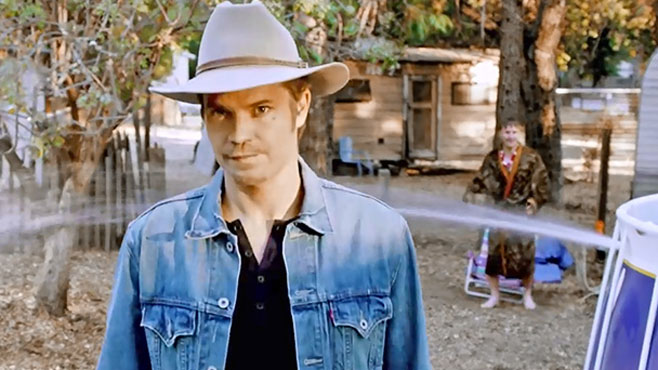
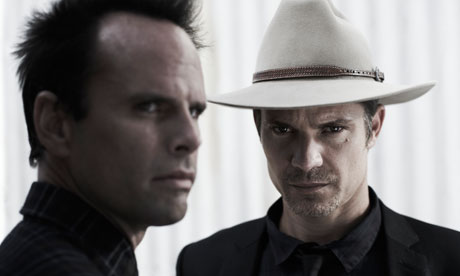
Walton Goggins and Timothy Olyphant in Justified

Chief among these darker characters is Boyd Crowder (Walton Goggins), latest in a long line of criminals who has dabbled in white supremacy – he blew up a black church with a rocket launcher, for god’s sake – evangelism, coal mining, bar owning, drug-making and distributing and, maybe most surprising of all, heroism and doing the right thing.

Pitting longtime friends/enemies and – when it’s convenient for them – cohorts and colleagues Raylan and Boyd against each other and, sometimes, against the dregs of Harlan County (and at times their own families) is the genius aspect of the show.

True to the spirit of Leonard – who’s featured characters used in the show in a few novels and stories – “Justified” features a lawman who’s not only cool but hot-tempered who, at times, makes astonishingly bad decisions and an outlaw who murders – sometimes with remorse, sometimes without – and traffics but is prone, at the time you least expect it, to do the right thing.

justified raylan boyd

If the conflict and simpatico relationship between Raylan and Boyd is the heart of “Justified,” the supporting characters are the veins that carry the blood.

Few cop shows have ever had such a likable and interesting group of lawmen, from wry Chief Deputy U.S. Marshal Art Mullen (Nick Searcy in a performance that makes me want to see a whole hour about him every week), Jacob Pitts and Erica Tazel as marshals Tim Gutterson and Rachel Brooks and assorted characters like a smart-ass U.S. attorney, a kinky judge and Constable Bob, a small-town, small-time lawman played by comedian Patton Oswalt who seems like the comic relief but ended the fourth season as just about the biggest badass in Harlan County. Despite his worries that the folks who live out in the hills eat people. I’m praying Oswalt and his “go bag” will be back this season.

And my god, what bad guys. Goggins makes Boyd Crowder as complex and fascinating a character as any on TV, and likewise Joelle Carter as Ava – a bad-leaning girl who could be downright ruthless when she needed to be, and ended up in prison because of it – are characters capable of carrying their own show.

And what a bunch of low-lifes consort with Boyd and are confounded by Raylan, including Dewey Crowe, the hapless, brainless small-fry crook played by Damon Herriman, Jere Burns as sarcastic criminal Wynn Duffy and so many others.

Tribute must be paid to the Bennett clan, led by Mags (Margo Martindale). The Bennetts, astonishingly corrupt but endlessly fascinating, made the second season of the show so hard to top.

The current season is trying, though, by introducing more members of the Crowe family, including Darryl Crowe Jr. (played by Michael Rapaport), a Florida thug moving to Harlan to complicate Raylan’s life.

I need to watch the first new episode of the season again because I can’t figure out just what about it left me a little frustrated. Maybe it was that Raylan and Boyd were a thousand miles apart for most of the action. Maybe it’s that both were out of Harlan County for most of the premiere. Because, believe me, as much as I wouldn’t want to live in Harlan County, I want my hour there every week.

New: ‘Veronica Mars’ movie poster

veronica-mars-movie-poster

So this is cool.

Here’s the poster for the “Veronica Mars” movie, due out March 14.

Funded by a very successful Kickstarter campaign, the Rob Thomas movie, featuring Kristen Bell in the now-grown-up role of the cult favorite high-school-and-college-sleuth, should be a treat for fans of the short-lived series.


‘Agents of SHIELD’ slow burn or burning down?

Agents of SHIELD magical place coulson

It’ll be really interesting to see how we feel about “Agents of SHIELD” in May.

The Disney/ABC series, about halfway through its first season, debuted in September to good ratings and impossible expectations. The street-level spin-off of Marvel’s cinematic universe and follow-up to “The Avengers,” the show looked at the non-superhero agents – like Phil Coulson, played in the Marvel movies and here by Clark Gregg – who are left dealing with the aftermath of the Battle of New York.

But while ratings are still … fine … disappointment set in as each successive episode not only failed to hand over the candy – Marvel characters we’ve wanted to see and fantastic events, even on a TV budget – but seemed like a routine supernatural procedural, an “X-Files” knockoff.

The showrunners have promised that “Agents of SHIELD” was in the middle of a slow burn, with the mismatched agents who are the series’ central characters still learning to trust each other and the mystery behind the resurrection of Coulson – who was ostensibly killed by Loki in “The Avengers” – slowly playing out. Sooo slowly. And obviously.

Last night’s first episode of 2014, “A Magical Place,” followed up on the kidnapping of Coulson by agents of Centipede, the organization that has been trying to turn people into superbeings. Centipede wants to know Coulson’s secret – SHIELD’s secret, really – of how you bring someone back from the dead.

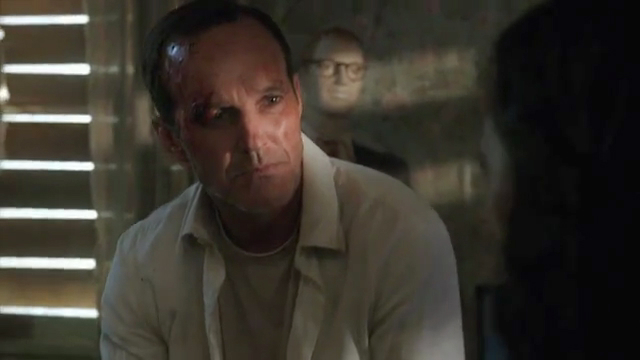
Most of the rest of the episode really doesn’t matter and already has mostly disappeared from my memory. Vivid in my mind is the scene in which, through a Centipede experiment, Coulson recalls his resurrection at the hands of SHIELD director Nick Fury (Samuel L. Jackson. There’s Coulson, strapped to a table, his brain exposed and being probed – seemingly being kntted back together – by a high-tech device.

And the entire time, Coulson is begging to be allowed to die.

It was an unsettling scene and Coulson’s unsettled reaction to the memory makes me wonder if the series isn’t going the way I speculated a few weeks ago in making SHIELD itself a bad guy – or at least an organization that needs reigning in.

That would also appear to be setting us up for the plot of “Captain America: The Winter Soldier,” which debuts in theaters in April and appears to pit the Sentinel of Liberty against at least some elements of SHIELD.

Considering the showrunners of “Agents of SHIELD” – created by “Avengers” mastermind Joss Whedon – would certainly never be able to tip the hand of the Cap movie, it’s possible this is where “Agents of SHIELD” has been heading all along.

We’ll know within a few weeks, certainly by the time the movie comes out in April and the first season of the series winds down in May.

It’s asking a lot of today’s short-attention span, general audience viewers to wait an entire season to get a bead on a show’s characters, tone and plot.

But maybe, come spring, it’ll all make sense to us, and we’ll see if the show’s slow burn has been worth burning some early viewers.

Classic TV: ‘Angel’ ends with drama and class

angel finale not fade away

I’m not sure, to tell you the truth, how much time Joss Whedon, Jeff Bell and others behind the scenes on “Angel” had to prepare for the end of the series. The way writer/producer David Fury tells it, Whedon had asked the WB network for early word on renewal for a sixth season – the fifth season was drawing a bigger viewing audience than the fourth – and wanted to play ahead. But the network decided to cancel the show in February 2004.

The final seven episodes of the season’s full order of 22 were still to air, and while most of those were undoubtedly written, in production or even finished by that February announcement, the final handful of episodes feel like they’re building to something – either one of the most genuinely satisfying season climaxes ever or one of the most genuinely satisfying series finales ever.

As readers know, I rewatched a couple of late-fifth-season episodes on a whim recently. Then another couple. And before I knew it, we had rewatched the final nine episodes.

First, a word about what that means.

My concentrated TV-watching time is pretty limited, considering work and family demands. It seems like a lot of time for reading more than an article in Time or Entertainment Weekly or watching a random episode of a series just isn’t available. Because of that, I’ve got a to-read list a mile long. And I’ve got a to-watch list that includes all of “Breaking Bad” and the last episode of “The Sopranos,” for god’s sake. Plus a lot of other worthy stuff.

So sitting down and watching the last nine episodes of “Angel” in just a few days’ time? That was pretty extraordinary.

I’ve noted recently that while the series was uneven at times early on, the final season – with the partners in Angel Investigations being put in charge of evil Los Angeles law firm Wolfram & Hart – was consistently good if not great.

The core characters were sharp and the actors played their hearts out. Characters like Harmony and Lindsay contributed great support. Cameos and references tied the series’ final hours to the greater “Buffy” and “Angel” universes.

The final episodes – following the tragic classic “A Hole in the World” and followups “Shells” and “Underneath” – set the wheels in motion for the finale.

In “Origin,” the adoptive parents of Angel’s son Connor come to Wolfram & Hart with questions after the teenager turns out to be superhuman. The deal that a desperate Angel made the previous season – to give Connor a happy life – begins to unravel.

“Time Bomb” finds Illyria, the ancient god who simultaneously destroyed and possessed the beloved Fred in “A Hole in the World,” posing more of a threat to the team … and, unexpectedly, a potential ally.

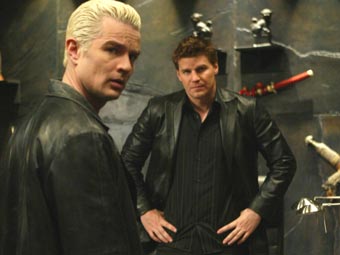
The most light-hearted episode of this final stretch, “The Girl in Question,” finds Angel and Spike in Italy, ostensibly trying to recover the body of the head of a demon clan but truthfully dealing with overwhelming jealousy after Buffy begins dating the Immortal, a perfect nemesis of the two for more than a century. It’s a shame Sarah Michelle Gellar didn’t return for a quick moment as Buffy, but the episode as written focuses on Angel and Spike and their lame attempt to “move on” after the woman in their life was no longer in their life.

And “The Girl in Question” also gave us some bittersweet moments, as Fred’s parents visit and Illyria impersonates Fred and fools them. It’s a charade that horrifies Wesley … or so he says.

During the final episodes, the series set Angel up as a potential bad guy, finally working toward the goals of the supernatural senior partners in Wolfram & Hart and making inexplicably hard-hearted choices. It’s a role that David Boreanaz had played well before, of course: A moment of true happiness puts Angel’s soul in a bottle and he reverts back to his evil incarnation of Angelus.

The episode “Power Play” brought Spike, Wesley, Gunn and even Illyria out of the realm of suspicion of Angel and into direct confrontation.

Not much more can be said about “Not Fade Away” that hasn’t been said since the “Angel” series finale aired on May 19, 2004. I’m kind of dumbfounded to realize that it will soon be a decade since the finale.

A lot of series – really good series – have aired in the past decade and some of them ended in a manner that either pleased fans (“Breaking Bad”) or confused and even outraged them (“Lost”).

But while the ending of “Angel” is left somewhat open-ended, it remains one of the most satisfying series finales ever for me.

Angel and his team – acknowledging that they have no real hope of striking a painful blow to the senior partners in Wolfram & Hart – decide to take out their representatives on earth, the Circle of the Black Thorn. Angel has been acting cruelly and – well, evilly – to ingratiate himself with the Circle, which is made up of demons either in disguise – one is a U.S. senator – or blatantly, openly evil.

In a finale that feels, in some ways, like an “Ocean’s 11” or “Magnificent Seven” plot variation, the team – including Lorne, the musical demon, and Lindsay, the former Wolfram & Hart lawyer – takes on the Circle with an aim of achieving Angel’s goal of destroying it.

(After a final afternoon of saying goodbyes and achieving goals, that is. Spike finally performs his poetry onstage and Gunn spends time helping Anne, the inner-city youth shelter director whose character goes all the way back to the early days of “Buffy.”)

The final showdown is suspenseful and heartfelt, as the team takes its revenge on the demon circle, saves a baby and loses at least two of its members.
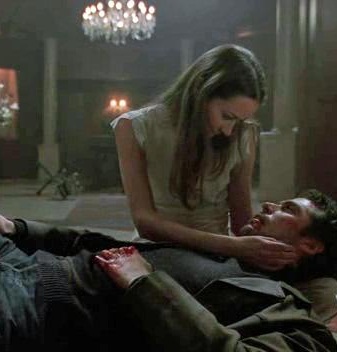
angel not fade away wesley illyria

In one of the most effecting moments on the entire series, Illyria comforts a dying Wesley by appearing to him as Fred one last time.

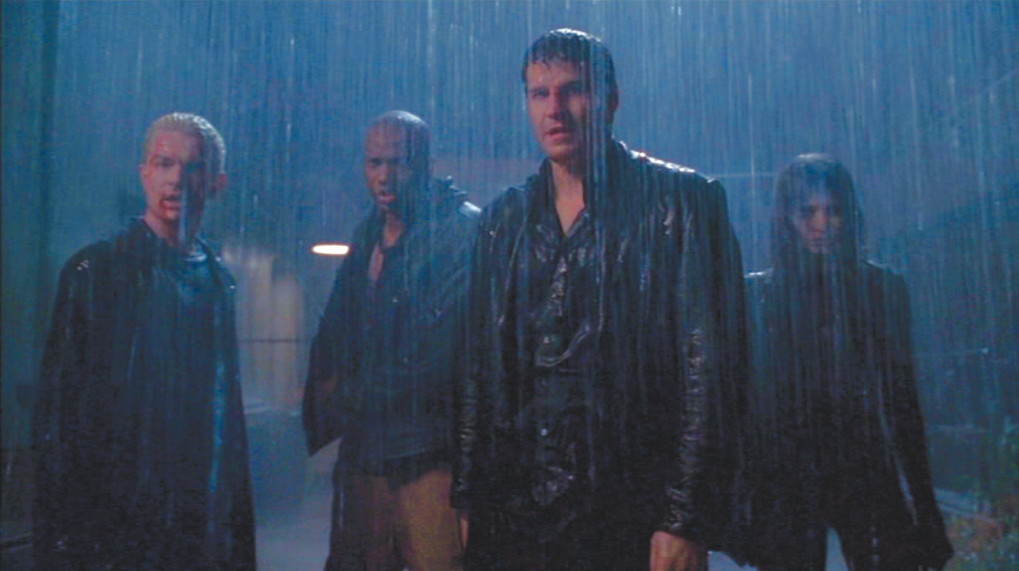
The final scene finds the survivors in a back alley behind the Hyperion, the old hotel where they were headquartered for a season or two. Angel and Spike had predicted that the senior partners would reign hell down on them for their acts. As an Orc-like army approaches and a dragon dips menacingly overhead, our heroes prepare for one final battle.

And black-knight-turned-white-knight Angel, sword in hand, is ready to meet the dragon.

Watching the last few episodes of “Angel” again recently left me acutely feeling the loss of the series. A part of me wishes that we were still watching “Angel,” which would be in the middle of a 15th or 16th season by now.

Part of me wishes that the widespread view embrace of horror/sci-fi TV that’s brought a long life to “Buffy” and “Angel’s” successors, like “Supernatural” and “Vampire Diaries” and “American Horror Story,” had been present when the uncle, the forefather, of those latter-day shows had been around.

Because I’d love to have seen the outcome of that battle with the dragon. And everything that came next.
‘Angel’ season five – ‘Shells’ and “Underneath’

angel shells illyria

I didn’t expect to be rewatching – no less reviewing here – the last handful of episodes of “Angel,” the “Buffy the Vampire Slayer” spinoff that was, in some seasons, superior to “Buffy.”

But after watching “Smile Time” and the devastating “A Hole in the World,” we decided to rewatch a couple more episodes.

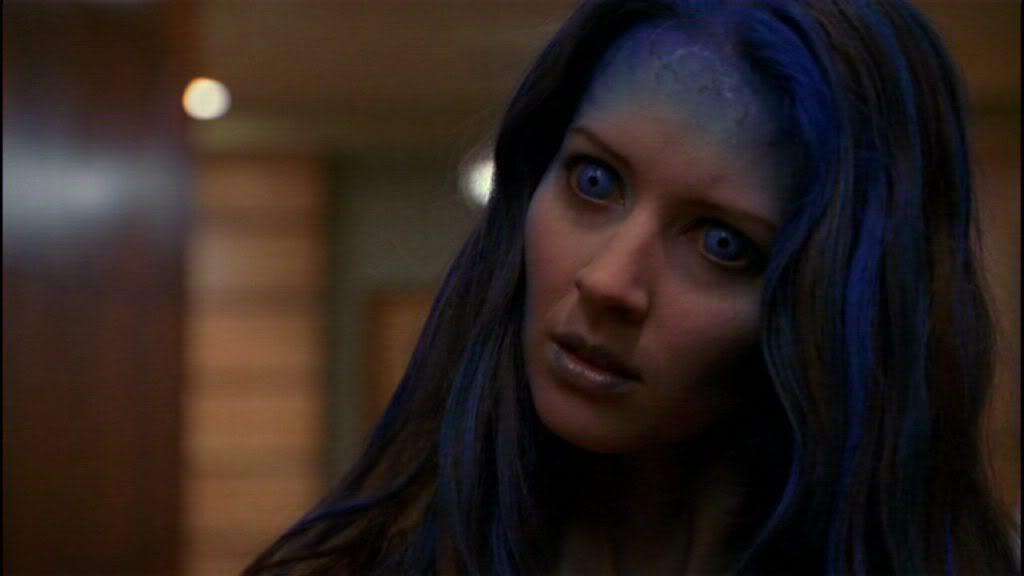
“Shells” is a continuation of “A Whole in the World,” in which lovable Fred (Amy Acker) is possessed by Illyria, an Ancient One looking to re-enter our world and rebuild its former kingdom.

angel illyria

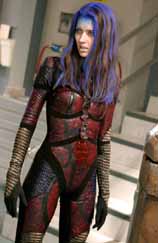
While Angel, Spike, Gunn and Lorne continue to look for a way to reach an apparently impossible goal – re-infusing Fred’s soul into her body, now a blue, ambulatory but holy-moly-she-looks-good-in-blue-skin home for Illyria.

Illyria, meanwhile, plans to call forth her demon minions … but is in for an unpleasant surprise. With no undead army to command, she turns to Wesley, still morose over Fred’s death, to give her a reason for continuing to exist on this plain.

angel underneath

In “Underneath,” the plot points that will drive the rest of the season – and the series – are introduced. Duplicitous Eve, the former liaison to Wolfram & Harts’ senior partners, tells our heroes where they can find Lindsay, whose help they’ll need to defeat the apocalyptic plans of the senior partners.

Introduced was Adam Baldwin – so great as Jayne on “Firefly” a few years later – as Marcus Hamilton, the new liaison to the senior partners who will, ultimately be the surrogate Big Bad later in the season.

There’s no huge revelation or plot turning point in “Shells” and “Underneath.” They feel like mopping-up and setting-up episodes, in a way, continuing the origin of Illyria and setting up the final conflict. But damned if they aren’t strong hour-long fantasy dramas, deepening the characters we already know, returning favorites like Lindsay and making us love Amy Acker even more than we thought we could before.

The five episodes to come give us the return of Connor – a much more liable character than he was previously – and even Buffy, in a way.

“Angel” was overshadowed, in some ways, by “Buffy” during much of its run. But with the final season of “Buffy” over before season five of “Angel” began, it felt like all the stars aligned just at the right moment, giving us our only contact with the Buffyverse and great, beloved characters at their moments of truth.

Classic TV: ‘Angel’ – ‘A Hole in the World’

angel a hole in the world

Was there ever a stronger season of series TV than the fifth and final season of “Angel?”

Okay, maybe you can make arguments for peak seasons of “Lost” or “Breaking Bad,” or going way back, the first season of “Star Trek.”

But the fifth season of “Angel” – in which the stalwart heroes of Angel Investigations are put in charge of Wolfram and Hart, the Los Angeles law firm that represents evil on Earth – has to rank right up there.

The first season or two of “Angel” – which debuted in October 2003 as a spin-off of “Buffy the Vampire Slayer” – were uneven, with real highs and lows as vampire-with-a-soul Angel moved from Sunnydale to LA and began fighting crime. The best episodes gave off a real Batman vibe, with Angel fighting evil by night, jumping from rooftops and traveling through tunnels under the city. The worst episodes made it seem like “Buffy” mastermind Joss Whedon didn’t quite know what to do with star David Boreanaz and his supporting heroes like Wesley (Alexis Denisof) and Cordelia (Charisma Carpenter).

But despite a few mis-steps, “Angel” gradually built to a stronger series that was not only about the supernatural forces at work on Earth but also the flawed heroes who stood between us and the demon world.

By the fifth season, “Buffy” co-star James Marsters had joined “Angel” as Spike, the charismatic “bad boy” vampire and antagonist to Angel. Everything clicked. Boreanaz and Marsters were almost co-leads and Denisof, J. August Richards and the lovely Amy Acker – joined later by Andy Hallett as showbiz demon Lorne – were as solid a cast as any show on TV in the 2003-2004 season.

angel smile time

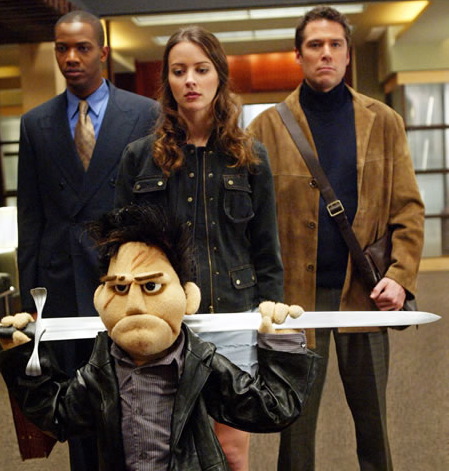
By the episode “Smile Time,” in which the Angel gang took on demonic puppets – and Angel found himself turned into a puppet – the show had hit a perfect mix of drama, soap opera and character comedy.

Then Whedon – more recently writer/director of “The Avengers” – hit us hard in the heart with “A Hole in the World.”

For several seasons, Acker had been the series’ secret weapon. An adorable genius, Fred had been the object of affection of half the cast, including both Wesley and Gunn (Richards). By this episode, she had picked up another admirer, nerdy Wolfram scientist Knox.

Although the romance between Fred and Gunn had been dramatically interesting, Wesley and Fred were destined to be together. They finally realized their full romantic potential in “A Hole in the World,” and – true to the Joss Whedon School of Romance in Drama – were soon to be split asunder. It’s the old “fall in love, get hit by a bus” theorem that I’ve referred to before.

Fred is infected by spores from an ancient sarcophagus in the Wolfram lab. Very quickly, it’s determined – in a whipsmart scene in which Lorne, who reads people’s thoughts and future by hearing them sing, hears Fred singing a few notes – that Fred is dying inside as Illyria, an ancient demon, hellbent on returning to Earth, reshapes her as its vessel.

Wesley comforts Fred, Gunn over-compensates for his inadvertent role in Fred’s condition and Angel and Spike head for Great Britain to find the Deeper Well, a literal “hole in the world” from which Illyria sprang.

There’s a tremendous “band of brothers” feel to the group that works feverishly to save Fred’s life and Whedon not only writes a devastating finale to Fred’s story but elevates an already great season.

Because there’s a price to be paid for the hubris and ambition of the players in this story and Fred pays it.

What’s extraordinary about the story is that, even while it brings Fred’s existence to an end, it continues her story as Illyria and gives Acker a totally different acting challenge.

The fifth season of “Angel” continued to one of the best series finales ever, one that was perfect and satisfying and yet made you want more at the same time.

But the season peaked with “A Hole in the World,” leaving a hole in viewers hearts.

Classic TV: “Dragnet: The Christmas Story’

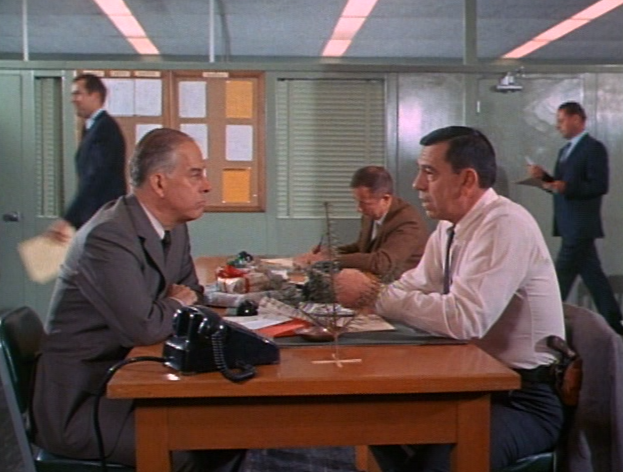
dragnet the christmas story tree

Every TV series – well. most of them, anyway – does a Christmas episode. Sometimes they’re “very special” episodes. It’s too much for TV writers and producers to resist, really: Do a heartwarming episode for the holiday, usually adapting Dickens’ “A Christmas Carol.” As they said, in reference to another subject, on “Buffy the Vampire Slayer,” It is an opportunity to “hug and cry and learn and grow.”

But not Jack Webb, no ma’am. When the creator of “Dragnet” does a Christmas story, he does one that’s to the point and – even though it has some sentimental moments – full of sharp edges.

I just rewatched “The Christmas Story” episode of “Dragnet,” which also proved that when Webb had a story he liked, he stuck with it. Webb wrote the script originally for his “Dragnet” radio series and the version of TV’s “Dragnet” that aired in the 1950s.

I watched the version – called “The Big Little Jesus” originally but retitled “The Christmas Story” by this time –  that aired on NBC in December 1967. This was the color version of “Dragnet” and the one that co-starred Harry Morgan as Bill Gannon, the partner to Webb’s LAPD Detective Joe Friday.

“Dragnet” reveled in the everyday police cases that Webb believed made the Los Angeles Police Department the best law enforcement agency in the world. “The Christmas Story” was a perfect example of that.

A San Fernando Valley church reports  on Christmas Eve that its Baby Jesus statute is missing from its Nativity display. Friday and Gannon question the priest about who might have been able to get into the church to steal it. Friday seems surprised when the priest says the church is open 24 hours a day. “So any thief could get in?” Friday asks the priest, who replies that the church especially wanted thieves to make their way to the altar.

Friday and Gannon promise the priest they will try to have the Baby Jesus statue back before 6 a.m. Mass on Christmas morning.

The detectives pursue a couple of leads, including a visit to an offbeat seller and, apparently, re-buyer, of religious statues. They also talk to a couple of altar boys, including Barry Williams, who would within two years be playing Greg Brady on “The Brady Bunch.”

Ultimately the cops are pointed toward a down-on-his-luck parishioner who, it’s assumed, stole the statue. But it’s obvious he did not, and Webb makes Friday’s frustration at the dead end briefly palpable.

The mystery, such as it was, is solved without any participation, other than as observers, by the cops. As Friday and Gannon go back to the church to tell the priest they failed, a little boy comes in, pulling a red wagon. In it, of course, is the Baby Jesus statue. The boy, whose family attends the church, had told the infant that if he got a red wagon for Christmas he would give it the first ride. The boy got the wagon from local firemen, who fix up broken toys for poor children in the neighborhood, which explains why he had the wagon early enough to pinch Baby Jesus from the manger.

“The Christmas Story” was, after all, a very special episode of “Dragnet.”

Random observations:

The conversation between Friday and Gannon that opens the episode acknowledges, for the first time I remember really, that Friday has a girlfriend. I’m sure this was touched on at other times in the series, and it’s well-established that Gannon is married, But it’s a nice touch, and the ensuing conversation about proper presents for a wife or girlfriend adds a bit of personality to the characters.

I also love that the Christmas tree that Gannon brings to the office and plops down on the work table he shares with Friday looks like an even more pathetic version of Charlie Brown’s tree, as seen in the animated special two years earlier.

It’s a nice bit of business for Friday and Gannon to get more time to work on the theft by asking their captain – who had wanted them on another case – to call the priest himself and tell him they wouldn’t be returning the stolen Baby Jesus in time for Christmas.

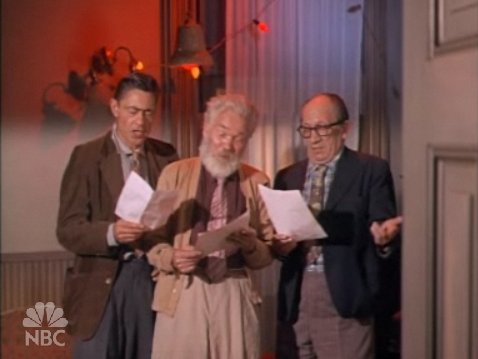
And this, the choir from the hotel for down-on-their-luck men:

dragnet the christmas story choir