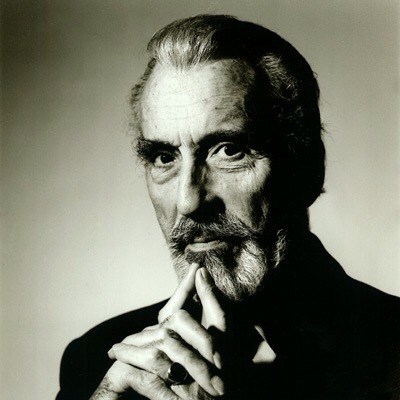
We’ll miss you.
RIP Christopher Lee
Leave a reply

We’ll miss you.

If you’re a regular reader of this blog (thank you and bless you) you know it’s been pretty quiet of late.
I can’t blame anyone but myself for that, but I will say that my job, as rewarding as it is, has been exceedingly busy in recent months. That hasn’t changed, really, but I’m going to try to post more here even though I’m still writing a lot for my actual work.
Also: I’ll try to post the occasional iPhone photo here, but I’m pretty active on Instagram, where you can find me as, strangely enough, Keith Roysdon. Maybe all run together into one word. Hard to tell.
So I’m going to try to post more here, I’ll probably promo my work more through my pop culture Twitter account @Pop_Roysdon and hopefully we’ll all enjoy it.
Or, if you see that nothing has changed here, you know this post was just overly-optimistic bull.
So here goes nothing! (Maybe literally.)

Not to sound like 1990s era Jerry Seinfeld, but what is the deal with travel?
If you wondered what happened to the author of this blog for more than a week: I was traveling on a family vacation that took me to the Grand Tetons National Park. More on that in a future iPhoneography entry.
After five airports in as many states in about as many days, I’ve been negligent in blogging. But I have been keeping track of some observations. So this morning, happily at my kitchen counter, I’m recalling the most memorable travel moments of the past week.
The Jackson Hole airport in Wyoming is pretty small but, like a true western chic airport, has more hydration stations for refilling water bottles than it has gates.
For an airport that sprawls over several buildings and has a tram, the Detroit airport is short on people-friendly space. There are not enough seats, leading to many instances of people sitting on the floor. And Fuddruckers in Concourse C, feel free to stop pretending you’re a real restaurant. You’re a counter where patrons can order by touchscreen and then struggle, loaded down with their luggage, to get their orders and get out.
Also, much has been made of Detroit’s oddball tunnel, with multi-colored lighted walls surrounding people-movers. It’s kind of disorienting. But hey, it has its own Facebook page: That Creepy Tunnel at the Detroit Airport.
The Minneapolis/St. Paul airport looks like a mall. Really. There are entire stretches of the airport that are recognizable as an airport only because of the occasional screen updating the status of arrivals and departures.
Here’s a good reason (although not the real reason) I didn’t update my blog in the past week: Airport wi-fi is usually slower than 3G cell coverage, which makes the free wi-fi offered in most airports a nice but mostly useless attraction.

There are so, so many reasons to honor Muhammad Ali.
Here’s a man who, as a child, pulled himself up out of the rough streets of Louisville, became an athlete, then became an Olympic athlete, became a professional athlete at a time of desegregation and prejudice against African-Americans, became a living symbol of how the government can try to crush people whose beliefs are considered unacceptable by some officials, fought his way back to the top of his profession and, even while facing a crippling illness, continued to live his life as an example to others.
Ali is a true hero.
The Muhammad Ali Center in Louisville, Kentucky, is a really very good repository and collection of the many highlights of his life. Medals and personal mementoes abound and – most compelling to me, in a way – film of some of his fights plays non-stop on monitors in the building.
The Ali center has a lot of weight but isn’t boring. The color and drama of Ali’s life is recreated.
Above is my iPhone snapshot of one of artist LeRoy Neiman’s paintings of Ali, of course. The original is on display in the center.

Inside the center, besides the display of Ali artifacts, are demonstrations of Ali’s reach on young people, including these tiles painted by children.

And outside the beautiful building is a sunny plaza overseen by images of The Greatest himself.
The Ali Center is worth a visit.

New developments for the next “X-Men” movie just keep coming, it seems.
First we learned that the follow-up to the quite successful – in many senses of the word – “X-Men: First Class” would be “X-Men: Days of Future Past” and would be based on a popular 1981 storyline from the comics that found the mutant superheroes living in – and trying to prevent – an apocalyptic future in which mutants are held in concentration camps guarded by robotic Sentinels.
Then we learned that director Matthew Vaughn would not be returning, but director Bryan Singer, who helmed the first two “X-Men” movies in the 2000s, would instead.
And in the past few days we learned that in addition to returning “First Class” cast members like Michael Fassbender, James McAvoy and Jennifer Lawrence, the actors who played longtime antagonists Magneto and Xavier in the original trilogy, Ian McKellen and Patrick Stewart, would return.
And we learned that Hugh Jackman, who had a fun, two-word cameo in “First Class,” might be returning after filming his solo film “The Wolverine.”
Of course, with a story featuring time travel and alternate realities, it’s not impossible to imagine multiple actors playing the same characters and it’s not impossible to imagine characters from widely divergent “X-Men” eras clashing and teaming up.
So with a couple of years to go until we see the movie, what do we want to see from “X-Men: Days of Future Past?” A few thoughts:
Colorful costumes. This seems silly, almost, in the wake of the true-to-the-comics costumes in “First Class” and “The Avengers.” But remember that the last time Singer directed these characters, the conventional wisdom at the time was that moviegoers would only accept the X-Men in black leather with yellow accents. We know better now. Bring on the blue and yellow spandex!
Beefy roles for various generations of X-Men. I want to see the Fassbender version of Magneto go on the equivalent of the Nazi hunt he conducted in First Class, maybe abetted this time by Jackman as Wolverine. Who wouldn’t pay to see those two in unstoppable pursuit of some villain?
A “Spock meets Spock” moment. Or several of them. We want to see the two versions of Magneto and Xavier meet each other and we want to be able to relish it, like we did when Spock met Spock Prime in “Star Trek.”
Sentinels. Sentinels. Sentinels. We’ve only been teased with the giant robots so far. Hollywood special effects are more than ready to give us these menacing figures now.
Wolverine, yes, but more than that. Who doesn’t love Wolverine and his on-screen personification, Hugh Jackman? But even if Jackman does appear in “Days of Future Past,” he shouldn’t be the focus. He’s best when he’s the wild card, going on a berserker rampage and scaring the hell out of every bad guy in sight.
Above all else, Michael Fassbender and James McAvoy. It’ll be cool to see Patrick Stewart and Ian McKellen, the heart and sole of the original “X-Men” movies, together again. But Fassbender and McAvoy made the roles of Magneto and Xavier their own in “First Class.” They energized the roles. I wish the finale of the movie hadn’t so thoroughly put Xavier in a wheelchair and set him and Magneto at odds. It was the least subtle element of the movie. But there’s a lot more to told about these two characters early in their conflict and I hope that’s what drives the movie.

I haven’t yet seen “The Dark Knight Rises” and I won’t even see it when it opens Friday because of a prior commitment. So almost everyone reading this will know before I do if there’s any truth to the spoilers circulating in the last couple of days.
In other words, keep in mind I have no idea if these spoilers are true. But based on what I’m reading, at least some of them are pretty accurate.
Oh yeah – SPOILERS!
The movie’s ending indicates more adventures of the Dark Knight are going to happen. We already know Warner Bros. wants to reboot the character after Christopher Nolan finishes his trilogy. The studio would love to build to a billion-dollar Justice League movie.
So after months of speculation that Joseph Gordon-Levitt would inherit the Batmantle in this movie … early indications sure make it sound like that happens, at least in some respects. Some reviews have outright said the ending sets up an “offshoot” movie, which certainly makes it sound like a continuation that isn’t another movie about Bruce Wayne.
A villain returns … but not the one you might think. Although the Joker survived “The Dark Knight,” Heath Ledger’s untimely death made it impossible for him to make even a small appearance in the movie. Rumors persisted that Nolan would include Ledger nonetheless, perhaps through unused footage or CGI.
Nolan is saying this week that Ledger is not in the new movie in any form. But early indications are that Cillian Murphy returns as the Scarecrow for at least one scene.
Batman bites the dust? Considering that in the comics Bane breaks Batman’s back and puts him out of commission for a while, everybody expected something dire to happen in this movie.
But I’m thinking David Letterman was kidding when, in a recent interview with Anne Hathaway (Selina Kyle in the movie), he says that Batman gets killed. Anyone who watches Letterman – who, during his days as a weatherman in Indianapolis forecast “hail the size of canned hams” – knows that’s typical of his humor.
I do believe that “The Dark Knight Rises” brings Bruce Wayne’s story to an end. I just don’t think the movie kills him off.
We’ll see this Friday. Well, at least some of us will.
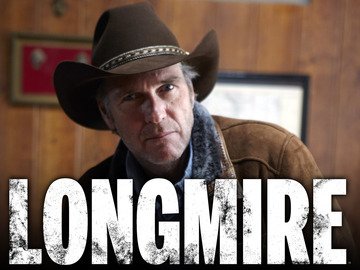
I’m a fan of Craig Johnson’s Wyoming-set mysteries about Sheriff Walt Longmire and the offbeat citizens of his county, so I’m more than willing to give A&E’s “Longmire” series, based on the character, a try.
Robert Taylor is really growing on me as Longmire and Katee Sackhoff is ideally cast as Longmire’s deputy, Vic Morelli. Although the show was filmed in New Mexico, the stark, beautiful scenery works for me.
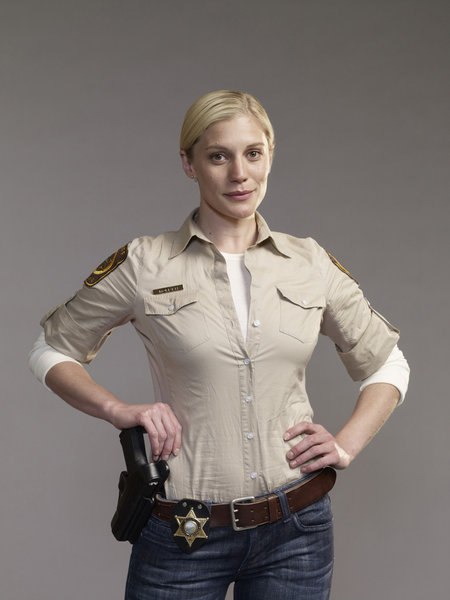
There are some important differences between “Longmire” and the Longmire books, however. Realizing they’re two different animals, I’m overlooking the variances for now.
But just for the record, here’s the most obvious divergences from Johnson’s books:

Cady, Longmire’s daughter. Cassidy Freeman is well-cast as Cady, the young lawyer who plays a central role in some of the novels. But the producers of the TV show made a choice by having Cady a resident of Wyoming rather than Philadelphia as she is in the books. That would appear to eliminate the Philly subplots (more on that next). It’s easier to have a long-distance character in novels than on a TV show, when viewers might wonder, “Why are there so many scenes in which two people talk on the phone?”
Philly: There’s a strong Wyoming/Philadelphia undertone to the books. Cady has a Philly law practice. Vic is from Philly. After the book in which Cady is injured and Walt and Henry Standing Bear go to Philly to find out what happened, Cady meets and falls in love with Vic’s brother, Philly cop Michael Morelli. I’m going to miss the Philly element of the TV series.
Natives: Several of the books, especially the newest, “As the Crow Flies,” have major plots and characters that revolve around the Cheyenne, Crow and other Native American nations represented in Wyoming and Montana. The most recent episode had Walt in a sweat lodge ceremony, an element of the latest book. I’d like to see a much greater representation of indigenous peoples in the books as well as …
The mystical. Almost from the beginning, the Longmire books have featured an undercurrent of the mystical as filtered through Native legends and beliefs. The mystical elements, including spirit guides of sorts who help Walt through tough spots, add a touch most other crime novels don’t have. I wish the series had more of this.
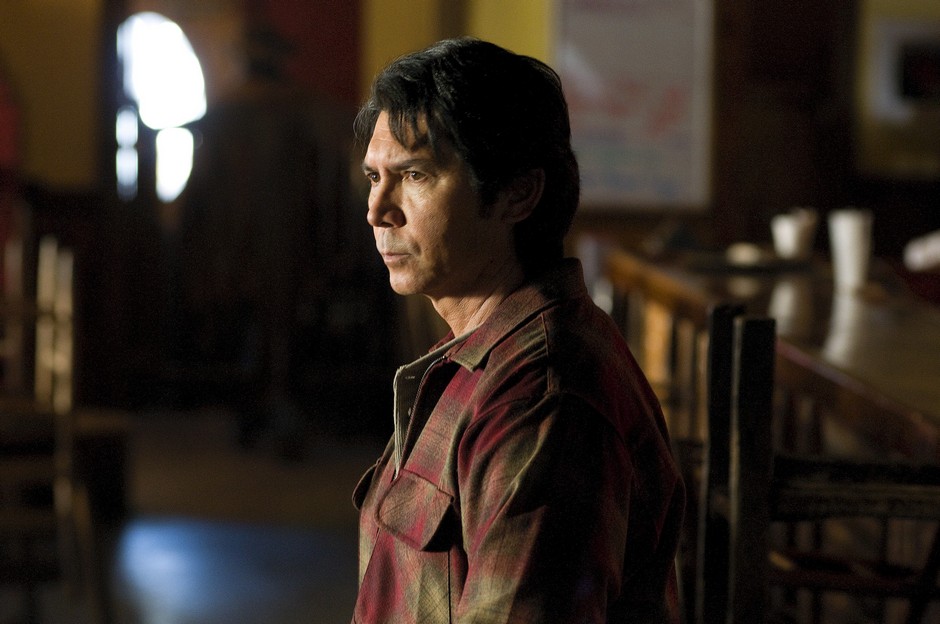
Which brings us to Henry Standing Bear. Lou Diamond Phillips is a very cool actor and he brings a familiar face to “Longmire.” But I’m not sold on him as the in-the-flesh representation of Henry Standing Bear, Walt’s lifelong Cheyenne friend and local bar owner.
I’ve noticed at least one, maybe two, moments in the series in which Walt seemed to doubt Henry, even wondering if he was up to something. That’s a different and not entirely welcome spin on the rock-solid relationship between the characters from the books. And Phillips isn’t really physically right for role since Henry is such a huge figure. But Phillips is a nice presence and I’m willing to wait to see if he’ll establish himself in the part.
“Longmire” is a pretty good, if unsurprising, TV cop show so far. Here’s hoping it will grow to become even more.

Sherlock Holmes and John Watson. Spenser and Hawk. There are some pretty amazing duos in crime fiction. I’d put Elvis Cole and Joe Pike right up there with the best of them.
Cole and Pike, the creations of crime novel author Robert Crais, return in “Taken,” Crais’ latest book about the cool Los Angeles detective and wiseguy Cole and his man-of-few-words-but-lots-of-deadly-action partner Pike.
Crais has played change-up a bit in recent books, sometimes concentrating more on Pike and less on Cole. In “Taken,” the author splits the story pretty evenly between Cole and Pike with a little attention paid to Jon Stone, Pike’s equally deadly but much more flamboyant associate.
As usual, Cole is a practical but noble example of the classic “knight for hire” crime novel character. Here he’s hired by a LA businesswoman to find her college-age daughter. Cole quickly determines that the daughter and her boyfriend have been taken by ruthless criminals who prey on human traffickers and the undocumented immigrants they smuggle into the country.
The twist in the story is that Cole himself gets taken by the bad guys and it’s up to Pike and Stone to get him back.
Crais, like Robert B. Parker did with his Spencer books, makes his protagonists immensely likable. Although Pike is quiet and mysterious, Cole is a flippant hero, needling the bad guys in his efforts to push them into mistakes.
It’s hard to imagine that Crais has been writing about Cole and Pike since 1987. He’s written 15 books about the two as well as some stand-alone novels that have fed into his series.
While the last few books haven’t had the punch of the first several, Crais has deepened our understanding of Cole and Pike — particularly Pike — and fleshed out their personalities. While the books might not carry the emotional weight of the early entries in the series — especially now that Cole’s relationship with attorney Lucy Chenier seems to be on the back burner — they’re still absorbing, entertaining reads and time spent with familiar characters.

“The Fades” has left us before we really got to know it.
If the name of the BBC supernatural series doesn’t ring a bell with you, that’s probably a good indicator that the show was little-seen. But believe me, it was much admired in some quarters.
Previously in this blog I’ve noted that the show, about a British teenager, Paul, who discovers he’s a “Buffy”-like Chosen One, was one of the best modern-day incarnations of that type of story: A young person, overmatched by regular everyday life,x finds the weight — and fate — of the world on his (her in “Buffy’s” case) slim shoulders.
“The Fades,” which aired around these parts on BBC America, had only about a half-dozen episodes in its first season. The storyline resolved itself to a great degree but really left fans wanting more.
It was not to be. The channel BBC3 announced a few days ago that a second season would not be produced.
I doubt that decision — which has been greeted with some “outrage” by fans, according to news accounts — will be reversed, but I think you’d still enjoy the first (and only) season of the show. It’s been available On Demand and is out on disc.
If you start watching, be aware that after a slightly awkward opening episode, the show moves into creepy good mode.
There’s not much of “The Fades” out there, but what there is is quite enjoyable.
 keithroysdon