Category Archives: zombies

Look! It’s The Governor from AMC’s ‘The Walking Dead’

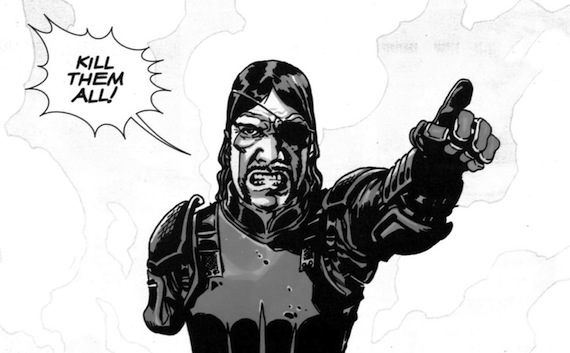
Here’s a first look at actor David Morrissey as The Governor from AMC’s “The Walking Dead” series, which returns this fall.

AMC has released the first shot of Morrissey as the scary and controversial character from the comic book series, expected to play a huge role in the third season of the series.

It’ll be interesting to see if AMC’s character has as many bizarre quirks as the character in the comic series. It looks as if he starts out with more body parts, at least.

AMC plans 16 episodes for the third season. I haven’t heard if they’re planning to break that into eight-and-eight episodes again, but that seems likely.


‘Walking Dead’ reveals Michonne

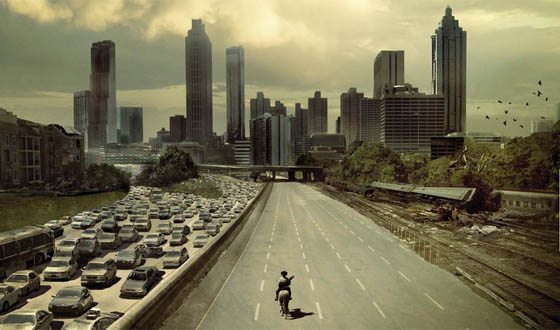
If we start our “Walking Dead” countdown now, how great a fever pitch of anticipation will we reach by the time the AMC end-of-the-world series returns in October?

And yet …

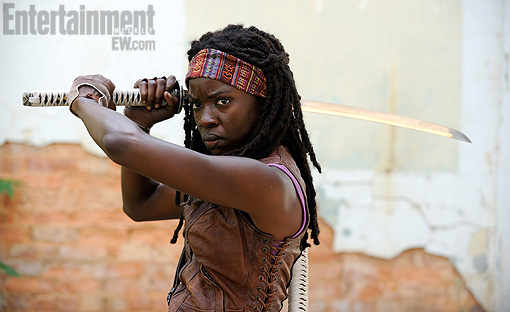
Entertainment Weekly has a cool pic. Here’s Danai Gurira as Michonne, the fan favorite sword-wielding warrior woman from the “Walking Dead” comics. Michonne, played by an anonymous actor in a hooded robe, showed up in the final moments of the season finale this spring, helping Andrea, who was surrounded by walkers.

After the show aired, the producers announced they had hired Gurira to play Michonne.

I’ve only been a casual reader of the comics, but Gurira looks pretty authentic to me.

The countdown is on!

‘Incredibly Strange Creatures,’ great memories

My companion, who is now long gone but shall remain nameless anyway, was itching to hit a zombie in the head with a baseball bat.

“If somebody comes at me, they’re gonna get it,” he said, showing me the baseball bat that was well-hidden under some blankets.

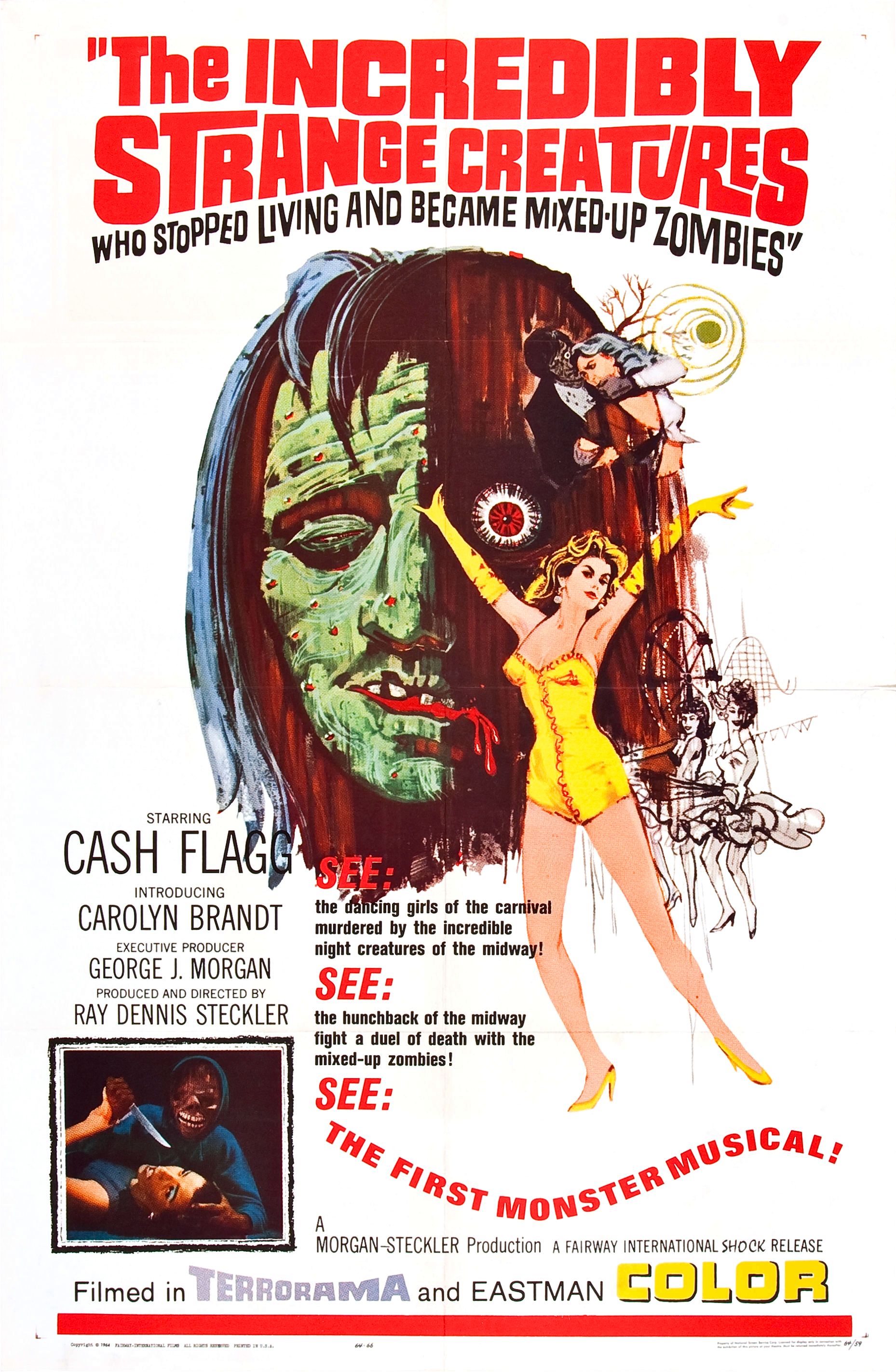
I don’t remember the year, but it must have been the late 1960s or early 1970s. The occasion was the re-release of “The Incredibly Strange Creatures Who Stopped Living and Became Mixed-Up Zombies.”

If you don’t remember this movie milestone, I’ll refresh your memory.

Ray Dennis Steckler was a maker of ultra-low-budget movies in the 1960s. He also acted in some of his movies, under the stage name Cash Flagg, probably because he could afford his salary.

In 1964, Steckler directed “Incredibly Strange Creatures,” which was released by Fairway International Pictures. Fairway released a handful of movies in the 1960s, including this and director Arch Hall’s “Eegah,” in which teenagers encountered a caveman. Of course. It was the 1960s and Hollywood had discovered what a potent box-office force teenagers could be. So teenagers were encountering everything from Frankenstein to giants to … well, you name it.

Fairway’s best-known movie was undoubtedly “Incredibly Strange Creatures,” in which teenagers encountered … not a caveman, but zombies at a carnival.

Stecker — er, Flagg — and other patrons of the carnival are hypnotized by a fortune teller and turned into crazed killers. For good measure, the fortune teller splashes acid on her unwilling slaves, giving them disfigured faces to match their murderous instincts.

By the end of the movie, the … well, sort of strange creatures had broken out of their cages and taken vengeance on their carnival captors.

That’s where my companion’s baseball bat came in.

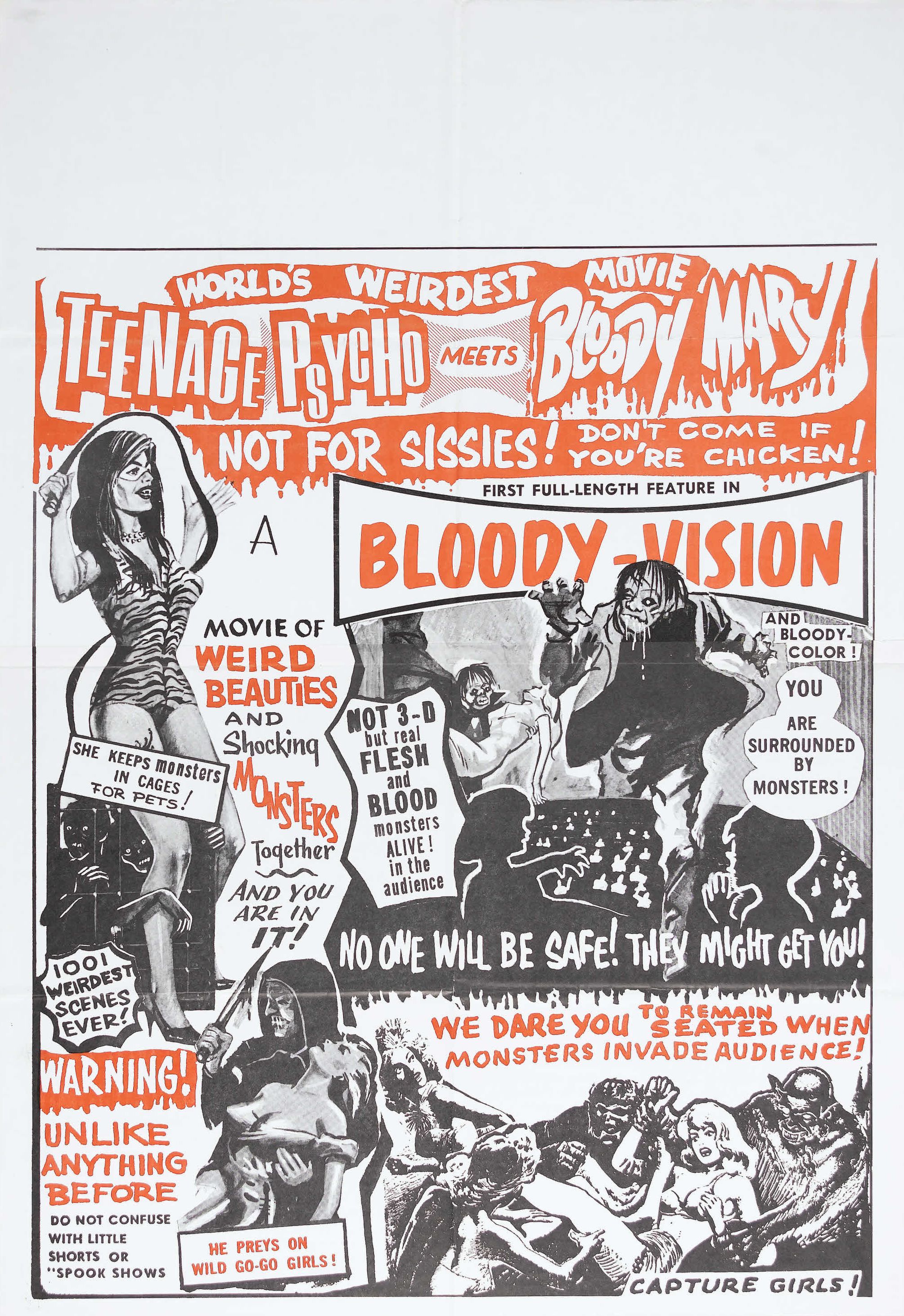
At some point during the surprisingly durable theatrical lifespan of the movie, either during its original release or its subsequent re-release as “Teenage Psycho Meets Blood Mary,” Fairway or someone had the ingenious idea of selling the picture by offering something that TV couldn’t compete with.

Not 3-D. Not Smell-O-Vision.

Real life zombies, running loose in the theater (or more likely, considering the low-budget nature of the movie) the drive-in.

Or, as the ads put it:

“Not for sissies! Don’t come if you’re chicken!”

“Not 3-D but real FLESH and BLOOD monsters ALIVE! in the audience.”

“NO ONE WILL BE SAFE! THEY MIGHT GET YOU!”

“We dare you to remain seated when monsters invade audience!”

In theaters where the movie played, the management made its ushers wear cheap monster masks and, in the scene when the monsters rebelled and broke loose on screen, the hapless theater employees would run up and down the aisles, screaming and frightening moviegoers.

Except for my companion, who had made up his mind to brain one of the zombies if this outbreak occurred.

Really, he understood that “real zombies” — stop and think about that phrase for a moment — would not be rampaging through the aisles of the drive-in.

But just in case …

Anyway, my memory of the movie is fairly dim all these years later. But my memory of that baseball bat and the threat of violence in the aisles remains vivid.

No, nobody got hit with a baseball bat that night. Zombies — in this case undoubtedly the teenage employees of the drive-in — did rampage, but none got close enough to us to warrant a good beating.

Thank goodness. Beating up teenage zombies with a baseball bat during a movie that’s been acclaimed as one of the worst of all time isn’t something you want on your record.


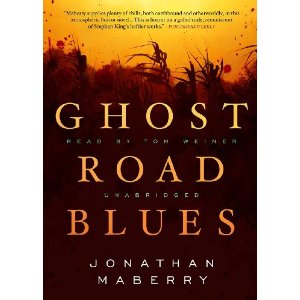
Maberry’s ‘Ghost Road Blues’ has some King in it

You’ve heard of Christmas in July? How about some Halloween in April?

If that sounds good to you, I’ll recommend Jonathan Maberry’s “Ghost Road Blues.” It’s not a new book but it’s new to me. I sought out Maberry’s book because I enjoyed his zombie thriller “Dead of Night” and wondered what he could do with something on a grander scale.

With three books in the Pine Deep trilogy — “Ghost Road Blues” is the first — Maberry has written a story that, at least in the first volume, feels like something from Stephen King. With supernatural lurking in the shadows of a small town and all-too-human characters nearly outdoing the monsters for evil — even while an apocalypse draws near — “Ghost Road Blues” reads like some of King’s best, including “The Stand” and “Salem’s Lot.”

Best of all, it gave me a real feeling of Halloween approaching — without the actual onset of winter not far behind.

“Ghost Road Blues” takes place in the town of Pine Deep, Pennsylvania, in the weeks leading up to Halloween. The holiday is an important one because the town is famous for its over-the-top celebration of Oct. 31. The town attracts thousands of visitors from the eastern U.S. with its shops, restaurants, haunted hayrides and ghostly attractions.

Three characters are central to the novel: Crow, a former cop and recovering alcoholic who runs the hayride attraction and owns a holiday-themed store; Val, Crow’s lifelong friend and girlfriend; and Terry, another lifelong friend who’s also mayor of Pine Deep.

Into the mix this year comes a carload of drug dealers, thieves and killers led by Ruger, a mass murderer wanted by the authorities up and down the East Coast. Ruger and his cohorts end up in Pine Deep as they try to elude police.

Crow, Val and Terry have a lifelong bond because of something they experienced as children 30 years ago: A mysterious serial killer struck Pine Deep, killing Terry’s little sister and leaving all three survivors scarred.

Town vigilantes ostensibly killed the serial killer but in reality they killed a black drifter, the Bone Man, who was innocent. In fact, the Bone Man himself had earlier dispatched the killer.

What none of the players know: The killer from 30 years ago was the embodiment of evil and now he’s back, ready to begin where he left off.

“Ghost Road Blues” is nearly 500 pages long but rarely lets up. Crow and his friends are great, sympathetic characters and Maberry puts them through the wringer. It’s hard to imagine what he has in store for them in “Dead Man’s Song” and “Bad Moon Rising,” the remaining books in the trilogy.

Like King, Maberry draws some of his best characters from flesh-and-blood types, including Iron Mike Sweeney, a teenage monster movie fan who is befriended by Crow. Iron Mike, who prefers to live in a fantasy world in which he is a hero, is as lovable a character as you could ask for.

On the other hand, Iron Mike’s stepfather, Vic Wingate, is one of the most detestable characters I’ve read in a long time. Iron Mike lives in a fantasy world because Wingate is a brutal bully, abusing Mike and his mother.

But Wingate is something else as well. He’s the right-hand-man of the evil force, long believed dead, manipulating the modern-day players.

With its moody imagery of corn fields, pumpkins and lonely farms, “Ghost Road Blues” perfectly captures the macabre melancholy of small-town Halloween. It’s a genuine treat even well in advance of the ghostly holiday.

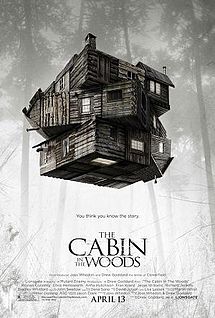
‘Cabin in the Woods’ a fun thrill ride

A lot of people are comparing “The Cabin in the Woods,” the new thriller, to other movies that simultaneously exploited, explored and expanded on horror film themes, notably “Scream.”

But besides being better than “Scream,” “Cabin” reminds me more of a grown-up and bloody “Monsters Inc.,” the Pixar animated movie about a company that specializes in giving kids nightmares with monsters under their bed and in their closet.

Since I didn’t see “Cabin” until a week after it opened, I’m going to assume anyone reading this has either seen the movie or heard the basic story by now. So there might be some spoilers ahead. I won’t spoil the ending, though.

“Cabin” was written by “Avengers” director and “Buffy the Vampire Slayer” creator Joss Whedon and directed and co-written by Drew Goddard. On the surface, it plays like a “Friday the 13th” throwback: A group of college students — a jock, a stoner, a brain, a shy girl and a slut — go to a remote cabin to party.
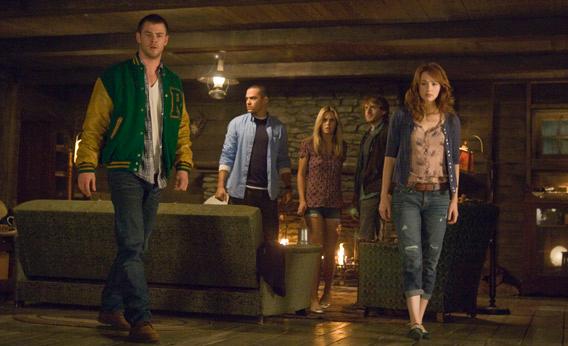
From the very start, though, the audience knows something else is going on. The group is being monitored by office monkeys/scientists in a war room-style bunker. Not only are the watchers seeing everything that happens as the five get to the cabin; they’re manipulating the players and events. Gas is pumped through vents that prompts the partiers to behave in particular ways. A mild electric shock runs through the handle of a knife to make the person holding it drop it.

A few spooky things happen in the cabin — not the least of which is the uncharacteristic behavior of the five — but the movie shifts into high gear when they venture into the cabin’s basement and find hundreds of old and obscure items, including a necklace, reels of film, a studded metal ball (more than a little reminiscent of the mechanical nightmare box from the “Hellraiser” movies) and a diary of the former occupants of the cabin.

The partiers choose — and seal — their fate when they become engrossed in the diary, even reading aloud a passage in Latin. It is here when the movie seems most like “Scream,” as the stoner warns against reading the words aloud. He’s seen enough movies to know what might happen.

Before long, the long-dead cabin occupants have crawled out of their graves and begun stalking the teens.

Of course, it is the lab scenes that set “Cabin” apart from the “Evil Dead” films. We quickly find out that the lab workers are monitoring the goings-on at the cabin — as well as other sites around the world — and causing terror and mayhem. The reason? They’re servants of the ancient, Lovecraftian gods, the old ones, that once dominated the earth. And they know that bad things will happen if those gods aren’t appeased by their sacrifice.

The lab workers are also the source of much of the film’s humor, which is as crass and mean-spirited as it is funny. The scientists, led by Bradley Whitford and Richard Jenkins, are cold-hearted (mostly) and unfeeling as they must be. Their jobs are to stage modern-day human sacrifices. There’s no room for bleeding hearts here — except for the ones being ripped out on the lab’s monitors.

It’s hard to imagine, given the ending, how a sequel to “Cabin” could happen, but I guess a prequel is possible. What’s more likely is the Internet will fill up with speculation/fan fiction set in the world in which “Cabin” takes place that will fill in the backstory of the lab and its workers, how their system was set up and maintained and how it otherwise interacted with the outside world. Do the lab workers commute? Is the lab government-sponsored?

The lab workers, who also include Amy Acker and Tom Lenk from Whedon’s “Buffy” and “Angel,” are perfectly cast and always believable.

The archetype young people offered up for sacrifice are likewise terrific. The movie was made a couple of years ago and sat on the shelf not because of its quality but because its original studio, MGM, was having money problems. Since then, Chris Hemsworth (who plays the jock) has become a star as the Marvel comics character “Thor.” He’s got a big summer between this and “The Avengers.” Hemsworth is good and he and his four co-stars — Kristin Connolly, Anna Hutchison, Jesse Williams and Fran Kranz — are well-cast and play their parts perfectly. Kranz, who was in Whedon’s “Dollhouse” TV series, is very Shaggy-reminiscent as the stoner.

Random thoughts:

The sterile, underground labs and monster holding cells of “Cabin” reminded me of the Initiative, the secret military experiment from the fourth season of Whedon’s “Buffy.” Only instead of stocking a compound full of monsters to kill teenagers, the Initiative captured monsters to experiment on them.

Another “Buffy” echo: “Cabin” builds on the idea of thousands of years of human sacrifice to appease evil. Of course in “Buffy,” the Slayers and Watchers were created, thousands of years ago, to fight evil.

I hope someone’s working on a detailed analysis of the whiteboard in the war room that contained all the monsters and scenarios. I tried to read as much of it as I could and caught some of the other threats like “Kevin” — a Jason stand-in, possibly? — but I would love to see everything that was up there.

Do you think the monsters in the movie were supposed to be real in their world? Or were they created, “inspired” by old horror tales and movies? Or does — as one clever person I know suggested — “Cabin” take place in the same world as all those old horror movies, finally taking us behind the scenes of Jason, Michael Myers, Freddy and all the rest?

“Cabin” is, for those with strong hearts and stomachs, cool, geeky fun. Maybe best of all, it made me want to re-watch “Buffy” episodes and some favorite recent horror movies.
‘Night of the Comet,’ ‘Buffy,’ Black Widow: Butt-kicking heroines

With “The Avengers” coming up on May 4, it’s interesting to note that one of the first clips from the movie officially released, a couple of weeks ago, was one of Black Widow, the non-superpowered, female member of that particular boys club, easily escaping from some bad guys and demolishing them in the process.

It’s a pretty good action scene, if mild compared to what we’ve subsequently seen involving Thor, Iron Man and particularly the Hulk.

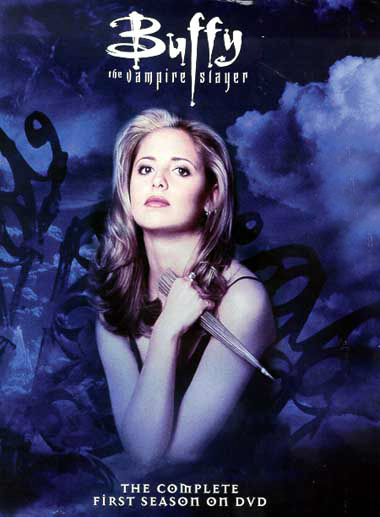
But there was some nice symmetry to the clip’s release considering that “The Avengers” was directed by Joss Whedon, creator of “Buffy the Vampire Slayer.”

There’s been some backlash to Whedon’s signature use of petite female characters as ass-kicking heroines, including Buffy and other slayers from that series and “Angel” as well as River, the programmed killing machine in “Firefly.”

But it’s interesting to note that Whedon has cited in at least one interview “Night of the Comet” as one of the influences on the creation of “Buffy” the lame movie and terrific 1997-2003 TV series.

Not long after the series ended, Whedon told IGN:

So, you know, when I hit on Buffy the Vampire Slayer, it was right around the time when Revenge of the Bimbos, or Attack of the Killer Bimbos or something – there were a lot of movies coming out that were proto-silly ’50s style titles. They were on the video store shelves. I worked at a video store. I would watch them, and I’d be like, “You know what? This is just another bimbo movie. These women aren’t empowered at all. They just made up a funny title.” I was like, “I would like to make a movie that was one of these crappy, low-budget movies, that like the Romero films, had a feminist agenda, had females in it who were people, and had all the fun, all the silliness. Night of the Comet was a big influence. That actually had a cheerleader in it. With a title that would actually make people take it off the video store shelves, because it has to sound silly and not boring. 

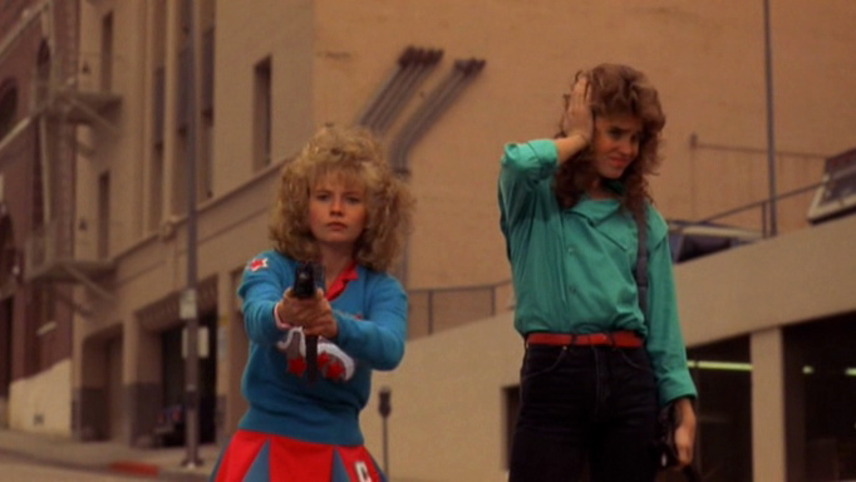
“Night of the Comet,” released in 1984, was the story of two Southern California teenagers, sisters Regina (Catherine Mary Stewart), known as Reggie, and Samantha (Kelli Maroney), known as Sam, who survive the end of the world, brought on by global exposure to a comet that reduces most of the world’s population to red dust and turns the rest into zombies.

Reggie and Sam, after a moment of shock and loss, quickly set out to survive in the post-apocalyptic world and connect with other survivors.

Although they’re teenagers — and the movie was released during the “Valley Girl” craze — Reggie and Sam are level-headed, even matter-of-fact, about the end of the world. There’s the customary all-you-can-shop scene, played to “Girls Just Want to Have Fun,” set at the mall, but George Romero’s “Dawn of the Dead” succumbed to the same idea a few years earlier.

And even though Sam is a cheerleader, the sisters are hardly pushovers. Raised by a career military man, the two quickly find supplies — although Sam is scornful of Reggie’s choice of automatic weapon, noting, “Daddy would have gotten us Uzis” — and are more than capable of defending themselves and other, less capable strays they come across.

Director Thom Eberhardt’s movie is amiably low-budget. You know they filmed the deserted downtown L.A. street scenes on a Sunday morning, for example, and you admire their ingenuity.

Whedon — who I’m pretty sure is an outspoken feminist — is a fan of empowered women. Even if they’re five feet tall and a hundred pounds. As long as they can wield a mean Uzi, kung-fu vampires into the afterlife or hold their own with the likes of Captain America and the Hulk, Whedon believes that size doesn’t matter — and neither does gender.

A moment to mourn ‘The Fades’

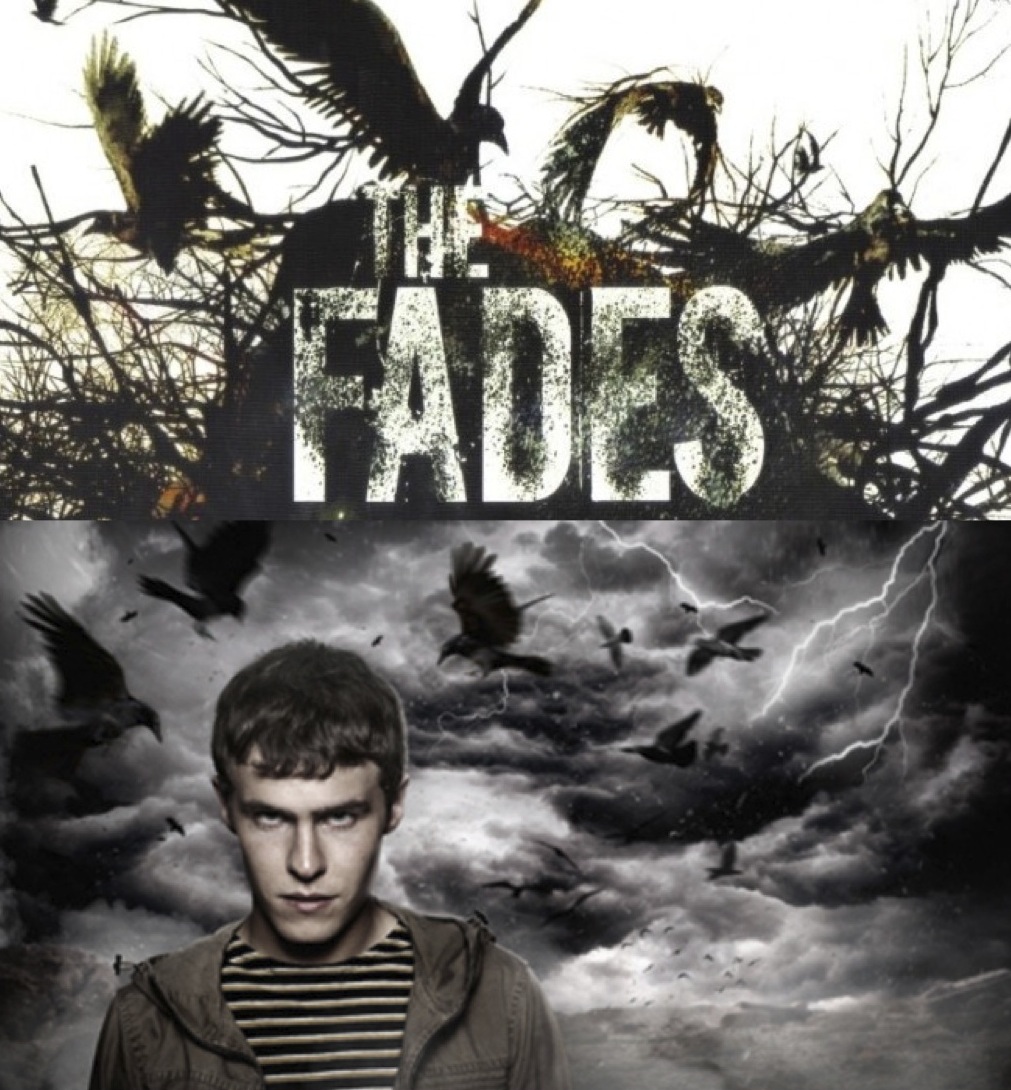
“The Fades” has left us before we really got to know it.

If the name of the BBC supernatural series doesn’t ring a bell with you, that’s probably a good indicator that the show was little-seen. But believe me, it was much admired in some quarters.

Previously in this blog I’ve noted that the show, about a British teenager, Paul, who discovers he’s a “Buffy”-like Chosen One, was one of the best modern-day incarnations of that type of story: A young person, overmatched by regular everyday life,x finds the weight — and fate — of the world on his (her in “Buffy’s” case) slim shoulders.

“The Fades,” which aired around these parts on BBC America, had only about a half-dozen episodes in its first season. The storyline resolved itself to a great degree but really left fans wanting more.

It was not to be. The channel BBC3 announced a few days ago that a second season would not be produced.

I doubt that decision — which has been greeted with some “outrage” by fans, according to news accounts — will be reversed, but I think you’d still enjoy the first (and only) season of the show. It’s been available On Demand and is out on disc.

If you start watching, be aware that after a slightly awkward opening episode, the show moves into creepy good mode.

There’s not much of “The Fades” out there, but what there is is quite enjoyable.

Have the nerds inherited the earth?

It wasn’t that long ago that fans of comic books, monster movies, science fiction and other nerdy stuff had to be fairly closeted about their pop culture choices.

I still remember the look on a guy’s face who, when I was a teenager, looked at the paperback book in my hand and read the title: “The Martian Chronicles.” This was Ray Bradbury. The author was — and is — considered a literary lion, for pete’s sake. But the guy glanced from the book cover to me and looked as if I had been perusing the latest issue of “Nuns and Nazis.”

God only knows what would have happened if I had been reading the latest issue of Famous Monsters magazine.

So I still feel a little lightheaded over the rise of geek culture. Not just the number of big-screen, big-budget movies based on comic books. I’m kind of getting accustomed to that.

No, I’m thinking about the TV shows — at least one of them based on a Podcast — that are not only devoted to a celebration of geek culture but even feature honest-to-goodness, real life geeks.

These shows portray the real-world versions of geeks like those in “Big Bang Theory” — without the Hollywood veneer. More about “Big Bang” in a bit.

Here’s a run-down of the geek and nerd equivalents of Johnny Carson:

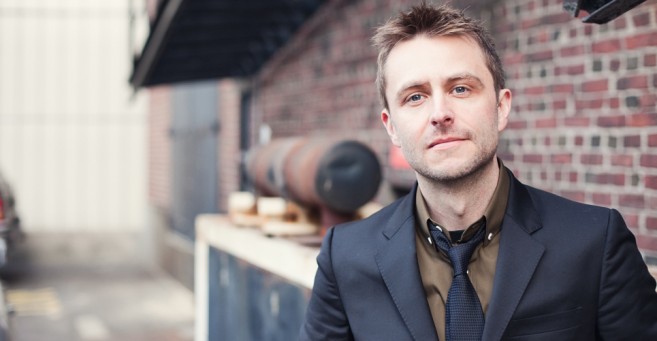
“The Nerdist:” Back in the day, Chris Hardwick was that snarky guy with the big voice on “Singled Out,” the MTV game show. A couple of years ago, Hardwick began “The Nerdist” podcast, an online audio look at geek and nerd culture featuring not only fans but celebrity guests.

Hardwick and “The Nerdist” — which also features genuinely funny geeks Jonah Ray and Matt Mira as regular panelists — got somewhat wider (or different) exposure when BBC America tapped the three to appear on a “Nerdist” TV series.

Only a handful of episodes have appeared so far, but they feature Hardwick, Ray and Mira chatting with geek culture demigods like Wil Wheaton and Nathan Fillion. The shows — available On Demand and no doubt online — are breezy and silly and don’t have any more substance than your typical talk show. They are, however, about the kind of geeky stuff that your parents used to hate.

“Talking Dead:” Hardwick packed up his geek shtick — but unfortunately not his sidekicks — and hosted this AMC talk show that followed episodes of the channel’s hit “The Walking Dead.”

Although the focus is narrow — it’s all about “The Walking Dead” — the show is entertaining and offers some insight into the series. The episode following the season finale of “The Walking Dead” featured the show’s creators announcing the actress who will play Michonne but also included one of the show’s funniest bits: An “In Memoriam” video montage of zombies killed off during that evening’s episode.

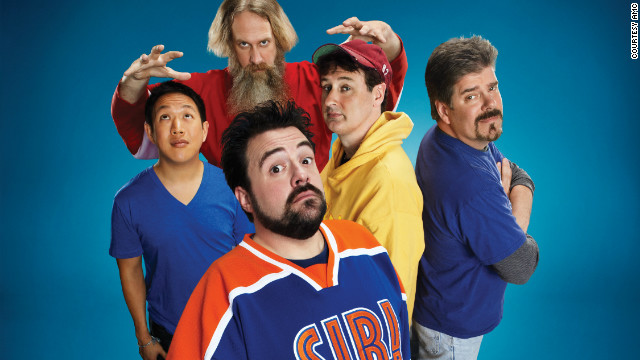
“Comic Book Men:” Somehow AMC has become the channel for nerd talk shows. Airing on Sunday nights along with “The Walking Dead” and “Talking Dead” is “Comic Book Men,” a series set in director Kevin Smith’s New Jersey comic book store.

Smith makes appearances but the series is focused on Walt Flanagan, manager of the store, and three employees/layabouts, Ming Chen, Mike Zapcic and Bryan Johnson.

All four guys are opinionated and entertaining. Chen, the low man on the totem pole, is like the Gilligan of the series.

It is Johnson, sporting a wild mane and wooly beard, who is the show’s highlight, however. Johnson’s online bio indicates that he has acted and directed in projects associated with Smith.

In “Comic Book Men,” Johnson is portrayed as an archetype familiar to anyone who has spent time at a comic book store or convention: The guy — usually older — who always seems to be hanging out, offering up sarcastic comments and withering put-downs. Johnson makes that stereotype immensely likable, however, through his genuine wit.

If “Comic Book Men” has a fault it is that I don’t think it realistically portrays a comic book store in one respect: Nobody ever buys anything! Most of the interaction between the employees and the public comes when people come in hoping to sell old comics or “Catwoman” Barbies. It’s like a nerd version of “Pawn Stars.”

Not even a roundup to non-fiction geek talk shows would be complete without a mention of “Big Bang Theory.” One of the most popular shows on TV, the CBS sitcom is about four geeks who hang out together, playing online games, going to a comic book store and obsessing about sex.

There’s a pretty divisive view of “Big Bang Theory” online. A lot of geeks consider it patronizing and shallow. It is, of course. But it’s no more patronizing or shallow a look at a group of friends than … well, “Friends” was.

And “Big Bang Theory,” like its real-life counterparts, offer a view of geek culture that not even Ross in the depths of his museum-geek persona could reach.


‘The Walking Dead’ and what we want to see

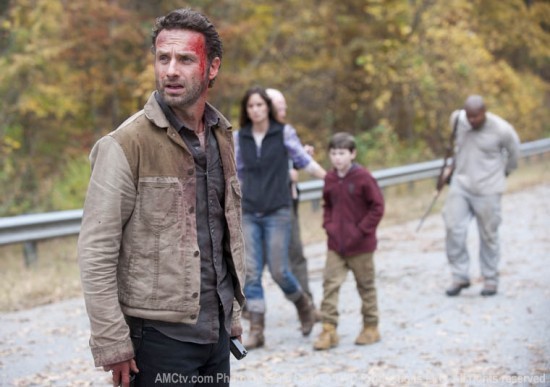
Last night’s second season finale of AMC’s “The Walking Dead” was pretty good — and viewers must have thought so too. They turned out in huge numbers: The finale scored a series record of 9 million viewers.

The finale did a good job resolving some storylines and hinting at others, including the prison (glimpsed at the end) that will figure into next season’s plot and the debut of sword-wielding good gal Michonne.

But we’re greedy. Here’s what we want to see when the show returns for its third season:

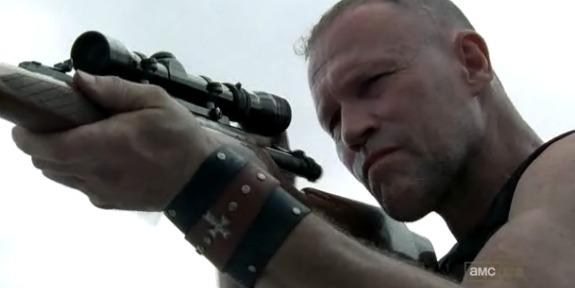
The return of Merle. Everybody’s favorite one-handed racist, Merle, is set to return in the third season of “The Walking Dead,” according to recent comments from actor Michael Rooker. Except for a hallucination visitation to brother Daryl, Merle has been absent for a long time. Can you imagine the tension between him and Daryl when they’re reunited? How will Merle react to Daryl’s new life as a good guy?

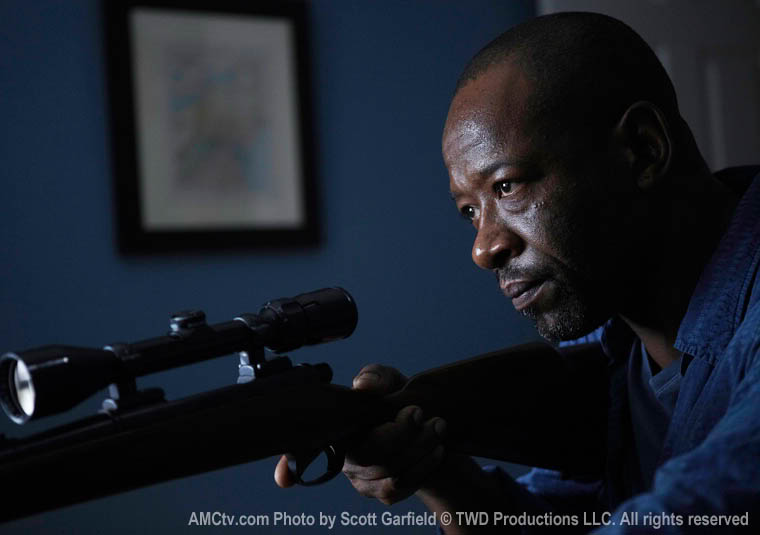
The return of Lennie James and Adrian Turner as father and son Morgan and Duane Jones. Rick encountered them early in the first season but left them behind in his hunt for wife Lori. James is a cool actor who brightens up every TV show he’s in. Wouldn’t it be great to see what Morgan and Duane have been doing in the weeks since the fall of Atlanta and the end of the world?

More for T-Dog. Robert “IronE” Singleton looked like he could be a very strong character in the early days of the show. But T-Dog has faded into the background in the past year or more. A character is only as good as his antagonists, and T-Dog was never better than when he had Michael Rooker’s racist Merle to play against, however briefly. Here’s hoping T-Dog will get some screen time next season.

More Hershel. Yeah, I know. I hardly thought I would be saying that. But as written and played in last night’s season finale, Scott Wilson’s Hershel was a hard-edged, kick-ass character. He’s sure to experience remorse from the loss of family members and his beloved farm. That loss could turn him into TV’s first brooding senior citizen zombie killer.

The secret of the helicopter. At the start of last night’s season finale, a helicopter flies over Atlanta. Besides drawing the attention of the walkers, the chopper implies somebody is still doing more than dodging zombies and hunting with bow and arrow (no offense, Daryl). Who was in the copter? The Governor? (Not the governor of Georgia, but the bad guy who’s set to show up in the third season.) The military? The president? Which leads us to the final thing we want to see next season …

The big picture. Not since the characters left Atlanta have we had any feel for what’s going on in the wide, wide world of zombies. Maybe when they get to the prison someone on the inside will have the rundown on how the plague of zombies is affecting the rest of the U.S. or even the globe. They’ve got working lights. Maybe they’ve got cable!

There’s a lot to anticipate for next season on “The Walking Dead.” I’m looking forward to seeing what the producers do with the show.


‘The Walking Dead’ season finale: Burning down the … barn

After  a second season that tested the limits of its viewers’ patience at times — and at other times excelled as after-the-end-of-the-world melodrama — “The Walking Dead” went out with a bang tonight.

Lots of bangs, as a matter of fact, followed by exploding walker heads. Also fire, as in the fire that burned down farmer Hershel’s barn.

In this case, fire good. Walkers bad!

Some thoughts on tonight’s episode:

The helicopter: As the episode begins, walkers in the streets of Atlanta notice a black helicopter overhead. They stumble after it, a journey that takes them out into the countryside and to the fields of Hershel’s farm. The helicopter not only explains why all the walkers showed up in the countryside at one time but teased us with the possibility of other survivors. Who was in that helicopter?

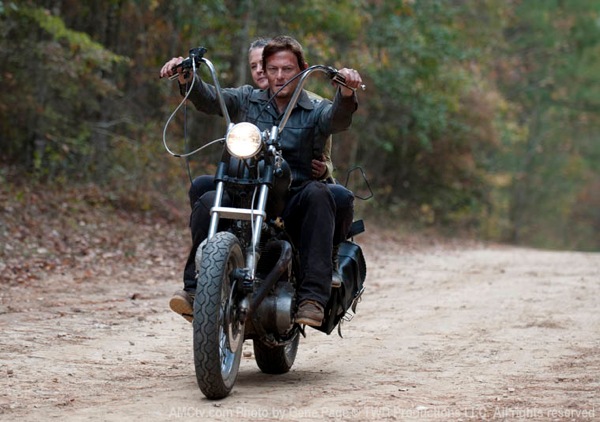
The badass chronicles: Daryl, with his crossbow and attitude, is a fan favorite on this show. Tonight he didn’t disappoint, tooling around on his motorcycle and snarking at people. Oh, and killing walkers. But Hershel, the mild-mannered veterinarian who has been an annoyance at times this season, grabbed his gun and put down a lot of walkers tonight. He also backed the new, more badass version of Rick who took charge by the end of tonight’s episode.

“We’re all infected.” Rick reveals what the doctor at the Centers for Disease Control whispered to him at the end of the first season. It makes perfect sense — the zombie plague had to begin somehow, after all — but casts a pall over the whole proceedings. If you manage to avoid walkers for 20 years and have a heart attack, you come back as a walker. Bummer.

The prison: The next major setting for the series is straight out of the comic book series. I haven’t read that far in the comics, but there’s potential for a lot of conflict there. We glimpse it at the end of the episode.

Michonne: One of the most-awaited characters from the comic book series showed up right before the final scene, as a hooded, sword-wielding figure  rescues Andrea from a horde of walkers. On “Talking Dead” afterward, the show’s producers confirmed that the hooded swordswoman was popular comic book character Michonne. Creator Robert Kirkman (I think it was) said that Michonne is the first character who’s not just surviving in the post-apocalyptic world but has it all figured out.

I’ll come back to the topic of “The Walking Dead” at some point soon — certainly before the show returns next fall — but it’s been fun blogging about the series this season and I’m looking forward to season three.