Where have you gone, Mike Nomad?

I was a newspaper fan from childhood, years before I would have guessed my writings would appear in print on a nearly daily basis. Decades before the Interwebs made it possible to connect with the big, wide world on an instantaneous basis, TV, radio and newspapers were my connection, my contact, to everything out there that was bigger than me.

Just as Johnny Carson’s “Tonight Show” was the avenue for a kid from Central Indiana to learn about the finer points of Jewish comedians and great jazz, so newspapers were a way for a Cowan elementary-schooler to begin to form a rudimentary grasp of current events.

And newspaper comic strips were the icing on that cake of information.

I read virtually all the comic strips, from the beautifully drawn but kind of impenetrable, plot-wise, “Prince Valiant” Sunday strips to the bread-and-butter comedy of “Hagar.” I read the comics page from the top down every day.

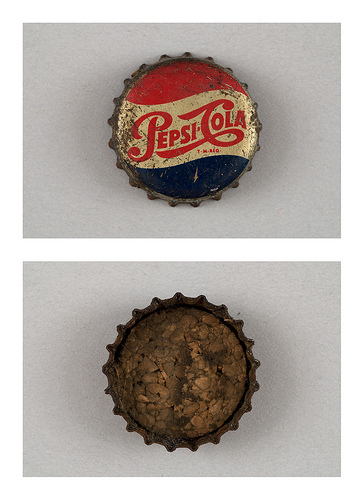
I can’t say I loved every single one — sorry, “Andy Capp” — but some of the strips I savored like cold Chocola on a hot afternoon. Even well into my adulthood, “Calvin and Hobbes” was the highlight of my day. I probably should have saved it for late in the evening so the day didn’t peak too early. I still mourn Dec. 31, 1995, when Bill Watterson ended his strip. I don’t think the comics page has been the same since.

But while the funny strips were probably the most enjoyable and the most accessible, I loved the drama strips. Well, I can’t say I spent a whole lot of time dawdling over “Mary Worth” or “Apartment 3-G,” but I read them.

The adventure strips, though, are another matter. A particular favorite was “Steve Roper and Mike Nomad.”

The strip began in 1936 — back then it was “Big Chief Wahoo” — which was well before my time. Journalist Steve Roper was introduced in 1940 — still well before my time — and eventually took over the strip. Adventurer Mike Nomad was introduced in 1956.

Roper and Nomad were the kind of duo that remains popular to this day, particularly in mystery novels that feature a more cerebral lead character and his quick-with-his-fists buddy. Roper was, fittingly for a journalist, the kind of guy who could not only investigate a crime but think his way out of a tight spot.

Nomad, with a flat-top haircut that looked like you could drive a pick-up truck across it without mussing a single hair, was the funnier, flashier character. He was known to hang out in Chinatown or down at the docks and usually ran afoul of some bad guys who wanted to prove they were tougher than Nomad. They weren’t.

I have to admit I lost track of Roper and Nomad after the duo disappeared from our local papers. I reconnected with their adventures, in a daily, incremental way, when I was out of town and picked up a newspaper that still carried the strip.

And I’m a little surprised that the strip continued until the day after Christmas 2004. By that time, the strip had allowed Roger and Nomad to age gracefully, although Nomad could still get into and out of a scrape or two.

He couldn’t get out of the slow fade of adventure comics as published in newspapers, though. While a few daily action strips remain, most have gone the way of Roper and Nomad.


What’s on your nightstand?

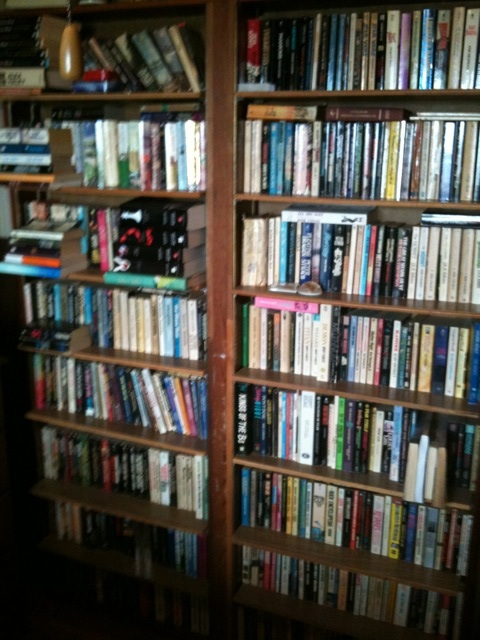
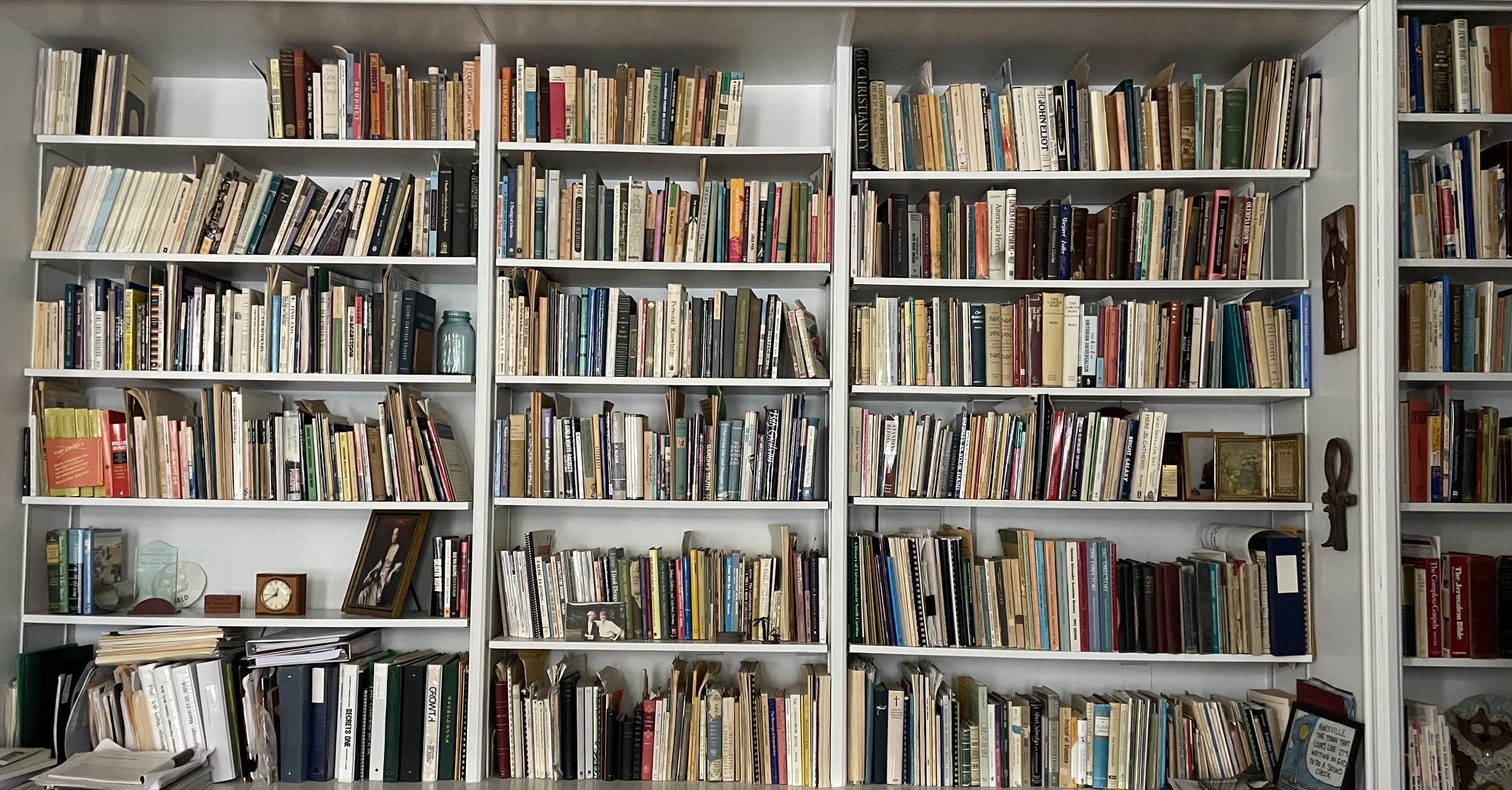
We’ve got books all over our house. In bookcases and in boxes and filling those handy folding shelves that Target used to sell. I’ve got boxes of old comics and monster movie magazines in the garage (which themselves will one day be the topic of a blog entry or two).

But most of the book action in my household is on the nightstands.

All of us have a few books within reach, ready to be read in the few minutes each night before we (I, really) crash into fitful sleep.

The nightstand is where I put my glasses and my keys and my iPhone each night, but the two stacks of books, teetering a little precariously over everything, is what makes me feel comfortable.

The stack of books at the back of the nightstand is shamefully neglected. Some of those books have been there for a couple of years. They’re books that have been recommended, gifts that I’m meaning to get around to, books that I bought on sale just because I could and books that I’ve actually read before but want to keep handy. “Gregor the Overlander,” by “Hunger Games” author Suzanne Collins, is one that has been highly recommended to me. “Devil in the White City” by Erik Larson is one that I’ve already read and highly recommend.

On top of that stack is a small legal pad, complete with Harry Potter pen, that I keep handy just to jot down notes.

The front stack on my nightstand sees the most action. That’s where you’ll find my latest library books. On top of that stack right now are three books in Craig Johnson’s series of mystery novels about Wyoming sheriff Walt Longmire. If you haven’t read Johnson’s books, you should because they’re great. Good stories, even better characters and a great take on life from his crusty old sheriff protagonist. And you can say, “Oh, I’ve read those books” in case a proposed A&E cable TV series about Longmire is a hit.

Also prominent on the front stack is “The Encyclopedia of Appalachia,” a hefty reference book with a depth of knowledge that matches its weight. Anything you want to know about that region that’s so dear to my heart can be found in that book.

We’re trying to corral our books in this household, figuring out if we want to get some new bookcases. If we do, how we store our books will probably change.

I can’t imagine any change, however, that will rob my nightstand of books.

Geektastic: Jonny Quest stop-motion animation

This makes me all geeky goosebumpy.

A stop-motion animation artist named Roger Evans has produced a two-minute-long-or-so version of the opening credits of the classic 1960s animated series “Jonny Quest.”

Yes, this talented man has produced a stop-motion animated version of an animated cartoon, but if that stumps you, you’re missing the point. And probably checking out the wrong blog.

If you’re an old school “Jonny Quest” fan, you’ll appreciate the behind-the-scenes details of how Evans accomplished this. Here’s the webpage with the info.

And if you don’t get a tingle every time the Quest jet cuts through the clouds, I’ll double your money back.

Just for fun: Buckaroo Banzai

Here’s a little something for my fellow geeks out there: The end credits of the 1984 film “The Adventures of Buckaroo Banzai Across the 8th Dimension.”

The movie, starring Peter Weller, Jeff Goldblum and Ellen Barkin, came out in the summer of 1984 and was met with a collective “Huh?”

The story of Buckaroo, a surgeon/musician/adventurer, and his posse was a throwback to pulp stories featuring superheroes like Doc Savage.

But the movie left a lot of people cold. It did play like a long inside joke, admittedly, but it was an inside joke that I appreciated.

I saw this at the (now gone) Northwest Plaza Cinema in Muncie. It was the summer of “Ghostbusters,” “Beverly Hills Cop,” “Star Trek III” and “Indiana Jones and the Temple of Doom,” and Buckaroo and the Hong Kong Cavaliers got lost at the box office.

Overlooked as it was, there’s been talk of a sequel and of  a TV series, and Buckaroo’s HQ, the Banzai Institute, has a Facebook page.

And the legend lives on in the film’s cult status.

Weather hates us: Blizzard of ’78

Watching bits and pieces of the Hurricane Irene coverage the past few days makes me think of the two greatest weather events of my lifetime so far: The Blizzard of ’78 and the ice storm of 2005.

A lot of people in this part of the Midwest have compared the two in the years since the January 2005 ice storm and most people I’ve spoken with say that in some ways the blizzard was less harrowing. The loss of electric power for most of us during the ice storm — we were lucky and only without power for three or four days, although some were in the dark and cold for a week or more — was worse than being cooped up at home after the Blizzard.

Although I’m not signing up for a recurrence of either, I think I’d prefer to relive the Blizzard of ’78 if I had to choose. The January 1978 blizzard — up to 20 inches of snow across much of Central Indiana, whipped by high winds into road-closing drifts that often reached to the rooflines of homes — paralyzed much of the state.

But aside from keeping us out of school for days, the blizzard had other good (bad?) effects. My family, which lived on a farm in the country at the time, was pretty well prepared and didn’t go without necessities. My brothers had borrowed some friends’ snow shoes and made forays out a few times, walking the two miles to the Marsh at Southway Plaza, the nearest grocery store.

Eventually a snow plow got down South Walnut Street and we managed to get out. I don’t think I’ll ever forget what a surreal first trip we made down the newly-0pened road. The snow had drifted higher than the tops of cars and the plow had made a virtual tunnel, open at the top, one lane wide all the way to town. There were a couple of wider spots to allow cars to pull over for the passage of the sparse other traffic.

In the decades since the blizzard — certainly by the time of the ice storm — I knew that weather emergencies were no longer an impromptu vacation from school and responsibilities. Now we still have to get to work and school. Life goes on, even after a weather disaster.

So I’m feeling for people on the East Coast who are dealing with damage and, long after the 24/7 news coverage ends, will be picking up the pieces.

By the way, I don’t have any Blizzard of ’78 pictures. The photos included here are from northern Indiana and were found on a website about the Blizzard. But they’re very representational of how I remember roads and driveways to be once we had tunneled our way out.

Are we bigger slobs every generation?

My maternal grandfather, James Albert Stewart, was a manual laborer most of his life. He lived a hardscrabble existence in Tennessee before moving to Muncie and then worked, along with his wife, Ida, in the town’s dirty, hot factories. He was by no means a dandy.

Yet in the years I remember him best, after he was retired, my grandfather dressed in black slacks, a white dress shirt, a thin black tie and (sometimes) a jacket and hat every day. Not just for attending the Baptist church on Sunday. Every day. He would get dressed up and ride the bus downtown and pass the time in stores and coffee shops, dressed in a manner most people these days would associate with the Blues Brothers or the Men in Black. That was how men dressed back then.

My mom and dad were more casual than my grandfather but still pretty “dressy.” Mom wore dresses to church and Dad wore a tie and jacket on Sunday but during the week Mom wore slacks and blouses and Dad wore work pants and shirts.

Five days a week, I’m likely to be wearing khaki pants and oxford shirts, which may be why I love being able to wear shorts (or jeans) and knit polo shirts on weekends. I have a rack full of ties but break them out only occasionally.

Sensing a trend here?

To carry the dressing-down timeline a bit further, I see people in their 20s who seem to live in shin-length shorts and concert Ts. Or even worse, pajama pants and T-shirts. Nothing says, “I just rolled out of bed and I think I brushed my teeth” like pajama pants worn out in public.

I don’t long for a return to the days of white shirts and fedoras, despite my fondness for the TV show “Mad Men.” But I’m officially tired of people wearing Nike pool shoes everywhere but the pool and wearing ratty jeans to mortuary calling hours.

I’m gonna continue to dress down on weekends and days off. You’re not going to see me sporting spats and a cummerbund (okay, maybe the latter in case I’m best man in a wedding again) anytime soon.

But if you see me on the street in pajama pants, please wake me up gently because I’m sleepwalking.

Rockin’ your world

Today’s earthquake packed a lot of entertainment into just a few seconds.

Now I’m being kind of facetious about the ‘quake, which was centered in Virginia but felt waaaaay over here in Indiana, because the latest news reports indicate no injuries and little damage. As one Internet quipster said, the tremors would be wildly over-reported because they were felt in DC and NYC and I suppose there’s some truth to that.

But even here, where the New Madrid fault sometimes kicks up a rumble or two, today’s earthquake felt like a real rock-and-roller.

Maybe it’s because I was on the fourth floor, but today’s ‘quake felt different than the few I’ve experienced before. Those were shakers. Probably thanks to my elevated position, this one felt like more like a wave. A friend and I looked at each other and, we later determined, were thinking the same thing at the same time: I’m feeling dizzy.

Afterward, among a flurry of conversations — both in person, on Facebook and Twitter — I enjoyed trading stories about what we felt and when.

I don’t wish an earthquake on us or anybody and I know the New Madrid fault could really throw us for a loop someday.

But today’s quake gave us all something to talk about that wasn’t politics or the economy or war. It made us all feel like we were sharing an experience instead of arguing about an experience.

Except for you people who didn’t feel it, that is. You guys are just weird.

Just for fun: Jonny Quest

Here we go again: Last night, I tried to post the opening credits of the classic animated series “Jonny Quest,” but for some reason wasn’t able to.

Since it seems to be working tonight, here’s a few thoughts:

“Jonny Quest” debuted on TV in 1964 and lasted only a season, but it is one of the most-repeated, most-imitated and idolized ostensibly-for-kids shows ever. It’s influenced a couple of generations of animated shows and there’s even been talk of a live-action movie version.

If the show was before your time or below your radar, the stories focused on Jonny, a pre-teen whose dad, Benton Quest, was a government scientist. Government agent Roger “Race” Bannon was Jonny’s bodyguard and teacher and Hadji was Jonny’s adopted brother.

The show was great wish-fullfillment for a kid like me but also just plain fun as the Quest clan jetted around the world, encountering sinister plots, evil scientists, maniacal despots and mysterious happenings.

“Jonny Quest,” along with “Star Trek” and old Universal monster movies, helped activate the geek gene in a lot of us.

Trickle down: Ice in urinals

Here’s something that few men and even fewer women have ever seen. I’ve only seen it a couple of times.

Ice in the urinal.

I’ve written about this before on Facebook, but i noticed it again last week, so I thought I would mention it here.

If you’ve been to La Hacienda, the longtime Mexican eatery on Muncie’s south side — and you’re a guy — you’ve noticed the ice in the urinal there. The bar and restaurant is one of the few in this area that I’ve noticed that dumps ice cubes in its urinal.

But why?

The prevailing theories behind the practice of ice in urinals are:

The ice, as it melts, provides what amounts to a continuous flush.

The very fact that the ice needs regular replenishing indicates to patrons that the staff is checking the restroom.

The cold discourages drain flies.

And because it’s fun to melt the ice, guys are more likely to, you know, actually aim.

So now you know.

But I wonder: Is there an equivalent in the women’s restroom?


Bookstore apocalypse: Making a run for the Borders

Boy, things were hopping at the Borders bookstore today.

If that statement makes you go “Huh?” then you’ve been paying attention to news about the book-selling industry. Borders, the nation’s second-largest chain, announced in July it would shut down and close its nearly 400 stores.

Experts say the company made a lot of bad moves in the past decade, including its response to the Internet. First Amazon kicked the butts of most big chain stores and now e-books are outselling paper and cardboard books.

While I have a real appreciation for some bookstores — Powell’s in Portland, Oregon, Tattered Cover in Denver, Malaprops in Asheville, North Carolina, to name a few — I can’t say I felt a special affinity for Borders. Barnes and Noble feels more like a “real” bookstore to me.

But I hate to see a bookstore go out of business. The closing of a bookstore means one less place to browse and touch and sample and buy books.

I’ve certainly contributed to the downfall of bookstores. While we still buy books, I’ve tried to save money in recent years by stepping up my library use.

So it was with mixed emotions that I found myself, out of the blue, at the going out of business sale at Borders today.

We decided to visit Hamilton Town Center on the north side of Indianapolis and were walking around when we realized that Borders — not Barnes and Noble — was the bookstore at that mall. We figured it would already be closed but it wasn’t. It is in its death throes.

“Going out of business” banners and signs are plastered everywhere and shoppers bustled about, checking out the somewhat-depleted shelves.

We bought some books, DVDs and CDs. Yes, it was like shopping in an elephants graveyard, times three. And no, there wasn’t a rack of eight-track tapes, thank you very much.

As we made our purchases and the clerk behind the register thanked us and wished us a good day, I wondered if he didn’t really mean, “Thanks for coming by! Too bad you didn’t spend a hundred bucks here when it counted!”