‘The Cut’ is a cool crime novel

There are a couple of moments in George Pelecanos’ crime novel “The Cut” when his protagonist, solider-turned-investigator Spero Lucas, finds his heart beating and blood racing, usually when he’s confronted with horrific violence.

But most of the time, Lucas is the epitome of cool. And that makes “The Cut” cool reading.

Somebody with better oversight of the world of crime novels would know the answer to this question, but I can’t help but wonder if we’re seeing a slew of new thrillers and hard-boiled PI books featuring capable young heroes newly back in the US after serving in Iraq or Afghanistan. Another good series, Ace Atkins’ books about Mississippi sheriff Quinn Colson, comes to mind.

Pelecanos is planning on turning Spero Lucas’ adventures in gritty DC into a series and it feels like a natural.

“The Cut” finds Lucas back home after his tour of duty in Iraq. He’s working for a defense attorney and distinguishing himself for his no-nonsense investigations.

Between cases, he’s contacted by an imprisoned drug dealer who wants to hire him to find packages of marijuana that have been stolen. The dealer was using that tried-and-true method of moving illegal materials: Shipping packages to houses that are vacant during the day, then sending his men to get the packages off the doorstep. Except that the packages are being stolen.

Lucas, who has a moral code but doesn’t frown on associating with criminals, decides he can work for the dealer for a 40 percent cut of the money recovered.

While chasing down leads, Lucas finds the case is a little too close to home for members of his family, including his brother, a school teacher. Lucas and a small circle of cohorts put themselves on the line to save a promising young student and avenge the deaths of a couple of likable guys who should have known better but didn’t.

Some readers might be perturbed by the way Pelecanos has Lucas so damn casual about everything, including working with less-than-savory characters and, frankly, murder. But the character is ideally drawn considering his military background and his “you or them” matter-of-fact attitude.

While the story is as straightforward as a Robert Parker Spenser novel, Pelecanos fills “The Cut” with a lot of nice little touches, from Lucas’ way with women to his love of food to his blended Greek-and-African-American family.

Pelecanos has written several books but may be best known as one of the creative types behind “The Wire,” the highly-regarded HBO series.

“The Cut” is my first chance to sample Pelecanos’ work. You can bet it won’t be my last.

iPhoneography: Cool Halloween stuff

Has it been a year already? Can it possibly be the weeks leading up to our favorite geeky and spooky holiday?

It’s twue, it’s twue. It’s not all that long now until Halloween.

And that means it’s time for our first 2012 installment of iPhone photos of freaky Halloween stuff.

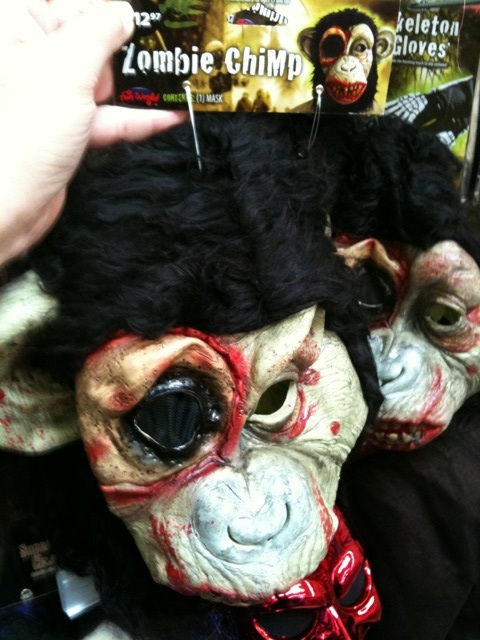
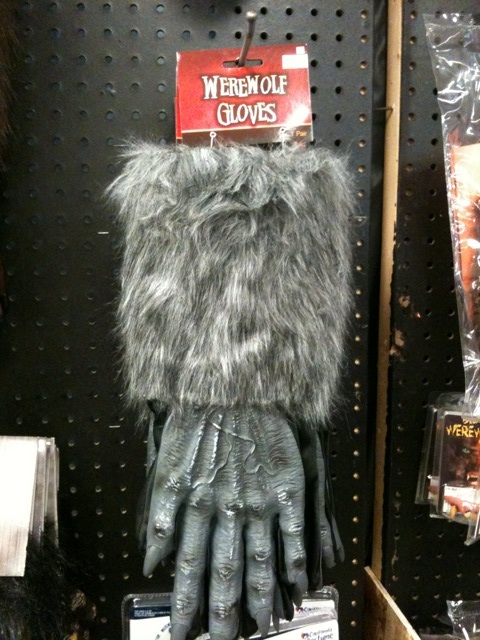
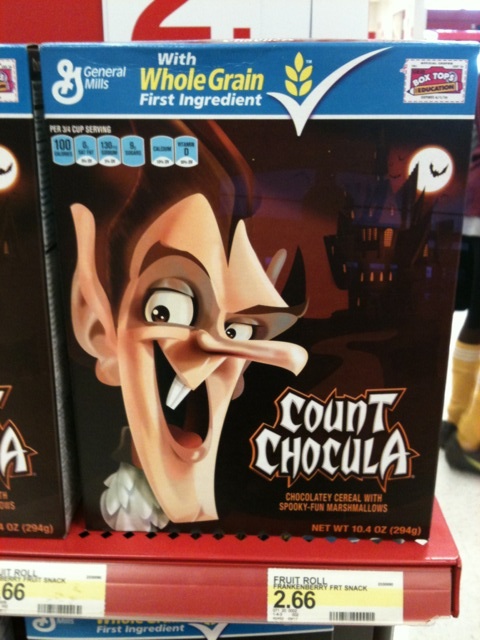
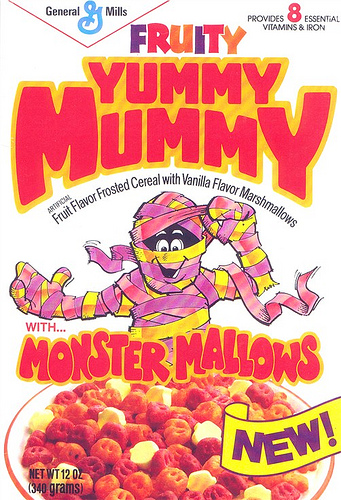
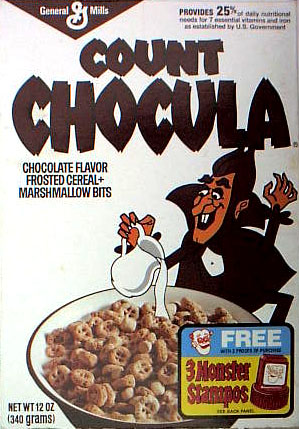
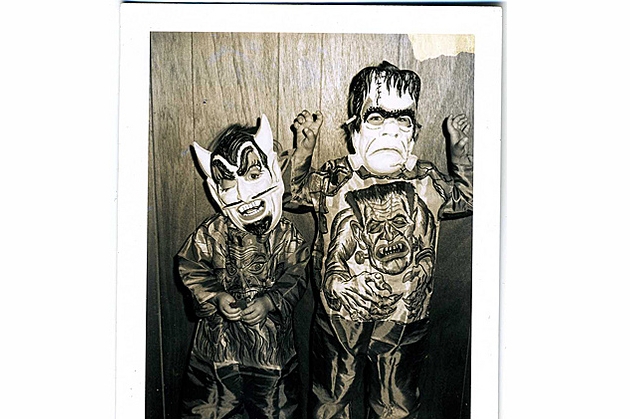
If you remember from last year, I snap iPhone pics of fun, cool and unappetizing Halloween costumes, masks and decor. Considering that I saw my first Halloween stuff in the stores in July this year, I think I’ve demonstrated remarkable restraint in waiting until September.

Anyway, here goes:

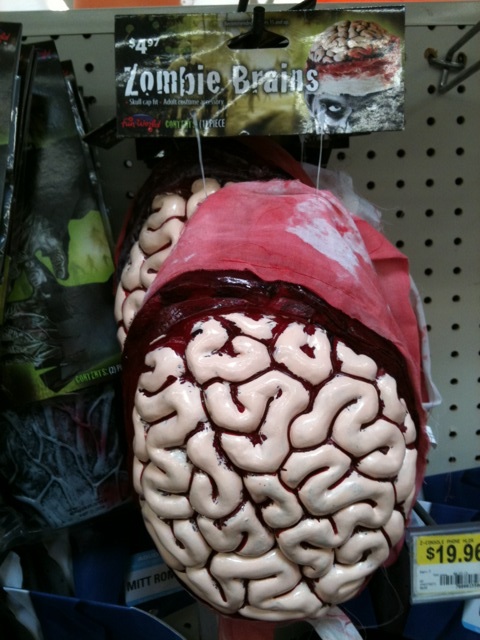
Let’s start with the Zombie Baby pictured above. Remember Zombie Babies? I saw them for the first time last year and was immediately taken (and taken aback) with how twisted they were. Really. A co-worker put one in another co-workers chair last year. This year I’m waiting to see if anyone is brave enough to surprise a new parent with a Zombie Baby (like Freaky Frankie here; yes they all have names) in a playpen. They make quite a strong visual impression.

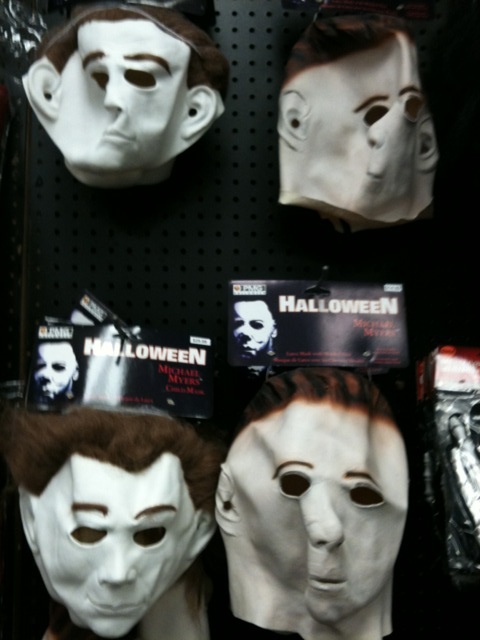
Ah, the classics. You can’t go wrong with a Michael Myers motif, copying the killer from John Carpenter’s classic “Halloween.” The original was apparently a modified William Shatner mask.

And speaking of classics: This officially sanctioned by Universal Studies mask of the classic Frankenstein monster is beautiful. This photo doesn’t do justice to how detailed it is.

Another classic, more recent: Pinhead from the “Hellraiser” movies. The pins are rubbery, of course. No need to worry about what damage you’ll do to the couch when you fall asleep, still wearing it, after the party.

And classics, part three: For decades, Don Post masks have been Halloween standards. Tor Johnson, anyone? (Remind me to do a special Don Post … er, post … in the coming weeks.) This one – Old Lady with Scarf – isn’t top-of-the line Don Post, but it’s nice to see the brand in Halloween stores.

How about a black rubber fetish mask? (The zipper doesn’t work; sorry.) How about standing in a dark room, after everyone else has gone home, wearing a black rubber fetish mask? How about someone calling 911 for me?

If you’re interested in something a little more light-hearted, you could do the time warp clear back to the 1970s with these sideburns …

Or this tambourine. Be cool, man. Some of us were alive during the ’70s.

If you prefer something of a more recent vintage. I imagine Eminem fully sanctioned and licensed this “White Rapper” mask.

As I’m sure that Tupac’s estate approved this “Thug Life” mask.

Getting away from masks for a moment: This scary clown piece would be perfect to hang in the aforementioned dark room. Now with extra creepy!

Last but not least for this time around: Pizza face for your coffee table.

More next time.

Classic TV: ‘Community’ ‘Remedial Chaos Theory’

I’m not sure there’s anything on TV like “Community,” and that’s probably worked against the viewership of the show.

The NBC sitcom is about as atypical a situation comedy as anything airing now. The premise – a diverse group of misfits forms a family while attending a community college – isn’t novel.

But during its first three seasons, under the guidance of creator Dan Harmon, “Community” became something more.

There were inklings of the show’s inherent “different-ness” in the first season, certainly. But the first-season finale, in which the regulars and the large supporting cast wage war in an on-campus paintball match to win “priority status” for class registration, established the show as surely as “Prophecy Girl,” the first-season finale of “Buffy the Vampire Slayer,” established that series as one for the ages.

The paintball episode played, with furious and hilarious seriousness, like an action movie, “Terminator” by way of John Woo, with standoffs and ambushes and devilish double-crosses. All played against expectations.

My favorite moment is when off-kilter geek Abed (Danny Pudi) rushes up to snarky lawyer Jeff (Joel McHale) and intones, “Come with me if you don’t want paint on your clothes.” Fans of the “Terminator” movies recognized that line.

Throughout the second and third seasons, “Community” deepened its characters – a group that is frequently at each others’ throats but can’t live without each other – and raised the freak flag higher. An episode revolving around a game of Dungeons and Dragons was funny and touching.

By the time “Remedial Chaos Theory” aired early in the third season, Harmon and the cast and crew knew they could get away with a lot. And they did. As the characters gathered at a housewarming party for roommates Abed and Troy (Donald Glover), they rolled dice to see who would go downstairs to meet the pizza delivery guy.

With each roll of the dice, another reality unfolded. Friendships ended, relationships began and lives were lost, for god’s sake. It was all funny and incredibly clever and mind-bending in a way precisely unlike any show on TV right now.

The show has mixed in a tremendous amount of geekery in a manner that’s less showy but more genuine than the amusing “Big Bang Theory.” After “Remedial Chaos Theory,” the series explored the other, “darkest timeline” and, with a nod to the “Star Trek” mirror universe, Troy and Abed donned Evil Spock-like goatees.

When “Community” returns on Oct. 19, it will be without Harmon, a creative man bounced from his own show, if we’re to believe his own account and those of others, over huge differences in temperament and people skills.

So I’m not sure what “Community” will be like when it returns. Will it be just a silly sitcom? Will it continue to defy expectations and conventions? We’ll know soon.

‘Walking Dead’ season 3 poster arrives

It’s not like we were looking forward to the Oct. 14 return of “The Walking Dead” or anything.

Oh, who are we kidding? Of course we’re looking forward to the third season of the AMC show, to see what happens when the survivors of the zombie apocalypse venture into the prison and the town of Woodbury.

And bonus: Merle!

AMC has released the poster for the new season and it features Rick atop a toppled bus in the prison yard.

“Fight the Dead. Fear the Living” is a good slogan. Of course, there are echoes there of George Romero’s classic 1978 “Dawn of the Dead,” where bikers and human frailty posed more of a threat than zombies.

Anyway. Oct. 14. Be there or be zombie chow.


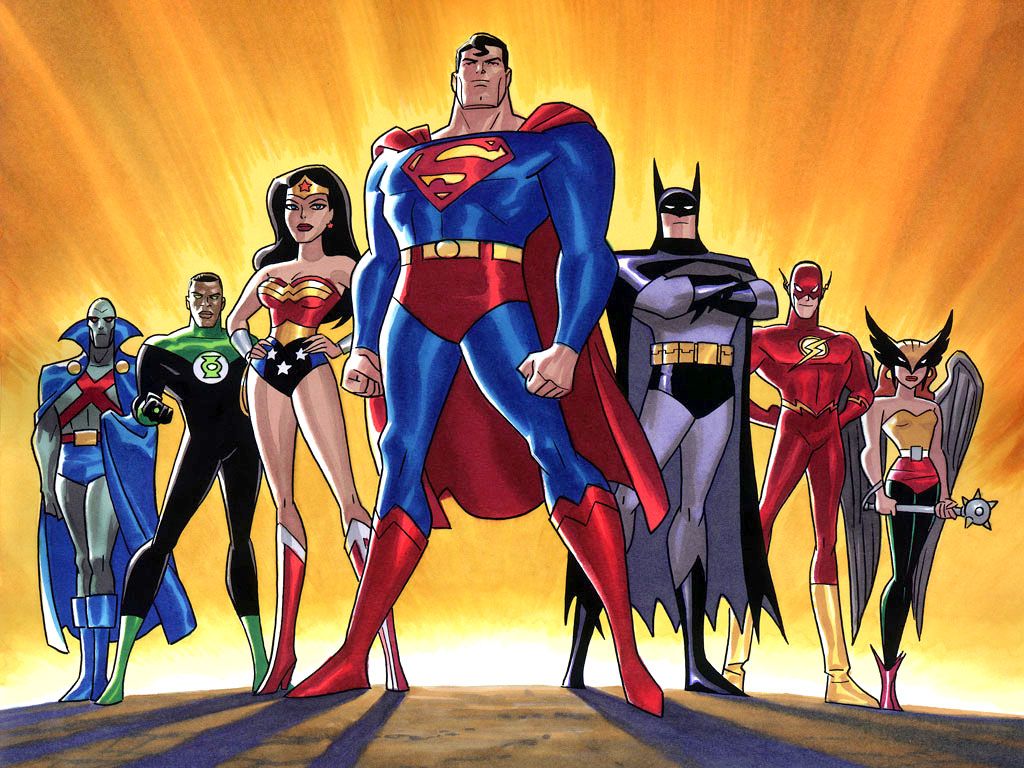
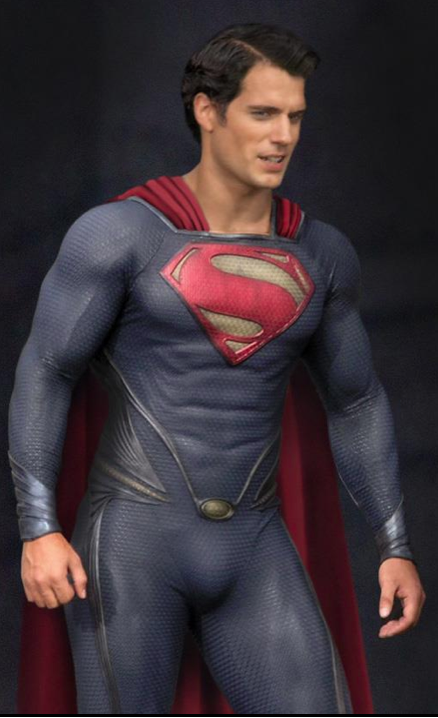
Duncan only one case of unconventional superhero movie casting

In noting Michael Clarke Duncan’s recent passing in this blog, I mentioned the minor furor after the “Green Mile” actor was cast to play the Kingpin in the Ben Affleck “Daredevil” movie.

Duncan worked as Marvel’s kingpin of crime however, and became the latest in a string of offbeat and unorthodox casting for comic book movies.

Some of them worked and others did not. Here are a few examples.

Offbeat casting that worked:

Michael Keaton as Batman. When Tim Burton cast Michael Keaton to play the title role in his 1989 “Batman” adaptation, the furor among fans was crazed. If the Internet had been in every basement at the time, it would have melted down. Keaton was best known for comedic roles like in “Night Shift.” And what about that jaw line? But Keaton was perfect as the grim-faced Dark Knight and the distant Bruce Wayne.

Hmmm. We’re still making up our minds:

Jessica Alba as Sue Storm. Alba is as beautiful an actress as you can find in Hollywood. But she just looked fake as the blonde adventuress, the Invisible Woman.

Tobey Maguire as Spider-Man. I thought director Sam Raimi’s first two “Spider-Man” movies were pretty damn good. But Maguire seemed too old to be a believable Peter Parker. Or maybe I was just reacting to foreshadowing of his emo-laden dancing in the third movie.

Nope. That’s just wrong:

Kate Burton as Lois Lane. “Superman Returns” had a number of problems. Brandon Routh wasn’t one of them, but Burton was. She’s a lovely actress but far too lightweight to be the tough and spunky ace reporter from the Daily Planet. Here’s hoping Amy Adams works better in “Man of Steel.”

Michael Chiklis as Ben Grimm/The Thing. How much do we love Michael Chiklis? A lot. But while he was an okay Ben Grimm he just didn’t work in a Thing suit. And he just wasn’t tall enough. When “Fantastic Four” gets rebooted, I think they should go the Hulk route and combine live action and CGI.

Jack Nicholson as the Joker. Sorry, fans. I love Nicholson. But he wasn’t right for the Joker. He was too old, not physical enough and – while he had an admirably goofy vibe – just didn’t have the right psycho demeanor. When I’m watching “Batman” now I like Nicholson’s pre-Joker performance more than his post-Joker performance.

And one wild one: When the producers of the Christopher Reeve “Superman” movie were considering actors to play the Man of Steel, they considered everybody from Robert Redford to Paul Newman (two of the biggest stars of the time). One of the Salkinds suggested casting the most famous man in the world, Muhammad Ali.

Ali wasn’t right for the role, but what an idea!

RIP Michael Clarke Duncan

Here’s some sad news as reported by The Associated Press: Actor Michael Clarke Duncan has passed away at 54.

Duncan was probably best known for his role in “The Green Mile,” but I always think of him as Wilson Fisk, the Marvel comics crime boss known as Kingpin, in the Ben Affleck “Daredevil” movie.

Duncan also provided the voice of Kilowog in the “Green Lantern” movie.

Duncan, who some reports pegged as six-five and 300 pounds, had been in a Los Angeles hospital since a July heart attack.

There were a number of … off … elements about the “Daredevil” movie, although I think it gets more right than it gets wrong.

But one of the things that it got right was casting Duncan as Kingpin. It was a controversial move considering that Duncan was black and Fisk/Kingpin had always been portrayed as white in the comics.

This wasn’t a case of the character being changed in latter-day comics, as Marvel has gradually morphed Nick Fury into the image of Samuel L. Jackson, first in its Ultimates line of comics and now in the everyday Marvel world, where the original Fury’s son, who is black, has taken the name Nick Fury Jr.

At the time of the “Daredevil” casting, some people online complained that Duncan shouldn’t have been cast. Kingpin, who is also a Spider-Man enemy, shouldn’t be black, they said.

But there’s no reason besides the way the character has been drawn to rule out the color-blind casting.

And Duncan himself was good in the role of the dapper NYC gang boss.

Interestingly, we’ll see Laurence Fishburne as Perry White in next year’s Superman saga “Man of Steel.” There hasn’t been a lot of controversy about it and it’s possible that Duncan’s casting can be credited with paving the way.


The Essential Geek Library: The Film Classics Library

It was 1974 and the videocassette recorder was, at least for home use, still on the distant horizon. If movie fans wanted to relive a favorite classic movie, they had few choices. The could wait for an art-house re-release. They could hope to catch it on late-night local TV.

Or they could buy Richard J. Anobile’s Film Classics Library.

Published by Avon and selling for the then-substantial price of $4.95, Anobile’s Film Classics Library was the closest thing to owning a copy of a favorite film that most of us fans could imagine … up until the time we could actually own a copy of a favorite film.

Looking back from the perspective of today’s instant access for movie fans – Want to see a movie? Pop in your disc. Watch it on On Demand. Stream it online. – Anobile’s books were ingenious and just what we needed back then.

Each movie was recreated in the pages of the oversize paperback through every line of dialogue and more than 1,000 frame blow-ups.

The books were, in a way, like comic books. Anobile took images and dialogue from the movies and reproduced them, in sequence, in such a manner that readers could relive the films.

Everything was included except for movement and audio. Opening and closing credits are included, as are lap dissolves and fades, which, Anobile noted, preserve the feel of the film.

I spent hours of my adolescence studying these books, looking at the still shots and reading the dialogue.

I still own two of the entries from the series, covering James Whale’s “Frankenstein” and Alfred Hitchcock’s “Psycho.” I remember but don’t own Anobile’s recapturing of “Casablanca.” Checking around online today, it appears editions of “The Maltese Falcon” and Buster Keaton’s “The General” were also released.

A few other movies and TV shows, including “Star Trek,” received a similar treatment before the advent of VCRs. None of those later books could match the classic appeal of the FIlm Classics Library.

‘Last Kind Words’ mixes crime, family

Most crime novels are told from the point of view of the cops or a PI because that’s who we sympathize with. Author Tom Piccirilli’s “The Last Kind Words” is squarely in the corner of a Long Island, New York, family whose business has been, for generations, crime.

And you’ll find yourself sympathizing with them (at least most of them) and even rooting for them.

It helps that Piccirilli, author of several books, is such a solid writer and that he centers his book on Terry Rand, the youngest son in the family. Terry returns home after a five-year absence. He fled after his brother, Collie, went on a killing spree, shooting, stabbing and strangling several strangers one particularly horrific night.

The family finds Terry and lets him know that Collie wants to see him in the final days before he is executed.

Terry comes back and, reluctantly, returns to his old life and his family’s home. He’s reunited with his teenage sister, Dale; his mother and father, his grandfather and his two uncles.

Dale isn’t in the family business yet, although her current boyfriend is a mob wannabe. But his uncles, Mal and Grey, are still hustlers and card sharps. His father, Pinsch, is obsessed with his porcelain figurine collection but can’t resisting breaking and entering a house now and then. Terry’s long-suffering mom is caretaker for Shep, the family patriarch who, despite being nearly lost to dementia, is still the smoothest pickpocket around.

And then there’s Collie.

Collie has asked the family to contact Terry because of a bizarre twist from the night of the killing spree. In a prison visit, Collie tells a disbelieving Terry that he didn’t kill one of the eight people he was convicted of murdering. The killer is still out there and is still killing.

Terry must overcome his anger at his brother as well as the distance he’s put between himself and his family to try to arrive at the truth.

Plaguing Terry throughout the book: Is evil inherited? Sure, everyone in the family except for their mother and Dale is a thief, a pickpocket, burglar or scam artist. But does that make them evil?

And what pushed Collie over the edge? And could that madness affect other members of the family?

There’s an element of danger for the Rand family in a dogged cop who years ago pursued the family but, because of his own loneliness, has become something of a family member.

But the greatest threat to Terry comes from within himself and within the family.

Piccirilli’s sly sense of humor is an undertone in the book. If you noticed anything odd about the names of the family, Piccirilli gradually reveals that they’re all named after breeds of dog. (Terry’s name is Terrier, for example.)

“The Last Kind Words” is a terrific book. It’s steeped in cool noir, with bad guys and even badder guys.

Best of all, Piccirilli is working on another book about the Rand family. I’ll be reading it.


iPhoneography: Knoxville

We get down to Knoxville at least once a year, usually in the summer, and I always think about what a livable city it is. At a little less than 200,000 residents, the city has the bustling University of Tennessee campus, a pretty thriving downtown and the beautiful Tennessee River. It’s a natural for iPhone pics.

One of the highlights of the city’s downtown is Market Square, a large public square, surrounded by shops and restaurants, with a scenic fountain as well as space for arts performances.


If you walk around you’ll find some interesting sights, like the cemetery at First Presbyterian …

And if you stick around until dark you can enjoy the nightlife.

The Tennessee Theatre is a great indoor performing arts spot. And they still show classic movies there.

Go to Mast General Store while you’re downtown. They have an entertaining assortment of stuff.

Including the kind of old-time candy you don’t see much anymore. Gee, why would anybody think these were supposed to look like cigarettes?