I’m not sure, to tell you the truth, how much time Joss Whedon, Jeff Bell and others behind the scenes on “Angel” had to prepare for the end of the series. The way writer/producer David Fury tells it, Whedon had asked the WB network for early word on renewal for a sixth season – the fifth season was drawing a bigger viewing audience than the fourth – and wanted to play ahead. But the network decided to cancel the show in February 2004.
The final seven episodes of the season’s full order of 22 were still to air, and while most of those were undoubtedly written, in production or even finished by that February announcement, the final handful of episodes feel like they’re building to something – either one of the most genuinely satisfying season climaxes ever or one of the most genuinely satisfying series finales ever.
As readers know, I rewatched a couple of late-fifth-season episodes on a whim recently. Then another couple. And before I knew it, we had rewatched the final nine episodes.
First, a word about what that means.
My concentrated TV-watching time is pretty limited, considering work and family demands. It seems like a lot of time for reading more than an article in Time or Entertainment Weekly or watching a random episode of a series just isn’t available. Because of that, I’ve got a to-read list a mile long. And I’ve got a to-watch list that includes all of “Breaking Bad” and the last episode of “The Sopranos,” for god’s sake. Plus a lot of other worthy stuff.
So sitting down and watching the last nine episodes of “Angel” in just a few days’ time? That was pretty extraordinary.
I’ve noted recently that while the series was uneven at times early on, the final season – with the partners in Angel Investigations being put in charge of evil Los Angeles law firm Wolfram & Hart – was consistently good if not great.
The core characters were sharp and the actors played their hearts out. Characters like Harmony and Lindsay contributed great support. Cameos and references tied the series’ final hours to the greater “Buffy” and “Angel” universes.
The final episodes – following the tragic classic “A Hole in the World” and followups “Shells” and “Underneath” – set the wheels in motion for the finale.
In “Origin,” the adoptive parents of Angel’s son Connor come to Wolfram & Hart with questions after the teenager turns out to be superhuman. The deal that a desperate Angel made the previous season – to give Connor a happy life – begins to unravel.
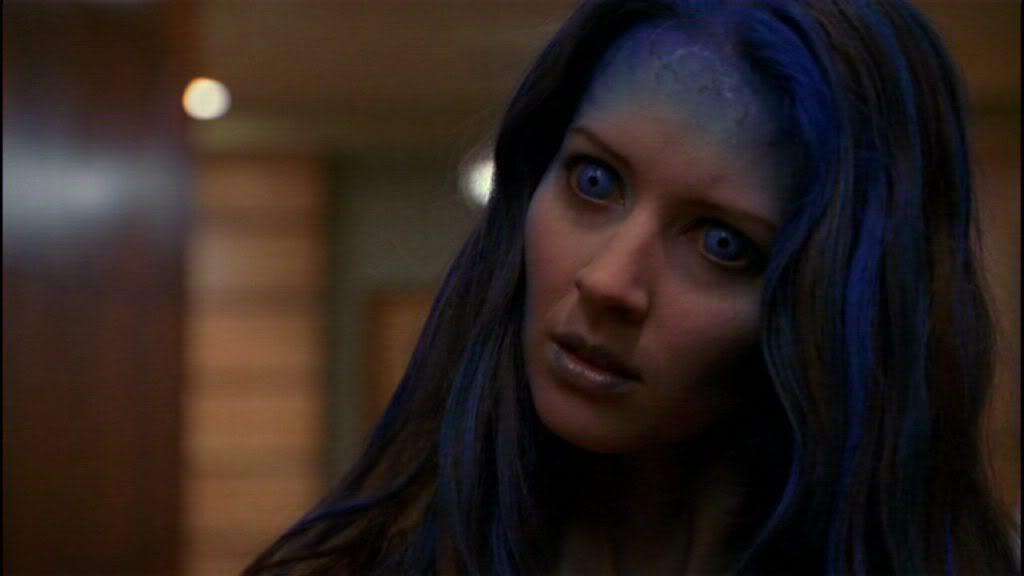
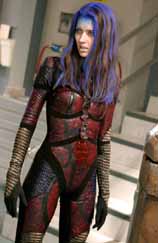
“Time Bomb” finds Illyria, the ancient god who simultaneously destroyed and possessed the beloved Fred in “A Hole in the World,” posing more of a threat to the team … and, unexpectedly, a potential ally.
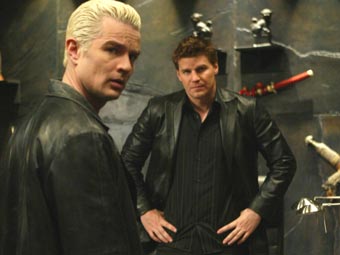
The most light-hearted episode of this final stretch, “The Girl in Question,” finds Angel and Spike in Italy, ostensibly trying to recover the body of the head of a demon clan but truthfully dealing with overwhelming jealousy after Buffy begins dating the Immortal, a perfect nemesis of the two for more than a century. It’s a shame Sarah Michelle Gellar didn’t return for a quick moment as Buffy, but the episode as written focuses on Angel and Spike and their lame attempt to “move on” after the woman in their life was no longer in their life.
And “The Girl in Question” also gave us some bittersweet moments, as Fred’s parents visit and Illyria impersonates Fred and fools them. It’s a charade that horrifies Wesley … or so he says.
During the final episodes, the series set Angel up as a potential bad guy, finally working toward the goals of the supernatural senior partners in Wolfram & Hart and making inexplicably hard-hearted choices. It’s a role that David Boreanaz had played well before, of course: A moment of true happiness puts Angel’s soul in a bottle and he reverts back to his evil incarnation of Angelus.
The episode “Power Play” brought Spike, Wesley, Gunn and even Illyria out of the realm of suspicion of Angel and into direct confrontation.
Not much more can be said about “Not Fade Away” that hasn’t been said since the “Angel” series finale aired on May 19, 2004. I’m kind of dumbfounded to realize that it will soon be a decade since the finale.
A lot of series – really good series – have aired in the past decade and some of them ended in a manner that either pleased fans (“Breaking Bad”) or confused and even outraged them (“Lost”).
But while the ending of “Angel” is left somewhat open-ended, it remains one of the most satisfying series finales ever for me.
Angel and his team – acknowledging that they have no real hope of striking a painful blow to the senior partners in Wolfram & Hart – decide to take out their representatives on earth, the Circle of the Black Thorn. Angel has been acting cruelly and – well, evilly – to ingratiate himself with the Circle, which is made up of demons either in disguise – one is a U.S. senator – or blatantly, openly evil.
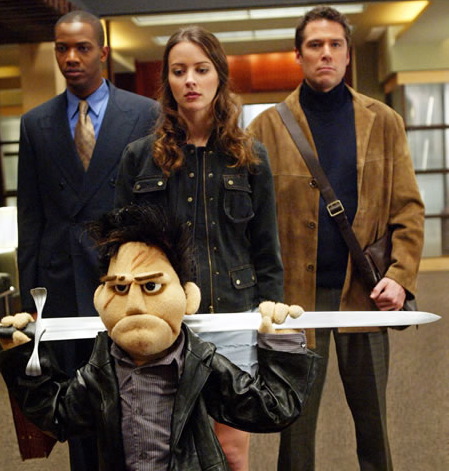
In a finale that feels, in some ways, like an “Ocean’s 11” or “Magnificent Seven” plot variation, the team – including Lorne, the musical demon, and Lindsay, the former Wolfram & Hart lawyer – takes on the Circle with an aim of achieving Angel’s goal of destroying it.
(After a final afternoon of saying goodbyes and achieving goals, that is. Spike finally performs his poetry onstage and Gunn spends time helping Anne, the inner-city youth shelter director whose character goes all the way back to the early days of “Buffy.”)
The final showdown is suspenseful and heartfelt, as the team takes its revenge on the demon circle, saves a baby and loses at least two of its members.
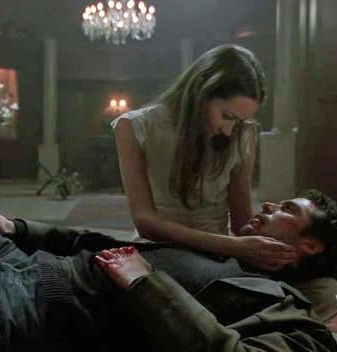
In one of the most effecting moments on the entire series, Illyria comforts a dying Wesley by appearing to him as Fred one last time.
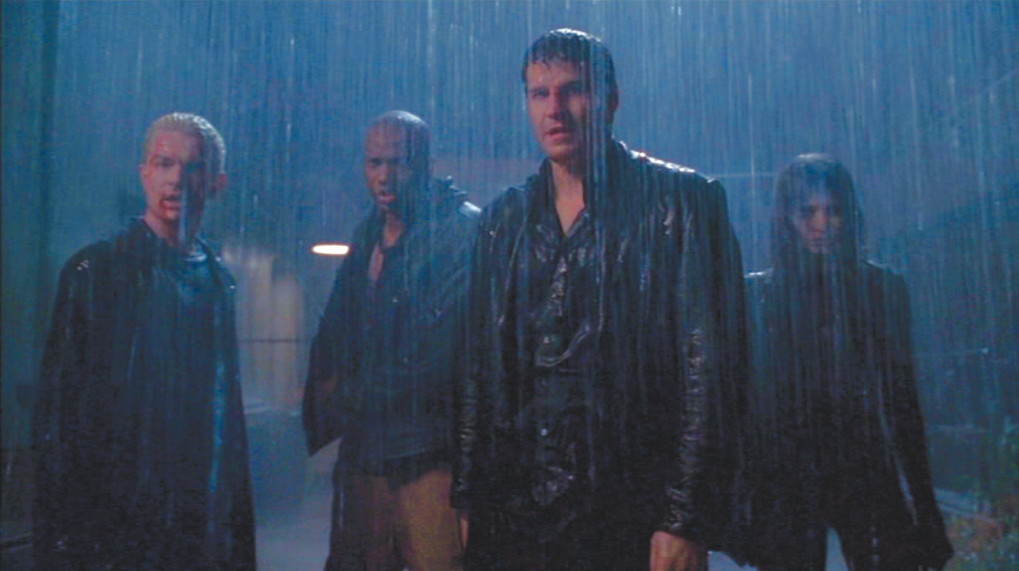
The final scene finds the survivors in a back alley behind the Hyperion, the old hotel where they were headquartered for a season or two. Angel and Spike had predicted that the senior partners would reign hell down on them for their acts. As an Orc-like army approaches and a dragon dips menacingly overhead, our heroes prepare for one final battle.
And black-knight-turned-white-knight Angel, sword in hand, is ready to meet the dragon.
Watching the last few episodes of “Angel” again recently left me acutely feeling the loss of the series. A part of me wishes that we were still watching “Angel,” which would be in the middle of a 15th or 16th season by now.
Part of me wishes that the widespread view embrace of horror/sci-fi TV that’s brought a long life to “Buffy” and “Angel’s” successors, like “Supernatural” and “Vampire Diaries” and “American Horror Story,” had been present when the uncle, the forefather, of those latter-day shows had been around.
Because I’d love to have seen the outcome of that battle with the dragon. And everything that came next.

 keithroysdon