Tag Archives: Batman

TV crush: Yvonne Craig

batgirl cape

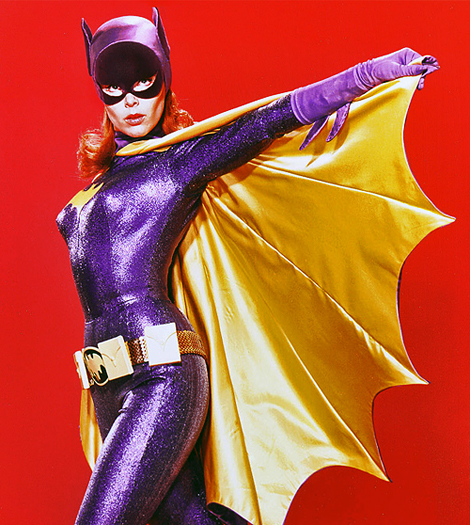
It’s safe to say Yvonne Craig sparked more than a few transitions from boyhood to manhood for male TV viewers in the 1960s

That’s because Craig made a heck of an impression on us as Barbara Gordon, also known as Batgirl, in the “Batman” series.

Craig, born in 1937, was a ballet dancer before appearing in a variety of TV series, including “The Man from UNCLE” and “The Wild, Wild West.”

Yvonne_Craig_Star_Trek

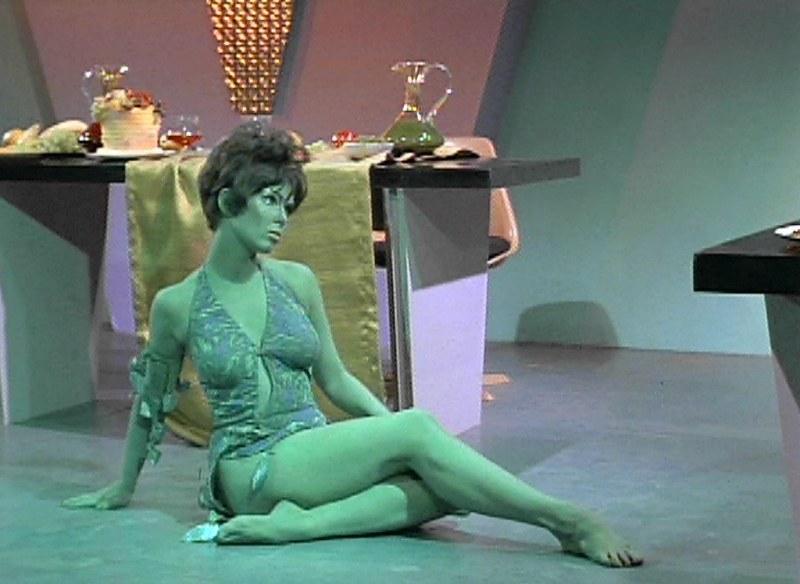
Her appearance as a green-skinned seductress in the “Star Trek” episode “Whom Gods Destroy” – the second chartreuse woman in the series – is no doubt responsible for the presence of a green-tinged woman in the 2009 “Star Trek” movie.

But all it took was for Craig to join the “Batman” cast for her to forever be a fanboy favorite.

Craig, as Batgirl, was added to the cast for the final season in 1967.

yvonne_craig batgirl full

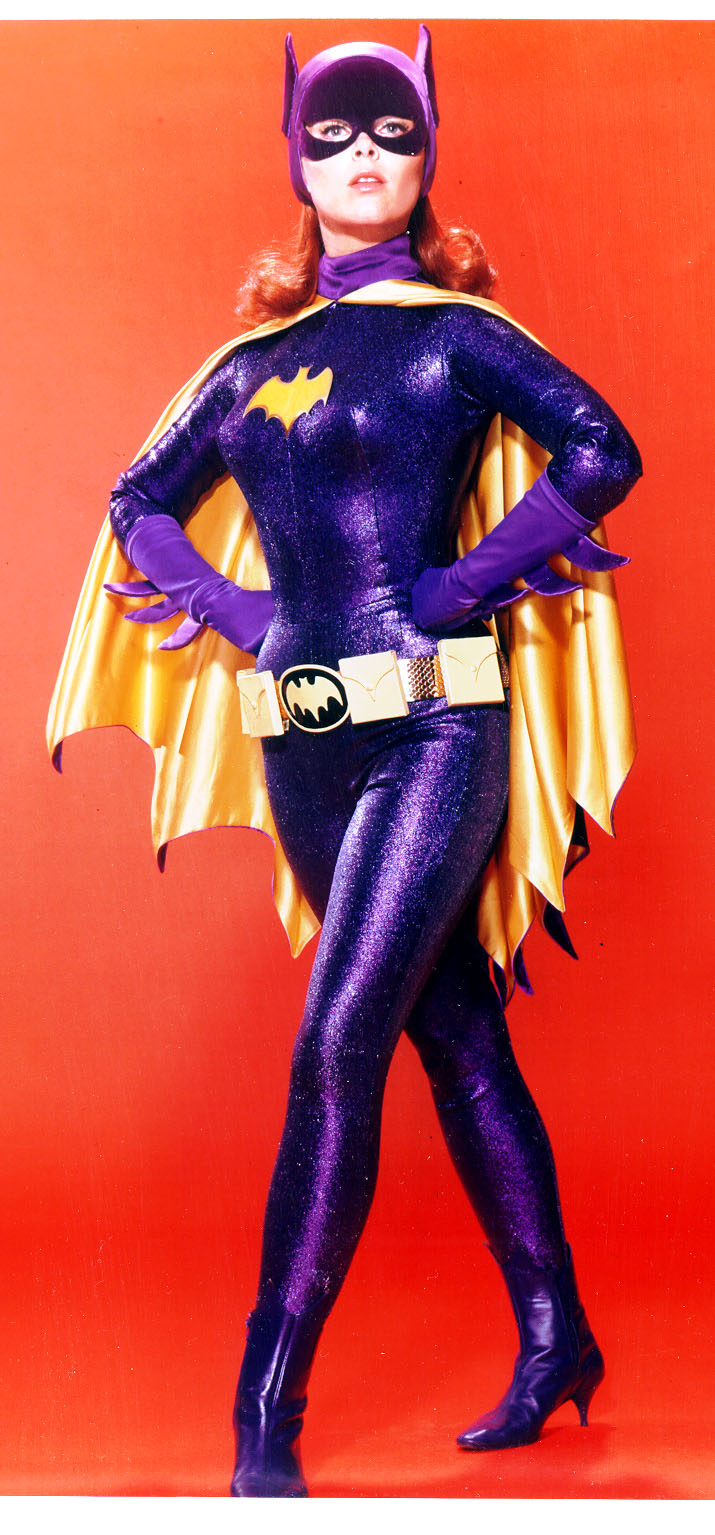
The impression her outfit – sparkly purple suit with yellow cape and hip-hugging yellow utility belt – made on a nation of us was truly great.

Here’s to Yvonne Craig.

Hardcover heroes: Comic book novels

wayne of gotham

There’s a surprisingly long history of comic book superheroes appearing in novels, either hardcover or paperback. Some of us have shelves lined with prose treatments of our favorite heroes.

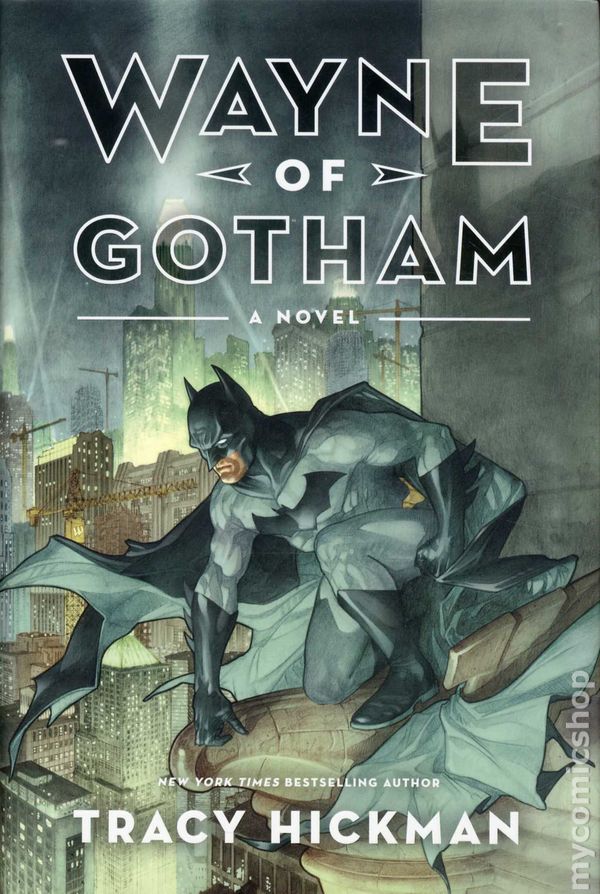
Having just read “Wayne of Gotham,” a recent novel by Tracy Hickman, I thought I’d make mention of a couple of notable ones.

First, “Wayne of Gotham.” Hickman’s story alternates between two time periods, the present day, as Batman tries to unravel a decades-old mystery, and the late 1950s, when his father, Gotham physician Thomas Wayne, dealt with a threat to his beloved city.

The 1950s storyline, of course, takes place several years before the events of the Batman comics that created the Dark Knight: Thomas and Martha Wayne are gunned down in an alley, while their young son watches, by a deadly criminal. Young Bruce Wayne devotes his life to fighting crime, as we all know, as Batman.

In Hickman’s book, chapters alternate between the present and the past, recounting a mystery that confronted both generations of Waynes.

In some ways, it feels like Hickman’s most daring decision is to depict an aging Batman who fights crime now with the help of high-tech devices. Sure, Batman still enjoys a good scrap. But he’s middle-aged and all those midnight battles have taken a toll on his body.

superman george lowther

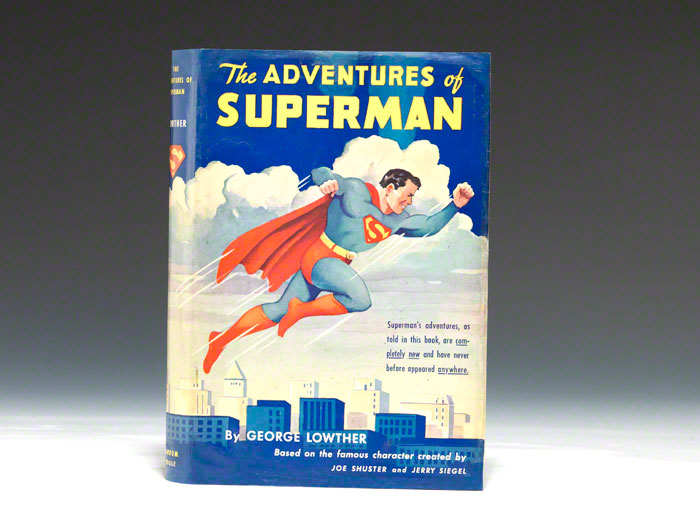
The granddaddy of all superhero books is George Lowther’s 1942 novel “The Adventures of Superman.” The character of Superman had been around for a few years by the time this hardback book was published, but the impetus for the book was no doubt the very popular “The Adventures of Superman” radio series. Lowther was a writer on the show as well as many others.

(Fun fact about Lowther, who died in 1975: He also wrote more than 40 episodes of “CBS Radio Mystery Theater,” the last of the widely heard radio dramas, in 1974 and 1975.)

Lowther’s Superman novel, which was reprinted in 1995, was the first novelization of a comic book superhero, of course, but also contributed to the mythology of the character, naming Superman’s parents on Krypton Jor-El and Lara, varying from the earlier Jor-L and Lora from the comics.

(Another fun fact: The radio series introduced several of the core Superman mythos concepts, including Kryptonite, that elemental remnant of Superman’s home planet that can be dangerous to him. Although the radio show is largely unheard these days – I have an audio cassette boxed set from 20 years ago – it contributed a lot to the character.)

enemies and allies

Probably my favorite modern-day superhero novelization is “Enemies & Allies,” a 2009 novel by Kevin J. Anderson.

Set at the height of the Cold War in the 1950s, the novel recounts the early, uneasy meeting between Superman and Batman as they team up to battle Lex Luthor, who is stoking 1950s-era fears of nuclear war and alien invasion.

Anderson’s book is terrific. It’s a good treatment of vintage superheroics and is quite faithful to the feeling of mutual suspicion replaced by growing trust between Superman and Batman. I wish he’d come back to the characters.

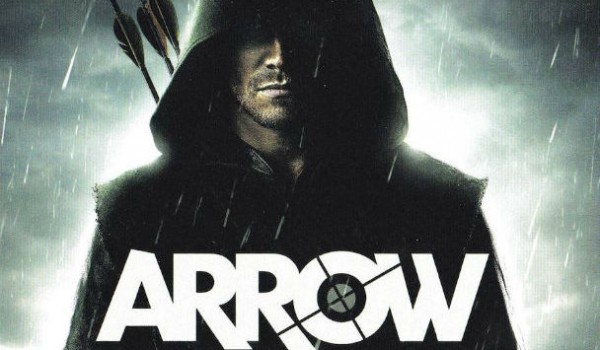
‘Arrow’ offers good take on comics hero

Yes, I rolled my eyes a bit when I heard that CW’s new series about the DC Comics character Green Arrow was called “Arrow.” It’s another instance of the “we’re ashamed this is based on a comic book” mentality, I thought.

“Smallville” instead of “Superboy,” “Mercy Reef” instead of “Aquaman,” and, frankly, the preponderance of “dark” in modern-day Batman movie titles. And yes, I know Batman’s called “The Dark Knight.” And Superman is “The Man of Steel.” I’m not going to be convinced that there isn’t some embarrassment at work there.

The producers constantly emphasizing that “Arrow” was a gritty, realistic world without superpowered heroes was another red flag, it seemed.

So I didn’t watch the first few weeks of “Arrow.”

But after catching up with it, I’m actually finding myself enjoying the series.
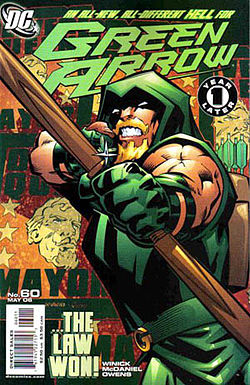
If you’re not familiar with Green Arrow the comic book character, he’s a mix of Batman and Robin Hood and he’s been a staple of the DC universe for decades. Oliver Queen is a billionaire orphan, like Bruce Wayne, who turns his thirst for revenge into nighttime vigilante work. He’s got a quiver of trick arrows that’s not unlike Batman’s utility belt and he prowls the dark alleys of Star City, protecting the innocent.

There have been two high-profile depictions of old Ollie in recent years. One was the sarcastic, liberal-leaning conscience of the “Justice League Unlimited” animated series.

The other was in live action. Justin Hartley played a good Oliver Queen/Green Arrow in “Smallville.” He was that show’s Batman substitute when Bruce Wayne couldn’t be deployed by the producers and Oliver became virtually the second lead of the show.

When the CW decided to follow “Smallville” with a Green Arrow series, a lot of people assumed the role would be filled by Hartley. But the network cast Stephen Arnell in the role and while he’s apparently become famous for his abs – he could bounce an arrow off his stomach for a three-corner trick shot – he’s actually pretty good in the role of a rich playboy/obsessed crimefighter.

The series follows Oliver Queen, back in Star (for some reason here called Starling) City after being shipwrecked for five years. In flashbacks – one of which intriguingly included a glimpse of the two-tone mask of DC villain Deathstroke – we see Oliver’s time on the island after his father, rich industrialist Robert Queen, killed another shipwreck survivor and himself so that callow young Oliver might live.

In modern-day scenes, Oliver has a list of bad guys who are taking a bite out of the city. In each episode, he confronts them, threatens them if they don’t change their ways and contribute to society, and then clashes with them when they ignore his warning.

Oliver, unlike Bruce Wayne, isn’t opposed to killing when forced to. It makes the edgy hero even edgier.

The show’s supporting cast does a good job of backing Arnell. Characters are a mix of those created for the show and others like Black Canary herself, Dinah Laurel Lance, GA’s longtime main squeeze. This Dinah is pretty quick with her fists and feet, but we’ve yet to see if she becomes the fishnets-wearing superhero.

They’re sprinkling the show with mystery and mythology and, best of all, other DC characters, including Deadshot the assassin and, in an upcoming episode, Huntress, the superhero previously seen in the “Birds of Prey” series. In that series she was the version of the character who was the daughter of Batman and Catwoman. The character here won’t have that genealogy, however.

I’ve watched the first three episodes of “Arrow” so far and I’m enjoying the show’s dark, gritty tone. Arnell is good, the other characters are at least not too annoying and the action scenes are fine.

I’ll stick with “Arrow,” even though he’s lost the colorful part of his name.


My movie role: Thug in a Batman fight

Did I ever tell you about the time I got beat up by Batman and Robin in a movie?

It was about 30 years ago and my circle of geek friends included Mark Racop, a Ball State University student from Logansport, Indiana, who was a fan of all things Batman. Racop did more with his fandom, however, than read comic books or sit around watching reruns of the 1960s “Batman” TV series, however.

Racop made Batman movies. And a Batcave. And, most impressive of all, Batmobiles.

My friends and I had flirted with movie-making a few times, writing and shooting a short thriller masterminded by my pal Brian McFadden. But Mark was serious as a heart attack about his desire to make Batman movies.

Now mind you this was before the 1989 Tim Burton “Batman” movie starring Michael Keaton. Nobody had put Batman on film since the 1960s and then it was the campy “Blam!” “Kee-runch” Batman.

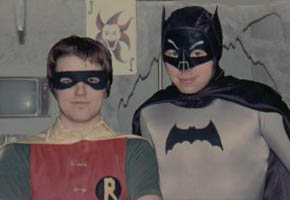
Mark enlisted a bunch of us to appear in “Eyes of the Cat,” a 45-minute Batman movie featuring himself as Batman — in costume quite like Adam West’s outfit from the TV series — and various other friends as Robin, Catwoman and assorted henchmen.

That’s where I came in.

Because Racop shot his movie over the course of months (maybe years), I was only in a few moments of the movie. I played Figgy Pudding, a thug rousted and roughed up by Batman and Robin. My friend Brian played Harry Beefmelons.

We spent a couple of days roughing each other up, throwing punches and working out our own fight choreography. It was a blast.

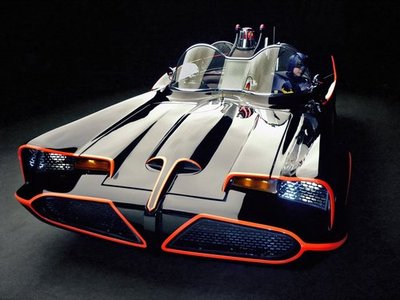
Mark went on to a number of enterprises, including his latest. His company, Fiberglass Freaks, is officially licensed by Warner Bros. and DC Comics to make and sell replicas of the 1960s Batmobile.

The Batmobile he had back in the day was one that he had cobbled together from a 1974 Monte Carlo and it was cool for a fan effort. The vehicles he makes today are gorgeous.

You can check out a webpage about “Eyes of the Cat” here. Sorry, no pics of me as Figgy Pudding.

And you can check out Mark’s custom superhero vehicle website here.

If you buy a Batmobile and decide to make a movie, I’d love to have a part. Maybe a speaking role this time.

‘The Green Hornet’ still carries a sting

In a recent blog item about “The Lone Ranger,” I noted the relationship between that radio (and later TV and movie) vigilante and “The Green Hornet.” It’s the kind of geeky stuff I just can’t get enough of.

So I thought I would return to the subject of “The Green Hornet,” one of the coolest masked vigilantes this side of Gotham City.

Nostalgia channel MeTV had a mini-marathon of the 1966 “Green Hornet” series tonight, so seeing a couple of  episodes of the show prompted me to mention a few notable elements of the series.

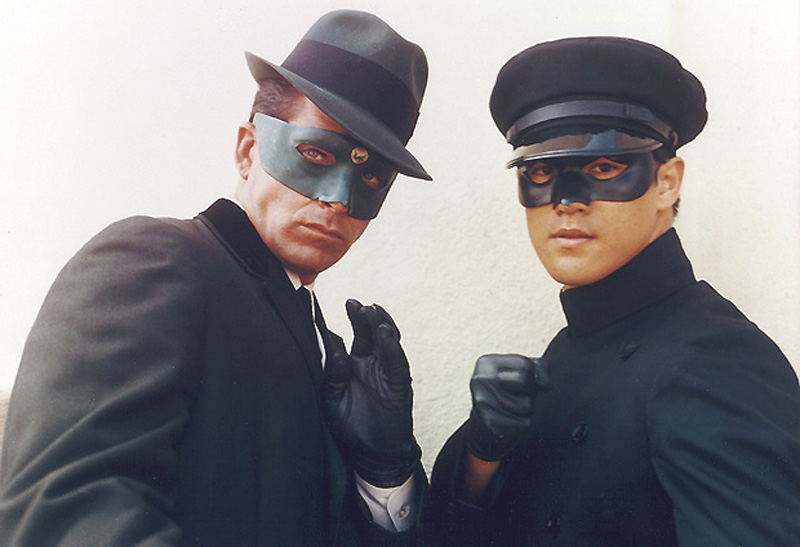
The Green Hornet and Kato were outlaws. This aspect of the show was way ahead of its time. Sure, there was a random episode or two of the campy “Batman” series in which the Penguin or somebody framed Batman as a bad guy. But “The Green Hornet” was considered a criminal by the police and public. Of course he was a good guy, but he shared a bad PR agent with Spider-man.

The show’s opening theme was the coolest. Rimsky-Korsakov’s “Flight of the Bumblebee” was an inspired choice for theme, and cool jazzman Al Hirt performed a blisteringly hot version. The theme was so cool that Quentin Tarantino used it in “Kill Bill” decades later.

The show wasn’t campy. “Batman,” by the same producer, was a huge hit but still leaves a sour taste in some fans’ mouths because of its campy “Biff! Pow! Only cross the street when you have a walk signal” feel. “The Green Hornet” wasn’t campy or silly. It was a straight tale of cool good guys busting mobsters.

Bruce Lee. Van Williams might have starred as newspaper publisher Britt Reid and the Green Hornet, but Lee — soon to become an international star — was frosty cool as Kato, the Hornet’s sidekick and chauffeur.

Martial arts. Sure, the show wasn’t as accomplished in showcasing the prowess of Lee and his fists of fury as modern-day series would be. Fight choreography back then just wasn’t as elaborate as it is today. But there’s no mistaking Lee’s skills.

Newspaper love. Reid was the publisher of a Los Angeles newspaper. While his vigilante activities might have been a little too participatory for journalism purists, Reid’s fearless crime-busting was something to which budding reporters like me could aspire. Besides, how many shows besides this one and “Lou Grant” routinely took place in a newspaper office, with shots of papers running through presses?

“The Green Hornet” lasted only one season, but the show is still watchable today, maybe even more so than “Batman.”