Tag Archives: Captain America

Marvel movies: What we want to see in Phase 3

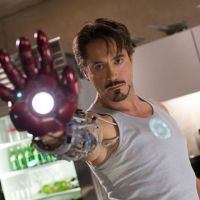
downey-jr-ruffalo-the-avengers-shooting-on-location-02

If you’re only a casual fan of the movies made from Marvel comics in the past four or so years, you might not be familiar with the “phases” that the company is moving through as it brings its complex universe to the big screen.

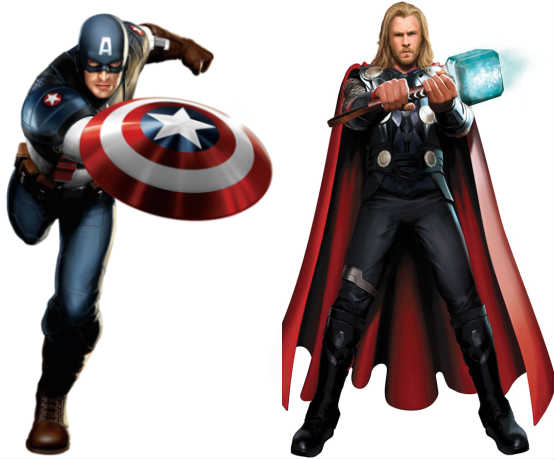
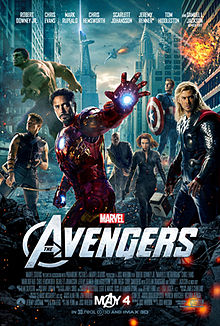
Phase 1, as dubbed by Marvel, began in 2008 with “Iron Man,” moving through solo adventures for the Hulk, Thor and Captain America and culminating in last summer’s “The Avengers.”

“Iron Man 3” kicks off Phase 2 this May, with “Thor: The Dark World,” “Captain America: The Winter Soldier” and “Guardians of the Galaxy” to follow, and Marvel films honcho Kevin Feige has indicated that series will sew the seeds for the “Avengers” sequel in 2015, even if moviegoers don’t recognize those seeds at the time. (Talk about a crazy Easter egg hunting challenge!)

“Ant-Man” is already on the schedule for late 2015, a few months after the “Avengers” sequel, and would kick off Phase 3. Marvel films honcho Kevin Feige hinted recently that “Dr. Strange” might also follow in Phase 3.

Remember that Hawkeye was introduced in “Thor,” so it’s possible we’ll see more Marvel characters introduced in Phase 2.

But here’s what we want to see in Phase 3:

luke-cage

Diversity. Luke Cage and the Black Panther are two longtime Avengers who would not only be great additions to the team but bring needed color to the movie line-up.

The_Wasp

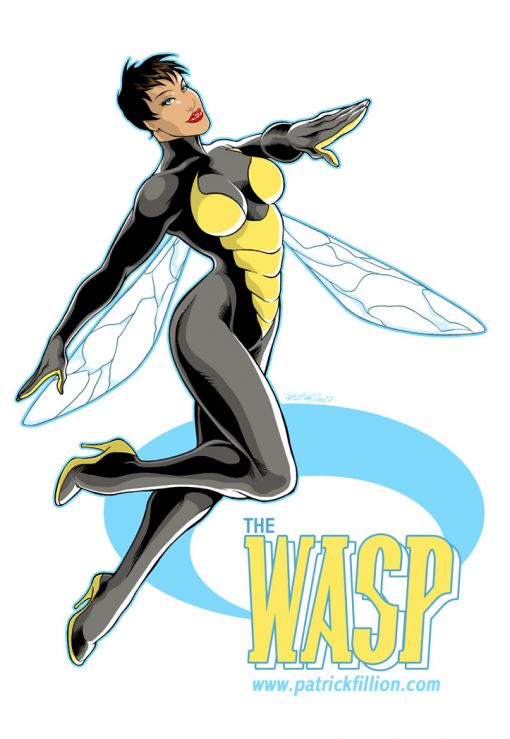
Women, including Wasp! She was a founding member of the Avengers, for pete’s sake. It would make sense that she’s introduced in the “Ant-Man” movie.

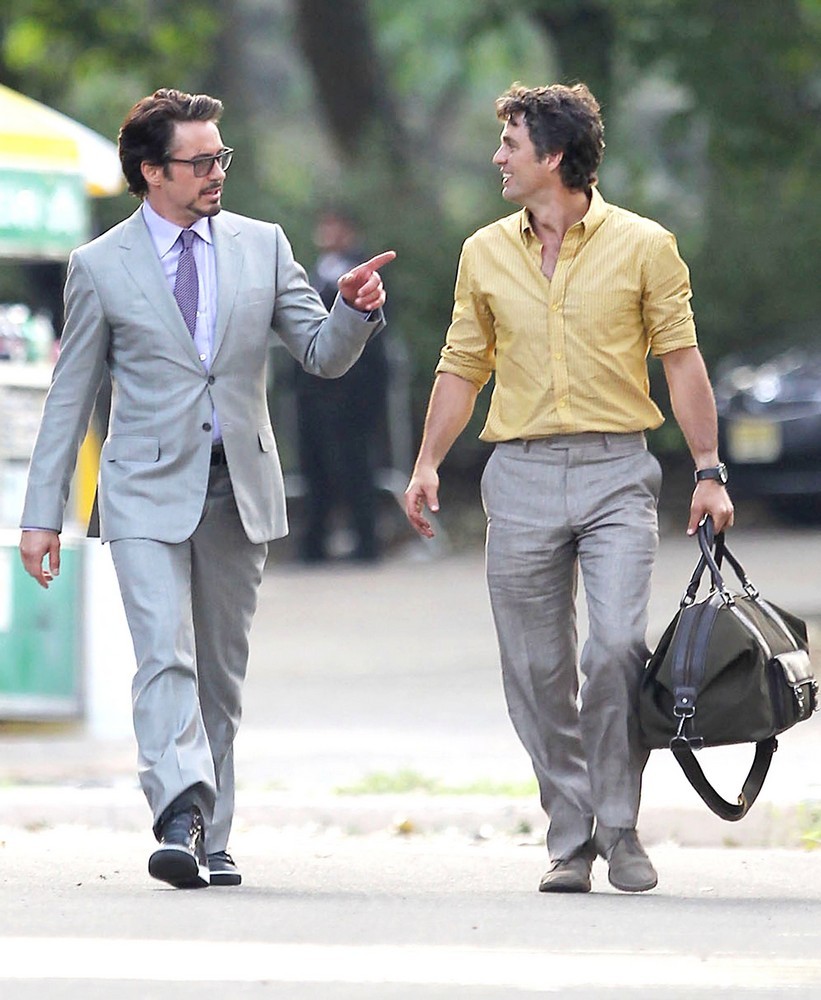
More Hulk. Even better, a Hulk/Iron Man Marvel Superhero Team-Up.

Big and small. A good mix of personal, high-stakes stories – which “Iron Man 3” appears to be, as much as any Marvel superhero movie can be – with the grand-scale action plots we know from Marvel.

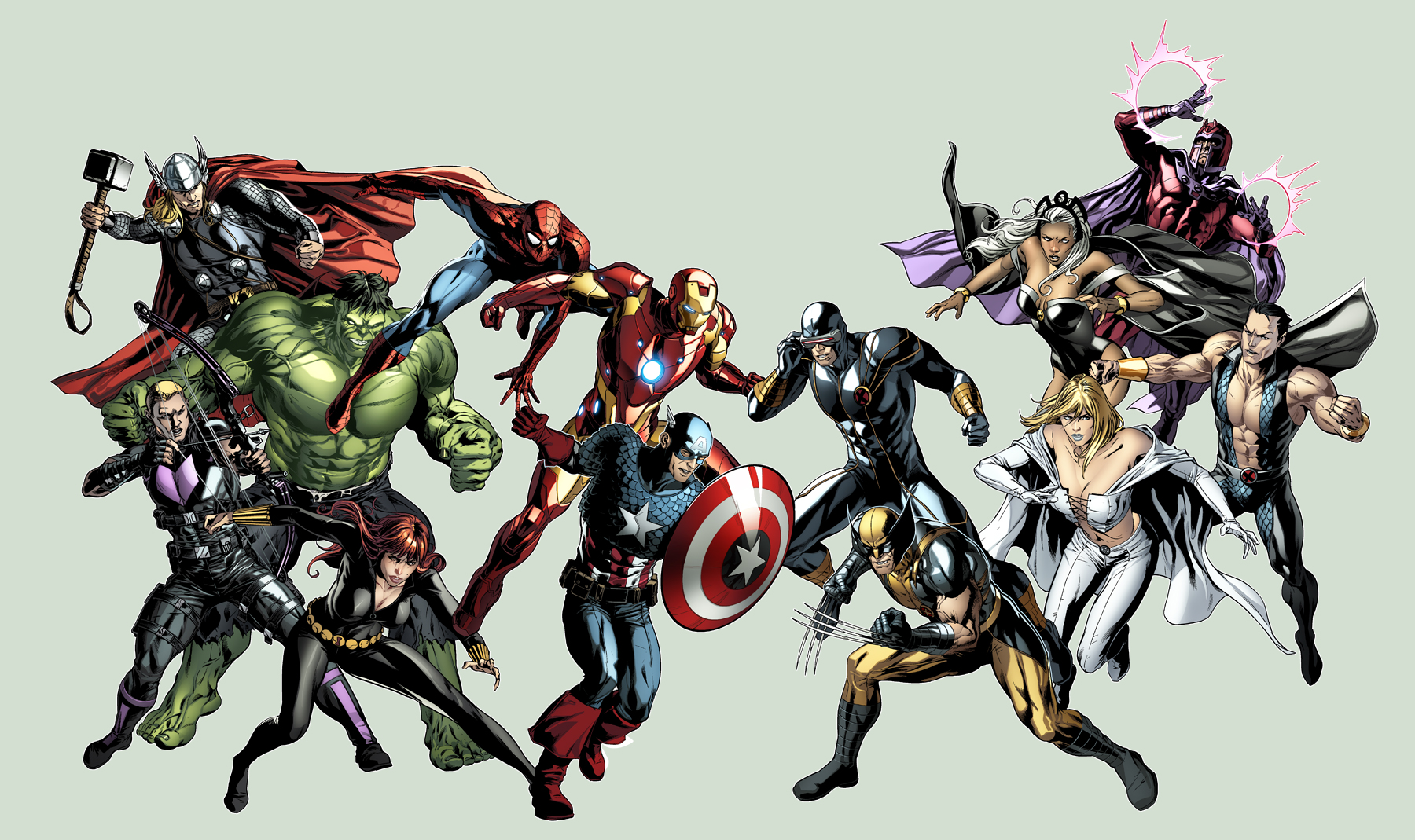
avengers and xmen

Dare I say it: Crossover with characters whose big-screen rights are owned by other companies, namely “Fantastic Four,” “X-Men” and “Spider-Man.” Surely with lots of money to be made this can be worked out, right?

Come on, Marvel. Make it happen!

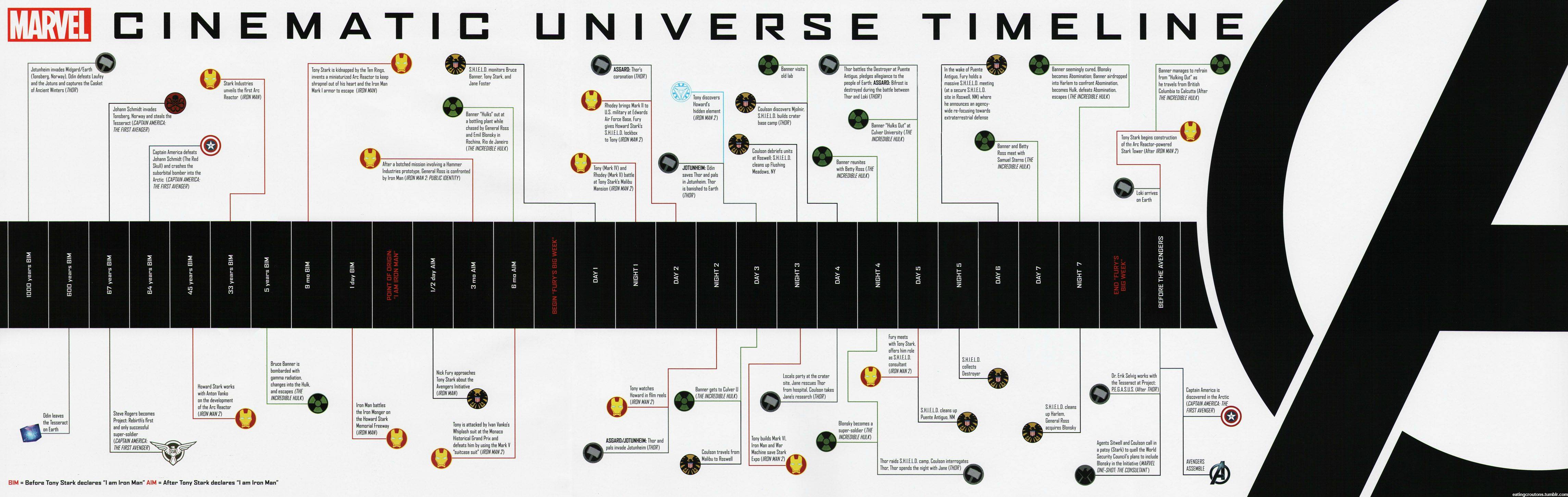
Marvel movie timeline: What happened when?

You might have to turn the Internet on its side to fully appreciate this one, but a new book, “Avengers: The Art of Marvel’s ‘The Avengers,'” is coming out and it includes this timeline to the happenings of the Marvel cinematic universe.

I’ve always been a sucker for timelines, whether they’re demarcations of real events or, one of my favorite timelines from a couple of decades ago, a linear recounting of when events in the “Star Trek” universe took place.

Admittedly, the timeline of the Marvel movie universe is kinda thin so far. After all, we’re talking about only a handful of movies leading up to “The Avengers.”

But it’s fun to see how the chronology of the movies’ releases doesn’t always follow the chronology of how events played out in Marvel’s internal storyline.

I mean, it’s pretty cool to find out that when Bruce Banner was hulking out at Culver University in “The Incredible Hulk” in 2008, Thor was defeating the Destroyer in New Mexico on virtually the same day — and that movie came out three years later.

Cosmic, I know.


‘The Avengers’ delivers on four decades of fanboy dreaming

There’s little to be said regarding “The Avengers” that hundreds of reviews and a million online message board postings haven’t said already.

So I’ll say it anyway. “The Avengers” rocks.

Writer/director Joss Whedon’s big-screen version of the Marvel comic — you’ve probably heard of it by now — seems to have broken our collective “Holy Jebus I’m so relieved” meter. Since Marvel published “Avengers” issue number 4 in March 1964, some of us have been waiting for this day with a mixture of anticipation and dread.

Right up until not long before 2008’s “Iron Man” introduced the concept of Marvel’s superhero team — created way back when as an answer to DC’s “Justice League” — to the movies with Nick Fury’s post-credits reference to “The Avengers Initiative,” most of us believed this would never happen. The odds just seemed too great that someone could get this all so right.

Over the decades, superhero movies had gotten bits and pieces of the comic book experience right: The first night Christopher Reeve’s “Superman” patrolled Metropolis; the slightly off-kilter emotional balance of Bruce Wayne and his alter ego in Tim Burton’s “Batman”; the concept of a tempestuous but effective super-powered fighting force in “X-Men.”

But more often than not, filmmakers proved they didn’t have what it takes.

Whedon ably demonstrated he could do heroic, tragic, funny and deprecatingly self-referential in his TV series “Buffy the Vampire Slayer,” “Angel” and “Firefly.” But to cap — pun only slightly intended — four years of Marvel movie foundation-building with one honkin’ big superhero slugfest seemed like more than anyone could manage.

And yet Whedon did it.

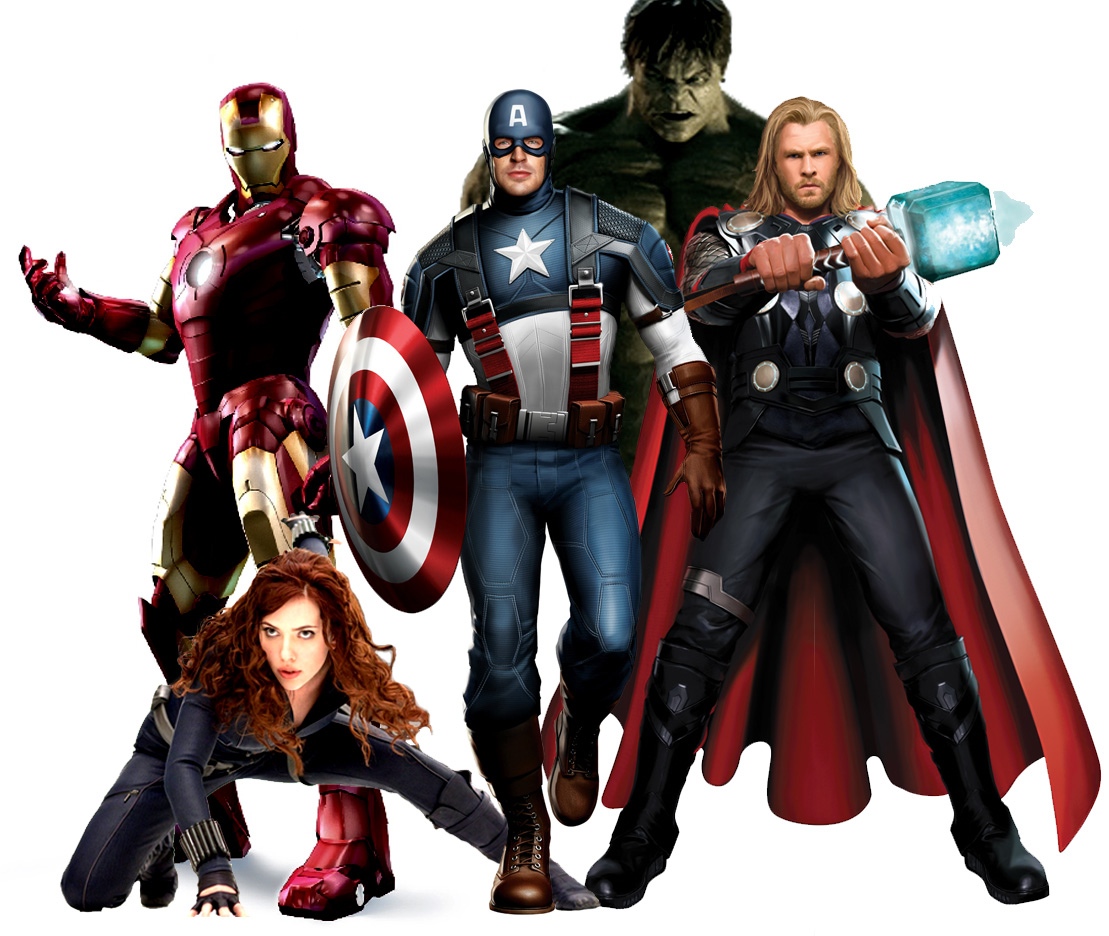
If you’re not familiar with the basic premise by now … I can’t imagine why you’re reading this. Suffice it to say that the heroes and supporting players of “Iron Man,” “The Incredible Hulk,” “Thor” and “Captain America” come together when Loki, Thor’s brother, makes a deal with the devil (spoilers later) to take over the Earth in exchange for the Tesseract — known as the Cosmic Cube in the comics — the source of infinite power introduced in “Captain America”  last year.

The first half of the movie finds the Avengers introducing themselves in Mighty Marvel style: Through a series of misunderstandings and moments of self-interest, they fight, bicker and fight some more, much to the exasperation of Fury (Samuel L. Jackson), the SHIELD spymaster who, we discover in this movie, has to answer to a (literally) shadowy group of superiors. And isn’t beyond manipulation.

The threat posed by Loki (Tom Hiddleton, in straight-on villain mode here) is great enough — an alien invasion force poised to devastate New York and, presumably, the planet — to convince the heroes to stop squabbling and work together. Iron Man (Robert Downey Jr.) turns his cool sarcasm down a few notches, Captain America (Chris Evans) learns how to be a leader even in the modern world, Thor (Chris Hemsworth) balances his love for his brother and his sense of guilt, Bruce Banner (Mark Ruffalo, in both human and Hulk guises) almost seems to revel in letting the beast off the chain and SHIELD agents Black Widow (Scarlet Johansson) and Hawkeye (Jeremy Renner) more than prove their worth as the non-superpowered members of the team.

(I have to say I haven’t understood those people, many of them ostensibly fans of comic books, who said they didn’t understand why Black Widow and Hawkeye would be members of the team considering their lack of superpowers and invulnerability. The Avengers comic has always included human beings — although highly skilled ones — as members. While the movie has great fight scenes involving Thor and Hulk and Thor and Iron Man and Cap, one of the most dramatic scenes involves Black Widow dealing with the onslaught of the Hulk and its aftermath.)

The second half of the movie finds the Avengers, spurred on by dire circumstances, facing off against not only Loki but his invasion force, made up of the Chitauri, Skrull surrogates from the comics.

If there’s a weakness about the movie it is that the Chitauri are nothing but cannon fodder, not unlike the legion of orcs in “Lord of the Rings” or stormtroopers/fighting droids in the “Star Wars” prequels. While the climactic battle that pits the Avengers against the Chitauri — and devastates half of New York, it seems — is beyond exciting, and scenes with the Avengers in battle against the alien invaders and their giant flying snake things — ask for them by name — are great, it all feels like an extended warm-up for something bigger.

Although it’s hard to imagine what could be bigger than this.

Other thoughts:

Hulk catch: Even if you’ve seen the many, many commercials and clips from “The Avengers,” there are entire sequences you haven’t even glimpsed yet. But I did regret that one of the trailers used the shot of Hulk flinging himself through the air and catching Iron Man as he fell, braking their descent by sliding down the side of a building. When the shot comes, late in the movie, I could anticipate it because I knew I hadn’t seen it yet.

Natasha and Boris — er, Clint: I really want to know more about Black Widow and Hawkeye. The movie doesn’t give them an outright romance, but there’s a lot of shared history there, so much so that they can even joke about it. I want to know all about the movie’s ostensibly “puny humans.”

Tony Stark and Bruce Banner: I loved how Whedon matched up the story’s resident eggheads. They share a lab and a skepticism of SHIELD’s motivations and even ride off into the sunset together at the end. How about making Iron Man/Hulk team-up movies?

Cap’s leadership: Since the fourth issue of  “The Avengers” comic, Captain America has been the team’s leader. There have been many moments of self-doubt for this man out of time. But Steve Rogers is a natural born leader of men. The movie establishes that in a scene in which he barks out orders to some NYC cops who wonder why they should obey his directives. Cap then smoothly demolishes some Chitauri, causing the cops to quickly turn and begin following his orders.

More Pepper: I didn’t realize Gwyneth Paltrow had as prominent a supporting role in “The Avengers” as she does. She and Downey are perfect together. I want a scene or two with her in every “Avengers” sequel.

That’s not creepy at all: SHIELD agent Phil Coulson (Clark Gregg) has had nice supporting parts in several of the Marvel movies. Whedon gives him great stuff here, including a funny scene in which he professes his fanboy love for Cap. “I watched you when you were sleeping,” Coulson says before realizing how stalkerish that sounded. “I was present when you were unconscious .. from the ice,” he quickly adds.

Whedon brings the funny: The whole movie is full of funny quips and scenes like that one.  The guy knows when to ratchet up the action and when to leaven it with humor.

Whedon undercuts expectations. Some people fault Whedon with being too self-referential and jocular, but his sense of humor is perfect for a movie that could be ridiculous. That’s what the final credits scene is about. Finally, after four years of Marvel movies, Whedon came along and played with the audience’s expectations about Marvel’s patented “surprise” extra scenes following the end credits. And he did so in a style familiar to any Whedon watchers.

Spoilers ahead:

3

2

1

What you’ve heard about the two “Avengers” credits scenes is true. Partway through the end credits, the mysterious figure backing Loki’s invasion is revealed, although non-fans might not recognize Thanos, the Marvel Comics god of death. It sets things up nicely for a sequel.

And the scene at the very end — showing the exhausted heroes having a bite to eat in a battle-scarred New York restaurant, while an employee tries to sweep up in the background — is quintessential Whedon.
The road to ‘The Avengers’ (part two)

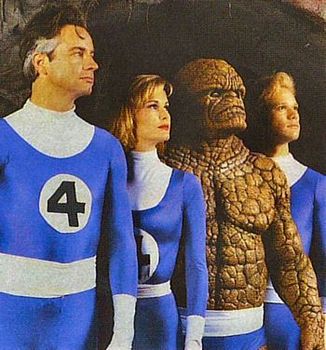
Sixty years after the “Captain America” serial debuted in 1944, another Marvel movie milestone occurred: The aborted release of “The Fantastic Four,” a low-budget movie (co-produced by the legendary Roger Corman). Made to perpetuate rights to Marvel’s first family, the movie was pretty bad. While the cast and crew apparently thought it would be released and a premiere was announced, the movie was shelved. Today it is legend to some and reality to others who have bought bootleg DVD copies at comic book conventions.

For a while it seemed like Marvel’s heroes were destined for low-budget life only. Then “X-Men” was a hit in 2000, followed by “Spider-Man” two years later. The characters, as well as the Fantastic Four, were sold off by Marvel to different companies, though. While Sam Raimi made two good “Spider-Man” films, “Fantastic Four” and its sequel were lackluster enough to make fans crazy. After decades of no big-screen adaptations, were Marvel’s heroes fated to live only through erratic, variable-quality movies?

And would fans never see a unified Marvel universe onscreen?

At some point, Marvel decided to take the best of the properties it still had film rights to — Iron Man, Captain America and other longtime Avengers stalwarts — and knit a coherent universe.

The “Yes!” moment came in 2008 with the release of “Iron Man.” Sure, before Jon Favreau’s movie there had been references to the larger world of Marvel characters, notably on computer screens in the “X-Men” movies. Fun “Easter eggs” maybe, but with no hope of follow-through.

At the end of “Iron Man,” Tony Stark (Robert Downey Jr.) returns to his home and finds Nick Fury (Samuel L. Jackson) waiting for him. Fury tells Stark he’s not the only superhero in the world and tells him he’s there to talk about “the Avengers initiative.”

By that point, fans knew that Marvel had big plans for their universe. Soon, each movie would build toward “The Avengers.”

A long four years followed, but fans were rewarded with some fun movies. “The Incredible Hulk” in 2008 was, I thought, a terrific movie, with good Hulk action but also exciting scenes, including one in which soldiers pursue Bruce Banner (Edward Norton) through a South American slum.

The Hulk movie continued — even amped up — the Avengers foreshadowing. Spymaster Fury didn’t reappear but SHIELD was all over the movie, as it had been in “Iron Man,” and Downey Jr. appeared as Stark at the end. Maybe best of all were the references to the “super soldier” program that created Captain America, as Hulk’s nemesis the Abomination was created in part because of the same serum that, decades earlier in the comics, made Steve Rogers Captain America.

Between them, “Iron Man” and “The Incredible Hulk” made for a great one-two punch.

“Iron Man 2” dug deeper into SHIELD and the Marvel universe two years later. SHIELD was fully staffed by this point, with not only Fury and Agent Coulson returning but Natasha Romanov (Black Widow, played by Scarlett Johansson) showing up. Cap’s shield was even on hand, in Stark’s lab.

We found out why a year later, when the summer of 2011 brought fans “Thor” and “Captain America.”

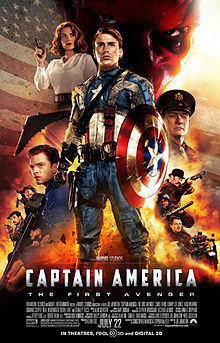
The two movies almost felt like two chapters of one story. Although “Thor” took place in Asgard and the present day and “Captain America” took place in the 1940s (with a modern-day framing device) the movies integrated the Avengers building blocks. SHIELD agent Coulson and references to other characters, notably a veiled reference to Gamma scientist Bruce Banner, were sprinkled through “Thor,” while “Captain America” put the Red Skull in search of the Cosmic Cube, a treasure from the armory of Odin, Thor’s father.

The two movies didn’t have the impact of “Iron Man,” perhaps, because the earlier film took so many people by surprise. But “Thor” and “Captain America” are so strong, so entertaining and so thorough in their establishing of “The Avengers” that they exude confidence.

By this point, Marvel was confident enough of its plans to end the movies not only with surprise extra scenes but James Bond-style “Captain America will return in The Avengers” slides.

Even while DC Comics was floundering, releasing a half-hearted “Green Lantern” movie that clumsily introduced Amanda Waller, a Nick Fury surrogate, and couldn’t get “Dark Knight” director Chris Nolan to agree to let his Batman character exist in the same world as the rest of the Justice League, Marvel had established its world.

The long road led to “The Avengers.” The movie comes out this week. Early reviews are very positive, and Marvel seems confident enough to continue to build its movie universe.


The road to ‘The Avengers’

It’s been a long road to “The Avengers.”

Not just the four years since Samuel L. Jackson showed up at the end of “Iron Man” and freaked out fans — at least those who were sufficiently clued in to hang out in the theater until after the credits — by telling Robert Downey Jr. he wanted to talk to him about “The Avengers Initiative.”

There’s been a lot of anticipation since 2008, but considering the decades since Captain America was introduced in Marvel Comics (actually, Timely Comics back then), the past four years have been a breeze.

Here’s part one of a highly selective look at the road to “The Avengers” movie.

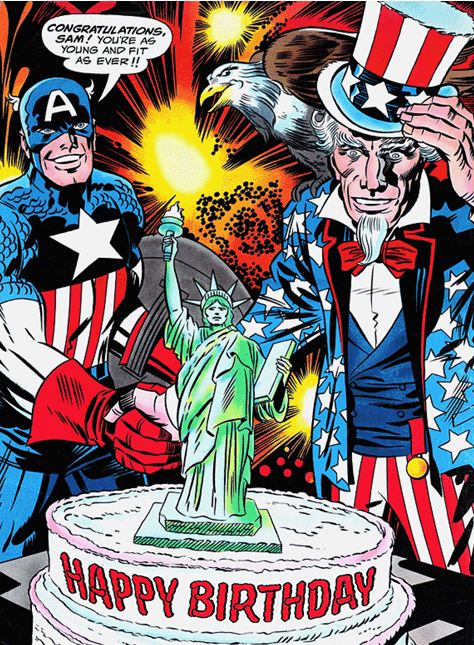
“Captain America Comics,” issue one, dated March 1941 but on stands months earlier, debuted as the world grew edgier about the war in Europe. The character — 98-pound patriot Steve Rogers, turned into Captain America through the Super Soldier experiment — was created by Joe Simon and Jack Kirby. Comics were a  huge deal back then, with far higher sales numbers than today, and Cap was a hit — especially with the punch he landed on Hitler’s jaw on the cover of one issue — and the movies beckoned.

“Captain America” the movie serial was released by Republic Pictures in 1944 starring Dick Purcell as Cap. But Cap wasn’t soldier Steve Rogers in this movie. He was a crime-fighting district attorney. And Purcell was kind of … egg-shaped. At least his head was. Cap continued in the comics but didn’t come back to the screen for decades and his fellow Avengers didn’t get their big-screen chance for an even long time.

The “Avengers” comic debuted in September 1963, the creation of Stan Lee and Jack Kirby, and — like Marvel’s other early team, The Fantastic Four — was a cool variation on DC’s happy family the Justice League. The Avengers bickered and fought among themselves — the lineup was constantly changing, which was one of the comic’s charms.

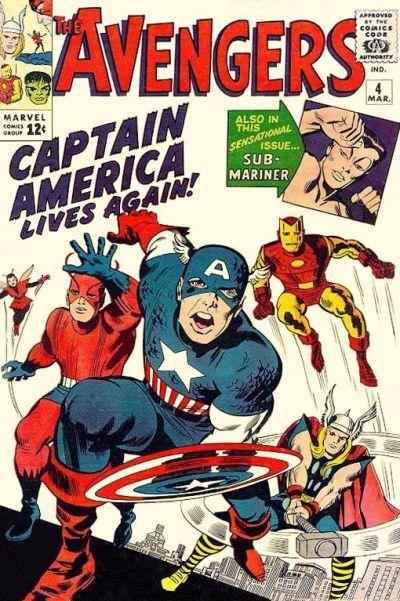
“Avengers” issue four marked a real turning point as Cap was discovered frozen in ice and thawed. While he joined the Avengers — and quickly became the team’s leader — he was an essentially tragic character. Most of the people he knew, with the exception of former commando Nick Fury, were dead. Most tragically, his World War II sidekick, James “Bucky” Barnes, had died in battle. Bucky would, amazingly, stay dead for decades to come.

In 1979, the first of two made-for-TV “Captain America” movies was made. The movies starred Reb Brown and seemed to be a bizarre attempt to cash in on Evel Knievel, the motorcycle stunt rider, since Brown spent more time on a bike than on two feet.

While he continued in the comics and, along with many other Marvel characters, showed up in various animated series, Cap didn’t return to the big screen until the 1990 Albert Pyun “Captain America” movie, starring Matt Salinger as Steve Rogers and Scott Paulin as the Red Skull, bizarrely changed from a Nazi to an Italian facist. Once you get beyond the novelty of seeing live-action images of Cap and the Skull, the move is pretty dreadful. Its low budget doesn’t allow for much action.

For years, attempts to bring Marvel characters to the screen fell by the wayside and it seemed as if fans would never see their favorite heroes in action.

Then Fox released Bryan Singer’s “X-Men” in 2000. The movie was a hit and the studio followed it up with films based on the Fantastic Four.

It was only a matter of time until Cap and the Avengers got their chance.

(More to come.)

And the Oscar won’t go to …

Back when I was a movie reviewer and entertainment writer, I followed the Oscar announcements as if the head of the motion picture academy was releasing puffs of either gray or white smoke. They were that important to me. Movies were my religion.

This year’s nominees were announced this morning but I’ve yet to really study the full list. I do have a few thoughts, however.

I’m not going to suggest that “X-Men First Class” or “Captain America” or “Bridesmaids” or any of several movies I saw in 2011 should have been nominated.

But each year when Hollywood is buzzing about the best movies of the year, my mind goes back to 1982. I wrote an article listing my picks for best pics of the year.

But I was too caught up in what I should choose as the best movie of the year rather than what I really thought.

Considering 1982 was a milestone year for movies, guess which of the following I picked as the best of the year:

“E.T.”

“Tootsie”

“Star Trek II: The Wrath of Khan”

“The Verdict”

“Gandhi”

“Sophie’s Choice”

“Blade Runner”

“My Favorite Year”

“Richard Pryor Live on Sunset Strip”

“The Year of Living Dangerously”

Yep, that’s right. I picked “Gandhi.”

Undoubtedly a good movie, and an Oscar winner, but one that I’ve never watched a second time.

Since then, I’ve learned to be true to my own tastes.

Between now and the Academy Awards ceremony in February, I’ll no doubt see some more of the nominees. So far, of the nine movies in contention for Best Picture, I’ve seen “Midnight in Paris” and “The Help.” I don’t know that either picture is one for the ages but they were pretty good.

I’m looking forward to “War Horse” and “The Artist” and some of the other nominees.

And I don’t really think I’ll see the makers of “Captain America” leaping up on stage next month.

But I might be wishing they would.


Top movies of 2011: Some thoughts

I’ve noted this before, but there was a period when I was in a movie theater every single weekend. I reviewed movies from 1978 to 1990 and saw almost everything that came to town.

More than a few years since then the majority of my movie-watching has been on home video. The demands of real life — particularly when nobody was paying me to review movies — meant I caught a lot of movies months later.

Accompanied by various enthusiastic family members and friends, I saw a lot more movies in the theater this year. I still haven’t seen the “Sherlock Holmes” sequel or “The Girl with the Dragon Tattoo,” but I saw a lot of movies earlier in the year. Particularly the geeky, comic-booky ones.

I just ran across this list, on Box Office Mojo, of the top movie box office results of the year and thought I might make note of those movies that caught a few bucks from me this year.

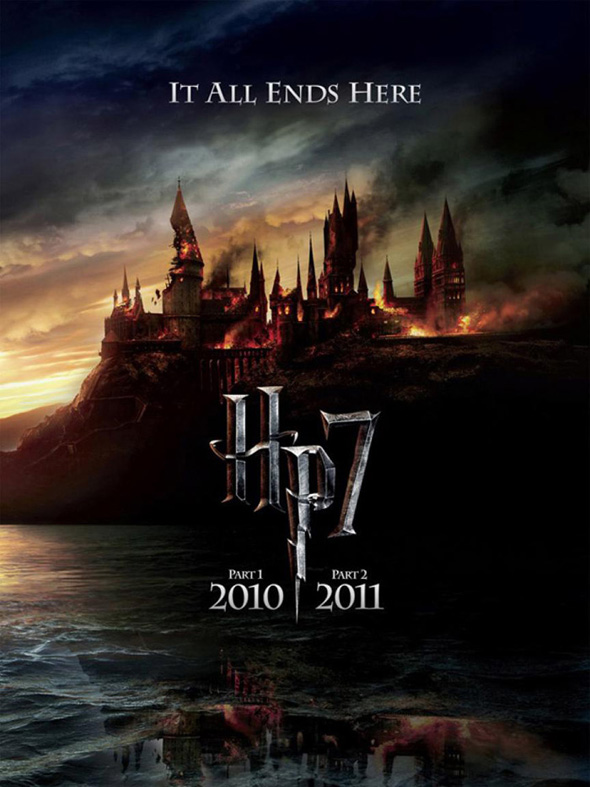
1. “Harry Potter and the Deathly Hallows Part 2,” $381 million. How could I not go see the final big-screen outing for Harry and company? Maybe not my favorite of the movies — I think “Prisoner of Azkaban” takes that honor — but a fitting end to the series.

2. “Transformers: Dark of the Moon,” $352 million. Yeah, my attendance of this was kid-driven. But you know what? It was a pretty fun action movie. And who doesn’t like seeing Buzz Aldrin interacting with giant robots?

3. “The Twilight Saga: Breaking Dawn Part 1,” $273 million. Haven’t seen it yet. Probably will on DVD. Not holding my breath.

4. “The Hangover Part II,” $254 million. I thought the first one was a hoot. Haven’t seen this yet. It just didn’t seem like a must-see-in-theaters to me. Obviously a few people disagreed.

5. “Pirates of the Caribbean: On Stranger Tides,” $241 million. I’ve never gotten these movies. Johnny Depp is fun in them but the stories are unfathomable. No ocean pun intended.

6. “Fast Five,” $209 million. Didn’t see it. I imagine I’ll watch it on TNT someday. Or the Speed channel.

7. “Cars 2,” $191 million. Another kid-driven movie and not as good as the original, but good, silly, fun. Can’t top other Pixar movies for heart, smarts and humor, however.

8. “Thor,” $181 million. If you told this Marvel Comics-loving kid back in the 1960s that someday somebody would make a multi-million-dollar blockbuster about Thor and that millions of people would go see it … well, I’d probably be so pathetically grateful that you knew who Thor was that I would have believed you.

9. “Rise of the Planet of the Apes,” $176 million. Maybe the biggest surprise of all the movies on this list that I saw. Who knew it would be so good?

10. “Captain America,” $176 million. One of my favorite comic book characters in one of my favorite comic book movies. And I totally geeked out over the “Avengers” preview at the end. (Spoiler!)

Jumping down the list, a few observations:

I’m kind of surprised that “Bridesmaids” didn’t place higher than 12 with $169 million. “This is like lava coming out of me.” I laughed a lot.

At 14, “X-Men First Class” also deserved to make more than $146 million. Almost as much of a surprise as “Rise of the Planet of the Apes.” A good Marvel movie from someone other than Marvel? An even bigger surprise.

Speaking of comic book movies, “Green Lantern” was 22nd with $116 million. If I could, I’d get my money back and the movie would have made $10 less.

“The Green Hornet” ($98 million) made more money than “Crazy, Stupid, Love,” with $84 million? Are there more Seth Rogen fans than Steve Carell fans?

“Real Steel” ($84 million) and “The Muppets” ($80 million) should have made more.