
In the final years of his life, before his death at age 81 in February 1969, Boris Karloff had become a beloved figure in movies and TV. The man who played Frankenstein’s monster in 1931 continued working for decades, ensuring himself a place in entertainment history not only with his early work but with vocal performances aimed at children and the entire family, as in “How the Grinch Stole Christmas” in 1966.
Although he was in frail health late in life, Karloff continued working, turning out four movies that were released in 1968 alone. One was “Targets,” a poignant drama in which Karloff played a veteran horror movie actor whose fate is intertwined with a modern-day horror, a murderous sniper.
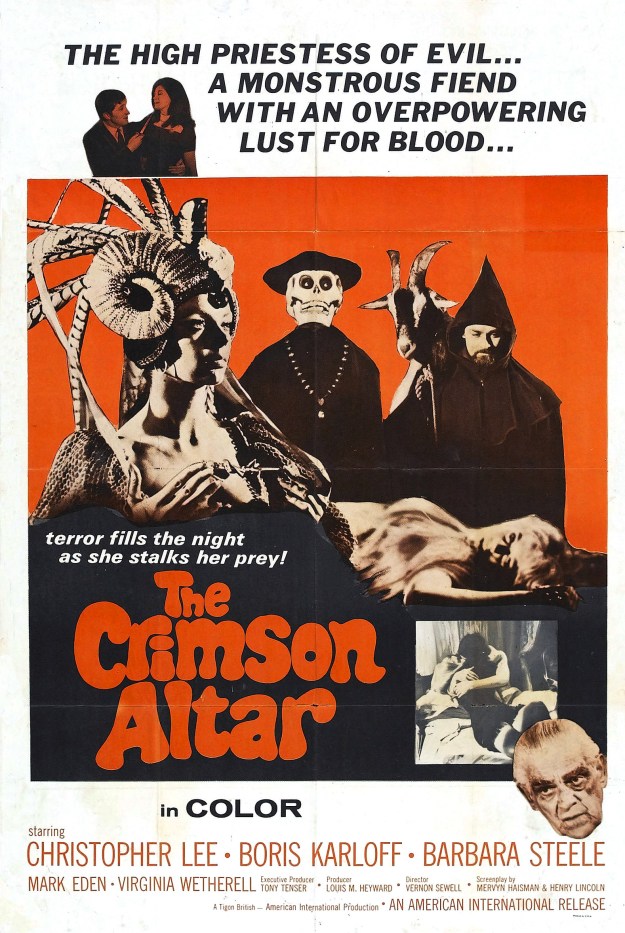
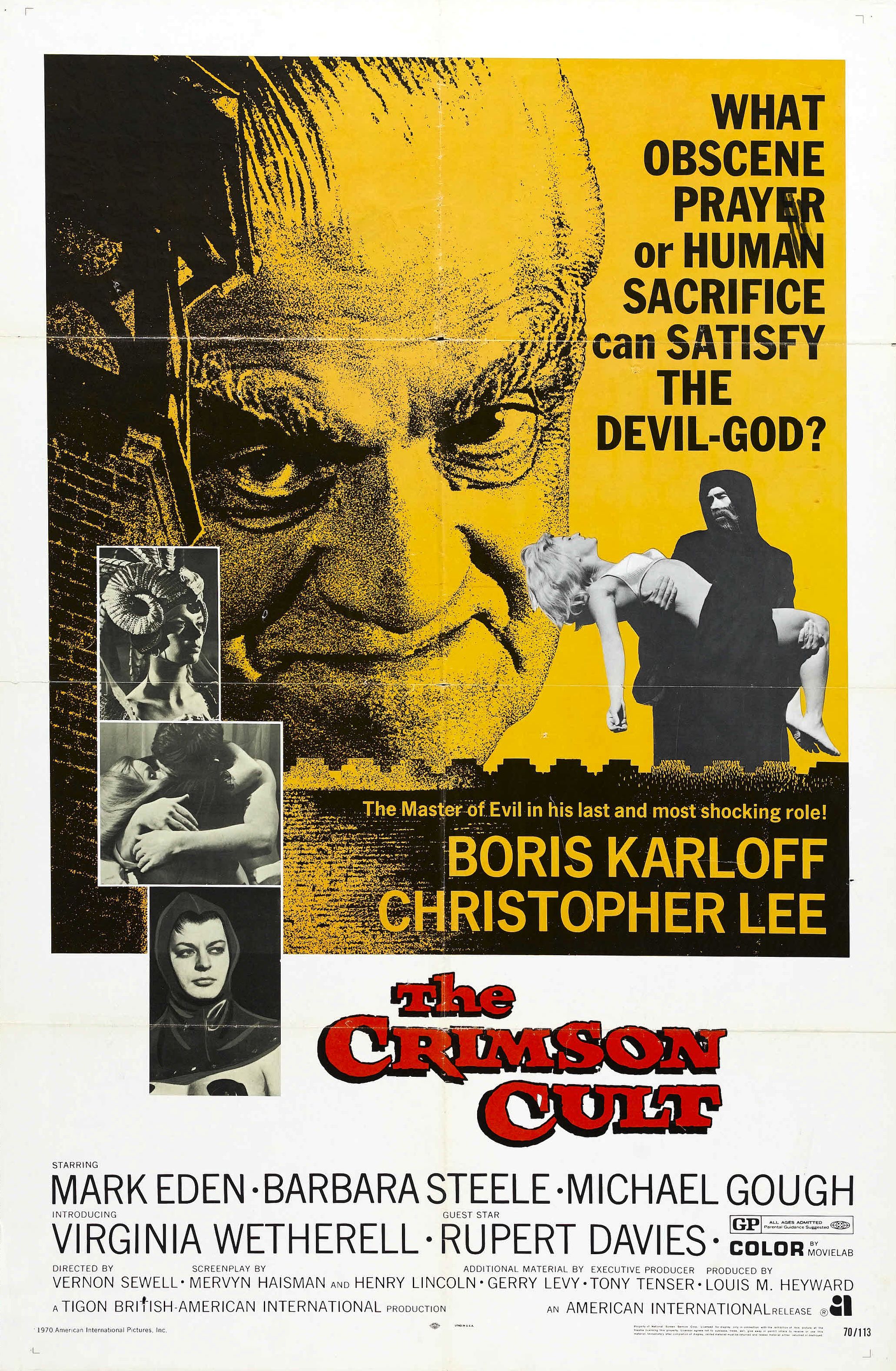
1968 also saw the release – at least in the United Kingdom; the U.S. release came in 1970 – of “Curse of the Crimson Altar,” known in the U.S. as “The Crimson Cult.”
This movie’s plot is familiar to those who remember “The Wicker Man” and other movies about cults that thrive in small-town England: An outsider comes to town looking for his missing brother. Little does he know that the lord of the manor who welcomes him into his home is the leader of a crazy cult (is there any other kind?) that worships a long-dead witch. The crusty local professor is able to help provide some clues, but it’s only a manner of time until our hero is trussed up in a dungeon, waiting to be sacrificed.
Mark Eden is fair to middling as the hero, but the reason for this movie to exist are the headliners who draw from two generations of horror film superstars.
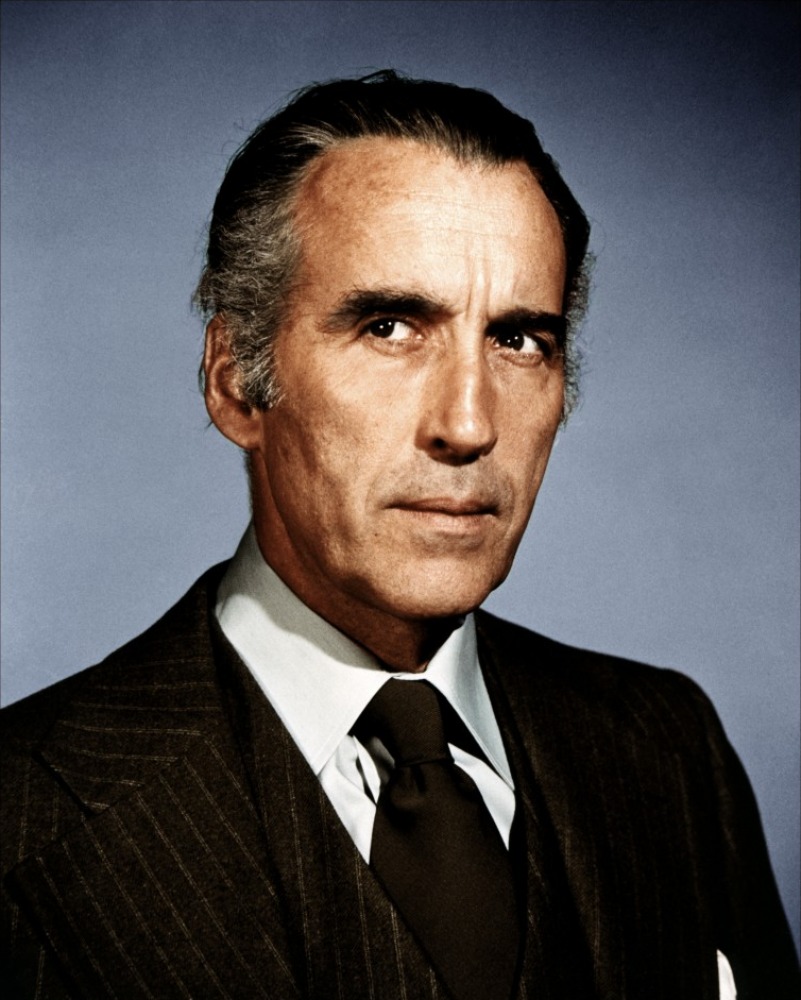
Karloff plays Professor Marsh, the witchcraft expert, and Christopher Lee is Morley, the leader of the cult. Karloff is frail here, spending much of his time in a wheelchair. But his voice is as rich and strong as it was at any time in his career and he brings a touch of class to the movie.
Lee is likewise good as the cult leader, although anyone hoping to see him invoking demons and sacrificing virgins had better look elsewhere. Lee skulks through his mansion, urbane and threatening by turns, but the cult scenes for the most part look like they could have been shot anytime and anywhere. Except for the presence of Eden in a couple of them, the cult scenes look like they could have been shot years and miles apart from the rest.
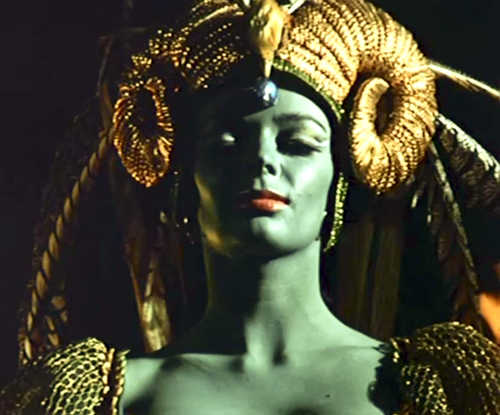
At least those scenes are presided over by Italian horror superstar Barbara Steele. Steele’s painted green here, for some reason – more witchlike? – but looks great.
The movie has many of the loony elements you’d expect from a movie about sinister witch cults released in 1968: A witch (that’s a given), a cult (well …) human sacrifices in a dungeon, implements of torture, women in pasties with whips (!) and guys in, well, I’m not sure how to describe these outfits. Maybe leather onesies with the arms cut out?
Random observations:
The movie, upon release in the U.S. by American International Pictures, was rated “GP,” the forerunner to PG. And while it’s hard to believe now, the movie shared one quality with other PG-rated movies of the 1970s and even 1980s: Nudity. It’s not much more than you can see on some cable TV shows right now, but if a PG or even PG-13 movie came out today and contained nudity, people would go nuts.
Likewise, the movie features scenes of “wild and groovy” parties, complete with dancing girls in mini skirts and people painting each other. In retrospective, the scenes come off like something from an “Austin Powers” movie.
Although Karloff comes off all gruff and sinister – and he’s Boris Karloff, after all, the original Frankenstein’s monster – he’s on the side of the angels here. Despite the looming, grimacing visage in some of the movie’s posters.


 keithroysdon