Tag Archives: Dennis Lehane

‘The Drop’ a return to form for Dennis Lehane

the drop dennis lehane

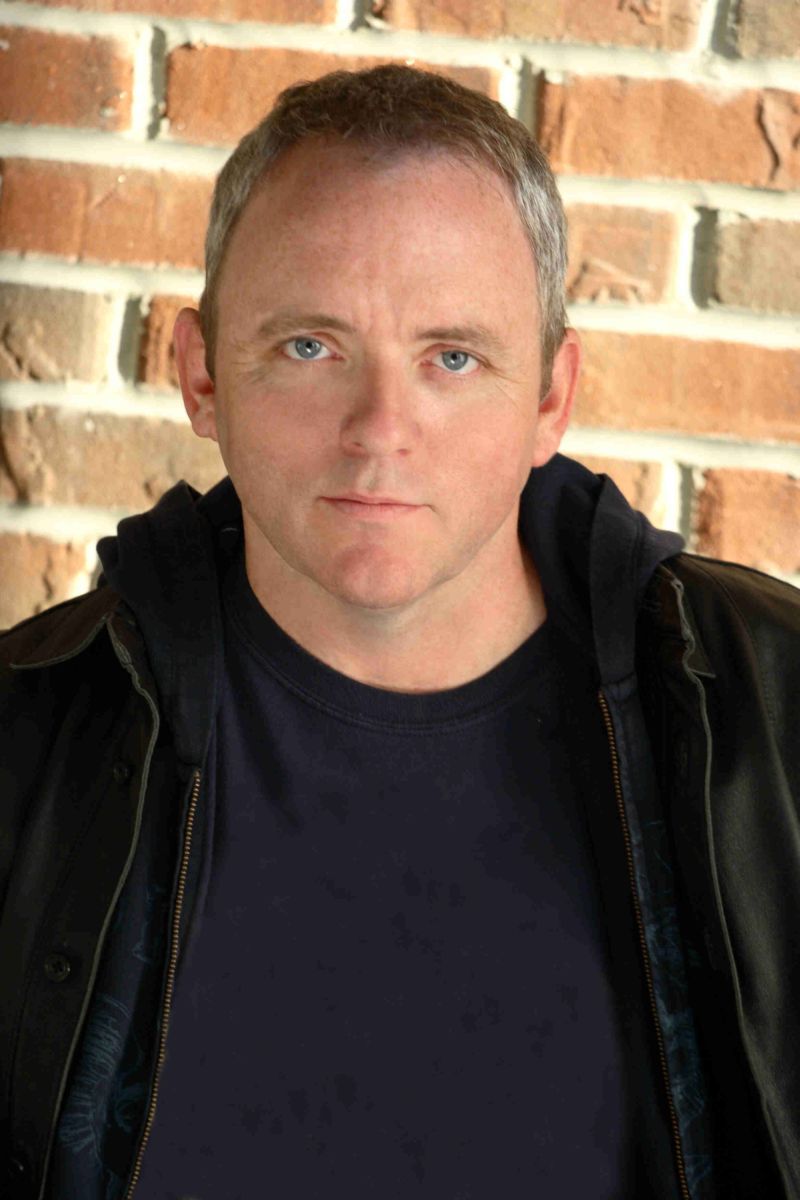
It’s pretty easy for me to say that Dennis Lehane is one of my favorite writers.

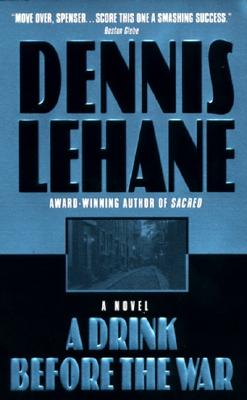
I didn’t really know Lehane until a decade or more ago when I saw the paperback version of his 1994 crime novel, “A Drink Before the War,” on the shelf in a bookstore. A gritty private eye story set in Boston, the book was the first of six books that Lehane wrote about Patrick Kenzie and Angie Gennaro.

Let me wax on about Patrick and Angie for a second if you will.

How to describe Kenzie and Gennaro, partners in a Boston private investigations operation? They’re lifelong friends, very seldom lovers and equals in the tough guy department. Through a series of five incredible books, Lehane leads Patrick and Angie through not only nifty crime stories to rival Robert B. Parker’s Spencer at his best but also through gut-wrenching personal trauma.

That’s because Patrick and Angie are more than lifelong friends and partners. They’re also survivors. During the course of five books, Lehane pits Kenzie and Gennaro Investigations against the worst of the worst: Blackmailers, serial killers and child molesters and exploiters. If you saw the movie of the fourth book in the series, “Gone, Baby, Gone,” you got a taste of the harsh yet rewarding story, characters and atmosphere of the book.

I often tell people – always tell them, really – that they should read Lehane’s Patrick and Angie books if they’re in the mood for dark crime drama. And I tell them that the books are dark. Dark, I tells ya.

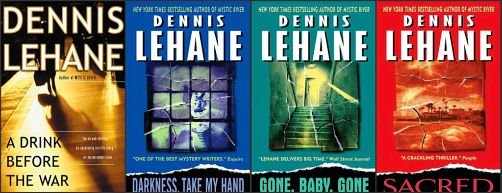
And I add that the books MUST be read in order: “A Drink Before the War,” then “Darkness, Take My Hand,” then “Sacred,” then “Gone, Baby, Gone,” then “Prayers for Rain.”

The books are certainly my favorite crime novel series of all time and they very well might be the best such series ever.

You might have noticed that I said Lehane wrote six books about Patrick and Angie but I mentioned “five incredible books.” That’s because “Moonlight Mile,” Lehane’s 2010 return to the characters after 11 years, was so disappointing. I wanted Patrick and Angie to come back for so many years … and then read “Moonlight Mile” and understood why Lehane had stopped writing the characters before – I’m guessing – being encouraged to come back by demand from fans like me and a big check from his publisher.

dennis lehane

Lehane has certainly written some other terrific thrillers, including “Shutter island” and the very nearly without peer “Mystic River.” If you know those two books – unrelated to the Patrick and Angie books – only from their movie adaptations, do yourself a favor and read the books.

Which brings me to “The Drop,” which is the return to Boston’s mean streets that “Moonlight Mile” just couldn’t be.

“The Drop” – written by Lehane from his own screenplay for a movie that ultimately starred Tom Hardy and James Gandolfini – is the story of Bob, a kind-hearted but lonely Boston bartender working for his distant cousin at his cousin’s bar … which is secretly owned by Chechen mobsters.

After decades of a lonely existence, Bob begins to come out of his shell when he meets Nadia and, with her help, rescues a dog that had been dumped in a trash can. But there’s more to Nadia and the dog than Bob understands at first. Just like there’s more to the the low-life types who circle on the edges of his world, including a menacing stranger who insists that Bob has taken his dog.

“The Drop” isn’t a long book and doesn’t have a complex plot. although there are some twists and turns. It’s a straightforward tale of a likable joe who wants to improve his life – if he doesn’t get killed first.

Best of all, “The Drop” is a great return to the Lehane’s Boston, a world of hustlers and thugs and forces that can come at anyone sideways and change their lives for the better or the worse.

My favorite books of 2012

gone girl

I really, really did read something other than mysteries and crime novels in 2012. Let’s see, I read the … hmmm. I read the oral history of MTV. I’m reading that new history of Marvel Comics right now.

But most of my reading has, in recent years, revolved around the murder and mayhem genres. That’s after a lifetime of reading science fiction and fantasy, a genre I still like to explore once in a while.

So this list skews heavily to crime novels and mysteries. But if you’re looking for a good read, you’ll find a few here.

My favorite book I read in 2012 was undoubtedly Gillian Flynn’s “Gone Girl.” The story of a seriously screwed up marriage and what happens after the wife goes missing, “Gone Girl” was a huge hit and is being made into a movie. You’ve probably read it by now, but if you haven’t, it’s worth seeking out. Be aware: There’s a twist in the middle. And if you’re married, it will have you seriously examining your relationship.

the last kind words

One of the best surprises of the year for me was “The Last Kind Words” by Thomas Piccirilli. The story revolves around three generations of a family that’s always been on the shady side of the law. What happens when one brother comes home just before the other is due to be executed makes for a gripping read.

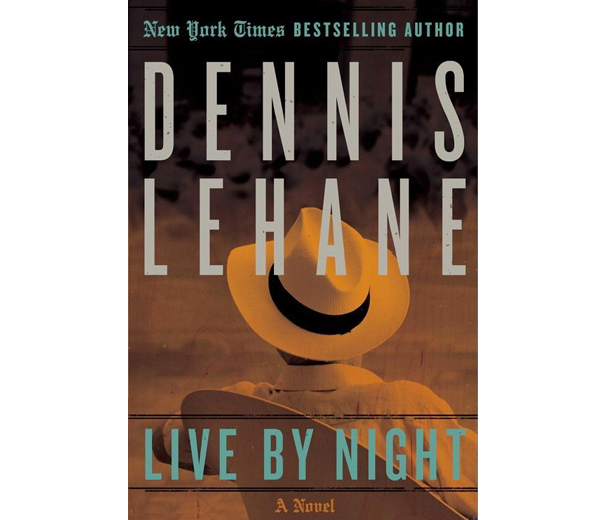
Families and crime are also the stuff of “The Prophet,” Michael Koryta’s mix of “Friday Night Lights” and a murder mystery and “Live By Night,” Dennis Lehane’s continuing exploration of a mid-20th century Boston family whose members straddle both sides of the law.

Lehane’s early works are among my favorite books of all time, and 2012 featured new work by some of my other favorite crime fiction authors, including “As the Crow Flies,” Craig Johnson’s latest tale of Wyoming sheriff Walt Longmire; Lee Child’s “A Wanted Man” and other Jack Reacher tales; “Spilled Blood” by Brian Freeman; “The Drop,” the latest Mickey Haller/Harry Bosch story from Michael Connelly; and “Taken,” another story about L.A. private eyes Elvis Cole and Joe Pike, from Robert Crais.

If you haven’t read anything by Josh Bazell, I highly recommend “Beat the Reaper” and his newest, “Wild Thing,” two books that follow a former mob doctor in hiding. The latest features a story about a search for a Bigfoot/Loch Ness-type creature as well as a guest appearance by political pin-up girl Sarah Palin. Seriously.

Ben H. Winters gave us the first of three books set in the waning days of the Earth. “The Last Policeman” features a cop trying to solve a homicide at a time when the world is going to hell and nobody else cares. I’m looking forward to the rest of the trilogy.

And we’ve noted the passing of legendary crime fiction writer Robert H. Parker. His estate has chosen a couple of writers to continue some of his series and Ace Atkins did an admirable job with a new Spenser story, “Lullaby.” Atkins’ tale was the equal of later-day Parker and that’s a good thing.

Lehane’s ‘Live By Night’ a good gangster tale

I’ve long declared my love for author Dennis Lehane’s hard-boiled, heart-on-his-sleeve Boston crime novels, especially his series based on private investigators Patrick Kenzie and Angie Gennaro.

I was less fond of Lehane’s “The Given Day,” a look at the troubled Coughlin family of Boston in the 1910s. Father Tom was a crooked cop whose sons got into no end of cops-and-robbers misadventures.

So I didn’t know what to expect from “Live by Night,” Lehane’s follow-up that takes up the story of Joe Coughlin, the son who decided to pursue a career as an outlaw – in reality, gangster – in 1920s Boston.

Joe Coughlin is an appealing protagonist, despite his life of crime and because of his moral code. He steals, sure, but there are lines he won’t cross.

Unfortunately for Joe, one line he will cross is the common sense barrier that might have kept him from hitting on the girlfriend of a prominent Boston gangster.

Just when it looks like “Live by Night” will be a standard tale of cops and crooks on the streets of Boston, Lehane gives the plot a twist. Joe ends up in prison, his father ends up a piteous figure and, before we’re done, the action takes us to rough-and-tumble Tampa and Havana.

“Live By Night” has some good characters and a slightly episodic plot. Antagonists slide in and out of the story in a manner that ultimately really does make sense, even if it doesn’t seem to at the time.

Lehane has a great ear for cops and bad guys, even those from generations ago.

“Live By Night” is good crime fiction, good drama and a bittersweet look at family, love and damn bad luck.

Grimm P.I. Tales: The early work of Dennis Lehane

A decade ago, “Mystic River” became a best-selling, highly praised novel for its author, Dennis Lehane, and changed the way the public perceived him – and maybe the way he perceived himself.

His previous books, revolving around the Boston private investigator duo of Patrick Kenzie and Angie Gennaro, were met with awards and acclaim. The first, “A Drink Before the War,” won the Shamus Award, one of the highest accolades for published mysteries. But the acclaim that greeted “Mystic River” elevated Lehane out of the ranks of typical crime novel writers.

Too bad.

While I liked “Mystic River” and, to some extent, “Shutter Island,” which came out two years later, in 2003, it is Lehane’s early work, the gritty and often downbeat series of novels about Kenzie and Gennaro, that remain my favorites.

A few weeks ago I mentioned that I was indulging in my irregular habit of re-reading the Patrick and Angie books. Along with other summertime reading, I’ve re-read the first three books in the series and thought I’d give you a quick rundown.

By all means, if you read the books – and they’re very rewarding, if very dark – read them in order.

“A Drink Before the War,” published in 1994, opened the series in fine form with Kenzie and Gennaro running their PI office out of a borrowed bell tower in a Catholic church in the blue-collar Dorchester neighborhood. Yes, I know, it sounds gimmicky, like something out of a TV show, and there’s a bit of a formula feel to the setup.

But “A Drink Before the War” is anything but a predictable, feel-good story, as Kenzie and Gennaro are hired by a group of politicians to find a statehouse cleaning lady who’s disappeared with some important documents.

Before long, the two find that everything isn’t what it seems, of course. Class and race tensions thoroughly permeate the action.

The book introduces not only the PIs but the cops in their neighborhood, the criminals – including Bubba, lifelong friend of Patrick and Angie and one of the most dangerous men to walk the streets of Boston – and Phil, Angie’s husband.

While Patrick is a smart ass not unlike Robert Parker’s Spenser – albeit with a dark, dark background – Angie is a complicated character. Phil is a wife-beater. He was once one of Patrick’s closest friends. Now Patrick has to tread lightly around Angie’s awful marriage out of fear of what might happen. Angie, like many victims, doesn’t know how or even seem to want to break free from her hellish life. Patrick has learned the hard way that he can’t interfere.

Before the book ends, Patrick and Angie will jump into harm’s way to right wrongs and expose the truth.

If “A Drink Before the War” seemed dark, the second Lehane book, 1996’s “Darkness, Take My Hand,” proved to be even more so.

When a sadistic killer begins plying his trade around their neighborhood, Patrick and Angie find themselves drawn into a mystery that dates back decades, to separate but equally unholy alliances among killers and among neighborhood vigilantes.

Unlike many crime thrillers, “Darkness, Take My Hand” emphasizes the toll that fear and violence takes on the lives of people who live with it every day.

The story climaxes in one of the most harrowing showdowns I’ve ever read.

Lehane’s third Kenzie and Gennaro story, “Sacred,” is probably the weakest of the original series of books but still a good read. Published in 1997, “Sacred” finds Patrick and Angie hired to find the missing daughter of one of New England’s richest men. It’s a departure from their typical story of Boston’s meanest streets and, to its debit, really could be about any male-female private eye partnership.

I haven’t yet dipped back into Lehane’s fourth book and the best-known of his non-“Mystic River” books, “Gone, Baby, Gone.” The 1998 book – made into a pretty good movie in 2007 by director Ben Affleck – might be Lehane’s best. I’ve read it several times and I’m looking forward to reading it and its 1999 follow-up, “Prayers for Rain,” in the coming weeks. When I do, I’ll note it here.

I’ll also talk about how Lehane’s writing goals seemed to change after “Mystic River” was a hit in 2001 and why his work has been very different since.


Favorite authors: Dennis Lehane wages ‘War’

I’m pretty relentless in my appetite for new books. When I was a kid, I would go back and read and re-read books by my favorite authors, including Ray Bradbury, Robert Heinlein and Kurt Vonnegut.

But these days I’m always trying new authors or devouring everything by a newly-discovered favorite like Craig Johnson or Ace Atkins.

But every year or so, I dip back into the work of Dennis Lehane.

Considering how damn dark much of Lehane’s work is, it’s hard to imagine how it could feel like comfort food to me, but it does. Not so much “Mystic River” or “Shutter Island,” although I liked those (the former quite a bit).

No. When I want to relive my favorite Lehane experience, I jump back into his series of novels about working-class Boston private investigators Patrick Kenzie and Angie Gennaro.

The fourth book in the Kenzie and Gennaro series, “Gone, Baby, Gone,” was made into a pretty good movie in 2007 by director Ben Affleck. Not all of the novel’s grim appeal made it onto the big screen, but quite a bit did.

So now that I’m between new books to read, I’m starting the Kenzie and Gennaro series over again with the first, 1994’s “A Drink Before the War.”

If you’ve never read Lehane’s Patrick and Angie series, I’d highly recommend it. But you really have to read them from the beginning.

Lehane takes his characters, including not only the PI partners but their friends like Bubba, the former-Marine-turned-weapons-dealer-nutcase, through some pretty big – you might say dire – changes during the course of the series.

“A Drink Before the War” opens with Patrick and Angie working out of their customary office, the empty bell tower of a Boston Catholic church. Patrick is a smartass with a gooey center. Angie is a beautiful hellraiser with an awful home life.

The two accept a case working for some legislators and their toadies trying to find a statehouse cleaning woman who’s disappeared with some supposed “documents.”

Lehane gets to the nitty gritty quickly, touching on Patrick’s hellish childhood at the hands of his father, a now-deceased firefighter regarded as a homegrown Boston hero, and Angie’s regular beatings at the hands of Phil, her husband and Patrick’s childhood friend.

Patrick, of course, is deeply in love with Angie and seethes when he sees how Phil treats her. Patrick learned the hard way, though, about trying to intercede on Angie’s behalf.

The book manages to touch on class warfare, race relations and marital discord in a plot that’s liberally sprinkled with humor.

Make no mistake, however: Lehane’s vision of his characters is dark, dark, dark. Dark, I tells ya. It’s hard not to love Patrick and Angie and hard not to ache for the troubles that befall them.

But Lehane’s Kenzie and Gennaro books more than make the heartache worthwhile.

I’m planning to touch on the series here over the next few weeks. Pick up the series and follow along if you will.

But remember: Read them in order: “A Drink Before the War,” “Darkness Take My Hand,” “Sacred,” “Gone, Baby, Gone” and “Prayers for Rain.”

I can’t totally endorse Lehane’s 2010 return to the characters after more than a decade’s absence, “Moonlight Mile.” But we’ll get to that later.

Have fun!