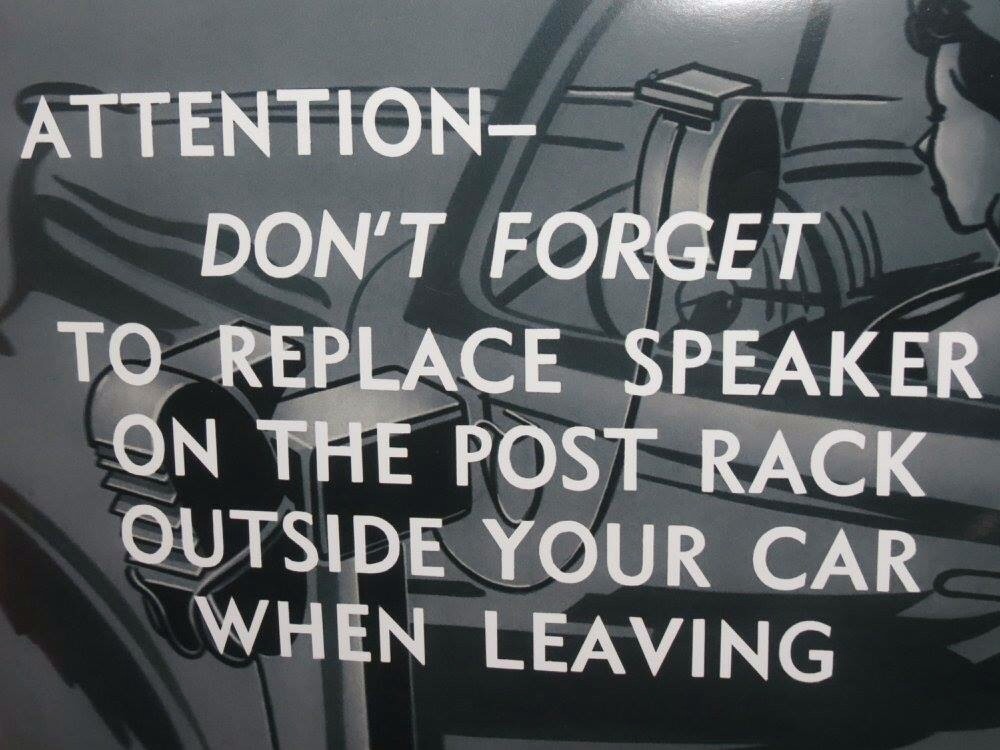
I copped this online just now.
Yes I’m old enough to remember this and similar cautions when going to a drive-in movie.
We were always reminded.
Always.
Yet I remember seeing it happen.
I copped this online just now.
Yes I’m old enough to remember this and similar cautions when going to a drive-in movie.
We were always reminded.
Always.
Yet I remember seeing it happen.
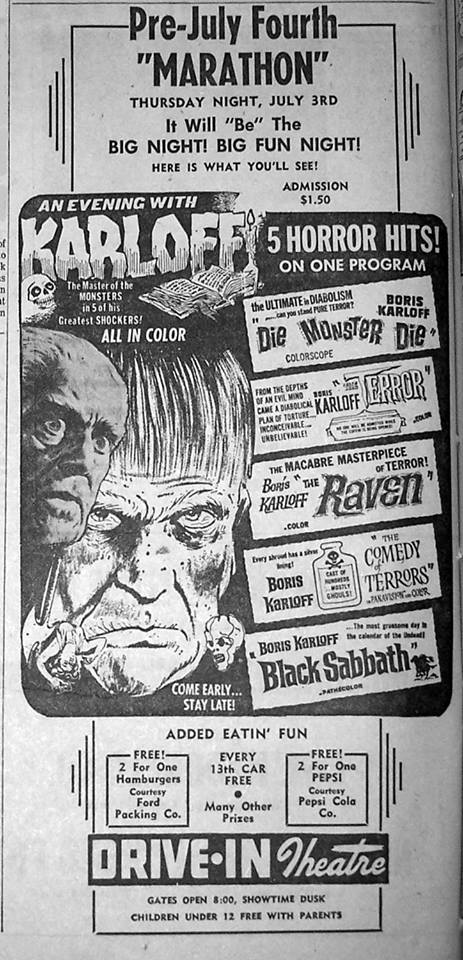
You don’t necessarily think about Boris Karloff, king of the Universal monsters, on the Fourth of July.
You do think about drive-in movies on the Fourth, and here’s a Karloff-centric drive-in quintuple feature ad.
It’s likely this drive-in Karloff marathon took place in 1965. The top-billed picture, “Die, Monster, Die,” was released that year. All the others were older.
Karloff had been well-known as a horror film actor for decades by that point, since 1931’s “Frankenstein,” and continued to appear in movies and TV up until his death in 1969. Beyond his death, actually. Although his health had declined over the years and he was often confined to a wheelchair, Karloff worked on movies late in life and some of those were released as late as 1971, two years after his death.
In 1965, when this quintuple feature was released, he was considered a horror movie elder statesman at age 77.
Karloff wasn’t known to a new generation of fans, by the way, until he narrated “How the Grinch Stole Christmas” in 1966.
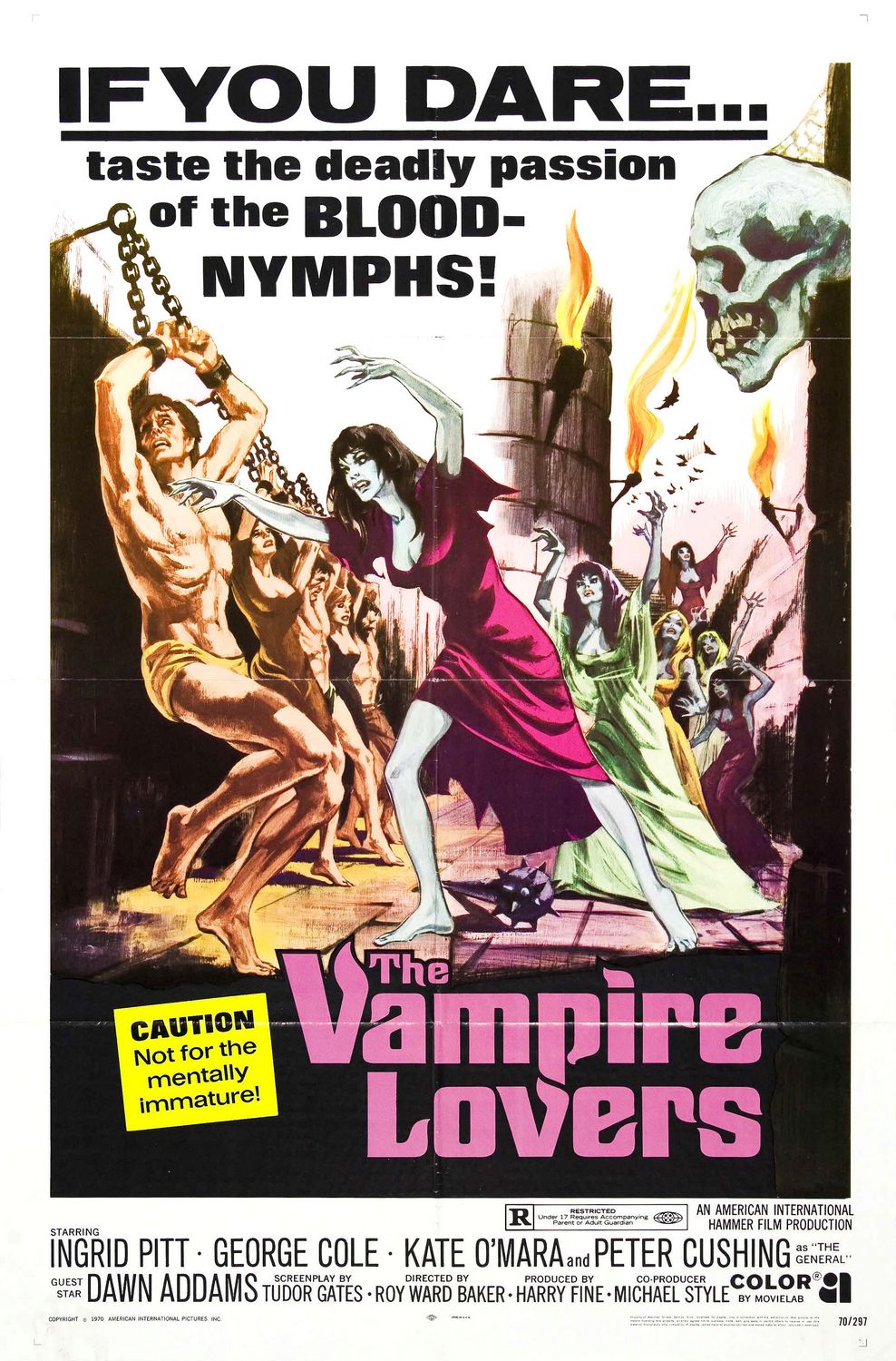
When i was a pre-teen and young teen, “The Vampire Lovers” was something of a holy grail.
If by holy grail you meant a Hammer horror film that not only featured Peter Cushing, a favorite actor, but also actress Ingrid Pitt and a bevy of actresses in various stages of undress.
And making out.
I didn’t see the 1970 movie in theaters or even a drive-in, a venue in which I assume it excelled. I saw it years later on HBO or Cinemax or on home video.
But for a while there, I was fascinated at the thought of seeing this R-rated movie.
A big part of the reason for my interest was this picture:

This “Vampire Lovers” publicity shot of Ingrid Pitt – or at least one like it – appeared in an issue of Cinefantastique magazine and guaranteed I would jump at the chance to see the movie when I could.
Of course, in the days before home video or the Internet, that meant waiting for it to come around to a theater again – something that didn’t happen with British horror movies – or for it to show up on HBO or some other pay channel.
I saw it back then, which it finally showed up, and I watched it again this afternoon.
It’s an odd movie and presented something of a risk for Hammer – best known for the Christopher Lee/Peter Cushing “Dracula” and “Frankenstein” movies – and its U.S. distribution partner, American International Pictures.
That’s because while the movie had all the trappings of Hammer’s successful horror movies – period setting, costumes, good production values and blood, all in living color – and it had Cushing as a good guy, it had a couple of offbeat elements.
Chief of them was the movie’s sexually-charged villainess, played by Pitt. As Carmilla, Pitt is a vampire very much like Dracula – including his taste in victims.
Carmilla, you see, is a lesbian vampire.

Sure, she seduces and kills, with fangs sinking into throats, a couple of men in the movie. But it is her attraction and seduction of women in the film that sets it apart from other monster movies of the day and is, to a great degree, why it became a cult classic.
Pitt – who appears fully nude in the film – spends most of the movie seducing, bedding and biting female acquaintances including nubile Emma (Madeline Smith, who appeared in several Hammer films). She even appears to fall in love with the young woman, which proves to be her downfall.
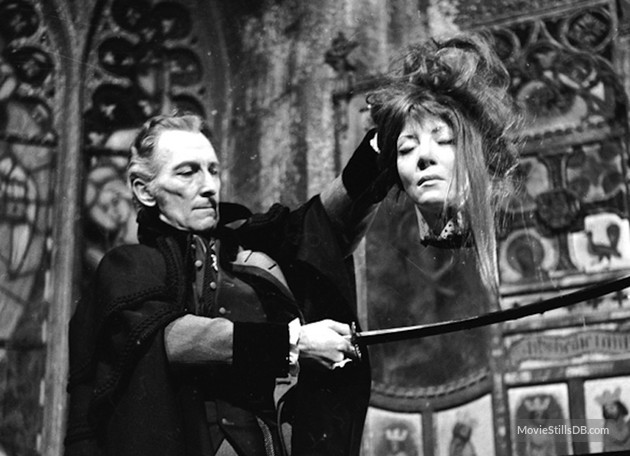
Hammer made a series of erotic female vampire movies, of which “The Vampire Lovers” was the first. The others were “Lust for a Vampire” and “Twins of Evil.” Pitt also played the title role in “Countess Dracula” in 1971.
If you’re just seeing “The Vampire Lovers” for the first time, be aware there is fairly extensive nudity – all female cast members of course; sorry for those hoping to see Cushing at least bare-chested – and scenes that are sexual in nature.
In other words, that publicity photo of Pitt didn’t lie.
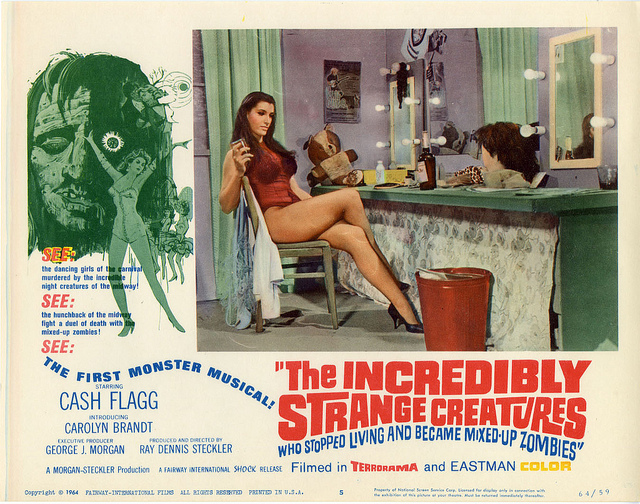
I’ve written about the 1964 low-budget classic, “The Incredibly Strange Creatures who Stopped Living and Became Mixed-Up Zombies” before, notably my memories of seeing it at a drive-in with an older relative.
I didn’t touch on the movie all that much, though.
Ray Dennis Steckler directed and stars – under his pseudonym Cash Flagg – and I guess you could argue he’s a forerunner to the director/stars we’re familiar with from today. His performance isn’t horrible but he’s undercut by the low, low-budget of his own movie.
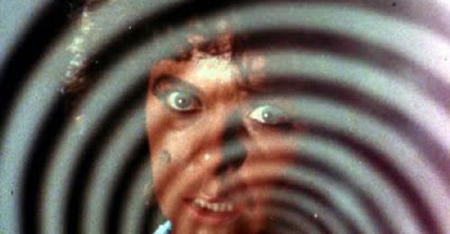
The movie follows a group of friends who visit a carnival and stumble upon bad guys who hypnotize, disfigure and enslave people, turning them into, in effect, zombie slaves.
The movie has the telltale leisurely pace of a low-budget flick. For what seems like forever, characters wander around, gazing at stuff, talking about nothing. There seem to be endless scenes of arty dance numbers, totally out of place at a nightclub. Watching one of these movies makes you appreciate how a well-written, well-edited movie … well, moves.
Considering the movie was touted as “the first monster musical,” I know what Steckler was going for. But sheesh. I lost track of how many musical numbers were included.
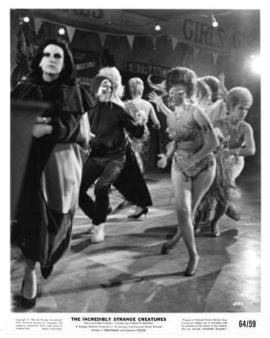
A dancing girls sequence seems to have been shot in a community theater, and the producers were intent on getting their money’s worth because the scene goes on and on .. and then is followed by another musical sequence. Cue up “Let’s All Go to the Lobby!”
Likewise, scenes of a nightclub comic are so bad they almost seem like a modern-day parody.
Not to mention the interpretive dance/dream sequence.
After a quick break to hypnotize a victim … it’s another musical performance!
Endless shots of carnival rides.
The cheapness of the movie’s production really stands out when you see how many sets look cheaper than your standard 1960s sitcom living room – and that’s the most lavish sets here. The fortune-teller set, which consists of a few drapes and blackout curtains, isn’t as bad as the plywood airplane cockpit in “Plan Nine,” but it’s pretty bad.
Something has to be said about the hairstyles of the three leads. They are, respectively, a receding combover, a towering pompadour and a huge and baffling head of helmet hair.
When the “Incredibly Strange Creatures” finally break loose with about 15 minutes left in the movie … it’s time for another musical sequence. Steckler really knew how to build suspense!
For a real treat, seek out the “Mystery Science Theater 3000” version of the movie from 1997. It’s available through Hulu online and Mike Nelson and the robots’ version of “Incredibly Strange Creatures” is just as funny as you’d think it would be.
Just because.

A while back I was inspired to begin this recurring look at the poster art of 1970s movies after seeing the throwback-style poster for “Captain America: The Winter Soldier.”
Movies don’t get any groovier than “Coffy,” the 1973 blaxploitation flick starring Pam Grier in the title role. And the poster does justice to the movie’s storyline.
After her younger sister is hooked on drugs, Coffy, a nurse, sets out to kill as many drug dealers as possible.
It’s a pretty straightforward plot.
If you’ve never looked at it, check out the oddly-written Wikipedia page for the movie, complete with plot recap.
“Coffy uses her sexuality to seduce her would-be killers,” indeed.
And good lord, what an impression Grier made on a lot of us.

See what I mean?
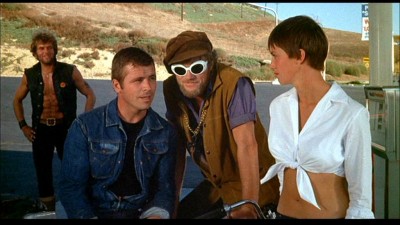
Tom Laughlin is not as well known as Peter O’Toole, certainly, but Laughlin made his own mark on the movie business. He died today at 82.
Laughlin was probably best known for creating the character of Billy Jack, a pacifist who unleashed his deadly martial arts moves when he was pushed … too … far.
Laughlin played Billy Jack in four movies: “The Born Losers” in 1967, “Billy Jack” in 1971, “The Trial of Billy Jack” in 1974 and “Billy Jack Goes to Washington” in 1977. He was ultra-recognizable with his close-cropped hair and blue jean jacket. He was also the guy usually laying waste to a bunch of heavies.
Although the movies were pretty straightforward vigilante fantasies, Laughlin, who also directed, was credited with pioneering modern-day marketing techniques and releasing some of his films himself when big studios spurned them.
Laughlin ran for president – yes, president – in 1992, 2004 and 2008.
Last year I wrote about going to see “The Born Losers” at the drive-in. Here’s that entry.
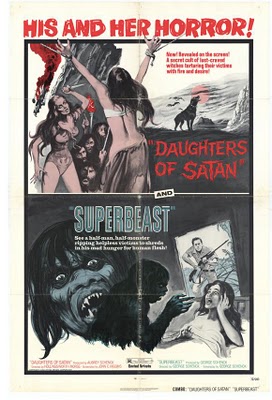
Believe it or not, I’d never heard of “Superbeast” before I saw it among the free movies on the On Demand menu on my cable.
Okay, maybe that’s not all that hard to believe.
The movie was filmed in the Philippines as part of a subset of the movie industry I’ve always been interested in: Cheap exploitation movies filmed – or at least partially filmed – there for release to the US drive-in circuit. For a while there, note some biographies of legendary exploitation filmmaker Roger Corman, exploitation movies and especially exploitation movie trailers included prodigious amounts of Filipino footage of jungles and helicopters and girls firing machine guns. It’s all a little like the footage of chicks shooting machines guns in Quentin Tarantino’s “Jackie Brown.”
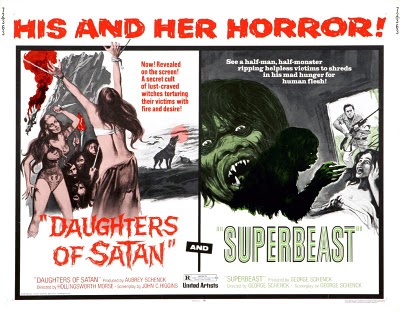
“Superbeast” was released in 1972 on a double-bill with “Daughters of Satan,” a thriller that starred future TV icon Tom Selleck. Selleck went on to greater things, but the same can’t be said for the male lead here, Craig Littler, who did have a stint in the Saturday morning kid’s show “Jason of Star Command.”
Considering the exotic locales in “Superbeast,” there’s a lot of travelogue material here, including trips down rivers with hippos and the like lying alongshore. All this footage serves to fill out the running time of the movie, which has a rather thin storyline.
“Superbeast” is another variation on a couple of well-remembered and much-exploited stories: “The Island of Dr. Moreau” and “The Most Dangerous Game.”
A doctor, played by Antoinette Bower, investigates mysterious goings-on in the jungle and finds lab experiments that turn men into half-men/half-animals.
But there’s really not a whole lot going on for the first half of the movie, except for the doctor waking up to the sounds of screams and gunshots. The doc finds out that the mutated results of these jungle experiments become targets for the mastermind behind it all, a hunter played by Harry Lauter.
Even this description makes “Superbeast” seem more action-packed and coherent than it is. It’s marked by the lazy lack of cleverness that is the ruin of many low-budget movies – and makes clever low-budget films seem even better by comparison. Rather than writing and shooting meaningful plot points, the filmmakers include lots of footage of people just wandering in and out of scenes.
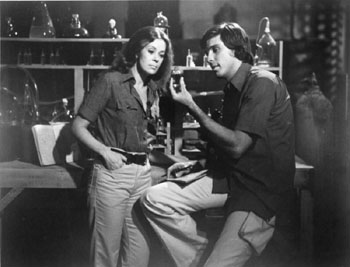
“Superbeast” tries to create shocks by including some real-life gore. There’s an autopsy scene using real footage and another with real organs in a jar. And “Superbeast” might be one of the few movies with exposition delivered via slide show. The movie has a real WTF moment when the female doctor dreams about having sex with one of the mutated natives.
After meandering through the plot for nearly 90 minutes, Litter goes all manimal and shows up in an immobile apeman mask. A struggle ensues and well, that’s pretty much it.
The movie even ends with a “huh?” freeze frame, as if to emphasize the futility of trying to find a coherent plot here.
“Superbeast” didn’t have a life much beyond those 1972 drive-in theaters, and that’s just as well.
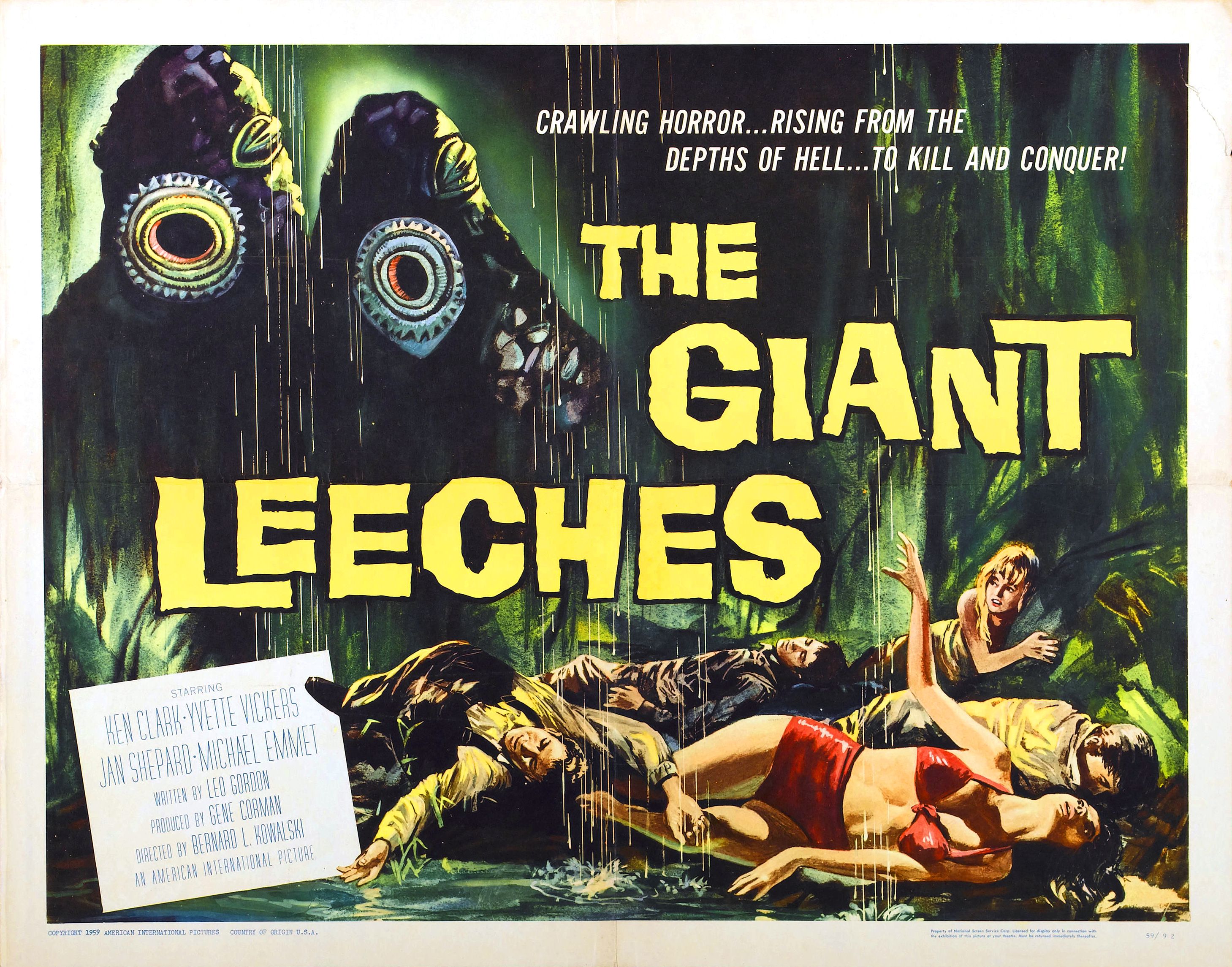
“Attack of the Giant Leeches” sounds like the quintessential low-budget drive-in horror movie, and with good reason:
It’s a Roger Corman production at American International Pictures.
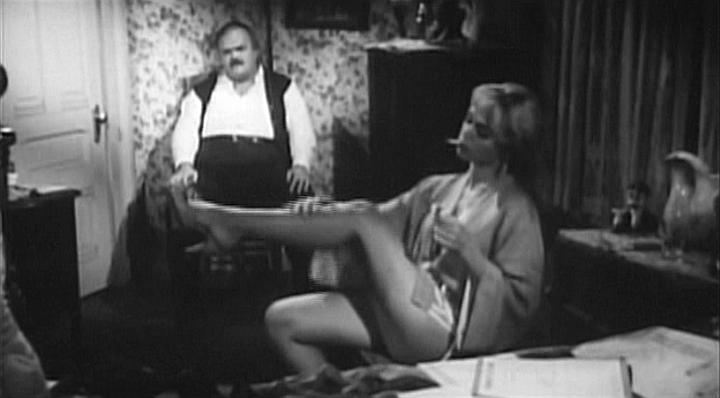
It’s set in Florida but there’s a southern “swamp trash” – to use a phrase uttered in the movie – feel to the movie, right down to the corn pone accents and moonshine-swilling hillbillies.
It’s a Roger Corman production (did I mention that already?).
Its title alone sounds like every bad imaginary movie that ever played out on a drive-in movie screen in some other movie or TV show.
“Attack of the Giant Leeches,” all 62 minutes of it, is great fun, a mix of southern fried domestic drama right out of “Cat on a Hot Tin Roof” and low-rent monster movie.
Legendarily made in eight days, “Attack” has a low-rent feel but doesn’t stint on action. Except for a couple of scenes that feel like people are standing around talking for the sake of filling up a few minutes of screen time, “Attack” brings the drive-in thrills early. One of the titular characters shows up even before the credits, and there’s two or three attacks in the first 20 minutes of the movie.
A small Florida town is beset by attacks by man-sized leech creatures. As people turn up sucked to death or missing, game warden Steve swings into action. Well, sort of. First of all, he needs to make sure nobody’s going to do anything to hurt indigenous wildlife.

The creatures are low rent – somebody sewed plastic octopus suckers on the forerunner of the Snuggie – but probably more effective because they are little seen.
There’s one genuinely creepy moment in the movie in which we learn the giant leeches are taking their victims to an underwater cavern. They’re left there to be sucked dry of blood a bit at a time. It’s kind of eerie.
There are some decidedly loony moments:
Game warden Steve runs up to floozie Liz as she screams because she’s been frightened. But Steve, rather than holstering his pistol, points it right at Liz’s face as he comforts her.
Cal, the no-goodnik making time with Liz, is a dead ringer for comic Adam Carrolla.
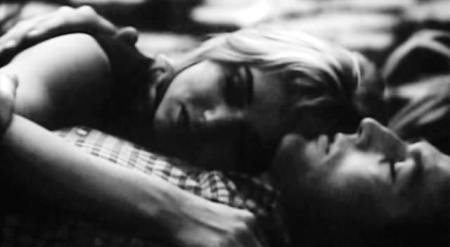
Cal and Liz go out to a remote spot in the swamp – despite stories about the leech creatures – to make out … in a decision they make standing in the doorway of a bedroom. Young people these days!

Steve and pal Mike decide to go diving in the swamp to look for the giant leech creatures with scuba equipment they took from a ship belonging to “the Italian navy.” Huh?
The creatures usually have a fairly effective “rattle” noise they make, but early on one makes a sound like a cougar’s cry.
Check out “Attack of the Giant Leeches.” It’s drive-in schlock fun.

There’s something about this weather that reminds me of going to drive-in movies.
Around here, we had two — the Muncie Drive-In and the Ski-Hi Drive-In — in or near the city and another — the Blackford County Drive-In — just to the north. The latter wasn’t the type of drive-in your parents took you to, however. The Blackford showed “adult” movies — porn, in other words.
As for the Muncie and the Ski-Hi, I spent many, many hours there as a kid and young adult.
One of my earliest drive-in moviegoing memories was of seeing the 1967 flick “Born Losers” at one of Muncie’s two drive-ins. “Born Losers” was a low-budget action movie that introduced the cult character of Billy Jack (played by Tom Laughlin), a returning Vietnam vet who takes on a motorcycle gang. The movie actually inspired sequels.
I remember seeing it with my parents and paternal grandmother. Why my parents decided to take me or my grandmother to a (in my memory) sleazy, bloody action movie I can’t imagine.
I just remember my grandmother nearly fainting into her concession-stand pizza after the bad guys push a young man’s face into the windshield of a car, resulting in a bloody, slobbery mess. Onscreen, I mean.
From time to time in this spot I’ll share some memories and some great old drive-in movie ads.
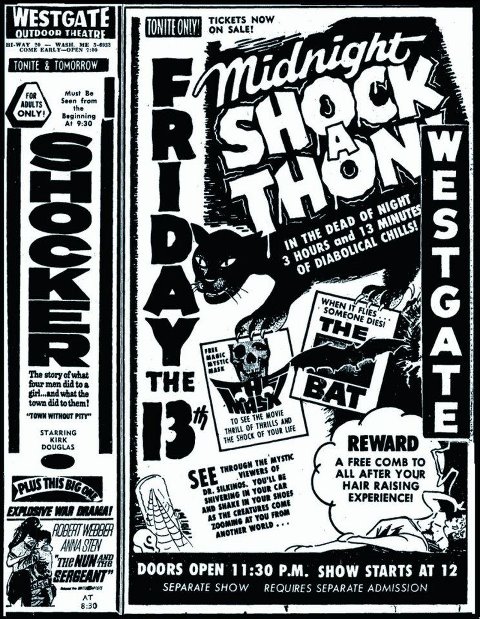
How about this one for a re-release of “The Mask” Not the Jim Carrey comedy but a bizarre 1961 horror movie about an ancient mask that has the power to drive people crazy. Some remember “The Mask” from the early 1980s, when it was re-released at the height of the 3-D revival.
This “midnight shock-a-thon” ad features not only “The Mask” but “The Bat,” probably a 1959 Vincent Price thriller and “Town Without Pity,” a 1961 Kirk Douglas movie that is sold, as you can tell from the ad, in the sleaziest way possible:
“The story of what four men did to a girl .. and what the town did to them!”
This ad has some exploitation/drive-in advertising gems, including “A free comb to all after your hair-raising experience!” I can hear it now: “Mom, Dad, can we go to the drive-in tonight? They’re giving away free combs!”

Lastly, how about the exploitation double-feature classic “I Drink Your Blood” and “I Eat Your Skin.” The former is a 1970 movie about Satanists terrorizing a town. The latter originally came out in 1964 and was about zombies. The combination of titles was drive-in movie gold.
The canny drive-in operator offered a free buffet of “skin chips and dip” and “flesh fries” and provided free Tums.
Who wouldn’t turn out for this drive-in combo?
 keithroysdon