Tag Archives: Edgar Wright

Joss Whedon, Edgar Wright and the ‘Ant-Man’ Cornetto

joss whedon twitter cornetto edgar wright

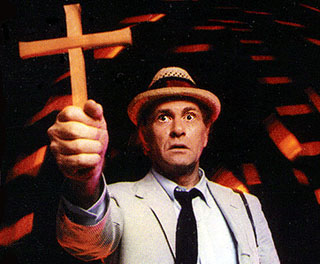
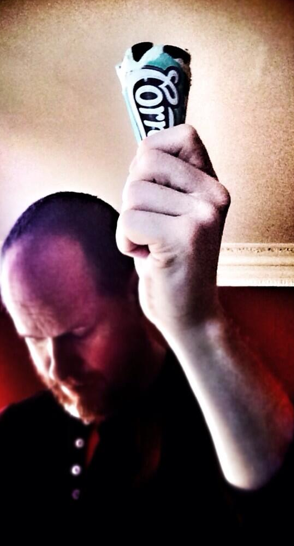
So this was “Avengers” mastermind Joss Whedon’s reaction to fellow director Edgar Wright’s departure from Marvels “Ant-Man.”

Whedon tweeted this picture last night. Head bowed, he’s holding aloft a Cornetto – the British sweet that gave its name to Wright’s “Cornetto Trilogy,” including “Shaun of the Dead” – like a candle at a vigil.

It’s already been dubbed “The Cornetto of Solidarity.”

Nicely done, Mr. Whedon.

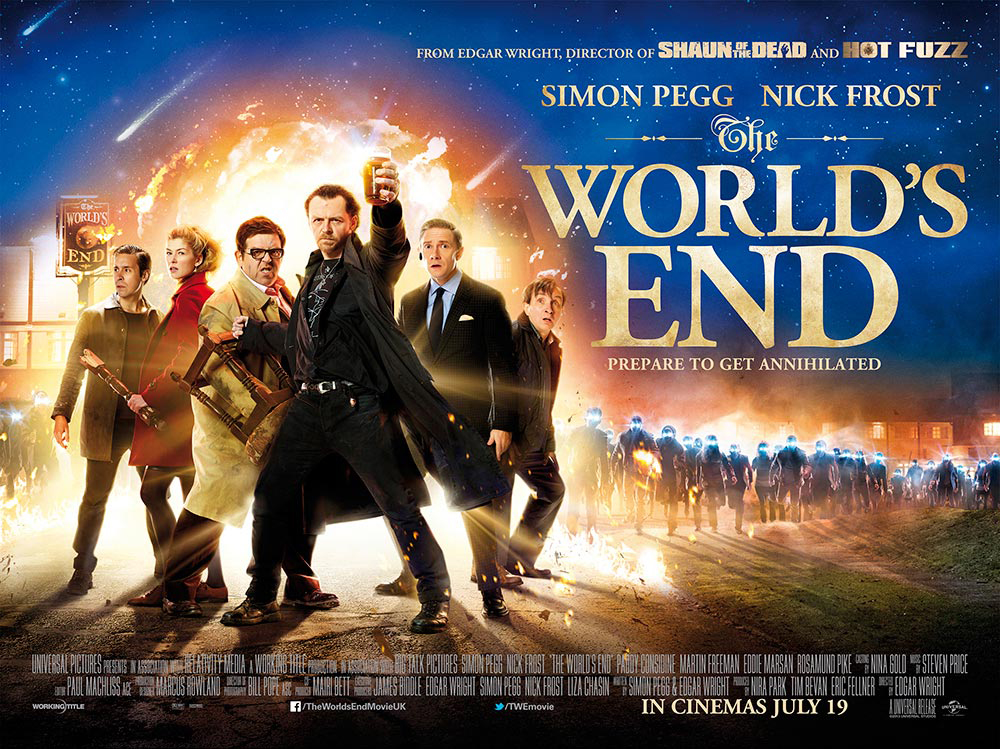
The end of the world as we know it: ‘The World’s End’

The-Worlds-End-poster

Edgar Wright, who might someday be known as the director of “Ant-Man,” has over the past decade given movie fans often-funny, often-touching glimpses into the lives of a few misfits and outcasts in the UK, from the dead-end zombie fighters of “Shaun of the Dead” to the small-town coppers of “Hot Fuzz.”

Now comes Wright’s “The World’s End,” which seems to cap this summer’s moviegoing (and end of the world-depicting) experience.

What Wright jokingly refers to as the third film in his “Cornetto” trilogy – named after a popular ice cream treat that shows up in all three movies, yes that’s how offbeat Wright’s humor is – is actually two movies in one: A “growing up is hard to do” reunion of old chums movie and an end-of-the-world comic thriller.

Needless to say, spoilers ahead if you haven’t seen the movie, which opened wide yesterday.

Two of Wright’s regular collaborators, Simon Pegg (Shaun as well as Scotty from “Star Trek”) and Nick Frost are among a group of friends who get together more than two decades after one of the most awesome but frustratingly incomplete nights of their lives: In 1990, before they went their separate ways and left their hometown of Newton Haven, they attempted an epic pub crawl that entailed drinking a pint at each of 12 pubs.

In fact, Pegg’s character, Gary King, only gets his four friends to join him by lying to them that the others have already agreed to meet to try to complete their challenge. That’s not enough for some, notably Andy (Frost’s character), who not only stopped drinking but holds Gary in contempt for his actions (only gradually revealed) that night. Andy comes along only after Gary tells him he needs the flashback to recover from the recent death of his mother.

Nevertheless, Pegg and cohorts played by Frost, Martin Freeman, Eddie Marsan and Paddy Considine return to Newton Haven and attempt the feat. Along the way, they run into Rosamund Pike as Freeman’s sister, who hooked up with Gary that night long ago.

The quest begins with a couple of disappointments for the hilariously self-centered Gary – played with gusto by Pegg – in that Andy no longer drinks and no one in their old town seems to remember them.

Those anomalies are resolved, however, when at one stop King impetuously confronts one of the townspeople and the fivesome is shocked to discover many of the residents of Newton Haven have been replaced by robots.

The rest of the movie plays out in a comic rush as the group of friends tries to get away without being absorbed and assimilated by the robots and their alien overlords – even while Gary, increasingly drunk, determined and frustrated, tries to complete the pub crawl.

Parts of “The World’s End” are laugh-out-loud funny and parts are poignant. There are some bizarre shock value special effects and a funny final encounter with the invaders who’ve turned Newton Haven into a bland lab experiment.

Driven by Pegg’s bravura performance and the propulsive “must get to the next pub” plot, “The World’s End” is a fun capper to Wright’s Brit-rich series of comedies.

Random observations:

Wright likes casting former James Bond actors in his movies. Timothy Dalton was in “Hot Fuzz,” while Pierce Brosnan is on hand here. I’m looking forward to Connery, Moore or Lazenby in “Ant-Man.”

The director gives us “call backs” to favorite moments in the earlier films, but none more obvious and beloved – it’s even in the commercials – than Pegg attempting to jump a fence.

It’s been a big summer for the end of the world, from “World War Z” to “This is the End” to this. It’s odd that the two more humor-inclined movies seemed to work best.

End of the world or not, “The World’s End” owes as much to “Invasion of the Body Snatchers” as to any other story.

Here’s a big spoiler alert, for discussion of the ending:

I was startled by it. When the little village of Newton Haven melts down thanks to the alien invaders and an electromagnetic pulse shoots out, the lights go out everywhere. I mean, around the globe. The final montage of scenes, narrated by Frost’s character, depicts the disparate members of the group living out their lives in the post-apocalypse. Most appropriately, Pegg’s Gary King is a wayfaring adventurer, moving across the wasteland as the now-teetotalling leader of a group of robotic duplicates of his friends’ younger selves. It feels like a climax that teases a sequel or spin-off film, but it’s really all we need to see to enjoy that premise.

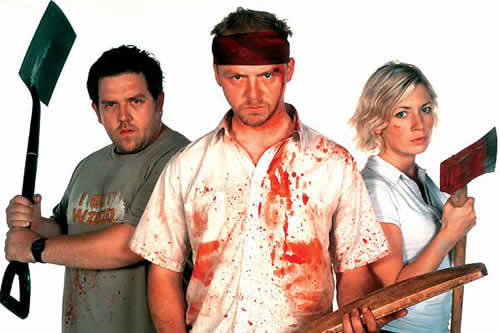
Movie classic: ‘Shaun of the Dead’

shaun-of-the-dead

Did anyone anticipate just how damn good “Shaun of the Dead” was going to be?

When the 2004 British comic-thriller, about a couple of goofy guys stumbling their way through life and, suddenly, the zombie apocalypse, debuted, I don’t think many of us appreciated how much comedic gold was to be mined from the end of the world.

Director Edgar Wright and stars Simon Pegg and Nick Frost – two under-achieving blokes who only very gradually realize the population around them is turning into flesh-eating zombies – turned the zombie story on end.

There’s plenty of creep factor, as zombies zero in on victims, and there’s some derring-do. But what made “Shaun of the Dead” so great was its humor, as Pegg and Frost sort through vinyl records to see which are suitable to toss at zombies or plot out schemes to save Shaun’s mum and girlfriend.

Random observations:

I love that Martin Freeman has a cameo in the movie. And I love that the actor, better known now as “The Hobbit” and John Watson from “Sherlock,” is featured in Wright’s upcoming apocalyptic picture “The World’s End.”

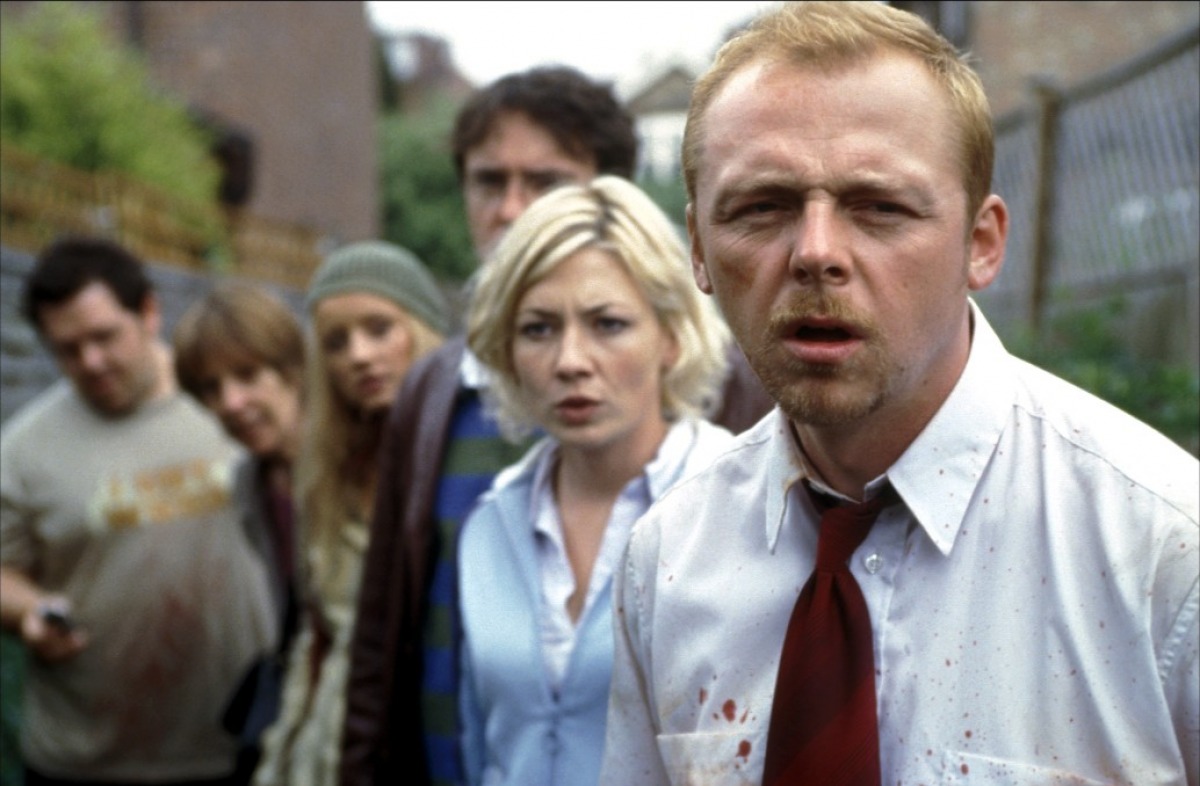
shaun-of-the-dead scene

I love that there’s a mirror-image group as counterpart to that led by Pegg. There’s an amusing scene when Pegg’s group encounters the other and nobody really seems to notice that they’re like an alternate universe version of our heroes.

“We’re coming to get you, Barbara!” Frost shouts into the phone to Pegg’s mum. It’s a play on “They’re coming to get you, Barbara,” From George Romero’s “Night of the Living Dead,” of course.

Has there been a better ending to a zombie apocalypse movie? Plainly, no.

Classic TV: ‘The Night Stalker’

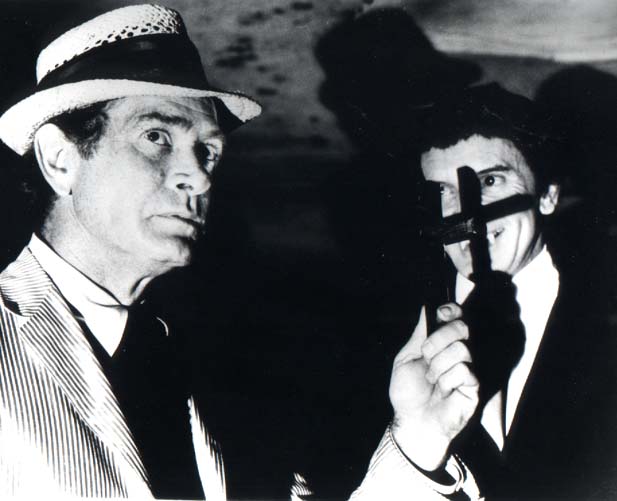
I noted here a couple of days ago the news that director Edgar Wright (“Shaun of the Dead”) and actor Johnny Depp were close to collaborating on a big-screen movie version of “The Night Stalker,” the 1970s TV movies/TV series that starred Darren McGavin as intrepid reporter Carl Kolchak, who pursued big bylines, splashy headlines and … monsters.

The possibility of a remake prompted me to break out my DVD of the original 1972 TV movie “The Night Stalker” and give it yet another viewing.

“The Night Stalker” is one of my favorite TV movies, heck, one of my favorite movies. I saw it when it originally aired, when I was all of 12 years old, and loved it then. I love it now.

Despite the fact that … gulp … 40 years have passed, the movie is rock solid. The elements of the story that are dated now only serve to give it a time capsule, slice of life feel.

With its lean 70-minute running time, the movie — produced by “Dark Shadows” creator Dan Curtis, directed by journeyman TV director John Llewellyn Moxey, written by the great Richard Matheson (“The Incredible Shrinking Man,” “I Am Legend”) based on a book by Jeff Rice — drags only near the very end, when McGavin spends a little too much time skulking around an old dark house.

Most of the movie is a dark-humored, action-filled, bitterly realistic take on newspapering, crime and big-city politics. In fact, it’s one of the best movies ever made about newspaper reporting. Kolchak is egotistical, insulting to his competition, intolerant of his bosses, dismissive to the public and resistant to authority. He is a classic newspaper reporter.

Kolchak, a reporter for a Las Vegas newspaper, narrates the plot, which unfolds in flashback. As the story proper begins, Kolchak is grumbling about being called back from vacation by his editor, Tony Vincenzo (the blustery, ill-tempered Simon Oakland) to cover what looks like the routine murder of a female casino worker.

Kolchak has, more so than many less realistic reporters in movies and TV shows, a fully-developed set of sources, both high and low, and one within the medical examiner’s office tells him the victim lost a lot of blood.

Before Kolchak can even consider that odd detail, another dead woman is found, also drained of blood.

The scenes set at crime scenes in “The Night Stalker” are some of my favorites. Inevitably, Kolchak shows up — sometimes right behind the police, including the nasty-tempered sheriff played by Claude Akins, sometimes even before the police show up.

Kolchak talks to cops and witnesses and in general has free run of these crime scenes. It’s a running gag that was probably unlikely then and is outlandish today, but they are fun scenes to watch.

Bodies, all drained of blood, keep turning up and one woman goes missing when, about halfway through the movie, Kolchak’s girlfriend, casino worker Gail Foster (Carol Lynley) suggests that maybe the killer really is a vampire. Kolchak scoffs at the idea but begins to read the old books Gail gives him.

Eventually, Kolchak tells the authorities — who barely tolerate his presence at press conferences, another realistic touch — that they won’t capture the killer unless they consider the possibility he might be a vampire.

I’m not sure that in the early 1970s a real-life coroner, police chief, sheriff and prosecuting attorney would call as many press conferences as the characters do in this movie, but they’re also fun scenes as Kolchak gets the cops and officials all riled up with his questions. The time capsule element of the press conference scenes is that officials expect the reporters to cover up the grisly, panic-inducing details of the murders. Now, of course, the press conferences would be live-streamed online and the reporters would have been tweeting all along. (Which is why officials today wouldn’t call this many press conferences.)

Besides the crime scene and press conference scenes, “The Night Stalker” boasts some pretty cool action scenes. Although there are a few scenes where Atwater, as vampire Janos Skorzeny, stalks his victims, there’s surprisingly little horror in the movie. Instead we get action scenes with a real sense of the unreal, as Kolchak and the cops come upon Skorzeny’s trail only to have the vampire kick their asses and escape.

The movie’s ending, with the authorities ensuring that Kolchak’s story won’t be told, is as downbeat and dark as anything on TV at the time or since. Ultimately, Kolchak has only the satisfaction of knowing he’s a good reporter to keep him warm at night.

McGavin — a dozen years later immortalized as the dad in “A Christmas Story” — has the right mix of schmoozer and attack dog that a reporter needs. Oakland is wonderful as that TV show cliche, the boss who yells.
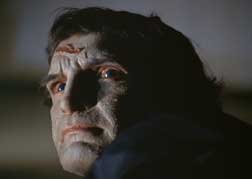
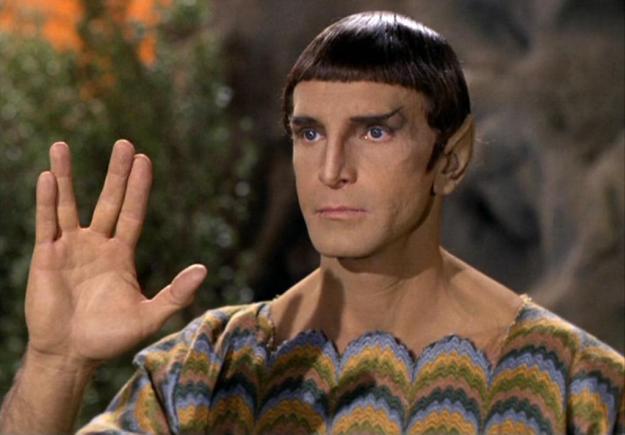
Atwater, who died only a few years after the movie aired, is terrific as the vampire. He makes a big impression without a word of dialogue. Atwater’s most significant other role was as Vulcan leader Surak on a single episode of “Star Trek.”
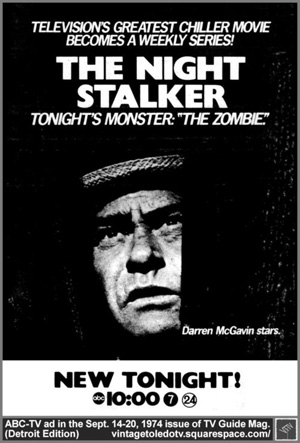
The movie was the highest-rated TV movie of its time and prompted a sequel, “The Night Strangler,” a year later, and a weekly series, “Kolchak: The Night Stalker,” two years later. Both the sequel movie and TV series were fine, but they couldn’t match the original.
“The Night Stalker” influenced a generation of young fans of the horror genre who went on to pay tribute in a variety of ways. Perhaps the best known homage to the Kolchak concept was “The X-Files,” with FBI agents pursuing mysteries and monsters each week. McGavin even appeared on “The X-Files” as a retired FBI agent.

If Wright and Depp do a modern version of Kolchak — or even one set in the 1970s — they might do a terrific job. I’ll be shocked, though, if they can top the original, which is a classic of its kind.
Wright, Depp to team on new ‘Night Stalker?’

Ever feel that mixture of eager anticipation and dread, that feeling that runs up your spine and messes with your brain when you’re thinking about something that could be so good, so cool … if it just doesn’t get screwed up?

That’s what I felt this afternoon when I heard that Johnny Depp and Edgar Wright, the genius director of “Shaun of the Dead” and “Hot Fuzz,” were teaming up to make a big-screen version of “The Night Stalker.”

If you’re not familiar with it, “The Night Stalker” was a 1972 TV movie that starred character actor Darren McGavin as Carl Kolchak, a hard-charging newspaper reporter who — thanks to his willingness to buck authority and his his inability to kowtow to his bosses — has drifted from newspaper to newspaper, city to city, in search of steady work.

He’s at a paper in Las Vegas when a series of gruesome showgirl murders gets his attention. He starts covering the story and, much to the horror of city officials and the chamber of commerce, discovers not only that a serial killer is at work … the killer is a vampire (played to truly creepy, alien effect by Barry Atwater).

The movie unfolded like a modern-day police procedural, with Kolchak arriving at crime scenes and irritating the cops when he isn’t hanging out in the morgue. It builds to a genuinely suspenseful climax in which Kolchak takes things into his own hands … only to find himself run out of town by officials worried about the story’s impact on tourism.

Masterful writer Richard Matheson wrote the movie based on a terrific book by author Jeff Rice.

“The Night Stalker” was the highest-rated TV movie of its time and sparked not only a 1973 sequel, “The Night Strangler,” but a 1974 series, “Kolchak: The Night Stalker.”

In the series, which ran only one season, Kolchak worked out of a Chicago news service, frustrated the same boss (the blustery Simon Oakland), and kept running into monsters. The best episodes featured a zombie and a vampire who was one of the victims from the original movie.

News of the remake doesn’t fill me with quite the same level of anticipation and dread that I feel for the Tim Burton/Johnny Depp “Dark Shadows.” Maybe because Burton, a genuine artist who seems to have lost the ability to make a coherent movie, isn’t associated with this.

Maybe because, as much as I liked “Dark Shadows,” it isn’t the equal of “The Night Stalker” in my book. If Burton makes “Dark Shadows” an unwatchable mess, that’ll be a loss. If Wright screws up “The Night Stalker,” I’ll be in mourning.

Wright — who has also been working on a movie of the Marvel Comics character Ant-Man, a member of The Avengers — seems well-suited to the mixture of humor and horror that a proper adaption of “The Night Stalker” would need.

But I really would dearly love it if a “Night Stalker” movie was really good, spawning a new generation of fans and renewing attention for the original ABC movies and TV show.