
Tag Archives: Gillian Flynn

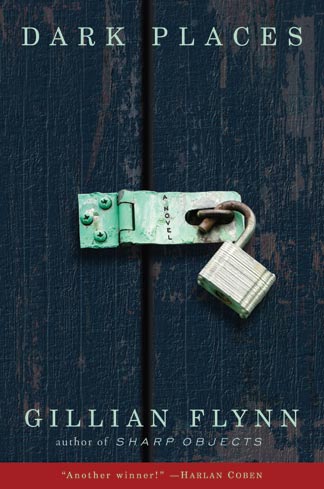
‘Dark Places’ takes readers to … uh, some dark places

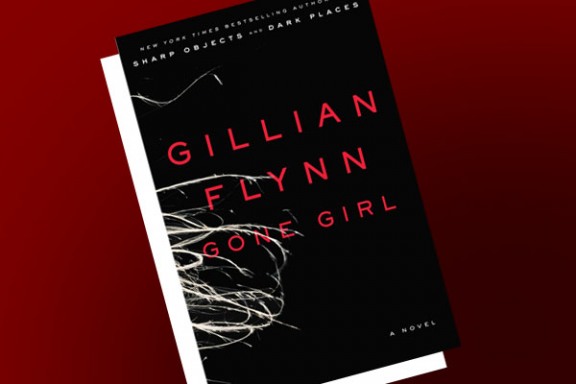
Gillian Flynn took the bestseller list by storm this summer with “Gone Girl,” a clever and well-written thriller about a marriage gone horribly wrong. Or, more jaded readers could argue, a piercing indictment of marriage as an institution.

I liked “Gone Girl” a lot, despite coming away from reading it kind of bummed out. So reading Flynn’s two earlier books, “Sharp Objects” and “Dark Places,” became a priority for me.

I’ve just finished her 2009 novel “Dark Places” and it wins the truth in advertising award. It’s pretty damn dark.

If you haven’t read it in the past three years you might now that the publisher is giving it a push in conjunction with the huge success of “Gone Girl.” At Target, for example, the three books are side by side on the shelves.

And honestly that push is appropriate because “Dark Places” is very true to Flynn’s style and tone.

“Dark Places” does for family life what “Gone Girl” did for marriage. In other words, makes you reconsider the institution.

“Dark Places” follows the life of Libby Day, a 30-something survivor of a horrific childhood trauma. In 1985, when Libby was 7 and living in Missouri, her mother and two sisters were brutally killed by a late-night intruder in their home. Libby escaped the house that cold night although she lost fingers and toes to frostbite and over-zealous medical treatment.

Libby helped authorities convict her 15-year-old brother, Ben, of killing their mother and two sisters. Ben was sentenced to life in prison.

In the decades since, Libby has drifted through life in a depressed haze. She’s lived off donations for the orphan of the “Missouri massacre” but the money is running out.

So when Libby is approached by the “Kill Club,” a group of people obsessed with murders from recent history, she jumps at the chance to make some money by selling family memories.

Before long Libby is going to prison to see her brother for the first time since the trial and even searching the Plains States for her father, Runner, a good-for-nothing type who some of Ben’s supporters in the Kill Club consider the true killer of the Day family.

Flynn takes Libby and readers to some pretty low places in a search for dollars that gradually turns into a search for truth. Chapters flash back and forth from Libby’s perspective to that of her brother and mother in the days leading up to the 1985 mass murders. It’s a technique that I don’t usually like but Flynn does it very well here.

Flynn does resort to some of the tactics that I don’t like about modern mysteries (multiple culprits, multiple solutions) but the strength of the book isn’t the mystery, strangely enough, but the characters. Watching her story unfold is a little like watching a slow-motion car accident. You care about these characters and what’s happening to them at the same time you’re horrified. But you can’t look away.

It’ll be interesting to see how Hollywood treats Flynn’s books. Reese Witherspoon is apparently adapting “Gone Girl” and I’ve read there’s a movie version of “Dark Places” underway starring Amy Adams. The role of Libby isn’t one that you would expect an actress like Adams to play, so it makes me wonder if the movie won’t turn Libby into a typical Lifetime movie heroine.
‘Gone Girl’ a twisted tale of marriage

I almost stopped reading “Gone Girl” less than halfway through the book.

It’s not that Gillian Flynn’s thriller, about a married woman who disappears and the growing shadow of suspicion that falls on her husband, isn’t well-written or absorbing.

It’s that Flynn, a former Entertainment Weekly writer, painted dual portraits of the husband and wife that were so sharp, so true-to-life, that they were pretty damn uncomfortable.

We’ve all seen this story played out too many times on tabloid TV: Pretty young woman goes missing. Husband seems oddly unmoved. As the police narrow their focus on him as a “person of interest,” he gets a high-profile lawyer. A loud-mouthed TV show host begins what amounts to a public crusade to convict the husband in the court of public opinion.

I almost didn’t have the heart to finish “Gone Girl.” But I kept going and was rewarded with a neat thriller that pulled me in and held me captive until the twisted ending.

Flynn tells the story of Nick and Amy Dunne, young marrieds who lost their jobs in the New York City media (thanks, Internet!) and moved back to his hometown in Missouri.

Nick seems to be a typical boy-man. He’s charming and good-looking but has never grown up. In NYC he ignores his wife and hangs out with buddies, drinking and flirting with women in bars. Back home in Missouri he takes care of his dementia-addled father and runs a bar with his twin sister, Margo (Go for short).

At the beginning of the book, Amy goes missing. At first it looks like she’s been kidnapped, maybe by one of the desperate men put out of work at the town’s only big industry.

But then the police turn their attention and their investigation toward Nick, who begins behaving oddly and outright lying to police.

Interspersed with chapters in the wake of Amy’s disappearance are her diary entries, over a period of several years, that seem to paint a picture of a troubled young woman. Among her troubles: The growing distance between her and her husband and Nick’s increasingly hostile behavior.

I was getting a little tired of Nick’s duplicity and Amy’s insipid second-guessing, but a little less than halfway through the book, Flynn throws readers a nice curve that very nearly turns the second half of the book into a completely new story. No spoilers here. Suffice it to say that, despite – or because of – a conclusion that is quite troubling, Flynn has written a terrific thriller.

Actress Reese Witherspoon is, according to news reports, going to produce a movie version with a screenplay written by Flynn. No word on whether Witherspoon will play Amy but I guess she’d be right for the part.

I’ve already cast Lizzy Caplan as Go. In my head at least.

“Gone Girl” hits so many notes perfectly. The tension between Nick and Amy’s parents after she disappears. The tactics of police investigators (“We want to help you, Nick”) and flashy, high-profile defense attorneys. Best of all is Flynn’s portrait of the Nancy Grace-style TV host, although after creating the character Flynn doesn’t do that much with it.

Flynn has scored a publishing sensation with “Gone Girl” and, if handled the right way, the movie could be a thriller to appeal to grownups.

One caveat: If you’re about to get married or are already married, “Gone Girl” will have you wondering about not only the little quirks of your relationship but the intent of the person on the other side of the bed from you. Flynn’s book is that good and that unsettling.