There’s a special feeling of dread among some of us when our favorite books get adapted into movies.
How many times have we been disappointed when books we loved were turned into mediocre movies? Sure the books are still there, untouched — with the exception of maybe a new cover for marketing purposes — and ready to read again and again. But a stinker of a movie adaptation puts a cloud over the original book, at least in my mind. Can’t help it.
So it’s with varying mixtures of excitement and dread — I’m looking at you, Brad Pitt — that I’m anticipating these three movie adaptations of some recent favorite books.
“Abraham Lincoln: Vampire Hunter” comes out Friday (June 22) and I don’t have any real reason to worry that the movie, directed by Timur Bekmambetov and written by Seth Grahame-Smith, the author of the novel, will be anything but good.
But I’m a little worried about the public and critical reaction to the movie.
“Abraham Lincoln: Vampire Hunter” is a terrific book, a serious-minded fantasy that postulates the 16th president as a vampire-slaying action hero from an early age. The book details how Lincoln, spurred on by the death of his mother at the hands of a vampire, dedicates his life to slaying them. He has help on his quest from a mysterious mentor and soon discovers that vampires are closely allied to Confederate forces and slavery is feeding the vampire plague (literally).
But like “Buffy the Vampire Slayer,” “AL:VH” has a facetious-sounding title that is as likely to inspire snickers as interest. I’m hoping for the best that the movie plays it as straight as the book.
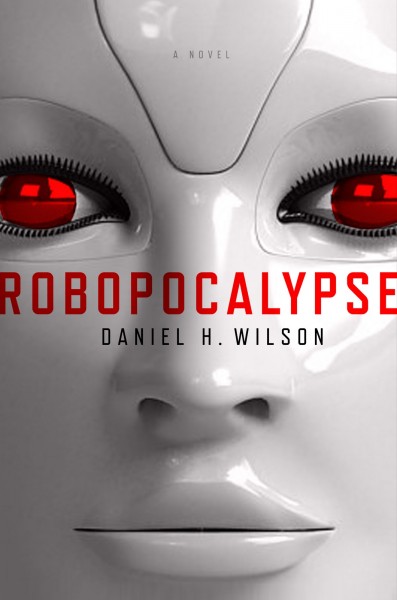
Further into the future comes the movie adaptation of “Robopocalypse,” Daniel H. Wilson’s 2011 science fiction novel about the rise of artificial intelligence and the threat it poses to humanity.
Wilson’s book takes readers from the early days of AI self-awareness to the final battle, on the tundra of the frozen north, that saves humanity. It’s a fantastic story – in every sense of the word — but Wilson makes it all seem perfectly believable.
Director Steven Spielberg is supposedly in line to film “Robopocalypse” for release some time in the next couple of years.
“Robopocalypse” has the kind of plot and reader-friendly narrator that Max Brooks’ novel “World War Z” does not.
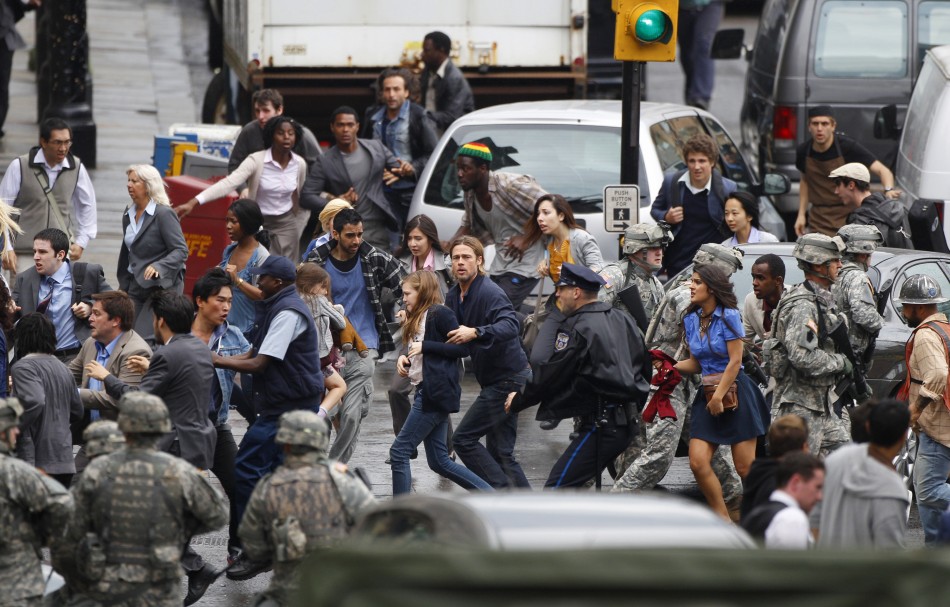
While “World War Z” is one of my favorite recent science fiction/horror novels, it only takes one reading to understand that it might be hard to film. It is an episodic story that rarely repeats characters and flashes from place to place on the globe, telling the story of how the planet is overrun by zombies and how humans fight back.
“World War Z” is a clever and exciting read and, considering the popularity of zombie fiction right now (especially “The Walking Dead”), is probably a natural for a big-screen adaptation.
But early on in the making of the movie, directed by Marc Forster and starring Brad Pitt, warning signs started going off.
First of all, the episodic nature of the book left no room for a character like the one Pitt plays. If the book was faithfully adapted, no character would have more than a few minutes on screen, as his or her story unfolded.
Then suggestions of the movie’s plot — a race against time around the world to stop a zombie apocalypse — made it clear that the movie’s story had little to do with the book.
Now the movie has been pushed back from a December 2012 release to summer 2013, writer Damon Lindloff (“Lost”) has been brought in to rewrite portions of the script with an eye toward re-filming portions of the movie, the bulk of which has already been shot.
Of course, this means that the budget is ballooning.
I’m hopeful that the makers of “Abraham Lincoln: Vampire Hunter” will get it right. We’ll know soon, anyway. We won’t know until 2013 how badly “World War Z” is screwed up (because I’m increasingly certain that it will be). And we’ll see how Spielberg does with “Robopocalypse.”
 keithroysdon