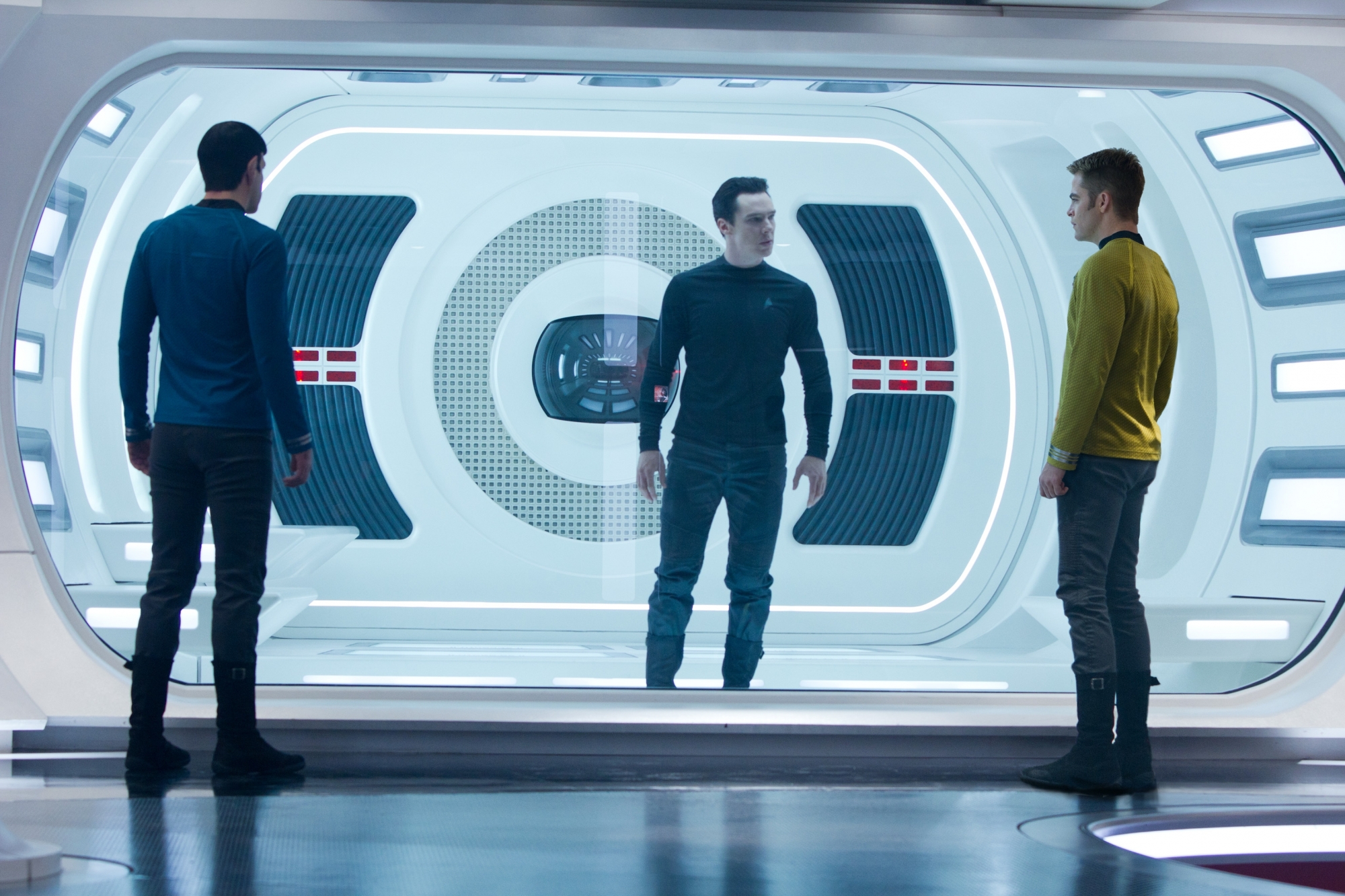
All weekend, I’ve been trying to find a way to express my feelings about “Star Trek Into Darkness,” the new J.J. Abrams follow-up to his 2009 reboot of the classic TV and movie series.
I really liked the 2009 movie and liked what Abrams did with it: By rebooting the stories but putting his own stamp on them by playing havoc with the timeline, he made it all seem fresh. True, the movie lacked a compelling villain and took a while to get started, but it was a top-notch effort.
Almost the opposite is true of “Star Trek Into Darkness.”
I should say that I actually liked the movie pretty well. This being the second film, no long set-up to establish the setting and characters was necessary. The cast has settled into their roles with ease. I could watch Zachary Quinto and Chris Pine play Spock and Kirk until they are as old as Leonard Nimoy and William Shatner.
And what a villain. I’m going to be venturing into spoiler territory here, so be warned. Okay? As “John Harrison,” Benedict Cumberbatch is one of the best “Star Trek” bad guys ever. Half-way through the film, when a captive Harrison announces that he is, indeed, Khan, it seemed perfect and gratuitous at the same time. Cumberbatch matched Ricardo Montalban for arrogant menace. But to what end? While I likewise could watch Cumberbatch play this dangerous but fascinating superhuman in a new movie every few months, there was nothing about the way the character was written that added meaning to the fact that he was Khan. He could have been your garden variety genetically superior bad guy.
In fact, Abrams’ and his screenwriters’ best creation is also, in some ways, their most pointless. The weight of history made the Khan character important in “Star Trek II: The Wrath of Khan.” This was a superheroic but tragic figure who had a reason to hate Kirk from – in the movie’s timeline – the captain having abandoned him 15 years before. In “Into Darkness,” Khan has a grudge against Peter Weller’s Starfleet admiral. And you know what? Weller’s Admiral Marcus was an asshole. In those scenes in which Khan was working with Kirk and Scotty to take Marcus down – and as much as I appreciated Kirk’s “I think we’re helping him” – I was actively rooting for Khan.
So much about “Into Darkness” seems overstuffed. My son observed after the movie, “It seemed like they were trying too hard.” He had just seen most of “Wrath of Khan” the night before and, while he’s not overly impressed with “Star Trek” in general, took note when “Harrison” introduced himself as Khan. But ultimately the shared plot and characters didn’t have much of an impact, on him or me.
“Into Darkness,” as fun and exciting as it is – and it is – seemed to be too laden with references and plot points and call backs to characters. We get the Prime Directive. Tribbles. All those cryogenic supermen (and not another single one gets thawed out). Carol Marcus, future mother (at least in the old movies/timeline) of Kirk’s son. And the whole sacrifice that doesn’t turn out to be a sacrifice at the end.
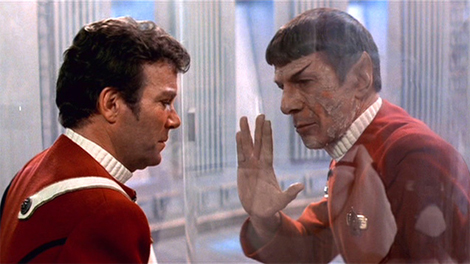
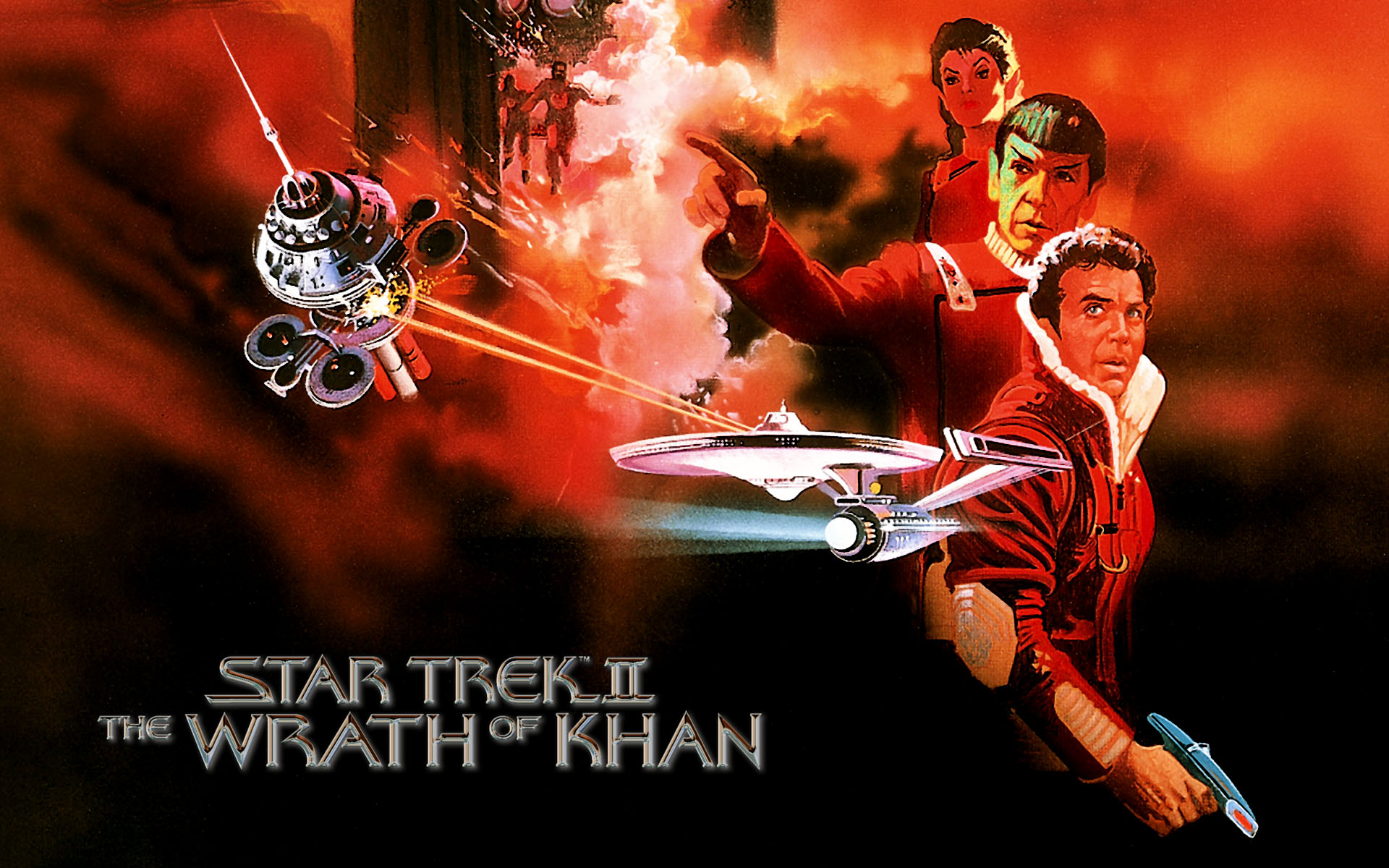
I still remember going with a group of friends to see “Wrath of Khan” in 1982. We had been delighted to see “Star Trek: The Motion Picture” three years earlier but its leisurely pace (jeez, just dock the shuttle already) and uncharacteristic relationship between Kirk and Spock and McCoy – because of Spock’s efforts to purge his human traits – were disappointing. “Wrath of Khan” was like a rebirth.
And the suspense. Even in those pre-internet days, somehow we all knew the rumors that Spock might be killed off at the end of the movie. Director Nicholas Meyer even teased us when, early on, he has Kirk ask Spock, “Aren’t you dead?” after the training exercise.
By the time the end of the movie rolled around, and we saw Spock’s fate play out in front of us, we were deeply moved.
As affecting as the climax of “Into Darkness” was – and it was – it felt like just another plot twist. Yes, we knew that “E.T.” was going to come back from the dead when Elliott’s flower revived. Same with the tribble here.
I can’t say I didn’t like “Star Trek Into Darkness.” I did. I felt it hit all the right notes – albeit maybe a few too many – and was a great showcase for terrific actors – especially Cumberbatch and Quinto – and rousing action scenes.
But the movie didn’t improve on the original in the ways that really mattered.
Random observations:
As great as Quinto is as Spock, Pine equals him as Kirk. It was cool to see him, by the end of the movie, in the place where Shatner’s Kirk was when the series started.
I miss Bruce Greenwood’s Chris Pike already.
Does Zoe Saldana rock that ponytail or what?
Karl Urban is so good as Bones, I wish he had more to do in these movies. There’s just one scene where the Kirk/Spock/McCoy character triangle plays out as it did in the TV show and movies. I could have used more.
I was pleased there were so many space scenes in the movie, particularly since the trailers and commercials made it look like the plot revolved around urban (not Karl) action in London and San Francisco.
It was good to see Leonard Nimoy although his scene was perhaps the most gratuitous moment in the film if you don’t count Alice Eve showing off Carol Marcus’ “holy moley” figure. I didn’t mind either, but Nimoy’s scene in particular seemed pointless.

Still no Shatner. I’ve come to accept that William Shatner will probably never appear in these movies. Apparently there was a nice Classic Kirk scene – mostly voice over, a holographic recording from beyond the grave – considered for the end of the first movie. I mourn that didn’t happen.
 keithroysdon