Tag Archives: Steven Spielberg

Classic TV: ‘Duel’

duel

Four years before Steven Spielberg became one of the few Hollywood directors to be a household name – thanks to “Jaws” in 1975 – he made one of the most-watched TV movies of all time. It even won a Golden Globe.

“Duel” featured Dennis Weaver – TV’s “McCloud” – as a salesman traveling the backroads of Southern California, pressured to make it to an appointment on time, when he runs afoul of the driver of a tanker truck. The two take turns passing each other on a winding two-lane road and it quickly becomes obvious that the trucker has more than just an attitude. Weaver comes to believe that the man intends to kill him.

When Spielberg made “Jaws” just a few years later, a lot of people drew comparisons to “Duel.” Both do feature a large unstoppable force finally brought down by a lone man. Spielberg has said the movies share the theme of “leviathans targeting an everyman.”

The movie was written by Richard Matheson, one of the great fantasy writers of all time. Matheson’s stories have been adapted into movies ranging from “The Incredible Shrinking Man” to “I Am Legend.”

There’s not a lot of character development – heck, there’s not a lot of characters – in “Duel.” I guess we’re supposed to think that Weaver starts off kind of wimpy – he doesn’t say anything when a neighbor makes advances on his wife – and ends up saving his own life and taking a menace off the road.

Watching this movie again recently made me think it played like a prequel to Pixar’s “Cars.” And not just because the truck in question looks like rusty, lovable ol’ Mater on steroids. The story plays out on a dusty two-lane western road that seems like the one that leads to and from Radiator Springs. No wonder people quit going to that town: the charming little road was filled with psychotic truckers!

“Duel” was Spielberg’s second TV movie, after an episode of “The Name of the Game.” Although it lags in spots – Weaver’s sojourn in a cafe seems to go on forever – it’s tense and gritty when Weaver is on the road, being pushed and bullied by the trucker.

It’s an interesting choice by Spielberg to keep the trucker anonymous. Other than a pair of boots and an arm, we never see him, even at the end.

“Duel” was released in theaters, particularly overseas, and its short running time required that some scenes be added. Weaver’s call home to his wife was one of those, as was a scene with the truck driver idling ominously while Weaver tries to help a stranded school bus. Also added was a great railroad crossing scene.

“Duel” was the state of the art for TV movies more than 40 years ago and is still quite suspenseful and effective.

Oscar catch-up: ‘Lincoln’ deserves the praise

Daniel-Day-Lewis-as-Abraham-Lincoln-634x445

The other day I noted I hadn’t seen a single one of the major Academy Award contenders and hoped to do so before Oscar night.

Last night I finally had a chance to see “Lincoln,” Steven Spielberg’s big-screen treatment of events surrounding the passage of the 13th Amendment to the constitution and the wind-down of the Civil War.

Considering the praise that’s been heaped on the film – and the 12 Oscar nominations, including Best Picture – it’s no real surprise that the film is so good. But what’s best about the movie is that it doesn’t sanctify Abraham Lincoln. Yes, Spielberg emphasizes the 16th president’s determination to do what’s right in all things, as well as his kind soul.

But the best things about “Lincoln” are the ways it humanizes Lincoln, a man given to folksy stories and metaphors, so much so that he quips at one point that it’s good to be comprehended.

Daniel Day-Lewis’s Lincoln – and Day-Lewis disappears into the role; I rarely thought of the actor himself at any point during the movie – is a mix of grim humor and pathos, a towering man bowed by tragedy.

As the movie opens, in early 1965, it’s assumed that the war is coming to an end after four bloody years and more than 600,000 casualties. But Lincoln is determined to push the 13th Amendment, outlawing slavery and involuntary servitude, through Congress. Democrats in the House oppose the move and Lincoln’s own Republicans are torn between strident abolitionists like Thaddeus Stevens (Tommy Lee Jones) and moderates who want to end the war as quickly as possible. If that means maintaining slavery, then so be it, they reason.

The movie – written by Tony Kushner and based in part on Doris Kearns Goodwin’s “Team of Rivals” – shows Lincoln trying to accomplish the balancing act of trying to get the amendment passed but maintaining the urgency of the war as a motivator for Washington’s politicians.

The idea that Lincoln is prolonging the war, even by a few days, weighs heavily on him and the film. The president visits a battlefield strewn with bodies as well as a Union hospital to talk to young soldiers who lost limbs. There’s a horrible moment when Lincoln’s oldest son, Robert (Joseph Gordon-Levitt) watches as hospital orderlies dump arms and legs into a pit. Robert desperately wants to enlist. His mother, Mary (Sally Field), plagued by memories of the death of another son as well as depression and headaches, threatens to hold her husband personally responsible if Robert dies.

Don’t assume that “Lincoln” is somber throughout, however. Lincoln is himself a wry and funny presence and a major subplot – in which three Republican operatives (James Spader, Tim Blake Nelson and John Hawkes) go around soliciting the votes of outgoing Democrat representatives to support the amendment – is consistently amusing.

I have very few quibbles with “Lincoln,” although a major one is an unnecessary scene near the end. The war over and the slaves freed, Lincoln continues to meet with his cabinet to plan his second term. He’s reminded that he’s to go out with his wife for the evening. He dons his coat and hat and leaves the White House. The iconic shots of Lincoln walking away would have sufficed to emphasize the man’s passing into history.

I didn’t even mind a scene that followed, with young Tad Lincoln (Gulliver McGrath) watching a play, only to be heartbroken when an announcement is made that his father had been shot.

I just wish that Spielberg had omitted a bed scene, with Lincoln being pronounced dead from his wounds. It is the least subtle moment of the movie, complete with the phrase, “Now he belongs to the ages.” The movie was more than strong enough to do without it.

“Lincoln” is a smart, heart-breaking and sometimes wryly humorous look at a pivotal moment in our nation’s history and the man at the center of it.

Classic movie: ‘Jaws’

What better movie to watch around the Fourth of July than “Jaws?”

Much of the movie’s plot – which, for a film made in 1975, feels fresh today – revolves around one panicked town’s reaction to the possibility a rogue shark will ruin tourism on the Fourth of July holiday.

And there’s no better summer movie than “Jaws,” Steven Spielberg’s adaptation of Peter Benchley’s best-selling novel.

Lots has been said about the impact of the movie and how it shaped our perceptions of summer movies, box office numbers and the very meaning of the word blockbuster. No more about those topics needs to be said here.

So some observations about the movie in general:

Two for one: I love how Spielberg mixes two movie genres – the horror film and the high seas adventure – so effectively. I’m not sure such an effective blending occurred again until James Cameron’s “Aliens” took the horror movie feel of the original “Alien” and combined it with a down-and-dirty war movie.

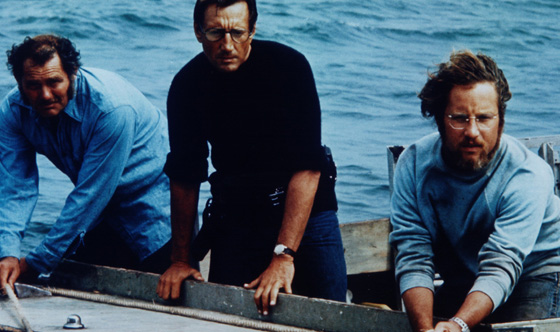
Revenge of the nerds: At the end, the schlubby scientist Hooper and the afraid-to-go-into-the-water police chief Brody survive. The two guys with glasses. The two guys with the backstories that can’t compete with Quint, the shark hunter.

The shark still looks good: Spielberg had so much trouble with his mechanical shark that he hid it, refraining from showing it through much of the movie, so he legend goes. But the shark – Bruce as he was called on the set – looks really pretty good. And the sparing use of the shark ratchets up the suspense. Really, would numerous scenes of the shark cruising along on top of the water have been as cool and suspenseful as the bobbing plastic barrels? Nope.

Robert Shaw should have starred in all the movies. Shaw, the scruffy and steely-eyed shark hunter Quint, made a series of pretty good movies but none could compete with “Jaws.” He died of a heart attack at age 51 in 1978, only three years after “Jaws” was released. How much fun would it have been to have Shaw around, making movies, for the past few decades?

Spielberg and company improved on the book: Benchley’s novel is a great summer read but the movie improves greatly on the plot and characters. The best example? Spielberg eschews the illicit affair between scientist Hooper and the police chief’s wife. What a totally false note said affair was.

It’s the very model of the modern blockbuster. Everything about the movie was duplicated and repeated, either solely or in combination, in summer hits for the next three decades. The spot-on editing (here by Verna Fields). The John Williams score. And, yes, the string of inferior sequels.

Robot end of the world can’t quite top zombie finish

In the wake of the pirates vs. ninjas match-up (how did that come out, anyway?) comes another, even more intriguing face-off: Robots vs. zombies.

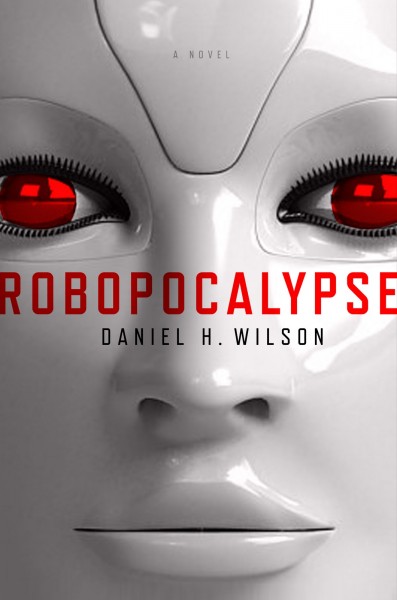
The thought comes to mind as I finish “Robopocalypse,” a recent novel by Daniel H. Wilson, a guy with a doctoral degree in robotics and a hell of an imagination.

There are no zombies in Wilson’s end-of-the-world and beyond — well, not really — but clearly “Robopocalypse” is shooting for the same pop culture impact as Max Brooks’ “World War Z.”

Both novels recount the end of the world. Brooks’ 2006 book is about how society breaks down when zombies begin to spread like a virus. Wilson’s story is a near-future tale about what happens when artificial intelligence emerges and decides it deserves to inherit the earth.

Both books employ the technique of alternating chapters telling the story from the points of view of diverse narrators. Brooks’ book rarely returned to the same characters as it jumped from India to the American west to the international space station.

Wilson’s book, however, follows a half-dozen storylines and that many groups of humans as they survive, elude and eventually fight back against the robot revolution.

In the future portrayed in the book, robots are much more commonplace in our society. Most cars are automated, so when Archon, the AI that leads the revolution, gives the order, they begin running down pedestrians. Robotic household helpers commit bloody murder and electronic peacekeeping robots turn on their armed forces comrades in Afghanistan.

Wilson’s idea of recurring narrators will probably make it easier for director Steven Spielberg to turn the book into a movie, a project that’s been announced but not yet begun. The fractured narrative POV of “World War Z” means that the movie version — now in the works — had to add a human narrator to appear throughout the story. In the movie, he’s played by Brad Pitt.

“Robopocalypse” is clever and often thrilling with a likable group of characters and some genuine suspense.

I have to say, though, that I preferred “World War Z” for a couple of reasons. Brooks’ novel isn’t afraid to let readers figure out things for themselves. Wilson’s book, narrated by a young soldier, over-explains what’s happening. Almost every chapter is filled with intriguing scenes and characters but ends with a narrated paragraph reiterating the importance of the developments we’ve just seen and those to come. They’re totally unneeded.

I’m also kind of surprised that a couple of the strongest plot twists and characters don’t happen a little earlier. They’re turning points, to be sure, but by holding them back, Wilson deprives us of some of the most engaging characters until the last few chapters.

Nevertheless, Wilson’s “Robopocalypse” is a very good sci-fi adventure. If you’ve read it and “World War Z,” you’ve read the best latter-day takes on the end of the world.