Those were the days, weren’t they?
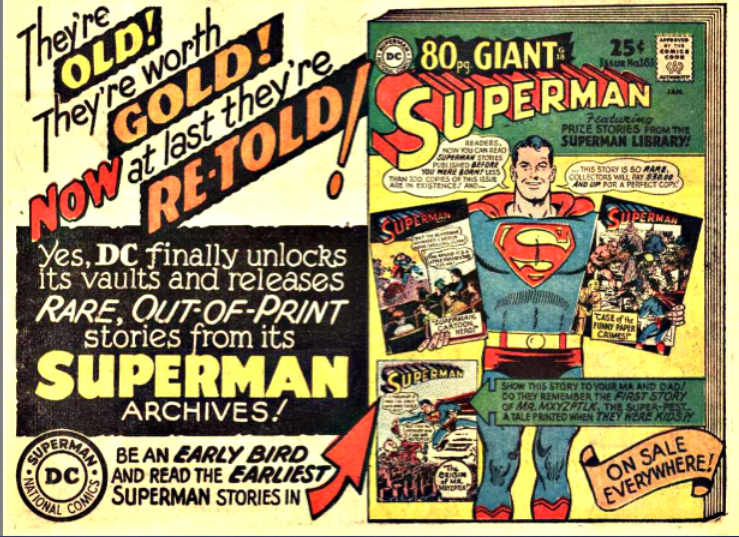
80 pages of comic book action for 25 cents.
Even though the “giants” were mostly reprints – many from the Golden Age or early Silver Age – they were many times over our money’s worth.
Back with our occasional look at odd moments in comic books.
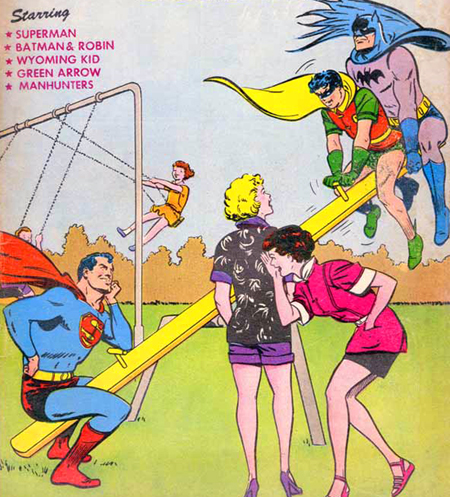
It’s easy to forget how crazy much of DC’s Silver Age was. Batman was fighting space monsters, Lois Lane was scheming to discover Superman’s identity – and marry him – and Superman was constantly falling in love with mermaids and the like.
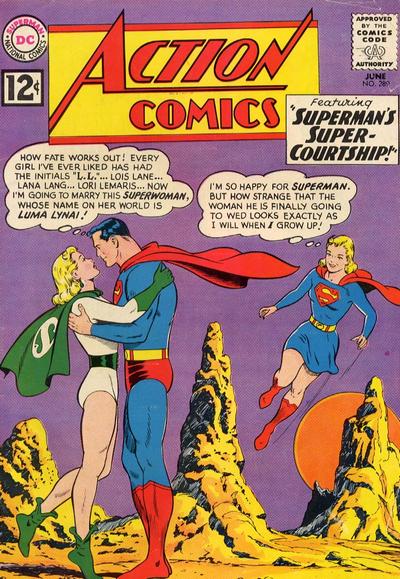
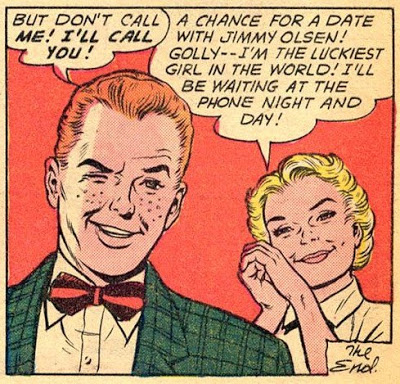
Or getting fixed up, like in Action Comics 289, which came out in June 1962.
In a plot that could be adapted as a Kate Hudson romantic comedy, Supergirl, worried about her cousin Superman’s loneliness, keeps trying to fix him up. Potential mates include Helen of Troy and members of the far-future Legion of Superheroes.
Ultimately, Supergirl finds a perfect match for her cousin. And what the hey – she looks just like a slightly-older Supergirl!
Some feverish dreaming going on there, among fans and in the DC editorial offices.
I come to praise Les Daniels, not to bury him. But it turns out one of my favorite authors of comic book histories died and I didn’t even hear the sad news.
Daniels – who died in November 2011 at age 68 – is one of those authors to whose work I have returned again and again.
And no wonder. While he wrote fiction, his non-fiction work lines a shelf near by bedside.
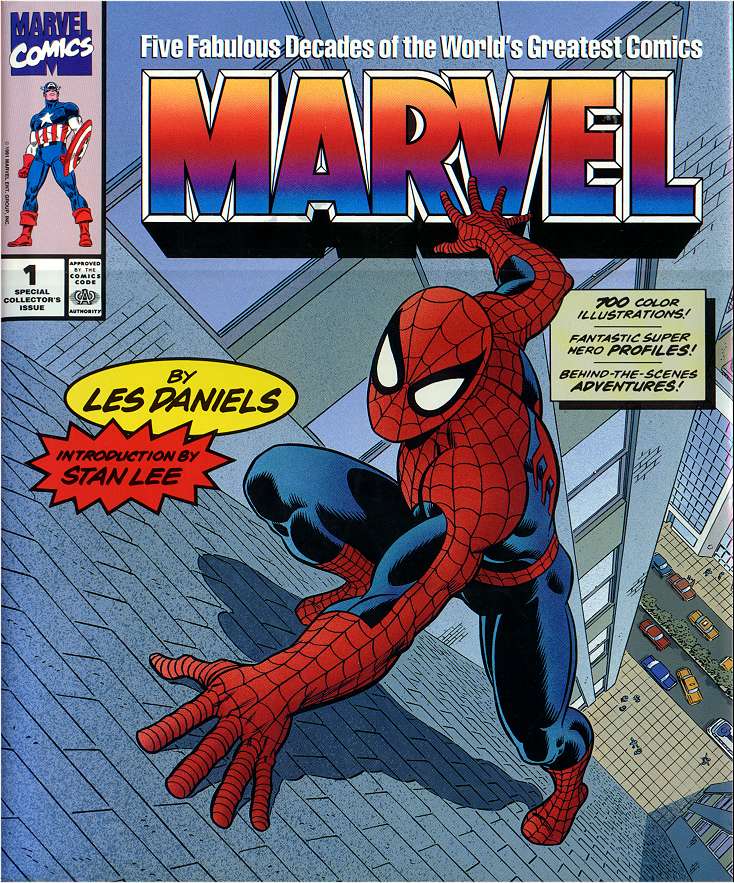
In 1971, he wrote one of the early serious histories of comic books, “Comix: A History of the Comic Book in America.” He followed this up with some of the most readable “official” histories of comic book publishers and characters in print, including “Marvel: Five Fabulous Decades of the World’s Greatest Comics” in 1991, “DC Comics: Sixty Years of the World’s Favorite Comic Book Heroes” in 1995, and what I consider his best modern-day work, a three-volume history of DC Comics’ Trinity, Batman, Superman and Wonder Woman.
These three”Complete History” volumes were published in the late 1990s and early 2000s and, in addition to his clear and concise writing, feature some of the best design in comic book histories to that day. These volumes include covers by Chip Kidd, a star of the book design world.
Daniels was also an author of historical fiction and historical fiction with a supernatural bent.
There’s so much online – and so much crap online – about comic books these days, Daniels’ work seems – and is -authoritative and comprehensive and first-rate by comparison.
RIP Mr. Daniels.
Well, this is kind of wonderful.
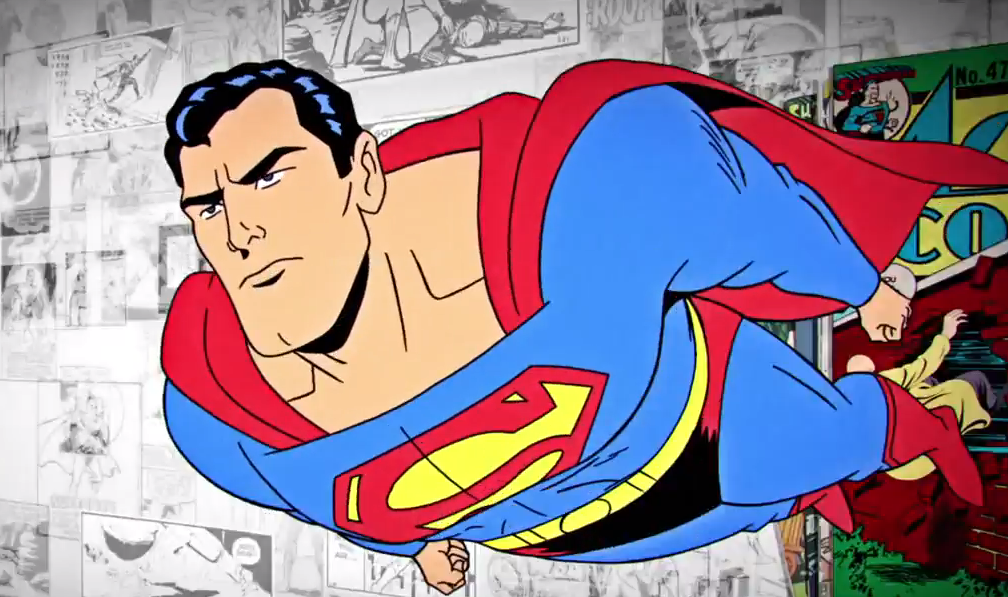
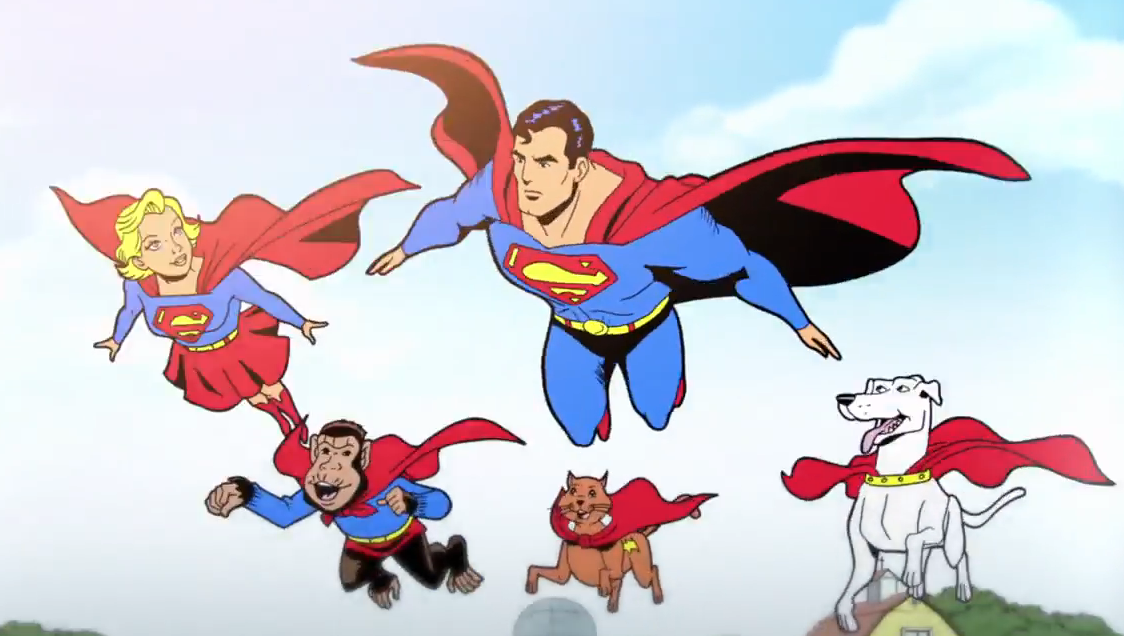
To mark the ongoing celebration of Superman’s 75th anniversary – it was 1938 when Jerry Siegel and Joe Shuster’s superhero debuted – the people at DC Comics got DC animated universe mastermind Bruce Timm and “Man of Steel” director Zach Snyder to collaborate on a two-minute history of the character.
The look of Superman changes throughout, from the original design of the Man of Steel to the Fleischer animated shorts to faithful cartoon renditions of live-action Supermen like George Reeves and Christopher Reeve.
Some of the great characters and storylines – Bizarro, the death of Superman – are here too, as are many of the great artists.
And this just makes me smile.
See the video here at Entertainment Weekly.
It’s puzzling how Wonder Woman has eluded film and TV makers.
Of course, we can’t be sure what Joss Whedon would have done with his Wonder Woman movie that got spiked, but we’ve seen DC Comics, Warner Bros. and other filmmakers stumble more than once in their attempts to do a live-action Wonder Woman.
I’ve always said the DC Comics animated universe treatment of Wonder Woman in the “Justice League” series could serve as a ready blueprint for how to make a serious, ass-kicking live-action version of the Amazon warrior princess and her world.
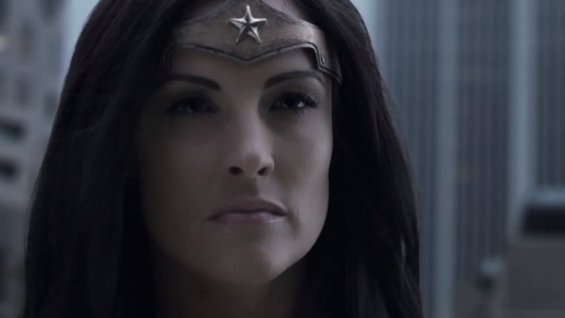
It looks like Rainfall Films has, in its two minute Wonder Woman short, opted for a “Man of Steel” treatment, which makes sense since that’s the way DC and Warner Bros. are headed. By adding Batman to the “Man of Steel” sequel, maybe they’re building to a movie featuring the DC trinity – those two plus Wonder Woman.
At any rate, the short film would serve nicely as a model for the big studio.
And you could do a lot worse than having Rileah Vanderbilt play the role in a full-length movie. She looks great in the short.
As more than a few people have said online: Okay. Go do this.
Think you know the story of Superman?
Well, maybe not.
When “Man of Steel” comes out June 14, director Zack Snyder might have a few surprises even for longtime fans of the man of … er, steel.
Most of us don’t know what to expect from “Man of Steel” yet, but it’s certain that a few elements of the Superman mythos will be tweaked at the very least.
That’s not surprising, because most filmmakers like to bring something new to their versions of familiar stories. That’s why “The Amazing Spider-Man” retold the origin of the webslinger only about a decade after we saw it before and tried to infuse new elements – chiefly a mystery about Peter’s parents – into it.
It’s not just superhero stories that get revamped. When director John Carpenter made “The Thing” in 1982, he made the “walking alien carrot” much less of the traditional monster familiar from 1951’s “The Thing from Another World.” the first adaptation of John Campbell’s story. Carpenter made the alien menace a much more paranoia-inducing shapeshifter.
By the way, spoilers ahead for some current movies if you haven’t seen them.
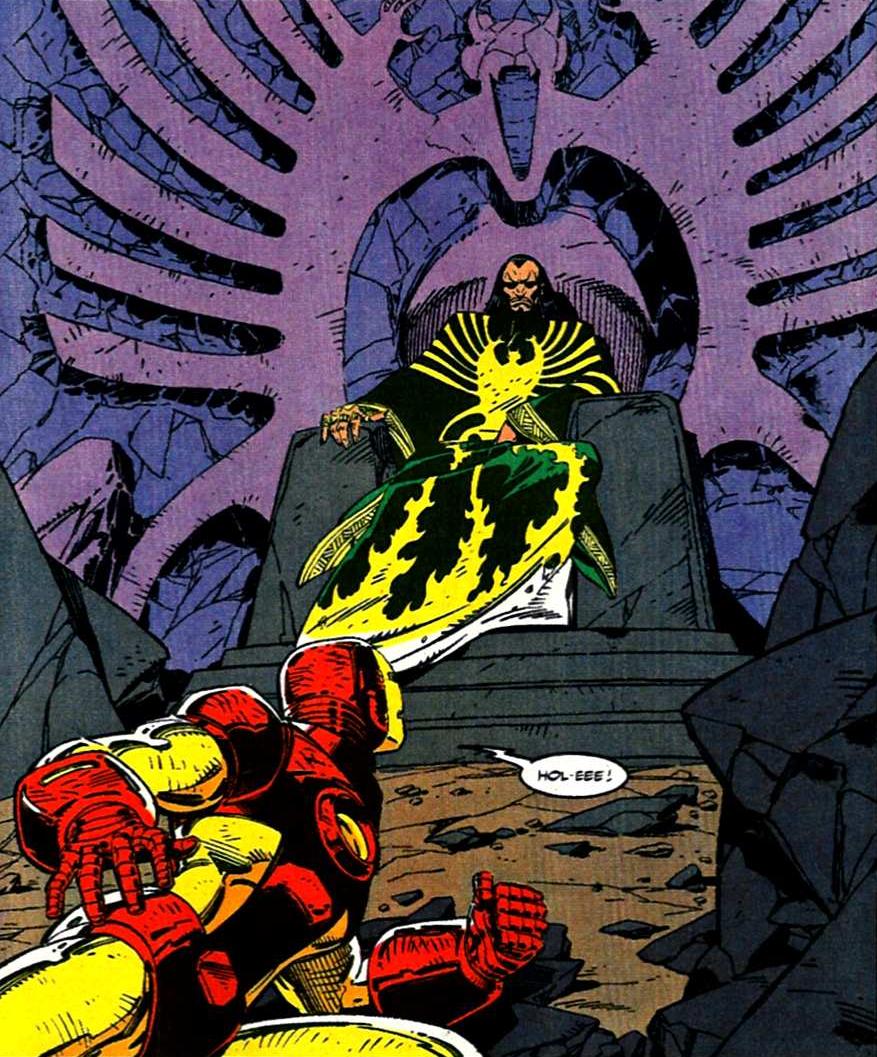
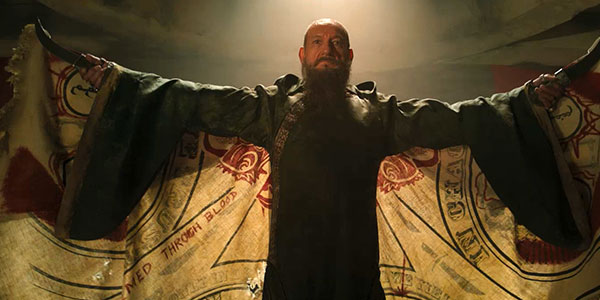
Some fans of the “Iron Man” comics were irritated when this summer’s “Iron Man 3” made huge changes to the character of the Mandarin, the longtime antagonist of Tony Stark.
The Mandarin went from an Asian menace armed with magic rings …
To a figurehead, a stalking horse played by a down-at-the-heels British actor.
Sometimes it’s more than changing characters. Sometimes it’s all about changing the background of sets of characters.
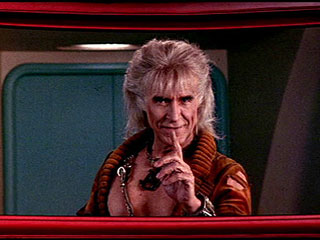
The classic 1982 “Star Trek II: The Wrath of Khan” was a sequel to an episode of the original series and emphasized the bad blood and shared history of Khan, the genetically superior warrior, and Jim Kirk.
In this summer’s “Star Trek Into Darkness,” however, there was no history between Kirk and Khan. And I think the movie suffered for that.
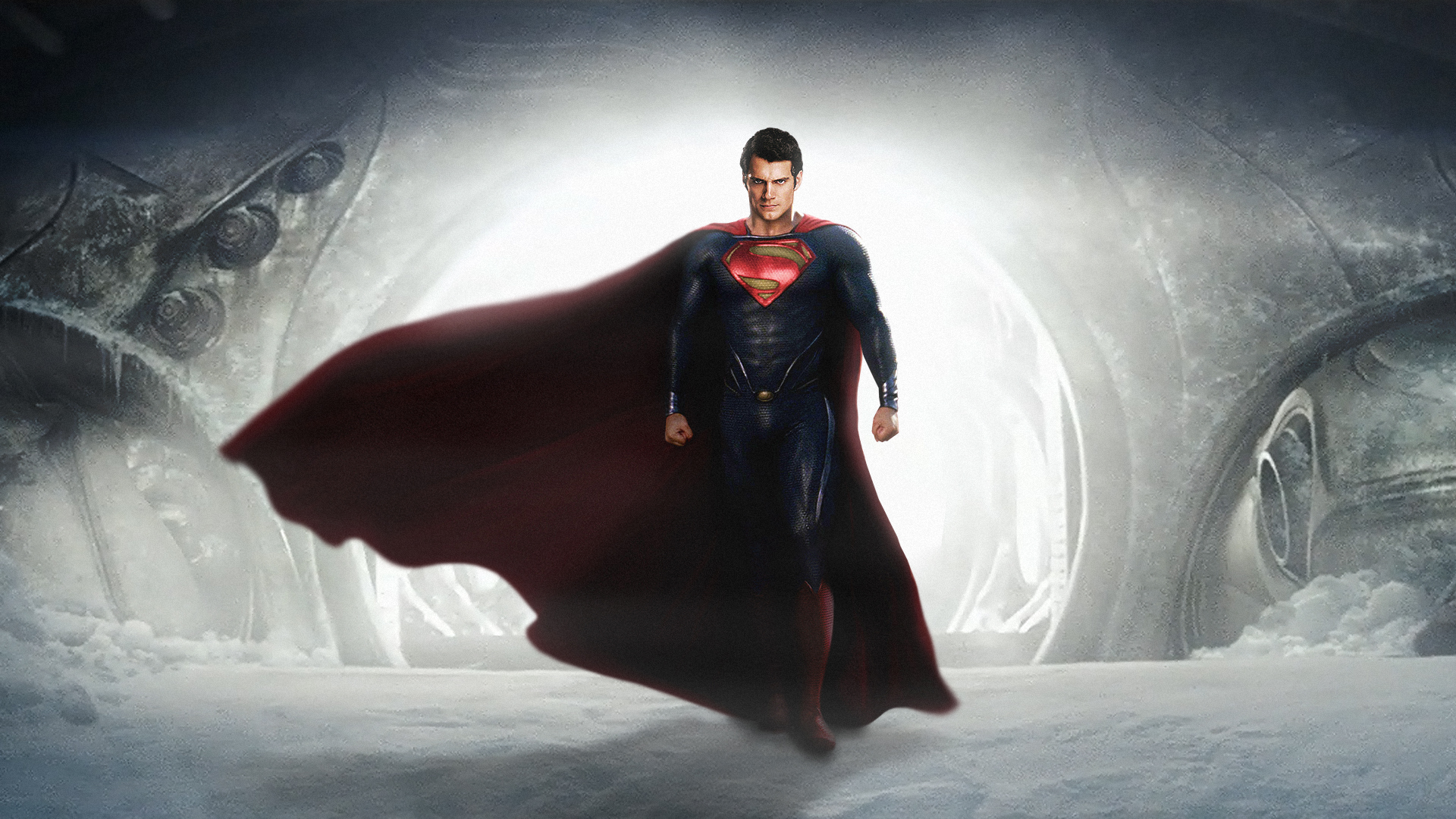
With “Man of Steel,” the rumors have been flying about changes Snyder and producer Christopher Nolan might have made.
Does Superman’s Kryptonian birth father, Jor-El, live? Or are the clips of Russell Crowe talking to Henry Cavill just indicative of an amazingly lifelike hologram?
Is Zod (Michael Shannon) sprung from the Phantom Zone or does he arrive in a space ship? Sure looks like a Kryptonian ship in the background to me.
We won’t know the answers for a few days. But we can already guess about fairly interesting cosmetic changes to two longtime characters from the “Superman” stories.
Daily Planet editor Perry White and cub reporter/photographer Jimmy Olsen have been staples of the comics for a half-century.
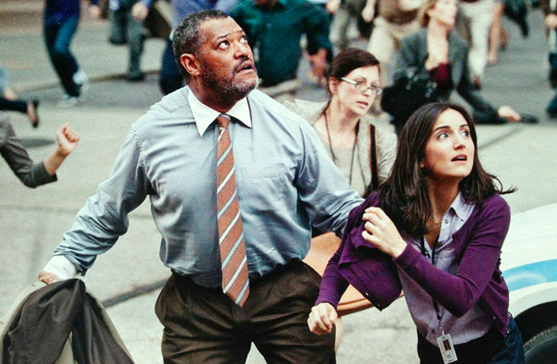
Snyder, interestingly, cast Laurence Fishburne, an African-American actor, to play White, who has traditionally been, well, white. I love Fishburne and I think this is a big win.
But it’s less clear who’s playing Jimmy Olsen in the movie. In fact, it’s becoming more clear that Jimmy Olsen isn’t in the movie. Actress Rebecca Buller seems to be playing Jenny Olsen.
Traditional Jimmy.
New Jenny.
I can live with that.
So what do you get for the Man of Steel who has everything?
A new logo, apparently.
DC Comics has released a new Superman logo for its comics to coincide with the 75th anniversary of the first “Superman” story.
Created by Jerry Siegel and Joe Shuster, the last son of Krypton has been an enduring icon for three-quarters of a century. The new “Man of Steel” movie comes out June 14.
So how do we feel about the logo? It’s okay, I guess.
The cape’s too short.
The hair is funky.
But it’s nice to see Big Blue get a nod.
Superman is a test that many movie- and TV-makers don’t quite pass.
Created by Jerry Siegel and Joe Shuster and continually published and re-printed since Action Comics No. 1 hit the stands in early 1938 – 75 years ago – Superman and his alter ego, Clark Kent, make up one of the most recognizable characters in all of popular culture.
So it’s not a surprise that DC Comics and Warner Brothers – frustrated in their efforts to create a big-screen presence since “Superman Returns” missed the mark several years ago – are trying again with “Man of Steel,” due in theaters June 14.
I’m still not sold that director Zack Snyder has the character right. But I was a little more convinced after the trailer for “Man of Steel” released a few days ago.
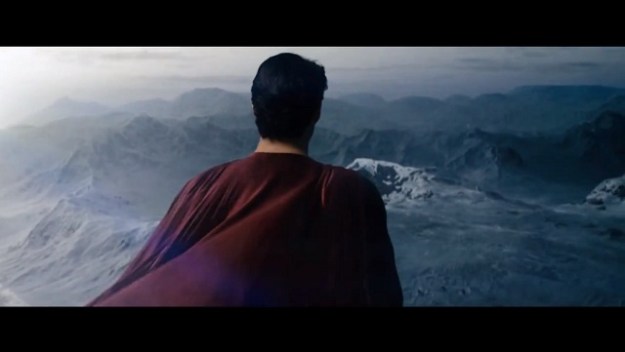
That’s mostly because the trailer, at least, emphasizes the “outsider” status of the character.
Make no mistake, and I’ve said it here before: Superman is not a brooding character like Batman. He’s not driven by nightmares. He’s not wracked by guilt. If Snyder’s “Man of Steel” is marked by those characteristics, the movie will fail.
But he is, for all his optimism and courage and innate knowledge of right and wrong, an outsider.
The trailer seems to acknowledge this, portraying a Kal-El/Clark/Superman who, as a young man, is uncertain about what he should do with his life and afraid of how he will seem to the world around him.
As he grows up, he appears to wander far away from Smallville, even though he continues to use his powers for good, rescuing men in a fiery accident.
The trailer shows us a Lois Lane (Amy Adams) who has been seeking this man of mystery (Henry Cavill), and it is in Lois’ words that the movie might find the best definition of the character.
“How do you find someone who has spent a lifetime covering his tracks?” Lois asks. “For some, he was a guardian angel. For others, a ghost. He never quite fit in.”
Yes.
Superman is, even while he is the champion of his adopted world, an outsider. He’s the last of his kind – well, for the most part – and the first of a new kind on Earth. He feels an obligation to his new home even as he mourns the home he never knew.
Tellingly, Lois asks Superman – still unnamed to the world at large – about the “S” on his chest, and Superman tells her that the symbol stands for “hope” on his world.
Playfully, Lois notes that on this planet, it’s an “S” and begins to suggest it should stand for Superman before she is interrupted.
The trailer seems to capture the world of Superman. We can hope so, at least.
(I still don’t get the kid in the backyard with a makeshift cape on his shoulders. If that’s young Clark, it doesn’t make sense. Who is he imitating? I’m more convinced now than earlier that the boy isn’t Clark, but is a young boy play-acting as Superman after the character becomes known to the world. If so, it will be a lump-in-your-throat moment.)
Looking forward, with hope, to June 14.
There’s a surprisingly long history of comic book superheroes appearing in novels, either hardcover or paperback. Some of us have shelves lined with prose treatments of our favorite heroes.
Having just read “Wayne of Gotham,” a recent novel by Tracy Hickman, I thought I’d make mention of a couple of notable ones.
First, “Wayne of Gotham.” Hickman’s story alternates between two time periods, the present day, as Batman tries to unravel a decades-old mystery, and the late 1950s, when his father, Gotham physician Thomas Wayne, dealt with a threat to his beloved city.
The 1950s storyline, of course, takes place several years before the events of the Batman comics that created the Dark Knight: Thomas and Martha Wayne are gunned down in an alley, while their young son watches, by a deadly criminal. Young Bruce Wayne devotes his life to fighting crime, as we all know, as Batman.
In Hickman’s book, chapters alternate between the present and the past, recounting a mystery that confronted both generations of Waynes.
In some ways, it feels like Hickman’s most daring decision is to depict an aging Batman who fights crime now with the help of high-tech devices. Sure, Batman still enjoys a good scrap. But he’s middle-aged and all those midnight battles have taken a toll on his body.
The granddaddy of all superhero books is George Lowther’s 1942 novel “The Adventures of Superman.” The character of Superman had been around for a few years by the time this hardback book was published, but the impetus for the book was no doubt the very popular “The Adventures of Superman” radio series. Lowther was a writer on the show as well as many others.
(Fun fact about Lowther, who died in 1975: He also wrote more than 40 episodes of “CBS Radio Mystery Theater,” the last of the widely heard radio dramas, in 1974 and 1975.)
Lowther’s Superman novel, which was reprinted in 1995, was the first novelization of a comic book superhero, of course, but also contributed to the mythology of the character, naming Superman’s parents on Krypton Jor-El and Lara, varying from the earlier Jor-L and Lora from the comics.
(Another fun fact: The radio series introduced several of the core Superman mythos concepts, including Kryptonite, that elemental remnant of Superman’s home planet that can be dangerous to him. Although the radio show is largely unheard these days – I have an audio cassette boxed set from 20 years ago – it contributed a lot to the character.)
Probably my favorite modern-day superhero novelization is “Enemies & Allies,” a 2009 novel by Kevin J. Anderson.
Set at the height of the Cold War in the 1950s, the novel recounts the early, uneasy meeting between Superman and Batman as they team up to battle Lex Luthor, who is stoking 1950s-era fears of nuclear war and alien invasion.
Anderson’s book is terrific. It’s a good treatment of vintage superheroics and is quite faithful to the feeling of mutual suspicion replaced by growing trust between Superman and Batman. I wish he’d come back to the characters.