Tag Archives: Thanos

‘Guardians of the Galaxy’ takes us out there

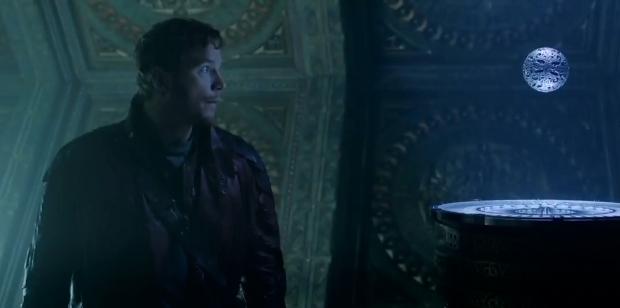
guardians infinity stone

A lot of people are saying “Guardians of the Galaxy” is this generation’s “Star Wars.” I’m not sure that’s the case, or that anything could be this generation’s “Star Wars.” Some people forget just what a game-changer “Star Wars” and, two years earlier, “Jaws,” were. Those two movies solidified summertime as a time for big-screen escapist fare and proved that people would pay to see it.

Others say that “Guardians” is this generation’s “The Last Starfighter” but I think that’s selling “Guardians” short. As fond as my memories of “Starfighter” are, I think “Guardians” is a better movie.

So what role does “Guardians” fill?

Roles, really.

First of all, it’s a really good summer movie. It’s good-natured and funny and full of action.

Secondly, it’s a sure-footed next milestone in the Marvel Cinematic Universe. Although it only slyly references the quest for the Infinity Stones – the sources of power that will, almost certainly lead Thanos to Earth in the third “Avengers” movie, probably in 2018 – it keeps that subplot to the first three phases of Marvel movies in moviegoers’ minds.

Thirdly, it expands the Marvel Cinematic Universe. Here’s how:

The comics published by Marvel in the past half-century-plus have covered a lot of territory, literally and figuratively speaking.

There’s the street-level superheroes, like Spider-Man and Daredevil, dealing with maniacal villains and street punks alike. The non-Marvel Cinematic Universe “Spider-Man” movies and Marvel’s upcoming Netflix series like “Daredevil” map out this world. (They’re the Marvel counterparts of Batman, for you DC lovers out there.)

There’s the global superheroes, like the Avengers, who have the power to face threats to the entire world. The non-MCU heroes like “Fantastic Four” also fall into this category, as does DC’s Superman and Justice League.

What “Guardians” does is give Marvel Studios a beachhead in the cosmic universe where the comic books have played for a half-century.

There’s always been some crossover among all these Marvel realms, such as when Galactus, devourer of worlds, shows up and is tackled by the FF. Cosmic threat comes to global heroes.
But quite often, the links between the cosmic and Earth-based heroes have been only tenuous. Captain Marvel or the Silver Surfer or Warlock show up and fight and eventually team up with the FF or the Avengers to face a menace like the Kree-Skrull War, but by the end of the story, things are back to a Marvel status quo and the Avengers are dealing with Earth-based villains like Doctor Doom.

“Guardians” plunges us headlong into that cosmic Marvel universe with only occasional looks back at Earth.

I won’t recap the plot I’m sure you’re familiar with by now or even go on and on with my thoughts about “Guardians.” Director James Gunn had made a fun, “Star Wars”-ian adventure pitting an unlikely band of heroes against evil forces. Along the way, the movie introduces, more smoothly than most would have thought possible, fantastic creatures like Rocket Racoon, a small but ferocious animal with a pitiable past and a love of big guns, and Groot, a walking, talking (well, a little) tree creature. Space raccoon and gentle plant-based giant you say? Sure, why not. It’s a testament to Gunn’s handling of the characters and plot of “Guardians” that what the characters are matter less than who they are.

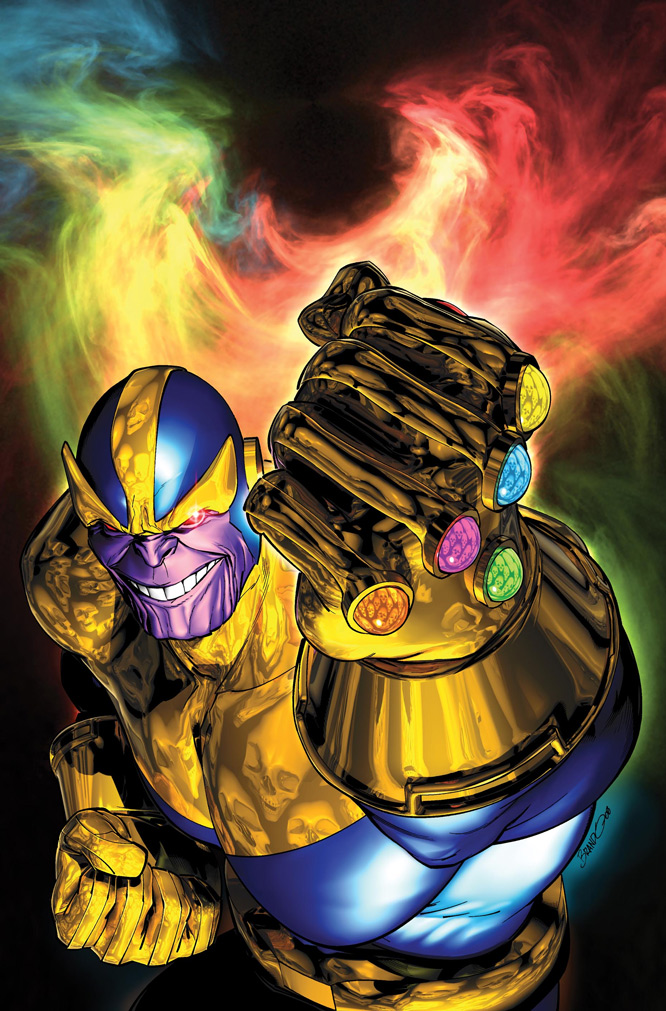
If you remember, Thanos, Marvel’s go-to cosmic bad guy, showed up at the end of “The Avengers” to take credit for pitting an invading alien army against Earth and grin at the thought of courting death.

Thanos wants the Tesseract – the Cosmic Cube in the comics – that the Red Skull wielded in “Captain America” and Loki sought in “The Avengers.” Along with the Aether, the cosmic power from “Thor: The Dark World,” and other Infinity Stones, Thanos can make the Infinity Gauntlet, a weapon of unimaginable power. It’s a certainty that will be the major plot point of the third “Avengers” movie.

One of the most amusing things about “Guardians” is that much of the history and power of the Infinity Stones is laid out midway through the movie … but to the protagonists and antagonists of “Guardians,” who don’t even know as much as Captain America and Iron Man about the importance of the Stones but know a thing to keep away from bad guys when they see one.

So the collected Guardians, led by the effortlessly charming Chris Pratt as Peter Quill, take on Ronan, an upstart ally of Thanos, in an effort to keep a handle on their particular Infinity Stone and keep it away from Thanos.

It’s an effort that will continue for another four years before the contest for the Stones pits Avengers – and likely other allies – against Thanos in the third Avengers movie, which will likely act as capper to the first three phases of big-screen Marvel.

“Guardians” is so much fun, so funny, so charming, that it carries all the responsibility of furthering the over-arching plot of big-screen Marvel as if it were a feather. Despite its many accomplishments, that might be the movie’s handiest achievement.

By the way, I wanted to mention Marvel’s other comic-book universes, besides street-level, global and cosmic playgrounds, because the big-screen Marvel universe will no doubt incorporate them as well.

(I won’t get into a couple of lesser-known Marvel comic book universes here because, frankly, I don’t think we’ll see big-screen versions of Marvel’s romance and western comic worlds anytime soon.)

We’re all but certain to see Marvel’s mystical and horror universes come into play in movies before long, perhaps in a combined venture.

The studio has already named a director for its “Dr. Strange” movie, about a physician who became a master of the mystic arts and fought supernatural creatures. It’ll be interesting to see who the studio picks to play the part because Strange could be as much of an anchor for ongoing Marvel movies as Robert Downey Jr. has been as Tony Stark.

A “Strange” movie would not only introduce the mystical and supernatural Marvel universes to the big screen but could encompass the company’s long history of horror characters, some of whom regularly cross paths with heroes like Spider-Man (I’m looking at you, Moebius the Living Vampire) but operate in a realm that ranges from the dark corners of the Earth to other dimensions. It’s a world of magic – already explained in the “Thor” movies as simply science that humans can’t understand – and wild creatures.

If the idea seems strange to you, consider how strange a space raccoon and a talking tree might have seemed before this record-breaking opening weekend for “Guardians of the Galaxy.”

By Selvig’s Chalkboard! More ‘Thor’ sequel Easter eggs

selvig chalkboard thor the dark world

Right before “Thor: The Dark World” opened, I pointed out some of the hidden secrets from the latest Marvel movie and how its first end credit scene – featuring the Collector, a character from next year’s “Guardians of the Galaxy” movie – set up a narrative thread that could carry Marvel movies through “Avengers 3” in 2018.

Turns out there were other Easter eggs also that I’ve been learning about this week thanks to online postings.

The “Cabin in the Woods” whiteboard was a treasure trove of geeky fun for fans of that movie, and the chalkboard Erik Selvig uses to explain the events of the first “Thor” movie are pretty fun too.

Sharp-eyed fans have pointed out the reference on the chalkboard to the “616 Universe,” the name for the Marvel universe all the comic book characters inhabit. Looks like crazy old Selvig knows it exists.

The board also references – in a portion of the board right behind Selvig – “The Fault,” a “tear in the universe” plot point used in comic book stories featuring The Inhumans, the secretive super-powered race that Marvel is said to be interested in bringing to the big screen.

There’s also reference to “The Crossroads,” taken from a past adventure featuring the Hulk and … Dr. Strange, another Marvel character apparently destined for the big screen.

Here’s one I’m actually kinda more excited about, even if it is a longshot:

warlock cocoon thor the dark world

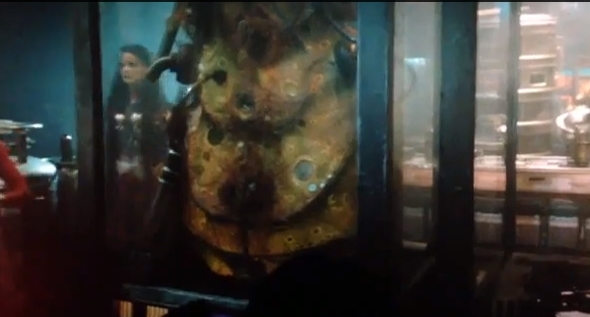
That cocoon-type thing is from the first scene in the end credits of “Thor: The Dark World” and is something that’s apparently been collected by … well, the Collector.

It looks suspiciously like this object:

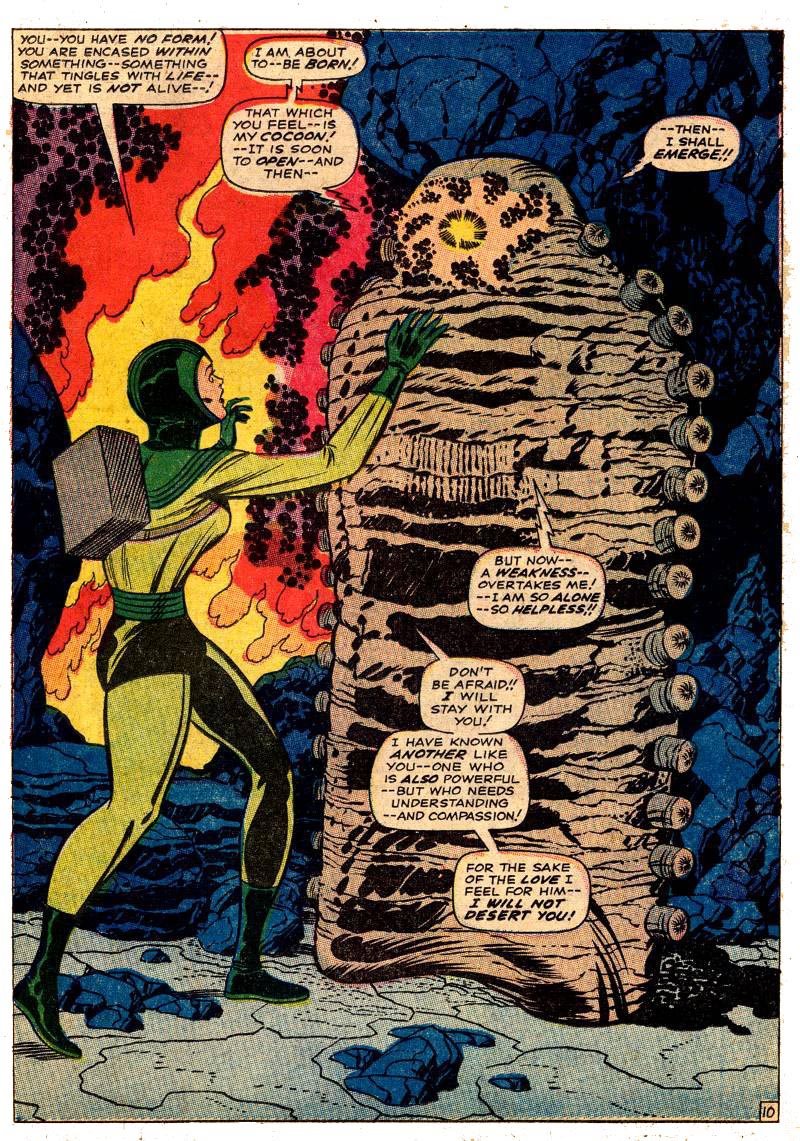
warlock cocoon-fantastic_four_167_1

That’s from Fantastic Four 67, and that panel shows FF friend Alicia Masters finding the cocoon of Him, the cosmic being later known as Adam Warlock.

Warlock was a favorite of mine from the comics. He was a foe of Thanos, the smiley bad guy from the end credits of “The Avengers,” the guy who’s apparently destined to play antagonist in future Marvel movies, including “Avengers 3.”

Cool, huh? I’m kind of convinced that nothing happens in these Marvel movies by accident. Maybe they’re just in-jokes to entertain fans. Maybe they’re pointing the way toward future adventures. Either way, it’s fun stuff.

Secrets of ‘The Avengers’

After seeing “The Avengers” for a second time, I thought I’d note a few moments from the movie that didn’t make their way into my review.

In some cases, they might be elements from the movie that blew right past the general audience.

And there’ll be a spoiler alert before the very end, if you still haven’t seen the movie — and contributed to the record-breaking $200 million opening weekend take.

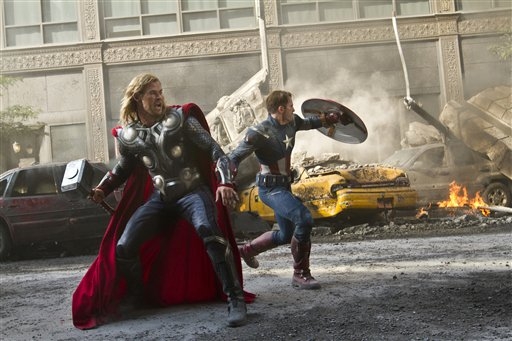
Loki did it: Thor’s brother, Loki, is a troublemaker, a trickster god of the first order. He’s the force that sets the plot of Joss Whedon’s movie in motion by materializing on Earth and stealing the Cosmic Cube. Later, Black Widow, using unconventional interrogation techniques, determines that Loki is trying to get to the Avengers through the Hulk.

That’s perfectly appropriate, because in the first issue of the Avengers comic, released in September 1963, Loki uses tricks and illusions to get superheroes Iron Man, Ant Man and Wasp to go after Hulk. Thor shows up and, after some typical Marvel hero in-fighting, the team is formed. And stays together until the next issue.

Life Model Decoys: When SHIELD agent Phil Coulson calls Tony Stark early in the movie, Stark answers and says he’s not the real Tony Stark, he’s a Life Model Decoy. The geekiest among us know that Life Model Decoys were a creation of SHIELD early in the organization’s Marvel Comics history. In Strange Tales comic in 1965, SHIELD deploys LMDs — perfect copies of agents including Nick Fury — as … well, decoys.

“Puny god:” In one of the funniest moments in “The Avengers,” Hulk thoroughly wallops Loki. The audience is still laughing as Hulk walks away, muttering to himself. (Yes, the Hulk spoke in “The Incredible Hulk” and speaks again here.) What does Hulk say after giving Loki a (literal) smackdown? “Puny god!” It’s a play on Hulk’s patented “Puny humans!” declaration.

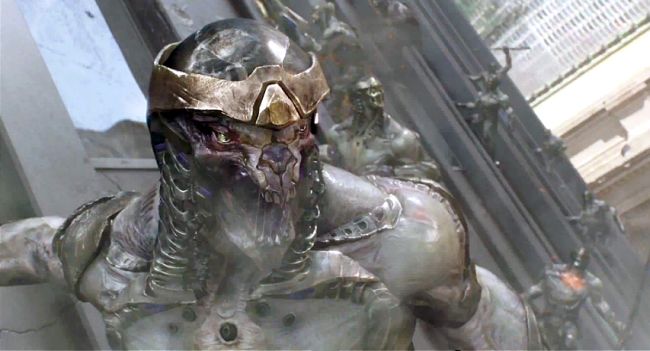
The Chitauri: After months of speculation about Loki’s alien army in “The Avengers,” it’s mentioned in the first moments of the movie, during voice-over narration, that the alien warriors are the Chitauri. Who? The Chitauri are, in the Ultimate Marvel comic book universe, the contemporary equivalent of the Skrulls. Apparently the Skrulls are considered part of the “Fantastic Four” movie universe and were not available for Whedon’s use here. Clever writer that he is, he got around that by using the Chitauri.

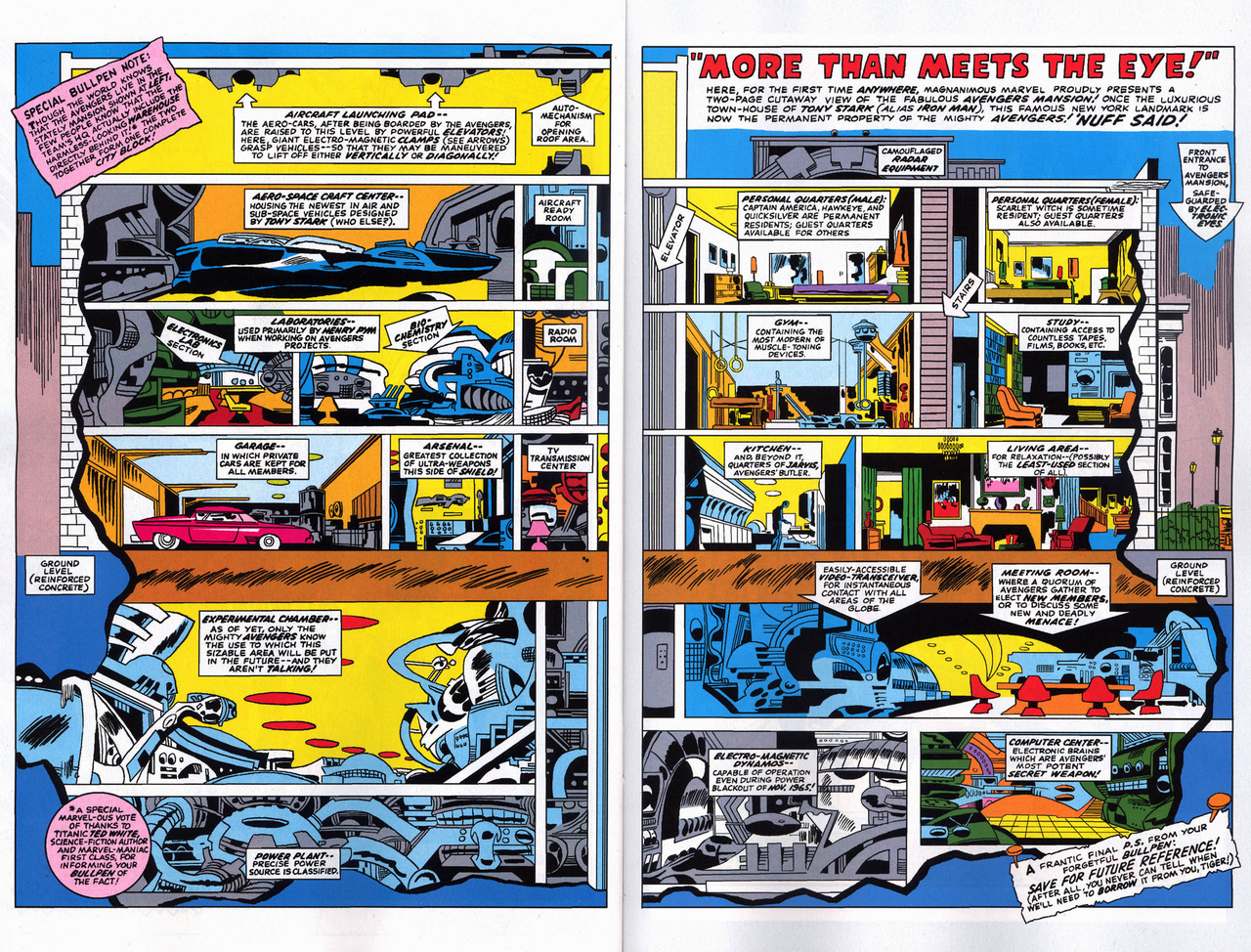
Stark Tower/Avengers Tower/Avengers Mansion: One thing the movie does, as did many Marvel comics over the past 50 years, is thoroughly establish a setting in New York City. As a kid who didn’t know he would ever visit the Big Apple — still haven’t, actually — I soaked up everything I could about New York from hundreds of Marvel Comics set there.

Second only to the Baxter Building — home of the Fantastic Four — on Marvel’s Landmarks of New York Tour is Avengers Mansion. Originally belonging to Tony Stark, the mansion is loaned to the Avengers for use as their home base. Jarvis, Tony’s butler, even becomes the butler for the Avengers.

In the movie, Stark is building a NYC skyscraper emblazoned with his name. During the battle with Loki and the Chitauri, most of the STARK lettering gets knocked off, leaving only a bold “A.” We notice this at the end of the movie and can assume that, for the inevitable sequel, the Avengers will hang out here.

Here’s the big “Avengers” movie secret. Once again, if you haven’t seen the movie, spoiler alert in …

3

2

1

Thanos: Partway through the end credits, the mysterious alien who had been talking to Loki is seen, on a crumbling asteroid in space, talking to a creature seated on a throne.

To go to Earth and take on the Avengers would be to “court death,” the alien says.

The massive figure stands up from the throne, turns his head and smiles.

It is Thanos, the Marvel Comics alien introduced in Iron Man comics in 1973. Thanos, created by writer/artist Jim Starlin, is based on Thanatos, the god of death from Greek mythology. In the comics, Thanos is to some extent Marvel’s counterpart to DC’s Darkseid, an extremely powerful and dangerous alien creature who has crossed over from comic to comic, posing a threat to many of the heroes of the Marvel Universe.

Whedon is a comic book fan (and writer) and, by including Thanos in “The Avengers,” sparked shivers down the spines of fans everywhere. If Thanos shows up in an “Avengers” sequel, the threat he poses will be far greater than that posed by Loki.

Just sayin’.