Tag Archives: The Hunger Games

‘Hunger Games: Catching Fire’ really sparks

hunger games catching fire

Somebody said that “The Hunger Games: Catching Fire,” the second in the series of four movies adapting author Suzanne Collins’ three books, is like “The Empire Strikes Back” for this series and in a way, they’re right.

I wouldn’t call the ending a cliff-hanger, actually. Like “Empire,” there is a resolution.

But “Catching Fire,” like Collins’ book, leaves some pretty big plot threads hanging. And they make us eagerly anticipate the resolution of the story even more.

I’ve noted before that that Collins’ clever and compulsively readable series starts off like a “Survivor”-style battle that demonstrates the cruelty of a totalitarian government but very quickly turns into a war story. By the time “Catching Fire” comes around the Hunger Games event itself is almost secondary to the growing protest by the oppressed citizens of Panem, the future USA, and the heavy-handed crackdown by President Snow and the government.

For 74 years, the government has enforced its rule and beaten down the citizenry – who dared try to overthrow the government three quarters of a century before – by taking two young people from each of the country’s 12 remaining districts and making them slaughter each other in a life-or-certain-death competition, called “The Hunger Games” because the name emphasizes the rewards for winning: A nice house back in your hometown and enough food to sustain your family. Not gold or glory. Just survival.

The way the games are portrayed, at least early in the books, is that they are a “gift” from the government, a not-so-gentle reminder of the price of revolt and “showcase” for the country’s best and bravest young people. It’s an ingenious plot point by Collins, as gifted a writer as any writing today.

The events of “The Hunger Games,” in which young District 12 contestants Katniss and Peeta not only survive but become an inspiration – much to the frustration of Snow – turn long-standing resentment of the government into a burgeoning revolt by the time of “Catching Fire.”

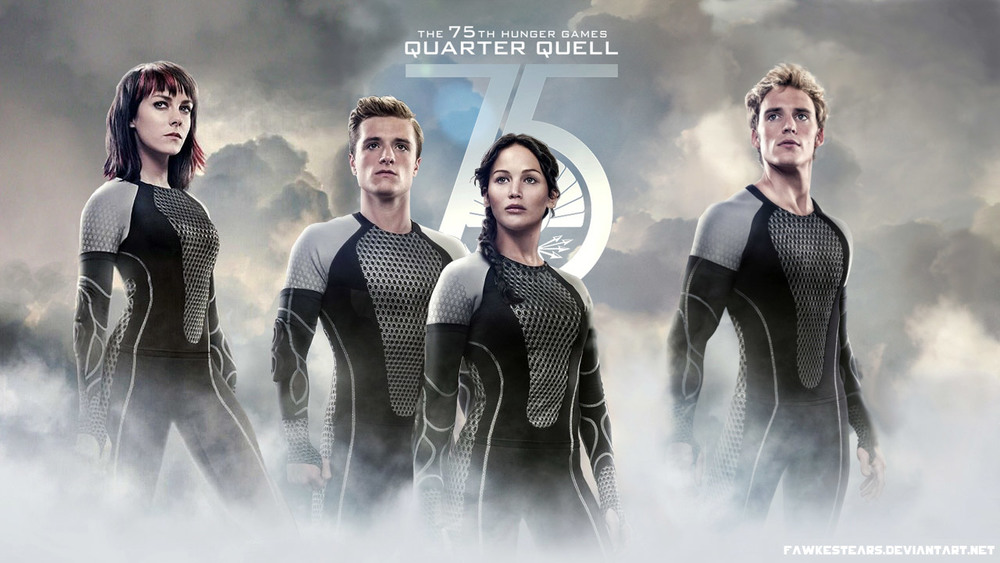
In the second novel and new movie, Katniss and Peeta are chosen, along with other previous Hunger Games victors, to participate in a special, 75th anniversary games – the Quarter Quell – pitting past champions against each other.

It’s an insidious plan. Katniss can either die or be molded into an unsympathetic competitor, willing to sacrifice her fellow champions, victors worshipped in their own districts.

The competition doesn’t come until half-way through “Catching Fire,” and it’s not portrayed with as much detail as the competition was in the first movie. That’s probably a wise move, since even if you haven’t read the book you’ll guess there’s something else afoot here. The new competitors, like Finnick and Johanna, have something up their spandex sleeves.

In some ways, I think “Catching Fire” is a better movie than “The Hunger Games,” which had the disadvantage of setting a lot of plot into motion but did have a shiny new world to show off. “Catching Fire” takes its time telling its story but doesn’t drag. It nicely expands on the storylines and characters and introduces new ones. And even though its ending – heck, maybe it is a cliffhanger – leaves you wanting more, it also leaves you feeling satisfied.

Once again, Jennifer Lawrence is great as Katniss. She’s roiling on the inside but calm on the outside through most of the movie, but the final shot – as she realizes the implications of everything that’s happened and a look of controlled fury appears on her face – is enough to boost audience expectations for “Mockingjay,” which will apparently be a two-movie adaptation of the final book.

Surely you know this by now, but “The Hunger Games” – although ostensibly a “young adult” book and movie series – is dark. Dark. Dark. And the story only gets darker in “Mockingjay.” It’s vivid, brutal and thrilling war fiction but war fiction nonetheless.

 

‘Hunger Games’ casting prompts racist rants

I know that you can’t judge a society by its worst members. And you sure as hell can’t guarantee that just because you liked a book, movie or TV show that everybody else who liked it will be as tolerant as you.

So why does it hurt so much that a group of racist idiots are ranting about the casting of black actors in the movie version of “The Hunger Games?”

The story broke wide on the website Jezebel. Under the headline “Racist Hunger Games Fans Are Very Disappointed,” writer Dodai Stewart notes that a tumblr, “Hunger Games Tweets,” collected Twitter comments about the movie and snared a few that were, to put it mildly, racist.

I’ll only quote a couple here.

“why does rue have to be black not gonna lie kinda ruined the movie,” one idiot pecked out.

“why is rue a little black girl? Stick to the book DUDE” is another.

Let’s put aside the fact that author Suzanne Collins, in describing Rue and fellow District 11 tribute Thresh, notes they have dark brown skin.

Let’s put aside that the DUDES who made “The Hunger Games” movie stuck to the book. DUDE.

Why would it matter how the characters were cast? Doesn’t some diversity in casting — and in creating the characters of Collins’ original novel — enhance believability? Otherwise, are we supposed to assume there are no black people in the future?

Maybe that’s the Twitter writers’ fantasy, but it’s plainly not Collins’ and it’s not mine. Or most of us, hopefully.

Time for one last tweet:

“Kk call me racist but when i found out rue was black her death wasn’t as sad #ihatemyself” one person wrote.

Two things to note about that tweet:

We hate you too.

And you left off the third “K” at the beginning of your Tweet. DUDE.

‘The Hunger Games’ goes to war

“The Hunger Games” — both Suzanne Collins’ book trilogy and the Gary Ross movie adaptation of the first novel, which opened Friday — is harsh stuff. There’s violence, some of it bloody. And yes, in the tradition of lit classics like “Lord of the Flies,” there’s physical violence involving children. Kids killing kids.

But imagine the opening half hour of “Saving Private Ryan” without its graphic depiction of the storming of Omaha Beach. You can’t, because that heart- and gut-wrenching scene — while taken from real life, rather than Collins’ deftly accomplished fiction — set the tone for all that followed. The stakes were high, the scene told us.

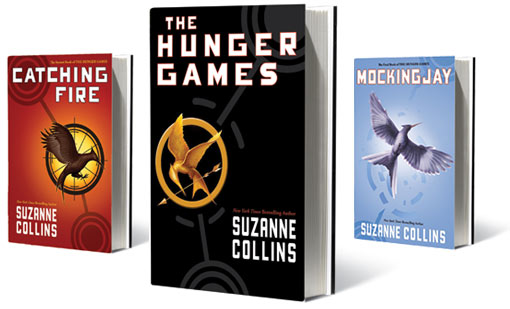
And even though the movie adaptation of the first of Collins’ best-selling young-adult novels — “The Hunger Games,” “Catching Fire” and “Mockingjay” — takes place in an imaginary future world, the stakes for its characters are just as high.

And they’re pretty high for readers of Collins’ books and viewers of Ross’ movie, too.

Much has been made about how violent the books and movie are and if that’s appropriate for the young adult audiences for which they were intended. But I can’t imagine a better message for young people than the idea at the core of Collins’ stories: Freedom is worth any cost.

But enough of philosophy. The movie from director Ross (“Pleasantville” and “Seabiscuit”) is a very good adaptation of Collins’ story. Maybe as good as could have been hoped for.

If you’ve read this far you probably know the story, but here’s a quick recap. The story is set in a future America called Panem. Seventy-four years have passed since a rebellion among the country’s 13 districts. The controlling Capitol punished the districts — aside from wiping one of them, 13, off the map — by instituting the Hunger Games. The name comes from the state of poverty most of the country’s citizens live in. While the citizens of the Capitol live in luxury, eating well, dressed and made up in florid, frivolous style, the people of the districts live an impoverished existence, scrambling to find enough to eat even as they produce the coal or grain used to feed the rich of the Capitol.

In each year’s Hunger Games, each of the 12 remaining districts are forced to offer up two Tributes, teenagers to do battle to the death in a specially-built arena for the televised amusement of the nation. Most years, the professional athlete/warriors from the wealthy districts win the Hunger Games.

The citizens of District 12, in what used to be the coal-mining countryside of Appalachia, are accustomed to their state, although some, like Katniss Everdeen (Jennifer Lawrence) and Gale (Liam Hemsworth) defy the Capitol by crossing the boundary fence and hunting in the forests nearby. It is here that Katniss sharpens her archery skills.

When the Reaping — the day the Tributes are chosen — comes for the 74th time, Katniss’ young sister, Prim, is chosen. Katniss volunteers herself as a substitute and, along with baker’s son Peeta (Josh Hutcherson), is chosen as District 12’s contestants in the annual bloodbath.

Katniss and Peeta travel to the Capitol with Haymitch (Woody Harrelson), District 12’s only living winner from past Hunger Games. Haymitch is to be their mentor in the games, giving them advice and securing sponsors, whose help can be vital because they can provide water, food or medicine.

If “The Hunger Games” drags at all, it is during the first half, as Katniss and Peeta prepare for the games. Even though the training and build-up to the competition is interesting, the story shifts into a higher gear when the games begin.

Katniss and Peeta find themselves competing against 22 other Tributes, including the brutal and well-trained professionals. They also build alliances, Peeta with those stronger competitors (at first) and Katniss with an endearing young Tribute named Rue (Amandia Stenberg).

The games go by quickly, literally in a blur during the fighting, when Ross’ camera work is a little too jostled for my tastes.

But the quiet moments — Katniss and Rue, Katniss and Peeta, Katniss trying to survive — are perfect and capture the tone of Collins’ story.

Since the story is all about control and manipulation — the Capitol portrays the Hunger Games as an annual reminder of the rebellion, and it is that, but it is also a way for evil President Snow (Donald Sutherland) to punish the districts — Collins had an ingenious idea to make teenagers the principals. Teens are all about rebelling against control and authority, of course.

The movie features a couple of hints about what is to come in the later books — and movies, considering “The Hunger Games” made $20 million in Thursday midnight showings and another $65 million or more on Friday, according to the Hollywood Reporter — especially in scenes of a riot in one of the districts watching the competition.

But while “The Hunger Games,” book and movie, stand on their own, they’re better as part of a trilogy, a story that tells of the events that change this future society forever.

Ross’ movie expands the story somewhat — including behind-the-scenes control room moments and shots of Haymitch wooing sponsors — and unfortunately limits some aspects, particularly the bonding between Katniss and Rue.

But it’s hard to imagine a better effort to capture the story, characters and spirit of “The Hunger Games.”