Tag Archives: The Night Stalker

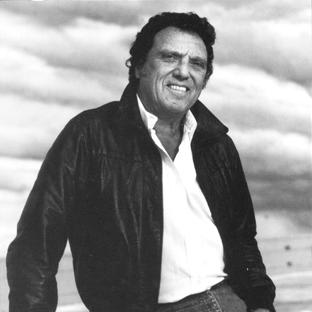
RIP “Night Stalker” creator Jeff Rice

jeff rice night stalker

I’m kind of heartbroken right now.

Earlier today I saw a random tweet about the passing of Jeff Rice.

If you ask, “Who is Jeff Rice?” you’ll either not give a damn about his death or – hopefully – you will care after I lay a little information on you.

Jeff Rice, who died in Las Vegas on July 1 at age 71, was a talented writer who peaked way before he should have and struggled – and failed – to reach the same height of success again.

You see, Jeff Rice created Carl Kolchak and “The Night Stalker.”

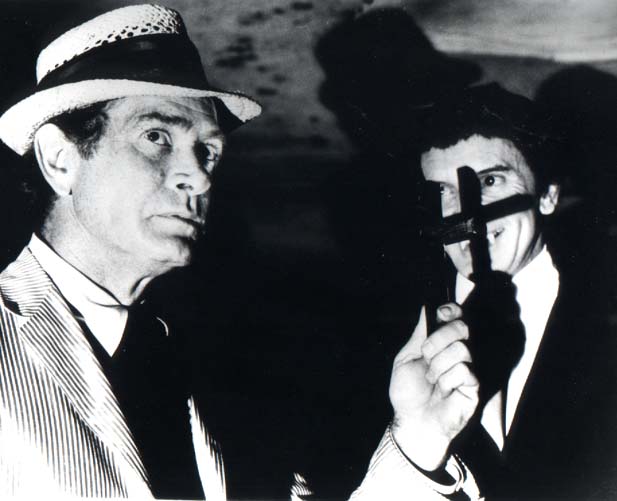
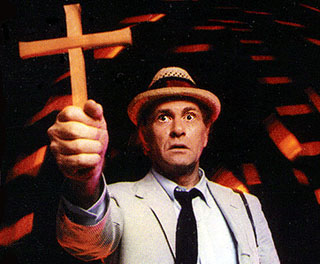
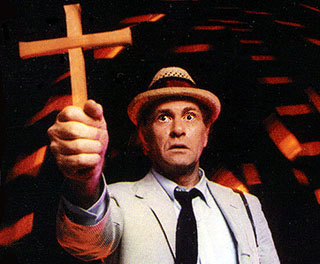
If that rings a bell, and it should, you might remember that “The Night Stalker,” a TV movie from “Dark Shadows” creator Dan Curtis and starring Darren McGavin as Kolchak, aired on ABC on Jan. 11, 1972.

The movie – what might now be called a procedural, as Las Vegas newspaper reporter Kolchak tracks a serial killer in Vegas and ruffles the feathers of cops, politicians and his boss at the paper – was one of the most successful TV movies of all time, with 54 percent of TVs in use and 33 percent of all TV homes tuned in the night it aired.

That’s in part due to the funny, action-filled script by “I Am Legend” and “Twilight Zone” screenwriter Richard Matheson and Kolchak’s way of staying one step ahead of everyone else – and rubbing their noses in it. (I’m betting he influenced almost as many would-be newspaper reporters, like me, as did Woodward and Bernstein.)

But “The Night Stalker” also did as well as it did, I believe, because Vegas serial killer Janos Skorzeny was a vampire.

I’ve written in this space before about my love for the movie – and my great fondness for the follow-up movie “The Night Strangler” and the “Kolchak: The Night Stalker” TV series that aired from September 1974 to March 1975.

As writer Mark Dawidziak noted in his book “The Night Stalker Companion” and his online obituary for Rice, the author’s work and the adaptations of it were enormously influential.

Not just on “The X-Files,” which captured the spirit of the movies and TV series and even paid tribute to Kolchak, but also a host of series that, like Rice’s work, brought “creatures of the night” out of the Victorian era and shook off their gothic trappings to introduce them to the modern world, like “Buffy the Vampire Slayer” and pretty much every recent movie or series that used “The Night Stalker”‘s mix of horror, humor, sarcasm, pessimism and, ultimately, bravery.

There had been little like “The Night Stalker” before but there was plenty to come.

As Dawidziak notes, however, Rice’s story was in many ways as dark as his story “The Kolchak Papers,” which eventually saw paperback publication as “The Night Stalker” in December 1973.
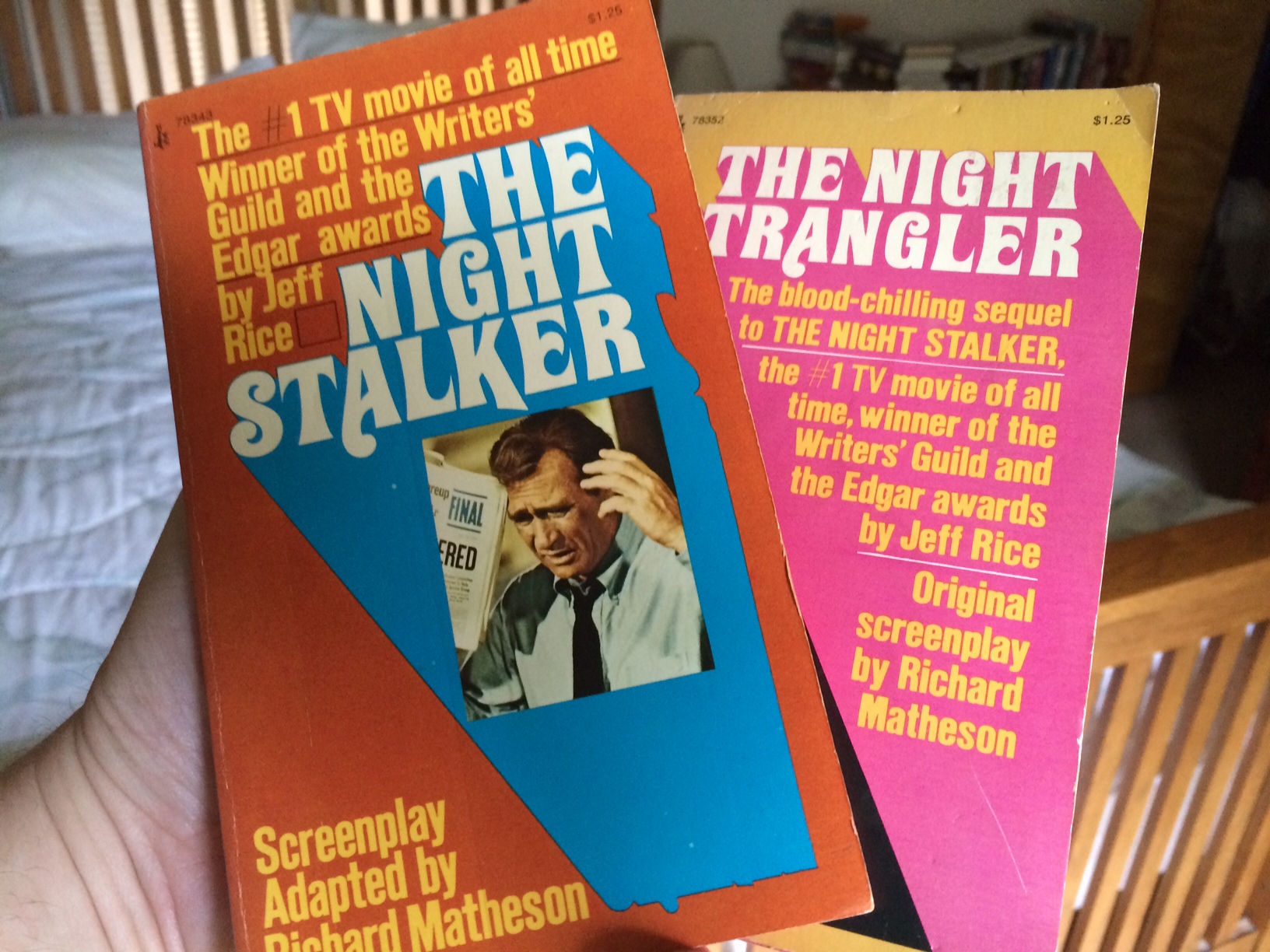
night stalker books

(The book cover photos that accompany this post I took today of my copies of Rice’s books. I’ve had them since they were published. They’re terrific.)

Dawidziak notes that Rice – himself a Las Vegas Sun reporter in the 1960s, and nobody’s pushover – based his fantastic yarn on his own experiences in Vegas, running up against corrupt politicians and criminals. Rice didn’t encounter any vampires, as far as we know, but anyone who remembers the movie knows that the most dangerous antagonists in the movie aren’t the age-old vampire but the forces of politics and the law, who lower the boom on Kolchak just as he triumphs.

As Dawidziak tells it, Rice’s downfall came after the “Kolchak” series was approved. It seems like somebody neglected to get the rights to the characters from Rice. The author asked for a piece of the action and, when the studio thumbed its nose at him, threatened to sue.

Rice was barred from the the production of the series and felt like his career was greatly diminished.

Rice never caught the huge break that his talent deserved.

And as Las Vegas Review-Journal writer John L. Smith reported, Rice lived out a “troubled” life until his death a little more than month ago.

I’ve seen “The Night Stalker” countless times and I’ve read Rice’s books several times. From the first page, Rice grips the reader with his portrait of Cheryl Ann Hughes, a casino worker in one of Las Vegas’ darker sidewalks on the wrong night.

A series of bullet points – a style best appreciated by those of us in the newspaper business – sums up Hughes in less than a page. Then this:

“Cheryl Ann Hughes: a girl with less than fifteen minutes to live.”

If you seek out and read Rice’s book – and you should – you’ll realize how much the TV movie owes to Rice not just because of characters and plot but also tone and voice. You can hear McGavin’s voice as you read Rice’s story.

I was 12 and a horror film fanatic when I first saw “The Night Stalker.” I greedily sought out more of this world, snapping up Rice’s novels when I found them and watching the sequel movie and series.

After hearing the news about Jeff Rice today, I’ll be stepping back into Kolchak’s world again soon.
Classic TV movie: ‘The Norliss Tapes’

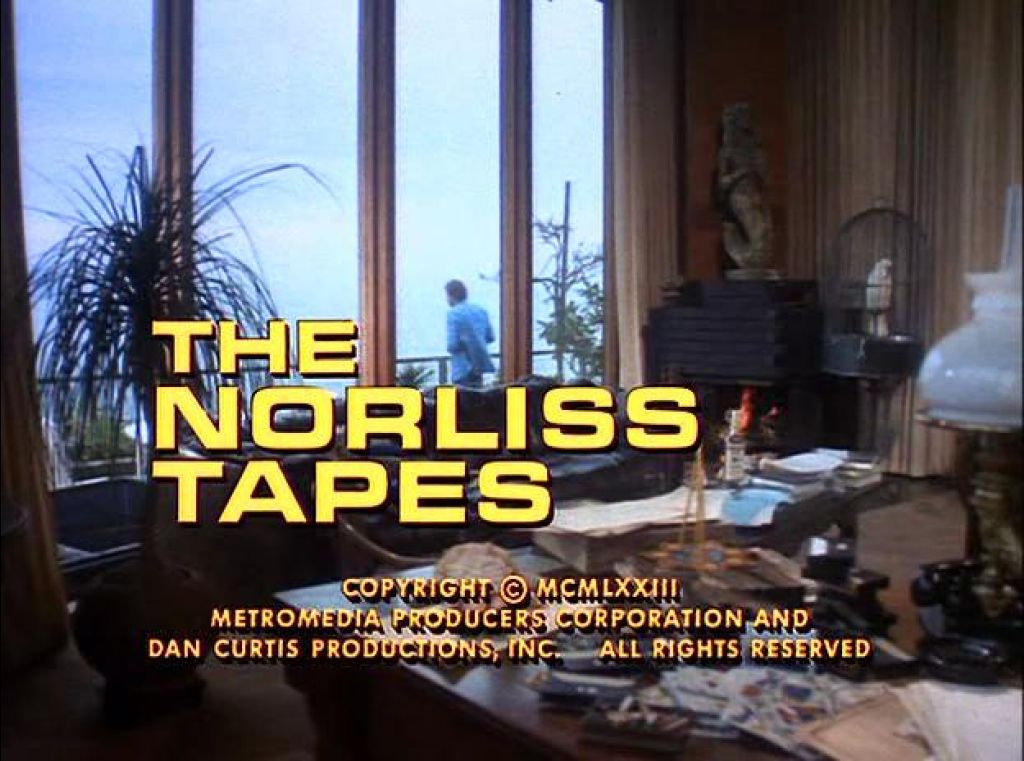
norliss tapes title card

“The Norliss Tapes” is one of those TV movies best remembered for its freaky, scary moments.

It seems it scared the hell out of a lot of kids back in the day. I know it made an impression on me.

The movie, which aired in 1973, was pretty clearly inspired by the success of “The Night Stalker” a year earlier. The two movies shared a premise – a writer investigating the undead – and Dan Curtis, the producer of “The Night Stalker,” produced and directed here.

“The Norliss Tapes” is no “Night Stalker,” however. But it’s a pretty good scare-fest.

The story begins with David Norliss, a writer with a contract to write a book exposing phony psychic phenomena, talking to his publisher and sounding bleak. Norliss (played by David Thinnes of “The Invaders” fame) recounts – via audio cassettes – how he found it easy to debunk mystics and psychics … but then he got caught up in the story of Ellen Cort (Angie Dickinson). Cort tells Norliss that she’s been attacked by – and she subsequently shot – a particularly strange intruder in her home: Her late husband Jim.

the norliss tapes creature

The storyline plays out not unlike “The Night Stalker,” with seemingly random murders by a supernatural being running counterpoint to the mystery of the apparently resurrected Jim Cort. The plots tie together, of course. As a matter of fact, there’s not a lot of mystery or subtlety, as Cort – freaky eyes and blue skin prominently displayed – is clearly the attacker.

Norliss begins investigating the possibility that Cort – whose body rests peacefully in his family crypt – is getting up and attacking people in the dead of night. And what about that mysterious Egyptian ring Cort was wearing?

dan curtis

Director Curtis was the man behind groundbreaking supernatural TV shows like “Dark Shadows” and “The Night Stalker,” and “The Norliss Tapes” shows that. The movie has a style and a music soundtrack familiar to fans of those shows. Robert Cobert, a Dan Curtis regular creative partner, was the composer of the score here.

Some cast members of “The Night Stalker” even recur here, including Stanley Adams as a witness and Claude Akins as a gruff sheriff who’s only too happy to keep a lid on spooky happenings.

Michelle Carey, a gorgeous 1960s and 1970s actress with a breathy, throaty voice, plays Ellen Cort’s sister and a friend of Norliss.

Keep watching through the end credits: There’s a recapping series of  scare scenes, ala “The Night Stalker,” among the credits.

Classic TV: ‘The Night Stalker’

I noted here a couple of days ago the news that director Edgar Wright (“Shaun of the Dead”) and actor Johnny Depp were close to collaborating on a big-screen movie version of “The Night Stalker,” the 1970s TV movies/TV series that starred Darren McGavin as intrepid reporter Carl Kolchak, who pursued big bylines, splashy headlines and … monsters.

The possibility of a remake prompted me to break out my DVD of the original 1972 TV movie “The Night Stalker” and give it yet another viewing.

“The Night Stalker” is one of my favorite TV movies, heck, one of my favorite movies. I saw it when it originally aired, when I was all of 12 years old, and loved it then. I love it now.

Despite the fact that … gulp … 40 years have passed, the movie is rock solid. The elements of the story that are dated now only serve to give it a time capsule, slice of life feel.

With its lean 70-minute running time, the movie — produced by “Dark Shadows” creator Dan Curtis, directed by journeyman TV director John Llewellyn Moxey, written by the great Richard Matheson (“The Incredible Shrinking Man,” “I Am Legend”) based on a book by Jeff Rice — drags only near the very end, when McGavin spends a little too much time skulking around an old dark house.

Most of the movie is a dark-humored, action-filled, bitterly realistic take on newspapering, crime and big-city politics. In fact, it’s one of the best movies ever made about newspaper reporting. Kolchak is egotistical, insulting to his competition, intolerant of his bosses, dismissive to the public and resistant to authority. He is a classic newspaper reporter.

Kolchak, a reporter for a Las Vegas newspaper, narrates the plot, which unfolds in flashback. As the story proper begins, Kolchak is grumbling about being called back from vacation by his editor, Tony Vincenzo (the blustery, ill-tempered Simon Oakland) to cover what looks like the routine murder of a female casino worker.

Kolchak has, more so than many less realistic reporters in movies and TV shows, a fully-developed set of sources, both high and low, and one within the medical examiner’s office tells him the victim lost a lot of blood.

Before Kolchak can even consider that odd detail, another dead woman is found, also drained of blood.

The scenes set at crime scenes in “The Night Stalker” are some of my favorites. Inevitably, Kolchak shows up — sometimes right behind the police, including the nasty-tempered sheriff played by Claude Akins, sometimes even before the police show up.

Kolchak talks to cops and witnesses and in general has free run of these crime scenes. It’s a running gag that was probably unlikely then and is outlandish today, but they are fun scenes to watch.

Bodies, all drained of blood, keep turning up and one woman goes missing when, about halfway through the movie, Kolchak’s girlfriend, casino worker Gail Foster (Carol Lynley) suggests that maybe the killer really is a vampire. Kolchak scoffs at the idea but begins to read the old books Gail gives him.

Eventually, Kolchak tells the authorities — who barely tolerate his presence at press conferences, another realistic touch — that they won’t capture the killer unless they consider the possibility he might be a vampire.

I’m not sure that in the early 1970s a real-life coroner, police chief, sheriff and prosecuting attorney would call as many press conferences as the characters do in this movie, but they’re also fun scenes as Kolchak gets the cops and officials all riled up with his questions. The time capsule element of the press conference scenes is that officials expect the reporters to cover up the grisly, panic-inducing details of the murders. Now, of course, the press conferences would be live-streamed online and the reporters would have been tweeting all along. (Which is why officials today wouldn’t call this many press conferences.)

Besides the crime scene and press conference scenes, “The Night Stalker” boasts some pretty cool action scenes. Although there are a few scenes where Atwater, as vampire Janos Skorzeny, stalks his victims, there’s surprisingly little horror in the movie. Instead we get action scenes with a real sense of the unreal, as Kolchak and the cops come upon Skorzeny’s trail only to have the vampire kick their asses and escape.

The movie’s ending, with the authorities ensuring that Kolchak’s story won’t be told, is as downbeat and dark as anything on TV at the time or since. Ultimately, Kolchak has only the satisfaction of knowing he’s a good reporter to keep him warm at night.

McGavin — a dozen years later immortalized as the dad in “A Christmas Story” — has the right mix of schmoozer and attack dog that a reporter needs. Oakland is wonderful as that TV show cliche, the boss who yells.

Atwater, who died only a few years after the movie aired, is terrific as the vampire. He makes a big impression without a word of dialogue. Atwater’s most significant other role was as Vulcan leader Surak on a single episode of “Star Trek.”

The movie was the highest-rated TV movie of its time and prompted a sequel, “The Night Strangler,” a year later, and a weekly series, “Kolchak: The Night Stalker,” two years later. Both the sequel movie and TV series were fine, but they couldn’t match the original.

“The Night Stalker” influenced a generation of young fans of the horror genre who went on to pay tribute in a variety of ways. Perhaps the best known homage to the Kolchak concept was “The X-Files,” with FBI agents pursuing mysteries and monsters each week. McGavin even appeared on “The X-Files” as a retired FBI agent.

If Wright and Depp do a modern version of Kolchak — or even one set in the 1970s — they might do a terrific job. I’ll be shocked, though, if they can top the original, which is a classic of its kind.

Wright, Depp to team on new ‘Night Stalker?’

Ever feel that mixture of eager anticipation and dread, that feeling that runs up your spine and messes with your brain when you’re thinking about something that could be so good, so cool … if it just doesn’t get screwed up?

That’s what I felt this afternoon when I heard that Johnny Depp and Edgar Wright, the genius director of “Shaun of the Dead” and “Hot Fuzz,” were teaming up to make a big-screen version of “The Night Stalker.”

If you’re not familiar with it, “The Night Stalker” was a 1972 TV movie that starred character actor Darren McGavin as Carl Kolchak, a hard-charging newspaper reporter who — thanks to his willingness to buck authority and his his inability to kowtow to his bosses — has drifted from newspaper to newspaper, city to city, in search of steady work.

He’s at a paper in Las Vegas when a series of gruesome showgirl murders gets his attention. He starts covering the story and, much to the horror of city officials and the chamber of commerce, discovers not only that a serial killer is at work … the killer is a vampire (played to truly creepy, alien effect by Barry Atwater).

The movie unfolded like a modern-day police procedural, with Kolchak arriving at crime scenes and irritating the cops when he isn’t hanging out in the morgue. It builds to a genuinely suspenseful climax in which Kolchak takes things into his own hands … only to find himself run out of town by officials worried about the story’s impact on tourism.

Masterful writer Richard Matheson wrote the movie based on a terrific book by author Jeff Rice.

“The Night Stalker” was the highest-rated TV movie of its time and sparked not only a 1973 sequel, “The Night Strangler,” but a 1974 series, “Kolchak: The Night Stalker.”

In the series, which ran only one season, Kolchak worked out of a Chicago news service, frustrated the same boss (the blustery Simon Oakland), and kept running into monsters. The best episodes featured a zombie and a vampire who was one of the victims from the original movie.

News of the remake doesn’t fill me with quite the same level of anticipation and dread that I feel for the Tim Burton/Johnny Depp “Dark Shadows.” Maybe because Burton, a genuine artist who seems to have lost the ability to make a coherent movie, isn’t associated with this.

Maybe because, as much as I liked “Dark Shadows,” it isn’t the equal of “The Night Stalker” in my book. If Burton makes “Dark Shadows” an unwatchable mess, that’ll be a loss. If Wright screws up “The Night Stalker,” I’ll be in mourning.

Wright — who has also been working on a movie of the Marvel Comics character Ant-Man, a member of The Avengers — seems well-suited to the mixture of humor and horror that a proper adaption of “The Night Stalker” would need.

But I really would dearly love it if a “Night Stalker” movie was really good, spawning a new generation of fans and renewing attention for the original ABC movies and TV show.

Richard Matheson: More than just ‘Real Steel’

The Hugh Jackman-starring robot boxing movie “Real Steel” is at the top of the box-office charts this weekend, just where it deserves to be. The movie features the “X-Men” star as a washed-up boxer who takes custody not only of his 11-year-old son but also a sparring partner robot literally pulled out of a junkyard.

In this future U.S., humans don’t box anymore but robots do. Their fight-to-the-death bouts are the logical extension, in some ways, of the current bloodsports enjoyed by many fans. The dad and son’s faith in each other and their  battlin’ robot pays off, of course.

The most enjoyable element of all this, to me, is that the movie is based on “Steel,” a short story from 1956 written by Richard Matheson. The story was previously adapted — with a lot less high-tech wizardry — on the classic TV series “The Twilight Zone.”

Matheson, born in 1926, is enjoying some renewed interest as a result of the movie. There’s this good interview at aintitcool and just the mention of the octogenarian writer’s body of work is enough to send geeks tripping through decades of favorite movies and TV shows.

Putting aside that Matheson wrote some wonderfully creepy short stories, like “Born of Man and Woman,” and terrific novels, like “I Am Legend,” if you just consider the number of good movies that had been made from his stories — “Omega Man” and “I Am Legend,” “Stir of Echoes” and “The Incredible Shrinking Man” to name a few — you’ve got a source of big-screen inspiration that might be second only to Philip K. Dick (“Bladerunner”).

But the TV shows and TV movies Matheson wrote. Oh my.

“Nightmare at 20,000 Feet” for “The Twilight Zone.” “Trilogy of Terror,” famous for its segment about a tribal doll come to murderous life. And “The Night Stalker,” one of the greatest combination horror movies/cop dramas/newspaper movies ever.

Yeah. Oh my.

I enjoyed “Real Steel” today, but I’ve been thankful for Richard Matheson’s talents since I was a kid.