

“Doctor Sleep” is, of course, Stephen King’s sequel to “The Shining,” his 1977 horror novel about a malevolent old hotel, the family that comes unraveled during a long, isolated winter there and the particular psychic talent, “the shining,” that King introduced in the book.
But for a few reasons, “Doctor Sleep” almost reminded me more of two other King books, “Salem’s Lot” and “The Stand.” It’s almost like two sequels in one. Or three.
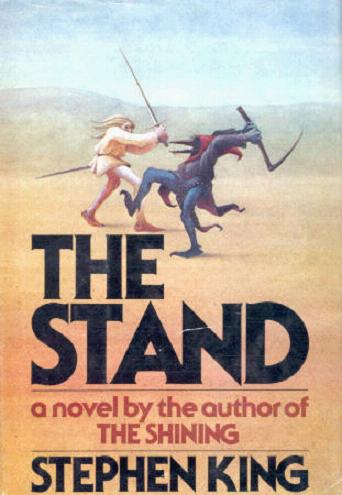
Maybe that’s not surprising. “Doctor Sleep” makes at least one reference to the menacing town that provided “Salem’s Lot” its name. And the shining – the psychic power, not the book itself – is sprinkled through a few of King’s books, most notably “The Stand.”
But “Doctor Sleep” reminds me of “Salem’s Lot” and “The Stand,” I think, because it doesn’t have the same sense of isolation and claustrophobia as “The Shining.” “Doctor Sleep” is quite road-bound, from its lead character’s wanderings in the opening chapters to the cross-country travels both the protagonists and antagonists undertake.
And there’s the small band of heroes that forms to take on the evil in “Doctor Sleep” that’s more than a little reminiscent of the similar groups in “Salem’s Lot” and “The Shining.”
There’s no doubting the heritage of the main character of “Doctor Sleep,” however: Dan Torrance is the grown-up and recovering alcoholic personification of little Danny Torrance, the boy who survives his father’s murderous attack in “The Shining.” Dan still has “the shine,” as old Dick Hallorann explained it.
But after chapters that ably demonstrate Dan’s journey to rock bottom as a substance abuser, his recovery is – blessedly – strong and he finds a new calling, as “Doctor Sleep,” helping patients in a hospice ease into the afterlife.
At the same time, a baby, Abra Stone, is born and grows to teenagerhood. Abra has the Shining in perhaps greater doses than Dan did as a boy, and Abra’s bright power draws the attention of True Knot, a traveling band of – well, psychic vampires is really the only way to say it – and the group targets Abra with murderous intentions.
Dan stumbles onto their plot and, with the help of a small, trusted group that includes the powerful young girl herself, intervenes.
As much as I enjoyed Dan and Abra and the others on the side of good, I enjoyed Rose the Hat, the charismatic but crazy leader of the True Knot. King establishes Rose as kind of the distaff version of Randall Flagg, the demon of “The Stand.” It’s not hard to see why Rose attracted followers. It’s likewise not hard to understand why the True Knot begins to fall apart with a good psychic shove from Dan and Abra.
The book, at just over 500 pages, feels leaner than some of King’s recent work, like “Under the Dome” and “11/22/63,” and its plot is as straightforward as can be.
So is the real feeling of dread the book inspired as I was reading it. I almost couldn’t wait to get to the end and find out if Dan and Abra and the rest came out okay.
While the band of heroes that takes on the True Knot is reminiscent of the heroes in King’s earlier books, there’s also no doubt that, in some ways, the book’s plot comes off as “Alcoholics Anonymous takes on Evil,” because AA and its life-saving disciplines – ones familiar to King himself – figure so prominently in the book.
King has acknowledged the perils of writing a sequel to a classic novel, and make no mistake, that’s what “Doctor Sleep” is.
But he needn’t have worried. Whether intentionally or not, King has made “Doctor Sleep” a book that can stand on its own, a book full of failure and promise and recovery and ultimate triumph.

 keithroysdon