Tag Archives: The Thing

It’s sobberin’ time

fantastic four thing naked

And also, apparently, nakeder. And less penis-ier.

You know, Ben Grimm is a tragic character and all, but … damn, man.

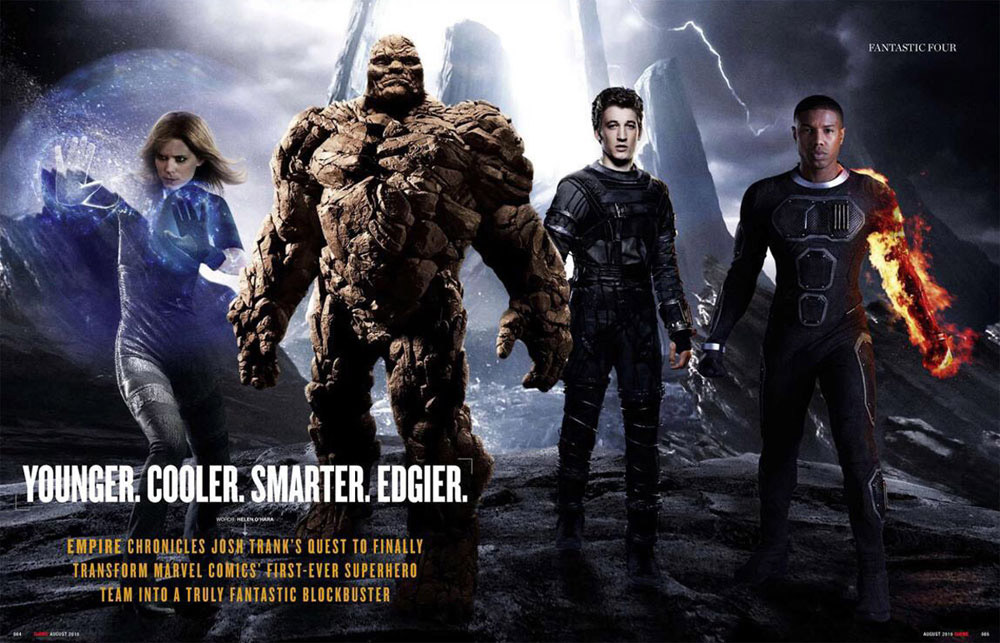
In the “Fantastic Four” comics and movies, there’s usually been an attempt to give the characters a consistent look in their costumes. This was done even for Ben Grimm, who turned into the rocky Thing. Benjamin Grimm usually had trunks on – blue to match the costumes of the other members of the FF – and or sometimes had on a whole jumpsuit-type-thing.

In the new movie, which comes out in August, the Thing apparently doesn’t wear any kind of costume.

And he apparently doesn’t … have … a penis.

I was already pretty uncertain about what I thought about the movie.

Now this.

Other people have noted this online, but does the Thing in the movie not eat or drink? Does he have any means at all of eliminating waste?

Is Ben Grimm’s longtime girlfriend, Alicia Masters, in the movie?

Are they going to address all this in the storyline?

Okay, now I’m just depressed.

Vision and The Thing

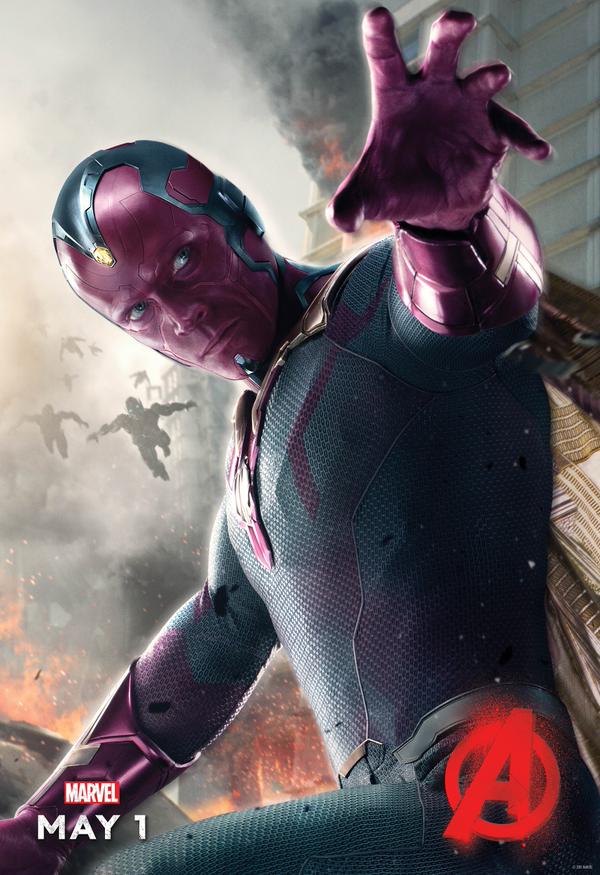
visionultronConsidering that both “Avengers: Age of Ultron” and “Fantastic Four” come out this summer, we’ve seen surprisingly little of two of the most important characters.

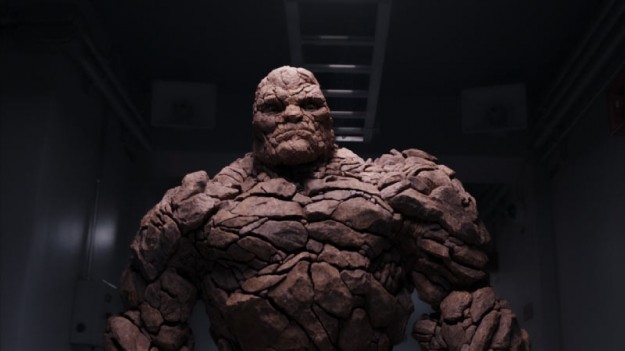
That changed last week when images of Vision from “Ultron” and Ben Grimm – The Thing – from “FF” were released.

That’s Paul Bettany as Vision above and, although the picture was almost certainly retouched for the Vision poster, he looks good.

thingfantasticfour

And there’s The Thing, which looks better in this picture than an earlier one but still isn’t quite right.

What’s missing?

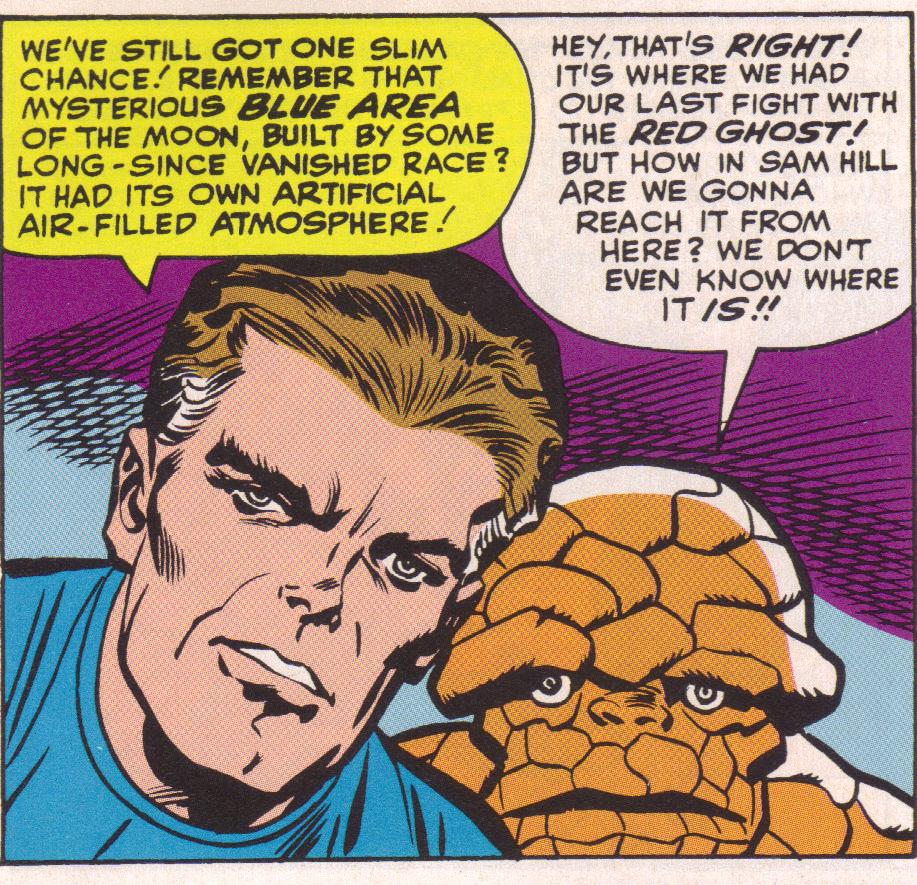
thethingbrow

His brow, of course. That simple feature, as created by Jack Kirby, made The Thing’s face so much more expressive, so much more human.

Classic comics: ‘Fantastic Four’ Galactus Trilogy plus one

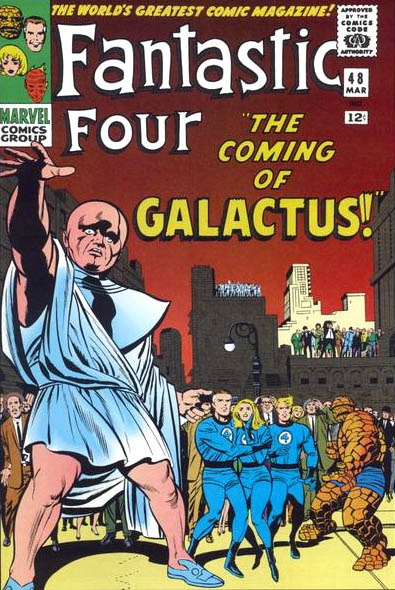
fantastic four 48

Has there ever been a greater run of creative energy in comics than the four issues of Fantastic Four that begin with issue 48?

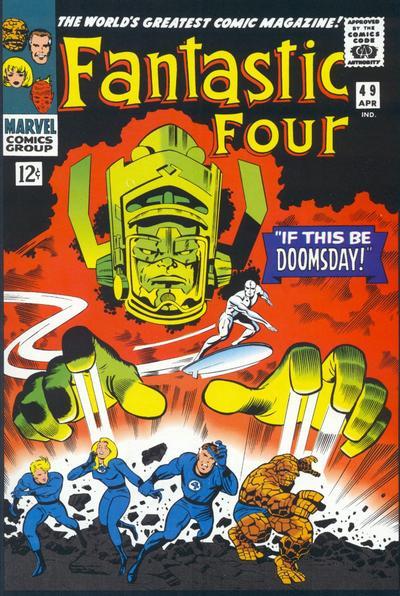
Geeks know that particular issue kicks off what has become known as the Galactus Trilogy. The three-issue series, written by Stan Lee and drawn by Jack Kirby and released in the spring of 1966, launched the Marvel Comics universe into the universe, literally, by expanding the role of “cosmic” characters like the Watcher and introducing the Silver Surfer and Galactus.

If you’ve seen the second “Fantastic Four” movie, you’ve seen a somewhat lackluster version of the story that played through issues 48, 49 and 50. For the purposes of ground-breaking drama and cosmic feel, I’m also throwing the next issue into this review as well.

The story, for those who don’t remember, follows the FF back to New York after they’ve had an encounter with the Inhumans at their isolated fortress.

The mood is somber. Johnny (the Human Torch) has been separated from his girlfriend, Crystal, one of the Inhumans, after the mysterious beings retreated behind an impenetrable barrier. Ben (the Thing) is dealing with the horrified reactions of New Yorkers who spot his rocky visage and feeling sorry for himself. Reed (Mr. Fantastic) has withdrawn into his lab. And Sue (the Invisible Woman) is complaining that Reed isn’t paying enough attention to her. Yes, I know. It was the 60s and women didn’t fair so well in comics. The treatment of Sue makes her out to be a fairly humorless harpy.

Anyway, the FF return to New York and find a series of strange happenings, including fire and boulders filling the sky from horizon to horizon. They quickly learn it is the work of the Watcher, the other-worldly observer of the Earth who isn’t supposed to get involved in the planet’s travails. But in this case he’s trying to hide Earth from the Silver Surfer, who, he explains, is the herald of Galactus, fearsome eater of planets. The Surfer finds suitable planets for Galactus to consume.

fantastic four 49

The FF battle the Surfer, who falls from the top of the Baxter Building and, coincidentally, into the apartment of Alicia Masters, Ben’s blind girlfriend.

As Galactus arrives and begins erecting the machinery of Earth’s destruction on top of the Baxter Building, Alicia helps the Silver Surfer learn the value of the people Galactus is about to kill. And the Watcher sends Johnny on a galaxy-spanning quest to find a weapon that can stop Galactus.
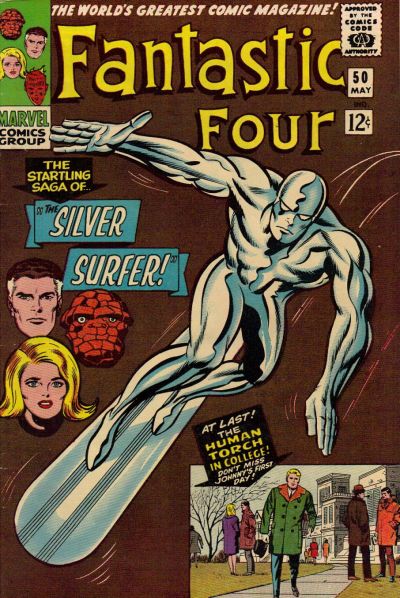
fantastic four 50

There’s a lot of plot, a lot of dialogue and a lot of action in these three issues. Lee and Kirby had a curious habit of beginning and ending plots in the middle of an issue, so Galactus is foiled before issue 50 ends and we get a hint of the next story – as well as Johnny’s first day at college.
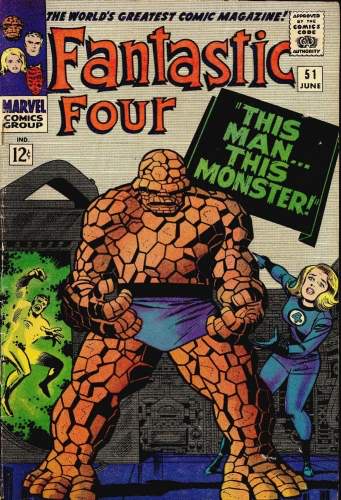
this man this monster

Issue 51 follows the Galactus trilogy with a story that is both cosmic and personal and remains one of my favorites to this day. “This Man, This Monster” lets Ben Grimm (and readers) wallow in his grotesque appearance and substantial self-pity as he wanders the streets of New York in the rain. He encounters a man who takes him home, drugs him and hooks him up to machinery that causes Ben to revert back to his human form. The man – whose identity we never learn – gains the appearance and strength of the Thing. His plan is to infiltrate the FF and destroy Reed Richards, a man whom he considers a hated rival.

Reed is in the middle of an experiment, traveling to a cold and hostile parallel world and, thinking the stranger is Ben, asks him to hold his lifeline. The man does so, overwhelmed by not only the daring and brilliance of Richards but also the trust placed in the Thing.
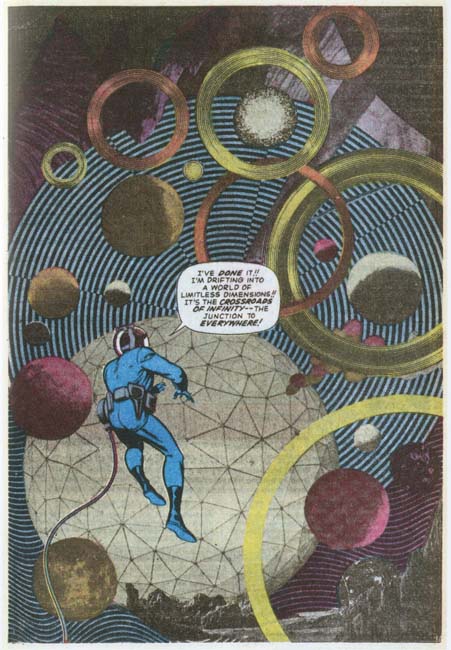
this man this monster pop art

Something goes wrong, of course, and Richards is lost in the parallel dimension. The stranger, with all of the Thing’s strength, goes in after Reed. Ultimately the man sacrifices himself to save Reed. When the stranger’s life is lost, Ben reverts to his Thing form. The timing is, as usual, awful for Ben. He had been standing at Alicia’s door, ready to share his life-changing news with her.
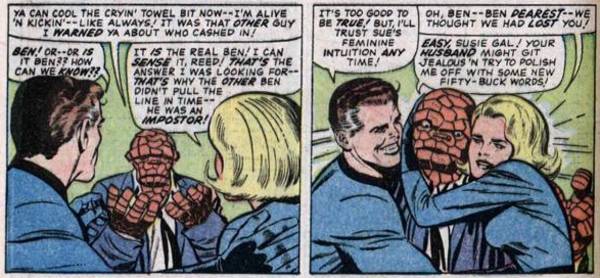
this man this monster reunion

The bittersweet ending: Ben returns to the Baxter Building to find Reed and Sue mourning his loss. They’re overjoyed by his return, an affirming moment for Ben.

Tribute should also be paid to inker Joe Sinnott and letterers S. Rosen and Artie Simek, who made Kirby’s pencils come to life. Has the Thing ever looked better than during this period? I don’t think so.

Someday it would be cool to see a full-blown big-screen movie version of the Galactus trilogy, not the half-baked version we saw a few years ago. (Galactus as a cloud. Hrmmph.) Maybe someday we will.

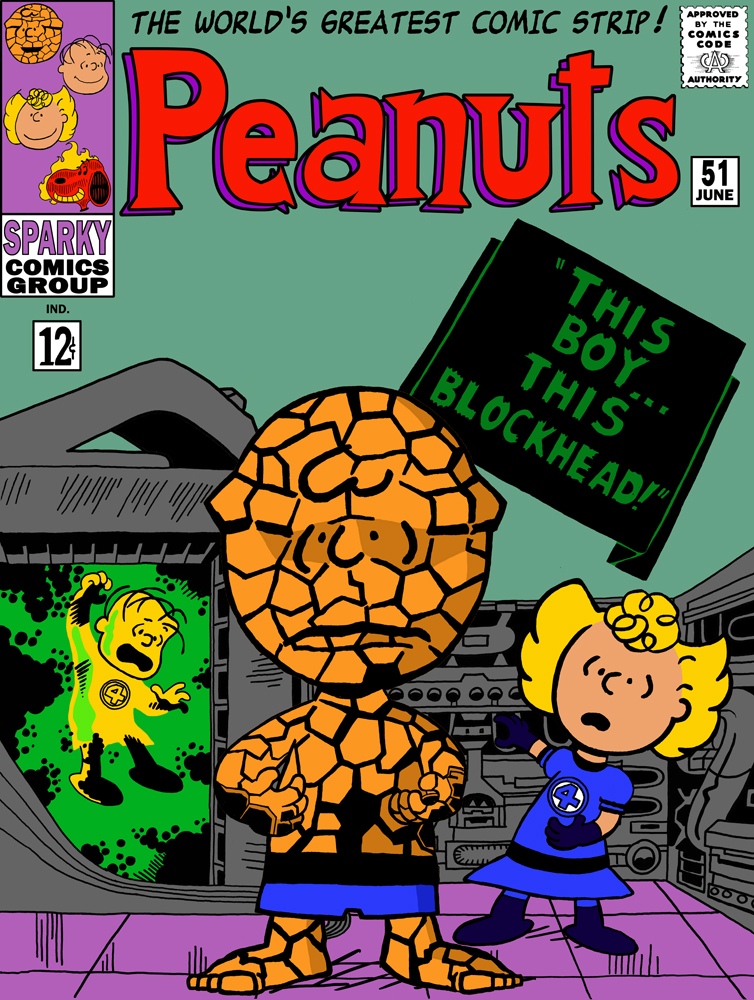
This Boy This Blockhead by jess harrold

By the way: The pop-culture impact of “This Man, This Monster” remains strong, as you can see from Jess Harrold’s art above.
The geek years of our lives: 1982

I’ve noted before in this space that 1977 was a pivotal year for movies. Two words: “Star Wars.”

But just as 1939 is a golden year for movie lovers, 1982 is a golden year for geeks. Maybe never before and maybe never since have so many milestone movies been released in a single year, many of them in the summer months alone.

I was reviewing movies that year — I had begun four years earlier and did it for another eight years, so it was prime moviegoing time for me — and even then I realized we were seeing something special.

As the 30th anniversary of this pivotal year rolls around, the Alamo Drafthouse Cinema is holding screenings of many of the movies. I can’t make those showings, but I’ll probably watch a few on disc. In the meantime, here’s my little look back.

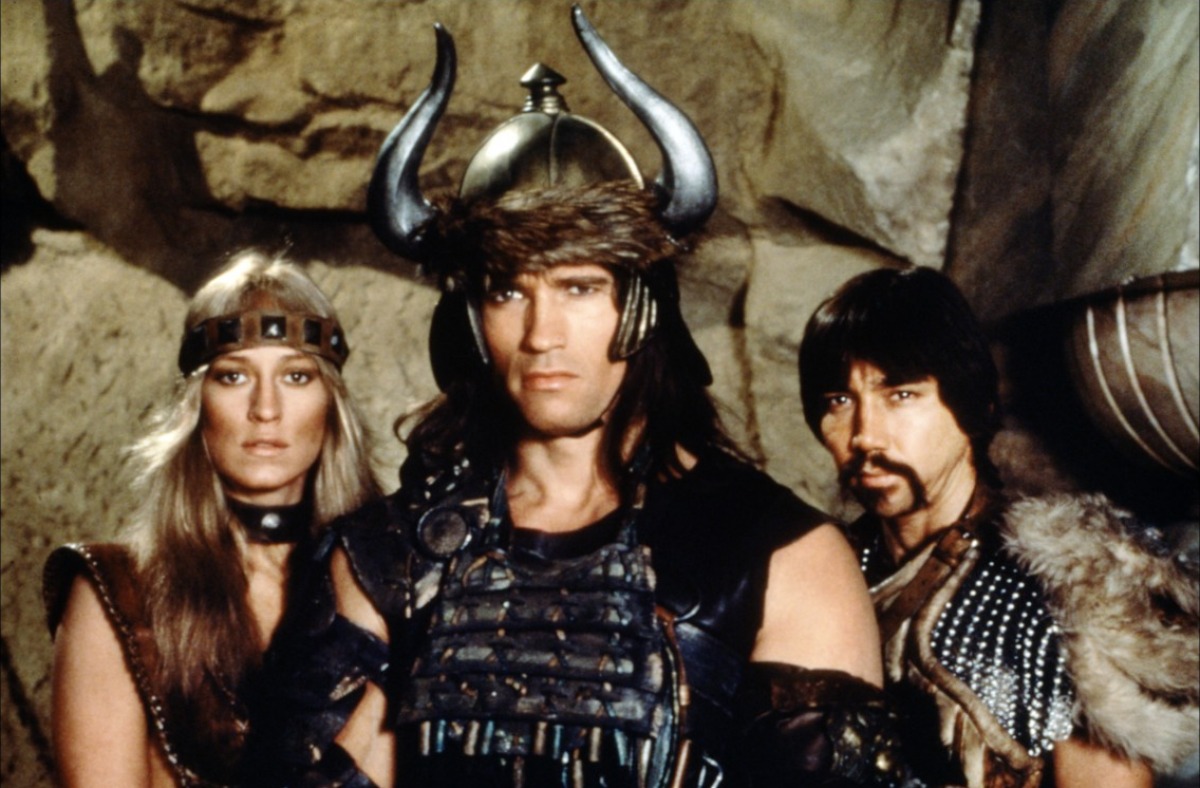
“Conan the Barbarian” — The Arnold Schwarzenegger movie was one of the first movies I saw through the press junket process, going to Chicago to see it and interview the cast and filmmakers. But even without that, I recognized the movie for what it was: The rare moment when Hollywood got the sword-and-sorcery genre right. There are some cheesy effects, to be sure. But the world of the pulp barbarian hero came to life.

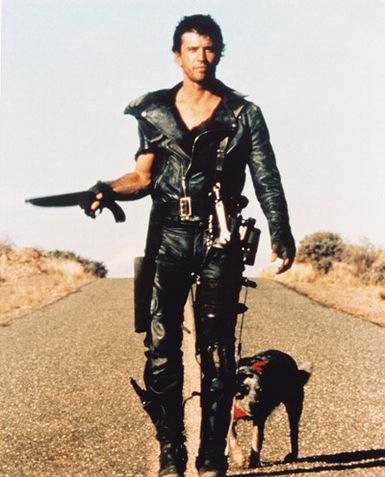
“The Road Warrior” — I had seen George Miller’s “Mad Max,” the dire action thriller starring Mel Gibson as a cop in a lawless land, but it was small in scope compared to “The Road Warrior.” Like “Conan,” “The Road Warrior” quickly defined its genre. All the elements were in place: A nihilistic hero with a heart; truly menacing bad guys; a varied and fascinating collection of good guys; stunts like movies had never seen before.

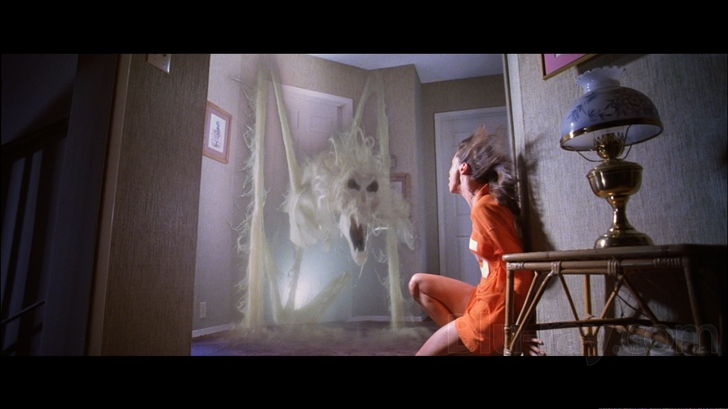
“Poltergeist” — This movie, directed by “Texas Chainsaw Massacre” director Tobe Hooper and produced by Steven Spielberg, was like the “Mirror Mirror” universe take on the suburban world given to us a few weeks later when director Spielberg released “E.T.” After decades of old dark house horror movies, the “haunted ranch house” tale told in “Poltergeist” seemed as fresh as could be.

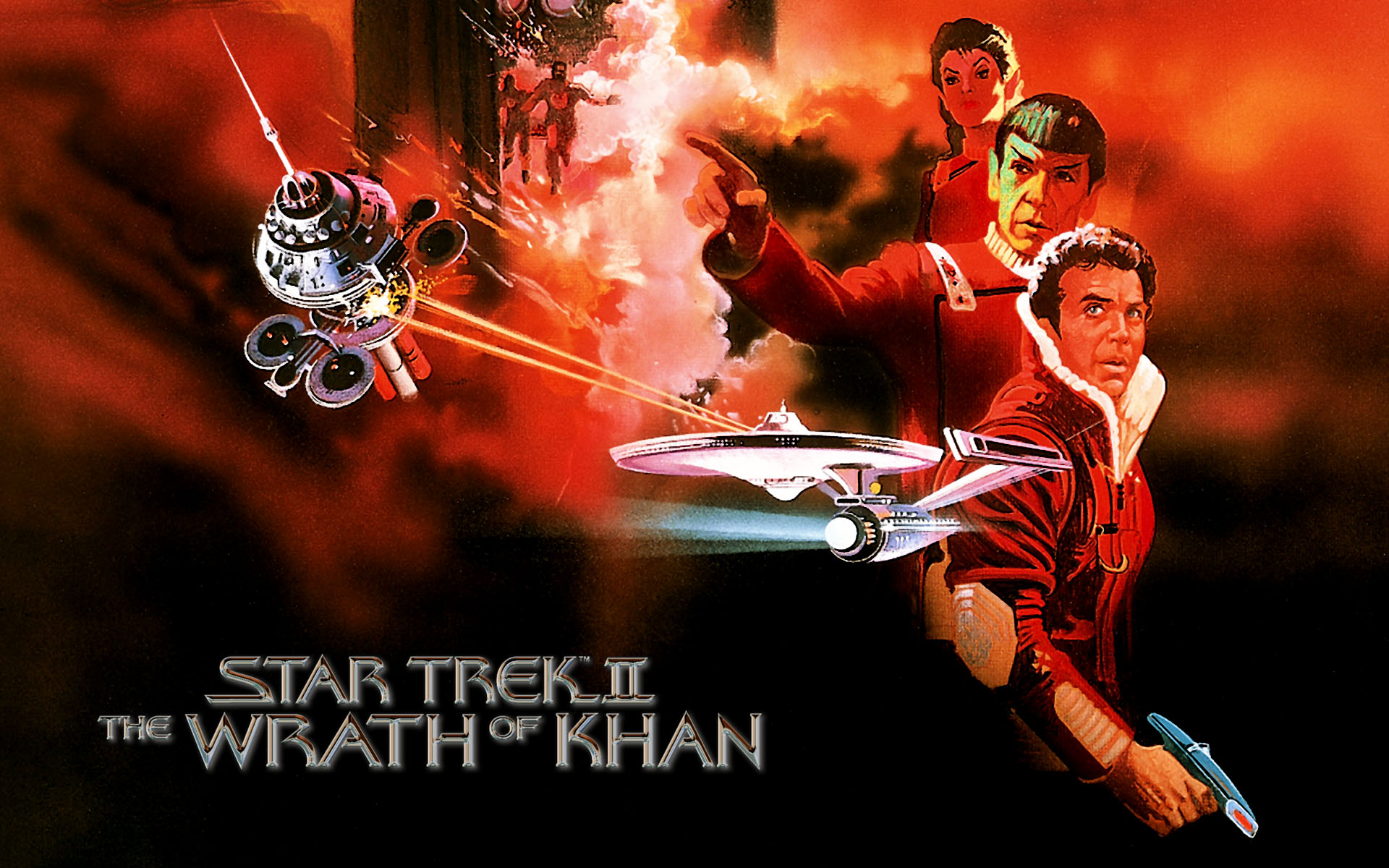
“Star Trek II: The Wrath of Khan” — While I really enjoyed the J.J. Abrams “Star Trek” reboot from a couple of years ago, the fact remains that Abrams, other moviemakers and all of fandom still believes that Nicholas Meyer’s take on Gene Roddenberry’s classic space opera is the one to emulate. And why not? Meyer brought a sharp military take to the familiar characters, pushed them through their paces in a quick-witted, thrilling plot, injected a ton of humor and tragedy and gave us one of the most heart-pounding climaxes ever. To this day, I remember the “Does Spock really die?” rumors before the movie opened, with fans eagerly anticipating/dreading the answer.

“E.T. The Extra-Terrestrial” — Sure the ending is marred by one of those “ohmygod he’s dead, no he’s not” resurrections. But time has probably dimmed our recollection of how simultaneously sweet and tart this movie is. The kids were cute but had realistic anti-sibling mean streaks, the mom (Dee Wallace. Sigh.) was a barely-hanging-in-there abandoned woman and E.T. himself was a great creation. It deserved to make a ton of money.

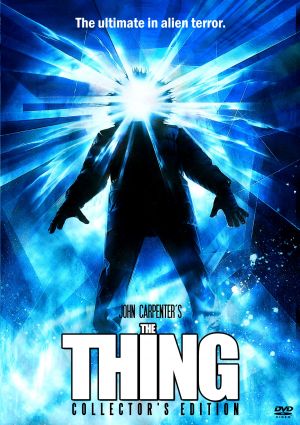
“The Thing” — Man, what a great horror flick. Director John Carpenter was on a roll with “Halloween,” “Escape from New York” and this, making him the most subversive director working and one of the most crowd-pleasing. Think about the endings to those movies for a minute: “Halloween” ended by establishing the boogeyman really existed. “Escape” ended with the protagonist, played by Kurt Russell, deciding “the hell with it” and destroying a tape that could save the world. And “The Thing” ended its cold and nightmarish story with a man versus alien creature showdown — featuring Russell and Keith David — that couldn’t have been more harsh.

The two last movies of the summer of 1982, “Tron” and “Halloween III,” were lesser lights, but how could they not be? “Tron” left enough of an impression to spawn a sequel nearly 30 years later. And “Halloween III” was a noble experiment that ultimately failed. Rather than try to top John Carpenter’s original, the movie’s producers went for a whole new story, about a fiendish plot to sacrifice millions of children with Halloween monster masks. “Three more days to Halloween!” was the earworm TV commercial jingle of the year. I just wish the movie had found an audience.

What a year.