Tag Archives: Thor

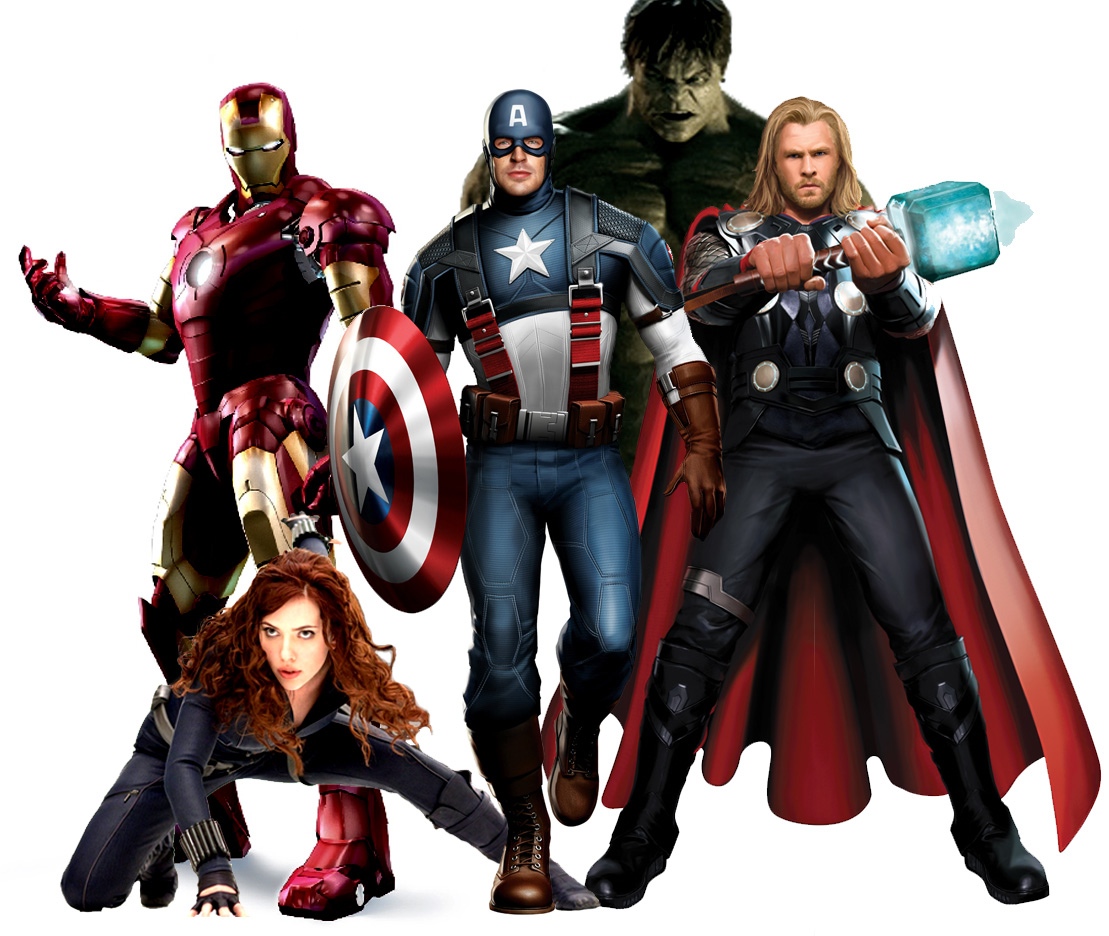
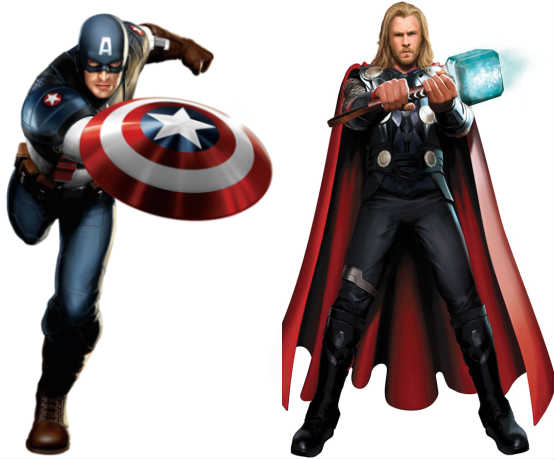
New Cap, new Thor and ‘Avengers: Ultron!’

avengers ultron EW cover

Again, which of us, as little geeks, thought this would happen? All this superhero movie madness?

And who could have imagined it would be so much fun?

Entertainment Weekly – which I haven’t seen yet – has a big preview of next May’s “Avengers: Age of Ultron.”

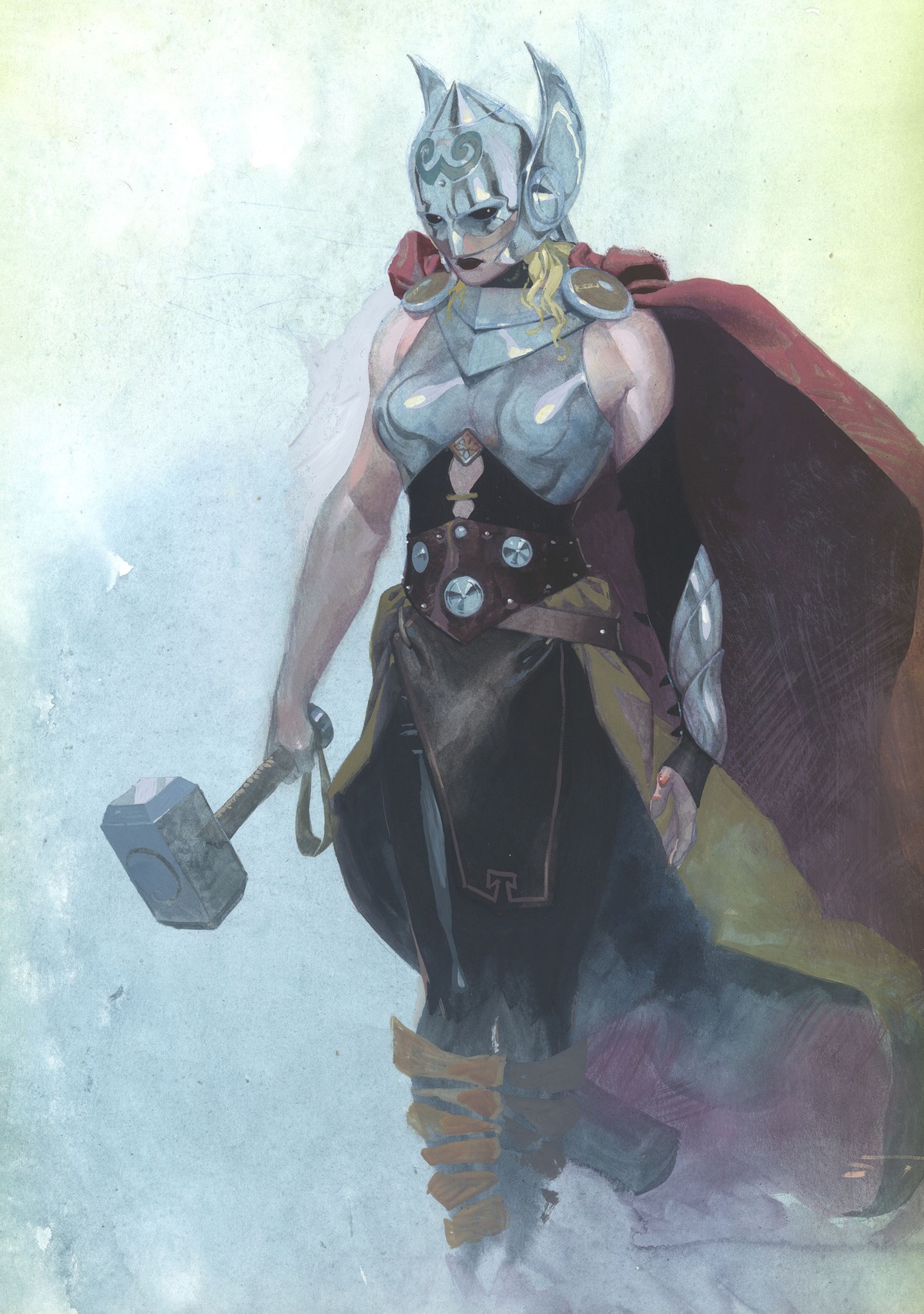
new female thor

Marvel announces that, in the comics, Thor will soon be a female who takes the Thunder God’s mighty hammer when the original Odinson is sidelined.

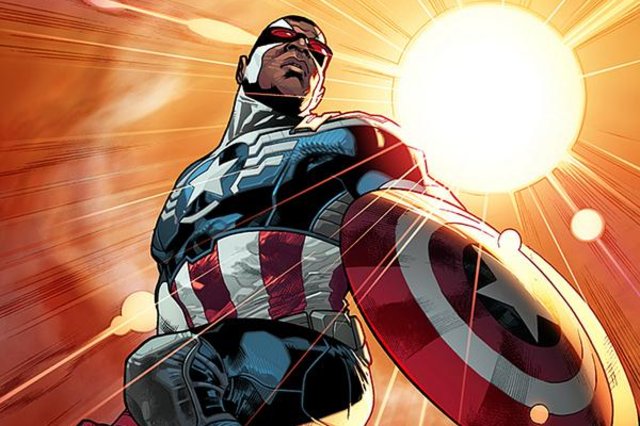
new captain america falcon sam wilson

Marvel announces a new Captain America – most likely Sam Wilson, Cap’s longtime partner as the Falcon – will take over for Steve Rogers, also in the comics.

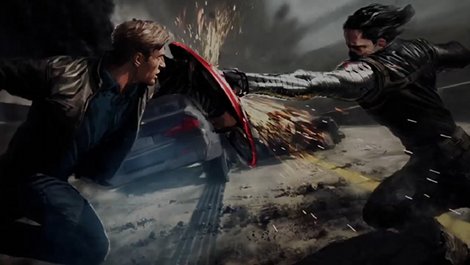
You know, this isn’t entirely new. Thor has been replaced before – once, notably, by a giant frog – and so has Cap (so many times I couldn’t begin to count, but most notably by Bucky Barnes/The Winter Soldier).

But it’s all fun and fair and will juice up publicity leading up to the “Ultron” movie next May.

So to reiterate: Hell to the yes.


Method to their madness: Marvel movie credits scenes

Thanos-in-The-Avengers-

In all the verbiage that’s been dedicated to end-credits scenes in Marvel movies, gone unaddressed is the question of why some movies have one end-credits scene and why a few have two.

Early Marvel movies had only one end-credits “stinger,” or “button,” scene. The first, of course, was Samuel L. Jackson as Nick Fury showing up at the end of “Iron Man” in 2008.

“The Avengers” set a precedent for two credits scenes that was continued in “Thor: The Dark World” and, we’re hearing, “Captain America: The Winter Soldier.”

Spoilers ahead, obviously, although some are for movies you’ve probably seen by now. And if you haven’t, why not?

What we’re hearing so far about the end credits scenes from the “Captain America” sequel indicate the movie continues the mini-trend of two end credits scenes but also the trend of making one a direct promo for a future movie and one a character piece.

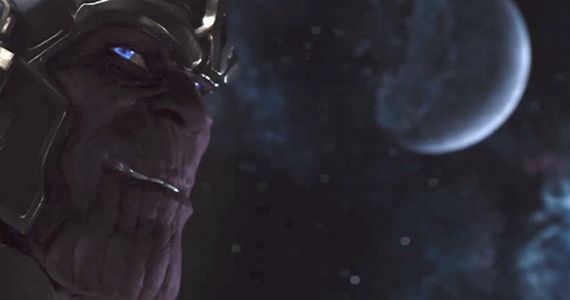
We saw that in “The Avengers,” which – in its first credits scene – teased Thanos as the bad guy behind the scenes of the movie. Then, in the end credits scene, the tired Avengers sit down for a meal in a nearly-demolished NYC restaurant. It’s a scene that emphasized the humor of director Joss Whedon.

Two end-credits scenes in “Thor: The Dark World” followed that pattern. In the first, the story is advanced toward this August’s “Guardians of the Galaxy” by introducing not only the character the Collector but the concept of the Infinity Stones before the very final scene showed Thor returning to Earth and reuniting with Jane Foster.

Now we’re hearing that two end credits scenes in “Captain America: The Winter Soldier” will follow the same approach. One will advance the larger Marvel movie storyline while the other will further the development of one character.

Is it purely a marketing strategy on the part of Marvel? At the end of the original “Captain America,” the most marketing-oriented extra so far included a montage of shots from “The Avengers.”

Is it artistic vision from the director? We know that’s not always the case. “Thor: The Dark World” director Alan Taylor grumbled about the inclusion of footage promoting “Guardians of the Galaxy” at the end of his movie. He didn’t direct it. Likewise, “Avengers” series director and Marvel’s big-screen consultant Whedon directed an “Avengers”-leaning promo at the end of the original “Thor” and, it was announced this week, directed one of the two scenes at the end of “Winter Soldier.”

So we’re guessing it’s more of a savvy, catch-em-while-they’re-in-the-theater-and-create-buzz move by Marvel.

And it’s one that usually adds to the enjoyment of the movies for fans.

Ranking the Marvel movies

Avengers assemble

Here’s a pointless exercise but maybe a fun one.

I decided to rank, in order of how much I enjoyed them/how good I thought they were, the big-screen Marvel movies.

It’s not too hard to tell that I prefer the official Marvel Cinematic Universe movies over the random Fox and Sony movies, I know.

A few provisos:

I’m not dipping back into pre-history far enough to drag “Howard the Duck” into this. And I haven’t seen it in a couple decades.

And I’m not including the 1994 “Fantastic Four” movie because it wasn’t released – I’ve only seen it on a bootleg DVD bought at a convention – and it doesn’t belong on this list any more than the awful “Captain America” TV movies do. Same for the “Blade” movies, which had their moments but seem as remote as the 1944 “Captain America” serial now.

Be aware, I’ve only glimpsed moments of the “Ghost Rider” movies on TV. And I’ve never seen the “Punisher” movies at all.

Two lists: First, just the “official” Marvel movies, then the list with the non-Marvel-overseen movies mixed in.

The Avengers

Captain America: The First Avenger

Iron Man

Thor

Thor: The Dark World

The Incredible Hulk

Iron Man 3

Iron Man 2

If you add the other post-2000 Marvel movies that aren’t part  of the official Marvel Cinematic Universe into the mix, it’s still weighted pretty heavy toward the official Marvel canon.

The Avengers

Captain America: The First Avenger

Iron Man

Thor

Thor: The Dark World

X-Men 2

Spider-Man 2

X-Men

X-Men: First Class

The Incredible Hulk

Spider-Man

Iron Man 3

The Wolverine

The Amazing Spider-Man

Daredevil

Iron Man 2

X-Men 3

Fantastic Four

Fantastic Four: Rise of the Silver Surfer

Spider-Man 3

X-Men Origins: Wolverine

Hulk

Elektra

Looking at that list, it seems like “Iron Man 3” is way too far down. But maybe not. I need to see it again.

Something tells me my list will see a big shake-up next month, when “Captain America: The Winter Soldier” opens.

Marvel Phase 2: What we want to see

cap and winter soldier

It’s pretty easy to talk about what movies and characters we want to see in Marvel’s cinematic Phase Two, leading up to the “Avengers” sequel in 2015.

We’re already know we’re getting “Iron Man 3” in just a few days, the “Thor” sequel this fall, “Captain America: The Winter Soldier” and “Guardians of the Galaxy” after that. “Ant-Man” fits in there somewhere.

marvel-phase-2 lineup

But what’s the spirit of what we want to see in the next set of movies?

The “this is new and exciting” feel of the original “Iron Man.” We’d seen a lot of superhero movies before 2008, but “Iron Man” was the first to create such a believable universe – the Marvel universe – of characters. You knew even before Nick Fury’s walk-on at the end that we were going to see this universe explored.

marvel-phase-2 ant man

The surprise of “The Incredible Hulk.” Yes, the Hulk was better in “The Avengers.” Yes, Joss Whedon got the characters of Bruce Banner and “The Other Guy” just right. But 2008’s “The Incredible Hulk” had some great moments, including even non-Greenskin moments, especially the scene where Bruce Banner leads a pack of Thunderbolt Ross’ soldiers on a chase through the slums of a South American city. It was a very “Bourne” sequence and had little in the way of typical superhero effects. But it sure was cool. “Ant-Man” has the potential to surprise us like that.

The heart of “Captain America.” We will be lucky indeed if the “Cap” sequel or any of the other Phase Two movies have the old-fashioned heart of Joe Johnston’s original. Cap’s story could have been corny. But this “kid from Brooklyn” was heart-warming and endearing and exciting at the same time.

marvel-phase- falcon

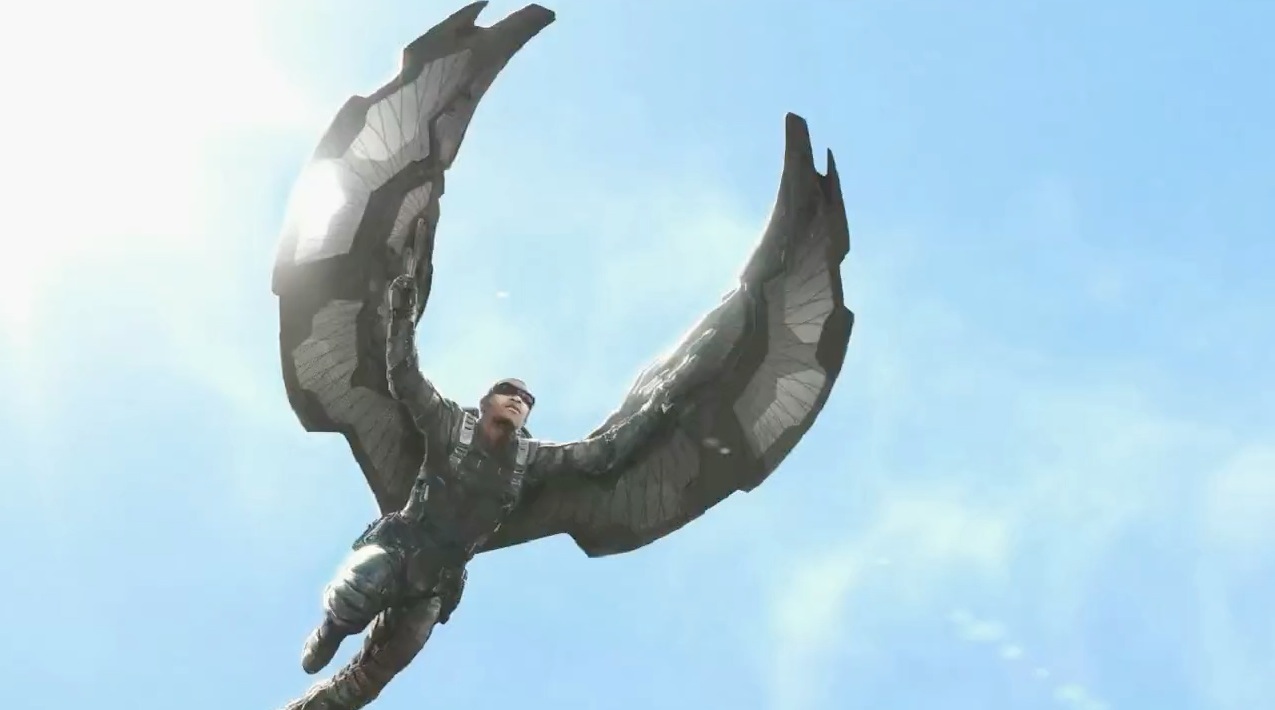
The spectacle of “The Avengers.” It had never been done, but Joss Whedon did it. He made a movie about a bunch of super-powered heroes that didn’t feel crowded or outlandish but had more than its share of large-scale scenes and epic battles. We need that in Phase 2. Imagine how wowed we could feel when we see The Falcon take flight in the “Cap” sequel.

The feel of “there’s a greater universe out there” of all the Phase One movies. It’s not just about loading the movies with guest stars and recurring characters. It’s implying – with greater or lesser degrees of subtlety – that there’s a bigger story lurking just around the corner from what’s happening on screen. Remember wondering how SHIELD played into all these stories? Who the heck that guy Thanos was at the end of “Avengers?” If we’re lucky, Phase Two will leave us wondering and wanting more.

Marvel movies: What we want to see in Phase 3

downey-jr-ruffalo-the-avengers-shooting-on-location-02

If you’re only a casual fan of the movies made from Marvel comics in the past four or so years, you might not be familiar with the “phases” that the company is moving through as it brings its complex universe to the big screen.

Phase 1, as dubbed by Marvel, began in 2008 with “Iron Man,” moving through solo adventures for the Hulk, Thor and Captain America and culminating in last summer’s “The Avengers.”

“Iron Man 3” kicks off Phase 2 this May, with “Thor: The Dark World,” “Captain America: The Winter Soldier” and “Guardians of the Galaxy” to follow, and Marvel films honcho Kevin Feige has indicated that series will sew the seeds for the “Avengers” sequel in 2015, even if moviegoers don’t recognize those seeds at the time. (Talk about a crazy Easter egg hunting challenge!)

“Ant-Man” is already on the schedule for late 2015, a few months after the “Avengers” sequel, and would kick off Phase 3. Marvel films honcho Kevin Feige hinted recently that “Dr. Strange” might also follow in Phase 3.

Remember that Hawkeye was introduced in “Thor,” so it’s possible we’ll see more Marvel characters introduced in Phase 2.

But here’s what we want to see in Phase 3:

luke-cage

Diversity. Luke Cage and the Black Panther are two longtime Avengers who would not only be great additions to the team but bring needed color to the movie line-up.

The_Wasp

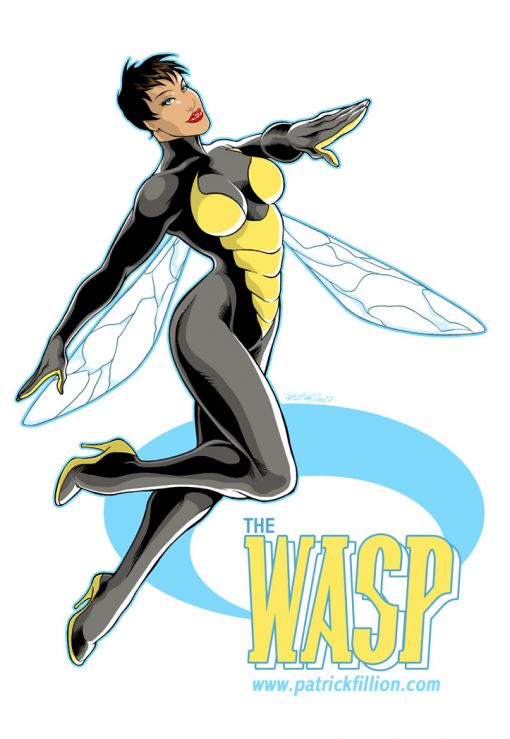
Women, including Wasp! She was a founding member of the Avengers, for pete’s sake. It would make sense that she’s introduced in the “Ant-Man” movie.

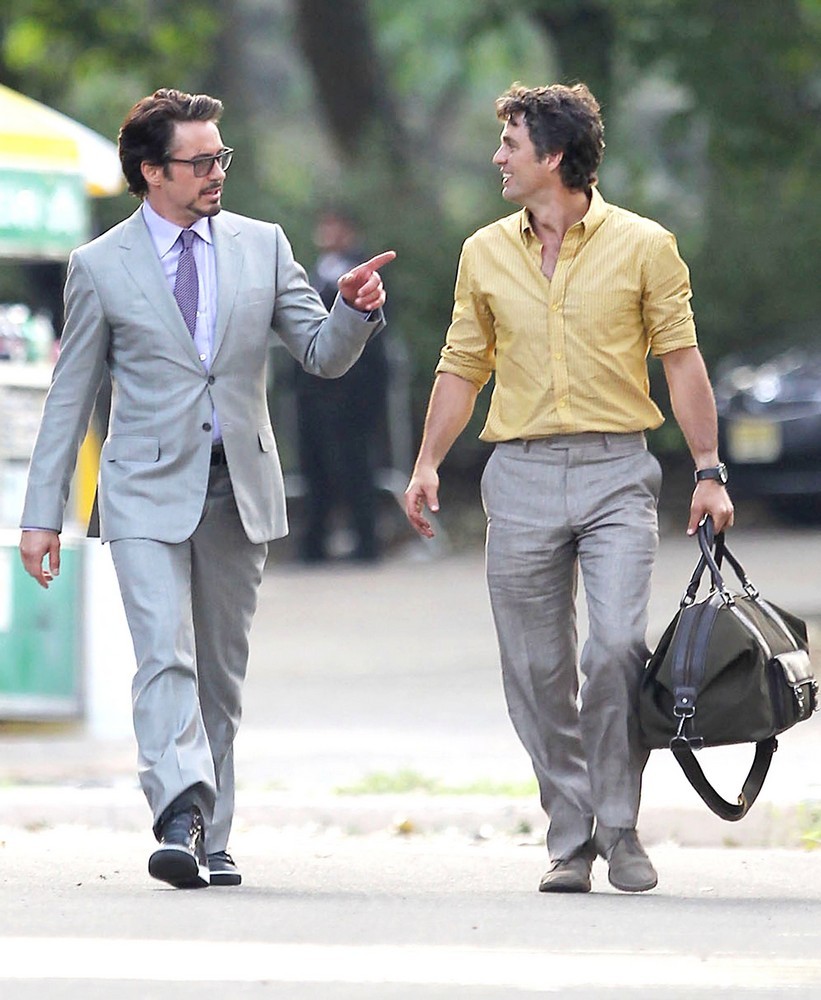
More Hulk. Even better, a Hulk/Iron Man Marvel Superhero Team-Up.

Big and small. A good mix of personal, high-stakes stories – which “Iron Man 3” appears to be, as much as any Marvel superhero movie can be – with the grand-scale action plots we know from Marvel.

avengers and xmen

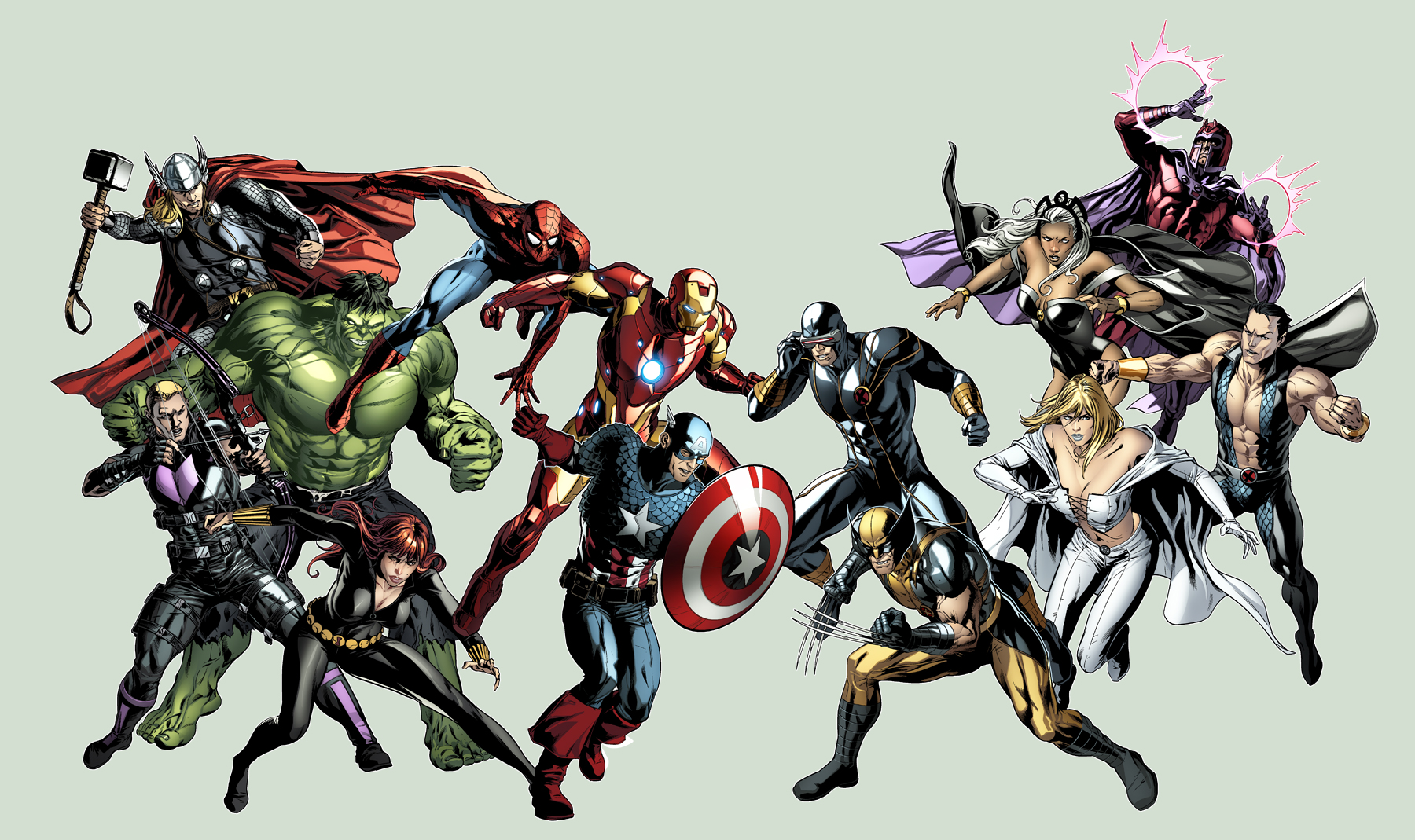
Dare I say it: Crossover with characters whose big-screen rights are owned by other companies, namely “Fantastic Four,” “X-Men” and “Spider-Man.” Surely with lots of money to be made this can be worked out, right?

Come on, Marvel. Make it happen!

Our favorite geek year: Marvel comics milestones

It’s a staggering thought: Many of the Marvel comics characters that dominate modern movies were created, by a handful of talented artists and writers, within the space of little more than a year about five decades ago.

Sure, everybody knows Marvel of the early 60s was an a creative hothouse. But it’s truly impressive how quickly the staff turned out one soon-to-be classic comic and character after another.

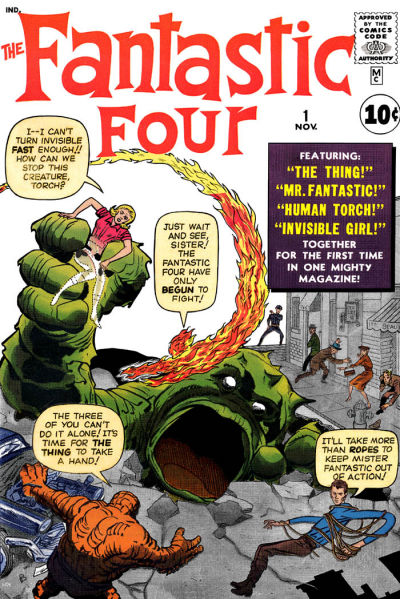
It started with Fantastic Four No. 1, with a cover date of November 1961. An important word about cover dates: Then, as now, comics and magazines were given cover dates that were slightly in advance of the period they were actually available. I’m guessing that if you went to a newsstand (remember those?) today, in early October, you’d find November or December or even January editions of many monthly magazines. The practice was (is?) aimed at making comics and magazines look like they have a longer shelf life (literally). So while FF was dated November 1961, it was in the hands of fans weeks before that.

Writer Stan Lee and artist Jack Kirby (with inker George Klein) introduced Reed Richards and the rest of the FF in that November 1961 issue and Marvel published several issues until, six months later, the first issue of The Incredible Hulk came out in May 1962. To create just the Fantastic Four would be an accomplishment for any two men. But for Lee and Kirby to create the Hulk within weeks or months is truly impressive.

Then things got crazy.

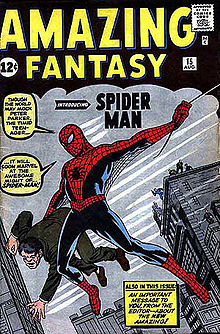
August 1962 saw the publication of Amazing Fantasy No. 15, which fans know introduced Spider-Man and his mild-mannered alter ego, Peter Parker. Lee and artistic genius Steve Ditko get the credit here for creating one of the world’s most enduring superhero characters.

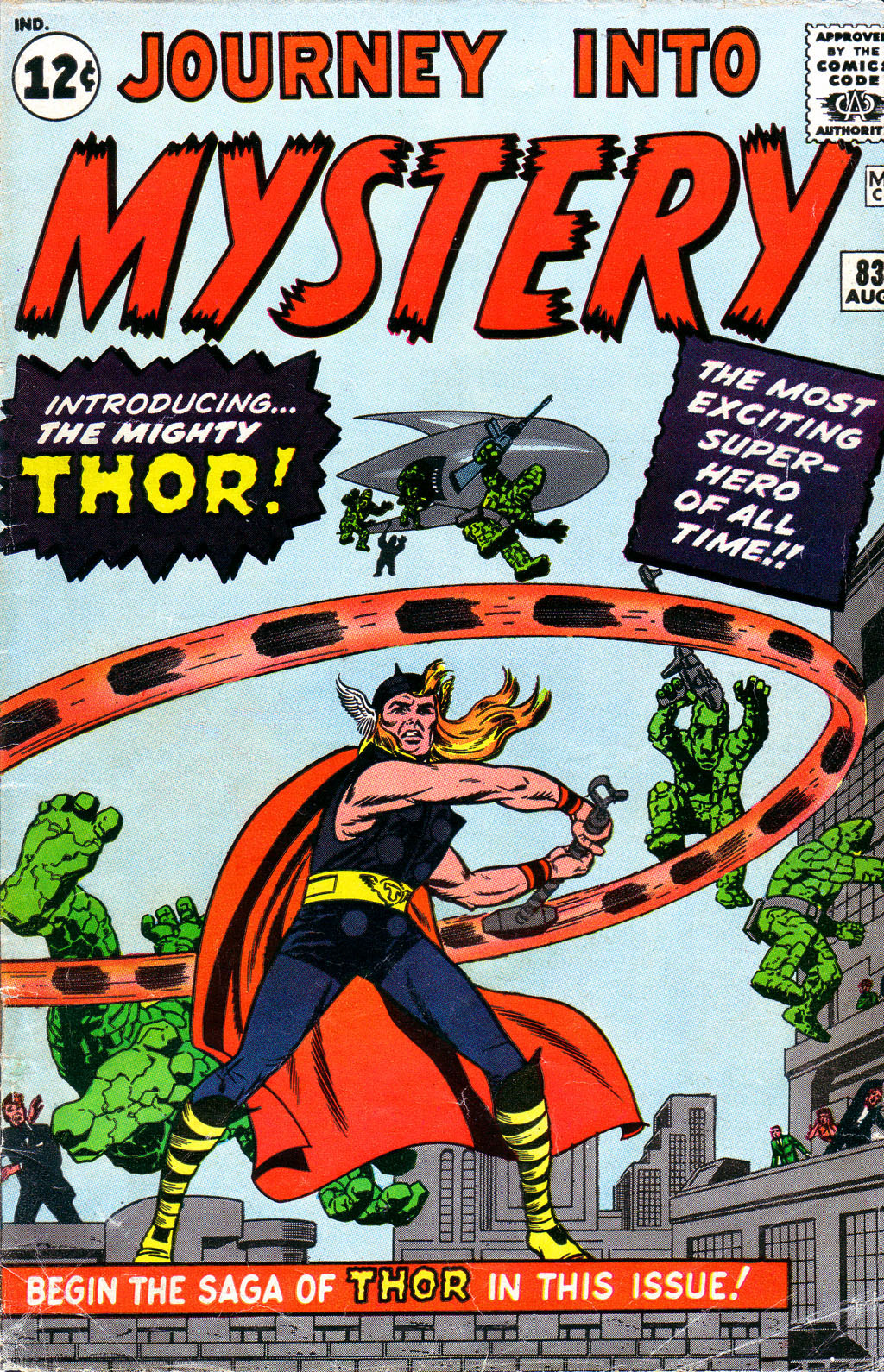
That same month, August 1962, saw Journey into Mystery No. 83, with Lee and his brother, Larry Lieber, behind the plot and script and Kirby and inker Joe Sinnott introducing none other than Thor.

(Now keep in mind that during this time, Marvel continued to produce follow-up issues of FF and Hulk.)

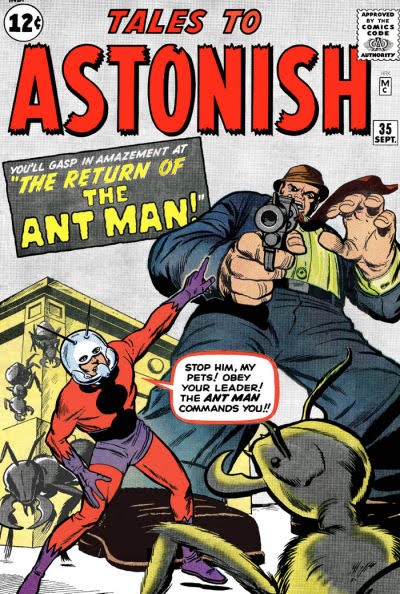
In September 1962, Lee, Lieber, Kirby and Dick Ayers gave the world Tales to Astonish No. 35, introducing scientist Henry Pym, better known as Ant-Man.

Remember, by this point, we’re still not a year past the introduction of the FF.

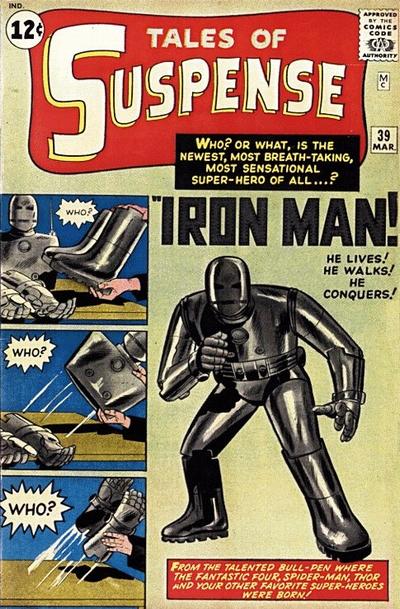
By March 1963, another major character was introduced when Iron Man debuted in Tales of Suspense No. 39. Lee and Lieber and artist Don Heck were the men behind the future Avenger.

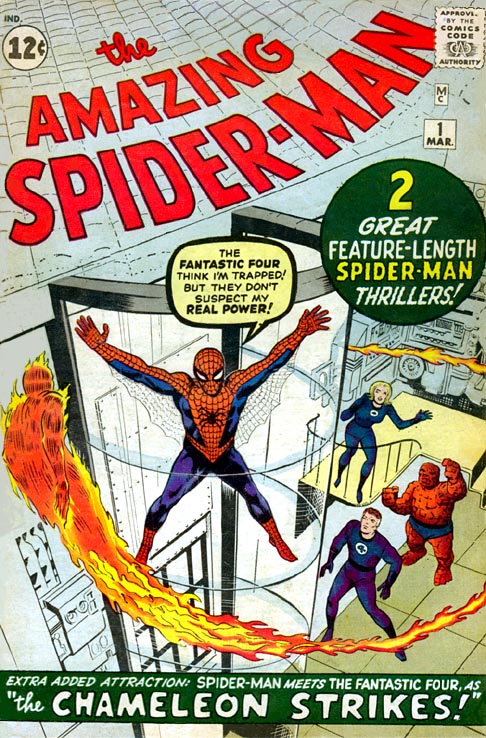
That same month, the unexpected response to Amazing Fantasy No. 15 led to the debut of Amazing Spider-Man No. 1, by Lee and Ditko.

The Marvel era was firmly in place in September 1963 with the debut of Avengers No. 1, featuring characters from the recent Marvel comics teaming up. Lee and Kirby and inker Ayers were reacting to – but actually topping – DC’s Justice League.

So, in the space of less than two years – little more than a year if you’re counting only the debuts of most of these characters – Lee, Kirby, Ditko and their cohorts gave us characters that not only entertained many readers but laid the foundation for the biggest movie hits of today.

Marvel movie timeline: What happened when?

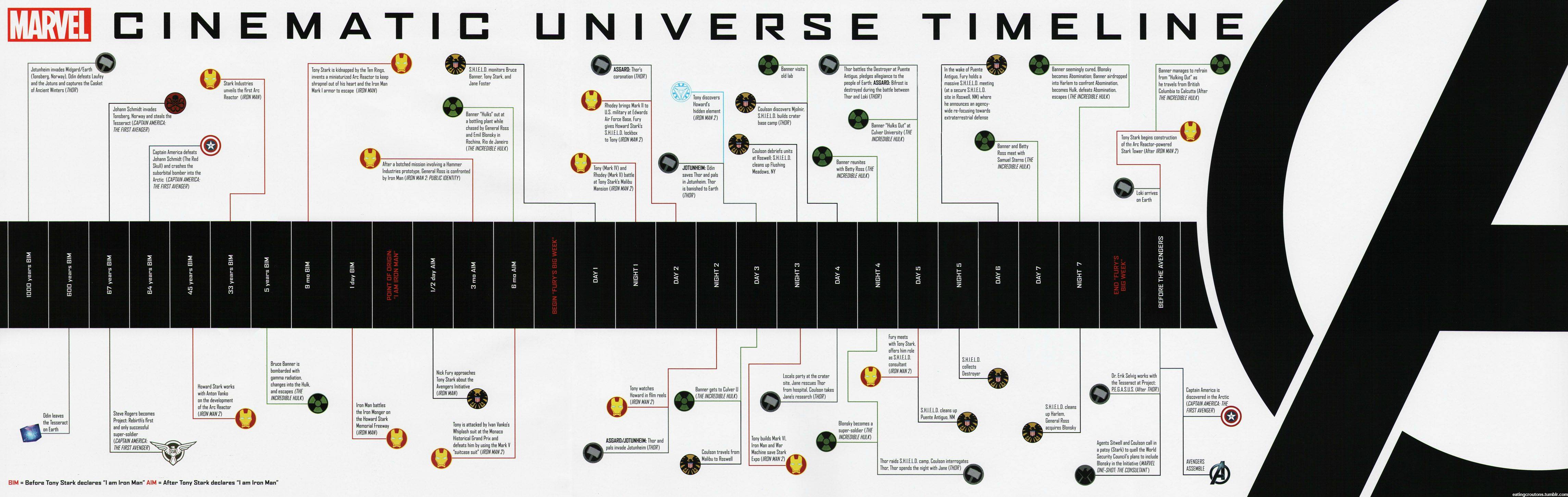
You might have to turn the Internet on its side to fully appreciate this one, but a new book, “Avengers: The Art of Marvel’s ‘The Avengers,'” is coming out and it includes this timeline to the happenings of the Marvel cinematic universe.

I’ve always been a sucker for timelines, whether they’re demarcations of real events or, one of my favorite timelines from a couple of decades ago, a linear recounting of when events in the “Star Trek” universe took place.

Admittedly, the timeline of the Marvel movie universe is kinda thin so far. After all, we’re talking about only a handful of movies leading up to “The Avengers.”

But it’s fun to see how the chronology of the movies’ releases doesn’t always follow the chronology of how events played out in Marvel’s internal storyline.

I mean, it’s pretty cool to find out that when Bruce Banner was hulking out at Culver University in “The Incredible Hulk” in 2008, Thor was defeating the Destroyer in New Mexico on virtually the same day — and that movie came out three years later.

Cosmic, I know.


The road to ‘The Avengers’ (part two)

Sixty years after the “Captain America” serial debuted in 1944, another Marvel movie milestone occurred: The aborted release of “The Fantastic Four,” a low-budget movie (co-produced by the legendary Roger Corman). Made to perpetuate rights to Marvel’s first family, the movie was pretty bad. While the cast and crew apparently thought it would be released and a premiere was announced, the movie was shelved. Today it is legend to some and reality to others who have bought bootleg DVD copies at comic book conventions.
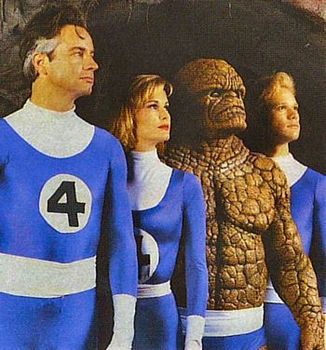
For a while it seemed like Marvel’s heroes were destined for low-budget life only. Then “X-Men” was a hit in 2000, followed by “Spider-Man” two years later. The characters, as well as the Fantastic Four, were sold off by Marvel to different companies, though. While Sam Raimi made two good “Spider-Man” films, “Fantastic Four” and its sequel were lackluster enough to make fans crazy. After decades of no big-screen adaptations, were Marvel’s heroes fated to live only through erratic, variable-quality movies?

And would fans never see a unified Marvel universe onscreen?

At some point, Marvel decided to take the best of the properties it still had film rights to — Iron Man, Captain America and other longtime Avengers stalwarts — and knit a coherent universe.
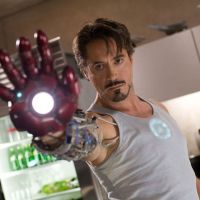
The “Yes!” moment came in 2008 with the release of “Iron Man.” Sure, before Jon Favreau’s movie there had been references to the larger world of Marvel characters, notably on computer screens in the “X-Men” movies. Fun “Easter eggs” maybe, but with no hope of follow-through.

At the end of “Iron Man,” Tony Stark (Robert Downey Jr.) returns to his home and finds Nick Fury (Samuel L. Jackson) waiting for him. Fury tells Stark he’s not the only superhero in the world and tells him he’s there to talk about “the Avengers initiative.”

By that point, fans knew that Marvel had big plans for their universe. Soon, each movie would build toward “The Avengers.”

A long four years followed, but fans were rewarded with some fun movies. “The Incredible Hulk” in 2008 was, I thought, a terrific movie, with good Hulk action but also exciting scenes, including one in which soldiers pursue Bruce Banner (Edward Norton) through a South American slum.

The Hulk movie continued — even amped up — the Avengers foreshadowing. Spymaster Fury didn’t reappear but SHIELD was all over the movie, as it had been in “Iron Man,” and Downey Jr. appeared as Stark at the end. Maybe best of all were the references to the “super soldier” program that created Captain America, as Hulk’s nemesis the Abomination was created in part because of the same serum that, decades earlier in the comics, made Steve Rogers Captain America.

Between them, “Iron Man” and “The Incredible Hulk” made for a great one-two punch.

“Iron Man 2” dug deeper into SHIELD and the Marvel universe two years later. SHIELD was fully staffed by this point, with not only Fury and Agent Coulson returning but Natasha Romanov (Black Widow, played by Scarlett Johansson) showing up. Cap’s shield was even on hand, in Stark’s lab.
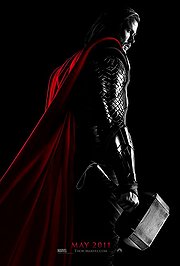
We found out why a year later, when the summer of 2011 brought fans “Thor” and “Captain America.”

The two movies almost felt like two chapters of one story. Although “Thor” took place in Asgard and the present day and “Captain America” took place in the 1940s (with a modern-day framing device) the movies integrated the Avengers building blocks. SHIELD agent Coulson and references to other characters, notably a veiled reference to Gamma scientist Bruce Banner, were sprinkled through “Thor,” while “Captain America” put the Red Skull in search of the Cosmic Cube, a treasure from the armory of Odin, Thor’s father.
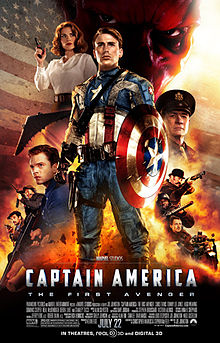
The two movies didn’t have the impact of “Iron Man,” perhaps, because the earlier film took so many people by surprise. But “Thor” and “Captain America” are so strong, so entertaining and so thorough in their establishing of “The Avengers” that they exude confidence.

By this point, Marvel was confident enough of its plans to end the movies not only with surprise extra scenes but James Bond-style “Captain America will return in The Avengers” slides.

Even while DC Comics was floundering, releasing a half-hearted “Green Lantern” movie that clumsily introduced Amanda Waller, a Nick Fury surrogate, and couldn’t get “Dark Knight” director Chris Nolan to agree to let his Batman character exist in the same world as the rest of the Justice League, Marvel had established its world.

The long road led to “The Avengers.” The movie comes out this week. Early reviews are very positive, and Marvel seems confident enough to continue to build its movie universe.


Top movies of 2011: Some thoughts

I’ve noted this before, but there was a period when I was in a movie theater every single weekend. I reviewed movies from 1978 to 1990 and saw almost everything that came to town.

More than a few years since then the majority of my movie-watching has been on home video. The demands of real life — particularly when nobody was paying me to review movies — meant I caught a lot of movies months later.

Accompanied by various enthusiastic family members and friends, I saw a lot more movies in the theater this year. I still haven’t seen the “Sherlock Holmes” sequel or “The Girl with the Dragon Tattoo,” but I saw a lot of movies earlier in the year. Particularly the geeky, comic-booky ones.

I just ran across this list, on Box Office Mojo, of the top movie box office results of the year and thought I might make note of those movies that caught a few bucks from me this year.

1. “Harry Potter and the Deathly Hallows Part 2,” $381 million. How could I not go see the final big-screen outing for Harry and company? Maybe not my favorite of the movies — I think “Prisoner of Azkaban” takes that honor — but a fitting end to the series.

2. “Transformers: Dark of the Moon,” $352 million. Yeah, my attendance of this was kid-driven. But you know what? It was a pretty fun action movie. And who doesn’t like seeing Buzz Aldrin interacting with giant robots?

3. “The Twilight Saga: Breaking Dawn Part 1,” $273 million. Haven’t seen it yet. Probably will on DVD. Not holding my breath.

4. “The Hangover Part II,” $254 million. I thought the first one was a hoot. Haven’t seen this yet. It just didn’t seem like a must-see-in-theaters to me. Obviously a few people disagreed.

5. “Pirates of the Caribbean: On Stranger Tides,” $241 million. I’ve never gotten these movies. Johnny Depp is fun in them but the stories are unfathomable. No ocean pun intended.

6. “Fast Five,” $209 million. Didn’t see it. I imagine I’ll watch it on TNT someday. Or the Speed channel.

7. “Cars 2,” $191 million. Another kid-driven movie and not as good as the original, but good, silly, fun. Can’t top other Pixar movies for heart, smarts and humor, however.

8. “Thor,” $181 million. If you told this Marvel Comics-loving kid back in the 1960s that someday somebody would make a multi-million-dollar blockbuster about Thor and that millions of people would go see it … well, I’d probably be so pathetically grateful that you knew who Thor was that I would have believed you.

9. “Rise of the Planet of the Apes,” $176 million. Maybe the biggest surprise of all the movies on this list that I saw. Who knew it would be so good?

10. “Captain America,” $176 million. One of my favorite comic book characters in one of my favorite comic book movies. And I totally geeked out over the “Avengers” preview at the end. (Spoiler!)

Jumping down the list, a few observations:

I’m kind of surprised that “Bridesmaids” didn’t place higher than 12 with $169 million. “This is like lava coming out of me.” I laughed a lot.

At 14, “X-Men First Class” also deserved to make more than $146 million. Almost as much of a surprise as “Rise of the Planet of the Apes.” A good Marvel movie from someone other than Marvel? An even bigger surprise.

Speaking of comic book movies, “Green Lantern” was 22nd with $116 million. If I could, I’d get my money back and the movie would have made $10 less.

“The Green Hornet” ($98 million) made more money than “Crazy, Stupid, Love,” with $84 million? Are there more Seth Rogen fans than Steve Carell fans?

“Real Steel” ($84 million) and “The Muppets” ($80 million) should have made more.