Tag Archives: Twilight Zone

‘Black Mirror’ a ‘Twilight Zone’ for … yadda yadda

black mirror be right back

Every few years, a new TV series is dubbed “The Twilight Zone” of its generation. Heck, even the 1980s “Twilight Zone” series was called the “Twilight Zone” of its generation. And it was really pretty good.

The designation shows the staying power of Rod Serling’s “Twilight Zone,” which began in late 1959 and ran several years into the 1960s.

But while “Black Mirror” might properly be called the “Twilight Zone” of its generation … it just might earn that title a bit more because its emphasis on technology and the way it is integrated into our lives makes it very thoroughly of our generation.

“Black Mirror,” created by Charlie Brooker, has been airing in England for a couple of years now, but its recent appearance on Netflix and online have made it widely known.

It’s a dark show. Dark. And if you don’t the title reference, it seems to me to be about that little slab of glass that most of us carry around with us every day: the smart phone. Dark until it’s activated and, as “Black Mirror” shows us, that little piece of glass and plastic and electronic innards can be mighty dark.

“Black Mirror” is set in a future that’s not very far ahead, when electronics have advanced somewhat but are still totally believable in this world of Google Glass and ever-present iPhones.

The series – two seasons of three episodes and a Christmas special – look at the way technology can be used to warp and twist us. Even by ourselves.

The opening episode, “The National Anthem,” is notorious because of its adult content, but it’s gripping and upsetting in an old-fashioned way. A beloved young British princess is kidnapped by terrorists. Their only demand? That the prime minister have sex. On live TV. With a pig.

blackmirrornationalanthem

As the clock ticks, the PM and his staff try to find a way to beat the demand and avoid the horrifying, humiliating and potentially politically disastrous ransom. Meanwhile, TV reporters scramble to find out what’s going on and the public watches, fascinated, as the drama plays out first on social media then on TV. It’s a fascinating commentary on new media and old media and how we shape them and they shape us.
black mirror christmas

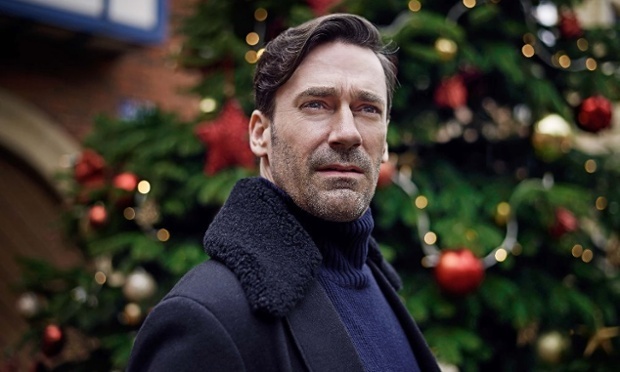
I liked “The Entire History of You” but winced at its tale of obsessive love and jealousy in a world where a “grain” of technology implanted in your head makes it possible to review – and share – your memories. The Christmas episode featuring Jon Hamm of “Mad Men” seemed to bite off too many stories.

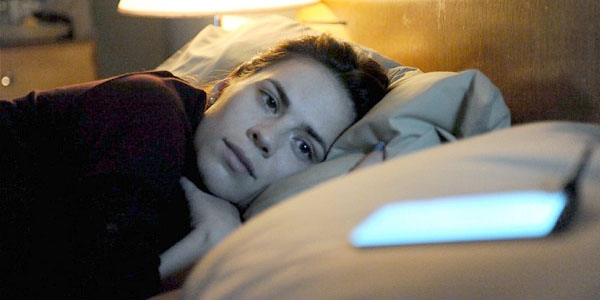
The best of the episodes I’ve seen is “Be Right Back,” with “Agent Carter’s” Hayley Atwell and Domhnall Gleeson as a young couple separated by his death in a tragic accident. But Atwell’s character learns there’s a way of being with her love again, thanks to technology. But what’s the price?

“Black Mirror” probably benefits from the cool, blue-tinged modern Brit TV atmosphere of shows like “Sherlock.”

Not to mention the pervasive feeling of technological dread each episode is infused with.
Classic TV: ‘Night Gallery’

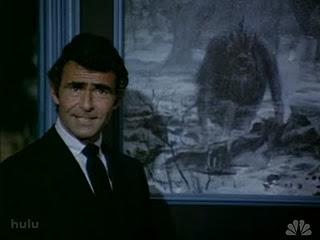
“Night Gallery” has, since the day it debuted as an irregularly recurring series on NBC in 1970, gotten a bad rap. During its three-year run, critics – and many viewers – alike judged it as Rod Serling’s unworthy follow-up to his ground-breaking anthology series “The Twilight Zone.”

And to be fair there aren’t many episodes of “Night Gallery” that have reached the iconic status of many episodes of “The Twilight Zone.” I recently watched “TZ’s” classic 1960 episode “The Monsters Are Due on Maple Street” and found its compact tale of paranoia and mob mentality still compelling, especially in these times.

But I’ve always loved “Night Gallery,” probably in part because it aired during my formative TV-watching years. I was devouring any kind of genre material in those days – movies, TV, comic books, novels, short stories – and “Night Gallery” fit a couple of those categories.

The show, hosted by Serling, just like “Twilight Zone,” and frequently featuring episodes he wrote, was as satisfying, to my young eyes, a presentation of the weird and the spooky as anything airing back in the day.

The pilot episode, which aired in 1969, was directed by Steven Spielberg and featured Joan Crawford, for goodness’ sake.

And how can we not love Serling? The gifted writer passed on in 1975, just two years after “Night Gallery” ended. He wasn’t much satisfied with the show by the end but that’s probably understandable. Serling’s talents no doubt made him less an artist and more a commodity to TV executives.

I’ve watched a couple of classic episodes recently on Hulu and thoroughly enjoyed them.

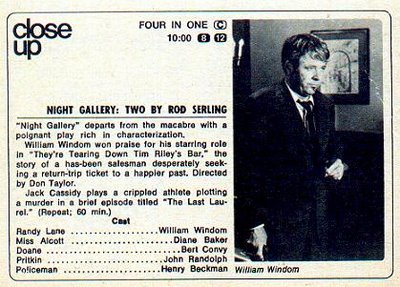
“They’re Tearing Down Tim Riley’s Bar,” from 1971, was written by Serling and comes across as more of a “Mad Men” story of corporate desperation than a spook story with William Windom as a business executive who’s been left behind in the rat race and longs for a past that lives on only in a shuttered neighborhood bar.


And bonus: Bert Convy plays Windom’s smarmy, conniving underling/usurper.

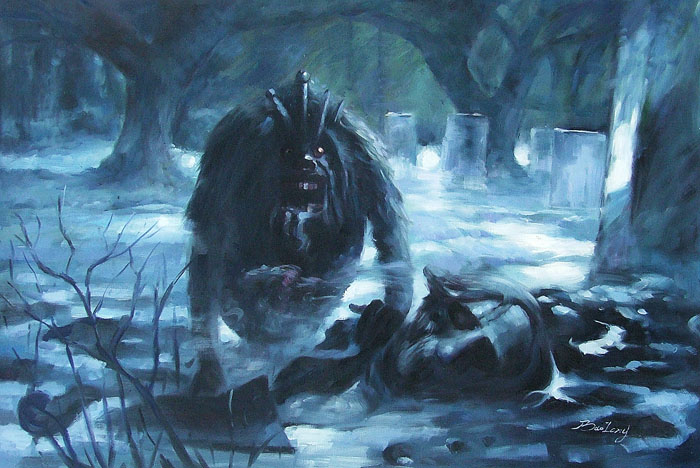
Much more straightforward, slow-burn horror could be found in “Pickman’s Model,” an episode I remembered quite well. Bradford Dillman played a turn-of-the-century artist who literally “paints what he sees.” The problem? He’s painting horrifying scenes of a monstrous ghoul that climbs out of the sewers and snatches people off the streets in a bad part of town.

From Larry Hagman to Leslie Nielsen to Victor Buono to Vincent Price, “Night Gallery” had an amazing rotating cast.

And presiding over it all was Serling, looking more dated in his shaggy haircut and mod jackets than he had as the buttoned-down host of “Twilight Zone,” but a welcome presence to be sure.

Check out Hulu’s collection of “Night Gallery” episodes. They’re also airing on MeTV, a nostalgia channel. “Night Gallery” was an immensely enjoyable follow-up to “The Twilight Zone” and, for me anyway, a fond send-off for Serling.