Tag Archives: zombies

Classic shlock: ‘Incredibly Strange Creatures’

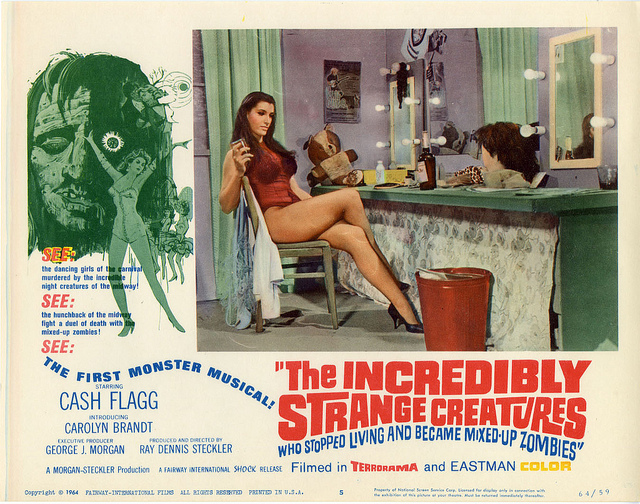
incredibly strange creatures lobbycard

I’ve written about the 1964 low-budget classic, “The Incredibly Strange Creatures who Stopped Living and Became Mixed-Up Zombies” before, notably my memories of seeing it at a drive-in with an older relative.

I didn’t touch on the movie all that much, though.

Ray Dennis Steckler directed and stars – under his pseudonym Cash Flagg – and I guess you could argue he’s a forerunner to the director/stars we’re familiar with from today. His performance isn’t horrible but he’s undercut by the low, low-budget of his own movie.
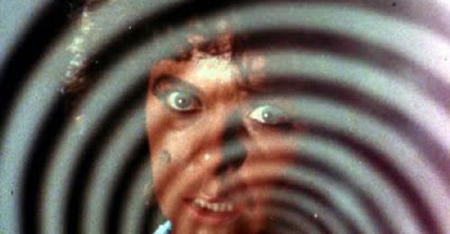
incredibly-strange-hypnotism

The movie follows a group of friends who visit a carnival and stumble upon bad guys who hypnotize, disfigure and enslave people, turning them into, in effect, zombie slaves.

The movie has the telltale leisurely pace of a low-budget flick. For what seems like forever, characters wander around, gazing at stuff, talking about nothing. There seem to be endless scenes of arty dance numbers, totally out of place at a nightclub. Watching one of these movies makes you appreciate how a well-written, well-edited movie … well, moves.

Considering the movie was touted as “the first monster musical,” I know what Steckler was going for. But sheesh. I lost track of how many musical numbers were included.
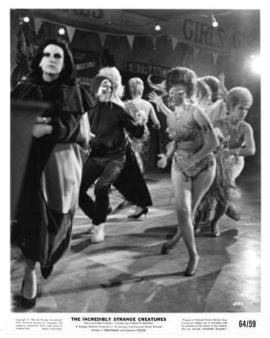
incredibly strange creatures dance number

A dancing girls sequence seems to have been shot in a community theater, and the producers were intent on getting their money’s worth because the scene goes on and on .. and then is followed by another musical sequence. Cue up “Let’s All Go to the Lobby!”

Likewise, scenes of a nightclub comic are so bad they almost seem like a modern-day parody.

Not to mention the interpretive dance/dream sequence.

After a quick break to hypnotize a victim … it’s another musical performance!

Endless shots of carnival rides.

The cheapness of the movie’s production really stands out when you see how many sets look cheaper than your standard 1960s sitcom living room – and that’s the most lavish sets here. The fortune-teller set, which consists of a few drapes and blackout curtains, isn’t as bad as the plywood airplane cockpit in “Plan Nine,” but it’s pretty bad.

Something has to be said about the hairstyles of the three leads. They are, respectively, a receding combover, a towering pompadour and a huge and baffling head of helmet hair.

When the “Incredibly Strange Creatures” finally break loose with about 15 minutes left in the movie … it’s time for another musical sequence. Steckler really knew how to build suspense!

For a real treat, seek out the “Mystery Science Theater 3000” version of the movie from 1997. It’s available through Hulu online and Mike Nelson and the robots’ version of “Incredibly Strange Creatures” is just as funny as you’d think it would be.
Cops and zombies: Jonathan Maberry’s ‘Dead of Night’

Shambling and slow as they might be, we just can’t get away from zombies.

There’s “The Walking Dead” on TV — the biggest hit on cable — and “World War Z,” the movie version of Max Brooks’ terrific book and starring Brad Pitt, to come out later this year.

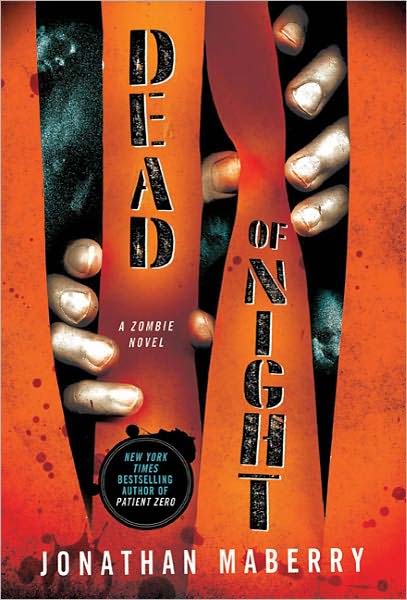
And there’s Jonathan Maberry’s “Dead of Night.”

Maberry is a writer of suspense fiction, comic books and thrillers that take their cue from biological warfare and the queasy possibilities of modern-day laboratory horrors.

In “Dead of Night,” Maberry does a couple of things I’ve not seen in a zombie book before.

He gets inside the mind of a couple of zombies — yeesh — giving readers a feel for the zombie perspective.

And, most interestingly and importantly, he approaches the possibility of a zombie apocalypse from the perspective of small-town cops dealing with its early stages.

Think about it: Most zombie books and movies, even if they have a small-town or isolated setting, include characters who know the big picture.

While Maberry’s story has those characters, it follows, especially early on but throughout the book, the street-level shock troops dealing with the beginning of the end of the world.

Maberry’s small-town Pennsylvania cops and TV reporters don’t know, at least for a while, that a plague of zombies has broken out. They only know that a couple of people have been killed, in grisly fashion, and that a couple of bodies have disappeared. A suspect is on the loose, but it takes a while for them to realize that the suspect and the missing corpse are one and the same.

The characters try to puzzle this out but thankfully never seem oblivious to the mayhem developing around them. As a matter of fact, there’s nothing like a previously dead body attacking you to change your perspective.

“Dead of Night” is a well-written thriller with appealing, made-for-cable-TV characters and situations.

The ending is open just enough to allow for a sequel. I don’t know if Maberry is planning one, but I’m ready to rejoin the zombie hordes if it happens.

High Priest(ess) of steampunk

Steampunk is kind of heard to explain.

Remember the rivet-covered, steam-powered flying saucers and such in the old 1960s “Wild, Wild West” TV series? Or the giant mechanical spider in the awful big-screen adaptation of the series, starring Will Smith?

Wait, let’s back up. I’m not sure anybody wants to remember that widescreen nightmare.

Anyway, steampunk — and the genre of fiction that bears that name — is, for the most part, a fanciful recreation of the latter half of the 1800s and early 1900s. Cowboys ride horses and use six-shooters and people travel on trains, but dirigibles are commonplace, people with missing limbs brandish elaborate false appendages and coal-or-steam-or-pedal-powered engines of destruction are the latest weapons of war.

Enter Cherie Priest.

Priest is a blogger and author of several works of fantastic fiction that falls into the “urban fantasy” category, where vampires and werewolves clash with criminals in big-city settings. I’m going out on a limb somewhat there, because I’ve just started reading one of Priest’s urban fantasy books, “Bloodshot,” so I’m not exactly sure what her books in that genre are all about.

But I can speak authoritatively about her steampunk books.

Priest isn’t the only person writing steampunk right now, certainly, but she’s one of the top practitioners. And her “Clockwork Century” series is not to be missed.

Priest’s steampunk series is set in the American 1880s, but one that’s markedly different from what we find in history books.

For one thing, the Civil War is dragging on. The battle between the North and South has been prolonged by the meddling of other parties, most notably the Republic of Texas, whose oil wealth and martial might — symbolized by the Rangers — have mustered on the side of the Confederacy.

Motivated by war and the profits to be had, inventors and captains of industry have pushed the 19th century’s technology and perfected lighter-than-air ships, trains bristling with armament, submarines and, most impressively, walking suits of armor.

Priest’s characters — many of them strong women, including a widow searching for her son in a ravaged city landscape, a nurse trying to make her way across country to find her father and a New Orleans madam eager to help the North and shake loose the bonds of the Confederacy — move through her plots in a matter-of-fact manner, wielding a gun or feminine wiles with equal skill.

Oh, and did I mention the zombies?

Yes, Priest has complicated matters by creating a wave of the walking dead — or rotters, as they’re called in their place of origin, Seattle.

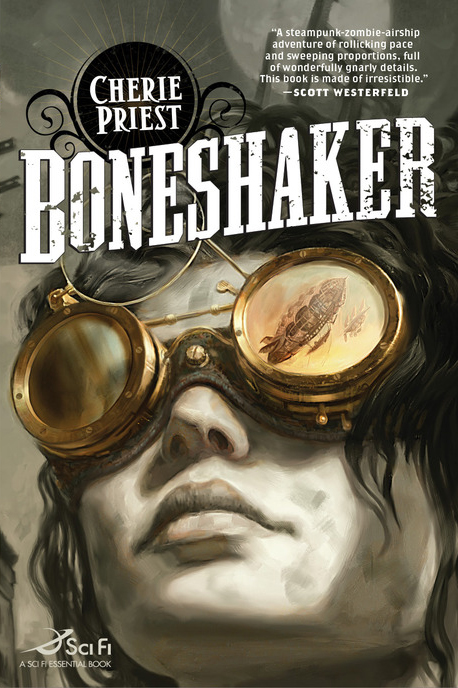
In “Boneshaker,” Priest explains how the zombies were created. A drilling machine released a toxic gas from the bowels of the earth under Seattle. Much of the city’s population fled. Others turned into rotters, shambling through the streets in search of human flesh. Others Seattle-ites fled to the underground beneath the city, where they live in tunnels safe from the toxic gas because of an intricate series of tubes and pumps.

If they go topside, they must wear gas masks to avoid turning into rotters. And they must be on guard not only from the zombies but the criminal element that thrives in the city.

In “Dreadnought,” we get our first glimpse of how the zombie plague is spreading. Drug makers and dealers are distilling the gas and turning it into “sap,” a highly addictive substance that eventually turns its users into the walking dead. The title refers to an especially deadly war train on which much of the story unfolds.

In “Ganymede,” the addiction has spread to New Orleans, which is a hotbed of Civil War intrigue thanks to a missing submarine and efforts to get it in the hands of the Union.

One of the most fun elements of Priest’s books is how she weaves characters through all her stories. The protagonist of “Boneshaker” is a supporting player in “Ganymede,” while the nurse and a Texas Ranger from “Dreadnought” show up in “Ganymede.”

Priest is a nimble writer. If you’re worried that her books would be written in a pseudo-Victorian-era style, don’t be. While her characters are not anachronisms, they have enough modern sensibilities to be completely relatable.

The books are fun, fast reads. (One of my few quibbles can be blamed on my aging eyes. The print in the paperback editions is sepia-toned. It might be appropriate to set the mood for the period in which the stories take place, but it makes it a bit hard to read.) Priest keeps the plot moving and throws in just enough twists and turns to surprise the reader.

Priest announced some big news right around the end of November. “Boneshaker” has been  acquired for adaptation as a movie. It’s probably not surprising, considering how hot zombies are right now, with “The Walking Dead” a hit on TV and in comics and “World War Z” coming out later this year.

Besides, who can resist the pitch — included in the announcement — that “Boneshaker” was like “Jules Verne meets ‘Resident Evil?'”

Movies are tricky things. Sometimes they completely miss the flavor of the books on which they’re based. Sometimes they get everything right.

Priest’s steampunk stories — and more of them are on the way — are as entertaining as any movie adaptation could be. Don’t wait for the big-screen version.

Zombies from A to … well, Zombie

Maybe it’s because it’s Sunday night and I’m missing “The Walking Dead.” Maybe it’s because “Zombieland” is on TV.

But zombies are on my mind tonight.

What is it about zombies that make them ideal fodder for spooky fiction? Maybe it’s because they’re so inexorable, shambling toward us — or sprinting, in some movies. Maybe it’s because they are — or were, at least — us.

Maybe it’s because they’re fun.

Zombies have lurked around the edges of pop culture for much of the past century, first popping up in Depression-era stories, usually set in Caribbean countries.

The 1932 movie “White Zombie,” starring Bela Lugosi, popularized the idea of the zombie as a glassy-eyed, stiff-gaited creature, usually controlled by a voodoo master. Zombies became staples of cheap monster movies for decades … until another cheap monster movie changed everything.

In 1968, George Romero and a handful of investors released “Night of the Living Dead” and set the tone for zombie flicks for years to come.

The black-and-white film, with its cheap gore and shockingly downbeat ending, wasn’t topped for another decade and then only by Romero himself.

“Dawn of the Dead” came out in 1978 and succeeded on so many levels. The film, in eye-popping color, featured explicit gore — the film was released unrated to avoid an “X” — and biting social commentary as survivors and zombies alike flocked to the shopping mall for a comforting reminder of the past.

The movie was such a hit that imitators and rip-offs followed, including 1979’s “Zombie,” a European shocker that was marketed in some countries as a sequel to “Dawn of the Dead.” “Zombie” featured the first shark vs. zombie underwater fight. First and, probably, only.

In 1985, “Return of the Living Dead” gave us a real change-up. While Romero continued to make (only sometimes effective) sequels to “Night” and “Dawn,” the co-holders of the rights to his 1968 movie made the first of a series of flaky, crazy, gory zombie pics. Famous for moments including reanimated medical specimens and zombies calling for “more paramedics,” “Return” was the most fun you could have with zombies. At least for a few years.

An often-overlooked zombie movie was “The Serpent and the Rainbow,” a Wes Craven movie starring Bill Pullman in a story loosely based on real-life researcher Wade Davis. The 1988 film is offbeat and effective and finds as many chills in the bloody politics of Haiti as in the walking dead.

Beginning with 2002’s “28 Days Later,” and remakes of “Night of the Living Dead” and “Dawn of the Dead,” zombies started getting nimble, fast and, in many ways, scarier. All of a sudden, zombies didn’t shamble slowly across a sunny graveyard. They ran like hell at us. It was freaky.

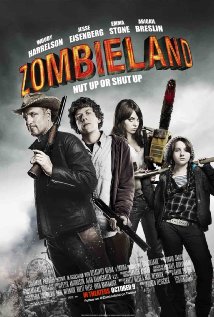
By the time “Zombieland” rolled around in 2009, the trends of fast zombies and gruesome and funny zombie deaths were fodder for a great movie. A small group of survivors travels across the country, looking for Twinkies and trust and finding Bill Murray — in one of modern cinema’s great cameos — and an abandoned amusement park. Well, not totally abandoned, of course.

With “The Walking Dead” comic book and TV series and Max Brooks’ great 2006 book “World War Z” — being made as a movie starring Brad Pitt — zombies are riding a crest of popularity right now. Zombie costumes were huge this Halloween. They were cheap to make and, after decades of watching zombies in movies and on TV, everybody knows how to pretend to be a zombie, right?

I love me some good vampire stories, particularly “Dracula” and “Buffy the Vampire Slayer.” But zombies are the monster of the moment, maybe improbably, and that popularity doesn’t show any signs of slowing down.

And neither do those damn zombies.