Monthly Archives: July 2012

New Comic Con images: ‘Guardians of the Galaxy,’ ‘Man of Steel’

The news was coming out of San Diego Comic Con faster than a speeding bullet tonight.

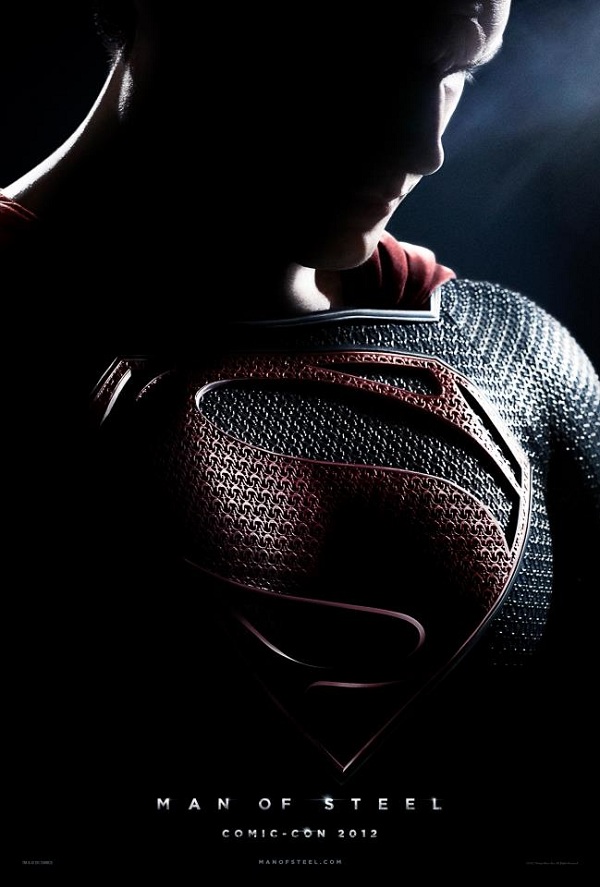
The Warner Bros. panel, according to online reports, included footage of Zack Snyder’s “Man of Steel,” the latest Warners/DC reboot of Superman.

The company also released a new teaser poster showing Henry Cavill as Supes:

The Marvel Films panel had some interesting news, including some titles: “Thor: The Dark World” for November 2013; “Captain America: The Winter Soldier” for April 2014 and “Guardians of the Galaxy” for August 2014.

Those follow the previously announced “Iron Man 3” for May 2013.

The “Winter Soldier” portion of the next Cap title would lead fans to expect that Bucky, Cap’s sidekick who “died” in the first movie, will be back. That’s because in the comics, after an absence of several decades, Bucky returned as the Winter Soldier, an assassin trained and maintained in youthful form by the Soviets.

“Guardians of the Galaxy” is an even more interesting turn of events that has, so far this evening, split fan opinion online.

The movie has been predicted for a few weeks now since Thanos, Marvel’s cosmic villain, showed up at the end of “The Avengers.” The Guardians, who have been around in one form or another since the 1960s, are longtime enemies of Thanos.

As another superhero team for Marvel movie-making besides the Avengers, they make as much sense as anything and are a more likely group in some ways than the Inhumans (fan fave characters who might have too many ties to the Fantastic Four for Marvel’s film arm to have the rights to) or the Defenders (which has included, over the years, such off-limits characters as the Silver Surfer and already-familiar ones like the Hulk).

Yet “Guardians” feels like a risk because it is cosmic in scope – a concept that was tested in “The Avengers” but still feels pretty disconnected from the “reality” established in Marvel’s movies so far – and because the characters are an unusual bunch, including Rocket Raccoon.

It’ll be interesting to see who Marvel chooses to helm “Guardians” and what direction the movie takes.


Comic cons: What I miss (and don’t miss)

So I’m sitting here and watching G4’s coverage of San Diego Comic Con – and also checking out some of the best comments on Twitter – and once again thinking, “Wow, I wish I was there.”

Followed quickly by another thought: “Wow, I’m glad I’m not there.”

I’ve never been to Comic Con but I’ve had a lot of experience at lesser cons from Chicago to Cleveland to Indianapolis to Denver. I’ve stood in line for speakers and autographs and snaked through the dealers room.

Some of my most vivid memories are attending “Star Wars” Celebrations when they were every-three-years events timed to coincide with the release of the prequels. The first was in Denver in 1999 at a decommissioned military base. Outside at a military base. In rain and sleet. At some point when we were standing in line in the cold mud to get into an event, my friend Andy said he was glad it was me who was with him and not his wife. “I’d already be divorced by this point,” he said.

Anyway, here’s some of the best – and worst – about convention-going.

The best:

The sense of community. During a comic convention – and the same goes for science fiction conventions – take a look around. There’s anywhere from a few hundred to several thousand people around you and they all love the same thing. Okay, maybe they’re not all fanatics about Famous Monsters of Filmland or Flash Gordon serials or vintage issues of The Flash. But they’re like-minded enough about some fannish thing to turn out in numbers and geek out.

The sense of excitement. It’s hard to be blase about that comic, movie or TV show when you sit through a convention hall presentation about it, hearing not only the words of the creative team but also the energy and expectation of other fans.

The costumes. A lot of fans get frustrated that much of the news media coverage of conventions focuses on geeks in costumes. While I’m writing this, G4 is interviewing Damon Lindlof as he stands in front of a bunch of guys in “Predator” costumes. No reason, why? But costumes add a lot of visual appeal to conventions, and I’m not talking about just the several dozen Slave Leias at every con. One of my favorites of all time? An Elvis stormtrooper.

The dealers room. Oh man, I’ve spent a lot of money in convention dealers rooms over the decades. Movie posters, magazines, comic books, DVDs. You can find almost anything in some dealers rooms. I bought the original script for the Tim Burton “Batman” movie at a convention. Dealers rooms are an opportunity to find things you never expected and never knew existed. One tip: Bring a lot of cash.

Briefly, a few things I don’t miss about convention-going:

The overwhelming crowds. I’m not inclined to freak out in big crowds. A few years of attending Mardi Gras in New Orleans will cure almost anybody of crowd phobia. But really big conventions will test your tolerance for elbow-to-elbow people.

The obliviousness of people. This is the extension of the overwhelming crowds scenario. I can’t count the number of times I was stopped cold in a convention hall or dealers room aisle by some oblivious guy who didn’t realize there were, I don’t know, a thousand people lined up behind him, also trying to get through the crowd.

The … shall we say … hygiene issues of some fans. ‘Nuff said.


New ‘Fantastic Four’ on the way; what we want to see

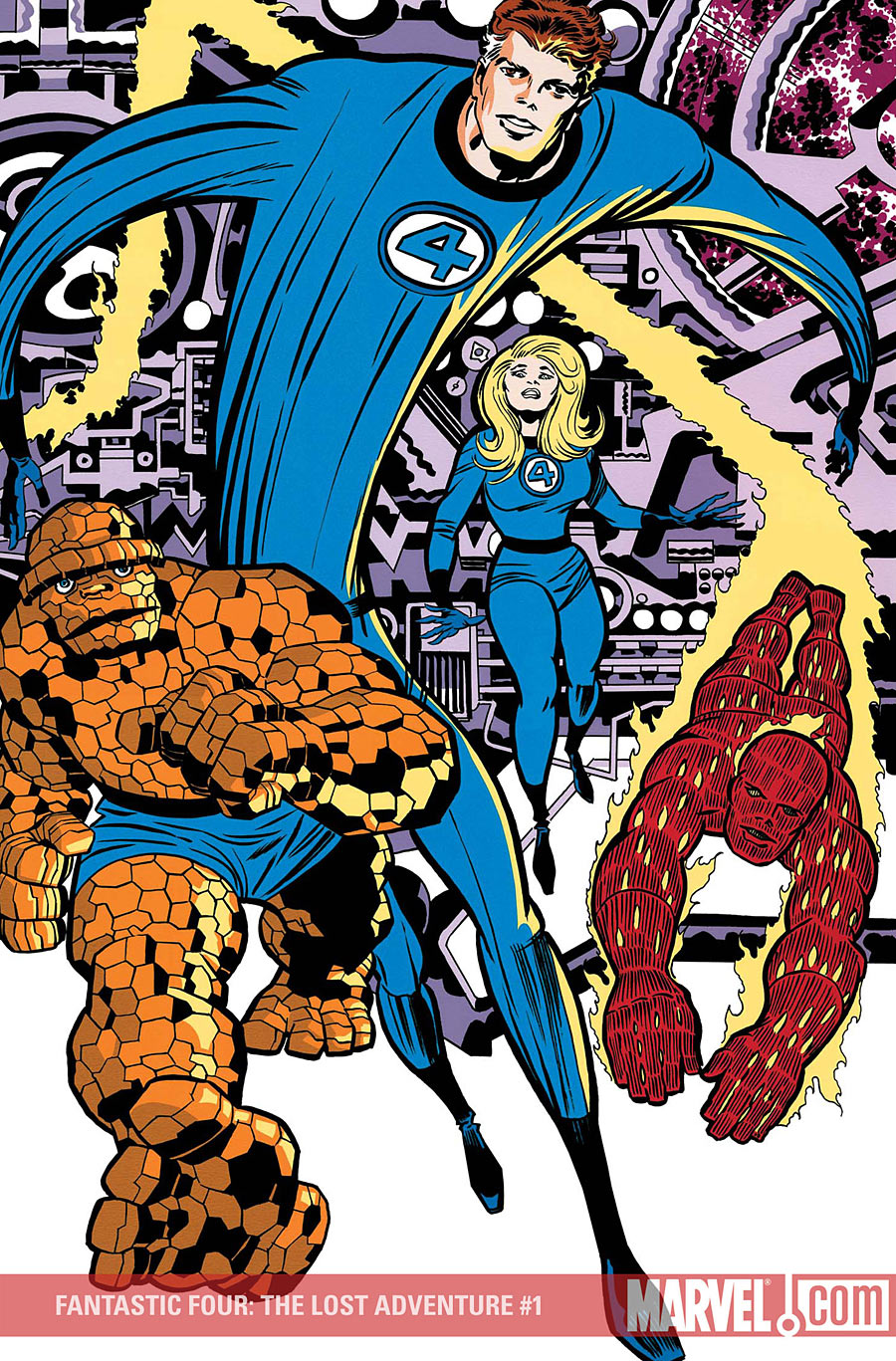
Timed in part to generate buzz on the floor of San Diego Comic Con, 20th Century Fox has announced that Josh Trank, who brought a new approach to the superhero origin movie with “Chronicle,” will direct the studio’s reboot of the “Fantastic Four” movie series.

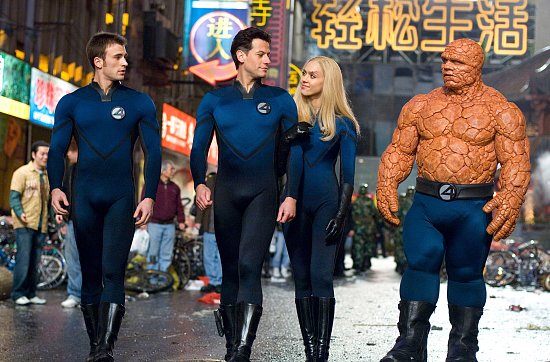
Well, everyone is guessing it’s a reboot. But it’s unlikely that Jessica Alba and Chris Evans will be taking a third turn as the Storm siblings.

I wasn’t bitterly, bitterly disappointed with the 2005 “Fantastic Four” movie and its 2007 sequel, “Rise of the Silver Surfer.” I was just bitterly disappointed. Only one bitterly there.

That’s because the FF are second only to – and maybe equal to – The Avengers as the favorite Marvel Comics of my childhood.

Getting everything about the FF right for a “Fantastic Four” movie won’t be an easy task, especially with so many fans suspecting that the new flick is just Fox’s way of keeping a handle on the characters so the title won’t revert to Marvel and the characters and their storylines won’t become part of Marvel’s born-and-bred movie universe.

But Trank generated some good will with “Chronicle,” and he might be up to this task.

Here’s what he needs to do:

Get the tone of the Fantastic Four right: That just about says it all. The book has always been one of Marvel’s offbeat properties. Most of the characters are related to each other or lifelong friends with all the frictions that entails. That means very different relationships than those among “The Avengers” in Joss Whedon’s blockbuster.

Reed Richards is a genius but not an ass. Not most of the time. The brains of the group is a difficult character, probably the most difficult of the foursome. He’s incredibly smart but remote. Imagine Robert Downey Jr.’s Tony Stark without the quips.

Sue Storm has to have something to do. She’s the Invisible Woman! She can … become invisible! (Okay, and also throw force fields and stuff). Sue’s powers must have seemed a lot more special in the early 1960s. Since she’s married to Reed and the sister of Human Torch Johnny Storm, she’s the glue that holds the family together. But she has to do more than look blonde and say, “Johnny! Reed!”

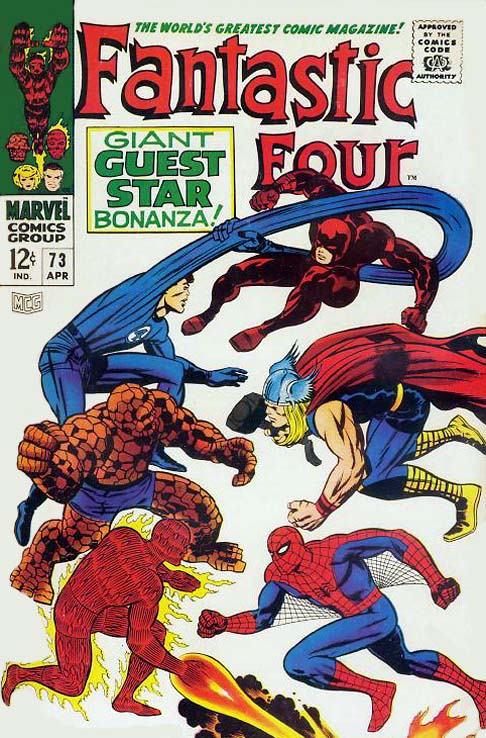
Look at the recent movies for an example of how to handle the Human Torch. Seriously? Yes. One of the few things that the “Fantastic Four” movies got right was Johnny Storm’s irreverent hot shot. He’s a prankster and full of himself. There’s a reason one of his best friends in the comics is that wiseacre Spider-Man.

Ben Grimm. Ben Grimm. Ben Grimm. The Thing is the heart and soul of the Fantastic Four. He’s a rollicking character, a guy who will “clobber” any creature and hurtle toward a threat as huge as Galactus. But Ben is also the most tender-hearted. He’s been dealt a terrible hand in life. Yet he gets right in there and jokes and brawls and fights the bad guys. And a note to Trank: Ben Grimm needs to be taller than the other members of the team. Maybe he doesn’t have to be as big as the Hulk was in “The Avengers,” but he needs to be bigger than he was in the recent movies.

Big scope. BIIIIIIG scope. The Fantastic Four comic was huge in scope, with Earth-threatening menaces like Galactus, fantastic Reed Richards inventions the size of a house and adventures that spanned space and time. I hope they don’t try to do the movie on the cheap.

While I’d like to see the FF in the Marvel movie universe, Trank and Fox might be able to do a lot with the beloved characters in a self-contained movie. If they respect the characters, the concept and the classic storylines, that is.

You shoulda been a superhero: Some inspired ‘Batman’ casting choices

It’s a guessing game – a match game of sorts – that comic book fans have been playing for decades. Who should play their favorite superheroes and villains in a movie?

With Marvel Comics movies, the casting game is going on, officially and unofficially, in Hollywood and in Everytown, all the time these days. With a couple of Marvel movies in the works, including “Iron Man 3” and “The Wolverine,” and a couple more in the offing – “Guardians of the Galaxy,” maybe? – somebody’s being cast as a Marvel character every few days.

With “The Dark Knight Rises” coming out soon and Warners and DC Comics planning a reboot for the Batman character, I got to thinking about ideal or almost-happened casting for Batman movies in the past. Only one of these falls into that “almost happened” category, though. The rest are just random thoughts that popped into my head over the past couple of decades.

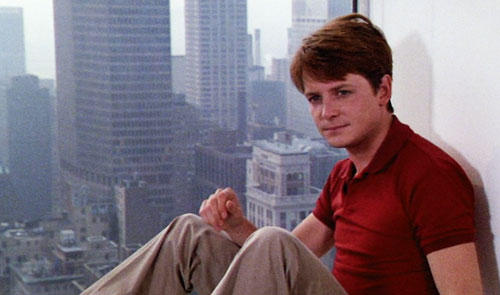
Michael J. Fox as Robin. Okay, wait a minute, wait a minute. Remember the controversy when Michael Keaton was cast as Batman” in Tim Burton’s 1989 movie? Keaton was primarily a comic actor with a receding hairline and not enough chin. But he did a great job.

I know from reading an early draft of the script – more about that another day – that Robin was originally meant to be a character in the movie. So, given the late-1980s period, why not cast 80s star Michael J. Fox as Dick Grayson/Robin? Fox had the right stature, both physically and Hollywood-wise, for the part. He’s quite capable of pulling off a dramatic scene and he might have brought a Burt Ward-style energy to the movie.

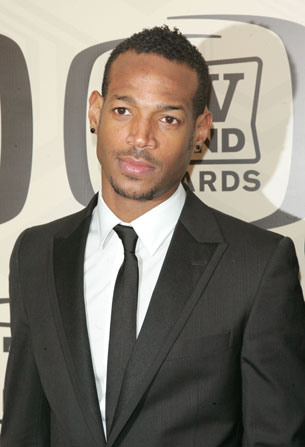
Marlon Wayans as Robin. Early in the history of the Tim Burton “Batman” movies, there was talk of a street-wise, “urban” actor being cast as Dick Grayson. There’s a Dick Grayson character in that early script and Wayans, who was 17 when Burton’s movie was released, was set to play the part. Wayans even said in 2009 that he got paid for the role but Burton didn’t include the character. As we all know, Dick Grayson didn’t show up until the third “Batman” movie and by that point was played by future “NCIS” TV star Chris O’Donnell. I wish we’d gotten the chance to see Wayans in the role.

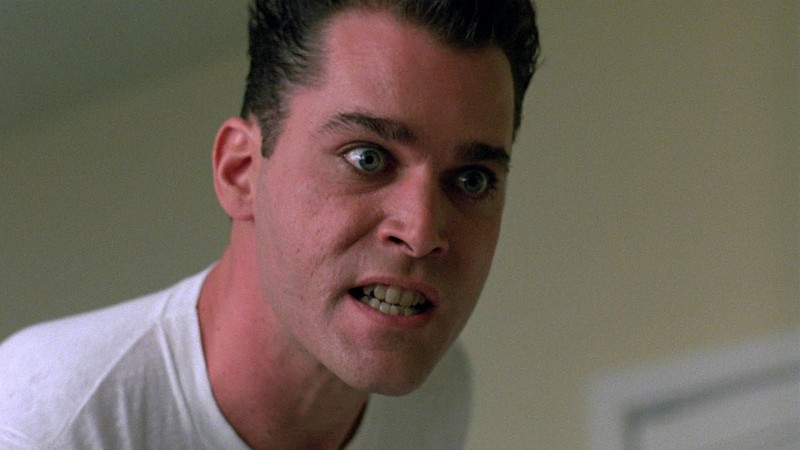
Ray Liotta as the Joker. Liotta is familiar to most of us from “Goodfellas” and other films, but take a look at him above from the 1986 Jonathan Demme movie “Something Wild.” Jeff Daniels plays a mild-mannered guy who falls in with a wild woman played by Melanie Griffith. It’s all fun and games until the woman’s homicidal ex-boyfriend shows up, played by guess who? I remember sitting in the theater in 1986 seeing Liotta’s crazy and scary expressions and thinking, “Damn, this guy would make a good Joker.” He sure would have been more physically intimidating than Jack Nicholson.

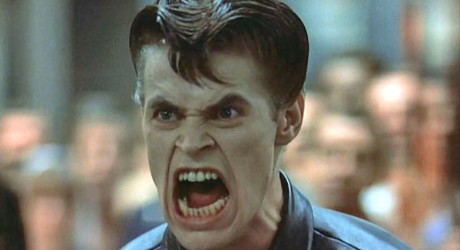
Willem DaFoe as the Joker. I liked DaFoe as Norman Osborn in Sam Raimi’s “Spider-Man” movie. I wasn’t crazy about the Goblin outfit, but that’s another story. Anyway. Osborn wasn’t DaFoe’s first opportunity to play a bad guy. Here’s how he looked in Walter Hill’s 1984 action musical “Streets of Fire” as the murderous leader of a biker gang. Look at that face and tell me he wouldn’t be ideal as the Joker.

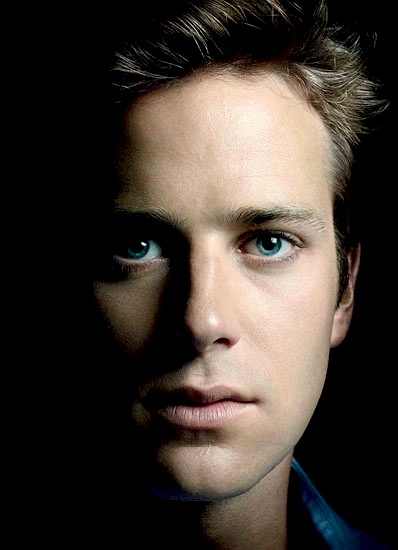
Armie Hammer as Batman. Or Superman. Everyone knows that DC and Warner Bros. are struggling to get their superhero film franchises off the ground – other than the very standoffish “Dark Knight” movies. They’re planning to reboot the Batman character almost immediately and want to jump-start a “Justice League” movie. (Of course, they’re only about $1.5 billion behind the box office take for “The Avengers.”)

But as fans know, Warners almost got a “Justice League” movie off the ground in 2008. A script was completed, casting had begun and apparently some costume tests were done. I’d like to pause right now to wonder how it’s possible that none of those costume photos have ever been leaked to the web. Anyway. Armie Hammer, later known for “The Social Network,” was cast at Batman before the movie got derailed. Hammer, who’s like seven feet tall, would have worked very well as a young Bruce Wayne. Or a young Clark Kent, for that matter. With Henry Cavill coming next year in “Man of Steel,” it’ll be interesting to see if he figures into future “Justice League” movie plans, if Hollywood will circle back to Hammer or find some virtual unknown for the role. That tactic worked very well with Christopher Reeve.

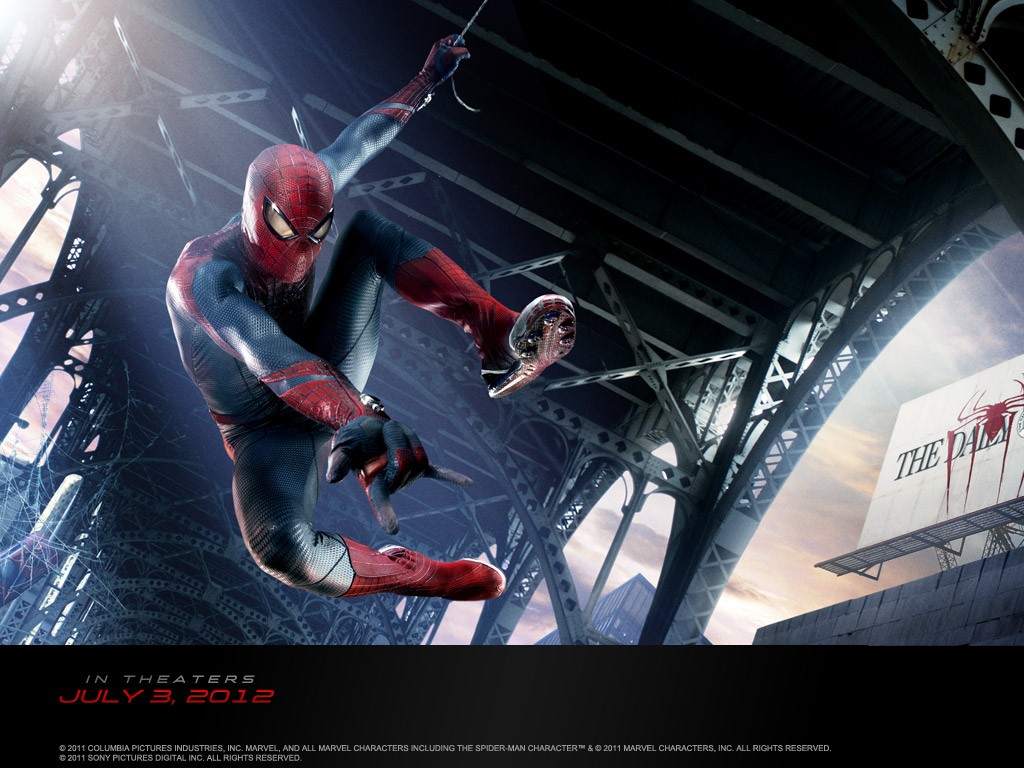
Secrets of ‘The Amazing Spider-Man’

Granted, “The Amazing Spider-Man” isn’t loaded with Easter eggs and teasers for the greater Marvel cinematic universe like “Iron Man” and every related Marvel movie since 2008. After all, “Spider-Man” was made by Columbia/Sony and is outside the Marvel movie universe. It’s not building to an “Avengers”-style team-up.

But director Marc Webb and the other makers of “ASM” have thrown a few strands of a larger Spider-Man story – as well as some Easter eggs – into the movie.

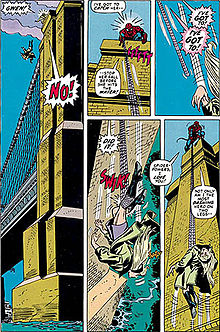
There she goes: Did anyone else wince at the scene when Peter, getting ready to fight the Lizard, apologizes to Gwen and tells her he’s about to throw her out a window? He does so, zapping her with a web and lowering her lightly to the ground below. He’s trying to get her out of harm’s way.

The scene was very reminiscent of the famous “Gwen Stacy dies” issues of “The Amazing Spider-Man” comic 121-122, in which the Green Goblin throws Gwen to her death, only to have Spidey catch her with webbing. But Gwen is dead anyway. I think the debate in fandom raged for years about whether the fall or the sudden stop at the end – thanks to Spidey’s webbing – was what killed her.

There’s no way that Webb didn’t realize the significance of throwing Gwen out of a building and catching her with webbing. Had to be an Easter egg – and foreshadowing.

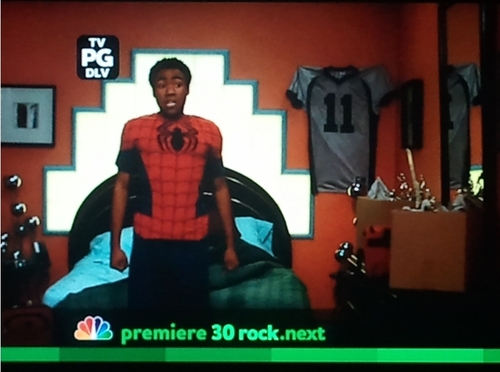
Tip of the hat: I’ll have to look for this Easter egg when I see the movie again, but I’m told there’s a photo of “Community” actor Donald Glover in Peter’s room in “The Amazing Spider-Man.” This is neat because, when the reboot was announced, someone suggested that Glover could play the part. The casting didn’t gain any traction, but now that Spidey in the Ultimate world is African-American, why not do a little universe-blending?

Meet the parents: Much more so than in previous “Spider-Man” movies, “The Amazing Spider-Man” teases about Richard and Mary Parker, Peter’s parents. They’re seen in a flashback at the beginning of the movie and some of the marketing for the film teased “the untold story” of Spidey’s origin. I don’t think the movie really lived up to this hype, but Webb and the screenwriters definitely created some aura of mystery about the Parkers and their connection to Oscorp.

After decades in which they were relatively overlooked in the comics – and their deaths were taken for granted as a mechanism to put Peter in his aunt and uncle’s care – Marvel decided to elaborate on the background of the characters, retconing them as agents of Nick Fury’s SHIELD spy organization. If “Amazing Spider-Man” generates sequels, it’ll be interesting to see how the makers explore the past of the characters – especially since SHIELD is part of the separate Marvel movie universe and theoretically not open to the “Spider-Man” movies.

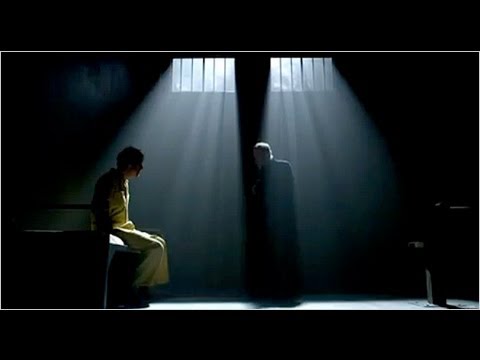
Who’s the guy? I mentioned this in my earlier review, but the movie’s end credits are interrupted by a scene of Rhys Ifans’ Curt Connors, incarcerated and being visited by a shadowy figure. I assumed this was Norman Osborn, the future Green Goblin.

But a number of sites have since theorized that the character was other Spidey villains as diverse as Electro (flashes of lighting? check) and Mysterio (abrupt appearance and disappearance? check).

Maybe we’ll find out in a sequel.

iPhoneography: Albany, Indiana

The town of Albany, Indiana, several miles north of Muncie, has remained surprisingly robust during its history. While other Indiana and Midwestern towns have withered on the vine, Albany has maintained a population of more than 2,000 people. It has a thriving downtown and local businesses.

Here’s a summer 2012 iPhone look at Albany.

For much of the 20th century, the McCormick Brothers company was the town’s biggest business. Founded in 1907 and lasting until the last quarter of the century, McCormick Brothers made a variety of metal products over the decades, beginning with washboards, moving into metal kitchen cabinets and then products for the war and interstate highway efforts.

While other businesses have occupied the sprawling McCormick Brothers plant, the most notable landmark remains its water tower, seen above.

Albany has a number of businesses in its downtown, including C.J.’s Hardware Store. C.J.’s is an old-fashioned hardware store with wooden floors, rolling ladders to help the store’s employees reach products on high shelves and the kind of  broad but selective inventory that makes old-fashioned hardware stores fun to walk around in.

Albany has a five-and-dime store. For many years, McCord’s Five and Ten offered bulk candy, nuts, household goods and some curious items. The sign is still on display inside the store. Under new ownership now, the store still has what might be the area’s biggest selection of hairnets.

The great old-school packaging makes the hairnets look like leftovers from the 1960s, but the store still sells hairnets to food service workers around the area.

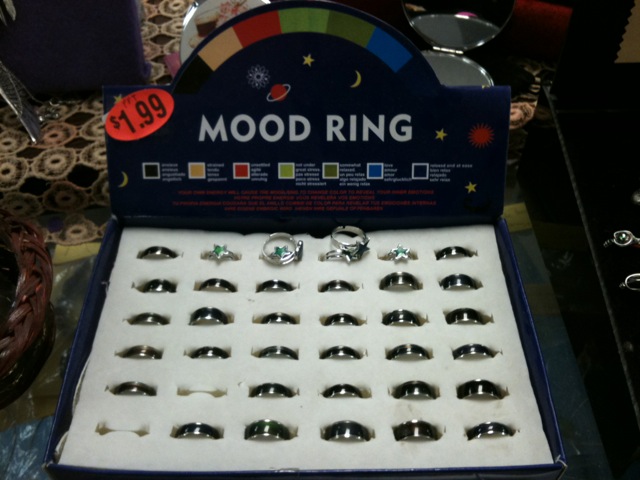
Mood rings, anyone? They have ’em.

One of the town’s churches was getting a new roof the day I was there.

This “ghost sign” for Colonial Break decorates the end of a building.

I’ve seen this sign, on the side of a building, before but never understood it. Would it light up, ring and alert passersby and police if a burglar alarm had been tripped? I’d like to know more about it.

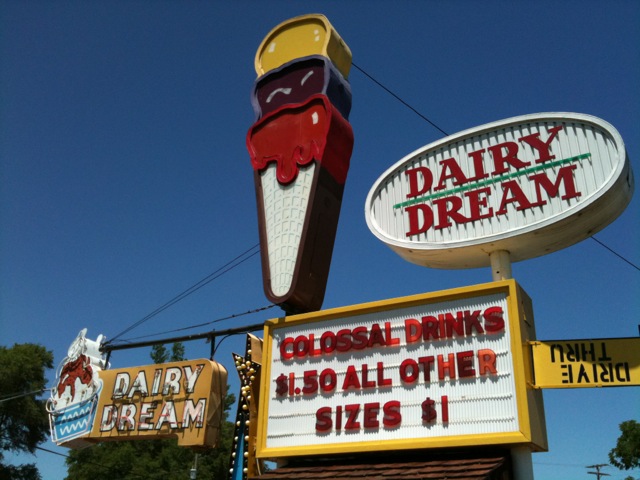
One of Albany’s most popular restaurants, the Dairy Dream.

Freak out: Scary stuff that haunted me

Just ask anyone who’s ever walked up behind me when I was vacuuming and they’ll tell you I’m pretty easy to freak out.

Maybe it was the combination of an overactive imagination and a childhood home that was supposedly haunted, but I’ve always been spookable. I’m not squeamish; blood and gore don’t bother me particularly, especially not in horror movies.

But subtle stuff – a shadowy figure in the distance, a pallid face outside a window – in movies really makes me squirm.

Herewith, some stuff that freaked me out in my younger, impressionable years.

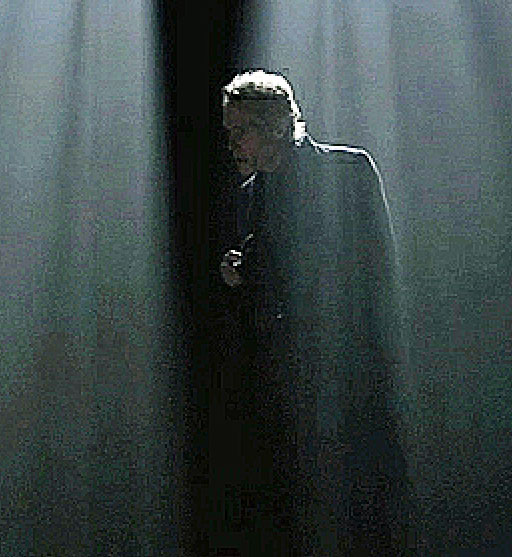
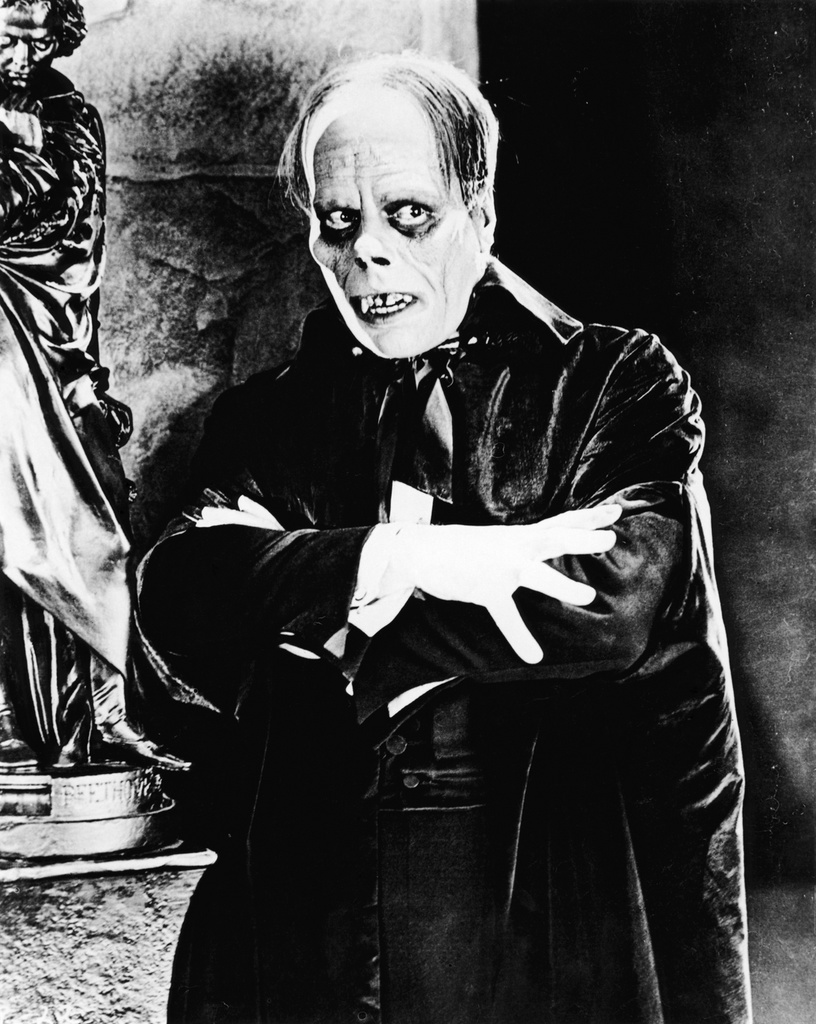
Lon Chaney in the 1925 “Phantom of the Opera.” Who wouldn’t be a little freaked out by that face? Mary Philbin and I were in good company in our reactions to Chaney’s masterpiece, both in terms of his film work and his makeup work. In Famous Monsters of Filmland I read all about how Chaney achieved this cadaverous look, manipulating his nose and cheekbones and eyes. But even though I knew Chaney’s secrets, that face made an impression.

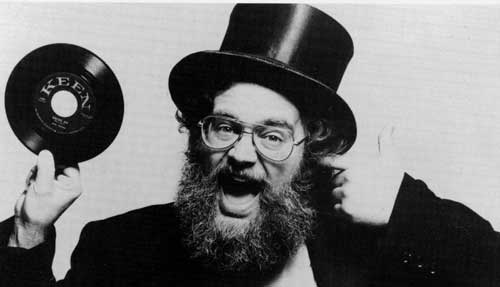
The Suicide Song on Dr. Demento. If you’re not hep to what the nerdy kids listened to in the 1970s and 1980s, Dr. Demento hosted a syndicated radio show playing offbeat songs like “Fish Heads” and “Shaving Cream.” The oddball doctor introduced a nation of youngsters to the work of Spike Jones and helped launch the career of Weird Al Yankovic. But the song that Demento played that sticks with me, 30-plus years later, was “The Suicide Song.” What was it? Incredibly enough, I can’t seem to find it online. There’s a listing of songs played on the show that includes it but I can’t find an audio or video snippet, which makes me wonder if I’m mis-remembering the name. But once I hear the song again – and its dirge-like, monotone recitation of dire lyrics – I’ll get goosebumps all over again.

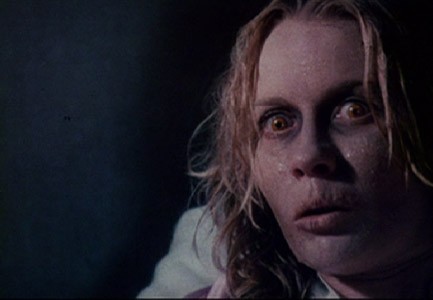
“Who are you?” from “Beyond the Door.” The 1974 Italian import “Beyond the Door” was considered little more than a rip-off of “The Omen” and “The Exorcist” with its plot about demonic possession. It’s a curiosity, maybe especially because of its star, British actress Juliet Mills, best known stateside for the sugary sitcom “Nanny and the Professor.” But when I think of “Beyond the Door,” I think of the late-night commercials for the movie showing clips of Mills levitating and twisting around and – unforgettably for me – intoning in a freaky bass voice “Who are  you?” I’m battling the heebie jeebies here.

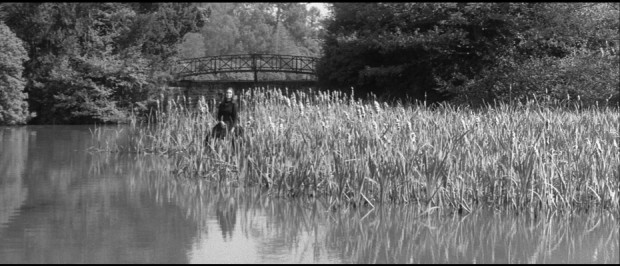
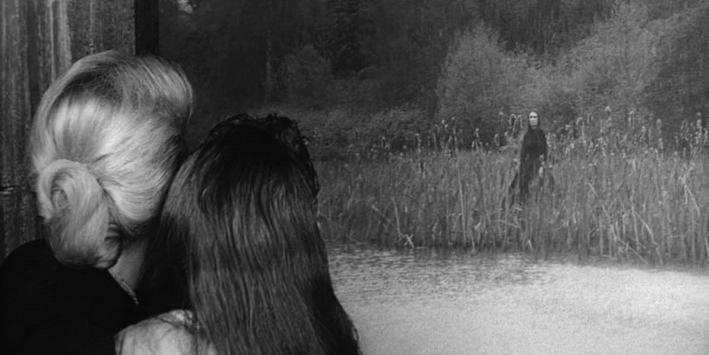
The ghosts in “The Innocents.” I’m not sure any movie is scarier than “The Innocents,” director Jack Clayton’s adaptation of Henry James’ “The Turn of the Screw.” The story of a governess going to a remote castle to take care of two truly strange children, “The Innocents” introduces a couple of the creepiest ghosts ever. And it does so in a totally freaky way: By having them stand, motionless, across ponds or outside windows.

I don’t know about you, but as far as I’m concerned, silent, unmoving figures watching me from a distance is more unnerving than a chainsaw-wielding maniac.

Unless he taps me on the shoulder while I’m running the vacuum cleaner.


‘Spider-Man’ maybe not amazing, but good

There’s apparently a pretty crass motive behind the fact that “The Amazing Spider-Man” is playing in theaters around the world this week, and I know that you would be as shocked as I am to learn that money has something to do with it.

Only about a decade ago, of course, Sony/Columbia Pictures started releasing Sam Raimi’s “Spider-Man” movies and the first two entries in the three-film series are pretty good. Since that time, however, Marvel Comics has gone into the movie business itself – you might have heard about that – and, as Hollywood tells it, Sony decided to hang onto the rights to stay in the Spider-Man movie business so the rights to the character didn’t revert to Marvel.

This means, for the time being, no Spidey in “Avengers” movies.

It also means, because the producers decided against letting Raimi continue his series, that Spidey got a reboot in the hands of director Marc Webb (heh).

Webb’s movie, “The Amazing Spider-Man,” would be closer to amazing indeed if so much of it didn’t feel like the reboot that it is.

That’s because Webb seems to have a pretty good handle on the movie and strikes the right tone. But a big chunk of the movie seems just too familiar, as Webb presents a slightly altered version of Spidey’s origin again.

Can we all agree that we don’t need to see future superhero movies spend quite so much time on the origin of its hero? Especially if we’re seeing a reboot?

Spoilers ahead, by the way.

Anyway, Andrew Garfield stars as Peter Parker, NYC high school student who’s something of a high-school outcast but nowhere near as much of a hapless nerd as Tobey Maguire’s “puny Parker.” He stands up for a kid bullied by meatheaded classmate Flash Thompson and catches the eye of beautiful Gwen Stacy (Emma Stone) even before he gets super-powers.

In the new outing, Peter is driven by the mystery of what happened to his parents, Richard and Mary Parker, who left him in the care of his Uncle Ben and Aunt May when he was a child. Peter finds his father’s Oscorp briefcase, which leads him to contact scientist Curt Connors (Rhys Ifans), a scientist colleague of his father.

After that injection of mystery, the rest of Parker’s story unfolds fairly normally. Peter gets bitten by a very special spider and gains its powers. His Uncle Ben gets killed (in a manner that seems much more random and less effective than in the comic and Raimi’s movie, frankly) and Peter decides to become a vigilante, hunting his uncle’s killer.

In the meantime, Peter and Gwen fall in love – kind of quickly, really – and Peter helps Connors single-handedly pursues his dream of manipulating genetics.

Of course, things don’t work out for Connors and he turns into the Lizard, a development that was teased throughout the Raimi films as actor Dylan Baker popped up, in a one-armed lab coat, only to never see the conclusion of his story reached.

There are some really good elements in Webb’s version of the story … and some that don’t work out all that well. Here are a few:

The mystery of Richard and Mary Parker: To make this reboot seem a little different, Webb and the screenwriters sow through the movie seeds of a the mystery of what happened to Peter’s parents. It’s implied that something untoward happened to them. But it’s just a tease so far.

Spidey the smart-ass. Here’s one thing that works really well. In the comics, Spidey is a jokester. He quips and hurls insults about as often as he spins webs. The movie does a good job with this aspect of Peter’s personality.

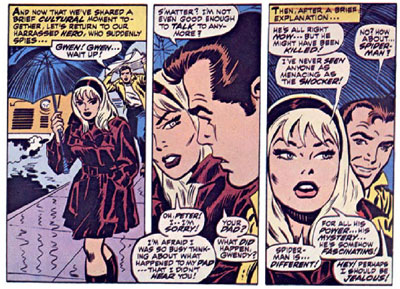
The Stacys are perfect. Emma Stone is perfectly cast as Gwen Stacy, Peter’s first big love in the comics. The Raimi films reversed things by giving us redhead Mary Jane before Gwen. Aside from being adorable, Stone is quite good as Gwen. And comic and actor Dennis Leary is very good as her father, NYPD Capt. George Stacy. True to the comics, Capt. Stacy eventually learns Peter’s secret.

The bad guy is … eh. Movies always run a risk when they make the bad guy a sympathetic character. Raimi danced on the edge of disaster but triumphed with the often-sympathetic Dr. Octopus in “Spider-Man 2.” But there’s not much to Curt Connors here and what there is is sympathetic or even pathetic. He really feels like a minor Spider-Man rogue.

The little things are good. Besides Spidey’s penchant for wise-cracking, one of the nicest touches in the film was bully Flash Thompson’s end-of-the-movie admiration of Spider-Man. In the comics, Flash was Spidey’s biggest fan at the same time he hated his secret alter ego.

The stinger doesn’t work. In Marvel’s owned-and-operated movies, beginning with “Iron Man,” there’s a credits or after-credits stinger, or extra scene, teasing developments in upcoming movies. Those scenes worked perfectly. In “The Amazing Spider-Man” – here are those spoilers I warned you about – the mid-credits scene shows Connors, incarcerated, being confronted by a shadowy figure. I think we’re supposed to assume it was the mentioned-but-unseen Norman Osborn, but the payoff fell flat with a mention of the “secret” about Peter’s parents. Uh, really? You’ve just spent two hours telling us there’s a secret about Peter’s parents, then you tell us, in the surprise secret scene, that there’s a secret about Peter’s parents? I guess the scene is there in case we were out at the  concession stand during that part, huh?

There’s nothing in “The Amazing Spider-Man” that can top the average Marvel movie or Raimi’s first two tries at the character. But there’s nothing offensive either. It’s worth seeing if your expectations are low or manageable.
 

Classic movie: ‘Jaws’

What better movie to watch around the Fourth of July than “Jaws?”

Much of the movie’s plot – which, for a film made in 1975, feels fresh today – revolves around one panicked town’s reaction to the possibility a rogue shark will ruin tourism on the Fourth of July holiday.

And there’s no better summer movie than “Jaws,” Steven Spielberg’s adaptation of Peter Benchley’s best-selling novel.

Lots has been said about the impact of the movie and how it shaped our perceptions of summer movies, box office numbers and the very meaning of the word blockbuster. No more about those topics needs to be said here.
So some observations about the movie in general:

Two for one: I love how Spielberg mixes two movie genres – the horror film and the high seas adventure – so effectively. I’m not sure such an effective blending occurred again until James Cameron’s “Aliens” took the horror movie feel of the original “Alien” and combined it with a down-and-dirty war movie.
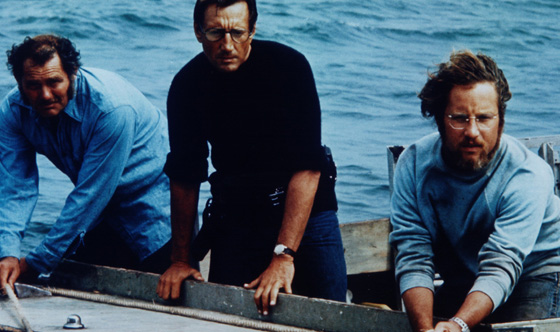
Revenge of the nerds: At the end, the schlubby scientist Hooper and the afraid-to-go-into-the-water police chief Brody survive. The two guys with glasses. The two guys with the backstories that can’t compete with Quint, the shark hunter.

The shark still looks good: Spielberg had so much trouble with his mechanical shark that he hid it, refraining from showing it through much of the movie, so he legend goes. But the shark – Bruce as he was called on the set – looks really pretty good. And the sparing use of the shark ratchets up the suspense. Really, would numerous scenes of the shark cruising along on top of the water have been as cool and suspenseful as the bobbing plastic barrels? Nope.

Robert Shaw should have starred in all the movies. Shaw, the scruffy and steely-eyed shark hunter Quint, made a series of pretty good movies but none could compete with “Jaws.” He died of a heart attack at age 51 in 1978, only three years after “Jaws” was released. How much fun would it have been to have Shaw around, making movies, for the past few decades?

Spielberg and company improved on the book: Benchley’s novel is a great summer read but the movie improves greatly on the plot and characters. The best example? Spielberg eschews the illicit affair between scientist Hooper and the police chief’s wife. What a totally false note said affair was.

It’s the very model of the modern blockbuster. Everything about the movie was duplicated and repeated, either solely or in combination, in summer hits for the next three decades. The spot-on editing (here by Verna Fields). The John Williams score. And, yes, the string of inferior sequels.

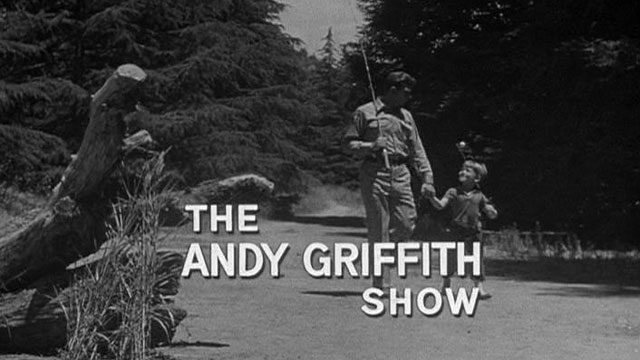
Andy Griffith and how TV has changed

Today’s news that Andy Griffith had died at age 86 was observered in predictable ways: Griffith’s role as TV icon, model father and reportedly very decent gentleman were dutifully noted.

But there was a little bit of disconnect – some of it generational – in reaction to Griffith’s passing.

Not because reruns of “The Andy Griffith Show,” the small-town sitcom in which Griffith starred from 1960 to 1968, aren’t readily available to younger viewers.

No. I think it’s because it’s hard to comprehend just how big a TV star Griffith was.

Griffith’s show was consistently in the top 10 highest-rated shows on TV for its entire run. At any given time, a quarter of the TV audience was tuned in to watch Andy, Barney Fife, Opie and the rest of the genial people of Mayberry.

Griffith was a big TV star in a four-channel TV universe. And that’s a big difference from being a TV star now.

A friend and I have often theorized that no modern-day TV stars or celebrities can ever hope to reach as many viewers as stars like Griffith, Johnny Carson or their like. That’s because, thanks to the proliferation of channels in basic cable dating back to the 1980s, the viewing audience is increasingly fragmented. A typical household receives dozens, even hundreds, of TV channels. Add to the mix DVDs, digital, streaming and on-demand shows and the 1960s standard of everyone tuning in to the same shows – a practice that brought big ratings, generated “water cooler” conversations and made stars of people like Griffith and Carson – is long gone.

Just look at listings of the top-rated programs of all time. If you discount the few remaining “water cooler” programs like Super Bowls, few shows of the modern era rack up huge ratings.

The top-rated TV episode remains the February 1983 – yes, 1983 – series finale of “MASH.” Sixty percent of households tuned in that night, making for a viewing audience of 50 million households.

The “Who Shot J.R.” episode of the original “Dallas” ranks right up there, followed by the “Roots” miniseries, big sporting events and a handful of other shows.

Very few broadcasts from the past two decades are near the top of the list. Most shows from today would be happy with a fraction of the viewers. In May, “American Idol” pulled in 16 million viewers.

Griffith, a canny entertainer with a way of knowing what viewers wanted, may have like-minded modern-day equivalents.

But none of them will ever have his reach or his impact.