Tag Archives: Johnny Carson

Colbert, Letterman and the death of CBS’ late-night slot

There were some genuinely funny moments in the final episode of “The Late Show,” Stephen Colbert’s late-night talk show airing Thursday evening from the Ed Sullivan Theatre. Probably my favorite line was when Seth Meyers, host of an even-later late night show on NBC, told Colbert he was sorry to see him go because where would the world hear what middle-aged white guys thought of the news? (All of the current late-night hosts are in that cohort.)

I hadn’t been a dedicated follower of Colbert’s show, or any show past 11:35 p.m., really, but the manner in which CBS unceremoniously yanked Colbert – indeed the whole damn “Late Show” brand, founded with David Letterman’s CBS show in 1993 – is part and parcel with how the network and owner Paramount have kowtowed to the current occupant of the White House and guaranteed I’d tune in to Colbert’s last few shows – at least to see clips I wasn’t already watching on Instagram.

Colbert appears to be a nice person and a smart person, so while the end of his show after 11 years was no doubt a blow to the talented former host of “The Colbert Report” on Comedy Central – that show I did watch every night – the end of his show and the resulting blowback might prove uncomfortable to CBS/Paramount. Possibly even a kick in the nuts, if the recent downturn in anything Paramount touches continues.

At any rate, while I won’t do a comprehensive assessment of the state of late-night TV talk shows or a comprehensive history of the shows and timeslot, I will share a few thoughts:

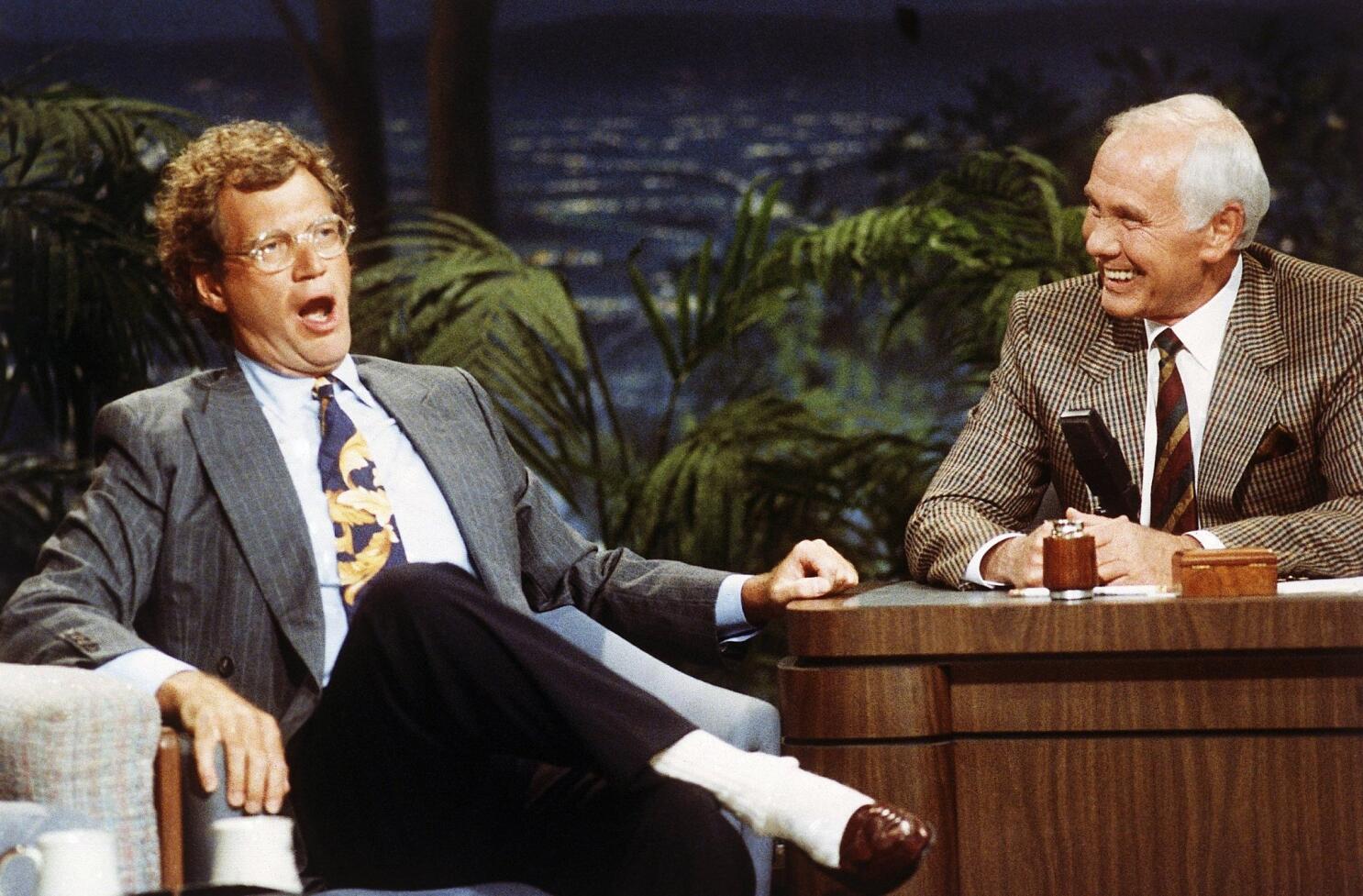
I grew up enjoying being the last person awake in my household, even when I was a kid. I could watch TV after my parents went to bed. That late-night period was, as I’ve noted before, an educational and formative place for me. I was a devotee of Johnny Carson’s “Tonight Show” on NBC and watched it for decades until his retirement. Where else could a kid from rural Indiana learn about jazz – from the Tonight Show Orchestra and guests like Buddy Rich – and Jewish comedians like Henny Youngman? Not to mention the authors Carson highlighted in the final segment of most shows.

I was definitely a fan of David Letterman, another Hoosier who seemed destined to inherit Carson’s “Tonight Show” crown but, as we all know, did not. When Letterman hosted his funny and offbeat NBC show following Carson, I would actually sit up every night and record the show AND cut commercials from my VHS recordings. I had an ungodly number of tapes filled with commercial-free Letterman episodes, at least until almost all of my hundreds of VHS tapes went to a landfill with the advent of DVDs.

The CBS plans for the slot – fill it with comedy programs leased from comedian Byron Allen – in effect means the return of infomercials to a national network following the 11 o’clock news. I wonder if CBS affiliates are obligated to air the network’s programing or if they can fill it with syndicated shows that might draw more viewers, like police procedurals? I’m old enough to remember when CBS (and ABC at times) threw everything they could find into the post-news slot, which meant we got to see lots of Canadian-made thrillers.

CBS is, in effect, abdicating the entire time slot, recalling the days before Letterman tamed that frontier for CBS and the network would air “The CBS Late Movie” – including repeats of made-for-TV movies – from 1972 to 1976 and then reruns of “Kojack” and “The Night Stalker” until 1985 and then “CrimeTime After Primetime” for a few years until Letterman debuted in 1993.

CBS, as if to erase all memory of the politically offending Colbert, not only fired him but ended the whole “Late Show” franchise Letterman and his company, Worldwide Pants, created.

It’s hard to imagine anyone tuning in from here on out.
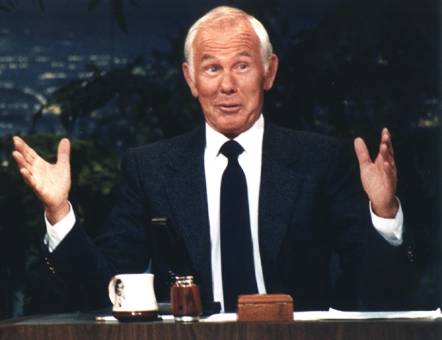
A midwestern education: What Johnny Carson taught us

Every once in a while I’ll surprise my wife with a comment about some obscure musician or author or political figure from the past. Seeing the look on her face, I’ll say, “I saw him on Johnny Carson.”

I would argue that for the 30 years leading up to his abdication of the “Tonight Show” throne, Carson was one of our nation’s greatest cultural educators.

I’m not talking about the times that Carson had political figures on the air, although that certainly fits the description as well.

I’m talking about how Carson, a white-bread Midwestern kid, helped spread the culture of the day.

It’s a feat not unlike what more recent hosts, including Jon Stewart or Stephen Colbert, do. But Carson brought us authors and entertainers and experts of every stripe. Along with actors and starlets and newsmakers and ordinary people who had unusual-looking potato chips, we saw the great and the near-great in a parade that’s unequaled today, when TV guests (with the exception of a few, like Tom Hanks and Bill Murray) seem to appear only when they’re plugging their new movie or music.

A few ways that Carson broadened our cultural horizons stick in my mind:

Comedians of all kinds, but particularly Jewish comics. If Indiana boys like me know everything there is to know about Jewish mothers and can even spout a few words in Yiddish, it’s because of watching comics on Carson’s stage and couch.

Carl Sagan. Neil deGrasse Tyson’s recent TV appearances aside, you’d be hard-pressed to find a scientist and author who was better known to the public at large. Sagan’s “Cosmos” series on PBS aside, I think most people knew him from his appearances on “The Tonight Show.”

Truman Capote and Gore Vidal. Two very different men and two very different authors whose books were read by many. But they became personalities outside the New York literary scene because of their appearances on Carson.

Buddy Rich. The world’s greatest drummer, Rich often performed in front of the “Tonight Show” orchestra. What kid didn’t want to pound the skins after seeing Rich on Carson’s show?

Marvin Hamlisch and the leading lights of Broadway. I’ve never been to Broadway but I know a lot about the Great White Way because Carson’s guests included not only the performers but composers of those shows.

As an aside, Carson’s tropical monologues were the stuff of legend, of course, but he even had time to fit the topical into silly bits. I’ll never forget during one of the Apollo moon missions Carson cracking a joke about a new toilet paper that had been invented as a result of the space program. Its brand name? Splashdown.


Andy Griffith and how TV has changed

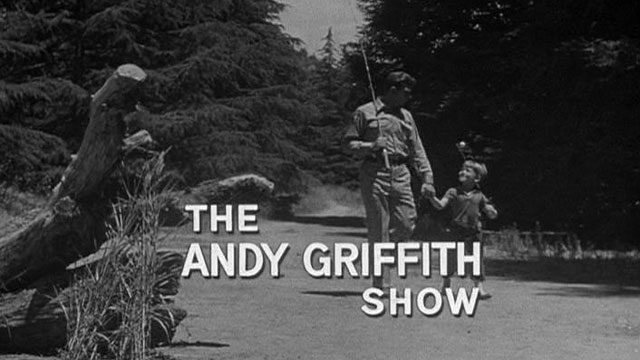
Today’s news that Andy Griffith had died at age 86 was observered in predictable ways: Griffith’s role as TV icon, model father and reportedly very decent gentleman were dutifully noted.

But there was a little bit of disconnect – some of it generational – in reaction to Griffith’s passing.

Not because reruns of “The Andy Griffith Show,” the small-town sitcom in which Griffith starred from 1960 to 1968, aren’t readily available to younger viewers.

No. I think it’s because it’s hard to comprehend just how big a TV star Griffith was.

Griffith’s show was consistently in the top 10 highest-rated shows on TV for its entire run. At any given time, a quarter of the TV audience was tuned in to watch Andy, Barney Fife, Opie and the rest of the genial people of Mayberry.

Griffith was a big TV star in a four-channel TV universe. And that’s a big difference from being a TV star now.

A friend and I have often theorized that no modern-day TV stars or celebrities can ever hope to reach as many viewers as stars like Griffith, Johnny Carson or their like. That’s because, thanks to the proliferation of channels in basic cable dating back to the 1980s, the viewing audience is increasingly fragmented. A typical household receives dozens, even hundreds, of TV channels. Add to the mix DVDs, digital, streaming and on-demand shows and the 1960s standard of everyone tuning in to the same shows – a practice that brought big ratings, generated “water cooler” conversations and made stars of people like Griffith and Carson – is long gone.

Just look at listings of the top-rated programs of all time. If you discount the few remaining “water cooler” programs like Super Bowls, few shows of the modern era rack up huge ratings.

The top-rated TV episode remains the February 1983 – yes, 1983 – series finale of “MASH.” Sixty percent of households tuned in that night, making for a viewing audience of 50 million households.

The “Who Shot J.R.” episode of the original “Dallas” ranks right up there, followed by the “Roots” miniseries, big sporting events and a handful of other shows.

Very few broadcasts from the past two decades are near the top of the list. Most shows from today would be happy with a fraction of the viewers. In May, “American Idol” pulled in 16 million viewers.

Griffith, a canny entertainer with a way of knowing what viewers wanted, may have like-minded modern-day equivalents.

But none of them will ever have his reach or his impact.