Category Archives: monster world

The geek years of our lives: 1982

I’ve noted before in this space that 1977 was a pivotal year for movies. Two words: “Star Wars.”

But just as 1939 is a golden year for movie lovers, 1982 is a golden year for geeks. Maybe never before and maybe never since have so many milestone movies been released in a single year, many of them in the summer months alone.

I was reviewing movies that year — I had begun four years earlier and did it for another eight years, so it was prime moviegoing time for me — and even then I realized we were seeing something special.

As the 30th anniversary of this pivotal year rolls around, the Alamo Drafthouse Cinema is holding screenings of many of the movies. I can’t make those showings, but I’ll probably watch a few on disc. In the meantime, here’s my little look back.
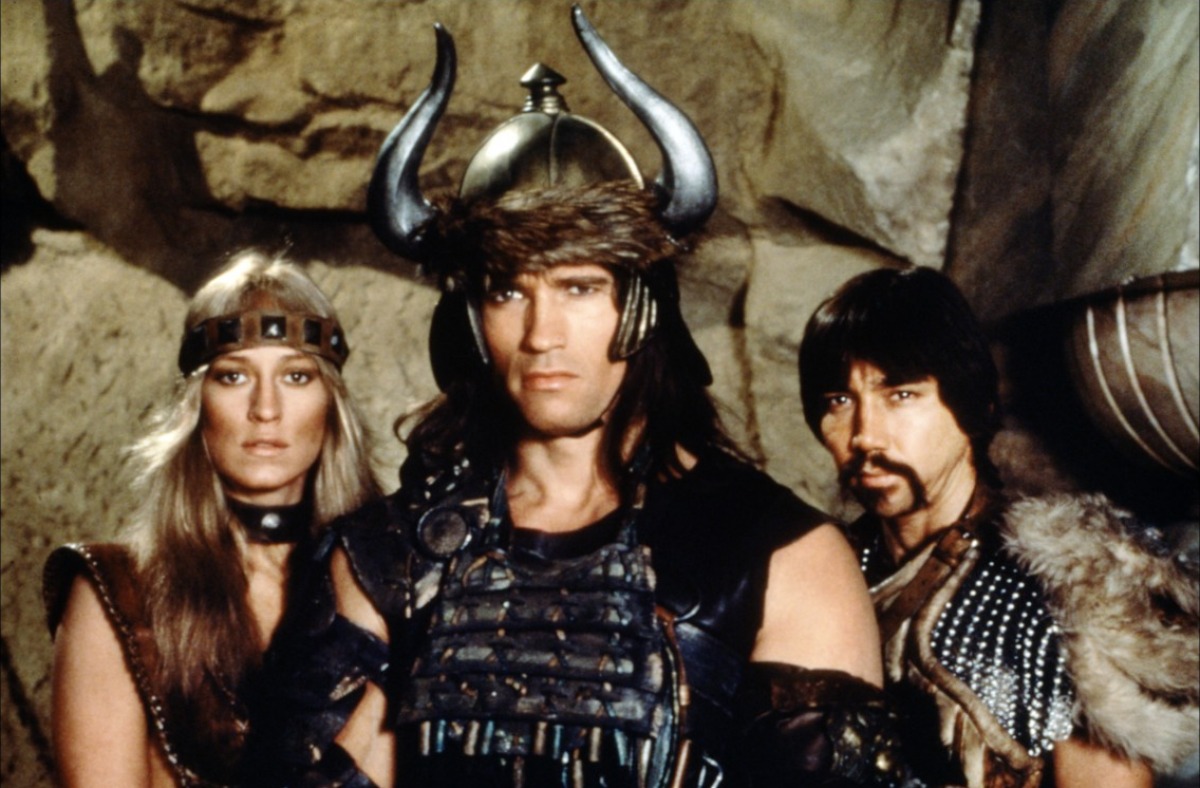
“Conan the Barbarian” — The Arnold Schwarzenegger movie was one of the first movies I saw through the press junket process, going to Chicago to see it and interview the cast and filmmakers. But even without that, I recognized the movie for what it was: The rare moment when Hollywood got the sword-and-sorcery genre right. There are some cheesy effects, to be sure. But the world of the pulp barbarian hero came to life.
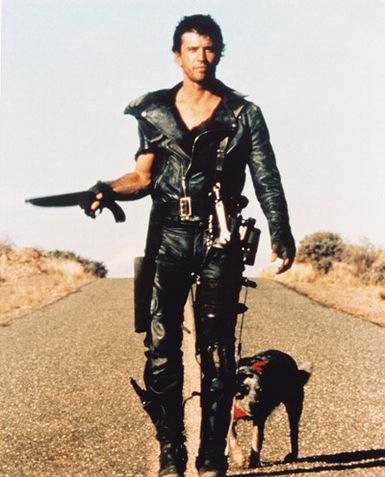
“The Road Warrior” — I had seen George Miller’s “Mad Max,” the dire action thriller starring Mel Gibson as a cop in a lawless land, but it was small in scope compared to “The Road Warrior.” Like “Conan,” “The Road Warrior” quickly defined its genre. All the elements were in place: A nihilistic hero with a heart; truly menacing bad guys; a varied and fascinating collection of good guys; stunts like movies had never seen before.
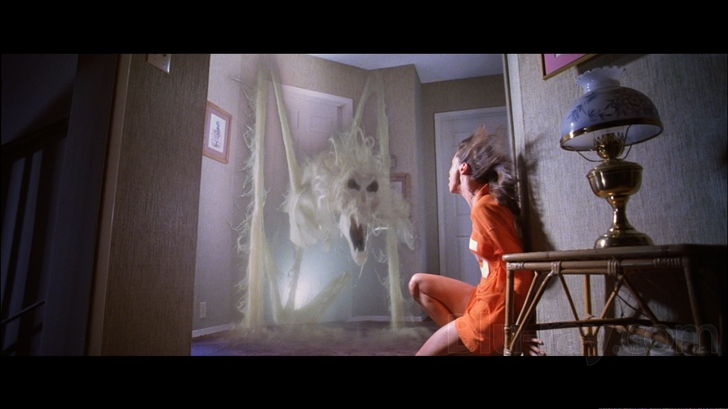
“Poltergeist” — This movie, directed by “Texas Chainsaw Massacre” director Tobe Hooper and produced by Steven Spielberg, was like the “Mirror Mirror” universe take on the suburban world given to us a few weeks later when director Spielberg released “E.T.” After decades of old dark house horror movies, the “haunted ranch house” tale told in “Poltergeist” seemed as fresh as could be.

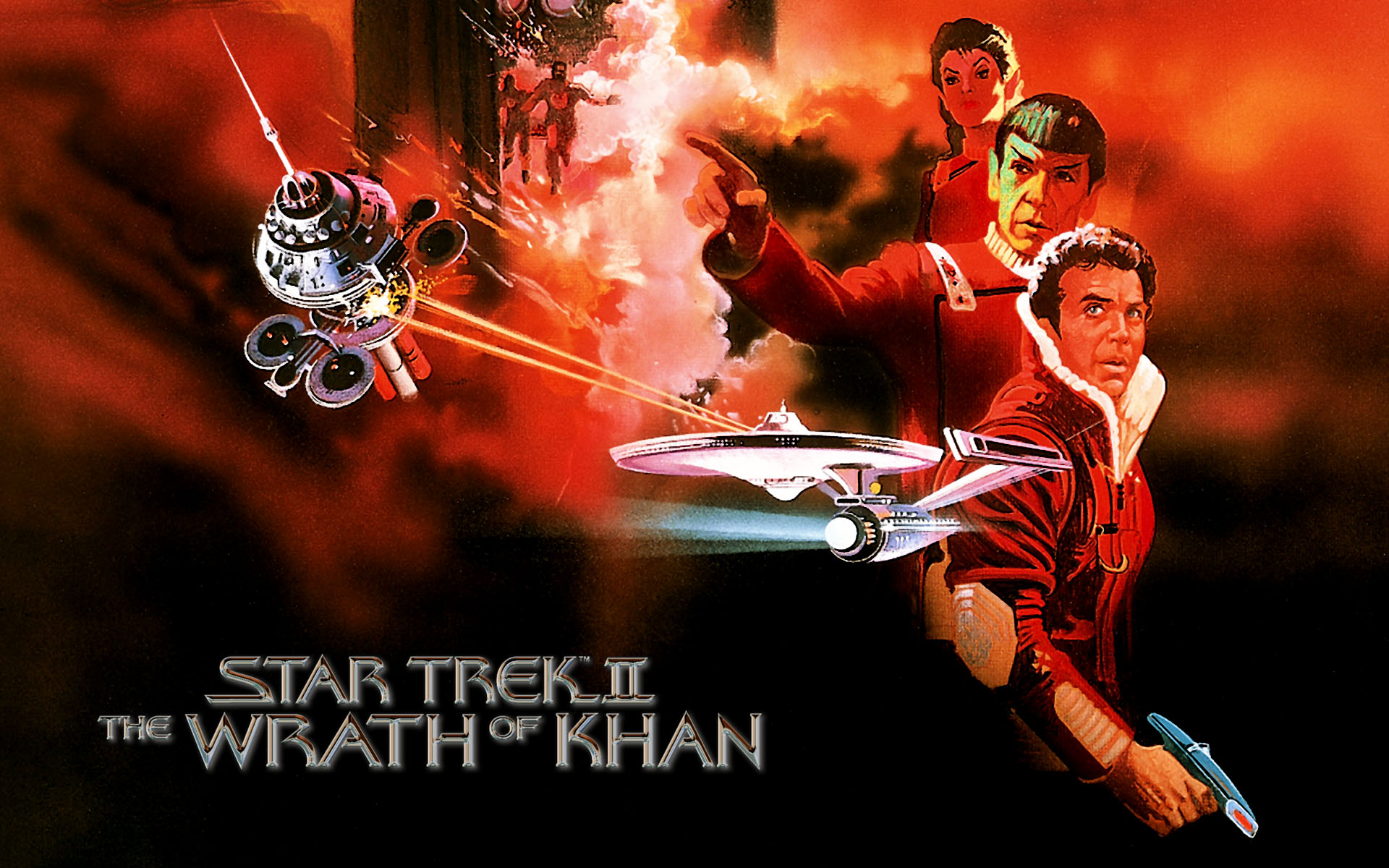
“Star Trek II: The Wrath of Khan” — While I really enjoyed the J.J. Abrams “Star Trek” reboot from a couple of years ago, the fact remains that Abrams, other moviemakers and all of fandom still believes that Nicholas Meyer’s take on Gene Roddenberry’s classic space opera is the one to emulate. And why not? Meyer brought a sharp military take to the familiar characters, pushed them through their paces in a quick-witted, thrilling plot, injected a ton of humor and tragedy and gave us one of the most heart-pounding climaxes ever. To this day, I remember the “Does Spock really die?” rumors before the movie opened, with fans eagerly anticipating/dreading the answer.

“E.T. The Extra-Terrestrial” — Sure the ending is marred by one of those “ohmygod he’s dead, no he’s not” resurrections. But time has probably dimmed our recollection of how simultaneously sweet and tart this movie is. The kids were cute but had realistic anti-sibling mean streaks, the mom (Dee Wallace. Sigh.) was a barely-hanging-in-there abandoned woman and E.T. himself was a great creation. It deserved to make a ton of money.
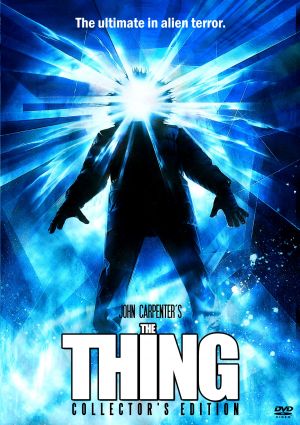
“The Thing” — Man, what a great horror flick. Director John Carpenter was on a roll with “Halloween,” “Escape from New York” and this, making him the most subversive director working and one of the most crowd-pleasing. Think about the endings to those movies for a minute: “Halloween” ended by establishing the boogeyman really existed. “Escape” ended with the protagonist, played by Kurt Russell, deciding “the hell with it” and destroying a tape that could save the world. And “The Thing” ended its cold and nightmarish story with a man versus alien creature showdown — featuring Russell and Keith David — that couldn’t have been more harsh.

The two last movies of the summer of 1982, “Tron” and “Halloween III,” were lesser lights, but how could they not be? “Tron” left enough of an impression to spawn a sequel nearly 30 years later. And “Halloween III” was a noble experiment that ultimately failed. Rather than try to top John Carpenter’s original, the movie’s producers went for a whole new story, about a fiendish plot to sacrifice millions of children with Halloween monster masks. “Three more days to Halloween!” was the earworm TV commercial jingle of the year. I just wish the movie had found an audience.

What a year.
‘Incredibly Strange Creatures,’ great memories

My companion, who is now long gone but shall remain nameless anyway, was itching to hit a zombie in the head with a baseball bat.

“If somebody comes at me, they’re gonna get it,” he said, showing me the baseball bat that was well-hidden under some blankets.

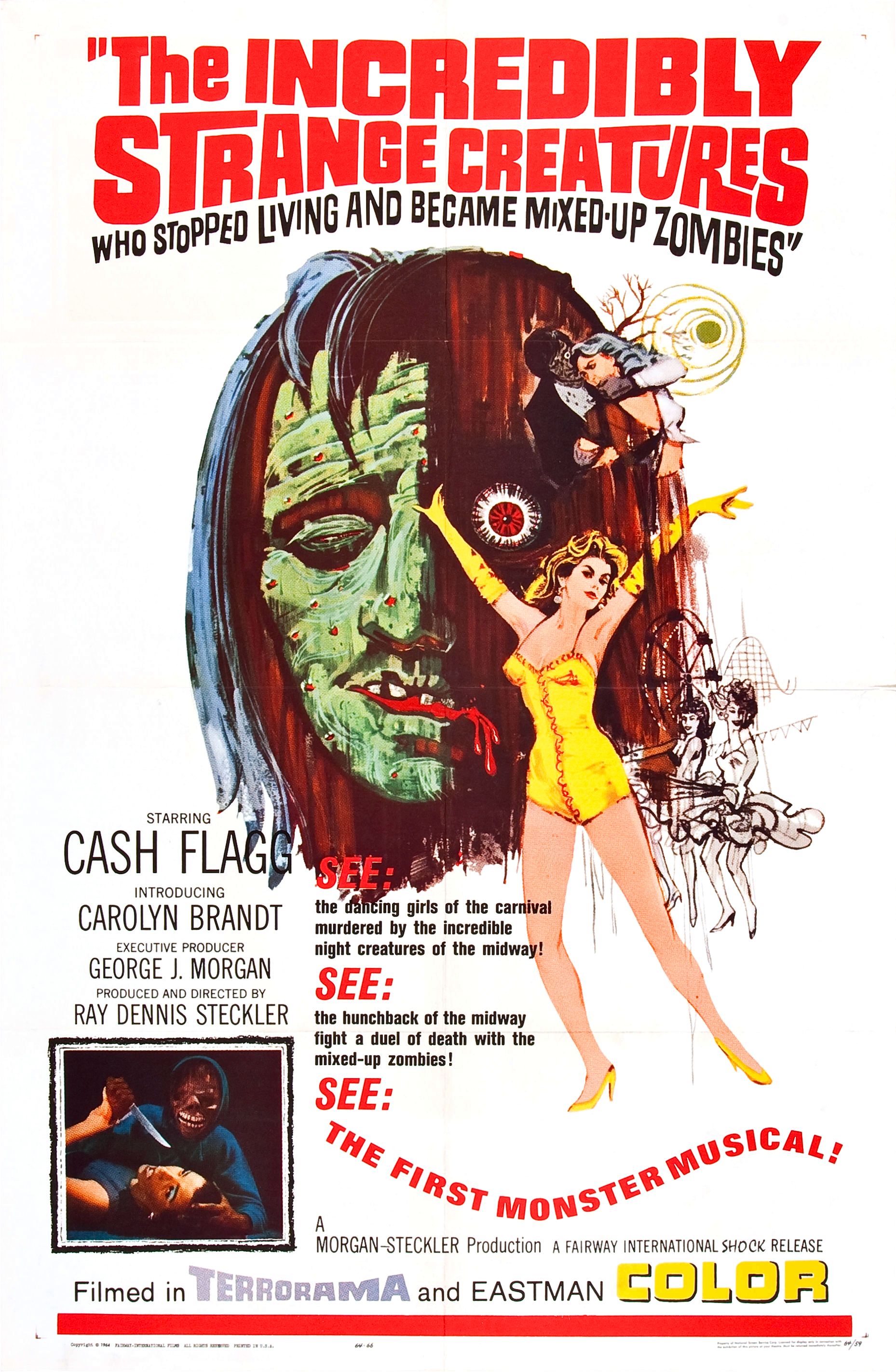
I don’t remember the year, but it must have been the late 1960s or early 1970s. The occasion was the re-release of “The Incredibly Strange Creatures Who Stopped Living and Became Mixed-Up Zombies.”

If you don’t remember this movie milestone, I’ll refresh your memory.

Ray Dennis Steckler was a maker of ultra-low-budget movies in the 1960s. He also acted in some of his movies, under the stage name Cash Flagg, probably because he could afford his salary.

In 1964, Steckler directed “Incredibly Strange Creatures,” which was released by Fairway International Pictures. Fairway released a handful of movies in the 1960s, including this and director Arch Hall’s “Eegah,” in which teenagers encountered a caveman. Of course. It was the 1960s and Hollywood had discovered what a potent box-office force teenagers could be. So teenagers were encountering everything from Frankenstein to giants to … well, you name it.

Fairway’s best-known movie was undoubtedly “Incredibly Strange Creatures,” in which teenagers encountered … not a caveman, but zombies at a carnival.

Stecker — er, Flagg — and other patrons of the carnival are hypnotized by a fortune teller and turned into crazed killers. For good measure, the fortune teller splashes acid on her unwilling slaves, giving them disfigured faces to match their murderous instincts.

By the end of the movie, the … well, sort of strange creatures had broken out of their cages and taken vengeance on their carnival captors.

That’s where my companion’s baseball bat came in.

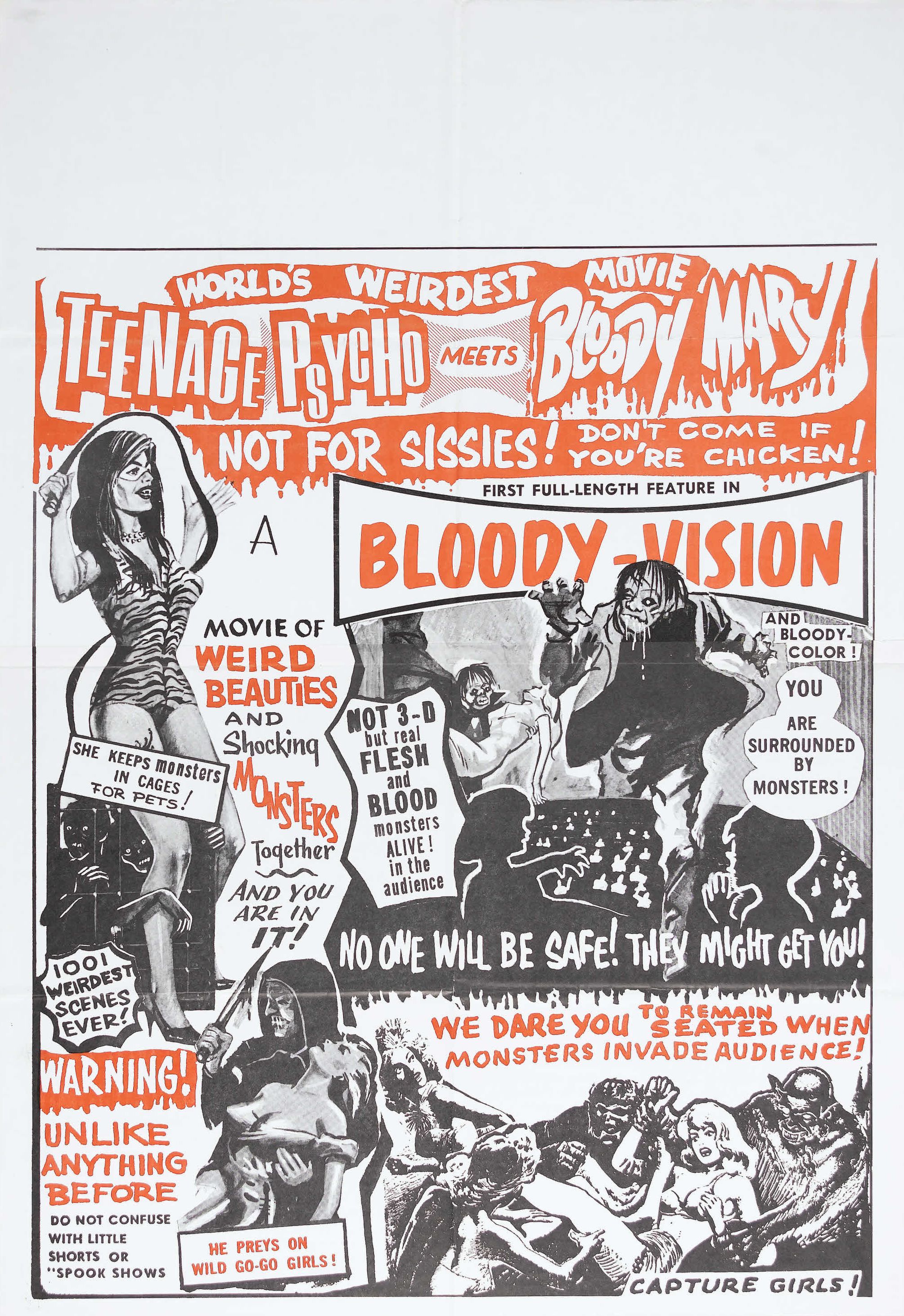
At some point during the surprisingly durable theatrical lifespan of the movie, either during its original release or its subsequent re-release as “Teenage Psycho Meets Blood Mary,” Fairway or someone had the ingenious idea of selling the picture by offering something that TV couldn’t compete with.

Not 3-D. Not Smell-O-Vision.

Real life zombies, running loose in the theater (or more likely, considering the low-budget nature of the movie) the drive-in.

Or, as the ads put it:

“Not for sissies! Don’t come if you’re chicken!”

“Not 3-D but real FLESH and BLOOD monsters ALIVE! in the audience.”

“NO ONE WILL BE SAFE! THEY MIGHT GET YOU!”

“We dare you to remain seated when monsters invade audience!”

In theaters where the movie played, the management made its ushers wear cheap monster masks and, in the scene when the monsters rebelled and broke loose on screen, the hapless theater employees would run up and down the aisles, screaming and frightening moviegoers.

Except for my companion, who had made up his mind to brain one of the zombies if this outbreak occurred.

Really, he understood that “real zombies” — stop and think about that phrase for a moment — would not be rampaging through the aisles of the drive-in.

But just in case …

Anyway, my memory of the movie is fairly dim all these years later. But my memory of that baseball bat and the threat of violence in the aisles remains vivid.

No, nobody got hit with a baseball bat that night. Zombies — in this case undoubtedly the teenage employees of the drive-in — did rampage, but none got close enough to us to warrant a good beating.

Thank goodness. Beating up teenage zombies with a baseball bat during a movie that’s been acclaimed as one of the worst of all time isn’t something you want on your record.


Saying goodbye to Jonathan Frid

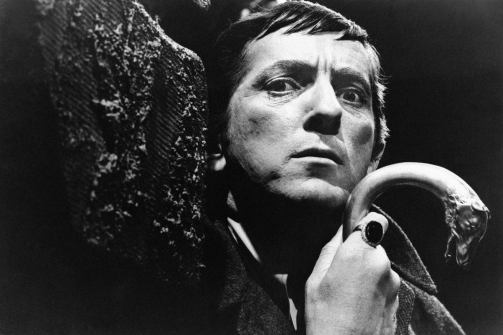
One of the pop culture icons of my childhood is gone. It was announced today that Jonathan Frid died April 13 in his home in Canada. He was 87.

Frid was, of course, Barnabas Collins on the classic supernatural daytime drama “Dark Shadows.”

His death came just a few weeks before the May 11 release of the Tim Burton, Johnny Depp big-screen version of the venerable soap. Frid, along with other regulars from the TV series, appears in the movie, which is pitched as a much more light-hearted take on the gothic drama.

“Dark Shadows” aired late afternoon weekdays from 1966 to 1971. Frid didn’t join the cast until several months in, however, when groundskeeper Willie Loomis (John Karlen) accidentally released him by opening his coffin.

I’ve noted before that the show was a special one for me. I came home from elementary school every day, sat down at the coffee table in my living room and watched the show while I did my homework.

My deepest appreciation for the series, however, came when it aired in syndication years later. Then I recognized all the tricks and treats the series contained: Wild storylines that involved not only vampires like Barnabas but witches, werewolves and ghosts and even time travel.

“Dark Shadows,” like many soaps at the time, was videotaped with little room for error or fixing of same. Actors would sometimes forget their lines or bump into furniture or doors while making a dramatic exit from a scene. I loved the show anyway.

I still remember with bitter disappointment watching the last episode. This was 1971, of course, before the Internet and news of show business — particularly a geeky daytime drama — was hard to come by.

The final episode reflected an effort to tie up loose ends. The last storyline for the show had all the actors playing their ancestors in the past. Near the end of the episode, bite-type neck wounds are inflicted on someone. Is a vampire loose at Collinwood?

But the voice-over narration contradicted that ominous development and predicted a happy ending for Bramwell Collins, played in this storyline by Frid:

There was no vampire loose on the great estate. For the first time at Collinwood the marks on the neck were indeed those of an animal. Melanie soon recovered and went to live in Boston with her beloved Kendrick. There, they prospered and had three children. Bramwell and Catherine were soon married and, at Flora’s insistence, stayed on at Collinwood where Bramwell assumed control of the Collins business interests. Their love became a living legend. And, for as long as they lived, the dark shadows at Collinwood were but a memory of the distant past.

The words had an element of finality to them and I suspected the worst. The following Monday I tuned in and, sure enough, the show was not on.

My disappointment was massive. I even wrote a letter to the Indianapolis TV station that aired the show, asking if it would return. I don’t recall getting an answer.

“Dark Shadows” — all 1,200-plus episodes — is now available on DVD for the enjoyment of fans.

I’m leery of what Burton and Depp have done with the remake, but I’ll probably see it.

And if he does indeed appear in the movie, Frid will be a welcome sight.

So I’ll mourn his passing and enjoy my memories of my afternoons with Barnabas and family and all the enjoyment Jonathan Frid gave me over the years.

Have the nerds inherited the earth?

It wasn’t that long ago that fans of comic books, monster movies, science fiction and other nerdy stuff had to be fairly closeted about their pop culture choices.

I still remember the look on a guy’s face who, when I was a teenager, looked at the paperback book in my hand and read the title: “The Martian Chronicles.” This was Ray Bradbury. The author was — and is — considered a literary lion, for pete’s sake. But the guy glanced from the book cover to me and looked as if I had been perusing the latest issue of “Nuns and Nazis.”

God only knows what would have happened if I had been reading the latest issue of Famous Monsters magazine.

So I still feel a little lightheaded over the rise of geek culture. Not just the number of big-screen, big-budget movies based on comic books. I’m kind of getting accustomed to that.

No, I’m thinking about the TV shows — at least one of them based on a Podcast — that are not only devoted to a celebration of geek culture but even feature honest-to-goodness, real life geeks.

These shows portray the real-world versions of geeks like those in “Big Bang Theory” — without the Hollywood veneer. More about “Big Bang” in a bit.

Here’s a run-down of the geek and nerd equivalents of Johnny Carson:

“The Nerdist:” Back in the day, Chris Hardwick was that snarky guy with the big voice on “Singled Out,” the MTV game show. A couple of years ago, Hardwick began “The Nerdist” podcast, an online audio look at geek and nerd culture featuring not only fans but celebrity guests.

Hardwick and “The Nerdist” — which also features genuinely funny geeks Jonah Ray and Matt Mira as regular panelists — got somewhat wider (or different) exposure when BBC America tapped the three to appear on a “Nerdist” TV series.

Only a handful of episodes have appeared so far, but they feature Hardwick, Ray and Mira chatting with geek culture demigods like Wil Wheaton and Nathan Fillion. The shows — available On Demand and no doubt online — are breezy and silly and don’t have any more substance than your typical talk show. They are, however, about the kind of geeky stuff that your parents used to hate.

“Talking Dead:” Hardwick packed up his geek shtick — but unfortunately not his sidekicks — and hosted this AMC talk show that followed episodes of the channel’s hit “The Walking Dead.”

Although the focus is narrow — it’s all about “The Walking Dead” — the show is entertaining and offers some insight into the series. The episode following the season finale of “The Walking Dead” featured the show’s creators announcing the actress who will play Michonne but also included one of the show’s funniest bits: An “In Memoriam” video montage of zombies killed off during that evening’s episode.

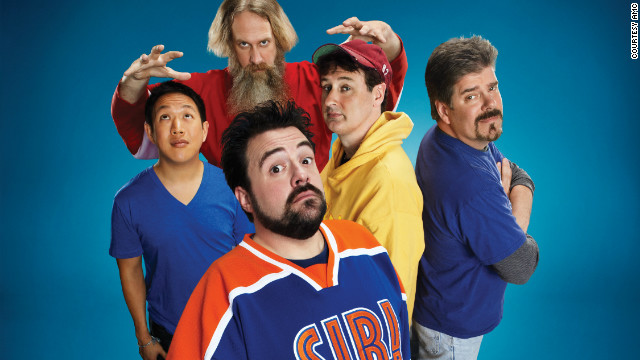
“Comic Book Men:” Somehow AMC has become the channel for nerd talk shows. Airing on Sunday nights along with “The Walking Dead” and “Talking Dead” is “Comic Book Men,” a series set in director Kevin Smith’s New Jersey comic book store.

Smith makes appearances but the series is focused on Walt Flanagan, manager of the store, and three employees/layabouts, Ming Chen, Mike Zapcic and Bryan Johnson.

All four guys are opinionated and entertaining. Chen, the low man on the totem pole, is like the Gilligan of the series.

It is Johnson, sporting a wild mane and wooly beard, who is the show’s highlight, however. Johnson’s online bio indicates that he has acted and directed in projects associated with Smith.

In “Comic Book Men,” Johnson is portrayed as an archetype familiar to anyone who has spent time at a comic book store or convention: The guy — usually older — who always seems to be hanging out, offering up sarcastic comments and withering put-downs. Johnson makes that stereotype immensely likable, however, through his genuine wit.

If “Comic Book Men” has a fault it is that I don’t think it realistically portrays a comic book store in one respect: Nobody ever buys anything! Most of the interaction between the employees and the public comes when people come in hoping to sell old comics or “Catwoman” Barbies. It’s like a nerd version of “Pawn Stars.”

Not even a roundup to non-fiction geek talk shows would be complete without a mention of “Big Bang Theory.” One of the most popular shows on TV, the CBS sitcom is about four geeks who hang out together, playing online games, going to a comic book store and obsessing about sex.

There’s a pretty divisive view of “Big Bang Theory” online. A lot of geeks consider it patronizing and shallow. It is, of course. But it’s no more patronizing or shallow a look at a group of friends than … well, “Friends” was.

And “Big Bang Theory,” like its real-life counterparts, offer a view of geek culture that not even Ross in the depths of his museum-geek persona could reach.


Classic TV: ‘The Night Stalker’

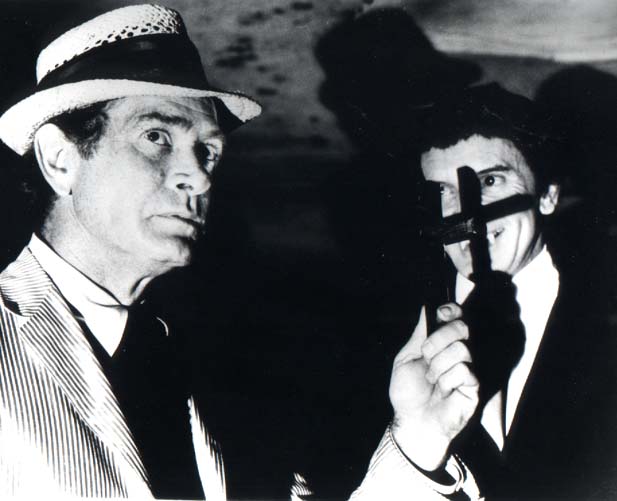
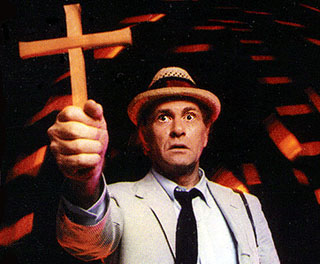
I noted here a couple of days ago the news that director Edgar Wright (“Shaun of the Dead”) and actor Johnny Depp were close to collaborating on a big-screen movie version of “The Night Stalker,” the 1970s TV movies/TV series that starred Darren McGavin as intrepid reporter Carl Kolchak, who pursued big bylines, splashy headlines and … monsters.

The possibility of a remake prompted me to break out my DVD of the original 1972 TV movie “The Night Stalker” and give it yet another viewing.

“The Night Stalker” is one of my favorite TV movies, heck, one of my favorite movies. I saw it when it originally aired, when I was all of 12 years old, and loved it then. I love it now.

Despite the fact that … gulp … 40 years have passed, the movie is rock solid. The elements of the story that are dated now only serve to give it a time capsule, slice of life feel.

With its lean 70-minute running time, the movie — produced by “Dark Shadows” creator Dan Curtis, directed by journeyman TV director John Llewellyn Moxey, written by the great Richard Matheson (“The Incredible Shrinking Man,” “I Am Legend”) based on a book by Jeff Rice — drags only near the very end, when McGavin spends a little too much time skulking around an old dark house.

Most of the movie is a dark-humored, action-filled, bitterly realistic take on newspapering, crime and big-city politics. In fact, it’s one of the best movies ever made about newspaper reporting. Kolchak is egotistical, insulting to his competition, intolerant of his bosses, dismissive to the public and resistant to authority. He is a classic newspaper reporter.

Kolchak, a reporter for a Las Vegas newspaper, narrates the plot, which unfolds in flashback. As the story proper begins, Kolchak is grumbling about being called back from vacation by his editor, Tony Vincenzo (the blustery, ill-tempered Simon Oakland) to cover what looks like the routine murder of a female casino worker.

Kolchak has, more so than many less realistic reporters in movies and TV shows, a fully-developed set of sources, both high and low, and one within the medical examiner’s office tells him the victim lost a lot of blood.

Before Kolchak can even consider that odd detail, another dead woman is found, also drained of blood.

The scenes set at crime scenes in “The Night Stalker” are some of my favorites. Inevitably, Kolchak shows up — sometimes right behind the police, including the nasty-tempered sheriff played by Claude Akins, sometimes even before the police show up.

Kolchak talks to cops and witnesses and in general has free run of these crime scenes. It’s a running gag that was probably unlikely then and is outlandish today, but they are fun scenes to watch.

Bodies, all drained of blood, keep turning up and one woman goes missing when, about halfway through the movie, Kolchak’s girlfriend, casino worker Gail Foster (Carol Lynley) suggests that maybe the killer really is a vampire. Kolchak scoffs at the idea but begins to read the old books Gail gives him.

Eventually, Kolchak tells the authorities — who barely tolerate his presence at press conferences, another realistic touch — that they won’t capture the killer unless they consider the possibility he might be a vampire.

I’m not sure that in the early 1970s a real-life coroner, police chief, sheriff and prosecuting attorney would call as many press conferences as the characters do in this movie, but they’re also fun scenes as Kolchak gets the cops and officials all riled up with his questions. The time capsule element of the press conference scenes is that officials expect the reporters to cover up the grisly, panic-inducing details of the murders. Now, of course, the press conferences would be live-streamed online and the reporters would have been tweeting all along. (Which is why officials today wouldn’t call this many press conferences.)

Besides the crime scene and press conference scenes, “The Night Stalker” boasts some pretty cool action scenes. Although there are a few scenes where Atwater, as vampire Janos Skorzeny, stalks his victims, there’s surprisingly little horror in the movie. Instead we get action scenes with a real sense of the unreal, as Kolchak and the cops come upon Skorzeny’s trail only to have the vampire kick their asses and escape.

The movie’s ending, with the authorities ensuring that Kolchak’s story won’t be told, is as downbeat and dark as anything on TV at the time or since. Ultimately, Kolchak has only the satisfaction of knowing he’s a good reporter to keep him warm at night.

McGavin — a dozen years later immortalized as the dad in “A Christmas Story” — has the right mix of schmoozer and attack dog that a reporter needs. Oakland is wonderful as that TV show cliche, the boss who yells.

Atwater, who died only a few years after the movie aired, is terrific as the vampire. He makes a big impression without a word of dialogue. Atwater’s most significant other role was as Vulcan leader Surak on a single episode of “Star Trek.”

The movie was the highest-rated TV movie of its time and prompted a sequel, “The Night Strangler,” a year later, and a weekly series, “Kolchak: The Night Stalker,” two years later. Both the sequel movie and TV series were fine, but they couldn’t match the original.

“The Night Stalker” influenced a generation of young fans of the horror genre who went on to pay tribute in a variety of ways. Perhaps the best known homage to the Kolchak concept was “The X-Files,” with FBI agents pursuing mysteries and monsters each week. McGavin even appeared on “The X-Files” as a retired FBI agent.

If Wright and Depp do a modern version of Kolchak — or even one set in the 1970s — they might do a terrific job. I’ll be shocked, though, if they can top the original, which is a classic of its kind.

Wright, Depp to team on new ‘Night Stalker?’

Ever feel that mixture of eager anticipation and dread, that feeling that runs up your spine and messes with your brain when you’re thinking about something that could be so good, so cool … if it just doesn’t get screwed up?

That’s what I felt this afternoon when I heard that Johnny Depp and Edgar Wright, the genius director of “Shaun of the Dead” and “Hot Fuzz,” were teaming up to make a big-screen version of “The Night Stalker.”

If you’re not familiar with it, “The Night Stalker” was a 1972 TV movie that starred character actor Darren McGavin as Carl Kolchak, a hard-charging newspaper reporter who — thanks to his willingness to buck authority and his his inability to kowtow to his bosses — has drifted from newspaper to newspaper, city to city, in search of steady work.

He’s at a paper in Las Vegas when a series of gruesome showgirl murders gets his attention. He starts covering the story and, much to the horror of city officials and the chamber of commerce, discovers not only that a serial killer is at work … the killer is a vampire (played to truly creepy, alien effect by Barry Atwater).

The movie unfolded like a modern-day police procedural, with Kolchak arriving at crime scenes and irritating the cops when he isn’t hanging out in the morgue. It builds to a genuinely suspenseful climax in which Kolchak takes things into his own hands … only to find himself run out of town by officials worried about the story’s impact on tourism.

Masterful writer Richard Matheson wrote the movie based on a terrific book by author Jeff Rice.

“The Night Stalker” was the highest-rated TV movie of its time and sparked not only a 1973 sequel, “The Night Strangler,” but a 1974 series, “Kolchak: The Night Stalker.”

In the series, which ran only one season, Kolchak worked out of a Chicago news service, frustrated the same boss (the blustery Simon Oakland), and kept running into monsters. The best episodes featured a zombie and a vampire who was one of the victims from the original movie.

News of the remake doesn’t fill me with quite the same level of anticipation and dread that I feel for the Tim Burton/Johnny Depp “Dark Shadows.” Maybe because Burton, a genuine artist who seems to have lost the ability to make a coherent movie, isn’t associated with this.

Maybe because, as much as I liked “Dark Shadows,” it isn’t the equal of “The Night Stalker” in my book. If Burton makes “Dark Shadows” an unwatchable mess, that’ll be a loss. If Wright screws up “The Night Stalker,” I’ll be in mourning.

Wright — who has also been working on a movie of the Marvel Comics character Ant-Man, a member of The Avengers — seems well-suited to the mixture of humor and horror that a proper adaption of “The Night Stalker” would need.

But I really would dearly love it if a “Night Stalker” movie was really good, spawning a new generation of fans and renewing attention for the original ABC movies and TV show.

Geek wish list: EC Comics library

They sat there, on a high shelf of the comic book shop, calling to me.

It was the late 1970s or early 1980s, I don’t remember exactly when, and my friends and I were regulars at Comics Carnival, a comic book shop in the Broad Ripple neighborhood of Indianapolis. We were all college age with too much time on our hands, too much of the geek in us and not enough money.

The store had thousands of geek-pleasing items for sale, from comics to genre film magazines to posters and superhero statuettes.

Besides going to school, I was writing freelance for a Muncie newspaper and a couple of free monthlies in Indy. Freelancing didn’t — still doesn’t — pay a lot; I never got paid for at least one article for the latter of the free monthlies.

So I didn’t have a lot of money to spend. What I wasn’t spending on hanging out with my friends, going to movies and, you know, living, I spent on the finest geekery.

But I couldn’t afford those books on the high shelf.

Russ Cochran, a small-press publisher, had undertaken, in about 1978, an ambitious effort. Cochran set out to reprint the classic EC Comics of the 1950s.

If you’re familiar with EC, you know that they were sister publications to Mad magazine but for the most part focused on cleverly written, beautifully drawn and incredibly lurid tales of horror, science fiction, the supernatural and suspense. Artists like Graham Ingels and Wally Wood adapted classic tales by Ray Bradbury as well as illustrating new stories.

ECs were before my time, but I grew up reading about them. They were Exhibit A in Fredric Wertham’s crusade against comics. Wertham was a quack psychiatrist who wrote a 1954 book, “Seduction of the Innocent,” and testified before Congress about what a horrible influence comic books were on children.

Although superheroes were among Wertham’s targets, EC Comics — with their funny but ghastly tales of zombies, killers and gruesome revenge — bore the brunt of the scrutiny of Congress. Outrage over stories of bloodthirsty creatures and strewn body parts radiated out of Washington.

Virtually overnight, EC’s “New Trend” line of horror comics was shut down.

While horror comics finally struggled their way back onto spinner racks in the 1070s, when Marvel introduced titles like “Tomb of Dracula,” EC passed into the realm of legend.

Until Cochran began his ambitious plan to reproduce virtually every EC Comic.

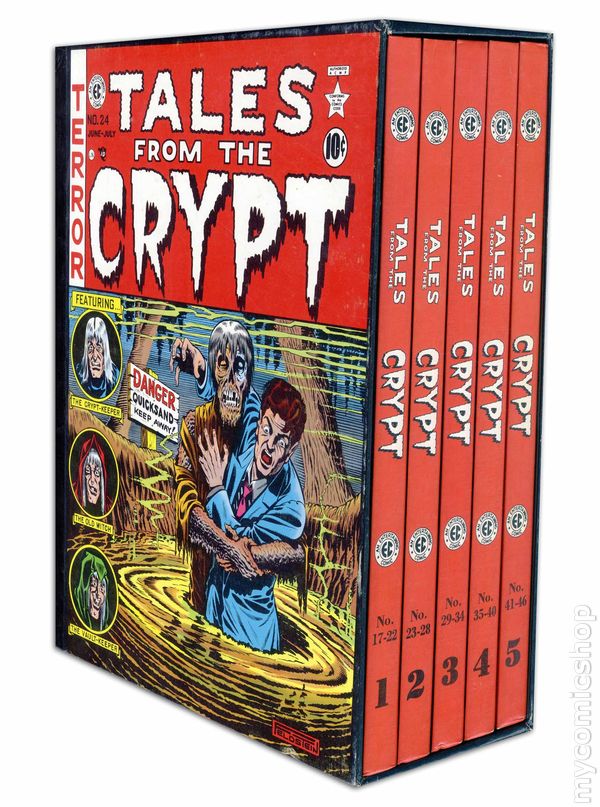
Cochran started reprinting the classic EC books with the company’s horror comics — “Tales from the Crypt” and “The Vault of Horror,” to note the most familiar titles — and moved on through science fiction, westerns, detective tales and the rest.

The comics were reprinted not in color, as they were originally released, but in clear, beautiful black and white. Several issues were collected, in order of publication, between colorful hardcovers.

The guys who ran Comic Carnival were nice geeks who, on more than one occasion, allowed me to gingerly look through the bound and slip cased EC collections. They did this despite knowing that I was unlikely to have the $100 or so for each multi-volume collection.

I looked at several volumes but could never bring myself to spend the money.

Today, of course, I wish I had. The long-out-of-print boxed sets sell for hundreds of dollars online — I saw one set for as much as $900 — and are much too expensive to try to collect now.

If I win the lottery or fall under the patronage of a benevolent billionaire, I’ll go looking for Cochran’s EC reprint volumes. Until then, they’ll remain on my geek wish list.


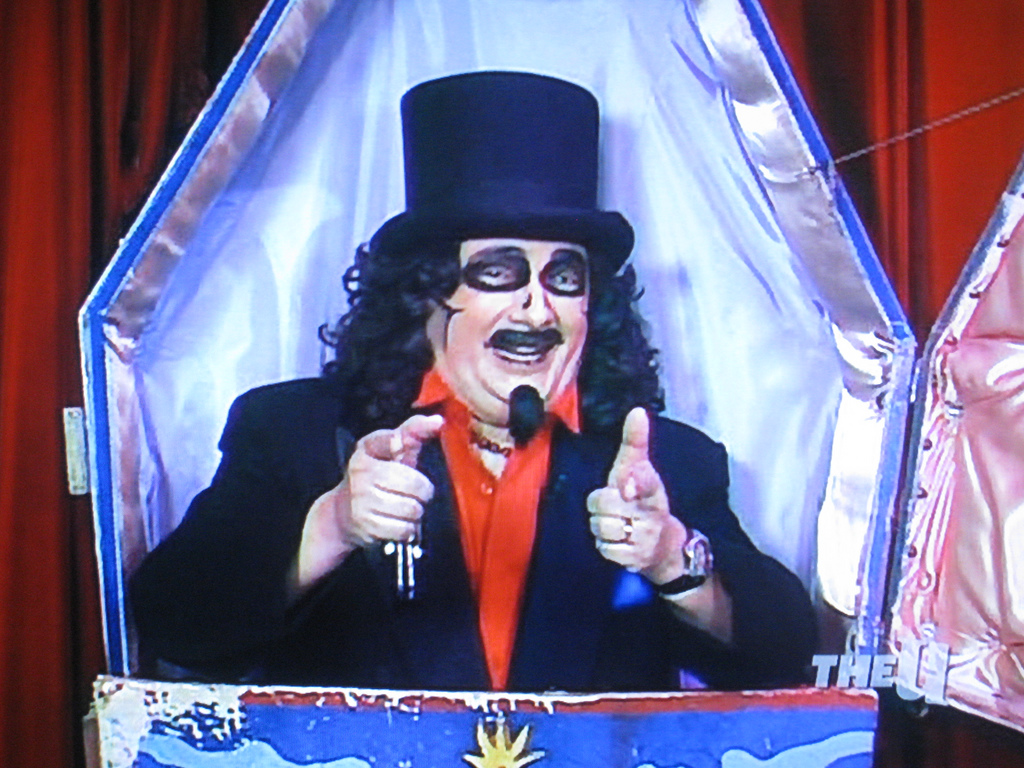
Svengoolie: Reunion with an old ghoul friend

Like a lot of people in Central Indiana, I grew up watching “Sammy Terry” late Friday nights on Channel 4. Sammy, whose son has lately taken up the mantle of corny horror movie host — at least on special occasions — was a fixture of most of our childhoods.

My misspent young adulthood, however, was spent in the company of Svengoolie.

For those who aren’t familiar with him, Svengoolie was a longtime horror movie host on Chicago TV station WFLD. The Sven that my friends and I were familiar with was played, for much of the 1980s, by Rich Koz, the second actor to play the part of the hippie ghoul and horror movie host.

Koz, in Svengoolie drag, would present classic (and not-so-classic) horror movies during his Saturday night show. My friends and I tuned in every week, snacks and beverages at hand, to enjoy the movies and Koz’s irreverent approach to them.

Our love for Svengoolie was so great that, when we heard that WFLD was being dropped from the local cable channel lineup in the mid-1980s, we sent him a telegram — kids, that’s the pre-Internet version of email — that he read on the final show that we could see.

My local cable lineup recently added MeTV, a nostalgia channel, and Svengoolie is right there, on Saturday nights, hosting — and making fun of — classic movies.

Last Saturday he aired “House of Frankenstein,” the 1944 Universal gem featuring not only Frankenstein and Dracula and the Wolf Man but a hunchback assistant.

Koz is older and has put on a few pounds — unlike the rest of us, who have remained young and svelte — but the show is snarky, campy good fun just like it was … holy crap, nearly 30 years ago.

Thirty years? That would make Koz and Svengoolie a classic showing classics. Hopefully for the viewing pleasure of classic old geeks.


James Bama: Artist of a thousand faces

For a compulsive credits-watcher like me, the revelation was dumbfounding: One artist was responsible for some of the most memorable pop culture images of my childhood.

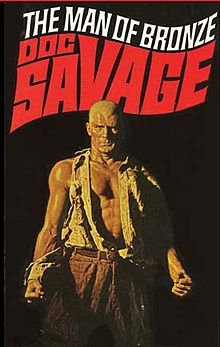
James Bama is a well-known Western artist. For me, he’s always been the man who painted photorealistic but slightly surreal covers for the 1960s paperback reprints of old “Doc Savage” pulp novels.

Since I obsessively checked movie and TV credits and artist and author credits of books, magazines and comic books, Bama was a familiar name to me.

His drawings of pulp hero Savage no doubt helped sell a new generation of fans on the Depression-era adventure stories.

How could young readers not be interested in a hero and an adventure that looked like this?

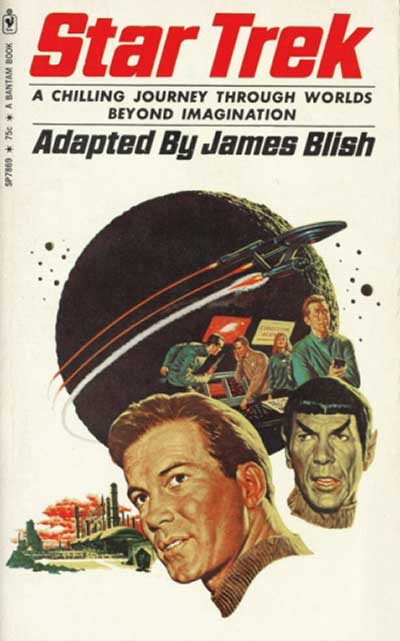
But when goofing around on the Internets the other day, I realized that the Bama of “Doc Savage” fame was also the artist who painted the cover of  an early “Star Trek” novelization. It’s one that’s still on my bookshelf.

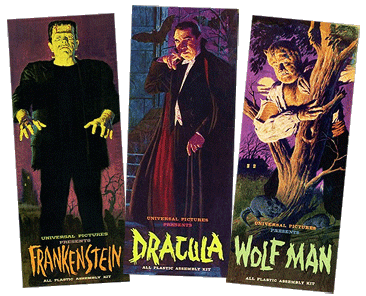
When I realized Bama had created that art, I began looking around and discovered that Bama had also painted the monster art used on 1960s Aurora model kits I loved as a kid.

How is it possible one man created so many pop culture — geek culture — touchstones?

Bama, a commercial illustrator for decades, gave up that life at his peak and left the fast lane behind to become a Western artist. He’s still going strong, painting and selling his art through a variety of galleries and websites.

He’s not drawing the colorful characters of my childhood anymore. But that’s okay. His classic work is already the stuff of pop culture legend.

The heyday of the monster world

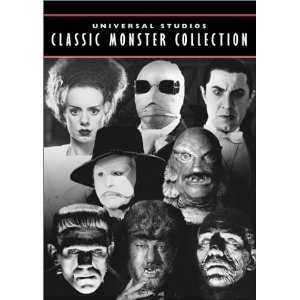
I grew up with monsters. The good kind. Frankenstein, Dracula, the Wolf Man, all  lurching around in foggy black-and-white graveyards and misty moors. The kind that were celebrated in Famous Monsters of Filmland magazine, shown by TV horror movie host Sammy Terry and frozen in time in Aurora model kits.

There’s a lot of Internet space used to describe the “monster kid” phenomenon. It’s the loosely defined generation of us — mostly boys — who grew up right about the same time classic monster movies of the 1930s and 40s were sold for airing on local TV stations in the 1960s.

Pop culture aimed at kids and kiddish hobbies permeates our culture today — entire TV channels are devoted to science fiction, young people and geeks, for pete’s sake — so it’s hard to figure out how monster kid culture became pervasive when I was growing up. Without benefit of cable TV and the Internet but thanks to magazines and late-night movies, we somehow knew everything about these old monsters.

We knew which movies featured Boris Karloff as Frankenstein’s monster (easy) and which featured Glenn Strange. We even hollered and pointed when Strange showed up as the bartender at the Long Branch saloon in “Gunsmoke.” Here was a rare moment of our monster world intersecting with the real world and we wanted the grownups to acknowledge it.

For a big part of my childhood and young adolescence, I immersed myself in monster world. I loved to draw back then and, using movie history books for reference, lovingly recreate the Universal movie monsters I love.

I collected not only Famous Monsters magazine but Castle of Frankenstein, the Monster Times and lesser-known publications. Sometimes my need to create led me to, foolishly, cut up those now-valuable magazines and reassemble the pictures into scrapbooks that looked like magazines.

My friend Jim and I even created our own monster magazine he sold at his school. It was painstakingly — and somewhat hilariously — written and illustrated by the two of us.

I haven’t drawn much in a few years and — after having paid to recreate my collection of Famous Monsters magazine, then subsequently selling it — don’t buy monster magazines anymore. The closest I get to publishing a fanzine about old Universal horror films is when I mention them here.

My Aurora model kits — my Wolf Man, Dracula and Mummy — survived my childhood and gathered dust on a shelf until about 20 years ago, when, in a whirlwind of clearing out stuff before moving, I put them in the trash.

I don’t want to recreate those models — although you can buy a vintage 1963 Aurora Mummy model on eBay for “only” $124.95 — and I don’t want to recreate those times.

But I don’t mind dipping into the monster nostalgia once in a while.