Category Archives: TV

Unsung actors: Victor Buono

We come to praise King Tut, not to bury him.

Likewise, Count Manzeppi.

If you’re hep to the character actors we loved to watch on TV in the 1960s, you know I’m talking about Victor Buono, who received an Oscar nomination for “Whatever Happened to Baby Jane” in 1962 but is best remembered among some of us for his TV roles.

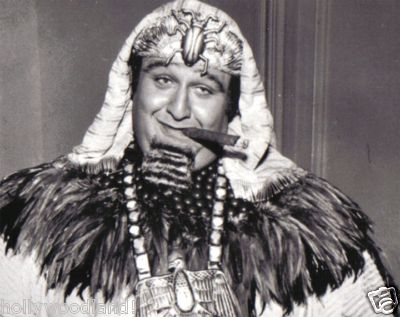
In “Batman,” he played a mild-mannered professor who, upon getting hit on the head, became the Egyptian-themed crime boss King Tut. Every guest-starring turn ended up with King Tut getting hit on the head again and reverting to his kindly professor persona.

And on “Wild Wild West,” he was the aforementioned count, foil to Secret Service agents Jim West and Artie Gordon.

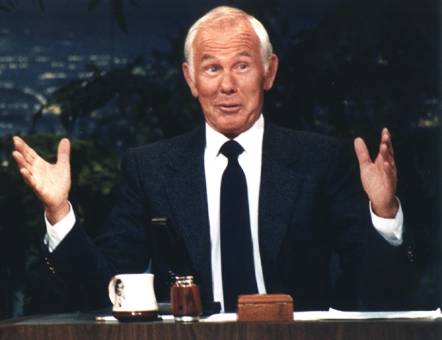
Buono had a second act, of sorts, in the 1970s as a talk show guest, usually on “The Tonight Show” with Johnny Carson.
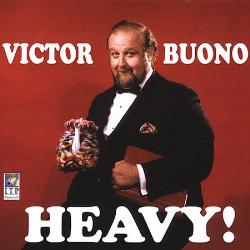
Buono was a witty fellow and often read his poetry while on the Carson show.

Here, from online sources, is his magnum opus, “The Fat Man’s Prayer.”

I think that I shall never see… my feet.

I think it only proper to end this portion of our discussion with a prayer.

Lord, my soul is ripped with riot,

Incited by my wicked diet.

We are what we eat, said a wise old man,

And Lord, if that’s true, I’m a garbage can!

I want to rise on Judgment Day, that’s plain,

But at my present weight, I’ll need a crane!


So grant me strength that I may not fall

Into the clutches of cholesterol.

May my flesh with carrot curls be sated

That my soul may be polyunsaturated.

And show me the light that I may bear witness

To the President’s Council on Physical Fitness.


At oleomargarine I’ll never mutter,

For the road to hell is spread with butter.

And cake is cursed, and cream is awful,

And Satan is hiding in every waffle.

Mephistopheles lurks in provolone,

The devil is in each slice of bologna,

Beelzebub is a chocolate drop,

And Lucifer is a lollipop!


Give me this day my daily slice –

But cut it thin and toast it twice.

I beg upon my dimpled knees,

Deliver me from Jujubees.

And my when days of trial are done

And my war with malted milks is won,

Let me stand with the saints in heaven

In a shining robe – Size 37!


I can do it, Lord, if you’ll show to me

The virtues of lettuce and celery.

If you’ll teach me the evils of mayonnaise,

The sinfulness of hollandaise

And pasta a la milanese

And potatoes a la lyonaise

And crisp fried chicken from the south!

Lord, if you love me, SHUT MY MOUTH!


Buono, who cut a hefty figure, died of a heart attack in 1982. Luckily we can remember him from his movie and TV roles and his funny and good-natured poetry.
 

Classic TV: ‘Night Gallery’

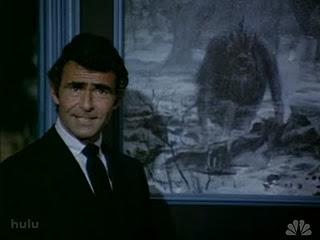
“Night Gallery” has, since the day it debuted as an irregularly recurring series on NBC in 1970, gotten a bad rap. During its three-year run, critics – and many viewers – alike judged it as Rod Serling’s unworthy follow-up to his ground-breaking anthology series “The Twilight Zone.”

And to be fair there aren’t many episodes of “Night Gallery” that have reached the iconic status of many episodes of “The Twilight Zone.” I recently watched “TZ’s” classic 1960 episode “The Monsters Are Due on Maple Street” and found its compact tale of paranoia and mob mentality still compelling, especially in these times.

But I’ve always loved “Night Gallery,” probably in part because it aired during my formative TV-watching years. I was devouring any kind of genre material in those days – movies, TV, comic books, novels, short stories – and “Night Gallery” fit a couple of those categories.

The show, hosted by Serling, just like “Twilight Zone,” and frequently featuring episodes he wrote, was as satisfying, to my young eyes, a presentation of the weird and the spooky as anything airing back in the day.

The pilot episode, which aired in 1969, was directed by Steven Spielberg and featured Joan Crawford, for goodness’ sake.

And how can we not love Serling? The gifted writer passed on in 1975, just two years after “Night Gallery” ended. He wasn’t much satisfied with the show by the end but that’s probably understandable. Serling’s talents no doubt made him less an artist and more a commodity to TV executives.

I’ve watched a couple of classic episodes recently on Hulu and thoroughly enjoyed them.

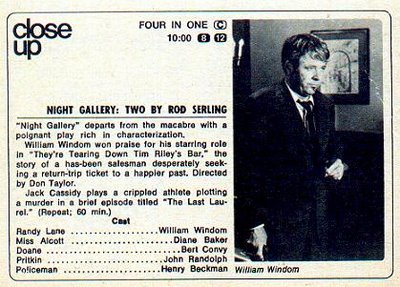
“They’re Tearing Down Tim Riley’s Bar,” from 1971, was written by Serling and comes across as more of a “Mad Men” story of corporate desperation than a spook story with William Windom as a business executive who’s been left behind in the rat race and longs for a past that lives on only in a shuttered neighborhood bar.


And bonus: Bert Convy plays Windom’s smarmy, conniving underling/usurper.

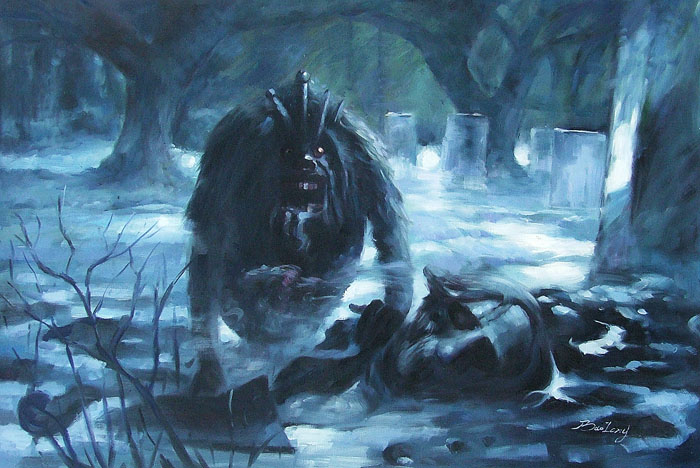
Much more straightforward, slow-burn horror could be found in “Pickman’s Model,” an episode I remembered quite well. Bradford Dillman played a turn-of-the-century artist who literally “paints what he sees.” The problem? He’s painting horrifying scenes of a monstrous ghoul that climbs out of the sewers and snatches people off the streets in a bad part of town.

From Larry Hagman to Leslie Nielsen to Victor Buono to Vincent Price, “Night Gallery” had an amazing rotating cast.

And presiding over it all was Serling, looking more dated in his shaggy haircut and mod jackets than he had as the buttoned-down host of “Twilight Zone,” but a welcome presence to be sure.

Check out Hulu’s collection of “Night Gallery” episodes. They’re also airing on MeTV, a nostalgia channel. “Night Gallery” was an immensely enjoyable follow-up to “The Twilight Zone” and, for me anyway, a fond send-off for Serling.

A midwestern education: What Johnny Carson taught us

Every once in a while I’ll surprise my wife with a comment about some obscure musician or author or political figure from the past. Seeing the look on her face, I’ll say, “I saw him on Johnny Carson.”

I would argue that for the 30 years leading up to his abdication of the “Tonight Show” throne, Carson was one of our nation’s greatest cultural educators.

I’m not talking about the times that Carson had political figures on the air, although that certainly fits the description as well.

I’m talking about how Carson, a white-bread Midwestern kid, helped spread the culture of the day.

It’s a feat not unlike what more recent hosts, including Jon Stewart or Stephen Colbert, do. But Carson brought us authors and entertainers and experts of every stripe. Along with actors and starlets and newsmakers and ordinary people who had unusual-looking potato chips, we saw the great and the near-great in a parade that’s unequaled today, when TV guests (with the exception of a few, like Tom Hanks and Bill Murray) seem to appear only when they’re plugging their new movie or music.

A few ways that Carson broadened our cultural horizons stick in my mind:

Comedians of all kinds, but particularly Jewish comics. If Indiana boys like me know everything there is to know about Jewish mothers and can even spout a few words in Yiddish, it’s because of watching comics on Carson’s stage and couch.

Carl Sagan. Neil deGrasse Tyson’s recent TV appearances aside, you’d be hard-pressed to find a scientist and author who was better known to the public at large. Sagan’s “Cosmos” series on PBS aside, I think most people knew him from his appearances on “The Tonight Show.”

Truman Capote and Gore Vidal. Two very different men and two very different authors whose books were read by many. But they became personalities outside the New York literary scene because of their appearances on Carson.

Buddy Rich. The world’s greatest drummer, Rich often performed in front of the “Tonight Show” orchestra. What kid didn’t want to pound the skins after seeing Rich on Carson’s show?

Marvin Hamlisch and the leading lights of Broadway. I’ve never been to Broadway but I know a lot about the Great White Way because Carson’s guests included not only the performers but composers of those shows.

As an aside, Carson’s tropical monologues were the stuff of legend, of course, but he even had time to fit the topical into silly bits. I’ll never forget during one of the Apollo moon missions Carson cracking a joke about a new toilet paper that had been invented as a result of the space program. Its brand name? Splashdown.


‘The Strain’ coming to TV

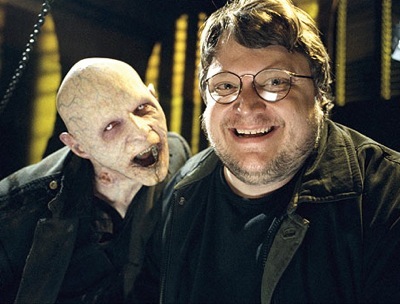
This is not surprising news: “The Strain,” the end-of-the-world-through-vampires trilogy of books written by Chuck Hogan and Guillermo Del Toro, is being turned into a TV series for FX.

It’s not surprising because “The Strain” trilogy – “The Strain,” “The Fall” and “The Night Eternal” – was originally conceived as a television series. And as a filmmaker and the guy who was tasked with bringing The Hulk to TV, Del Toro thinks and writes in a TV-friendly style.

But the news is interesting and could be good news for fans of the books. Or, at least, fans of the first book and elements of the second and third.

When “The Strain” came out in 2009, I thought it was one of the freshest and grimmest takes on vampire storytelling in years. The story plays out like a contagion thriller, with a scientist from the Centers for Disease Control, a World War II concentration camp survivor and an exterminator – yes, an exterminator – taking on a secretive vampire infestation of New York City.

The book’s plot is fun and the characters enjoyable, but the best part was the variation on vampire lore: The monsters were not sparkly dreamboats but pale, scary creatures with bloodsucking stingers that shot out several feet to snare victims. The heroes used some standard vampire-slaying tools but also used high-tech stuff like ultraviolet flashlights.

As good as the first book was, though, the succeeding volumes missed the mark with me. Maybe it was how dark they were. Maybe it was that it seemed Hogan and Del Toro painted themselves into a corner by going way, way too far too quickly.

At any rate, I’ll be interested to see what kind of show Del Toro and showrunner Carlton Cuse of “Lost” put on.

Here’s hoping they don’t go too far too fast.

What ‘Today’ is it? ‘Thoiseday’

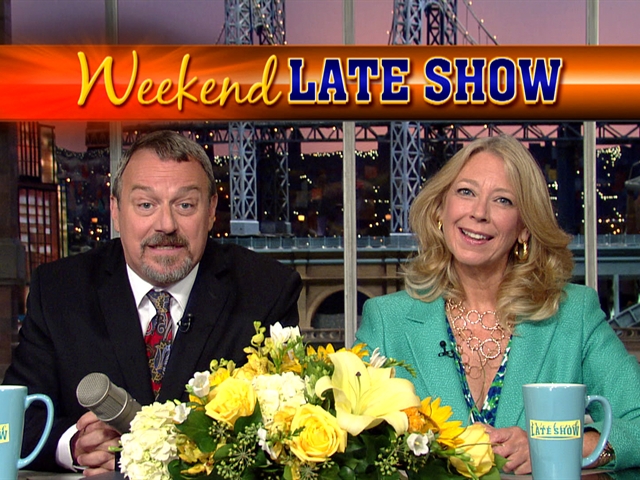
A friend introduced me to a series of short films that David Letterman airs on Thursdays on his “Late Show” program. They’re for “Weekend Late Show” and they purport to show what the perky hosts – Bruce and Linda – who host Letterman’s show on the weekends have planned for the days Dave’s off.

The “Weekend Late Show” spots are spoofs, of course. There’s no such show airing on Fridays, Saturdays or Sundays or whenever they’re supposed to air.

As spoofs, they’re quite clever. The “hosts,” sitting at Dave’s desk but playing second fiddle to a decorative centerpiece and (often) goofy headgear, tout upcoming segments on National Noodle Month or an interview with former “Dick Van Dyke” show regular Morey Amsterdam’s nephew, who’s written a book.

The spots capture, in canny fashion, the inane stories, packaging and delivery of morning shows in general, not just weekend morning shows.

As a regular viewer of NBC’s “Today” who finds himself puzzled or irritated by the morning show’s fixations – the British Royals, for example, or pretty young white women in peril – I appreciated the “Late Show” spoofs. And if the limited amount of “Today” I see each morning doesn’t have quite as many cooking segments as the spoofs would imply, the Letterman spots are still pretty much on the money.

By the way, on Roger Ebert’s blog, Tom Shales takes a few well-deserved pokes at the morning shows, especially “Good Morning America.” It’s nicely curmudgeonly stuff.

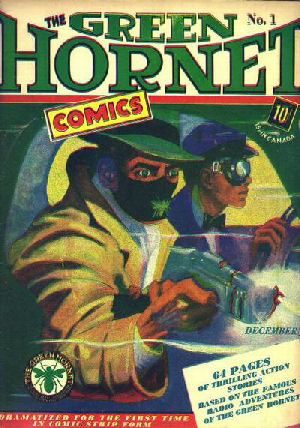
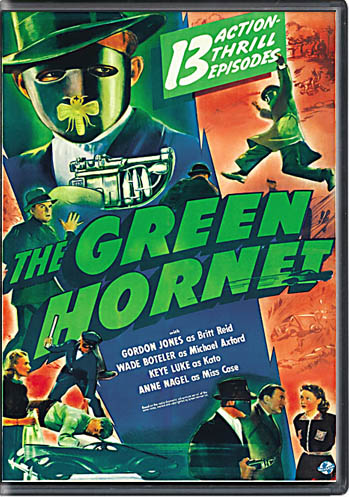
Classic heroes: The Green Hornet

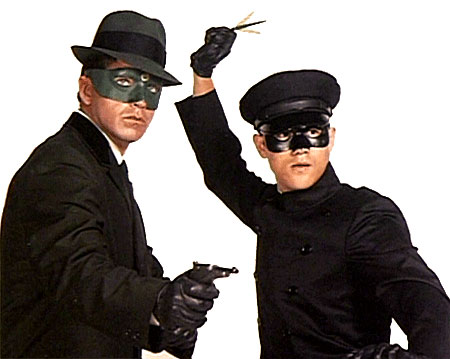
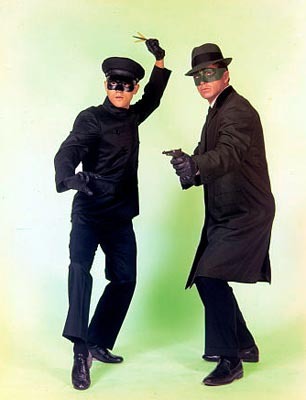
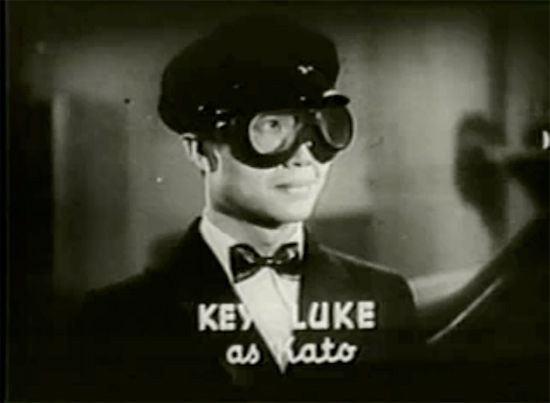
I became aware of the Green Hornet, masked crimefighter with a cool car and an even cooler sidekick, at the time of the 1966 TV series featuring Van Williams and Bruce Lee. The show ran only a season but the two also appeared in a high-profile, two-part guest-starring shot on ABC’s campy hit “Batman” series.

While they’re enjoyable to watch to this day, the two “Batman” episodes featuring the Green Hornet and Kato squaring off against and pairing up with Batman and Robin (Adam West and Burt Ward, of course) seem like an odd fit. “Batman” was goofy but the “Green Hornet” series was played absolutely straight.

That’s because the series, with Williams playing crime-busting newspaper publisher Britt Reid and Lee as his valet/sidekick Kato, followed the custom of the radio show that introduced the character in 1936.

Reid and Kato, while conducting normal, upstanding lives during the daylight hours, put on masks, arm themselves with Hornet “stings” and other non-lethal weapons and cruise through big-city back alleys at night, fighting crime and righting wrongs.

Not unlike some versions of Batman, the Green Hornet and Kato are considered criminals themselves. Their status as lawbreakers lets them fit right into the criminal underworld in their efforts to destroy it.

The 1960s “Green Hornet” series was played for drama and some ironic humor, particularly when Reid’s newspaper staff vowed to expose the Hornet’s crimes. But unlike the “Batman” series, the “Green Hornet” series featured gritty settings, straightforward stories and criminals who were less flamboyant and more murderous.

I didn’t see the Seth Rogen “Green Hornet” movie and I’m not sure I will. The reviews were pretty awful and I don’t think there was much to gain by turning “The Green Hornet” into a comedy at this point in the character’s history.

Fun fact: The Green Hornet is related to another great radio/serial/TV/comic book hero, the Lone Ranger. The producers of the radio show also produced the popular “Lone Ranger” series and noted that Britt Reid was the great-nephew of John Reid, the Texas Ranger who became the Lone Ranger after the rest of his posse were ambushed by outlaws.

‘Last Resort’ looks to have firepower

“Last Resort” sounds like a bad 1980s comedy featuring Andrew McCarthy and Jon Cryer as a couple of buddies on the make at a Florida tourist trap.

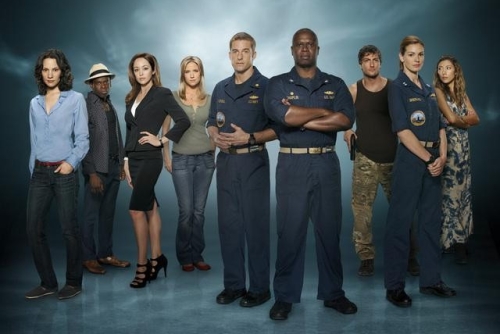
But no, “Last Resort” is a new TV series on ABC, overseen by the creator of “The Shield,” Shawn Ryan, and starring Andre Braugher and Scott Speedman.

It’s also a pretty nifty hour of television that left me wanting more.

“Last Resort” debuts on ABC on Sept. 27 but it’s available for viewing now on Yahoo. I watched it tonight, prepared to be underwhelmed or at best just whelmed. But, surprisingly, I really, really liked what I saw.

Braugher is Captain Marcus Chaplin, commander of the U.S. Navy nuclear sub Colorado. Speedman is his executive officer, Sam Kendal. As the pilot episode opens, they’re at sea, tasked with rescuing a group of Navy Seals caught in the crossfire of a mission gone south.

The pilot takes a few minutes setting up the friendships and conflicts on the ship, among them the hostile attitude of Chief of Boat Joseph Prosser (Robert Patrick of “Terminator” fame) and the potential for antagonism with the Seals.

But pretty quickly things go from a slow simmer to a rapid boil as the Colorado gets orders to launch four of its 18 nuclear missiles on Pakistan. Chaplin asks Navy commanders for confirmation through other channels and is promptly ordered relieved of command. When Kendal follows suit, another Navy ship fires on them, driving them to the bottom of the ocean.

Although the crew is split over the apparent disobedience of the captain and the executive officer, the two have enough support – particularly that of Lt. Grace Shepard (Daisy Betts), daughter of an admiral – to plow ahead and try to figure out what’s happening, especially when the world is told their ship has been destroyed by missiles from Pakistan and another Navy ship has apparently nuked Pakistan in return.

Chaplin and Kendal decide to “park” the Colorado off the coast of the island of Santa Marina, a tropical paradise that’s apparently run by a strong criminal element (foreshadowing of conflict to come? no doubt).

In a bravura monologue at the end, Chaplin sends out a video to the world with a simple message: Until we can figure out what’s going on, stay the hell away or we’ll unleash our nuclear arsenal on your ass.

A few moments of “Last Resort” didn’t ring true, particularly the abrupt “hey this island is nice, maybe we should stay here” moments at the end. But a lot of the show is fast-paced, snappy fun and the performances (by the leads, at least) are first-rate.

We’ll see how future episodes go, but the pilot is equal parts “Hunt for Red October,” “Crimson Tide,” “Star Trek” and “Lost,” with a little soap opera thrown in.

I’m really looking forward to the next episode of “Last Resort.”

But I can’t help but wish they had come up with a different name.

Random thoughts:

The terse nautical dialogue in “Last Resort” reminded me of what I liked about the chain-of-command-heavy episodes and movies of “Star Trek.”

The scene where a couple of characters strip down to their underwear, all the while spouting plot points, was silly. Really, really silly. And I’m almost certain nobody is going to hear the exposition.

The least believable parts of the pilot were the characters on the island. Here’s hoping the cliched islanders are written as well as the submariners in future episodes.


Classic TV: ‘Firefly’ ‘Our Mrs. Reynolds’

For a show that aired on Fox for only a few weeks a decade ago, Joss Whedon’s “Firefly” has inspired quite a cult following.

And it’s a following that no doubt irritates some people. Before he hit it big with “The Avengers,” Whedon was the kind of writer/director whose creativity inspired devout fans, who in turn seemed to inspire detractors who posted online messages along the lines of “These shows, like ‘Buffy the Vampire Slayer’ and ‘Angel,’ can’t be that good and Whedon is overrated and while you’re at it, go to hell.'”

“Firefly,” famously mishandled in its original network airing, nonetheless found a cult audience that very well might top “Buffy” and “Angel” in its devotion. The show’s “browncoat” fans are fervent to say the least.

It’s not hard to see why.

I watched a few episodes of “Firefly” when it originally aired in 2002 and thought it was … fine. It was a nice-looking, easy-to-follow “space western” about a group of shippers and smugglers who travel from world to world, licking their still-painful wounds from being on the losing side of an interplanetary civil war and trying to stay off the radar of the oppressive government.

The captain of the Firefly-class space ship Serenity, Mal Reynolds (played to perfection by Nathan Fillion) is surrounded by a crew that’s either devoted to him or willing to sell him out or, at various times, both.

The relationship between Mal and his crew was never better served than with “Our Mrs. Reynolds,” the sixth episode.

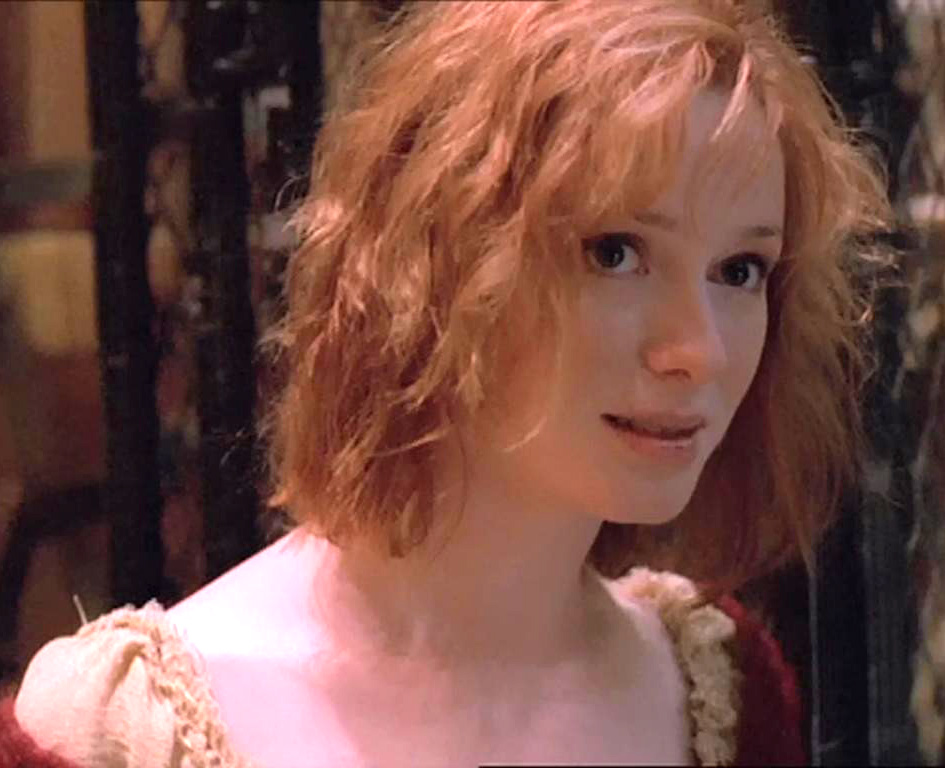
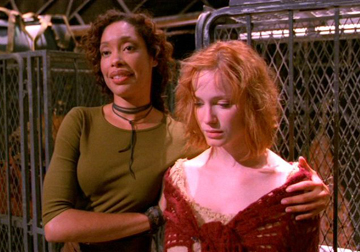
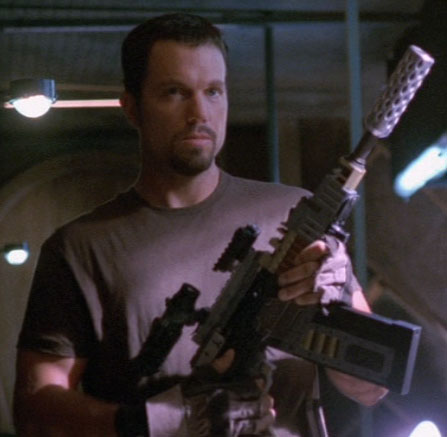
Mal, Jayne (the somewhat mutinous crew member played by Adam Baldwin), and Zoe (Gina Torres, his loyal former fellow soldier) help a town on a backwater planet rid itself of bandits and desperadoes, “Magnificent Seven” style. After a party honoring the crew, a groggy Mal wakes up on board the ship to find a beautiful young redhead, Saffron (Christina Hendricks, later of “Mad Men” fame), in the cargo hold.

In halting terms, Saffron explains that she and Mal are married and that she was a gift from her town for his help and she would be a good wife to him and doesn’t she please him? Mal is taken aback but is really disgruntled when his crew, led by ultra-loyal Zoe, begins mercilessly teasing him about his young bride.

Saffron sets about taking care of Mal, cooking for him, offering to wash his feet and sliding her curvy body between his sheets to warm his bed for him.

Mal has been warned by Book (Ron Glass), the ship’s resident preacher, of the dangers of taking advantage of such an innocent. “There’s a special hell for child molesters and people who talk in the theater,” Book warns him. “A special hell.”

Of course, Saffron isn’t what she seems. She’s part of a plot by some spacecraft scavengers to capture the Serenity for the value of its parts. Saffron seduces Mal, tries to seduce Zoe’s faithful but flustered husband Wash (Alan Tudyk, priceless) and even, in a desperate moment as her plan begins to unravel, sets her sights on Inara (Morena Baccarin), the high-class “companion” traveling with the crew. The moments near the end when Inara tries to distance herself from her reaction to both Saffron and helpless, unconscious Mal are hilarious.

Likewise, disreputable horndog Jayne’s lust for Saffron and his offering of Vera, his prize gun, to Mal in exchange for his young bride.

The episode played up not only the unlikely bond between the Serenity shipmates but also the excellent cast of “Firefly.”

And who didn’t come away from seeing “Our Mrs. Reynolds” and think, “Wow, Christina Hendricks is beautiful and a wonderful actress?” It was no surprise she found fame as Joan on “Mad Men.”

“Our Mrs. Reynolds” is a high-water mark even for a consistently terrific show like “Firefly.”


You say you want ‘Revolution?’

Ever since “Lost” was a hit, network and cable TV has been trying to find the next addictive serial drama. “Flash Forward,” “Alcatraz” and others came and went.

It’s easy to see why. While “Lost” had its problems – weak episodes where the show seemed to tread water early on, promising more than it could deliver in terms of its mythology and the final episode, which still ticks me off a little bit – it’s easy to see why its success has been hard to duplicate.

“Lost” had a fairly miraculous mix of premise, writing and cast – really, can you think of a show that cast even bit players so well? – and moments that lived on in the minds of viewers well past the finale of the show: Last night, a friend of mine saw a photo of my son with something written on his palm and quipped, “Not Penny’s boat!”

“The Walking Dead,” returning in October for a third season, is one of the few genre shows that has captured the imagination of viewers in quite the same way as “Lost.”

So now, from NBC, executive producer J.J. Abrams and “Iron Man” director Jon Favreau comes “Revolution,” which debuts Monday night.

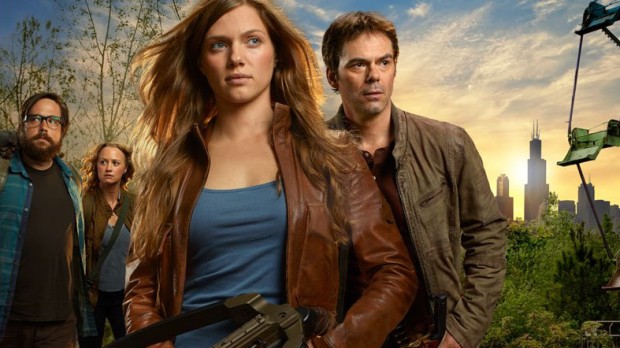
“Revolution’s” pilot, which is available online through Hulu, opens with a frantic conversation between two brothers. One tells the other, cryptically, “It’s about to go out and it’s never coming back.” A moment later, the power goes out. Cars quit running, cell phones stop working, planes fall from the sky. The premise of the show is that electrical energy is sapped from the entire planet.

Fifteen years later, society has long since fallen apart. Governments and corporations have crumbled and dictators, supported by brutal militias, have taken over. Cities have fallen into decay. Neighborhood cul-de-sacs are small farming towns.

Apple is no longer the world’s most valuable company. (Actually, there’s a reference to Google, and I’m looking forward to the episode that shows us how the present-day lords of Silicon Valley have turned into future Roman emperors.)

The mysterious General Monroe has dispatched his enforcer, Captain Neville (the wonderful Giancarlo Esposito), to find Ben and Miles, brothers who apparently hold some kind of key to what made energy disappear and what might bring it back.

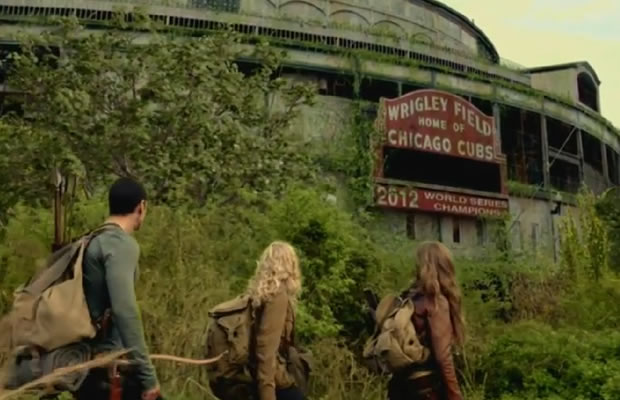
Ben gets killed by the militia and his daughter, Charlie (Tracy Spiridakos), and son, Danny (Graham Rogers) are separated. Charlie sets out for Chicago to find her Uncle Miles (Billy Burke from the “Twilight” movies, bringing some much-needed sarcasm to the show).

Not surprisingly, the ending of the pilot indicates the show’s over-arching mythology will revolve around what caused the blackout and what might reverse it.

I liked a lot of “Revolution” and will probably tune in to the series. But a few things came to mind while watching the pilot:

Many of the buildings in big cities are overgrown with wild vegetation just 15 years after the end of energy. This seems unlikely to me, frankly, unless kudzu pushed pretty far north fairly quickly. I think the makers of “Revolution” were watching “Life After People” on fast forward.

Likewise, “Revolution” shows a rusted-out car body used as a planter. Again, after only 15 years, a car would be totally stripped of paint and covered in rust? There’s a car outside my house that’s been out in the elements, year-round, for longer than that and it doesn’t look like a rust-colored flower pot.

I know Chicago was a big part of the plot and showing an overgrown Wrigley Field was too good to pass up. But it seems ironic that a ballpark that didn’t have electric lights for most of its existence is shown as an example of what happens after the power goes out.

The young leads are cute as can be, in a “Hunger Games” kind of way, but I’ll be waiting for every scene with the wry Burke and the wily Esposito.


Unsung actors: Roger C. Carmel

He’s one of those “Hey, I remember that guy!” actors. Roger C. Carmel was featured in many, many TV series in the 1960s and 1970s. According to his IMDB page, he guest-starred in everything from “The Dick Van Dyke Show” to “The Munsters” to “The Man from U.N.C.L.E.” and “Hogan’s Heroes” to “Batman” playing “guest villain” Colonel Gumm.

But Carmel, who died at age 54 in 1986, was best known for two roles. He co-starred in “The Mothers-In-Law,” a 1960s sitcom starring Kaye Ballard and Eve Arden and produced by Desi Arnaz, and he guest-starred in two episodes of the original “Star Trek” series.

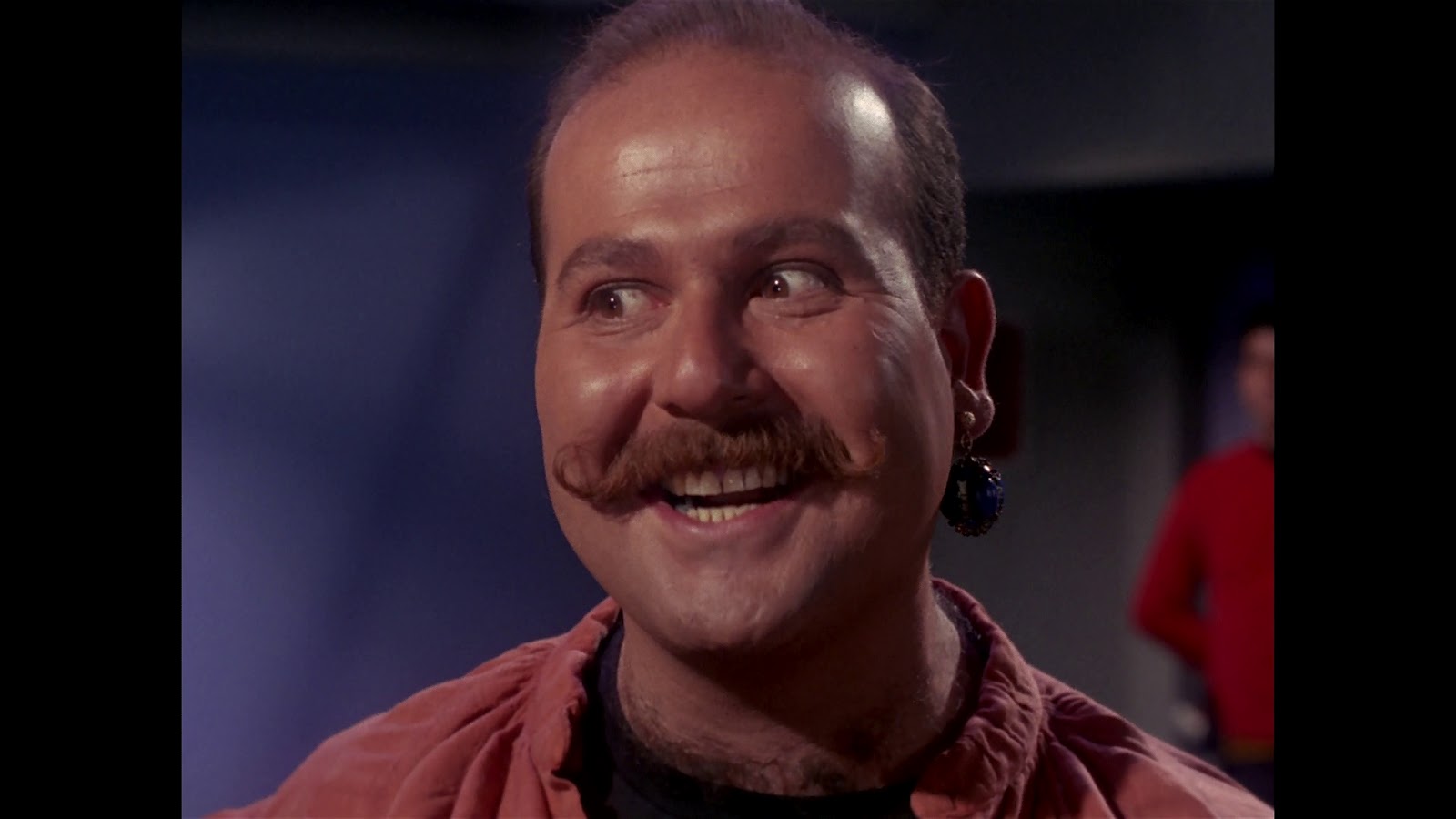
Carmel played Harcourt Fenton Mudd, a galactic hustler and con man who shows up in the first season episode “Mudd’s Women,” a fairly straight story about transporting what are, in effect, mail-order brides. But he is probably best remembered for reprising the Mudd role in “I, Mudd,” a second-season episode that finds the Enterprise crew arriving on a remote planet (is there any other kind?) where Mudd is the ruler (and prisoner) of a race of androids.

In the second episode, the tone is much lighter and Carmel plays Mudd with his trademark flamboyance. The effect was appropriate for a returning and not-very-threatening villain.

Carmel provided the voice for Mudd in an episode of the 1970s animated “Star Trek” series. There’s an online reference to plans for him to play the role once more in “Star Trek: The Next Generation,” in the first-season episode “The Neutral Zone,” in which three people from the past are revived from suspended animation. It’s a neat Hollywood tale and maybe it’s even accurate.

Carmel, who provided voices for a number of animated TV series in his final years, passed away before he had a third chance to meet the Enterprise crew.