Sure, I just tweeted it to make a joke, but this particular shot – and all of the 1961 thriller “The Innocents,” really – is a subtle but ultimately terrifying nightmare.
If you don’t know “The Innocents,” I won’t spoil it for you.
One of the greatest feats a novel, movie or TV series can achieve is world building. To create a world different from our own, in ways large and small, is an accomplishment.
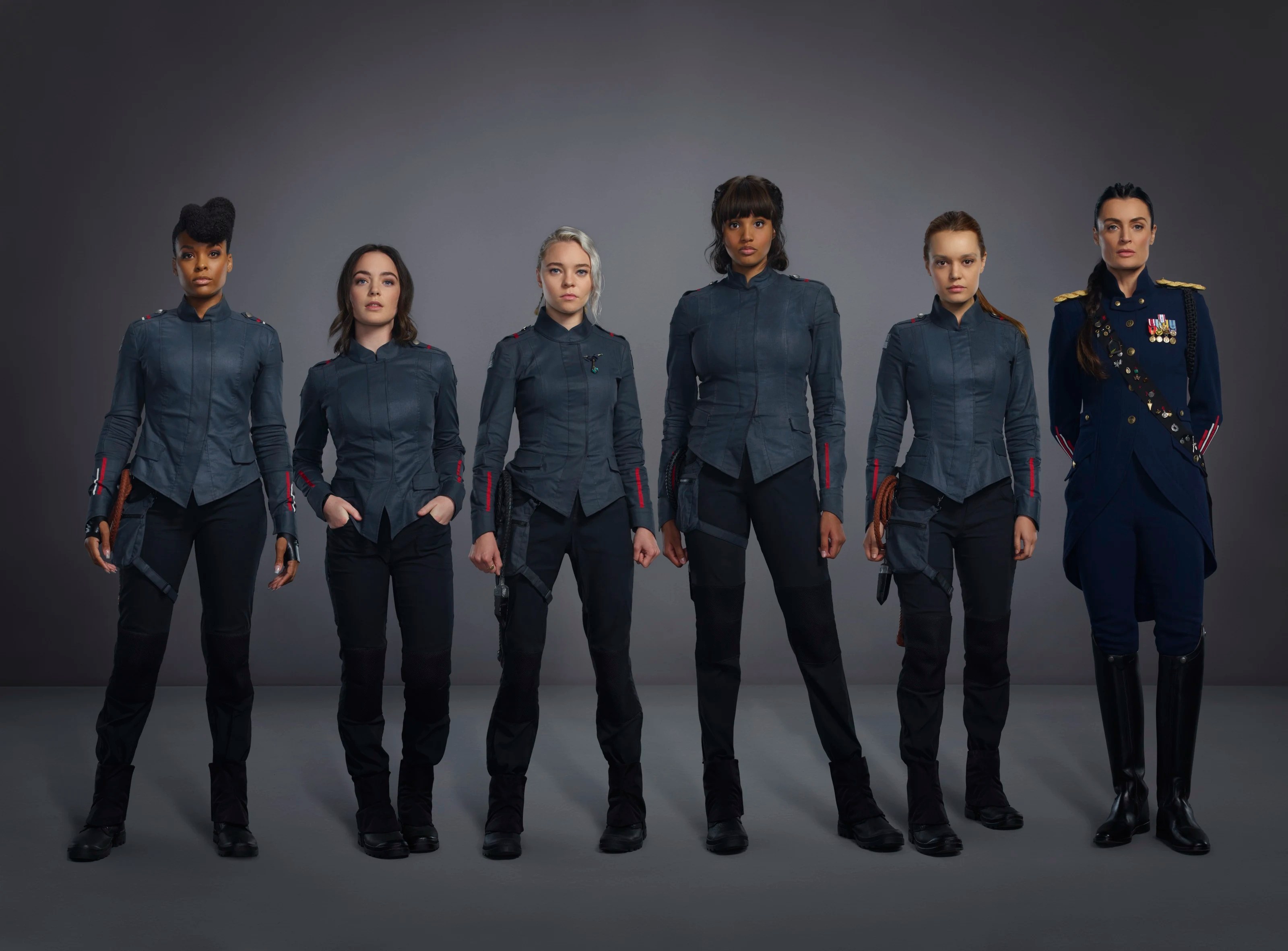
There’s no TV series on the air now that is better at world-building than “Motherland: Fort Salem,” in its third and final season on the cable channel Freeform and streaming on Hulu.
“Motherland” is set in a present-day United States greatly shaped by a decision from the 1620s: Instead of killing women who had been judged as witches, the leaders of Salem, Mass., reached an accord with the women. They embraced the magic that the women possessed. Over the centuries that followed, women not only filled the leadership roles in the growing country – and in other countries – but became the core of the military machine that defended the country. Women run the armed forces and a woman (played by the always-wonderful Sheryl Lee Ralph) is president.
A dominant figure in the world of witches is General Sarah Alder (Lynn Renee), a hero of the American revolution, who over the couple of centuries since has used her magical abilities – and the magic of the witches in the series manifests through cooly weird “songs” they vocalize – to not only run the Army but the titular West Point-style military academy, training young witches who join the military (sometimes at the displeasure of their families, but a call to arms is a call to arms).
The world of “Motherland” is fantastic but utterly believable within the show, and early on focused on the battle against the Spree, a domestic terrorist organization made up of witches. But more recently, the war has focused on the Camarilla, an ancient, man-led group of murderers and would-be dominators. The witches and the Spree form an uneasy alliance against the Camarilla.
I was surprised to learn that a man, Eliot Lawrence, created and guides “Motherland,” although maybe I shouldn’t be. But as a male viewer I feel like the series very ably represents the points of view of the women, who form alliances and have relationships with men in some cases but don’t need men to rescue them. My favorite moment yet might be from early on, when Alder and the women are meeting and the children on the Army base are being shepherded out to play by a couple of male caregivers. No heavy-handed point is made and viewers might not even notice, but it was there and it was smart.
But all of the world building won’t make us tune in if we don’t care about the characters and their stories.
Alder is a complicated figure, not entirely trusted by the women under her in the military, and in the current, third season, her story is off in a wild new direction, post-rebirth thanks to the “mother” entity that lives within Earth.
The series focuses on four young women: Raelle Caller (Taylor Hickson), Tally Craven (Jessica Sutton), Abigail Bellweather (Ashley Nicole Williams) and Scylla (Amalia Holm). The first three are Fort Salem cadets from diverse backgrounds; Bellweather is from a line of women who call to mind the Kennedys, for example. Scylla is a former Spree operative who falls in love with Raelle.
So there’s some soap opera-ish elements of “Motherland” and I’m totally cool with that. The characters in the expansive cast – especially Anacostia Quartermaine (Demetria McKinney), a savvy Army officer at Fort Salem – are varied and wonderful.
The show has a great, diverse cast (diverse in the sense of race but also gender identity and age) that has made some of its characters fan favorites.
I hated to hear that “Motherland: Fort Salem” would come to an end this season and I’m hoping that the very nature of the title means that it could morph and return as “Motherland: SOMETHING ELSEWHERE BESIDES FORT SALEM” because a lot of the action has moved away from the campus anyway.
But I’d urge you to check out the series by going back and watching it from the very first episode, on Hulu. It’s a must for us who love societies and worlds that are much like our own but viewed through a different prism.
I am not a binge watcher. I’ve got a lot of writing to do and I spend too much time on social media, so I’ve got several series to watch, from recent ones like “Ms. Marvel” and “Obi-Wan Kenobi” to “Dark Winds,” which at least I’ve started, but fallen behind on.
I’m serious when I note that I still haven’t finished the final season of “The Sopranos.” I haven’t watched more than an episode of “Breaking Bad.” I still want to watch “The Shield” someday.
Maybe when I retire. Ha.
Anyway, I am riveted by “The Old Man,” along with “Dark Winds” the latest prestige series from FX that is streaming on Hulu.
The premise, if you don’t know, is that Jeff Bridges plays a long-renegade CIA agent who, after decades of living in anonymity, finds himself pursued by his old agency, led by John Lithgow as a seriously conflicted Agency boss.
The series, based on the thriller by Thomas Perry, is realistic – you feel the bumps and bruises every time Bridges has to fight his way out of a predicament – yet fantastical in its insights into a world hidden from us.
I’m about three episodes in, from five that have aired so far and seven produced, I believe, and it’s so good. Bridges is great but Lithgow is wonderful as the CIA spookmaster. He should get an Emmy for this.
Amy Brenneman is so good as a woman who gets drawn into the mess, and it was cool to see Joel Grey pop up in a small part.
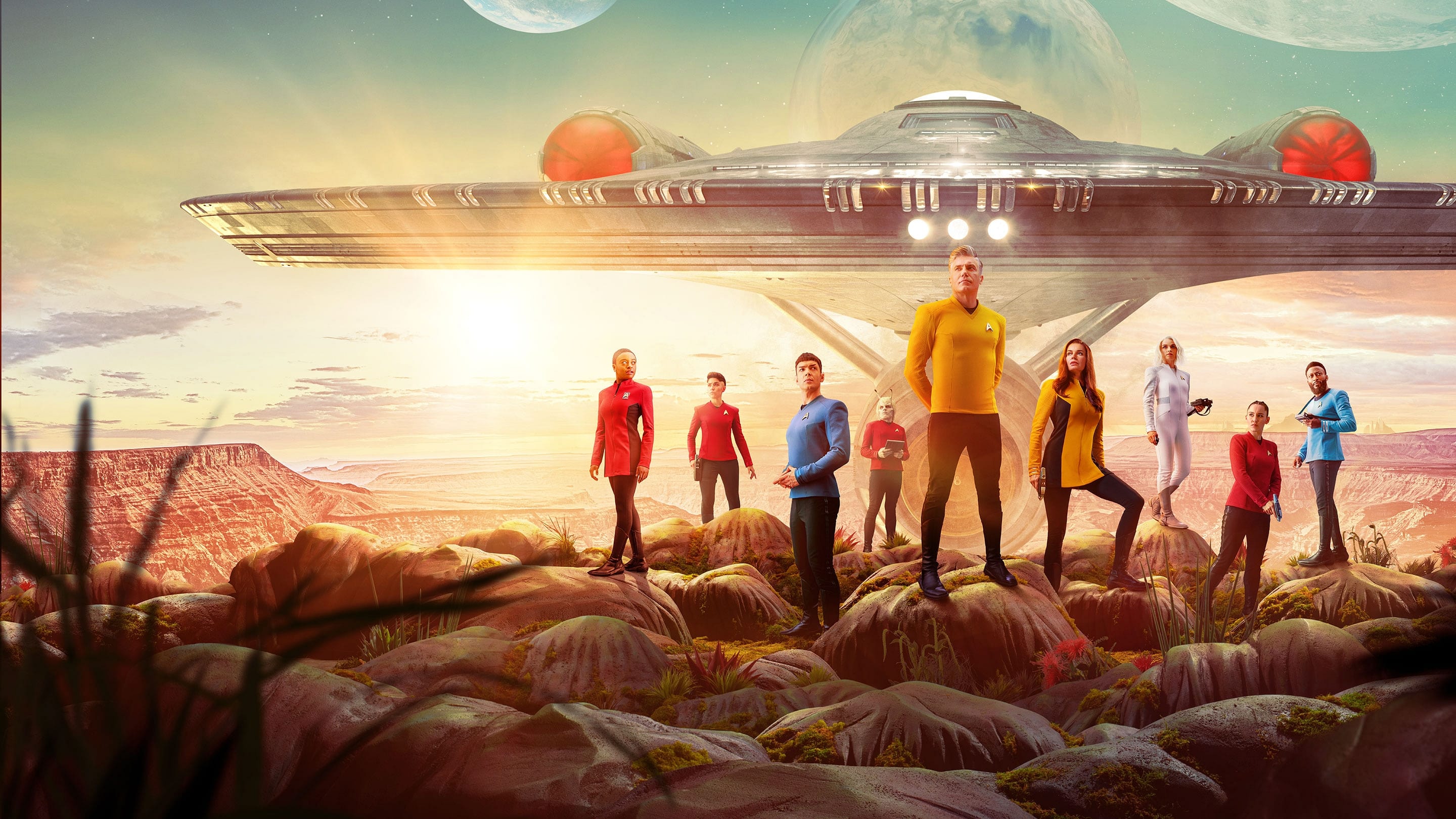
I’ll be back, at some point, with a little bit more to say about “Star Trek Strange New Worlds,” which just finished up its first season and is now near the top of all of my favorite Trek series.
I guess I don’t binge but managed to squeeze all those “Strange New Worlds” episodes in, huh?
The timeline of the latest “Star Trek” series begins on January 6, 2021.
Let me explain.
“Star Trek” has always, always been socially conscious, subtly – and sometimes not subtly – weaving commentary about race, gender, war and violence, any topic you care to name, into its stories.
So it shouldn’t be a surprise that “Star Trek: Strange New Worlds,” the latest Trek series from the Paramount+ streaming service, following “Star Trek Discovery” and “Picard,” is blessed with opportunities to tell its stories with not only action and good humor but the grace of equality, justice and fairness.
But in the first episode of “Strange New Worlds,” Enterprise Captain Chris Pike, in helping two warring factions on a planet find some common ground, talks about his birth country, the United States, and its fraught history.
As these factions prepare for civil war, Pike talks about his country’s own two civil wars. (Sandwiched in this history lesson here is the Eugenics Wars, which as longtime fans know gave rise to one-time Earth strongman Khan Noonien-Singh, played by Ricardo Montalban in the original TV series and the 1982 feature “The Wrath of Khan.”) Pike recounts the Eugenics Wars, World War III and the second civil war, and the video that is shown includes footage from January 6. Including the impromptu noose that loomed on the grounds of the Capitol during the insurrectionists’ assault on democracy.
Maybe that inclusion seems crass to you, not unlike citing September 11 in fiction. But I thought it made a couple of points, including another dose of the optimism that is characteristic of all “Star Trek” series and movies.
The point of the original series – and “Strange New Worlds” is a prequel to the 1960s show, showing us Spock and Chapel and Kyle and Uhura and Pike in their younger-by-a-few-years days – was that mankind struggled for years, decades, even the better part of a century, to survive and become unified and worthy of joining a galactic race.
There’s a reason that Pike is watching “The Day the Earth Stood Still,” the 1951 classic – directed by Robert Wise, who in addition to directing “West Side Story” also directed the 1979 “Star Trek: The Motion Picture” – when the first episode opens. There’s a pretty clear through-line between the benevolent but “fuck around and find out” alien of the movie and the Federation of Planets, a benevolent group that totally steers clear of interfering with less-developed planets until, well, some interference is necessary. I don’t know if someone kept track of every time “Star Trek” has violated its own Prime Directive but it happens again in “Strange New Worlds.”
And it’s wonderful.
Of course Pike, like the “Star Trek” captains before him, would never threaten an uncooperative society with planetary annihilation. That’s what the evil Federation does, the “Darkest Timeline” parodied so well on “Community.”
But no “Star Trek” series would be “Star Trek” without the hearts-on-their-sleeves Federation crews getting involved to prevent death and chaos. The one time in the new series that I thought Pike might be forced to stand by and let something horrible happen, the decision was taken out of his hands by a well-timed clobbering over the head, or something more high tech. A cheat? Yeah, probably. But even though, by the 23rd century, the Federation was supposedly cool and collected, we would not want our heroes to just let something horrible happen if they could help it. They’re our surrogates and our idols and our ideals, after all.
I’ll probably have more to say about “Strange New Worlds” at some point, as well as some of the modern-day “Trek” series that I have not yet watched. I jumped into these new Paramount+ series with “Strange New Worlds” because reviews of it have made it sound like my ideal “Trek” series.
And it really is.
I’ll only mention in passing, for now, how amazing this diverse and talented cast is. I find myself wanting to spend more time with every Enterprise and Starfleet character we have met so far, and a number of the recurring and episodic characters. It’s truly inspired writing and casting and performances when there are just so many characters who are so good and seem so true that you’re never like, “Oh, an episode featuring BLANK.” This won’t be one of the strongest episodes.” That has not once been the case here.
“Star Trek: Strange New Worlds” is boldly going and I love every minute of it.
Nobody asked me, but things I’ve watched recently or am currently watching:
“Dr. Strange in the Multiverse of Madness.” Just started streaming on Disney+. It’s really good and Marvel buffs will love it.
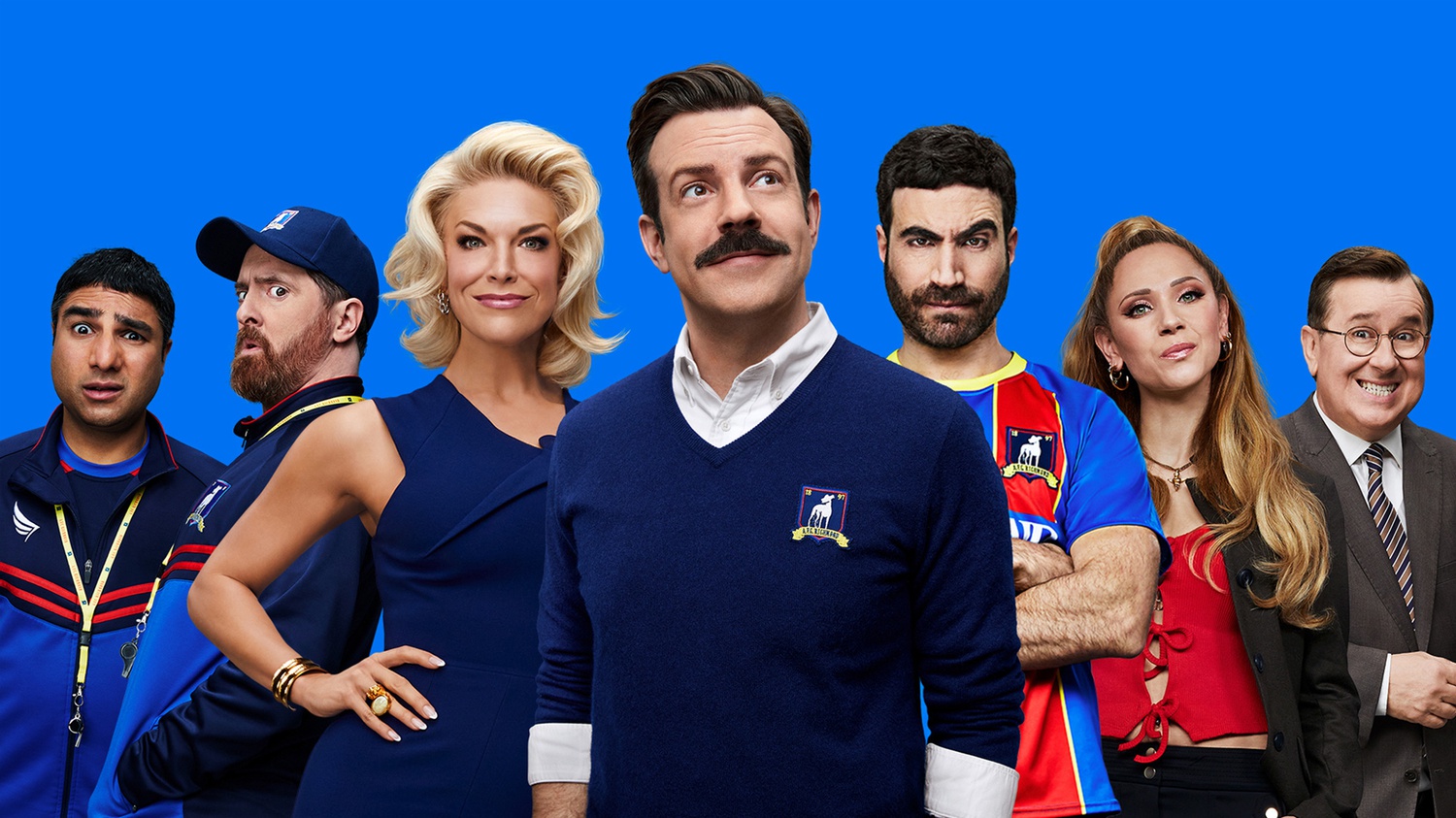
“Ted Lasso.” We’re finally watching it because I got a few months of Apple TV with my new iPhone. Man, it’s rare for a TV series to leave me feeling good and better about mankind in general, but this funny, funny series does. Just started season two.
“Dark Winds” on AMC. Based on some of the Tony Hillerman Navajo detectives books. It’s great so far.
“The Old Man” on AMC. Jeff Bridges and John Lithgow are great as former CIA operatives. Bridges went MIA decades before and now Lithgow’s team has to hunt him down. It’s great.
“Foundation” on Apple TV. Might be the most beautiful science fiction series ever. They’ve taken Isaac Asimov’s series about old white men talking about science and made it move and made it diverse.
“Severance” on Apple TV. We’ve only watched a couple of episodes of this bizarre sci-fi workplace comedy/drama but I like it so far.
I haven’t yet tried the new “Star Wars” series, like “Obi-Wan Kenobi,” on Disney+ but they sound great. Same for “Ms. Marvel.” Same for “Bosch Legacy” and “The Lincoln Lawyer” on Amazon Prime. I need to see them STAT.
I really, really want to see the new “Star Trek” series on Paramount+ but we don’t currently subscribe. It’s possible Amazon Prime, Disney+, Netflix and (for a while) Apple TV might be about as much streaming as we can watch/afford. And that’s not even counting stuff I’m recording and enjoying on TCM.
Maybe I need to take a week off and spend all that time playing catch-up.
A few years ago I was sick and didn’t sleep well at night. Most nights, I didn’t sleep much at all, falling asleep very late and waking up late.
For at least part of that time, we had access to streaming services at home and I watched all of “Deadwood” and discovered, not to my surprise, that everyone was right about the show. That’s the period when I checked out “Bosch,” at least a couple of seasons in, and loved the show. “American Pickers” was another series that I found a lot of comfort in.
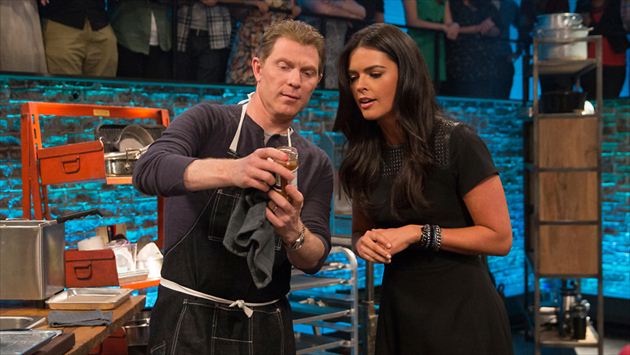
But it’s possible there’s no series that was so comforting to me as “Beat Bobby Flay,” the Food Network show featuring the titular chef who earlier, apparently, had a grilling show on the channel.
I don’t watch much in the way of cooking shows and I don’t really watch any cooking competition shows. My better half has introduced me to “The Great British Bakeoff” and it’s fun. But I’m not doing a lot of watching right now, outside of Marvel series on Disney+ and a few random network shows like “Big Sky.”
But I still stop on “Beat Bobby Flay” whenever I come across it while channel surfing and I’ll stop and watch. It reminds me of some of my few comforts when I was sick.
If you’re not familiar with it, the show pits Flay, the restaurant owner and TV host, against chefs from very cool-sounding restaurants. Two chefs take on each other in the first round, and then the winner takes on Flay for the second. A couple of well-known people, ranging from Tina Fey to Wolfgang Puck to Brooke Shields, moderate and cheer on Flay’s competition.
And the latter is the part I like about “Beat Bobby Flay.” While the gimmick of the show is that “everybody is out to beat” him, the show is not afraid to make Flay a figure of scorn on the show that bears his name.
Flay might be the nicest guy in the world, and he’s certainly a good sport, but his show builds him up as a world-class proficient chef and, really, an arrogant ass.
Maybe it’s just because we’re seeing the Flay the show wants us to see, but Flay comes across as someone you root against. We know we’re being manipulated, but by god this is an incredible premise and the show makes the most of it.
I can’t imagine any other show so willing to make every effort to turn everyone against its host. Imagine if CNN put Anderson Cooper in a dunk tank every few nights. Or if the point of Jimmy Fallon was to make people want to throw ripe tomatoes at the host. (Wait, that’s exactly what that show does – or would, I’m sure, if I watched it.)
Again, Flay is pretty good natured to have a whole show built around people rooting for him to get beat. I mean, these people take delight – even if it is corny, put-on delight – in the possibility.
And Flay is not afraid to come off as the bad guy, ending each episode he wins – and that’s most of them – with a smug pronouncement.
Of course, it’s easy to debase yourself when you’re handsomely paid and there’s approximately 10,000 episodes of a show with your name in the title.
But “Beat Bobby Flay” is comfort food, and ingenious at that.
I know, I know: Two blog posts in the same decade. Crazy.
I won’t blog as often as I used to, I promise, but I’ll try to get here when I’ve got downtime from what’s become my day job, post-retirement: Freelance writing.
I was invited to speak to a university class of grad assistants about creativity last year and I started by telling them the least creative thing I could think of, and that was that if they did any freelance writing, they should keep good track of their invoices.
So as a freelance writer who takes my own advice, I did some invoice work last night and this morning and then made some calls for some upcoming articles and did a little research on what might turn out to be a pretty interesting piece.
And around the edges of all that, I took in a little entertainment.
Despite the cable and streaming services we subscribe to, I’m not watching a ton of movies and TV unless it’s something I’ll write about. But strangely, I find that I spend a lot of time – for entertainment and for research for articles – on TCM.
A few years ago, I didn’t watch a ton of TCM, most often classic horror movies in the run-up to Halloween, but it’s become comfort food to me now.
As I’ve gotten older.
And as TCM began airing more movies from the 1960s and 1970s and 1980s, sometimes in “normal” TCM and sometimes in overnight TCM, especially the “TCM Underground” time slot late Friday Nights and early Saturday morning. In those hours, they’re likely to play bizarre ’70s sci-fi and horror and blaxploitation films and lately that’s been my comfort food. That and noir movies of the type I’ve written about lately.
When I was working in news – and I still am, only freelance now – I always felt I had to be current. I couldn’t dip too much into nostalgia for fear of seeming out of touch. At least that was my worry.
Now, around the edges of my writing, I’m finding time to watch some old movies and TV shows. Be assured that some of them are for articles I’m writing.
But some of this old pop culture is for pure enjoyment.
I figured out that I shouldn’t be worried about looking backward too much. I wrote a novel set in 1948 and I’m working on a novel set in October 1984, so I’m enjoying looking backward for those purposes.
It’s that looking backward sometimes helps us look ahead, and nostalgia helps us appreciate the time we came from and the time we’re in. Maybe the time we’re headed, too.
I’ll probably touch on some of this nostalgic stuff as this blog continues (assuming it will). You’ll probably also find it in some of the pop culture pieces I write.
Nostalgia isn’t bad for you and it’s not just for old people.
And you know what? It’s okay when it hits that sweet spot, and when it does act as comfort food.
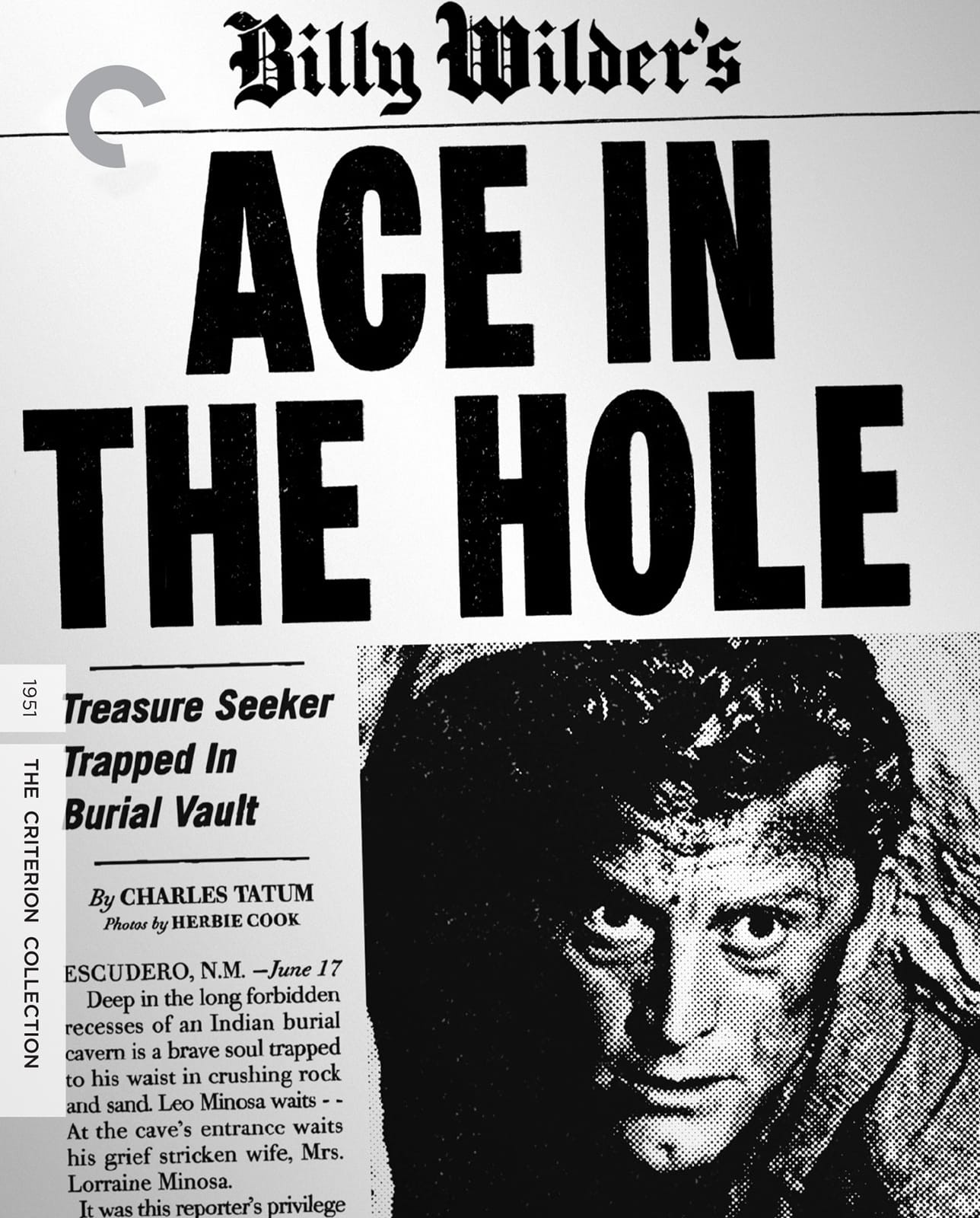
(Above: Billy Wilder’s 1951 classic “Ace in the Hole.” The movie is set way back in the day but it has a lot to say about today. TCM has it, either on demand or through the HBO Max streaming service. Criterion has it too.)
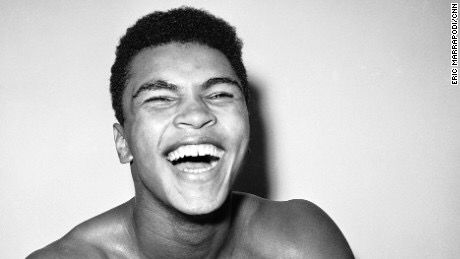
I grew up watching the televised fights of Muhammad Ali. I appreciated his boxing skills and his showmanship.
Only later did I learn more about and appreciate even more the man.
I always knew of the controversy that took his title away, but only as I became more mature did I appreciate how courageous his anti-war stance was at the time he took it.
And only as I followed his post-boxing career could I appreciate how he reached out to the world, seeking to bridge chasms and bring people together.
Ali was only a man and had flaws. But he rose above them like few of us do.
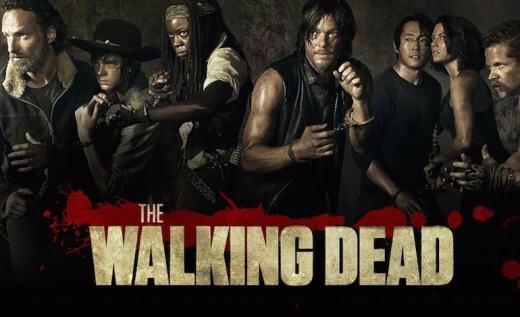
As we wait for “The Walking Dead” to return tonight, I’m wondering …
Are you still watching?
Obviously a lot of people are. It’s a top-rated show. It has a huge social media impact. There’s still a ton of buzz.
But I’m torn about continuing to watch.
As the cast and producers tease how brutal the second half of this season will be, I’m wondering if the show is going anywhere or if it’s more of the same: torture and misery for characters we’ve grown to like.
There’s some suspense, certainly, and I love characters like Carol and Darryl.