Tag Archives: book publishing

Which book genre is stuggling now? Nonfiction books.

Oscar-winning screenwriter William Goldman probably wishes he’d monetized his famous phrase, “Nobody knows anything,” because while Goldman (“Butch Cassidy and the Sundance Kid,” “All the President’s Men,” “The Princess Bride”) painted a wide swath with that statement, he’s surely as correct as correct can be. If we’ve learned nothing from watching movies, books, politics and, well, every damn thing, in the past decade, it’s that uncertainty is the norm.

I’m enjoying paying more attention to the publishing industry lately as I’m doing some editing for Constellate Publishing and working on three – count ’em – three novels. I get a lot of insights from the several-times-daily email from Publishers Marketplace and I’m enjoying learning which books and genres are going to be populating bookstore shelves in a year’s time.

But the more information I have, the more I need. I’ve got a William Goldman-level lack of knowing anything about the book industry and I’m trying to remedy it.

So today I was fascinated with a new piece by editor Sean Delone – link at the end of this post – in which he looks at some trends in publishing, specifically about non-fiction book publishing.

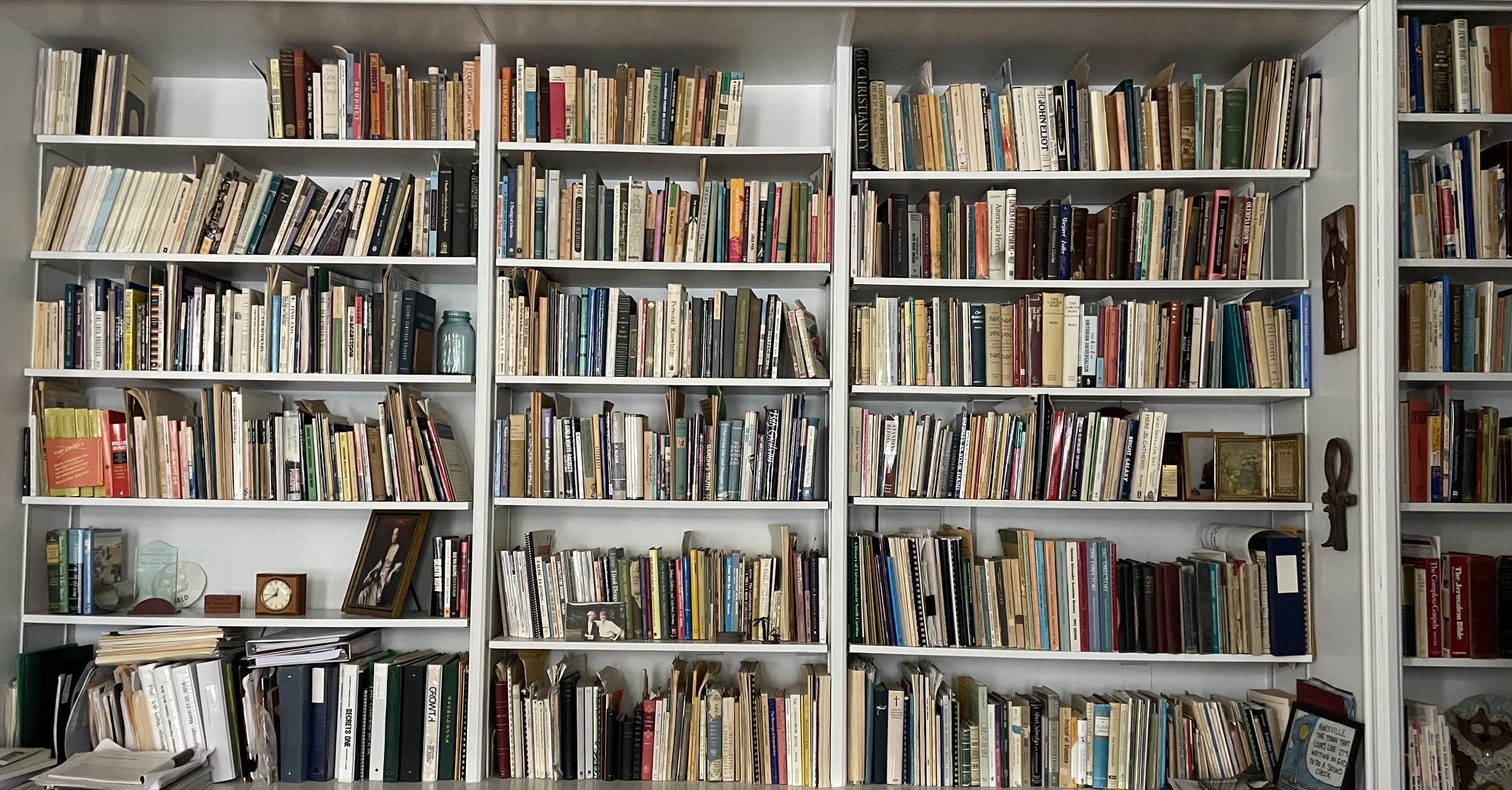
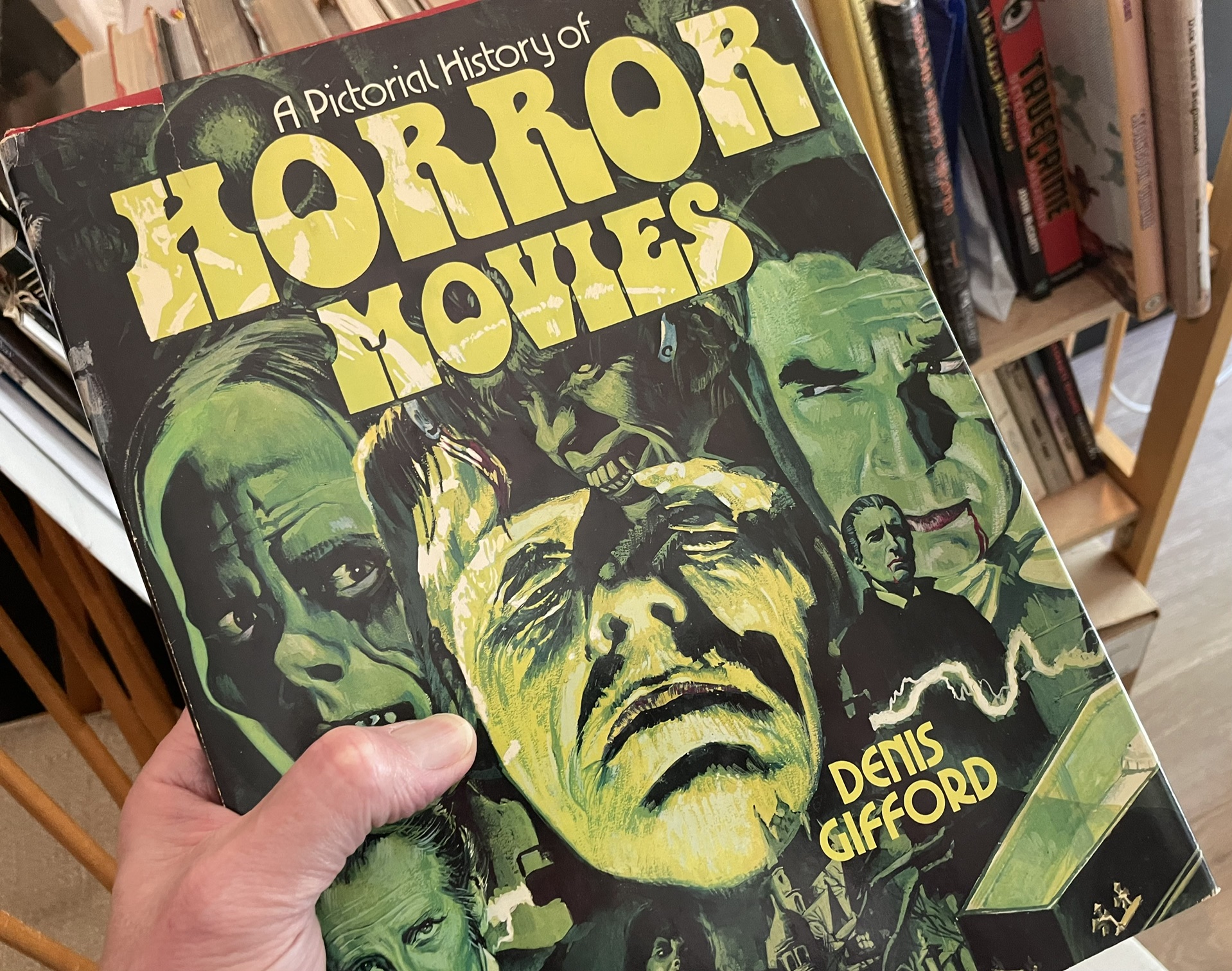
Before I get into details, here’s a picture I just took of one of my several shelves of non-fiction books, very specifically in this case books about movies, TV and entertainment, but we’ve accumulated hundreds of non-fiction books in the past few decades. Pictured above, my copy of Denis Gifford’s “A Pictorial History of Horror Movies” was published in the early 1970s. My copy was published around 1974 and it’s not even the oldest non-fiction book in the house.
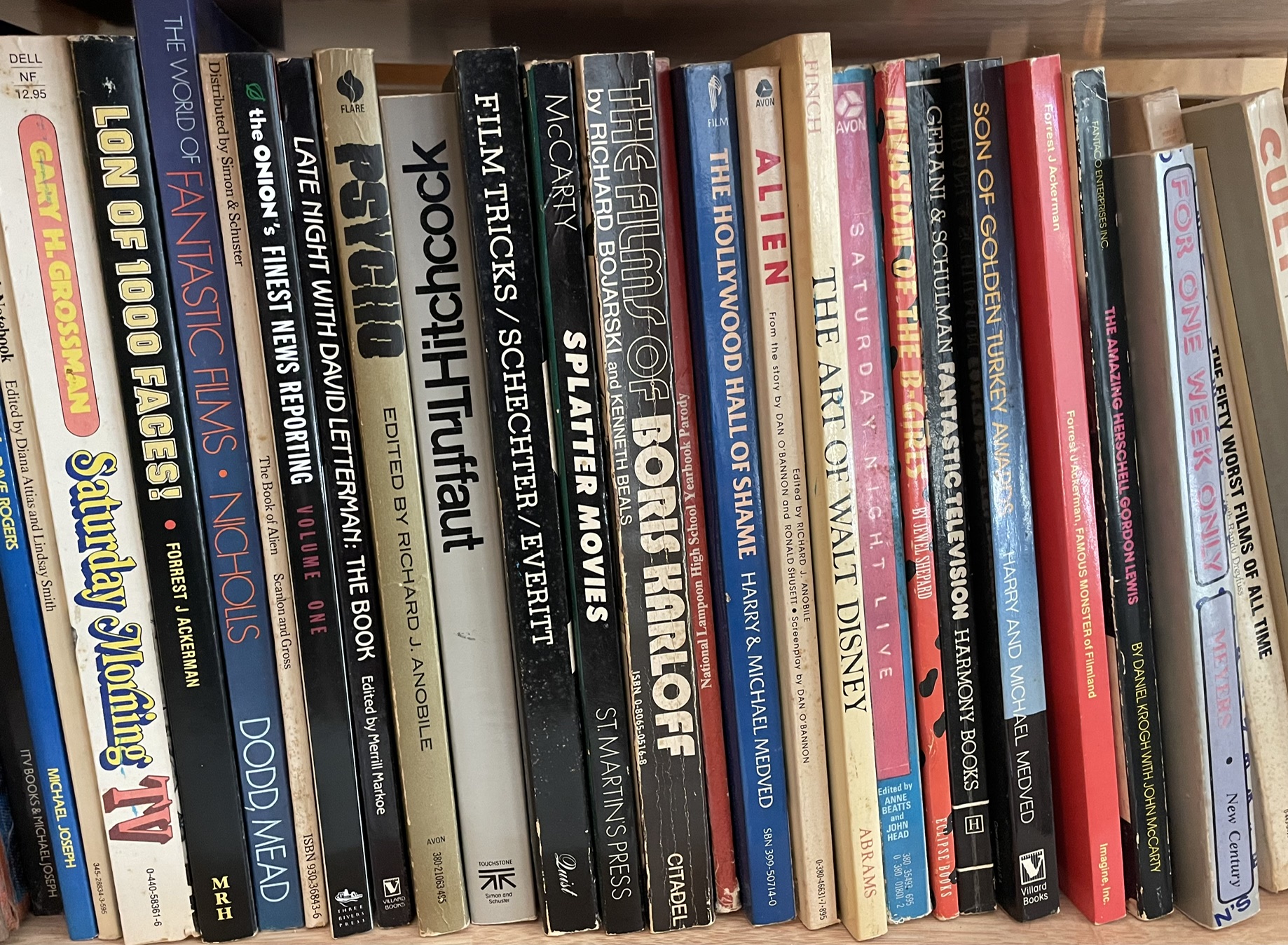
It’s accurate to say that I love non-fiction books, history or news or photography or films or Saturday morning cartoons or whatever, and while I don’t buy as many as I used to – I think my latest might be “TCM Underground,” the cult films book released right before TCM canceled the Saturday night/Sunday morning program – but while dozens of boxes of fiction going back to the 1960s are still stored in boxes here, our non-fiction books are mostly but not entirely displayed. Yeah, I love ’em.

And there’s no doubt that online sites have decimated the need for nonfiction magazines and books. Why buy an authoritative book when you can look something up on some possibly totally erroneous online site?

Anyway, Delone’s article, “The Nonfiction Book Market is Collapsing,” carried disheartening news.

The gist of it:

First, the entire industry boomed in Covid—writing is a hobby and reading for pleasure is, too—and has trudged along as it usually does, staying flat, growing a little over the years since 2020. But for the past decade the market for nonfiction has slowly collapsed. What has happened in the last ten years1 is that the overall industry has grown modestly, but fiction and nonfiction have basically flipped positions. In 2015, 6 of the top 25 bestselling hardcover books—this is a not-perfect but useful proxy for new books published—were fiction. In 2025, 18 of the top 25 hardcover books were fiction, meaning only 7 were nonfiction, almost an exact inversion of ten years ago.

Delone emphasizes he’s not writing an Atlantic-style “end of reading, end of books” essay. If you remember, that one alarmed at lot of writers, editors, publishers and readers a while back.

Delone notes that media – which used to be a few big newspaper book review sections and late-night talk shows, where even a Midwestern rube like me could see important authors interviewed by Johnny Carson – is much more decentralized than it used to be and there’s some emphasis placed on book influencers and book accounts on social media. (I follow a bunch of them, for enjoyment more than education, but information nonetheless.)

But he also notes a colossal fall-off in demand for the kind of information we formerly turned to non-fiction books for:

No amount of platform is going to change that interest across the board in nonfiction from celebrities down to science has been slowly disappearing. Even if nonfiction is stable and more predictable than fiction in the abstract, it’s by far worth taking the risk on an unknown novelist if the return is potentially 4x as much. Let’s bring the nonfiction collapse into current day context. Two weeks ago, the entire hardcover nonfiction bestseller list sold 42,000 copies, whereas just the top two bestselling fiction hardcovers the same week—The Calamity Club in its 15th week on-sale and Yesteryear in its 19th week on-sale—sold 52,000 copies. It’s not inconceivable that on the right week, one fiction hardcover with first week sales could outsell the entirety of the hardcover nonfiction bestseller list.

Welp, as the young people used to say.

Want another gulp moment?

The tide going out on nonfiction sales and reading is entirely reshaping the power balance in the industry. Not overnight, but slowly, the money is flowing to fiction and away from nonfiction. It is causing quite a scramble. Fiction is unpredictable, it requires taste, it does not favor the solid metrics or predictability which, if you are running a publishing company, are much more preferable (businesses tend to prefer predictable growth and low volatility or at least high growth alongside high volatility). Fiction is also an easier category for the big publishers to capture and corner the market on. For instance, a handful of talent agencies represent nearly all A-list actors, and therefore a significant supply of big nonfiction bestsellers. The capture in supply carries over to publishers—when is the last time a big celebrity has published a huge bestseller with an indie press?

Delone has a lot of interesting thoughts on the industry. You can find some very thought-provoking posts here:
Together, we can heal the Canada-US divide! Buy each other’s books!

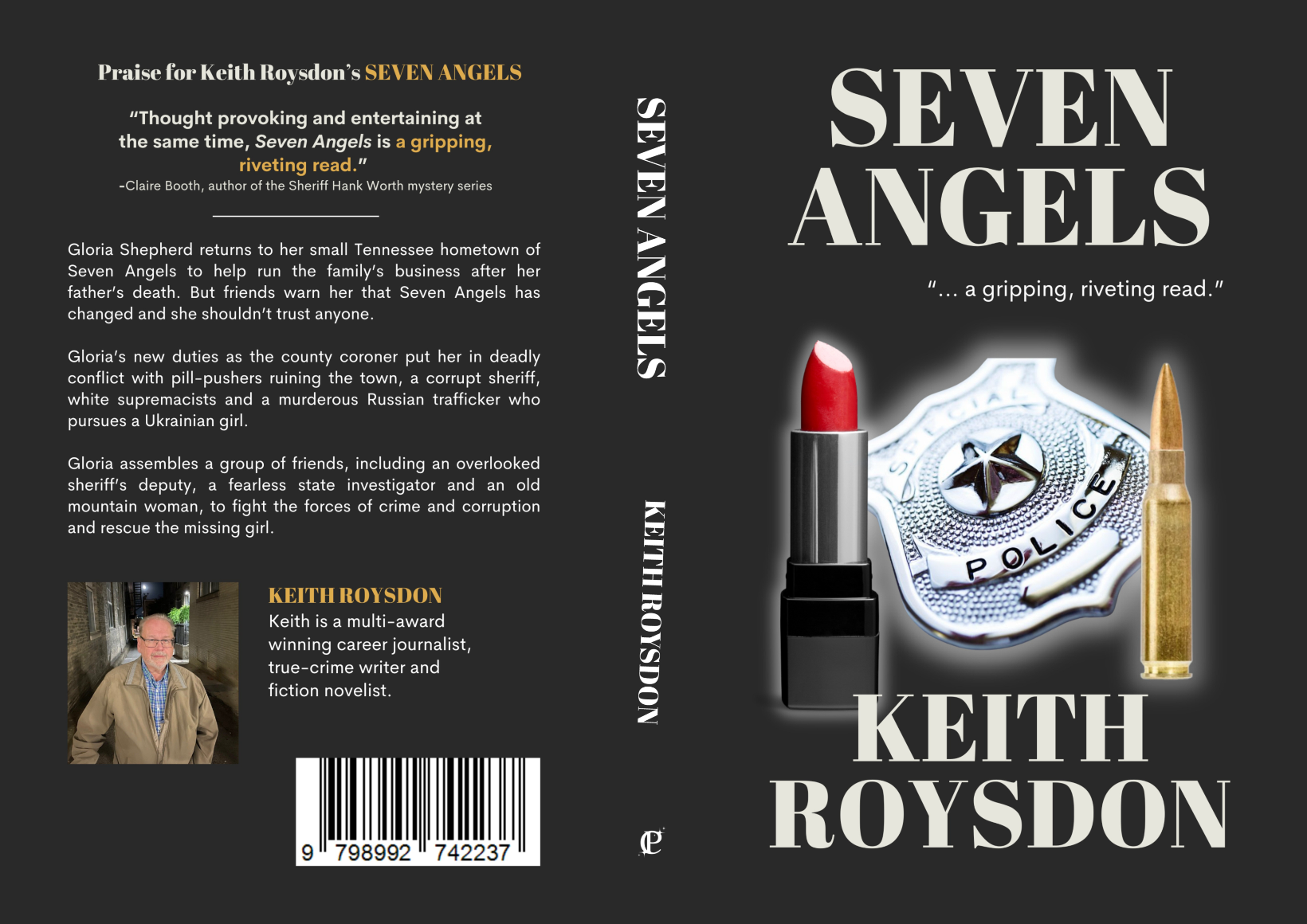
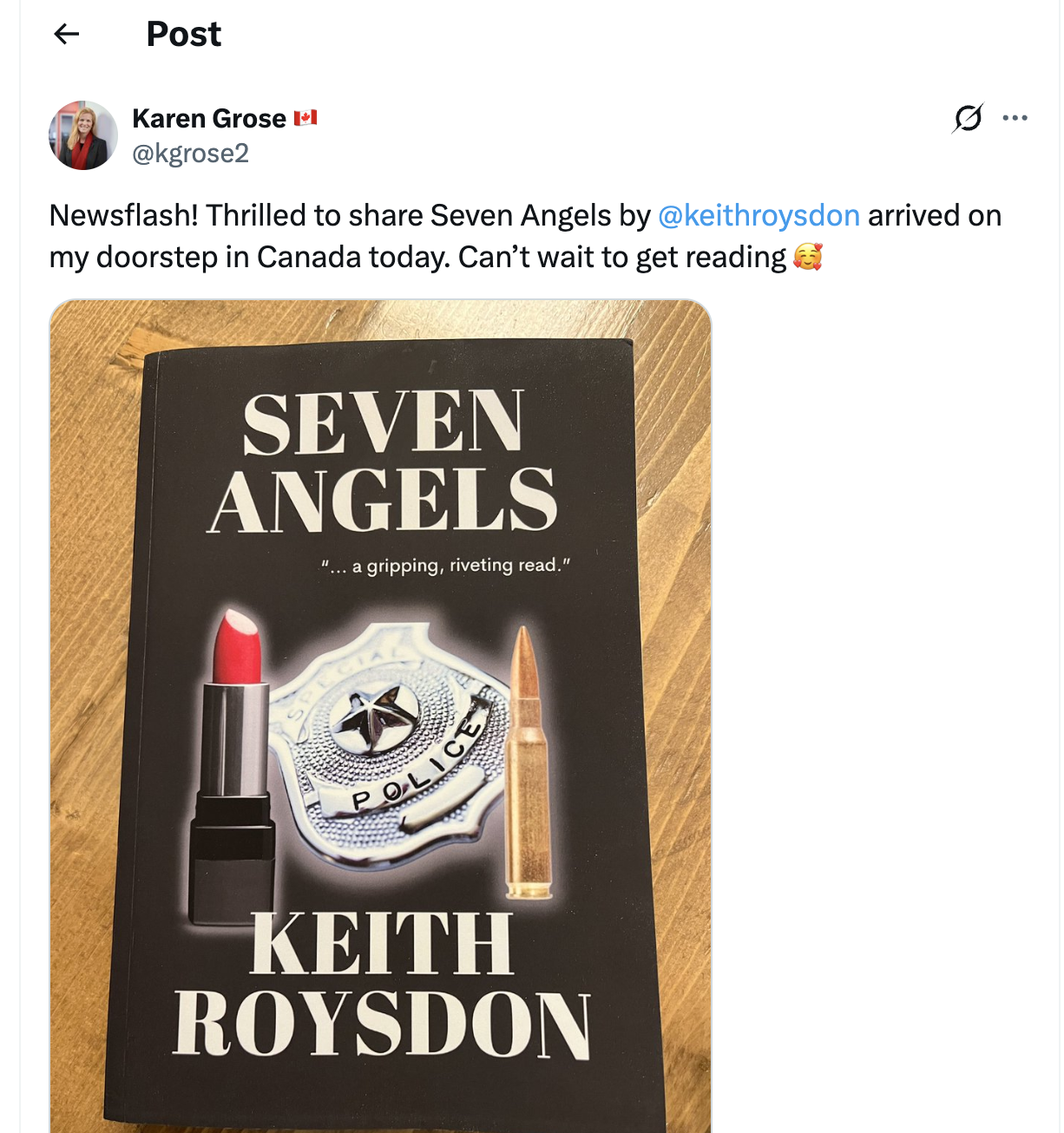
I always enjoy when friends and readers note on social media they’ve received a copy of one of my books, like the new one, SEVEN ANGELS, but I don’t usually post about it here.

Today, I am, because my friend Karen Grose, a rightfully proud Canadian author of several bestselling novels like ALL JUNE LEFT BEHIND and FLAT OUT LIES as well as WHAT WE KEEP SILENT, which is near the top of my Towering To Be Read Stack, posted on social media last night that she’d finallly received a copy of my crime novel SEVEN ANGELS.

Earlier this week, I posted here about my Canadian writer friend, who I’d been talking to for months about why Amazon Canada kept delaying delivery of my book that she’d ordered. I was stumped. Karen was stumped.

Maybe all it took was for me to post about it here, because Karen received the book something like the day after I posted about the delay. I’m certain the two are related, right?

Anyway, I told Karen that I hope she enjoys the book – now that she finally received it – and I’m looking forward to reading hers.

Karen’s site:

To that Texas politician: You can have my books when you pry them … well, you know the rest

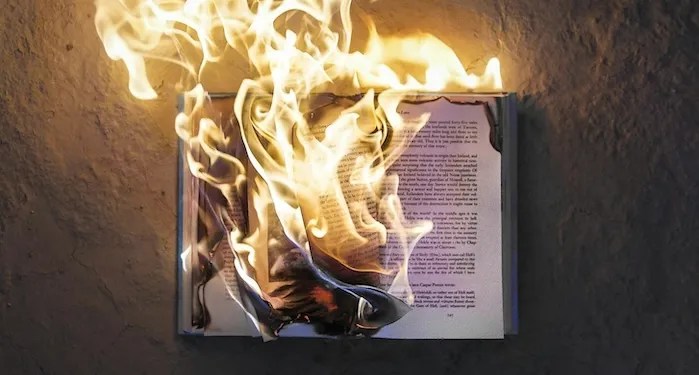
If I were to turn this space into a full reporting of every assault on books and literacy and writing and publishing and privacy and freedom of choice, I’d never get anything done. The folks at Book Riot – that’s their image above – are doing a good job of keeping track of every petty tyrant’s ambitions to tell you what you can and can’t read.

But I will note this: In a month of frustration and anger at the attack on books and our freedom – and you bet your ass those two are connected – by everything from greedy AI companies (who need to go broke and out of business sooner rather than later, please and thank you) and petty tinpot wannabe dictators over their own little fiefdoms, there’s little that has presented as so ignorant and intolerant as “We’re coming for the books,” uttered recently by repugnant Republican Texas Lt. Governor Dan Patrick.

Here’s how the Texas Tribune reported it on August 19:

Lt. Gov. Dan Patrick on Wednesday vowed to pass legislation punishing public schools that do not remove graphic books from their shelves by knocking them down a notch in the state’s annual school performance ratings, which the state uses to seize control of underperforming districts.

Flanked by easels displaying printed covers of books he found obscene, the lieutenant governor said school boards and administrators have not been following a 2025 law aimed at weeding out lewd books from the shelves in Texas’ more than 9,000 campuses attended by some 5.5 million schoolchildren.

“It’s the law and we expect you to follow the law. So we’re coming for the books,” Patrick said during a news conference at the Texas Capitol. “We ask that you do it on your own and remove these books.”

The law from last year, Senate Bill 13, granted school boards the authority to approve and remove books based on complaints they receive, such as those from parents and activist groups. Before, those powers largely belonged to school librarians. But Patrick said an overwhelming majority of school boards have not taken any action, as the law nears one year in effect.

Patrick is no stranger to controversy over his ignorant, intolerant and politically questionable acts. I’ll leave it to more comprehensive online sources to tell you about that.

Book Riot notes that this is “manufactured panic over the content of books in school libraries,” and there’s certainly some head-shaking in noting that Patrick was conducting a publicity stunt for his podcast. The far-right activist/busybody who stood on stage with him was his next podcast guest and she’s put together a list of 2,200 “dirty books” that Patrick is touting as the state’s unofficial list of books that will get school libraries in trouble.

All of you know this space has become increasingly noisy lately regarding authoritarian-wannabe and oligarchs’ attacks on books and writing and publishing and privacy and freedom, because please have no doubt that anytime a politician and would-be authoritarian wants to ban books in school libraries, what they really want to do is control every aspect of your life, from your reading material to who you marry and how and when you reproduce.

Huge sweeping generalization there? I’m not gonna go the easy route and compare these wannabe dictator moves to the best-known authoritarian movement of the 20th century, But that’s what’s at work here.

So to cop a phrase from the old gun lobby bumperstickers, “You can have my books when you pry them out of my cold, dead fingers.”

As Kelly Jensen so ably put it in that Book Riot piece:

If laws like SB 13 are about local control, then why does one partisan activist brag about having been engaged in censorship attempts at 163 schools where she doesn’t have a student or pay taxes toward? Why does one partisan activist get to decide which 2,200 books are illegal in Texas?

This isn’t about local control. It’s about Republican control of anything and everything, down to local availability of books.

Academic publishers have set some guidelines about AI use and, well, it’s a start

I like writing about the scourge of generative AI in the arts – obviously – and it seems like there’s new news almost every day.

I’ll make this quick:

In the new Publishers Lunch is a report on how some publishers have developed guidelines and methods of screening papers and books for AI use. (You’ll recall that the suspicion of AI has roiled the mainstream publishing industry lately, causing book deals to be canceled and, possibly, author careers to be stymied.)

Academic publishers cited in today’s Publishers Lunch have tried to come up with a constructive method of screening works submitted to them for use of AI. That’s because like a lot of publishing, academic publishers are being swamped with submissions of AI or AI-assisted slop.

The guidelines, which build on the use of AI-detection tools, set thresholds for when AI use is detected.

Some of the publishers have established four guidelines:

  • Assisted – AI helped you brainstorm or research but the writing is yours. Meaning, if you asked AI to find the relevant information for you and then you read those source materials and wrote from them, that’s a mechanical assist. It’s just AI working as a search engine.
  • Collaborated – AI drafted parts while you rewrote, verified, and made it your own. Meaning, if the facts, ideas, etc. came out of the AI model itself (e.g. you asked it explain something to you) and wrote from its answer instead of the source materials, that is AI collaboration and should be disclosed.
  • Generated & reviewed – AI produced the artifact, but you read every line, checked the facts, and stand behind it. To be clear, you hold responsibility for its integrity and accuracy.
  • Generated & unreviewed – AI made it and you didn’t really check. This is not acceptable AI use for PUP staff ever: internal, external or under any circumstance.

Publishers Lunch says that for at least one publisher, if a submitted work meets the last two guidelines, it’s rejected. That’s because that particular publisher correctly argues that the use of that much AI couldn’t be copyright-able because, of course, AI is based on the work of others.

I’m skeptical, but at least somebody is setting some guidelines somewhere.

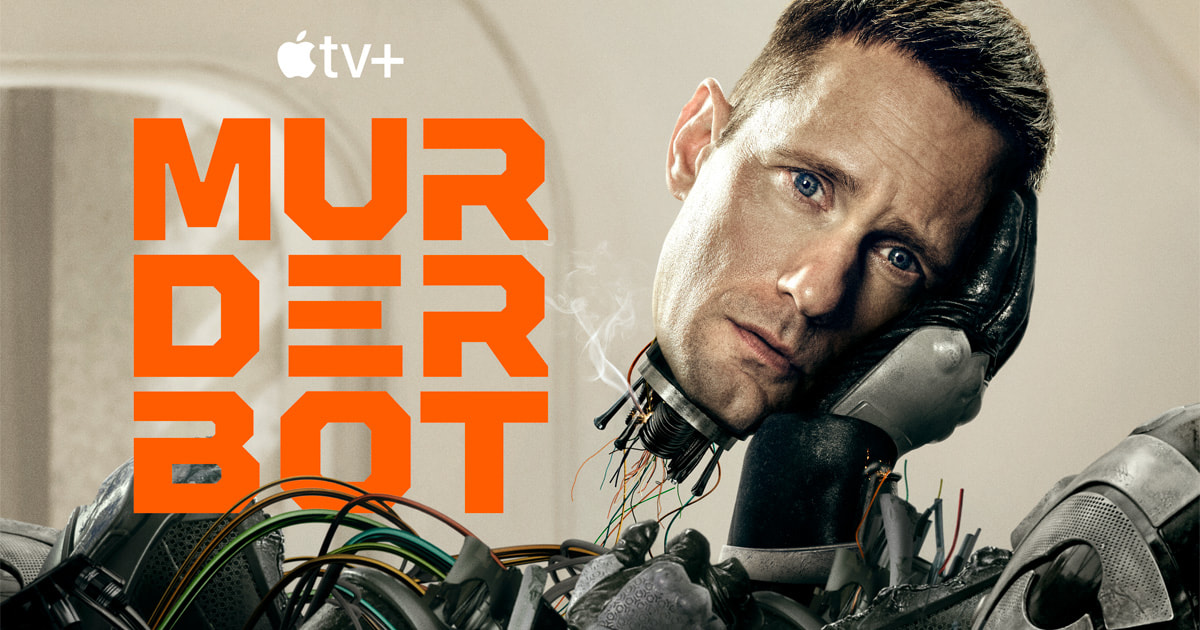
(Image at the top of this post is from the wonderful, funny AppleTV Plus series MURDERBOT, based on the series of novels by THE MURDERBOT DIARIES by Martha Wells.)

Trend chasing? So many hockey romance novels … most of them straight, though. How long will this trend continue?

Sooo many horny hockey players. And fans.

Barely a day goes by that I don’t open Publishers Lunch and see yet another book deal for a hockey romance.

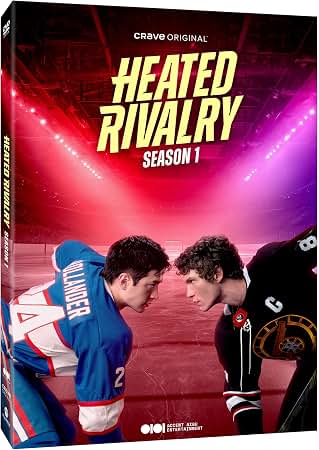
This is, of course, in the wake of the success of “Heated Rivalry,” the Canadian sports romance series about two hockey players who have an ongoing romantic and sexual relationship while playing on opposing teams. The series got a ton of views and a ton of publicity when it aired on streaming a few months ago.

It’s been interesting to see the book industry’s response to the popularity of the series, which is itself based on one book in a series called GAME CHANGERS written by Rachel Reid.

Oddly – or probably not oddly – of the half-a-dozen hockey romance books I’ve seen announced in the two or three months I’ve been subscribing to Publishers Lunch and Publishers Marketplace, most of the new novels are straight romance as opposed to gay romance like the popular streaming series.

The latest book to win a contract, the one I saw today, is, as Publishers Lunch reported:

Sunday Times-bestselling author Freya Marske’s THE OFFSEASON, the author’s first contemporary queer sports romance, pitched as for fans of HEATED RIVALRY and YURI ON ICE, in which a former figure skater who walked away from the sport returns home, where reconnecting with his infuriatingly gorgeous childhood rival, now the current national champion, reignites his passion for the ice—and more, to Ruoxi Chen at Putnam, in a two-book deal, for publication in summer 2027.

For all I know, each of the novels I’ve seen announced were in the works for years and are getting publishing contracts only now, after HEATED RIVALRY has made the subject popular for mass audiences.

It’s like another genre of books that I’m seeing announced regularly, the Western.

Who’ll get published first? Who will best meet the demands of readers? Will a half-dozen hockey romance books all be successful or will some corner the market? Or will each one inspire readers to seek out more?

After all, romantasy books – the trend, that is, not just the genre – kicked off somewhere and they’re still going strong.

No time to sleep! Constellate Publishing has a plan for months and months ahead

Screenshot

My friend Jill Blocker and I had our first Constellate Publishing meeting in a few weeks this morning. We’ve been busy with Indiana book talks and signings in support of our new novels HAPPILY AFTER EVER and SEVEN ANGELS, and then Jill went on to book events in her longtime town of Seattle as well as New York City and her home base in Zurich.

Today we had our usual Monday morning meeting and talked about what we’ve got on our Constellate agenda for the next few months.

I won’t get into specifics as to titles and authors, but we’ll be:

Editing a manuscript that’s in our 2027 release schedule.

Choosing at least one more MS to edit, publish and market from among submissions to us.

Planning e-book editions of our books and others.

And working toward publication of my novel GHOST SHOW, which I’ve written about here recently.

Jill’s next project is one that absolutely tickles me because it’s so perfect for her. I can’t wait until she tells you about it.

And I’ve got two novels to write, including what I hope will be a surprising spin on SEVEN ANGELS.

Sleep? Never heard of it.

With latest AI accusations, book publishing industry continues to melt down

The book publishing industry continues to work hard to self-destruct.

Everybody who writes about book publishing and particularly the harm wrought on books, writers and largely unsympathetic publishers is reeling today and writing about this, so while I’m not reeling I am writing – and slapping my forehead.

And yes, I’m being mean with that headline, because it’s not solely, or even primarily, the publishing industry trying to self-destruct. The big tech AI firms, which make generative AI possible, steal everything that isn’t nailed down, whether it’s writing or art or even something mundane that can be used to generate email.

And yes, I feel strongly about this because, last time I checked, two of my early true crime books were stolen to train AI book theft programs. “Wicked Muncie,” my co-written 2016 true crime book, and “Muncie Murder and Mayhem,” from 2018, turn up in a search of my name on the database of pirated books as provided by The Atlantic.

Without going into too much detail, in the course of this week, at least two “big” books have been withdrawn by their authors, stillborn by their publishers or otherwise fingered for having artificial intelligence elements. This can include AI writing or AI editing. A lot of people are giving the authors the benefit of the doubt and I can understand and appreciate that. Others are crediting the publishing companies for throwing a flag on the books because it’s not clear, despite their “we tested this book and our tests show it was written and/or edited with AI” claims.

Everyone from Publisher’s Marketplace to newsletters by Kathleen Schmidt (Publishing Confidential, an essential newsletter) and others have recounted the allegations and resulting controversy.

As Schmidt says, “Things can’t go on like this.”

Why do we care about this? Well, besides the fact that AI is an absolutely unnecessary tool in the creative arts, and besides the fact that data centers used to create AI products and portals are horribly destructive to the environment because they use rampant amounts of water and often run on heavy-polluting diesel generators, the fact is that the use of AI in creating art of any kind is destructive to creators, authors, artists, editors and, as much as we don’t sympathize with many of them, publishers.

As Schmidt notes, “a $2.5 million, two-book deal that was acquired by Minotaur (Macmillan) in a 14-way auction, (was) pulled by the author’s agents due to concerns about AI use in writing .”

This followed on the heels of another book and author questioned. As Schmidt reported, “Earlier this week, the author H.M. Smith was accused of using AI to write her new book, Daggermouth. In that case, Pangram returned the book as 60% AI. It is currently ranked at 73 on Amazon. Before that, Hachette canceled the book Shy Girl because Pangram returned it as 78% AI. What’s notable is that in each case, it was an individual from a media outlet feeding book files to Pangram without the authors’ permission. Welcome to the new world of “Gotcha!”

Schmidt is among those who note that programs that use AI to supposedly detect AI are highly probable to find AI where it doesn’t exist. There have been reports of long-ago-published books that, when tested by AI, come back with a false positive for the use of AI. Schmidt notes that she ran some of her newsletters through Pangram and the result was that they were 80 percent AI. And, of course, she’d written every word.

Here’s where I get to the self-destruction part. As Schmidt notes: Whether you admit it or not, there is A LOT of jealousy in the publishing world, so it wouldn’t surprise me if someone who disliked author X decided to use Pangram on their work and made the results public. This is not the publishing world I want to live in.

As Publishers Lunch/Publishers Marketplace notes, Sources tell PL that more deals are being cancelled behind the scenes following the discovery or suspicion of AI — one publisher noted that multiples imprint have had to cancel a book over this — including books that originate in the self-publishing sphere and are then picked up by Big Five publishers. This usually happens quietly and under the public radar, and is only brought to light by fans online.

There’s plenty of blame to go around here. There are apparently a ton of AI-written or AI-assisted books on Amazon. People who want to be authors but are unable to produce a book themselves or unable to hire qualified human editors to read their work – hell, just find writer friends who will edit your manuscripts and maybe pay them or repay them in kind – are causing readers to buy and read dreck and causing publishers to suspect everybody.

Before this latest AI controversy, I was going to write about another AI controversy: the abysmal practice, which became known in the wake of author Andrea Bartz’ $1.5-billion-winning class-action lawsuit against the AI company Anthropic, of Anthropic and other AI pirate companies, of buying copies of books and cutting off their spines in the process of feeding them into AI readers then shredding what’s left. (By the way, you should follow Andrea Bartz on social media. She’s become the face of authors fighting back against AI, but she’s also a great writer of thrillers.) This slice-and-dice process was allowed by a judge because once you’re bought a physical copy of a book, you can do as you want with it. Including destroying it.

So yes, Schmidt is correct. This mess can’t continue like this. It will, of course, as long as AI companies, publishing companies and some authors continue to make money. But in the meantime, the environment is suffering, authors and editors are suffering and writers whose work was stolen or must compete with AI slop are suffering.

My novel GHOST SHOW is coming

I wrote GHOST SHOW between writing SEVEN ANGELS and THAT OCTOBER.

I’ve always described it as “Rich Man, Poor Man,” but there’s no rich men. It’s VERY loosely based on the post-war years, when my mother’s family had moved to Muncie, Indiana (in the novel from Seven Angels, in real life, from Jamestown, Tennessee) to find work and a life.

The characters, several siblings from the Anderson family, work, play and try to survive and find their consciousness raised in the process.

The novel has gangsters, traveling Romani, infidelity, untimely death, lesbian college professors, a Bela Lugosi-type washed-up movie star, a traveling “ghost show,” a haunted theater with a real ghost named Milo and the President of the United States, Harry Truman, who visited Muncie that year as part of his election campaign.

But know this: Truman’s role is the most tearjerking of the entire book.

We’re going to publish it through Constellate Publishing in the coming months.

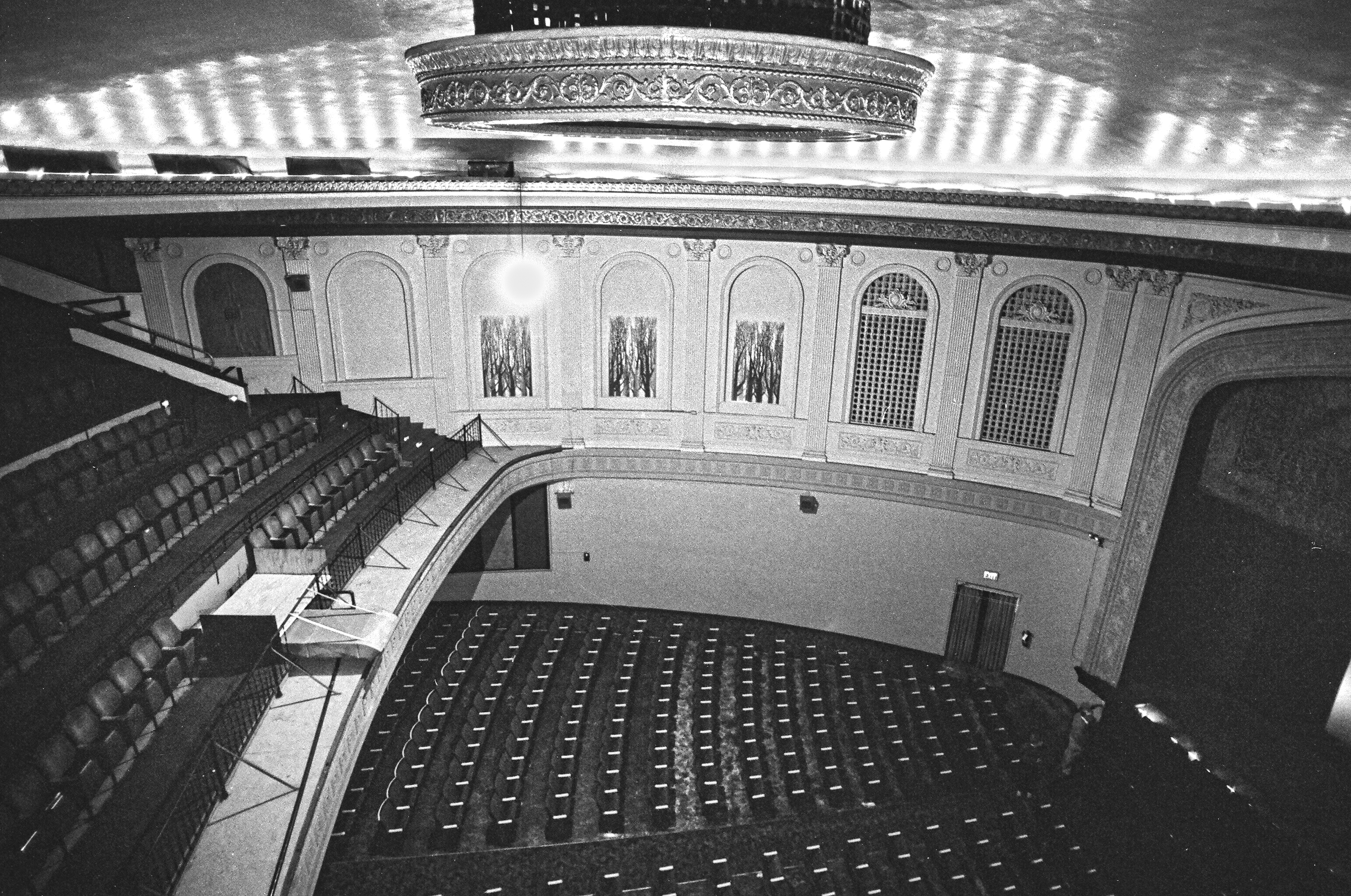
Photo above is by my friend John Disher and it’s a photo of the real Rivoli Theater, taken from just below its dome, in the theater’s final days before demolition in the 1980s.

GHOST SHOW is a big book. If you’re looking for a long and absorbing read, this will be it.

I’ll keep you updated here and on social media.

Hark! It’s a page of our book events this summer!

The authors of Constellate Creatives and Constellate Publishing are going to be out and about this summer, talking about our books, our publishing journey and our quest to find new authors to bring to the reading public.

Here are some of our events:

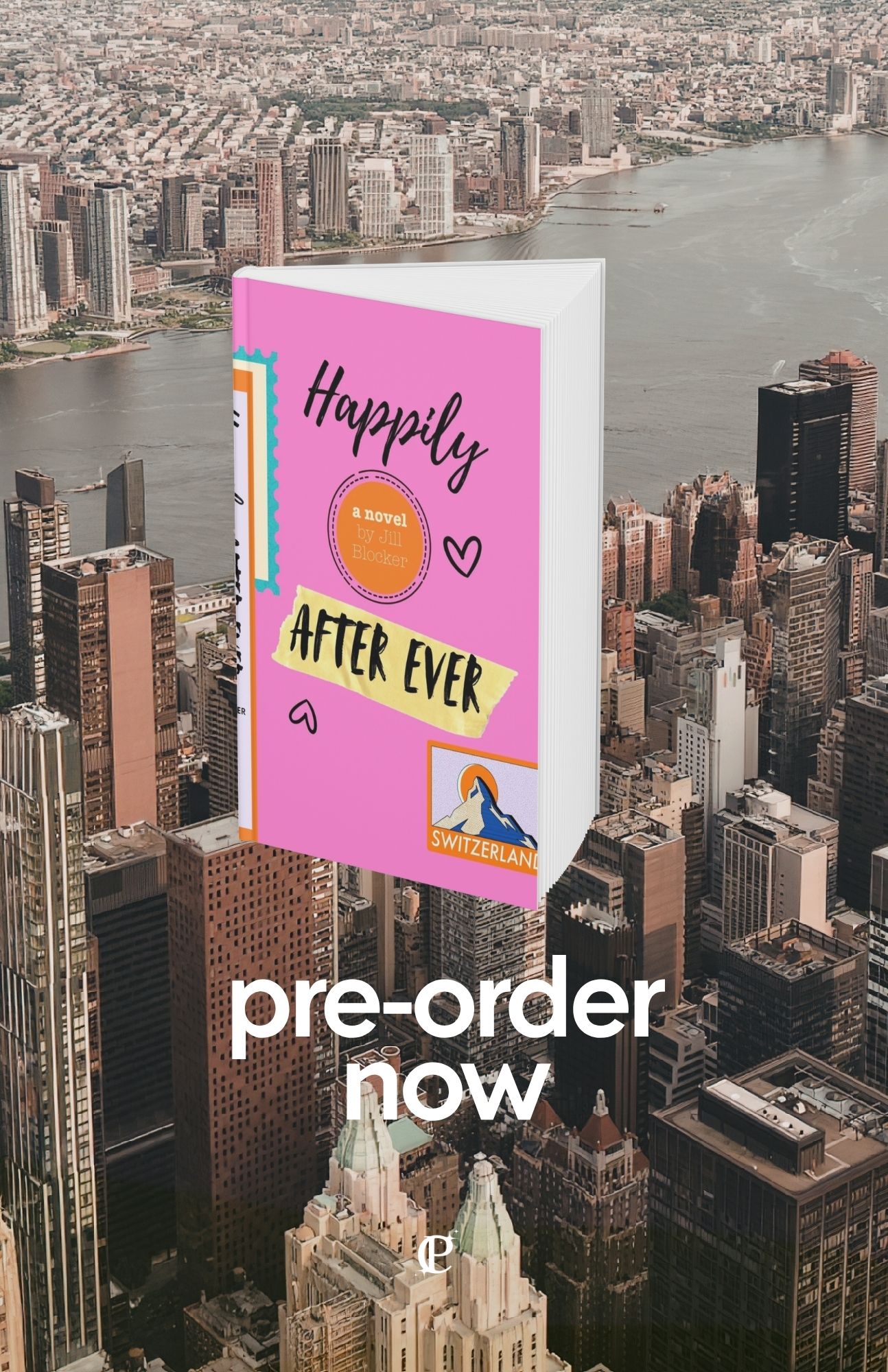
HAPPILY AFTER EVER, the latest from Constellate Publishing, is up for preorders

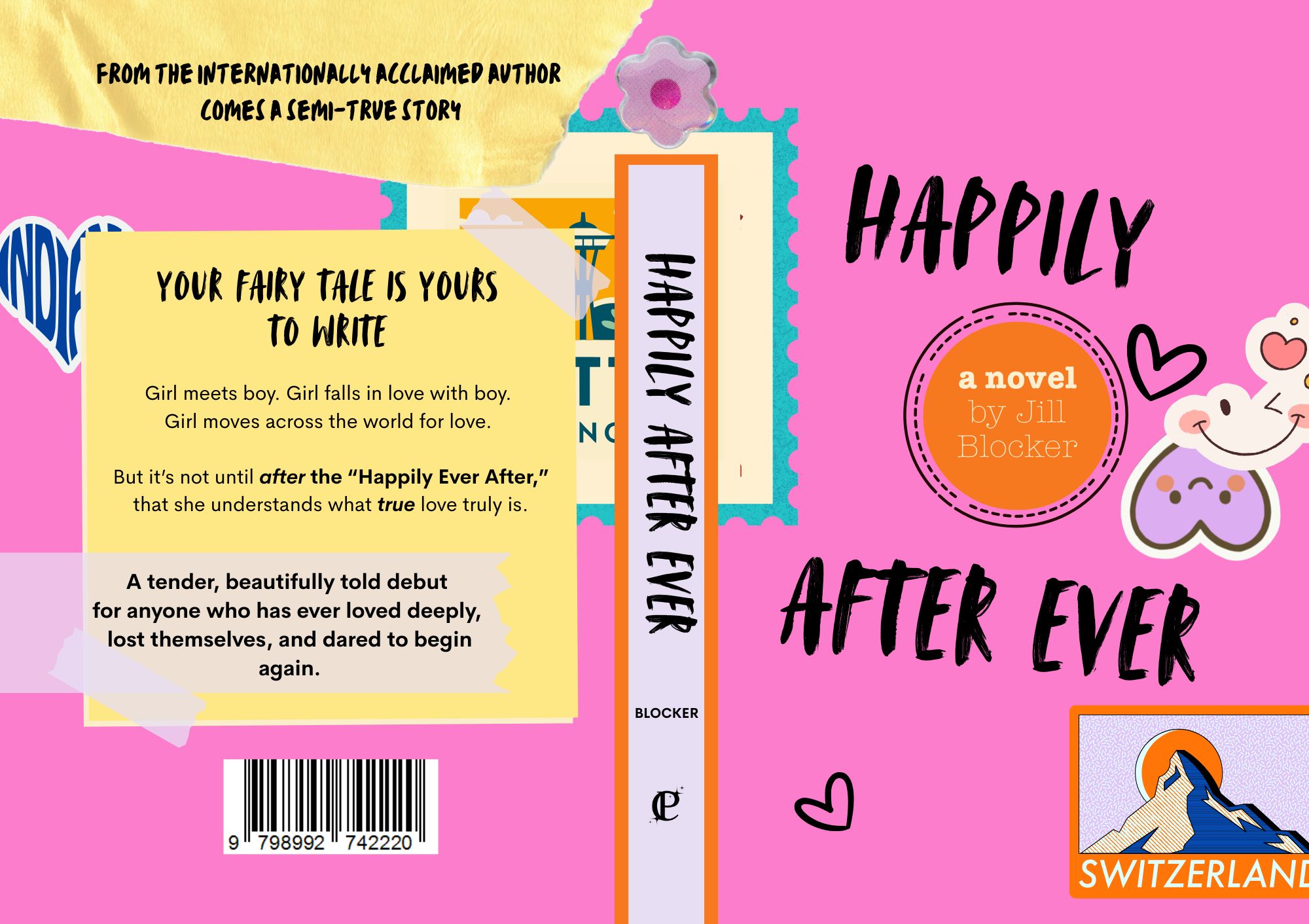
I’m so happy to be able to share this: You can now pre-order HAPPILY AFTER EVER, the newest novel from author Jill Blocker and Constellate Publishing!

“It started with a magic wand. Granted, it was the type of wand that was pink, sparkly and cost $1.99 at Target… but that was beside the point. The symbolism, I felt, was more important than its power.”
Girl meets boy. Girl falls in love with boy.

Girl moves across the world for love.

But it’s not until after the “Happily Ever After,” that she understands what true love is.

When Jill follows her heart from Seattle to Switzerland, she believes she’s stepping into the life she was always meant to have. Instead, she finds herself navigating the complicated realities of adulthood, identity, and the gap between the stories we’re told about love and the truth we discover for ourselves.

Against a backdrop of cobblestone streets, mountain peaks, and life-changing choices, Jill embarks on a deeply personal journey of self-discovery. As she confronts expectations, heartbreak, and the courage required to rewrite her own story, she learns that true love isn’t about finding someone else-it’s about finding yourself.

Perfect for readers who enjoyed the emotional self-discovery of Eat, Pray, Love, the honest millennial voice of Everything I Know About Love, and the reflective journey of Wild.
Heartfelt, insightful, and relatable, Happily After Ever is a coming-of-age story for anyone who has ever chased a dream, crossed an ocean for love, or wondered what comes next when the fairy tale ends.

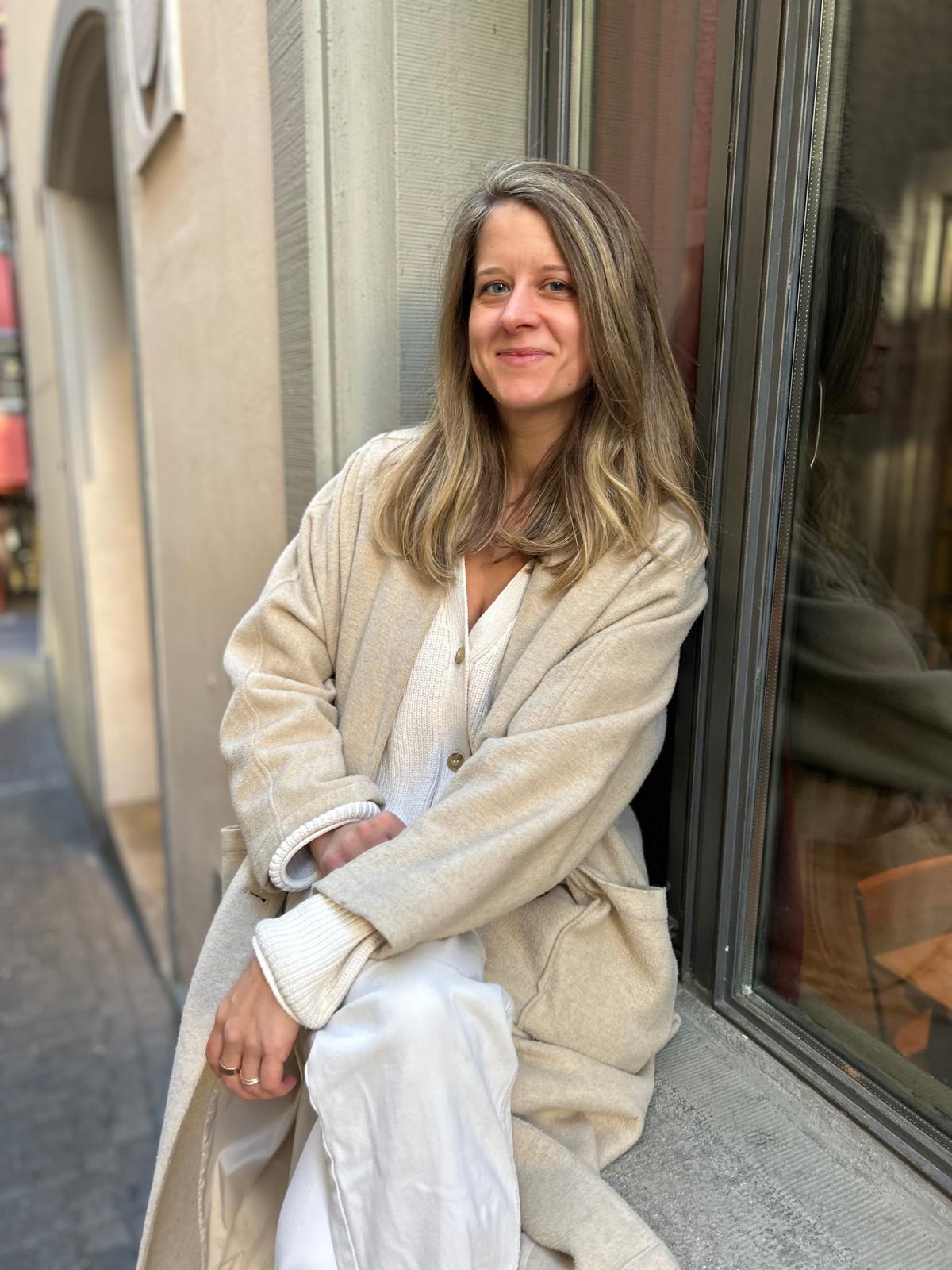
Link to preorder below this photo of my friend, author Jill Blocker:

Here’s how to preorder HAPPILY AFTER EVER: