iPhoneography: Christmas stuff!

You knew it was inevitable: After posting pictures of Halloween masks, costumes and decor available for sale, was there any doubt I would be posting pics of Christmas stuff?

Well, I had some doubts. There’s not as much outrageous Christmas stuff out there — no Navidad equivalents of Zombie Babies, for example — so there might not be enough material for weeks and weeks of posts.

So we’ll see where this takes us.

Since “A Charlie Brown Christmas” debuted in 1965, the “Peanuts” creations of Charles M. Schulz have been forever linked to the holiday for many of us. A few years ago, some canny company began marketing versions of the Charlie Brown pathetic Christmas tree.

So seeing Charlie and Snoopy and pals “decking them halls” on the lawn seems perfectly appropriate.

If you’d like to make a silent statement, there’s good ol’ Snoopy alone. And he’s fuzzy!

I’m at a loss to explain the Santa Pig. Maybe some clued-in reader will enlighten me.

In the spirit of the season, how about a couple of pretty Christmas pics? These are of the big tree in the middle of the Von Maur department store at Castleton Square Mall on the north side of Indianapolis.

Next time!


‘The Walking Dead” reveals ‘Secrets’

AMC’s post-zombie-apocalypse series “The Walking Dead” moved into full-on soap opera mode tonight, and that was fine by me.

As a matter of fact, except for a couple of zombie scenes, you could almost mistake tonight’s installment for an episode of “Knot’s Landing.” There was even a suburban cul de sac.

But seriously, folks: As we’ve noted already this second season, the drama in this show revolves around the people. What happens when Daryl’s brother Merle returns and finds out his little brother has become a good guy? What happens when Rick finds out Lori was shacked up with Shane in the first days of the zombie apocalypse? What happens when Shane pops his cork and starts killing people?

We found out the answer to one of those questions tonight and maybe it wasn’t surprising. If you’re struggling to deal with the continued existence of you and your ragtag band of survivors, you probably learn to shrug, move on and worry about a lot of small stuff later.

Not that there wasn’t plenty of personal drama going on. With a title like “Secrets,” you can bet that a few were spilled.

My favorite character, once again, was Glen, who continues not only to be a capable guy when you’re dealing with the walking dead but also a go-to comic character. As a young guy entrusted with too many secrets, Glen started burbling: Walkers in the barn. Lori’s pregnant. I’m making it with the farmer’s daughter.

The secret of the walkers in the barn was as poignant as it was wrong-headed. Made me want to slap everybody concerned. And yet, at the same time, I understood.

With all the character drama, maybe it didn’t seem like there was time for zombies. But there were a couple of good walker moments. The makers of the series know how to make our skin crawl with a well-timed zombie attack.

Next week’s episode is the “mid-season finale,” AMC says, which means that we won’t see new episodes until February. I’m hoping it’s going to be a doozie.

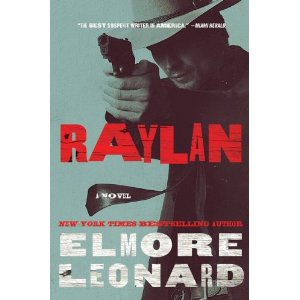
‘The Affair” shows how Reacher became Reacher

There’s something very pure about Lee Child’s Jack Reacher crime dramas. Almost as pure as Robert Parker’s Spencer books. Reacher is an ex military police officer who drifts around the country, helping people. Kinda like Lassie and the Hulk.

Child’s Reacher books have shown us how the protagonist handled everything from small-town bullies to government conspiracies. They’ve inspired a movie adaptation to star Tom Cruise, who is miscast. Reacher is a stoic giant of a man. Cruise … isn’t. So I guess we’ll see how that all turns out.

But one thing Child hasn’t done until now is tell us how Reacher became Reacher.

“The Affair,” Child’s most recent Reacher novel, flashes back to 1997, just a few months before the events of Child’s first Reacher story.

Reacher is still an Army MP, still taking orders from superior officers, even when they’re not really superior. And considering Reacher is a perfect physical specimen, an expert marksman, a man with an unerring internal clock and a deadly moral code, who would be considered superior?

As the book opens, Reacher is assigned to go to a town near a Mississippi military base, ostensibly to solve the murder of a young woman from the town but in reality to put a damper on the investigation. High stakes are involved, of course. Reacher’s most likely suspect is the son of a senator who has a taste for townies.

Reacher must balance the demands of the investigation, his own growing sense that his Army career is over, his affair with the town’s beautiful female sheriff and the usual assortment of bad guys who find themselves overmatched in battles of brains or brawn with Reacher.

Child’s books could feel predictable and too safe. I remember a moment in one of the later books when the bad guys broke Reacher’s nose and left him in a basement. It was the only real physical harm that I remember ever being inflicted on Reacher, and it was only momentary: Reacher quickly re-set his broken nose (in a painful scene that made me wince) and then decimated the thugs.

But Child has a knack for making the Reacher stories just right. Maybe it’s his capable, no-frills writing. Maybe it’s the detestable bad guys that Reacher takes on, or his likable allies. Maybe it’s Reacher himself, who is as amiable as he is deadly.

It will be interesting to see where the prolific author goes with this series. It would seem that this prequel tells us all we need to know about Reacher’s genesis and the previous book seemed to take him in a new direction, contemplating a romantic rendezvous of some substance.

Like a lot of other readers, I’ll be eager to see where Reacher ends up next.


Christmas favorites: ‘Santa Calls’

There are a lot of classic Christmas books and many of them are very familiar and much-beloved. But if you’re looking for an offbeat Christmas book for kids, check out “Santa Calls.”

The picture book by William Joyce tells the story — in tongue-in-cheek manner — of Art, a boy living in Texas in the early 1900s. Art is an inventor and self-styled adventurer who, along with his pal Spaulding, finds a mysterious crate. The box includes the makings of an early airship and, improbably, an invitation to come to the North Pole and find Santa.

Of course, much to Art’s dismay, his tag-along little sister, Esther, talks her way into the adventure.

The three kids find themselves involved in a wild and wooly battle, defending Santa and the North Pole against an evil queen. Art and Spaulding lead the fight and little Esther, much to Art’s surprise, proves her mettle.

The story and Joyce’s writing reminds me of old pulp stories and the ending — and the secret behind Santa’s call to arms — made me misty-eyed.

“Santa Calls” has become a favorite in our household. It’s a terrific and unexpected Christmas present.

‘Community’ deserves to live

If you’re not watching “Community” … why not?

If you pay attention to the comings and goings of TV shows, you might have heard that NBC has put its Thursday night comedy, “Community,” on hold for the foreseeable future. Maybe the show will come back after the first of the year. Maybe not until spring. Who knows?

Chances are this news doesn’t mean much to you. By virtue of the fact that “Community” is in danger of being canceled, it’s pretty obvious that the ratings are the suck.

So here’s a plea: Check the show out. It airs tonight — in just a few minutes, actually — but is available on demand and online.

Maybe an uptick in ratings will help convince NBC to put the show back on the air.

Why is “Community” worth saving?

Well, it’s funny, for one thing. But more than that, it’s offbeat. It is not your typical, laugh-track driven comedy.

Case in point: The recent third season episode “Remedial Chaos Theory,” in which the cast — misfit students at a community college — roll the dice to see who will answer the door when pizza is delivered and find themselves exploring several alternate realities. Any episode that includes a “fake goatee” nod to “Star Trek” without ever quite ‘fessing up to it gets my vote for funny and innovative.

Or the first-season episode about a campus-wide paintball game in which the participants quickly degenerated into cutthroat competitors. The episode mined every possible action movie cliche for big laughs.

Or the episode where the group manned a Kentucky Fried Chicken-themed spaceflight simulator. Or the episode that’s animated like an old Christmas special. Or the fake clip show!

Don’t be put off by what some might consider the oddball cast and plots. It’s a comedy about disparate types thrown together by circumstance, like “Friends” or “Seinfeld,” and it’s funny. And the cast is wonderful: Joel McHale, Chevy Chase, Danny Pudi and the adorable Alison Brie to name a few.

Here’s hoping “Community” gets a second chance. Like the “alternative realities” episode, there’s got to be a few possibilities left in the show’s future.


Family Circus: Zippy meets Jeffy

I mean, really, who knew?

Well, obviously a few people knew.

When Bil Keane, creator of the daily “Family Circus” newspaper panel, died about a week ago, I noted in this blog that while Keane’s panel wasn’t my favorite strip — that honor falls to “Calvin and Hobbes” or “The Far Side” — you had to admire Keane for his staying power. Although he had turned over the strip to his son, Jeff, in recent years, he maintained it for decades after creating it in 1960.

Now, thanks to a terrific Comics Journal column by Bill Griffith, the creator of the offbeat “Zippy the Pinhead” strip, I have a newfound appreciation for Keane’s sense of humor.

Griffith writes about how he didn’t expect to have much in common with Keane and other grand old masters of the comics page until he met them at a National Cartoonists Society dinner in 1990.

Griffith said Keane and the other members of the old guard were surprisingly funny and profane and the farthest thing from their squeaky-clean strips that you could imagine.

Keane and Griffith hit it off and, a few years later, Griffith wrote a 1994 series of “Zippy” strips in which his character spends time in the world of “The Family Circus.”

Keane favored Griffith with a tip of the hat with a 1995 panel in which young Billy is dreaming of Zippy. Keane even asked Griffith to draw Zippy for the panel.

Now, if you can get past the fact that the mixing of the two comics is perhaps more disturbing than funny, I can’t think of a revelation that made me smile more and think more highly of Keane.

It’s unfortunate that we sometimes appreciate people the most after they’re gone. And while I will still no doubt shake my head a bit when I come across a “Not Me” or ghostly grandparents panel in “The Family Circus,” I won’t be doubting Keane’s good sense of humor.

‘The Walking Dead’ flashes back

I don’t think any episode of AMC’s post-zombie-apocalypse series “The Walking Dead” has reminded me of Stephen King’s classic “The Stand” quite as much as tonight’s installment, “Chupacabra.”

Sure, it’s impossible for any end-of-the-world-and-after story to do anything but remind us of King’s epic. But tonight’s adaptation of Robert Kirkman’s comic book series had a couple of moments that evoked King’s masterpiece.

Spoilers ahead.

The episodes opens with a flashback to the early days of the zombie apocalypse as Shane, Lori and other survivors are stuck on the highway, watching in horror as the military drops napalm on a city — Atlanta, I’m guessing — to knock down an infestation of “walkers,” the show’s term for reanimated dead. The moment reminded me not only of “The Stand” but also “World War Z” and “The Strain,” two modern classics of the apocalypse.

But the moments most reminiscent of “The Stand” came when Daryl, the show’s new unlikely hero, is scouring the woods for a missing girl. He takes a tumble, ends up injured and gets a hallucinatory pep talk from an unlikely source: His brother Merle (Michael Rooker), the murderous racist from the show’s first season.

As Merle — whose return was teased in previews for this episode — taunts and insults Daryl into getting up and out of his predicament, a couple of echoes of “The Stand” came to mind: Nick Andros appearing to simple-minded Tom, telling him how to save injured Stu Redman, and also the internal battle going on inside Harold Lauder. In “The Stand,” Harold could turn bad or good and he struggles with his soul and his conscience before making a fateful and explosive decision. We haven’t yet seen what Daryl decides.

The episode also showcased the growing tension between Rick and Shane — who don’t yet know that Lori is pregnant and one of them is the father — and a freaky finale in which Glenn discovers the secret behind the peaceful farm in which they’ve taken shelter.

There are a lot of complaints online about the pace of “The Walking Dead,” but I’m enjoying it. Moments like those tonight, with Rick and Shane recalling their high school years and then debating the finer points of every-man-for-himself, and Merle’s brief appearance, are keeping me happy.

Paperback reader — for now, anyway

I don’t have any memory of the first paperback book I bought. But I have many memories of the paperbacks I’ve loved.

Sitting in the school cafeteria reading Stephen King. Becoming lost in “The Hobbit” and “Watership Down.” Finding myself transported to another time with Edgar Rice Burroughs. Expanding my consciousness with Ray Bradbury, Harlan Ellison and Hunter S. Thompson.

While I’ve read some of my favorite authors and their stories in other mediums, the paperback will always be the format through which I solidified my love of books.

My first few paperbacks cost about 60 cents. Because I don’t buy as many paperbacks anymore — yes, this is another of those “I’m part of the problem” posts — I’m startled to see how much mass market paperbacks and trade paperbacks cost now. Nevertheless, I still buy them. My copies of “Girl with the Dragon Tattoo” and “Girl Who Played with Fire” are in paperback, as is “Devil in the White City” and others.

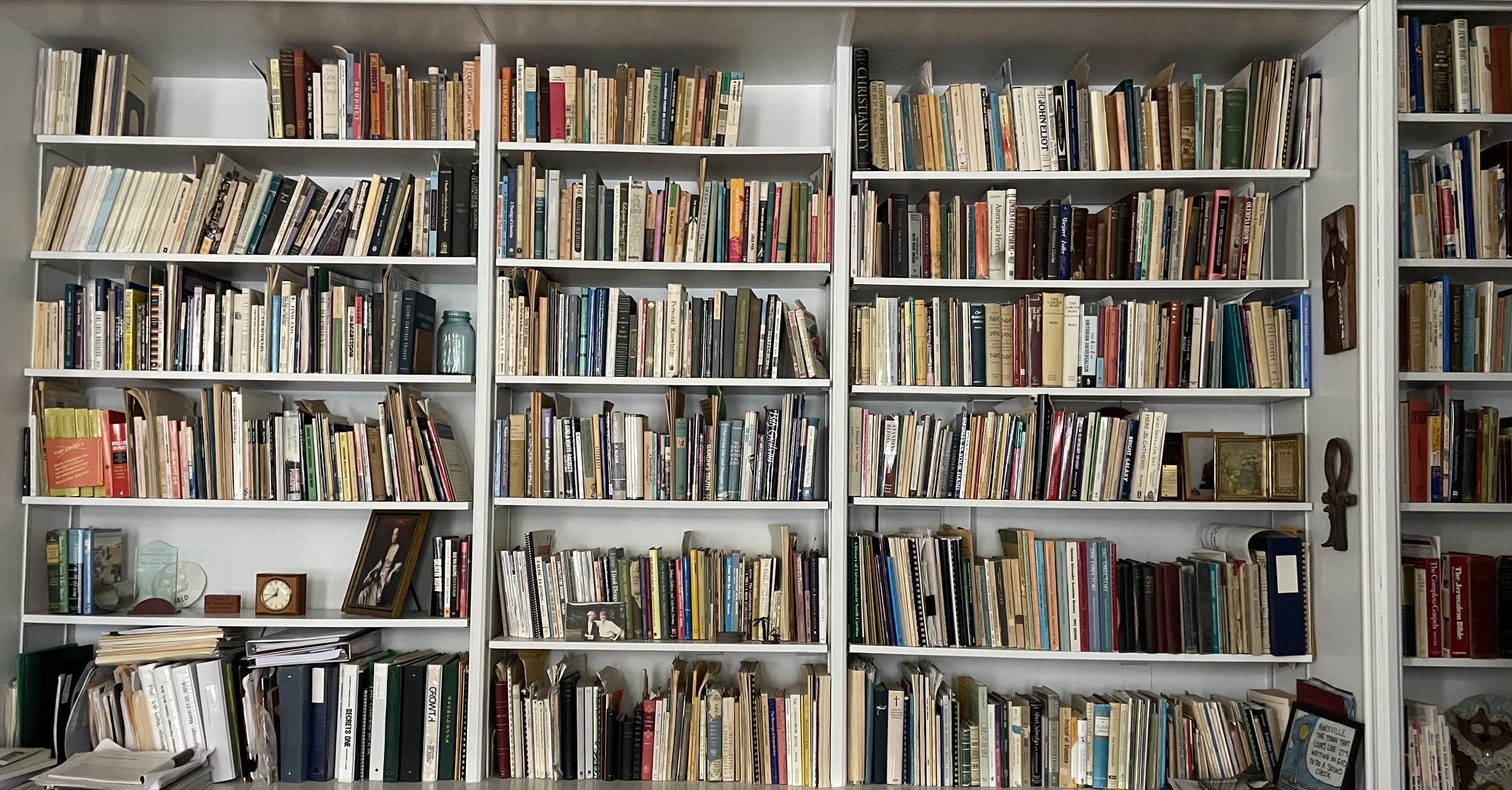
The photo above is of a homely bookshelf, tucked away in a spare bedroom in my house. It’s ugly as sin, the result of some cobbling-together my dad and I did 30 years ago. But it’s the home to most of my paperbacks. Dean Koontz and Robert Heinlein and John Varley and other favorites live there.

I love paperbacks.

So it was disheartening but inevitable to read the Crain’s New York Business article, “Trade paperbacks no longer worth the paper,” which notes that, with the rise of e-books, the publishing industry is pondering the future of paperbacks.

Paperbacks — specifically trade paperbacks here, but mass market paperbacks too, I’m sure — aren’t selling very well anymore. Sales were down 18 percent in recent months, even while e-book sales are up 8 percent. Electronic books are now 20 percent of sales for major publishers, notes the article, which was linked to on Twitter by publishing industry expert Sarah Weinman.

My point here is not to bury e-books — I’m for anything that promotes and perpetuates the reading of books — but to mourn the loss of paperbacks, if it comes to that.

The Crain’s article quotes a couple of people who say that trade paperbacks could be gone within a few years. Mass market paperbacks could follow, I suppose.

I can’t turn back the hands of time or reverse the flow of progress and wouldn’t want to do either. But I can’t help thinking, as we’re swept along in the current of change, about all the things that get lost along the way.

Used bookstores. The traditional platform for new authors. The cheap, fast read. The 10 cent paperback box at rummage sales, home of a million good stories.

Going, going …


New ‘Green Lantern’ has a lot to live up to

For Cartoon Network, Warner Bros and animation producer Bruce Timm, launching a new “Green Lantern” animated series must feel like a tricky thing.

When the computer-animated series went into production, Warner Bros. had a big-screen “Green Lantern” coming, its first attempt to turn WB’s DC Comics stalwart into a big-screen tentpole starring Ryan Reynolds.

The movie probably seemed like a sure thing, another step in establishing a DC franchise in movie theaters much like rival comics publisher Marvel was doing with “Iron Man” and, concurrent to the “Green Lantern” movie, “Thor” and “Captain America.”

But the “Green Lantern” movie, released this summer, was pretty lackluster, while “Thor” and “Captain America” were hits that only built anticipation for next summer’s Marvel team-up movie, “The Avengers.”

All of a sudden, “Green Lantern” — and the Cartoon Network animated series — must have felt a little daunting.

The new show not only had to live down the live-action movie but also live up to “Justice League” and “Justice League Unlimited,” the Bruce Timm-produced animated series that stand as the pinnacles of comic book animated series.

Yes, I know that Timm and Paul Dini’s “Batman: The Animated Series” is widely regarded as the best animated comic book show. But for me, “Justice League” and especially “Justice League Unlimited” are tops. Really, where else could you get the best — hands down — outside-the-comic-pages adaptation of Superman, Batman and other marquee heroes as well as obscure favorites like Dr. Fate, Black Canary and Bwana Beast, for goodness’ sake?

Cartoon Network previewed the opening episode of “Green Lantern” tonight — the series begins airing regularly next year as part of a DC block — and I have to say that while the show has potential it carries with it more liabilities.

Its computer-animated presentation is workmanlike at best. While a few scenes had some of the visual appeal of “The Incredibles,” for example, more often the show looked like unfinished footage included as a DVD extra. Piggy-looking Green Lantern Kilowog looked plastic. The look of the show needs drastic improvement.

And I’m not sold on the premise of the show either. Remember “Star Trek: Voyager,” the series that pushed a Federation starship to the edge of the galaxy and left it stranded there while the ship and its crew struggled to make their way home?

This is like “Green Lantern: Voyager,” with Green Lanterns Hal Jordan and Kilowog stranded millions of miles away from home, facing the Red Lanterns, a cranky group of outlaw ring-wielders.

Maybe it’s an effort to ensure the show and its characters stand on their own, but I’m not digging the idea of a show that will never allow Green Lantern to bump into Superman or Batman. Not to mention the absence of my favorite Green Lantern of all time, John Stewart, the African-American hero who — for all of us who loved “Justice League” and “Justice League Unlimited” — simply is Green Lantern.

When “Green Lantern” comes back next year, I’ll definitely give it a shot. I hope the show has as much imagination as the premise of its title character. It will have to go a long way — and come back from a great distance — to equal previous treatment of the character, however.


Mysteries not for the faint-hearted

Chelsea Cain’s mysteries are not for the weak of heart, and that’s not just a play on the “heart” element of most of their titles: “Heartsick,” “Sweetheart” and “Evil at Heart.” Cain’s tales of a Portland, Oregon cop and the love of his life — a beautiful female serial killer — are often filled with grisly, bloody moments.

At one point in the books, serial killer Gretchen Lowell takes police detective Archie Sheridan captive and, besides carving a heart in his chest, removes his spleen, for pete’s sake.

But gore isn’t the point of Cain’s books. And it’s an afterthought in her latest Archie Sheridan book, “The Night Season.”

Although Gretchen Lowell — nicknamed “The Beauty Killer” not because she is beautiful but because of the gruesome nature of her killing style — is a presence in this book (don’t worry, I won’t spoil how), Cain’s latest novel is really about Sheridan and the core of supporting characters the author has built up around him.

There’s Susan Ward, a newspaper reporter trying to survive the upheaval in her industry as well as encounters with homicidal maniacs; Henry Sobol, Archie’s partner on the force and a rock in his life; and a cast of characters that, four books into the series, feels as familiar and beloved as any in fiction right now.

Sheridan is an enormously flawed man. His infatuation with Lowell in the earlier books cost him his marriage and nearly his life. Far more realistically than might be expected for a thriller series, the books emphasize the toll that Sheridan’s bad decisions and his noble intentions have taken on him.

But readers who, in the past, might have thought Sheridan was a little too close to the edge might be happy to know that in the latest book, the only edge he’s in danger of stepping over is the banks of the swollen Willamette River.

Torrential rains have flooded the river and threaten Portland, and Susan Ward finds herself pursuing a new story: The discovery of a skeleton that might be left over from 1940s flooding that wiped out a small section of the city.

Meanwhile, Sheridan and Sobol and crew realize they’re dealing with more than a series of accidental drownings due to floodwaters. They are, in fact, dealing with a serial killer, one whose weapon of choice might seem over the top but is nonetheless pretty cool.

While Susan and Archie pursue their investigations, they’re thrown together and endangered — like the rest of the city of Portland — by the ever-rising floodwaters.

I’m glad I wasn’t reading “The Night Season” during our own winter thaw/spring rains. Cain vividly portrays the unrelenting rain, the tumultuous river and the dangerous nature of floodwaters. It made me want to check my crawlspace for rising water.