‘Classics Illustrated’ gets an in-depth history

Did you read “Classics Illustrated” comics as a kid?

I have to admit that I didn’t.

The comic book-style recaps of great works of literature like “Robin Hood” and “Last of the Mohicans” just didn’t appeal to me, a comic book nut.

The idea behind the series, created in the 1940s by the Kanter family — Albert and son William — was a good one. Take books that kids might enjoy if they gave them a chance, like “War of the Worlds” and “Treasure Island,” and turn them into comic books that kids might actually read.

The series began at a time when comic books were a top-selling — if totally disrespected by adults — part of kid culture and continued, somewhat amazingly, to the turn of the century.

Even if you weren’t a regular reader of “Classics Illustrated,” you’re probably aware of them. Their distinctive covers — dominated by the familiar yellow box in the corner and the boast that the comics featured “stories by the world’s greatest authors” — popped out from the dozens of “Fantastic Four” and “Superman” and “Archie” comics on the spinner racks.

While I was an avid reader of offbeat fare like Bullfinch’s Mythology and books about Man o’ War, “Classics Illustrated” seemed too much like cherry-flavored cough syrup to me: Something that was good for you but only barely disguised as something else.

But there’s a lot to admire about William B. Jones Jr.’s new book, “Classics Illustrated: A Cultural History,” a hardcover overview of the series, its creators, artists and writers.

Jones is an unabashed lover of the series and that shows. The book appears to be studiously researched and is definitely lavishly illustrated, with reproductions of interior art and covers in both black and white and color.

Jones looks at the writers and artists who made the series what it was, from founder Kanter to artist Henry Carl Kiefer, who defined the look of the series from its earliest days.

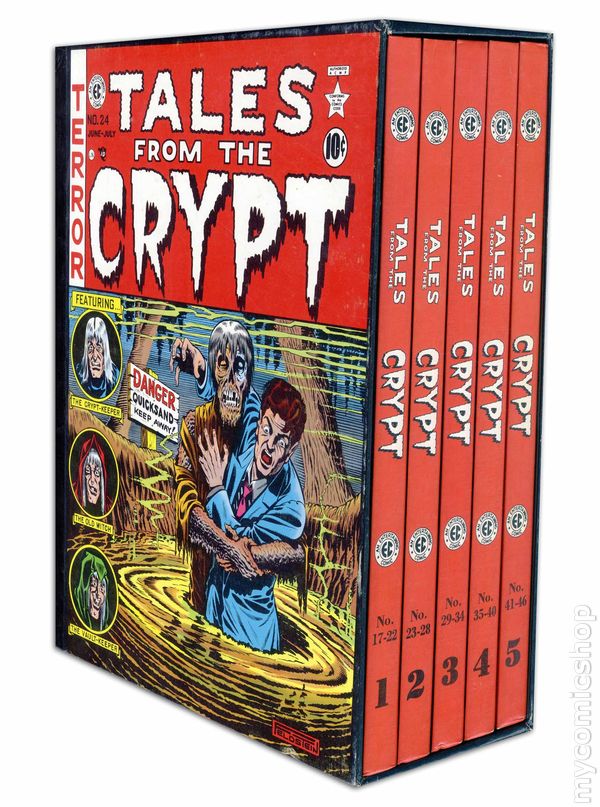
The series’ brief flirtation with horror stories — just as demagogues were leading the attack on comic books in general  — is genuinely surprising. So is the period in the 1990s when graphic novel versions of the classics attracted some of the comic book genre’s top artists.

There’s even a section about appearances by “Classics Illustrated” comics in movies, ranging from Elvis Presley vehicles to movies featuring Tom Cruise.

If you’re not a devotee of “Classics Illustrated,” Jones’ book is probably a casual read at best for you. If you’re as much of a fan as he was, you’ll love the book.


iPhoneography: Christmas ornaments

When I was growing up, the ornaments on the Christmas tree were almost always glass balls. Red and blue and gold and purple, with little wire hooks at the top that made it almost impossible for my clumsy fingers to hang on the branches of the tree, ornaments of that type are still what I think of when I imagine the decorations on the tree.

Some of them were probably the popular Shiny Brite ornaments pictured above, or imitations.

Ornaments — originally German-made glass baubles popularized by big American retailers like Woolworth and Macy’s — were so traditional for so long that it was inevitable that pop culture would eventually work its way into the product.

That point came in 1973, when Hallmark introduced its Keepsake ornaments collection. Those first few ornaments were snowmen and angels and Santa and look pretty primitive compared to the elaborate ornaments of today.

But the world of Christmas ornaments had changed. Before long, we could decorate our trees with Peanuts figures or Barbie or Mickey Mouse.

This year, the retailer is offering scenes from “Star Trek,” comic books like The Avengers and the Fisher Price Play Family Village.

Of course, for the latest iPhoneography Christmas entry, I thought I’d pass along some of the more offbeat pop culture offerings.

There aren’t many more instantly recognizable pop culture figures than jumpsuit-era Elvis Presley. Although this guy looks a little underfed, he’d be a good companion to a “Blue Christmas” theme.

How about Kiss frontman Gene Simmons? Nothing like an extra long tongue to say happy holidays.

And no, I’m not sure why he’s upside down in his box. Maybe that makes him more collectible.

Now this is more like it. “Yellow Submarine”-era Beatles ornaments. If this ornament could talk … it wouldn’t be in the actual Beatles voices.

And you can’t spell Christmas ornament without Grinch. Well, you can’t really spell it with G, R, I, N, C and H. But you know what I mean.

I mentioned Peanuts earlier but couldn’t resist coming back to this item, which isn’t really an ornament but is instead the Charlie Brown version of a nativity scene. Curiously, it’s not really labeled as such. Maybe they thought such a direct reference would offend someone. That would have to be someone who hadn’t seen the Peanuts Christmas special, of course.

More next time.


An unflinching but moving look at Jonestown

Most of us know how the story of Indiana preacher Jim Jones ended: Jones, a madman cloaked in the robes of a preacher, civil rights activist and would-be socialist, led nearly 1,000 of his followers to their deaths in a 1978 mass suicide in the South American country of Guyana.

But considering Jones grew up just a county over from where I sit as I write this, I didn’t know the full scope and breadth of Jones’ story. And I certainly didn’t know the lives and tragic deaths of his followers.

Until I read Julia Scheeres’ “A Thousand Lives: The Untold Story of Hope, Deception and Survival at Jonestown.”

Scheeres — whose previous book, “Jesus Land,” was a wrenching memoir of her early years in Indiana and, along with her brother, incarceration in a twisted South American youth camp run by a religious group — found a surprisingly similar theme when she chose Jonestown as the focus of her second book: The evil that people do in the name of their beliefs.

In the case of Jim Jones and his self-named South American settlement, those beliefs were, almost whole-heartedly, focused on the group’s leader. Jones, who had churches in Indianapolis and San Francisco before he moved his flock to Guyana, might have gradually succumbed to the the depths of his mental illness but was certainly fixated on exerting control over others even from his early days in the pulpit.

That control extended to every area of their lives. Jones took money from his followers — perhaps millions of dollars by the end — as well as their dignity. He seduced, coerced and outright sexually assaulted many of his people. He broke up families and turned spouses and siblings against each other.

Well before the end, Jonestown was a place where members of the Peoples Temple informed on each other and willingly — perhaps even with a heady sense of the control that Jones enjoyed — exacted punishment from their fellow church members.

Scheeres, who writes in a matter-of-fact tone that packs a punch, retells the story of Jones and his church through not only interviews with survivors but information gleaned from thousands of FBI documents.

The picture she paints is powerful and disturbing. She captures the anxiety and fear of a handful of Jones’ followers as well as the frightening tactics the Peoples Temple leader employed. Even while Jones worked to persuade his church members that “revolutionary suicide” — a term that Jones misunderstood or deliberately misstated — was their only possible fate, he staged fake assassination attempts and attacks to sell his plan.

In hindsight it’s hard to imagine how the authorities didn’t put a stop to Jones’ plan. But church members were so afraid and so mentally enslaved that, until the very end, many didn’t try to get away from their inevitable fate. And the authorities, both in the U.S. and in Guyana, couldn’t believe the warning signs. Who could possibly imagine that one man would convince nearly a thousand people to kill themselves?

Who would want, or could exert, that kind of control?

The Hoosier state, maybe not even the United States, might never again spawn such a man as Jim Jones. But Julia Scheeres’ “A Thousand Lives” is an eyes-wide-open look at how it happened once thanks to belief in a madman and the disbelief of those on the outside looking in.

iPhoneography: Christmas at the dollar store

As Calvin’s dad used to say, it’s a very special time! No, it’s not bath time. It’s time for more iPhone photos of Christmas stuff.

This time: Christmas at the dollar store.

This is too easy, really. Considering the offshore origin of most of these products, it’s probably no surprise that the packaging would contain a misspelling of the word ornaments.

I’m not sure if something got lost in translation here too. I always thought these were called snow globes. Maybe water balls is the acceptable name when there’s not really a lot of artificial snow included, which is the case here.

Here’s something for your jolly old elf and eight tiny reindeer: A tiny lunchbox. Actually, I suppose it’s intended as a gift box. But it would be perfect for taking your Christmas-themed Little Debbies to work.

Here’s some packaging that’s intentionally funny. If it’s too hard to read, the basic joke is that this Christmas cotton candy is guaranteed to prompt a smile in “typically pleasant individuals.”

“If you are a major grouch that doesn’t smile at a puppy or a rainbow then even we can’t help you.”

Cute.

More next time.


You’re a fine special, Mr. Grinch

I’m ready for your close-up, Mr. Grinch.

A few weeks ago in this blog I noted an early — very early — showing of “How the Grinch Stole Christmas,” the beloved 1966 animated special adapting the holiday tale by Dr. Seuss.

While I’m not a stickler for “no Christmas before Thanksgiving,” it seemed a little early.

Well, what a difference a few weeks makes.

The classic, animated by Chuck Jones, has at least a couple of airings before Christmas. TV Guide says the special will air Dec. 7 on Cartoon Network, followed by a repeat showing on Dec. 10, also on CN.

I think three weeks before Christmas is about right for watching the Grinch.

Now there is something you should keep in mind. It’s possible both these airings are in half-hour time slots. Since the special is about 26 minutes long, beware the possibility that the show might be edited or even time-compressed, which allows an entire show to air in a shorter period of time by speeding it up. Unfortunately, this might mean that the show would sound more like “How Alvin and the Chipmunks Stole Christmas.” Seriously, I can’t watch episodes of “Friends” on cable TV because they’ve sped up the show so much.

Of course, the reason modern-day airings of classic TV shows are sped up (or edited) is because TV shows are routinely stuffed with more commercials now than in decades past.

Sometimes networks or cable channels air these once-half-hour shows uncut in hour-long slots and add some extras.

And of course, there’s an easy way to watch the Grinch or Charlie Brown learn the true meaning of Christmas without benefits of modern-day tampering: Watch them on DVD.

But there’s something about the communal experience of watching Christmas specials when they’re airing. Facebook was dotted with people commenting on an airing of “Rudolph the Red Nosed Reindeer” the other night.

Oh, and in case I forget: If you want to watch a modern-day Christmas classic, catch “Olive the Other Reindeer,” airing Dec. 10 on Cartoon Network. It’s a great show, based on a sweet book. I’ll try to come back to the subject of “Olive” sometime before that airing.

‘Walking Dead’ mid-season finale ends with a bang

There’s been a lot of second-guessing of the second season of “The Walking Dead,” and I understand most of it.

The first season of the AMC series about the aftermath of a zombie apocalypse was straightforward “I Am Legend” stuff, survival and regrouping in the early days and weeks of the end of the world.

But by the second season — although still only weeks since the end of the world in the show’s chronology — had to do something different. And there was also the matter of budget cuts and turmoil behind the scenes, including the departure of writer/producer Frank Darabont.

So much of the second season has been set at a farm, where kindly farmer/veterinarian Hershel first provided assistance to the group of refugees then posed several problems for them. Would the members of the group succumb to the dangers of false hope, as Hershel has? Would they be allowed to stay in this comparatively idyllic spot even if they wanted to? And what about the missing girl and, oh yeah, the walkers that Hershel keeps penned up in his barn?

The first half of the season, which ended tonight with new episodes set to begin in February, prompted a lot of restlessness among both the human refugees and the audience. When would they find Sophia, the missing girl? When would Rick and Shane clash over Lori? When would the show get. on. with. it?

I’ve enjoyed the show and enjoyed tonight’s episode, “Pretty Much Dead Already,” even the soap-opera dynamics of love triangles and threatened betrayal. I like the characters and feel for their predicament.

No spoilers if you haven’t seen it, but tonight’s episode feels like a resolution, like a turning point. The ending was heartbreaking if not entirely unexpected.

But the glimpses of the farm in previews for next February’s episodes left me more than a little frustrated. I expected tonight’s episode to get them off the farm, back on the road and out of this storyline. Instead the preview seems to indicate more rural dithering is ahead of us.

I’ve enjoyed “The Walking Dead” so far and I’m looking forward to February, although not as much as I expected to.

But I’m really hoping that the show doesn’t continue to spin its wheels. The survivors need to move on to the next storyline and they need to do it soon.


The heyday of the monster world

I grew up with monsters. The good kind. Frankenstein, Dracula, the Wolf Man, all  lurching around in foggy black-and-white graveyards and misty moors. The kind that were celebrated in Famous Monsters of Filmland magazine, shown by TV horror movie host Sammy Terry and frozen in time in Aurora model kits.

There’s a lot of Internet space used to describe the “monster kid” phenomenon. It’s the loosely defined generation of us — mostly boys — who grew up right about the same time classic monster movies of the 1930s and 40s were sold for airing on local TV stations in the 1960s.

Pop culture aimed at kids and kiddish hobbies permeates our culture today — entire TV channels are devoted to science fiction, young people and geeks, for pete’s sake — so it’s hard to figure out how monster kid culture became pervasive when I was growing up. Without benefit of cable TV and the Internet but thanks to magazines and late-night movies, we somehow knew everything about these old monsters.

We knew which movies featured Boris Karloff as Frankenstein’s monster (easy) and which featured Glenn Strange. We even hollered and pointed when Strange showed up as the bartender at the Long Branch saloon in “Gunsmoke.” Here was a rare moment of our monster world intersecting with the real world and we wanted the grownups to acknowledge it.

For a big part of my childhood and young adolescence, I immersed myself in monster world. I loved to draw back then and, using movie history books for reference, lovingly recreate the Universal movie monsters I love.

I collected not only Famous Monsters magazine but Castle of Frankenstein, the Monster Times and lesser-known publications. Sometimes my need to create led me to, foolishly, cut up those now-valuable magazines and reassemble the pictures into scrapbooks that looked like magazines.

My friend Jim and I even created our own monster magazine he sold at his school. It was painstakingly — and somewhat hilariously — written and illustrated by the two of us.

I haven’t drawn much in a few years and — after having paid to recreate my collection of Famous Monsters magazine, then subsequently selling it — don’t buy monster magazines anymore. The closest I get to publishing a fanzine about old Universal horror films is when I mention them here.

My Aurora model kits — my Wolf Man, Dracula and Mummy — survived my childhood and gathered dust on a shelf until about 20 years ago, when, in a whirlwind of clearing out stuff before moving, I put them in the trash.

I don’t want to recreate those models — although you can buy a vintage 1963 Aurora Mummy model on eBay for “only” $124.95 — and I don’t want to recreate those times.

But I don’t mind dipping into the monster nostalgia once in a while.


The Great Newspaper Comics Challenge Part 2

For a moment there, I thought I had slipped through some kind of time portal into the distant past.

Here in front of me, in an Indianapolis community newspaper called the Eastside Voice, was the old “Flash Gordon” newspaper comic strip.

I hadn’t seen “Flash Gordon” in years. No newspapers that I knew of carried it. Yet here it was, in this little neighborhood newspaper.

Upon doing a little research on the Interwebs, I figured out why I hadn’t heard of the strip lately. “Flash Gordon” hasn’t been an actively-published newspaper comic strip since 2003, when artist Jim Keefe — following in the footsteps of classic “Flash Gordon” auteur Alex Raymond — stopped drawing it. Papers like the Eastside Voice run reprints of Keefe’s strips, which ran for several years.

So no danger that I’ve been missing new adventures of Flash, Dale and Ming the Merciless all these years.

So if “Flash Gordon” is still stuck on Mongo, what is in the comics lately?

A few weeks ago I acknowledged that I haven’t been reading newspaper comic strips regularly since the passing of “Calvin and Hobbes” and “The Far Side” and vowed to remedy that.

Well … I haven’t been reading the funny pages daily. But I thought I’d check out the Sunday edition today.

In “Peanuts” — a rerun, of course, since the passing of Charles Schulz a few years ago — takes a page from Calvin’s book by having Linus make a realistic snowman figure of Lucy. But instead of destroying it, Linus says he’ll get back at Lucy’s latest bullying by standing and watching the Lucy effigy “slowly melt away.” Yikes.

In “Garfield,” Jon insults Garfield’s bulge. Check. Garfield says talk about his waistline is making him hungry. Hmmm. Check, I guess.

In “Zits,” the teenage son in the household complains about having to take out the trash. Weirdly, however, the artists show the guy’s naked butt in the shower. Do we normally see naked butts in comics? Not since the great “Sgt. Snorkel Goes Streaking” incident of 1975, I would bet.

“Dilbert” looks at smartphone rage. It leads to a silly gag but it’s a good idea.

Jeff and Bil Keane’s “Family Circus” is a good execution of a simple idea. One of the kids — Billy? Jeffy? Honestly I can’t tell them apart — is seen giving a recitation of excuses about how he didn’t make his little brother cry.

More to come next time. Hopefully.

Will we ever see a ‘Justice League’ movie?

I watched “Captain America” on DVD last night and really enjoyed the movie, which brought Marvel’s World War II-era hero to the screen this past summer, all over again. The little sneak peek at next May’s “The Avengers” movie was fun. To say I’m looking forward to “The Avengers” is an understatement. The fourth issue of the “Avengers” comic, the one in which the heroes thawed Captain America and he joined the team, was the first comic book I ever owned, kindly given to me by an older friend.

But as much as I’m looking forward to “The Avengers,” I’m puzzled as to why DC — an arm of Warner Bros. — has been unable to get a “Justice League” movie into gear.

It’s not like “Justice League” can’t be translated into other media besides comic books. The “Justice League” and “Justice League Unlimited” series, set in the animated DC universe created with “Batman the Animated Series,” was a faithful adaptation of the comics. The “Unlimited” series expanded the membership of the League to include dozens and dozens of characters, both delightful and obscure (who would have thought of an entire episode built around hapless blowhard Booster Gold? Yet it was one of the best of the entire series).

And DC has also had good luck with “Justice League” animated in longer form, particularly “Justice League New Frontier,” a retro story based on Darwyn Cooke’s great graphic novel that set the hands of the superhero clock back to the 1950s and introduced Batman, Superman, Martian Manhunter and Wonder Woman (not to mention a host of yes, obscure characters). Heck, even TV’s “Smallville” had a version of the League on a TV budget.

So there’s no reason a “Justice League” movie can’t happen, except:

– The Christopher Nolan/Christian Bale “Dark Knight” movies. With the third, “Dark Knight Rises,” coming out next summer, Nolan seems to be ready to wrap up his foray into the character’s world. Much has been made over rumors that Nolan and Bale don’t want their “realistic” Batman to be seen in the same movie with a bunch of other “fantastic” costumed characters. Of course, “Dark Knight Rises” features not only Catwoman and Bane in outfits that would turn heads on most sidewalks. So maybe Nolan is loosening up his standards.

– DC and Warner Bros. can’t seem to get any other characters launched. “Green Lantern” came out this summer and really wasn’t very good. “Wonder Woman” imploded and never got made. “The Flash” has been in the planning stages for years.

– They tried to make a “Justice League” movie a couple of years ago, even picked the cast and began pre-production. Actors like Armie Hammer were fitted for costumes. (Why hasn’t footage or pictures of Hammer in Batman drag shown up online?) But then a writer’s strike happened, production in Australian fell apart and, frankly, I wonder if somebody didn’t lose their nerve. Remember Nolan’s reluctance to have  a bunch of colorful costumed characters in the same room together? Maybe it was catching.

In the time it’s taken for DC and Warner Bros. to make a good “Batman” movie, begin another one, start work on a “Superman” movie and make a mediocre “Green Lantern” movie, Marvel — now part of Disney — has released two “Iron Man” pictures, a good “Hulk” movie, “Thor,” “Captain America” and is putting the finishing touches on “The Avengers.”

Will we ever see the members of the Justice League swooping down from their Watchtower to take on some globe-threatening menace?


‘The Muppets’ make a heart-felt return

I was a bit outside the demographic for “The Muppet Show” when it aired in the late 1970s. I was in high school, so I was too old to be one of the show’s fervent kid viewers.

I was however, a show business nut. I was the kid, you might remember, who read Sammy Davis Jr.’s autobiography from my school library.

I could appreciate the show on several levels: Its silly jokes, its vaudeville style, its love of … show all appealed to me.

The guest stars were kind of dumbfounding. Mark Hamill from “Star Wars” one week, Gene Kelly the next.

So I had nothing but high hopes and good thoughts for “The Muppets,” the new movie starring Kermit the frog, Miss Piggy, Amy Adams and Jason Segel, the wonderfully awkward actor from such cult exercises as “Freaks and Geeks” and “Saving Sarah Marshall.”

Segel, apparently, was a Muppets fan growing up and despite his reputation for making R-rated comedies was given the opportunity by Disney — the studio that has owned the Muppets for much of the time since creator Jim Henson’s untimely death but has never seemed to know what to do with them — to guide a potential revival.

Segel plays a sweet, kind of clueless guy — his specialty — who, along with girlfriend Adams, helps his brother Walter — a Muppet in felt construction but a human in every other respect — meet the Muppets. Once they meet Kermit and learn that an evil oil magnate — played with relish and mustard by Chris Cooper — plans to demolish the old Muppet studio, they decided to put on a show to save the day. (And if that sounds like something out of an old Judy Garland/Mickey Rooney movie, rest assured that Rooney even makes an appearance.)

Ultimately, the movie is about the strengths of friendship and loyalty, but before the moral is lightly delivered there are plenty of celebrity cameos — Jack Black chief among them — and jokes, ranging from typical Fozzy Bear groaners to clever, meta references. (One of those comes early on, when Kermit appears ready to stop the plot in its tracks, prompting Adams to say, “This is going to be a really short movie.”)

Random thoughts upon watching the movie:

• Adams, next set to star as Lois Lane in the upcoming Superman movie, is adorable but downright womanly compared to the slight young actress who played the part in “Superman Returns.” That’s not a bad thing, but an interesting choice.

• I’m surprised the movie approached the idea of whether the Muppets are too old-fashioned to appeal to young, jaded audiences in such a head-on manner.

• Those bald, round-headed Muppet infants still creep me out.

“The Muppets” seemed like an odd choice for Segel to make, but Disney made a great decision in putting the franchise’s revival effort in his hands and those of director James Bobin. I hope the franchise goes on forever.