Dreams in a cardboard box: Captain Action

So the TV was on today and there was a commercial for Squinkies.

If you’re not already totally lost, you must have a kid or grandkid who is still young enough to be in the demographic for toys.

I can’t with utter confidence explain what Squinkies are. We don’t have any in our household but they appear to be squishy little plastic figures that come in about a thousand variations so your kids can collect them all (of course).

What really struck me about this commercial was that it was for Squinkies for boys. The spot featured comic book character versions of the squishy little figures. So while they still looked like something that would be lost in every nook and cranny of your couch within a couple hours of purchase, the makers are obviously trying to appeal to the male subset of toybuyers.

Which makes me think of my childhood and the dawn of the action figure.

While Barbie and her legion of high-heel-wearing imitators beat them to stores by several years, the action figures of my youth changed the play habits of a couple of generation of boys — all of a sudden, it was okay to play with dolls and please call them action figures by the way — and made millions for a few toy companies.

Hasbro launched the GI Joe line in 1964 at a time when little boys were still re-enacting the battlefield exploits of their fathers in World War II and Korea. The 12-inch figures introduced millions of little boys to machine guns, sandbags and footlockers.

I loved my GI Joes and my Johnny Wests (the latter an old west action figure) but for me there was no toy that compared to Captain Action.

Introduced in 1966 by the Ideal Toy Company, Captain Action was unusual in that his schtick revolved around becoming other heroes.

Somehow Ideal and GI Joe developer Stan Weston worked out character licensing agreements with Marvel and DC Comics as well as King Features Syndicate, the company that owned the rights to many popular newspaper comic strips.

So Captain Action, who wore a black and blue unitard and jaunty cap in his everyday mode, slipped into the costumes of other superheroes when needed. Captain Action could be Superman, Batman, Captain America, Spider-Man, the Lone Ranger and several other heroes.

The business dealings necessary to make this happen were above my head at the time and still seem kind of improbable, but even as a grade-schooler I knew that Captain Action was special. Like Barbie, he had a limitless supply of outfits. Unlike Barbie, Captain Action could go out and kick evil butt when he slipped into Superman’s spandex or the Lone Ranger’s chaps.

And if heroes are only as good as their villains, Captain Action was great. His bad guy was Dr. Evil. No, not the “Austin Powers” baldie. Captain Action’s Dr. Evil was a bug-eyed, blue-skinned alien of some kind with — get this — an exposed brain. That’s right. The top of his skull was missing and his pink brain was right there for all to see. Kind of makes you wonder why Captain Action didn’t put an end to more of their clashes by sticking his finger in Dr. Evil’s brain and stirring.

While Dr. Evil’s exposed brain might have been his oddest feature, his wardrobe was likewise offbeat. This baddie wore a Nehru jacket, sandals and a medallion on a gold chain.

Yeah, I know. But believe me, as a kid, you didn’t think about how unlikely that outfit was. Plus — exposed brain. Kind of trumped everything else.

My Captain Action figures didn’t survive many, many hard days of play. unfortunately, and neither did Captain Action as a toy in general survive changes in the toy market. The good captain never got a second wind in a smaller size, as GI Joe did, and couldn’t sustain the licensing agreements that made him so unique. With the nostalgia business in mind, new Captain Action figures were released a few years ago but couldn’t possibly thrive in today’s toy market.

But who knows? Maybe Captain Action and Dr. Evil are still out there, waiting for their comeback. All the captain needs is a few good costumes to borrow and all Dr. Evil needs is a bike helmet.

It’s the end of the world as we know it

Do we all have end of the world jitters? Or is the apocalypse just a passing fad in books, TV and movies?

I just saw “Rise of the Planet of the Apes” with my old pal Steve Warstler (hey Steve!) and we were impressed with how good the movie was. The story is straightforward and compelling and while the human characters are nothing special, the apes — particularly Caesar, the sympathetic chimpanzee who in the original films led an ape rebellion — were astounding.

Computer-generated effects can be cool and leave us cold at the same time. There’s the “uncanny valley” effect, of course, in which digital images that look kinda human but not quite creep us out. But no matter how good the effects are, the characters created by CGI are only as good as they are written and acted.

The smart script makes Caesar so sympathetic — orphaned in infancy, raised in a loving home, torn from his surrogate father (James Franco) and bullied until he rebels — we can’t help but root for him to throw off the shackles of human oppression. And Andy Serkis — who also performed Gollum in the “Lord of the Rings” movies — gives Caesar a foundation that goes beyond just a performance to layer special effects over.

But one thing I noticed before and after the movie was the number of apocalyptic, end of the world stories that are coming out. Attached to the “Apes” movie were trailers for a couple of them, the most memorable of which was “Contagion,” in which Matt Damon plays a man trying to survive an outbreak of a deadly virus.

The trailer for “Contagion” notes that most people touch their face several times each minute (and thus expose themselves to every germ their hands come into contact with). I don’t know if that’s true, but just the suggestion was enough to make me wish I had a bottle of hand sanitizer in my cupholder.

There’s quite a slate of end of the world movies on tap, chief among them, at least in my mind, “World War Z,” based on the terrific Max Brooks book about a zombie apocalypse. I’ve heard that a movie version of “The Passage” is going to happen, and it’s only a matter of time until the camera-ready trilogy of books — two out so far — in “The Strain” trilogy gets filmed. While “The Passage” left me cold, I’m loving “The Strain” books.

Of course, the original “Planet of the Apes” movies came out when the US was slogging through a seemingly endless war in Vietnam and turmoil on the home front. And the likes of “Earthquake” and “The Towering Inferno” and other big-screen disaster movies premiered during this same stressful period.

Maybe the books, TV shows and comics like “The Walking Dead” and movies like “Contagion” and “World War Z” reflect our collective feeling of unease. Maybe they’re just capitalizing on audience interest.

Either way, pass the hand sanitizer.

Michael Connelly and Mickey Haller

For some reason — maybe because I’ve seen previews for the new “Conan the Barbarian” movie — I’ve been thinking about when I met Arnold Schwarzenegger in 1982, when he was promoting the original “Conan” movie.

But then I watched the movie adaptation of Michael Connelly’s “The Lincoln Lawyer” tonight and decided that Arnold could wait.

The movie version, out on DVD, features Matthew McConaughey as Mickey Haller, the Los Angeles lawyer protagonist of Connelly’s book. The title comes from the defense attorney’s practice of maintaining office hours from the backseat of a Lincoln piloted around LA by Haller’s driver. The rolling legal suite is a cool, only-in-LA idea that demonstrates Connelly’s knack for nice character touches.

The movie’s pretty good. McConaughey isn’t necessarily who I pictured when I imagined Mick Haller, the canny attorney with a clear sense of right and wrong and an even clearer sense of what a jury will believe. However, McConaughey does a nice job with the role, which is a more internal, instinctive hero than most you’ll find in movies these days.

But the movie, entertaining as it is, doesn’t compare to Connelly’s books. The former LA newspaper reporter has written about two dozen books in the past 20 years. Several are about Haller. Most are about Harry Bosch, a veteran cop with more than a few dark shadings to his personality. Both characters are driven by a sense of justice, even if they approach that ideal from different paths at times.

The movie can’t capture the best part about Connelly’s characters: Their thoughts, their obsessions, their preconceived notions that they sometimes realize they must overcome. Bosch in particular is such a hardcase he would be very nearly unlikable if he really existed and you met him in person. But Connelly makes Bosch human and relatable because he lets us into his head. We see LA’s murder victims through Bosch’s eyes and feel his outrage at the very idea their deaths might go unpunished.

Haller is a more easygoing character than Bosch but also more clever. When confronted with a client who is guilty beyond reasonable doubt, he doesn’t throw up his hands and walk away. But he does ensure that justice is done.

In an interview on the DVD, Connelly echoes something Stephen King has said. He’s not so worried about movie versions of his work getting the characters wrong and messing up the storylines because the books are right there, on the shelf, uncompromised and waiting. Not unlike his characters.

One more thing: I haven’t been to LA in what’s going on 20 years now. But the city that Connelly and Robert Crais, in his Elvis Cole/Joe Pike books, portray is the one that I knew, from the precarious houses on hillsides to the rambling concrete highways. If you’ve ever been to LA and want to recapture it or have never been and want to know what it’s like, Connelly’s books give you a view from the backseat of Haller’s Lincoln.

Okay. Soon we’ll come back to the topic of Arnold and the most lasting impression he made on me: His height.

These books are kid’s stuff – and that’s high praise

What did you read when you were a kid?

I read everything I could get my hands on, starting with comic books but then graduating to Whitman books like those in the photo. Out of all the Whitman kid-oriented books I had, those are the three that survive today. I had quite a few more, including a “Star Trek” book that taught me what counting coup was.

And considering how much I love libraries now, it made perfect sense that I read everything in my school’s library – even some things that probably surprised Mrs. Jeffers, the beloved school librarian. Bullfinch’s Mythology? Heavens yes. Sammy Davis Jr.’s “Yes I Can?” Yes I did. Bound volumes of classic newspaper comic strips like “Terry and the Pirates?” Of course. I was a kid, after all.

As much as I loved books as a kid, I think it’s possible there’s more good literature for kids today. While my tastes and voracious reading habits took me far beyond the Hardy Boys books, today there’s a wealth of great stuff for kids to read.

I hope to come back to this subject at some point, so I’ll only name two series now. You might have heard of one and you might not have heard of the other, but they’re both great.

And yes, I read these relatively new books as an adult. And I still loved them.

First, the books you’ve probably heard of. Suzanne Collins’ “Hunger Games” trilogy is being made into a movie to come out early next year, so if you haven’t read the books yet you might want to. They’re riveting tales of about a future USA where the oppressive government makes teenagers from the impoverished country’s disparate and desperate districts compete in an annual fight to the death. The books are full of winning characters and great action and might – I know, I know, this is heresy – be better than J.K. Rowling’s Harry Potter books.

The series you might not have heard of is Nancy Springer’s Enola Holmes series. Enola is the younger sister of Sherlock and Mycroft Holmes. Enola, an ungainly, intelligent young teen, goes off on her own when her mother disappears. As the series progresses, she tries to solve the mystery of what happened to her mother even as she solves stand-alone mysteries in each book. Not to mention her efforts to keep out of the clutches of her brothers, who – in their well-meaning way – want to turn her into the docile young gentlelady that Enola does not want to be.

While the Enola Holmes books are fine for elementary-school-age readers (and older, obviously), “The Hunger Games” and its two sequels are pretty strong stuff and emphasize, as do the later Harry Potter books, the harsh reality of war and rebellion. I know elementary-age kids who love them.

Of course, just because there are so many good new books for young people doesn’t mean you shouldn’t dip back into the classics. In future blog entries I’ll probably throw around names like Robert Heinlein and Edgar Rice Burroughs.

And there’s always “More Tales to Tremble By.”

Grocery shopping, man style

When you were a kid, was a trip to the grocery store fun for you?

Oh man, it was for me.

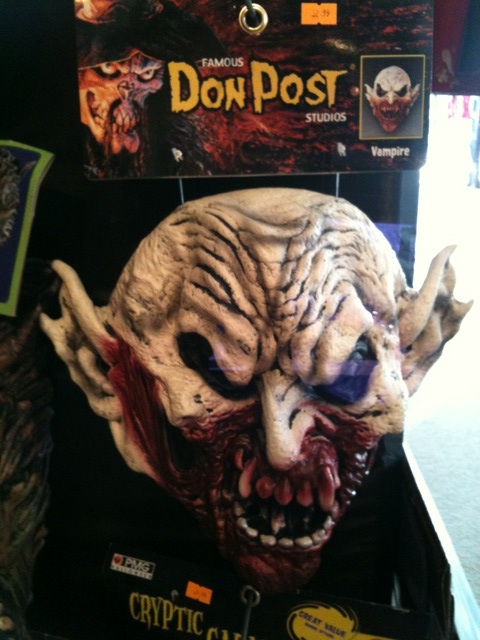
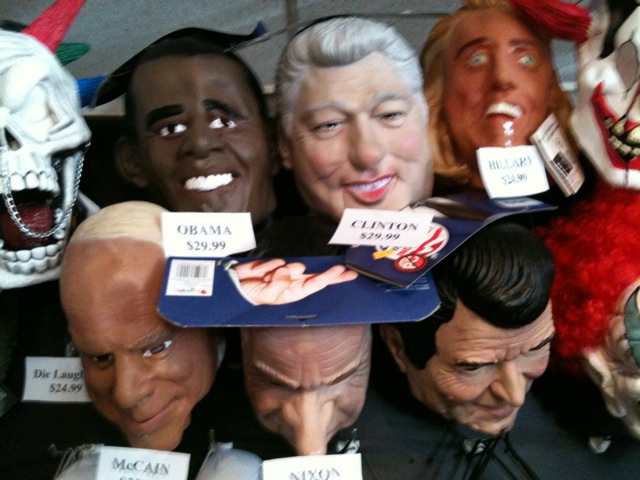
People who know me know that I still like a reasonable amount of store stops. There’s something appealing in checking out grocery stores, department stores, big box stores, little locally owned shops, the whole enchilada. I like seeing what’s new. I am always startled by the mid-July return to stores of back-to-school supplies but I love all those fresh notebooks and folders and pencils. I love the onset of Halloween season and could spend hours looking at every possible variation on masks and decorations.

But even grocery shopping is fine with me and has been since I was a kid.

I spent a lot of time going to grocery stores with my dad. He was the primary grocery shopper in my family. In fact, I have almost no memory of my mom in the supermarket. She wasn’t a big shopper in any way. Clothes shopping just about pushed her over the edge.

My trips to the store with my dad, however, were real treats for me.

I have only vague memories of Marshall Carter’s Madison Street Market. It seemed big to me at the time, but judging by the KFC now occupying its former location it must not have been all that big. My only distinct memory of it was that it seemed to be built on two levels. It seems like you had to step down to get to the rear of the store.

I loved going to Jack Gommel’s butcher shop. (I love seeing Mr. Gommel behind the butcher counter at Marsh these days too.) My dad and I would start at one end of the L-shaped butcher counter, buying baloney and bacon (when we didn’t have a supply from our own hogs) and hamburger (when we didn’t have a supply from our own cows) and the like. We made our way, shuffling along the butcher case with the other shoppers, from beginning to end, then ducked down the aisles to pick up the random canned or packaged good.

Dad and I often went to Marsh or Wise or Ross too, but Gommel’s stands out in my memory, as does the Eavey’s grocery store just off South Madison Street. Eavey’s was a favorite stop for me because of the magazine rack near the elevated office at the front corner of the store. I would peruse the magazines and comics there while Dad wheeled his cart around the store.

The magazine memory, of course, is somewhat unrelated to grocery shopping and more closely connected to the glimpse of the forbidden that Eavey’s magazine rack offered. Because there, on an upper row, were the kind of men’s magazines that most boys wanted to get a look at. They had names like “True” and “Man’s Life” and usually featured stories about hardy men surviving bear attacks and blizzards and brutal Pacific islands during World War II.

I spent most of my time at Eavey’s with my head whipping back and forth from the magazines to the aisle nearest me to make sure my dad wasn’t walking up behind me.

That’s because, in addition to grizzly mauling stories, the magazines featured cheesecake photos of models. The bikinis the women wore were probably modest compared to what we see today.

But take my word for it: They represented something you didn’t see every day in Cowan or Stick City. Even though Playboy and its imitators were in existence even then, those were beyond my grasp and my expectations.

The men’s magazines – and monster magazine and comics – in the rack at Eavey’s, however, were just an added bonus that helped ensure that any time my dad headed toward his pickup and asked if I wanted to go to the grocery, I was ready.

I wanted my MTV (back then)

Other than a tendency to waste an entire weekend watching a “Real World” marathon when my family was out of town, I haven’t watched MTV in a while. I still catch a few minutes of the channel’s annual movie awards show, which is silly fun, now and then. I might try “Teen Wolf,” which looks intriguing, when I have a spare minute. But the reality TV genre that “The Real World” spawned doesn’t appeal much.

And there doesn’t seem to be much on MTV these days besides reality shows. Same for VH1, which used to be a showcase for the videos that MTV had already abandoned but is now consumed with shows about celebrity wannabes and never-gonna-bes.

But the purpose of this blog entry isn’t to criticize MTV today but to remember MTV back then.

After all, the channel’s 30th anniversary is upon us.

Okay, let’s think about that for a minute. Thirty years.

Holy crap, we’re getting old.

I still remember vividly the heyday of music videos in the 1980s. Like every young adult at the time, I turned in to see every lame and cool video that premiered. My friend Brian and I practically raced to his apartment to watch the premiere of Michael Jackson’s “Thriller” video in 1983.

And the VJs. I loved the VJs. How cool was J.J. Jackson? How cute was Martha Quinn? How amazing was it to realize Nina Blackwood appeared in Playboy?

Although some of the videos are painful to watch now, they seemed like milestones at the time. How cool it was to see some of the biggest hits of the day come to life. Oh, and the David Lee Roth videos too.

While I enjoyed MTV, I think I liked the overnight videos show that aired on TBS even better. For five or six hours, the channel showed back-to-back-to-back videos interrupted only occasionally by commercials.

I stuck with MTV for years, even after videos were being replaced by programming. I loved the game show “Remote Control,” loved Jon Stewart’s show and the aforementioned “Real World.”

Of course, it seems like a million years ago now. But it’s been only 30 years.

Only 30.

iPhoneography

I really like my iPhone, even though it’s not the newest generation and doesn’t have all the bells and whistles. It lets me check email and Facebook and Twitter and, oh yeah, text and make phone calls.

And while it might be too much to expect that a complicated collection of plastic parts that does all those things also takes good pictures, the iPhone takes pretty good ones. Maybe nearly as good as a standard digital camera.

Here’s a couple I’ve taken this summer. One is of Chinese terra cotta warrior replicas at the Children’s Museum of Indianapolis and the other is of the interior of the Grove Arcade in Asheville, North Carolina.

If you’re in Asheville – a very cool city – you should check out the Grove Arcade. It’s a monument to how the best-laid plans etc., etc. In the 1920s, Asheville millionaire E.W. Grove wanted to construct “the most elegant building in America.” It was to be a 14-story tower and one of the largest buildings in North Carolina. But Grove died and the tower was never completed. In fact, only the base, a couple or three stories high, was completed.

Most of the tenants were evicted and the building was taken over by government offices during World War II, then the building sat empty for decades until it was finally restored and reopened with shops and offices in 2002. This photo shows the building’s main atrium.


Old sheriffs never die, they just solve mysteries

There’s a subset of the mystery genre called the “cozy” that features genteel detectives and killers and then there’s the type of mystery I like to call a “crusty.” These stories feature a cop or investigator – usually middle-aged or older – who would rather be hunting or fishing and drinking a couple of beers than solving crimes. These guys are often loners, maybe even misanthropes, but often have a small group of cohorts on whom they can depend. They’re usually softies at heart but show it only through their affection for their grown children or dogs.

There might be no better representative of the crusty right now than Walt Longmire, the Wyoming sheriff who is the central character in a series of mysteries written by Craig Johnson. The first is “The Cold Dish” and the latest is “Hell is Empty.”

Longmire is sheriff in the kind of town where everybody knows everybody else’s business but rarely sticks their nose in it. He’s no spring chicken. The series is set in the present day but Longmire is a Vietnam vet, and at least one of the mysteries springs from his time as an investigator there.

Although he’s a loner – living in house mostly unfinished since the death of his wife – Longmire has friends, including Henry Standing Bear and Victoria, his big-city born deputy and sometime love interest. His daughter and his dog further humanize him.

Johnson, who lives in a town of 25 in Wyoming, writes clear and concise stories that draw you in immediately. While they’re crime novels not unlike those that Robert B. Parker wrote, there’s enough of the feel of a western to them to appeal to fans of that genre.

Inspired, no doubt, by the success of the Elmore Leonard-based crime drama “Justified” on FX, the A&E cable network is making a “Longmire” movie starring Robert Taylor as Longmire, “Battlestar Galactica” star Katee Sackhoff as Vic – inspired casting there – and Lou Diamond Phillips as Henry.

They’ve de-aged the characters a bit for the movie but if they hit the kind of solemn tone that CBS has found with its adaptations of Parker’s Jesse Stone books, they could have a winner. I’ll be watching and I’ll be reading Johnson’s terrific series of books.


Get off my lawn volume one: Dining out then and now

My family ate out tonight at a Muncie restaurant and had a perfectly fine experience. We like to patronize both local and chain restaurants, mixing it up when we go out to eat. A favorite is a favorite, whether homegrown or the bright idea of somebody elsewhere, but we feel good when we’re patronizing locally-owned eateries.

While we – like a lot of people – have been eating lunch and dinner at home more in the past couple of years in large part because of the economy, eating out is still a part of our lives.

But I’m startled sometimes to remember how little my family went out to restaurants when I was a kid.

It’s not uncommon for us now to eat dinner out two or three times a week, but going to a restaurant was a rare thing when I was a kid. I’m not even talking about special occasion-type dining out. Maybe it was because my dad – a factory worker and farmer – was the sole wage-earner in the house and money seemed dear if not tight. There were not a lot of special occasions that involved an expensive meal out.

But maybe it was because there just weren’t that many restaurants back then.

Is that possible? I know there were restaurants around Muncie – several downtown, including the Rivoli diner and the Chinese restaurant, among others – and several on the southside, where we lived, including the Pixie Diner, Jimmy Carter’s Skyline, the near-downtown Big Wheel and a smattering of others.

But I honestly can’t recall a restaurant my family patronized on a regular basis … except for McDonald’s. I still vividly remember my dad driving into town to get hamburgers and French Fries at McDonald’s on the occasional Friday night. He would bring home the sack and my brothers and I would fall on it like wolves.

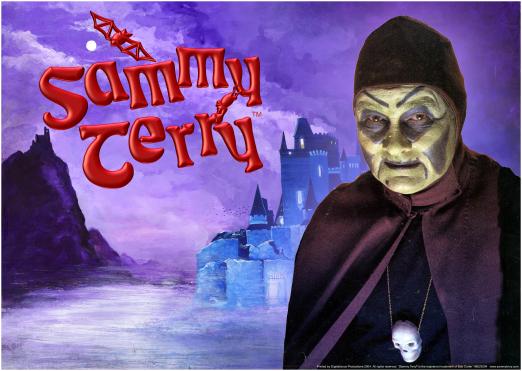
And my mom, bless her, would hold back a hamburger to offer me late that night when “Sammy Terry” was on Channel 4. I really wanted to watch Sammy’s old movie offerings but it was hard for me to stay up that late. So mom would offer me a nearly-midnight-snack of a McDonald’s burger as a waker-upper. I will forever associate McDonald’s burgers with my mom and Sammy Terry.

My parents ate out a lot more after I was an adult, partly because they felt like they could afford to and partly because my mom in particular felt like she had cooked enough for one lifetime.

But my dad was still inclined to cast a skeptical glance at the prices on the menu, even when he wasn’t picking up the check. I think growing up during the Depression, scratching for a living and putting in long hours in a hot factory for most of his life left him less inclined to throw a lot of money around in restaurants. Except for the occasional bag of burgers from McDonald’s.

Teenage angst is one thing, but sheesh

I’ve just finished reading “I Am Not a Serial Killer” by Dan Wells and enjoyed it a lot.

I didn’t know quite what to expect when I started it, even though I got a hint from looking at the dust jacked for the latest in the series about teenager John Wayne Cleaver. The cover blurbs suggest that Cleaver, 15 in the first book, is a sociopath and serial killer who, like Dexter in that book and TV series, turns his murderous attentions to victims who deserve to die.

There’s a bit more to it than that, however, and I’m not going to spoil it for you by spelling it out.

Suffice it to say that if you remember those darker episodes of the TV series “Buffy the Vampire Slayer” in which the authorities believe that Buffy is a psychotic killer when, really, all she’s doing is destroying demons and monsters … well, this book will resonate with you.

Wells is a clever writer. He maintains a propulsive momentum and very appealing characters. I could totally imagine this book being adapted as a TV series despite John’s graphic homicidal tendencies.

Besides, what teenager hasn’t imagined committing a gruesome murder or two?

Wells, like steampunk writer Cherie Priest, also maintains an interesting and varied blog if you want to check it out.

I’m switching up my reading and going into the next installment of Craig Johnson’s Walt Longmire book series, but I’m looking forward to starting Wells’ next John Wayne Cleaver book soon.