iPhoneography: More Halloween pics

It’s that time again: Time to look at some interesting, odd and creepy Halloween costumes and items of decor.

Let’s get started!

We’re gonna start small this time and go big.

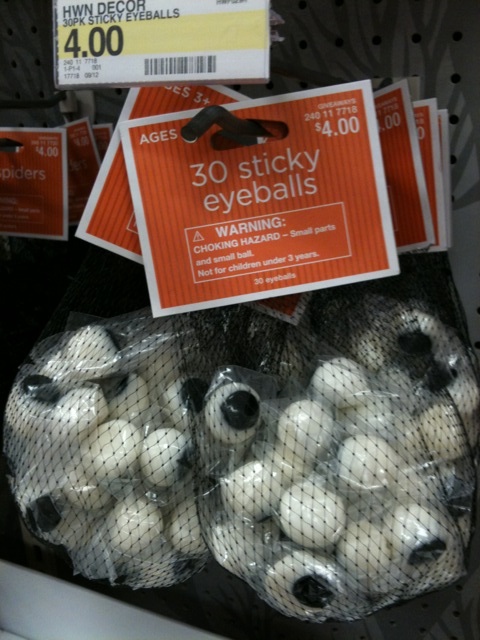
I don’t know about you, but I have sticky eyeballs when I wake up many mornings. But if I want a bag of 30 of them, I know where to go: Target.

There’s something about a bloody handprint that’s downright creepy. But bloody, kid-sized handprints on a window. Yeggh.

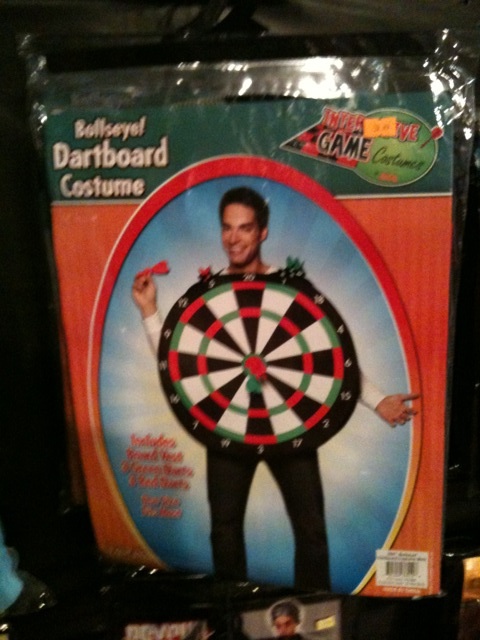
How about a costume that takes an ordinary item and makes it outsized? You can keep your banana costumes. For my money, you can’t top a costume that makes people want to throw sharp objects at you.

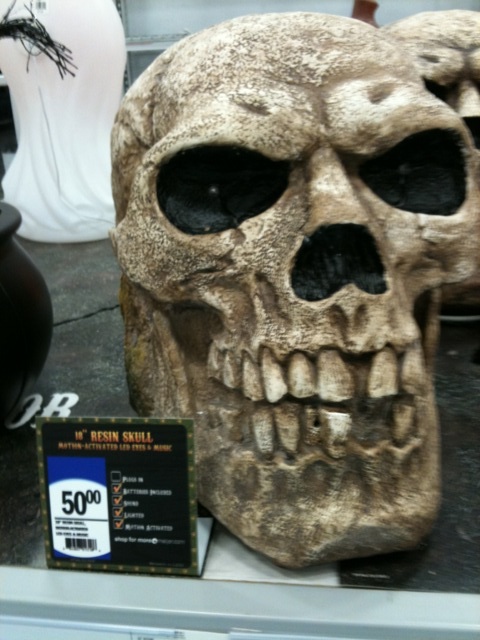
Everybody remembers that kid from school with a really big head. I think I know what happened to him. At any rate, I found his oversized skull.

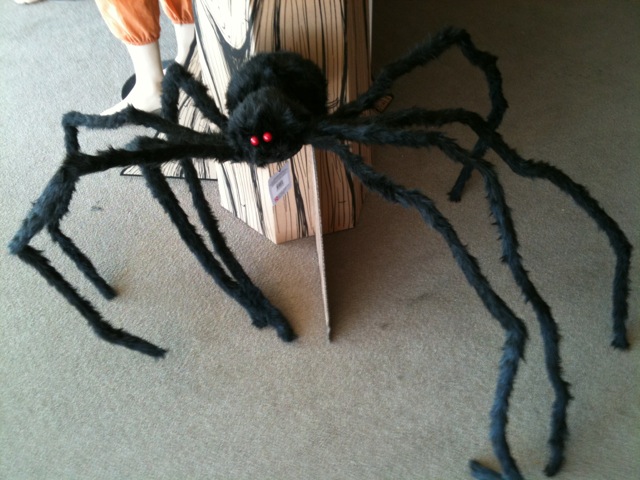
How about a big spider? If you saw this ottoman-sized arachnid crawling across the floor toward you, you’d want a comically large-sized newspaper or magazine handy.

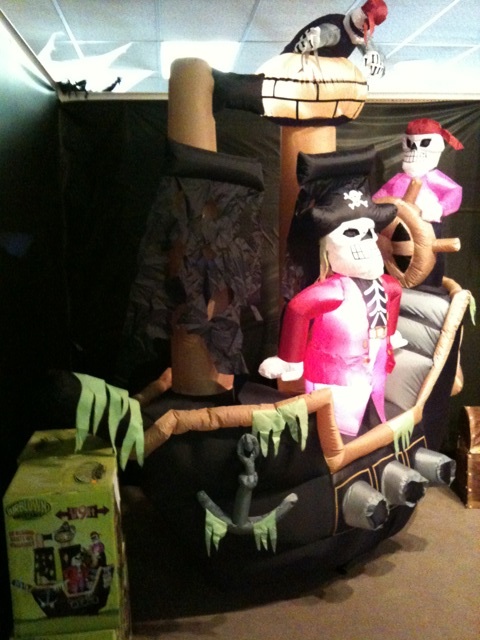
Last but not least, the ultimate Halloween version of a lawn inflatable. I don’t have any inflatables, but I love seeing them on lawns at Halloween and Christmas. I have a neighbor who even has a Thanksgiving inflatable.

This pirate ship, manned by skeletons, is the size of a mini-van.

That’s all for now. Next time, some cool and off-the-wall costumes for kids.

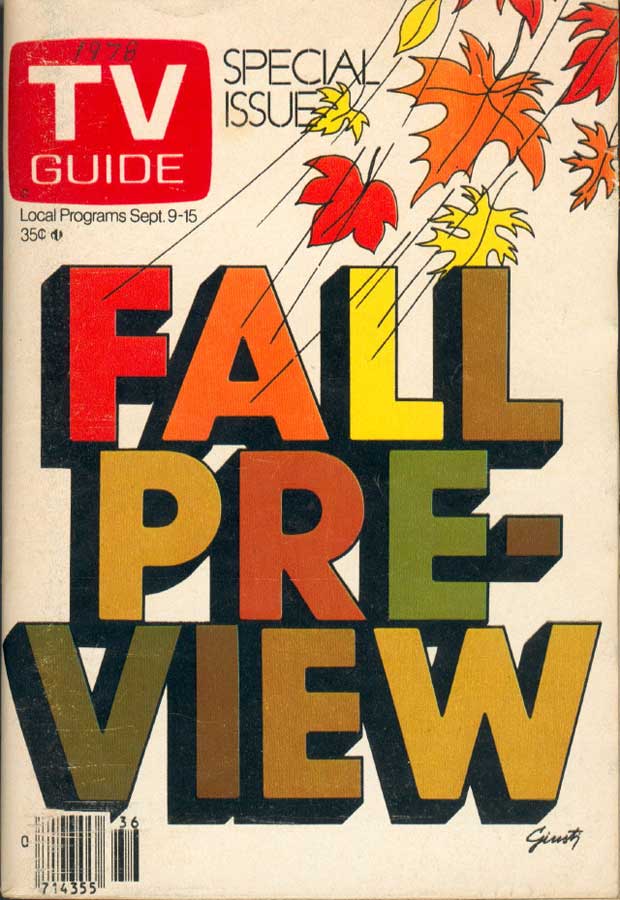
Fall’s not the same without TV Guide

I usually operate under the assumption that nobody who reads this blog grew up geekier than I did. Or at least you’re not willing to admit it.

But it took a special kind of geek to salivate over the TV Guide fall preview issue quite as much as I did.

Now when I was a kid and a teenager, I was a movie, sci-fi, book and TV geek. Unlike now. Ha.

The highlight of my week, at least many weeks, was Tuesday, when the new TV Guide came out.

My friend Jim and I went over each issue, inch by inch, increment of the day by increment of the day, checking out what was airing on the four or five channels we could see with our primitive TV antennas.

Sammy Terry’s “Nightmare Theater” was a highlight of each Friday night and the listings of Sammy’s two features that night was likewise a highlight of TV Guide. So was the listing for “American Bandstand” on Saturday. So were the Saturday morning cartoon listings.

We mapped out our entire week’s viewing well before the week began.

The best TV Guide of the year, of course, was the fall preview season. Besides the program listings that we scoured religiously were the articles and previews of new shows. “Battlestar Galactica?” Don’t know what it is, but I’ll give it a try. “Man from Atlantis?” Why not?

The TV Guide fall preview, with its colorful photos, snappy articles and — best of all, really — unsubtle ads was the social event of the year for geeks. If you considered a social event a digest-sized magazine that prompted you to spend hours on end sitting alone in front of a TV, that is.

I haven’t read TV Guide in years. I’m not sure a print version of the magazine is still published. I mostly know it now as a cable channel with low-rent programs and an annoying “crawl” of  listings. The online version of those listings is just as bad, maybe worse.

Somebody mentioned the other day that the fall TV season had begun, and I guess it has. But how can anyone tell without the fall preview issue of TV Guide on the coffee table?

Robot end of the world can’t quite top zombie finish

In the wake of the pirates vs. ninjas match-up (how did that come out, anyway?) comes another, even more intriguing face-off: Robots vs. zombies.

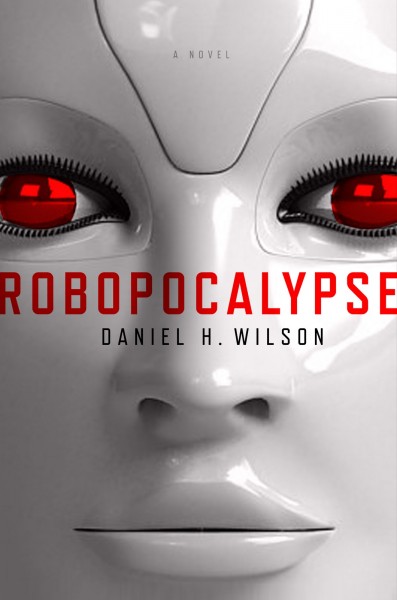
The thought comes to mind as I finish “Robopocalypse,” a recent novel by Daniel H. Wilson, a guy with a doctoral degree in robotics and a hell of an imagination.

There are no zombies in Wilson’s end-of-the-world and beyond — well, not really — but clearly “Robopocalypse” is shooting for the same pop culture impact as Max Brooks’ “World War Z.”

Both novels recount the end of the world. Brooks’ 2006 book is about how society breaks down when zombies begin to spread like a virus. Wilson’s story is a near-future tale about what happens when artificial intelligence emerges and decides it deserves to inherit the earth.

Both books employ the technique of alternating chapters telling the story from the points of view of diverse narrators. Brooks’ book rarely returned to the same characters as it jumped from India to the American west to the international space station.

Wilson’s book, however, follows a half-dozen storylines and that many groups of humans as they survive, elude and eventually fight back against the robot revolution.

In the future portrayed in the book, robots are much more commonplace in our society. Most cars are automated, so when Archon, the AI that leads the revolution, gives the order, they begin running down pedestrians. Robotic household helpers commit bloody murder and electronic peacekeeping robots turn on their armed forces comrades in Afghanistan.

Wilson’s idea of recurring narrators will probably make it easier for director Steven Spielberg to turn the book into a movie, a project that’s been announced but not yet begun. The fractured narrative POV of “World War Z” means that the movie version — now in the works — had to add a human narrator to appear throughout the story. In the movie, he’s played by Brad Pitt.

“Robopocalypse” is clever and often thrilling with a likable group of characters and some genuine suspense.

I have to say, though, that I preferred “World War Z” for a couple of reasons. Brooks’ novel isn’t afraid to let readers figure out things for themselves. Wilson’s book, narrated by a young soldier, over-explains what’s happening. Almost every chapter is filled with intriguing scenes and characters but ends with a narrated paragraph reiterating the importance of the developments we’ve just seen and those to come. They’re totally unneeded.

I’m also kind of surprised that a couple of the strongest plot twists and characters don’t happen a little earlier. They’re turning points, to be sure, but by holding them back, Wilson deprives us of some of the most engaging characters until the last few chapters.

Nevertheless, Wilson’s “Robopocalypse” is a very good sci-fi adventure. If you’ve read it and “World War Z,” you’ve read the best latter-day takes on the end of the world.

Family Circus been very, very good to me

One of the most enjoyable things about doing this blog for the past three months has been seeing what readers react to.

When I write about personal memories or experiences, people who I know, who find the blog through Facebook postings, read and respond.

When I write about pop culture touchstones, like Captain Action or Thingmaker, Internet search engines steer readers my way.

And then there’s the Family Circus newspaper comic strip.

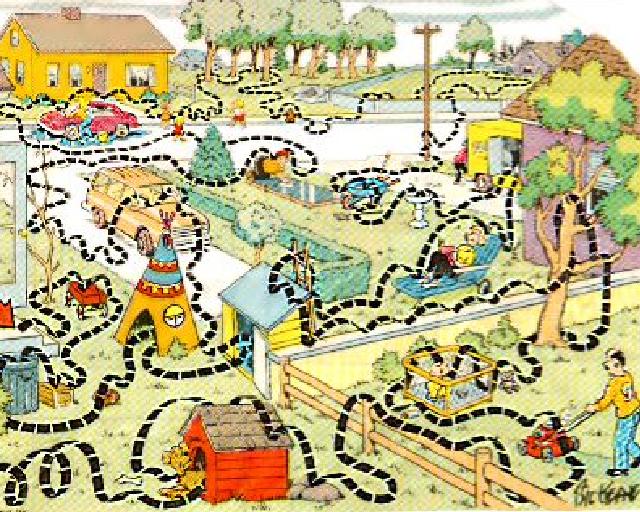
A few weeks back I mentioned new NASA photos of the moon and noted that the footprints and tracks of astronauts reminded me of those Family Circus panels where Billy — or was it Jeffy? — took some circuitous route home, symbolized by dotted lines throughout his neighborhood.

Here is the NASA photo:

And here is the Family Circus panel:

Well, Family Circus has its fans. They might not be quick to do Internet searches, but they will look up online references to the strip.

On Friday, this blog saw hundreds of page views sparked by Internet searches for “Family Circus Billy” or some variation on those words.

In online terms, hundreds of page views isn’t that many. In my day job, it’s typical for a story to get thousands of page views.

But for this little blog, hundreds of views is a big deal.

Seeing all those big numbers, I briefly flirted with the idea of turning this blog into an online shrine to the Family Circus.

But then I thought, what would I say about the Family Circus every day? How many times could I recap those classic “Not me!” panels?

So I decided to note the anomaly here and move on. Maybe I’ll never get those page views again.

Or maybe I’ll just do an occasional look at those “Ghostly grandparents watching over the kids” panels.


Spam, Spam, Spam, Spam

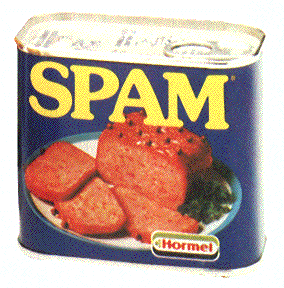
I love Spam.

The kind you eat.

Well, maybe love is too strong a word. But I like Spam. In a world where people eat raw fish — and pay premium prices to do so — Spam is not only a taste sensation but a bargain.

Okay, maybe there’s a bit of tongue in cheek — not to mention meat byproducts — in this ode to Hormel’s processed meat. But I genuinely enjoy the stuff.

My dad was a Spam eater from way back. (Or, if you prefer, SPAM. But that seems kind of stilted, so for the purposes of this blog, it’s Spam.)

Spam was a taste my dad acquired in World War II, when he was stationed in the Pacific Theater and spent part of his time as an Army cook. Hormel says 100 million pounds of Spam was shipped overseas during World War II. Some of it was even eaten. Much of it was used by my dad in various recipes.

During the war, my dad ate Spam because he had to but retained an appreciation for it, which he passed along to me.

Some of the foods of my youth — most sugary cereals, Beanie Weanies — don’t stand the taste-test of time today. Spam does, however.

I can eat it fresh (well … ) out of the can. I can eat it cold. I can eat it fried, preferably with eggs.

Part of the continuing appeal of Spam, I think, is that it horrifies my son so much. I enjoy torturing him by pulling a can of Spam out of our cabinet — I think that can has been there for much of his young life — and telling him, “What do you think? Should we have Spam tonight?” He reacts with disgust, of course, and so far I haven’t actually made him eat any.

Spam has gotten a bad rap in recent years. Its reputation took on a new luster with Monty Python’s “Spamalot,” but there’s not a lot that even a spoofy Broadway musical can do to overcome the onus of having particularly obnoxious junk email named after it.

Dang. All this writing about Spam is making me hungry. I don’t have any reason to worry that the can of Spam has been eaten, but it might have disappeared from the cabinet through some Spam-preventive skullduggery.

Ah, no. Still there. Waiting for me.

Soon, Spam. Soon.

iPhoneography Part … uh … more Halloween photos

It has been too long since the last installment of iPhone pictures of fun, cool and cheesy Halloween costumes, masks and decor available in your finer retail establishments. So long, in fact, that I’ve lost track of how many installments we’ve had.

So let’s get to it!

First, with apologies to IT guys and girls everywhere, there’s the computer nerd costume. The dorky glasses and pocket protector, sure, but the teeth? I’ve never seen an IT person with those teeth. I think they’re hillbilly costume teeth that got included in this package by accident.

Speaking of odd costume choices, what is it about this trench coat that makes it a “nightmare trench coat?” Beats me.

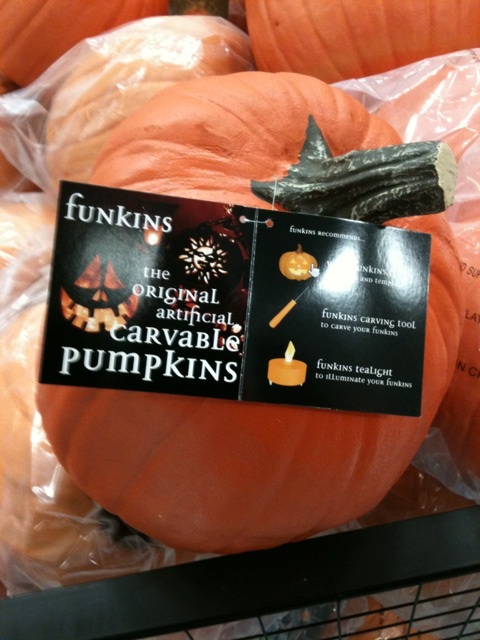
And who knew they had carvable artificial pumpkins? They’re kind of an interesting variation on the traditional pumpkin, without all the guts and seeds. But the one that I checked out was hard as a rock. I foresee even more pumpkin-carving-related trips to the emergency room with this baby. Funkins indeed.

I think these skeleton candleholders are actually pretty darn cool.

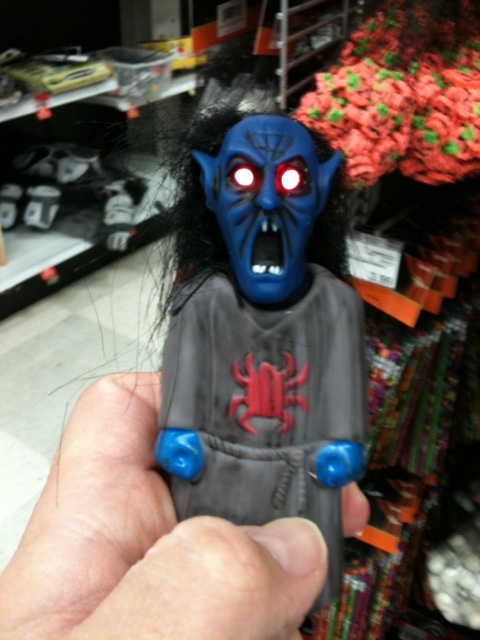
It’s hard to tell from this picture, but this is a freaky little doll, only four or five inches tall. You squeeze its lower midsection and it shrieks and its eyes light up. I’m tellin’ ya, it’s freaky.

Of course, my eyes light up if you squeeze my lower midsection. I might even shriek.

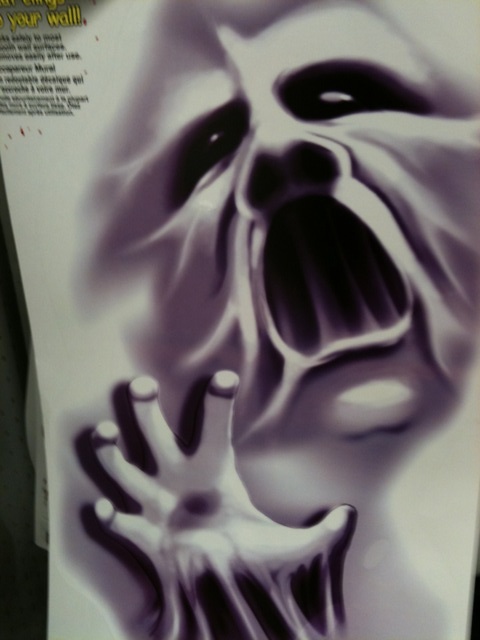
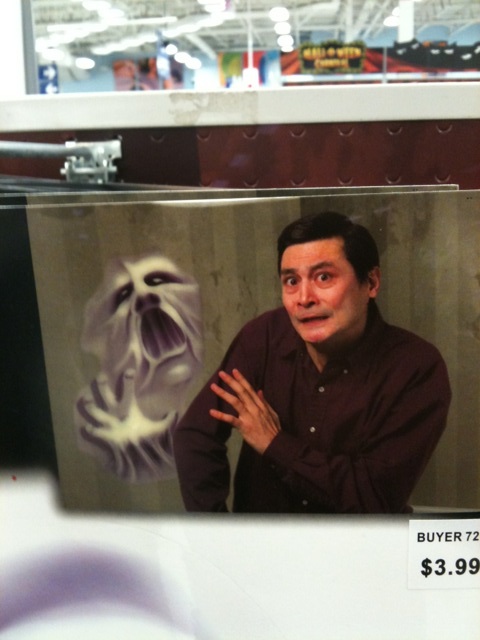
The last two photos for this time around are of those wall decorations that look like a three-dimensional face (and hand, in this case) pushing out of the wall. Kinda cool, huh?

But … the manufacturer ruins everything by hiring a bad actor for the packaging. Look at this guy. Do you believe he’s frightened by that face pushing out of the wall behind him? Or does that expression say something else, like “Wow, I shouldn’t have had that burrito.”

More next time!

‘Shocking’ developments in horror movies chronicled

If I live to be a hundred, I don’t think I’ll forget the anticipation I felt waiting to see the 1973 thriller “The Exorcist.”

The movie, which had opened just after Christmas in big cities, had made its way to Muncie movie theaters by early 1974 and my friends and I at Cowan High School were eager to see it.

Eager? We were positively nuts about seeing the movie.

I was a horror movie fan from childhood, having grown up on classic Universal horror films and fun-but-sometimes-camp 1960s Vincent Price/Roger Corman flicks.

But “The Exorcist” was something else entirely. A big-studio movie, it was being promoted through a high-profile TV and newspaper ad campaign and the kind of word of mouth that money couldn’t buy.

Newspaper and magazine articles recounted the audience reaction to the film, about a pre-teen girl apparently possessed by the devil. People who saw the movie were fainting and wretching in theaters when confronted by scenes of the girl — played by newcomer Linda Blair — vomiting green bile and backhanding priests. Not to mention that crucifix scene.

My friends and I talked and joked about the movie incessantly. When we finally went to see it, some of the joking stopped. As we waited in the crowded theater for the movie to begin, I could hear a very anxious woman behind me, expressing concern that the movie might be too much for her. I sat forward in my seat, worried that she might throw up on me.

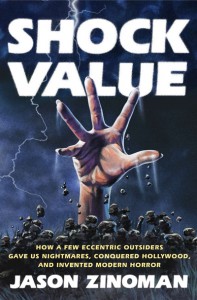
“The Exorcist” was in many ways typical of the new wave of more realistic, more controversial horror movies that were released in the late 1960s and throughout the 1970s, a period documented in Jason Zinoman’s new book, “Shock Value.”

Zinoman covers a lot of ground and a lot of personalities in his book. The big, well-known movies and names are here, as well as the players who had great influence on the new wave of horror films but who were little-known outside Hollywood circles.

One of them is Dan O’Bannon, who, while a student at USC, made a funny science fiction movie called “Dark Star” along with a friend and fellow student, John Carpenter. The ultra-low-budget movie, about the growing madness among members of the crew of a deep-space mission to destroy unstable planets, is odd and funny and made the best of its shoestring budget. The movie’s alien is a spray-painted beach ball with feet. Seriously.

Carpenter, as some of you might know, went on four years later to direct “Halloween,” the 1978 classic that changed horror movies and influenced generations of filmmakers.

O’Bannon co-wrote another classic, “Alien,” but found his career eclipsed by Carpenter. Plagued by medical problems and a bad reputation in moviemaking circles, O’Bannon died in 2009; his memorial service was attended by relatively few of his contemporaries. Zinoman’s book portrays him as a pivotal but tragic figure in modern-day movies.

“Shock Value” touches on many of the best and most notorious movies and filmmakers of the period, from “Night of the Living Dead” and its director, George Romero — I’ll tell you about my interview with Romero in another blog entry — as well as “The Texas Chainsaw Massacre” and its director, Tobe Hooper. Like O’Bannon, Hooper was responsible for one of the most influential movies ever made. And as was the case with O’Bannon, Hooper found himself struggling to equal his early successes.

I was a movie fan and, later, a movie reviewer during much of the period documented in the book and even interviewed some of the leading characters from Zinoman’s story, including Romero and Carpenter. But “Shock Value” told me things I didn’t know, including the shady reputation of the people who financed “Chainsaw Massacre” and some of Carpenter’s inspirations for “Halloween.” If you’ve ever seen the 1961 ghost story “The Innocents,” for example, you’ll appreciate when Zinoman quotes Carpenter about the effectiveness of placing macabre characters in the far background of a shot.

In these days of the Internet and instant updates on movies while they’re still in production, it’s refreshing to find a scholarly but accessible look back at some classic scary movies and the people who made them. “Shock Value” is both enjoyable and informative.

‘Dark Shadows’ cast looking good

I loved the daytime supernatural soap opera “Dark Shadows” when I was a kid. It aired every weekday afternoon right about the time I got home from elementary school and it was a must-watch for me while I worked on my homework. In fact, thrilling to the adventures of Barnabas Collins — the original vampire teen idol — Quentin, Willie Loomis and the rest of the Collins clan probably contributed to my schoolwork deficiency.

Despite my love for the show, which ran from 1966 to 1971 and aired periodically in syndication for years after, I wasn’t excited about the news that Tim Burton was making a big-screen version starring Johnny Depp.

Burton’s last several movies have been overblown messes and I assumed “Dark Shadows” would be when it comes out next year.

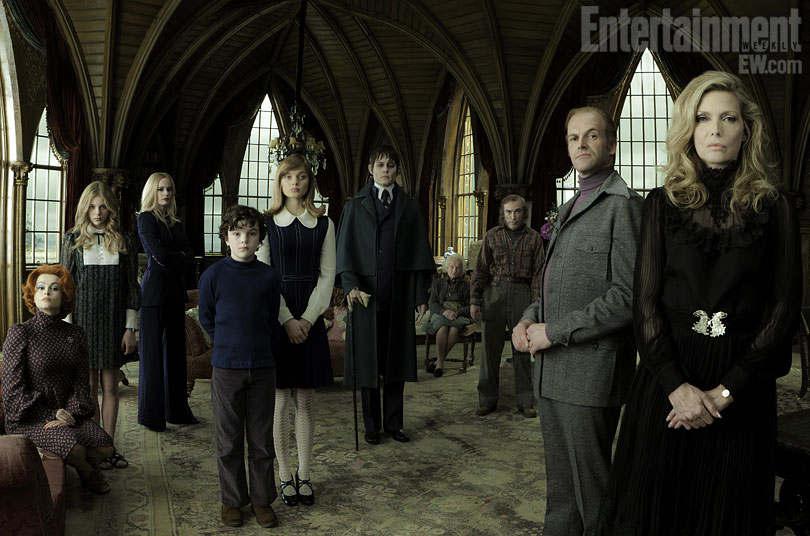
Then I saw the cast photo. And loved it.

The characters, makeup, 1960s period clothes and even the attitudes all look just right.

The movie still might be a mess. But I’m looking forward to at least checking it out.

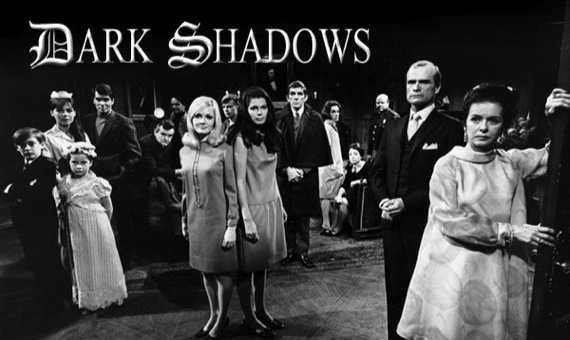
Above you’ll find the photo of the new cast as published this week by Entertainment Weekly. Below you’ll find an original cast photo.

A two-fisted drinker

I didn’t set out to confuse waitresses in Chinese restaurants. I really didn’t.

And, of course, it’s not just servers in Chinese restaurants who are confused when I order two drinks. It’s wait staff at almost every restaurant where I eat.

I don’t remember when I started asking for a water and a Diet Pepsi or unsweet tea. A long time ago.

You see, when I get seated at a restaurant and the waiter or waitress takes my drink order, I ask for — most commonly — a Diet Pepsi (Diet Coke if absolutely necessary) and ice water.

At some point, many years ago, I figured, “Hey, it wouldn’t hurt to balance out all that Diet Pepsi with some water. Water’s good for you, after all. They — science types I guess — say we don’t drink enough water. So I’ll order a glass of water along with my Diet Pepsi or unsweet tea.”

I also decided a glass of water was a good defense against negligent waitressing. If they never come back to the table and ask if I want a refill of Diet Pepsi, no big deal. I’ve got a glass of water handy. I’ve even been known to order a glass of water alongside a beer.

I usually have the same combo at home, in case you’re wondering if I inflict this odd preference only on professional servers. But at home I often get my drinks myself so it doesn’t matter.

Now this water-and-pop combo doesn’t faze some servers. But others are puzzled by it or even disbelieving.

In some restaurants, the server cocks an eyebrow and asks, “You want a Diet and a water?”

At others, they nod, walk away and return with just the water or just the Diet Pepsi. Not both.

At a few places, if I’m dining with someone, they assume I’ve just ordered for the other person and speed away, returning with a water and a Diet Pepsi that they arbitrarily assign to one or the other of us.

This just results in my dining companion being disgruntled.

Sorry for all the confusion, but I’m not going to change my preferences just because a server can’t figure them out.

Not to say that I’m not willing to find ways to emphasize that, yes, even though I’m just one person, I’m ordering two drinks.

“Can I get a Diet (pause) and a water please?” I ask.

I’ve even experimented with reversing the order, wondering if I say water before Diet, maybe that will signal they shouldn’t assume I’m just afflicted with some multiple-drink-ordering version of Tourettes.

“Could I get a water (pause) and a Diet please?”

I have yet to find a perfect way to pose this apparently unorthodox request.

Until I do, I’ll continue to get responses like one from a couple of days ago.

I told the waitress I wanted a Diet Pepsi and a water and she nodded, turned to walk away … then turned back.

“You want a Diet and a water?” she asked.

Yes, please. And thank you. And, apparently, sorry.