Here’s one for all you young people out there, because I know the young people like Slim Whitman.
WTF, you might be asking, as the kids say “What the fuck?” nowadays.
Well, I was prompted to write about the classic singer of classic cowboy songs after watching a few minutes of daytime cable TV this morning.
I don’t watch a lot of cable TV. I’m more likely to watch something streaming. And I never really watch much cable during the day. But I was channel surfing this morning, trying without luck to find something to occupy my brain for a few minutes before I submitted a horror novella for consideration, when I observed how awful the basic cable commercials are.
Lots of prescription medicine, over the counter medicine, snakeoil medicine, etc. Some gadgety things that involve shedding more light on your driveway or making it easier to hear the TV. I don’t know about you, but the last thing I ever have any trouble hearing is the commercials in TV.
So I thought back to the misspent days of my misspent youth and the times I watched local TV channels and I swear to god it seemed like nearly every other commercial back was for record albums.
You might know them as vinyl.
Most of the commercials were for record collections: Hits of the 60s or earlier, great country songs, Boxcar Willie, Fats Domino and Slim Whitman.
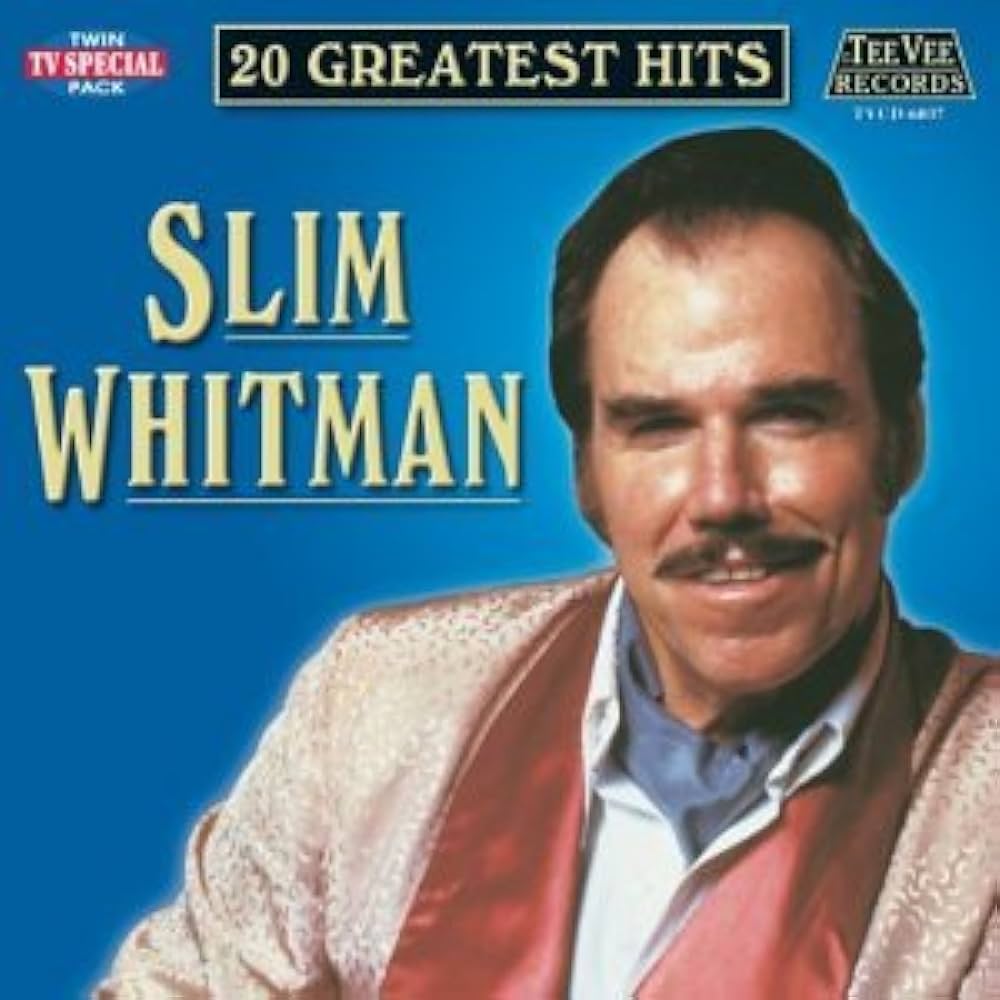
For those of you who don’t know: Slim Whitman, pictured here, was a country singer who was known for his falsetto and his yodel. His bio says he opened for Elvis Presley at one point. His greatest claim to fame in the last quarter of the 20th century came when his song “Indian Love Call” caused the invading Martians’ brains to explode in the Tim Burton sci-fi spoof “Mars Attacks!” which was itself loosely based on a vintage set of bubblegum cards.
Whitman, who died at age 90 in 2013, was a bigger star in the United Kingdom than in the United States.
So there you go, young people. Aren’t you glad you asked?
I think it’s easy for writers to get hung up on some, well, inspirational idea of inspiration.
I’ve always been a believer that inspiration can be quick and easy, even down and dirty. I take inspiration all the time from what I see out in the world, what I read and hear.
Today on twitter, a fellow writer, Regan MacArthur, talked about how he would change the 1997 crime drama “Cop Land” to add a little more drama for the central character, a New Jersey sheriff played by Sylvester Stallone. You should go read Regan’s tweet and follow him because he’s always just as smart as you would expect him to be from that tweet.
What Regan’s done is take a pretty great story and tweaked it just a little bit and, in my opinion, made it better. In the process, he might have inspired himself or any number of other people to write a thematically similar but different story about hero worship and how that plays into fraught relationships.
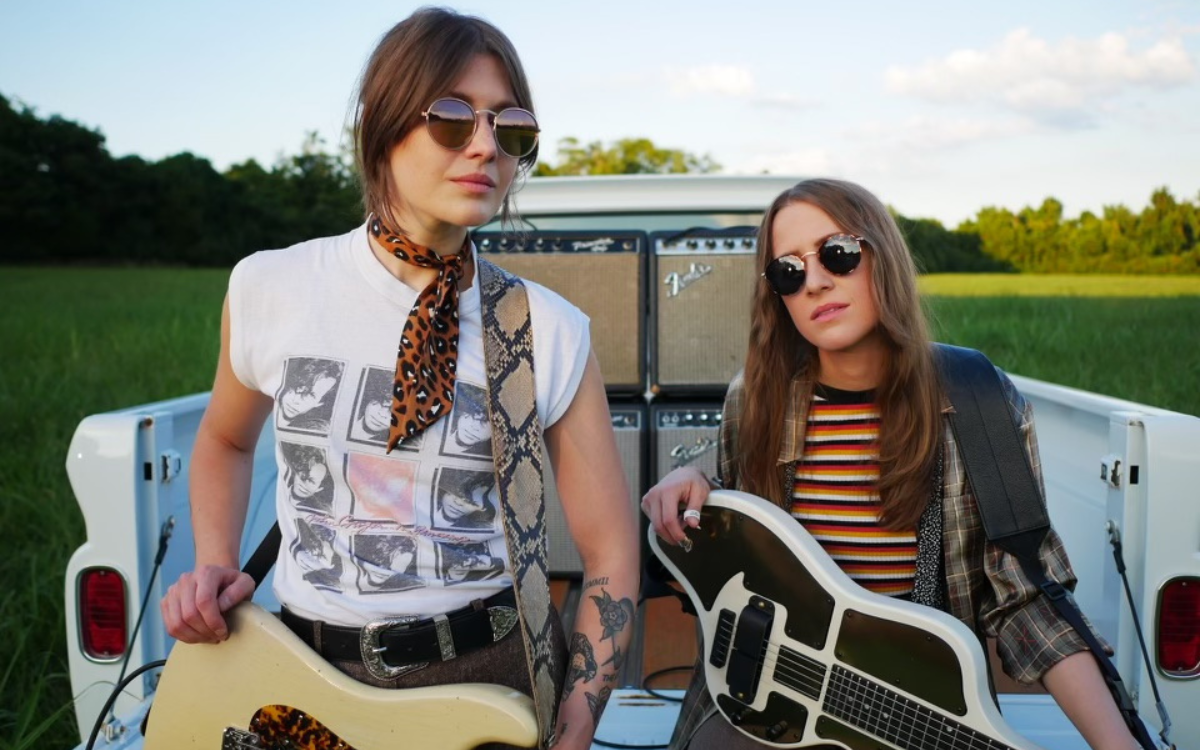
I’m trying to use this blog to talk more about writing, so I’ll note that I’ve taken inspiration lately from Larkin Poe, a truly great pair of musician sisters (pictured here) who are excelling in their mix of rock, blues and country,
They inspired me to write a short story that I’ve submitted for possible inclusion in a big 2024 anthology. No matter how good I think my story might be – I like it pretty well – it probably won’t make that anthology because so many truly inspired writers have submitted stories for consideration. I’ll shop it around somewhere else because I like the story and wrote it in a little lightning strike of inspiration.
I’ve got another story rattling around in the back of my head – and in notes – that was inspired by a former neighbor who was such a nutcase that I decided there had to be something hinky about him.
So we’ll see how that inspiration goes.
In the meantime, think about what inspires you. It doesn’t have to be a bolt from Mount Olympus. It can be as little as a good movie, a mediocre story, a billboard, anything.
I write a lot, considering dozens of articles I’ve written this year, as well as short stories and books. Somewhere along the line I’ve fallen into the habit of trying to write only when I’ll get paid.
So this blog, which dates to the early 2010s, when i was getting a regular paycheck for writing, has been neglected in recent years.
But with the former twitter disappearing up its own asshole and no other social media really coming on strong, I’m trying to make myself maintain an online presence somewhere besides social media.
So I’m here again, like some kind of drunken traveling salesman, returning home to the family he’s neglected over the years and promising to try to be better about just being here.
One easy way to do this is to write about what I’ve been reading or watching lately. So a quick checklist:
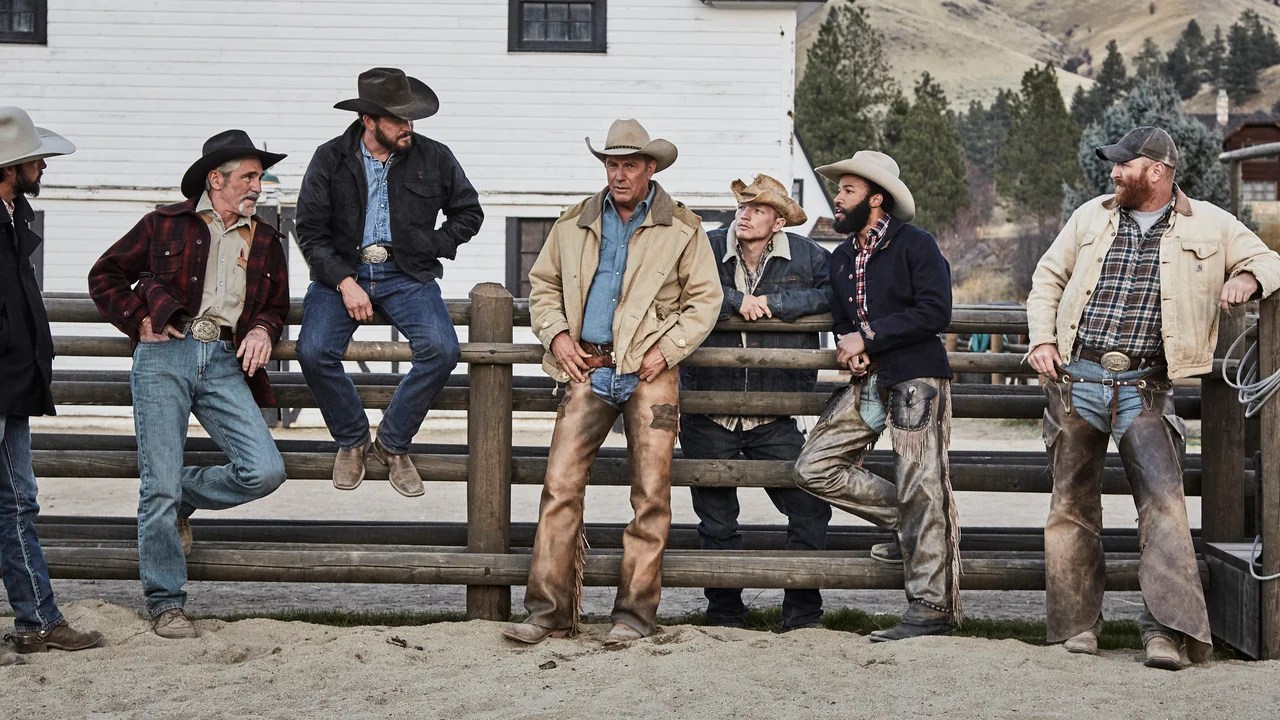
Yes, I’m watching “Yellowstone.” Again. I’m introducing my wife to it but I’m enjoying watching it again, despite how preposterous it gets as the series goes on, with the Dutton family killing man and beast with seeming impunity.
What I’ve always liked best about “Yellowstone,” though, is its servicing of its characters. The show juggles a lot of characters as the series goes on and a lot of writers who are inclined to turn up their noses at the show and its writer/creator would do well to take a few lessons.
If you’re writing a big, complicated story involving a lot of characters, you need to remember to make those characters consistent – not like shows dating back to “Melrose Place,” which would have characters completely change up their character to hook up with someone who had literally just tried to kill them – so that viewers and readers almost – almost – consider they’re watching and reading about real people they might know. Yes, in the case of “Yellowstone,” they’re awful real people but they seem true-to-themselves.
What I’m also watching:
I’m trying to watch some horror/thriller/suspense films during the month leading up to Halloween. Slow going so far, but I’ve enjoyed “Them,” the 1954 thriller about giant ants, and “Dressed to Kill,” the unhinged 1980 sexual thriller. The latter is a lot to take, 43 years after it came out.
I’m also watching “The Crown” for the first time and so far I’ve enjoyed the Clair Foy seasons best. And I’m rewatching “For All Mankind,” which does almost as good a job of world building as “Yellowstone.” The latter does best with its building out of its world by introducing more stories about Yellowstone ranch hands.
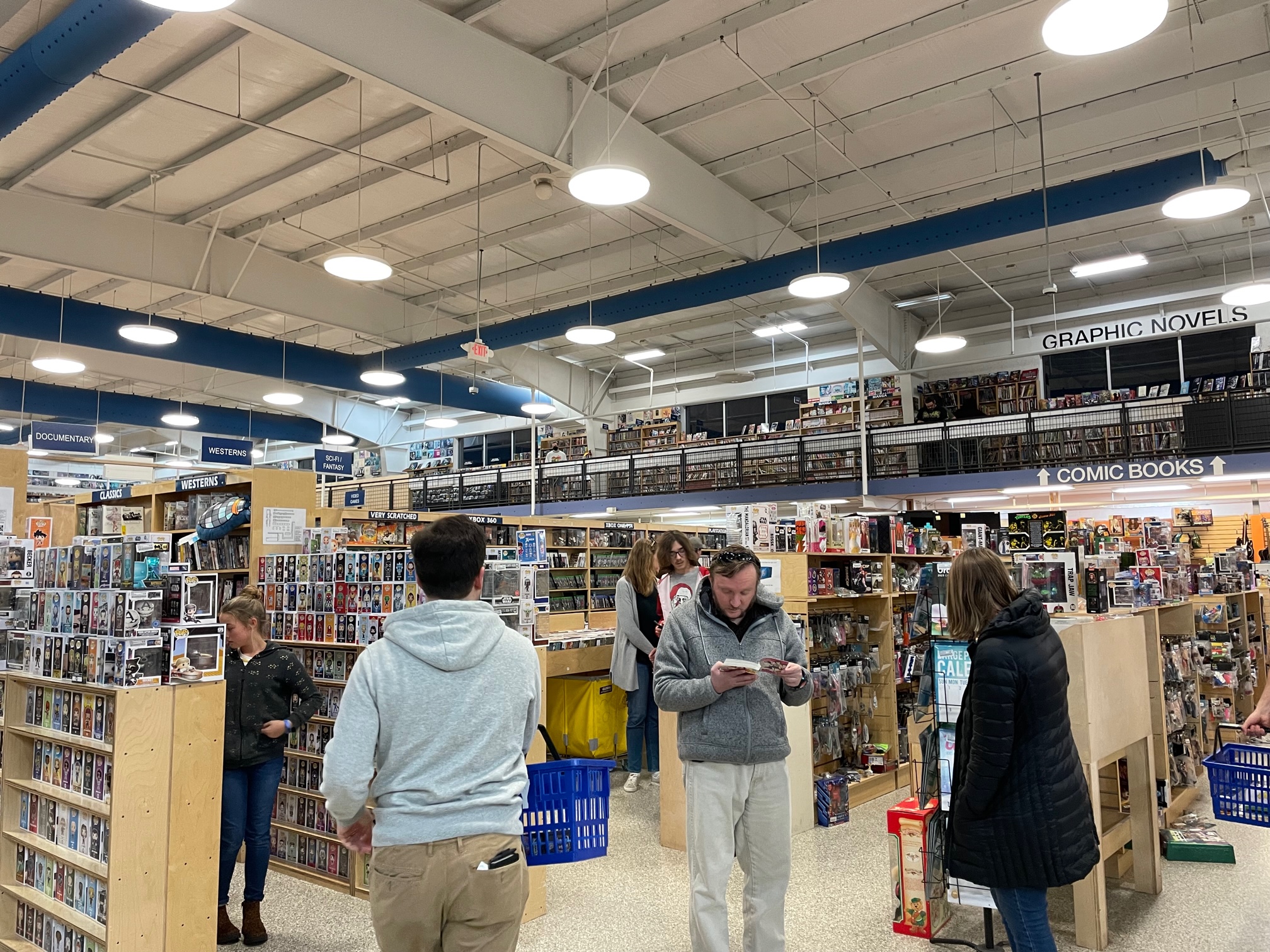
I was startled recently to realize how long it had been since I’d been in a proper used bookstore.
I’d been to Half Price Books in recent years, and they’re good and all. And I (briefly) checked out McKay’s here in my new city of Knoxville. And there are a few other used book stores around.
But to recall the sentiment of a U2 classic … I still haven’t found what I’m looking for.
I don’t want to leave any doubt that there are a lot of wonderful bookstores where I could spend a big chunk of the rest of my days. Like Malaprop’s in Asheville, Union Avenue Books in Knoxville and 57th Street Books in Chicago. They’re all great bookstores and you should visit them, along with Tattered Cover in Denver and Powell’s in Portland and other great indie bookstores.
But I grew up haunting the shelves of musty and cluttered used bookstores, like Al Maynard’s Used Book Headquarters and Bright’s Book Exchange, both in my hometown of Muncie, Indiana.
I miss those stores, both of which have been gone for half or more of my lifetime.
Maynard’s bookstore, run by a kindly but cantankerous old guy on the second floor of a downtown building, is the place I revisit in my dreams. Maynard, who closed his store when the building was sold out from under him in 1982, posted a sign at the top of the stairs that you couldn’t help reading as you climbed the stairs. It read something to the effect of, “You just climbed 23 steps on your way up … shoplifters will miss most of those steps on the way down.”
Maynard’s store had the standard overstock of every used bookstore back in the day, including stacks of National Geographic and too many copies of “Gone with the Wind.”
But there were 1950s and 1960s and 1970s paperbacks – the good stuff, the kind you could smell when you walked through the door – by the shelf full and, incredibly, many, many old pulp magazines. A guy I know bought many of those old and crumbling pulps from Maynard when he was holding his going-out-of-business sale. So those old magazines, with classic horror and sci-fi stories wrapped in mind-boggling cover art, live on.
I want to walk through Al Maynard’s store again, four decades after it closed and the building was torn down.
Same with Bright’s Book Exchange. I fanned through one of my old paperbacks the other week and was startled to see the stamp for the store on the inside cover and it brought back a flood of memories of my fellow geeks and I hanging out and talking to Bruce and looking at his endless racks of paperback and comic books.
When I mostly got out of collecting comics, I sold Bruce my copies of the Marvel comics introducing the new (at the time) X-Men. I wonder who has those books now? Because they’re not there anymore: The store has been a paint store or something for decades. An archive search shows the last ads for the store ran in 1988.
Yes, I know what you’re thinking: I’m not just looking for a used bookstore. I’m also looked to feel the same way I did back then, when I could walk into a bookstore and find, for a buck or less, some overlooked or half-forgotten paperback horror or science fiction novel or a collection of stories that were probably originally published in one of those old pulp magazines and reprinted for a new generation to discover in the 1960s or 1970s.
And you’d be right.
No, it is not possible to go back 40 years, to when I had a less complicated life and old, used books were more easily able to divert my attention and a good day meant finding a book with a mostly uncracked spine, no dog-eared pages and yet that smell that comes only after a book has sat on the shelf for a while, waiting for a new reader.
But … maybe the next used bookstore I find will take me back to that time.
The question in my headline above is mostly facetious. There’s a lot of humor in “Cobra Kai” the Netflix series (which debuted on Youtube) and a lot of it – really, most of it – comes from William Zabka’s character of Johnny Lawrence, memorable as the psycho but ultimate sympathetic antagonist of “The Karate Kid,” “Rocky” director John G. Avildsen’s 1984 hit. In the movie, Zabka was pitted against Ralph Macchio as Daniel LaRusso, a newcomer to the San Fernando Valley. LaRusso is the sympathetic protagonist, of course, and turns for help and mentoring to Noriyuki “Pat” Morita, who becomes his sensei in karate and life.
The premise of the antagonism between Johnny and Daniel is how the “Cobra Kai” series begins, with Johnny down on his luck and Daniel riding high as a SoCal car dealer. The first season is told, to a great extent, from Johnny’s point of view as he reopens the Cobra Kai karate dojo and tries to get his life together, particularly when it comes to his relationship with his teenage son, Robby (Tanner Buchanan).
Daniel himself has a challenge, running the car dealership with his wife, Amanda (Courtney Henggeler) and being a good father to their children, Samantha (Mary Mouser) and Anthony (Griffin Santopietro). Johnny, unable to connect with Robby, rescues neighbor Miguel Diaz (Xolo Mariduena) from bullies who were much like Johnny was, Miguel turns to Johnny for not only a father figure but a karate mentor.
The first season plays out much like you would expect, with stuck-in-the-80s Johnny building his dojo and Daniel struggling to deal with his hatred of Johnny. From Johnny’s point of view, Daniel was the bad guy of the original movies, having humiliated him in front of his sensei, John Kreese (Martin Kove).
But after the first season, “Cobra Kai” morphs into something else entirely, which is what prompted me to question internet references to the series as a comedy.
At the very end of the first (of five so far) season, Kreese reappears at Cobra Kai and “Cobra Kai” turns into an over-the-top and addictive melodrama.
Over the course of those five seasons (hopefully a sixth is in the works), “Cobra Kai” becomes a mix of soap opera, karate-fu (as Joe Bob Briggs might say) action (almost non-stop fighting scenes) and character betrayals and reversals. With the threat of Kreese overshadowing the all-important question of who will be the preeminent dojo in the Valley, the engaging young karate enthusiasts who join the opposing dojos fight, switch allegiances and eventually support each other in an even larger battle against villainous Terry Silver (Thomas Ian Griffith from “The Karate Kid Part III.”)
Silver’s return pushes the stakes sky-high and the action even higher. Silver is like something out of a James Bond movie and makes Kreese look reasonable by comparison.
The resurrection of that character is the best example of what “Cobra Kai” does so well: continue storylines from the original movies and bring back actors who were memorable from those movies. Daniel’s trip to Japan with Miyagi in the second movie is recalled here with supporting characters joining the “Cobra Kai” cast, most notably Yuji Okumoto as Chozen Toguchi, who battled Daniel to near-death in the second film but returns here as a wise elder who helps Daniel and Johnny lead their forces against Silver.
The entire series is dotted with scenes flashing back to the first three movies (not yet including the fourth movie, with Hillary Swank, but fingers crossed for next season) that left me gasping that they had not missed an opportunity to revive a character or plot point.
To be clear, “Cobra Kai” is ridiculous. Karate fights break out in school hallways and crowded public places. There are some real-world consequences, including injuries and lasting trauma (notably for Samantha LaRusso, who suffers at the hands of rival Tory Nichols (Peyton List) and struggles to make her way back to beatin’ the hell out of people.
This is a crazy show and hugely entertaining. It makes Marvel storylines look restrained and reality-based.
For an old guy, I like to think I do pretty well with technology. But after the last month of moving and setting up new accounts of various kinds – bank, cable and internet, the list goes on and on – I’m fed up with new account names and new passwords. Does that mean I won’t eventually settle into one of the other social media services? No. But I just don’t have the heart or will to do it now.
Twitter has always been odd as hell. Some of my most rewarding times on social media have been spent there, as well as some of my most frustrating.
But it was vital to me for reinventing myself after I left the newspaper industry full-time in 2019.
I had joined twitter in 2009 so I could tweet about Black Friday, which was still a thing back then. But in my hometown, Twitter has never been a mass media, so tweeting with a few hundred followers in those days was like hollering down a well. Pointless.
So for 10 years I used twitter like a lot of newspaper people: to tweet links to my stories and the stories of colleagues. To little effect, really, because Facebook sends many more readers to newspaper stories than Twitter.
But after slowing building my twitter reach to going on 3,000 followers, I took early retirement in 2019 and found myself wondering, “Now what?” That question applied to my use of twitter too. I didn’t have my own work to actively promote, but I could promote that of my friends and colleagues.
My writing partner and I were finishing up our third true crime book, “The Westside Park Murders,” that spring so that kept me busy. (The book was published by the History Press in 2021 after production delays due to the pandemic.) Then I began work on the first novel I’d written in nearly 20 years, “Seven Angels.” (The book won the 2021 Hugh Holton Award for Best Unpublished Crime Novel from Mystery Writers of America Midwest. It’s still out there, looking for a home.)
How does all this tie in to twitter?
I started using twitter not only as a way of promoting my own work, for sites like CrimeReads and, later, Daily Yonder and Gutter Review, but also making twitter friends with writers on the social media app. I actually have more twitter follows now than I did before I “retired.”
And we built a community. Not just the writers who i consider myself to actually know and who I speak with, but also some of the best and biggest writers, who I can exchange twitter pleasantries with. And not just politically active types but people who I know work to effect change.
Twitter lets a lot of people be themselves. That’s disastrous in some cases but infinitely rewarding in others.
I still think that twitter will survive, even if it goes away briefly. I think someone will rescue it and lift it up and return it to its status as the encouraging and infuriating place that it’s been.
I thought about tweeting this but decided to post it on this blog instead. Because twitter might go away and it is and always has been, like Facebook and Instagram and all the others, somebody else’s real estate.
We’re only renting space on social media, and it’s possible someone will come along and bulldoze that space.
But it’s possible someone will build a community all over again.
Because that’s what all of us have done all along. Build a community.
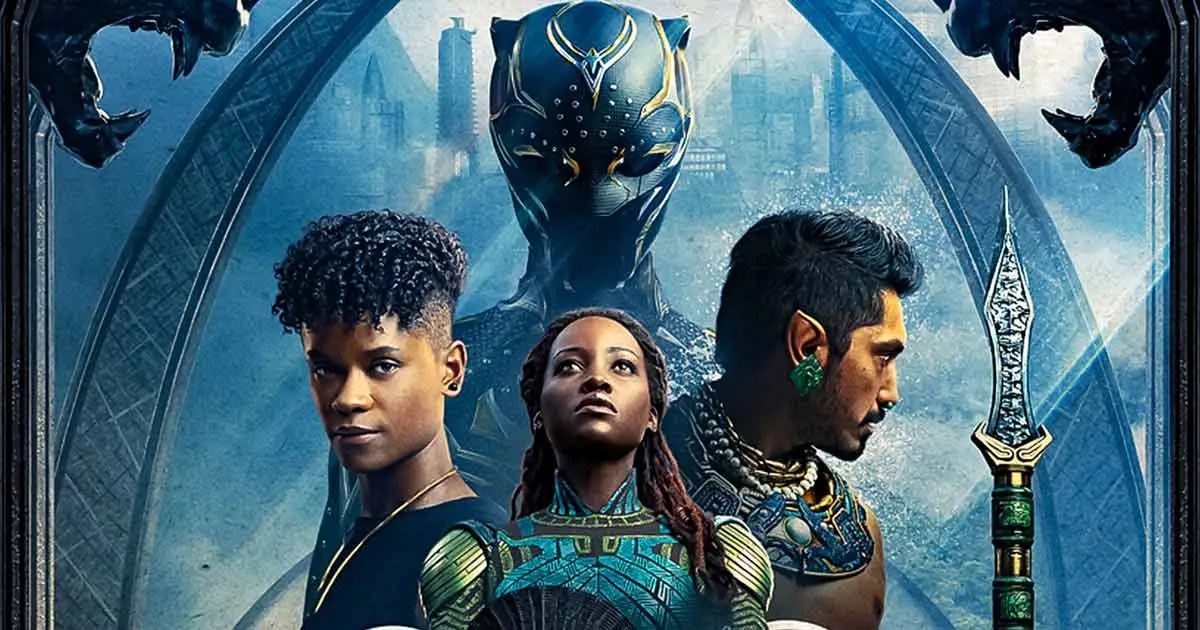
Some thoughts on “Black Panther: Wakanda Forever,” which I saw last night:
First, after seeing the “The Black Panther Will Return” screen at the end of the end credits – a bit of Marvel promotion that the studio has done many times – I wondered why more online reviews and news pieces hadn’t seized upon that. Marvel, where movies are planned out years in advance, announced something, a sequel or substantial reappearance, and nobody seemed to notice. I guess the return could be in the form of an appearance in the planned Wakanda series for Disney+, but it seems most likely the hero will return in the next couple of phases of big-screen titles, which builds to a pair of Avengers movies three years down the road.
I won’t get into spoilers much here, but wanted to note a couple of things.’
Director Ryan Coogler and Marvel were right to not recast after Chadwick Boseman died. It would have been disrespectful and unnecessary.
The sequel does pretty well with the daunting task of following an excellent film. Nothing could be as cohesive and impactful as the first film. But they did a good job.
The plot and battles are a little all over the map. But the character through-line is really well done. And the emotional toll of what happens to these characters is perfect.
Also perfect is the ending, including the sole end-credits scene.
The Wakandan characters were so fully-thought-out in the original film that there wasn’t much room for improvement here.
The new antagonist, Namor (played by Tenoch Huerta) makes a huge impression. I look forward to the future of this 90-year-old character from the Marvel comics.
Another good addition was Riri Williams, played by Dominique Thorn. Marvel does a good job introducing characters in secondary roles in big movies, ie Spider-Man and Black Panther in “Captain America Civil War.” Riri doesn’t leave that large an impression, but she’s the outside point of view in this movie and supplies a lot of the most amusing moments.
“Wakanda Forever” made a lot of money in its opening weekend, rightly so. The movie had an almost impossibly big void to fill and it mostly accomplished that.
So Twitter, where I spend too much time, is probably dying, strangled in the darkness by, well, how the hell do you explain what happened?
So I’m trying to diversify my online presence and part of that is posting more often on this here blog.
Over on Twitter, I usually do writing- and politics-related stuff. On Facebook I do personal stuff. On instagram it’s just pictures, usually, because what else are you going to do with it?
Before I urge you to scroll down and see several hundred pop culture posts, many of them dating to the heyday of this blog, the first half of the 2010s – well, I guess I’ve already urged you to do that now – I’ll make this post worth what you paid for it and note a couple of thoughts about the current crop of “Star Trek” series.
I’ve already mentioned on here that I love “Star Trek Strange New Worlds.” It really captures the spirit of the original series. I’m watching it a second time now.
“Star Trek Picard” is almost as good, but is not as light and deft as “Strange New Worlds.” I’lll be happy for the third and final season, though.
I’m still working my way through “Star Trek Discovery.” I love the cast and it’s taken an interesting swerve – 900 years into the future – and I’m beginning to get over how over-designed and distracting the Klingons were in the first season.
As a fan of “Star Trek” since its days in early 70s syndication, I’m just happy the show has a prominent place in entertainment again.
In 2019, I wrote my first full-fledged crime novel, “Seven Angels,” about Gloria Shepherd, who comes home to the little Tennessee town where she was born to help run the family funeral home and finds herself working to solve a murder and fight white supremacists, human traffickers and corrupt cops.
“Seven Angels” won the 2021 Hugh Holton Award for Best Unpublished Novel from Mystery Writers of America Midwest.
I got to play around with Tennessee characters and storylines, and here’s a portion of a chapter in which Gloria, newly named county coroner, goes out on a multi-jurisdictional raid that takes her to a moonshine still in a holler.
I hope you like it!
The Holler
“I thought moonshine was legal now,” Gloria said from behind the wheel. “Don’t they sell it in Gatlinburg?”
Bobby Lee nodded. “Legal moonshine is legal. Illegal moonshine is still illegal. The state licensed a few distilleries – the same big ones that make the whiskey you get in every bar and package store – to make moonshine, mostly as a tourist thing. But this guy’s not legal.”
Gloria’s Jeep was parked in the widest spot they could find along a gravel road leading into Falls Holler, about eight miles west of town. In front was a black SUV with four federal agents – a couple of ATF personnel, someone from Revenue, an FBI agent – and behind was an unmarked Crockett County car. In her rearview, Gloria could see the face of the woman behind the wheel.
“Who is she?” Gloria asked, hooking a thumb back.
“Deputy Suellen Cross,” Bobby Lee said. “I wanted you to meet her too. She’s good. Smart and a straight shooter. Very methodical but not afraid to get her hands dirty.”
“So if Westerman assigned her to this, he doesn’t like her?”
“Why do you think she’s driving that ancient Crown Vic?” Bobby Lee replied.
“I didn’t even think they made those anymore.”
“They don’t,” Bobby Lee said. “I bet that vehicle’s got 250,000 miles on it.” His portable radio crackled and he keyed his mic in response. “Okay, we’re a go.”
The three-car group, led by the feds, pulled onto the rutted gravel and headed into the hollow. The feds sped up but Gloria and the county issue kept up with them. “I hope Deputy Cross doesn’t break an axle on this shitty road.”
The hollow widened out and the feds led them to a small compound of buildings – shacks and trailers, really – surrounded by a fence. One of the feds jumped out, as did Cross. Both were carrying bolt cutters. They quickly moved to a gate and cut the chains that held it closed. The two pulled the gate to one side. As she walked briskly back to her car, Cross gave Bobby Lee a quick salute and nodded at Gloria. When Cross and the fed were back in their rides, all three vehicles rolled into the compound.
As they braked, Gloria and Bobby Lee got out of the Jeep. Cross quickly walked up behind them. “Bobby Lee,” Cross said, her eyes scanning the buildings. “Hey Suellen,” he replied. The three kept walking.
The feds approached a man who had stepped out of one of the trailers and were serving him with a warrant when Gloria, Bobby Lee and Cross got up to them.
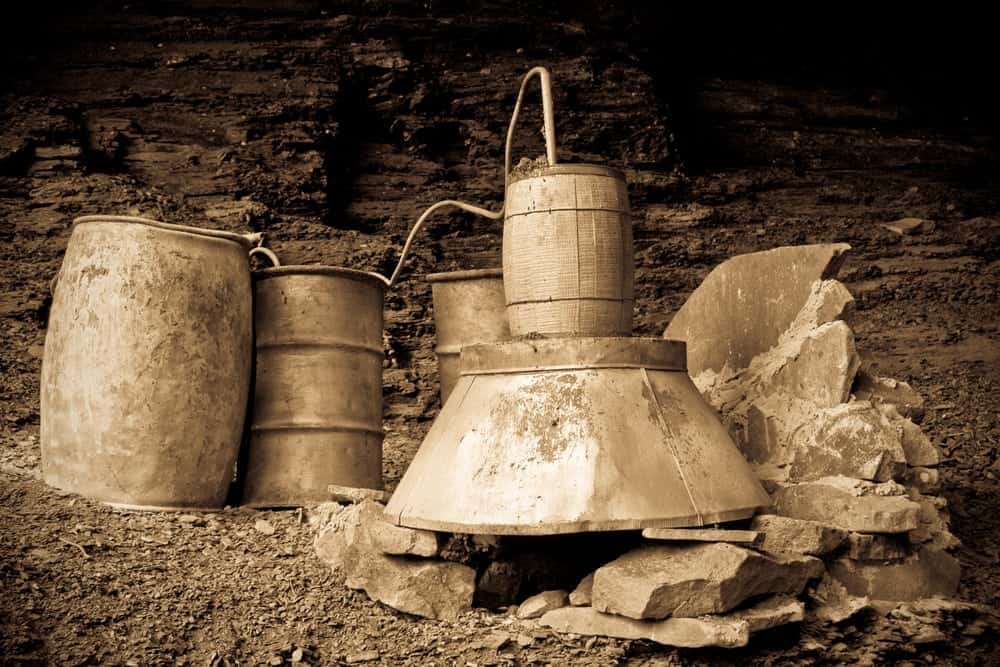
“We don’t make moonshine,” the man, dressed in jeans, boots and a T-shirt, was saying. “My daddy made ‘shine but that’s all that’s left of his still.” The man pointed to a pile of rusty metal at the side of a nearby pole barn.
While one agent babysat the man, the rest of them looked through the buildings. Nothing. They regrouped in the muddy patch at the center of the buildings.
“This was a bust,” one of the feds said.
Cross stood quietly, her face slightly upraised to the wind.
“Can I ask your subject a question?” she asked the fed. He shrugged and nodded.
Cross walked over to the man. “What’s that smell?” she asked. “That sweet smell?”
Gloria whispered to Bobby Lee, “I can’t smell anything but the pigs.” A pen with a couple dozen hogs, knee deep in muck, was next to one of the other trailers.
“The smokehouse,” the man told Suellen.
The deputy shook her head. “That’s not ham, bubba. I can smell ‘shine coming down from the ridge.”
The man’s face fell.
Suellen turned to Gloria and Bobby Lee. “His still’s up past the tree line. You ready for a little hike?”
Later, Gloria asked Suellen, “How did you know there was an active still there?”
Cross smiled. “My granddaddy made ‘shine. He did the same thing, kept a lot of hogs. All you can smell is that hog shit. It burns your eyes.”
“But you could smell the still,” Gloria said.
“When you grow up around it, you know the smell, even if they try to mask it,” Cross said.
It was fun last time I posted a first chapter of one of my books, so I’m doing it again.
Here’s the first chapter of my book “Seven Angels.” It was the winner of the 2021 Hugh Holton Award from Mystery Writers of America Midwest for Best Unpublished Novel.
It’s a crime story, set in modern-day Tennessee, about a young woman who comes home to her small town to help run the family funeral home. Events soon lead to her confronting murderers, white supremacists and human traffickers.
This first chapter establishes two of the key supporting characters. I hope you like it.
Chapter One
The children ran as if the devil himself was close behind. It was two devils, as a matter of fact, that pursued them.
The girl, lean and fair, paused as she scrambled over kudzu to turn and look back at her brother. The boy was shaking his right foot, trying to disentangle his Kmart sneaker from the vine, which covered everything that wasn’t moving and a few things that did move.
“Nicholae,” the girl whispered at her brother. The boy looked up from freeing his foot and she motioned for him to hurry.
Nicholae was not as agile as his older sister. He hadn’t joined her when she and some of the older kids, in a few stolen moments, had played basketball in the gym of the run-down former school where they had been warehoused until a few days ago.
“Elena,” the boy said, pleading. He was out of breath. Running through the vines was as hard as running in the snow back home.
Elena doubled back, crossing the yards that stretched between them, hopping over a fallen snag that itself had been carpeted by the kudzu. She reached her brother and held out her hand.
Nicholae – dressed, like Elena, in jeans and a T-shirt – took his sister’s hand and tried to stay on his feet as she pulled him along after her. Elena again jumped the snag, which had long since lost what remained of its branches. This time she turned and helped her brother step up onto the fallen tree and then step down on the other side.
The two continued toward the tree line ahead of them. The poplars and maples were thick. Elena didn’t know the types of trees that stood ahead of them but she thought they would offer shelter or, at least, a place to get out of sight.
The woods would be cool, too, Elena thought. The humidity of the day crushed them and made running harder. She looked over her shoulder at Nicholae and felt a pang of guilt that she was pushing him so hard.
But they couldn’t slow down. Not if they wanted to see Mama again.
Just a few more yards from the tree line and Elena thought she could hear voices behind them. Not within sight but not far away.
“Nicky …” Elena said as Nicholae slowed. She pulled him along again.
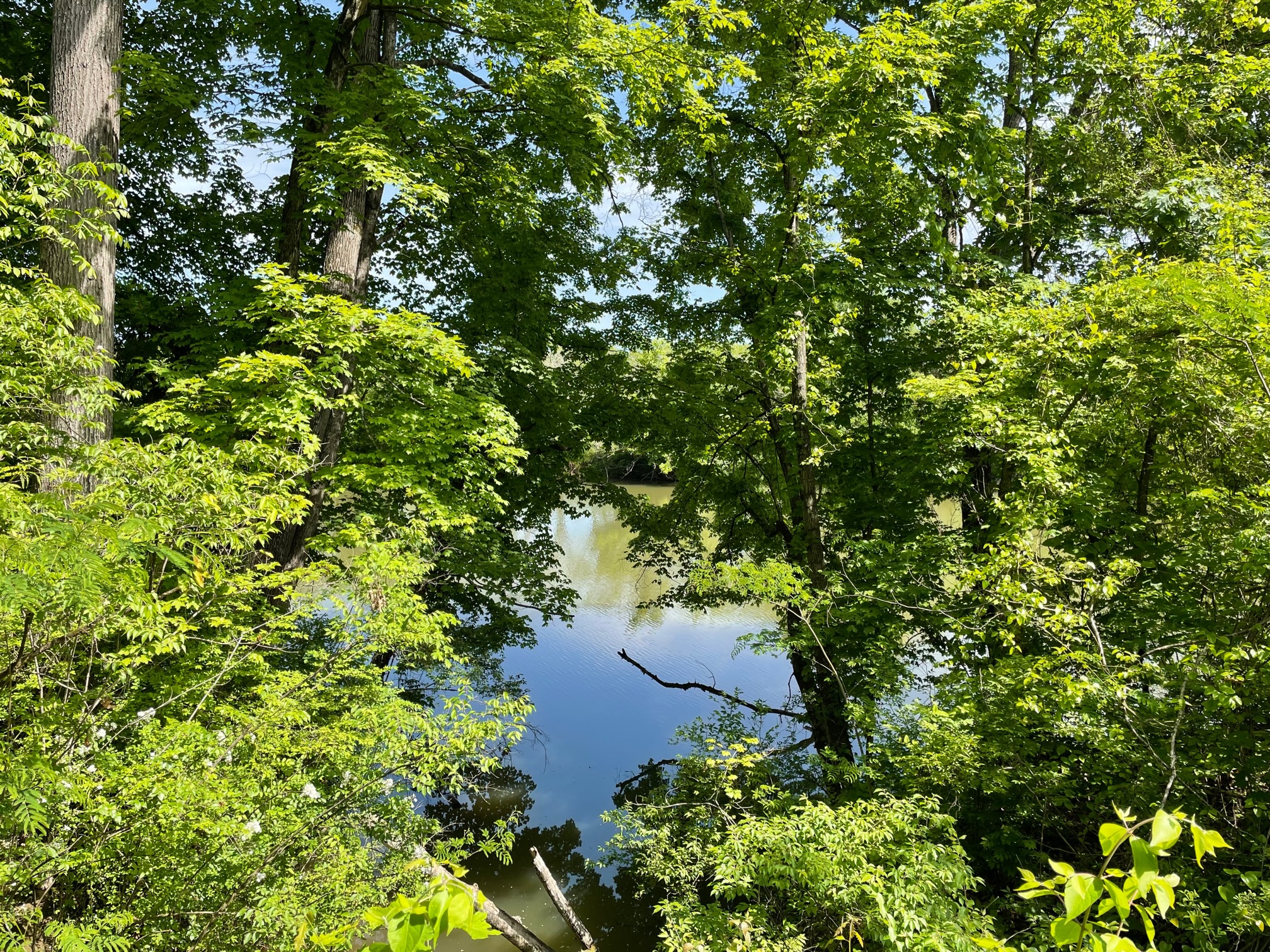
At the edge of the trees, a small stream lay in the shadows. Elena hadn’t noticed it until they were nearly in it. She let go of her brother’s hand and slowed a bit as she walked across the slippery river rocks in a few inches of water.
Elena splashed her way out of the stream and turned to Nicholae on the other side.
Her brother was on his knees, dipping a hand into the water. He raised the cupped hand to his mouth and sipped at it, then held his hand to his face to cool his flushed skin.
“Nicky!” Elena said in a low voice.
Nicholae stood, his face still bright from the heat and exhaustion, but also the first time Elena remembered him smiling in weeks.
Elena took a half step back toward where her brother stood on the opposite side of the little creek. She wanted to take a drink. The water did look so cool.
A loud crack split the humid air then and Nicholae fell, face first, into the creek.
“Nicky!” Elena screamed.
Elena looked past where her brother lay and saw the two men who pursued them in the clearing behind. They were struggling through the vine but one, the bald-headed man, was lowering the rifle he carried.
Elena stepped backward toward the trees but tripped in the kudzu. She fell hard into the vine, which at least cushioned her fall.
The men drew closer. They were almost to the fallen tree, just yards from where Nicholae’s body lay in the creek.
Another shot tore through the thick air. This time, the men threw themselves to the ground.
Elena felt a hand on the neck of her shirt and felt herself being pulled up and backwards. Her sneakers dragged through the vine as she was pulled back into the trees.
A few yards into the trees, the backward motion stopped. Prepared to fight as best as she could against the dark figure that had grabbed her, Elena turned.
The woman who had pulled her into the trees simply raised her hand as if to quiet Elena. Then she turned to peer into the clearing. Elena knew she should have run but instead stood still, looking at the figure next to her. The woman wore faded jeans, a plaid shirt and well-worn boots. Her head was covered by a floppy hat and her long brown hair, streaked with gray, fell over her shoulders.
Elena couldn’t study the woman’s face because she was turned half away from the girl, watching the clearing for sign that the men were venturing into the tree line. When Elena began to choke out a sob for Nicholae, the woman took one hand off her rifle long enough to reach out to the side and gently place her hand on Elena’s shoulder. But she didn’t take her eyes from where the sunlight filtered through the edge of the trees.
Elena heard the voices of the men but couldn’t tell what they were saying. She knew from hearing them talk for the past couple of days that one was called Connie and the other was called Amp.
After a few minutes, the two men, emboldened by the quiet from within the wood, could be heard walking noisily into the edge of the trees. The kudzu rustled and fallen tree branches snapped under their step.
The woman who hunched near Elena raised her rifle and fired off another shot. After Elena gasped and shuddered at the sound, she could hear the men noisily back away from the trees as they thrashed through the kudzu.
After a few more minutes, Elena couldn’t hear them at all.
The woman turned to her and again held up her hand, palm out, as if to signal Elena to stay where she was. The woman slowly moved toward the clearing but stayed in the shadow of the trees. She peered into the clearing, then slowly turned and came back to Elena.
The woman regarded Elena with a mixture of curiosity and pity for two seconds before she spoke.
“That boy … your brother?” she asked Elena.
Elena knew enough English to recognize the word. She nodded, tears filling her eyes.
“They carried him off,” the woman said.
She awkwardly patted Elena on the shoulder for a moment before she dropped her hand and pointed back, further into the trees. Elena’s gaze followed the gesture and saw the woods followed the ground as it curved, roughly, upwards. They were at the bottom of a hill.
“Let’s go,” the woman told Elena and, her hand on the girl’s arm now, guided her toward the deeply wooded hillside.