So long, Dave

david letterman

It was almost like a sickness.

For a few years in the 1980s, I stayed up every night and watched “Late Night with David Letterman” on NBC. But I didn’t just watch it. I also videotaped it.

And cut out the commercials.

That’s right. I was making my own commercial-free David Letterman video library.

I watched the show from its start just after 12:30 – following the Johnny Carson “Tonight Show” – until it went off an hour later. And, obviously, I loved the show enough to want to preserve it in that manner.

Letterman. Paul. Larry “Bud” Melman. All the rest.

The Alka-Seltzer suit. Dropping things off the tops of buildings. Interrupting other shows, like the bullhorn assault on the “Today” show.

My god, what fun.

Letterman, a fellow Hoosier who I remembered from his time on Indianapolis TV and – kinda – his time on my local radio station, had a masterful grasp of ironic comedy long before others followed. He was funny and absurd and disrespectful and everything anyone would want in a late-night talk show host.

I haven’t watched Dave in a while. The draw of “The Daily Show” and “The Colbert Report” was too great. Well, that and having to get up at 6 a.m. to deal with the demands of real life.

I’ve seen a little more of his show lately, since Dave’s departure was imminent. I wouldn’t have missed Bill Murray last night. And I’ll probably be watching tonight, for the final show.

Dave was ahead of his time and of his time. He was the late-night talk show host we deserved and needed. He ranked right up there with Carson in my book and always will.

So thanks, Dave, and so long.

1970s cool: ‘Race with the Devil’

race_with_the_devil lobby card

I’m thinking that the vehicular mayhem in “Mad Max: Fury Road” will top that in “Race with the Devil,” but I’m gonna just leave this here to encourage you to check out the latter film if you get a chance.

Directed by Jack Starrett, the 1975 thriller stars Peter Fonda, Warren Oates, Loretta Swit and the gorgeous Lara Parker as friends on an RV trip who stumble upon a Satanic ritual and human sacrifice in the middle of Texas.

Then the chase is on.

The leads are great and the wonderful character actor R.G. Armstrong plays the sheriff who won’t believe their story.

It’s a classic.

The ‘Batman’ script, Warner Bros and me

batmanscript

Last time I tried to write about Sam Hamm’s legendary script for Tim Burton’s “Batman” movie, I got a cease-and-desist note from Warner Bros.

We’ll see what happens this time.

It was the late 1980s and there was a lot of anticipation for Tim Burton’s “Batman” movie, planned for 1989 release. This was pre-Internet, remember, but the letters columns of genre magazines and newspapers devoted to the movie were full of opinions, pro and con, about the movie and Burton’s choice of Michael Keaton – an actor best known for comedy movies and, shall we say, not having the strong chin of a comic-book-movie actor – had set people on fire.

This was just a couple of decades after the Adam West-starring TV series. A decade earlier, the Richard Donner-directed, Christopher Reeve-starring “Superman” was a huge hit and Warner Bros. seemed to want to follow the same formula with Burton’s “Batman.” In other words, an unknown or unlikely choice as the hero bolstered by a big star as the villain.

Burton had those elements firmly in place with Keaton – who would go on to surprise many with his performance and presence – and Jack Nicholson as the Joker (the movie’s equivalent of “Superman” and its two big stars, Marlon Brando and Gene Hackman).

What was crucial and a total unknown at the time was the tone of the “Batman” movie. The Adam West series, beloved more today than at the time, was still fresh in people’s minds. Would Burton and Keaton and Nicholson turn their “Batman” into a spoof?

batmanjoker

(That didn’t happen, of course. I still vividly remember seeing the movie on its opening weekend in 1989 on a trip to visit friends in Los Angeles. We stood outside the Chinese Theatre in a line that extended around the block and then waited only-a-little-impatiently for the movie to begin. The Chinese Theatre had a Bat Signal fired up and projected Batman’s chest symbol on the curtains before the movie began. We were not disappointed once we saw the movie.)

But at some point during all the anticipation and the aftermath, I came across a copy of a Batman script, written by Sam Hamm and noted, “Third Draft, February 29, 1988.” And yes, there was a February 29 that year.

I bought the screenplay at a sci-fi and comic-book convention within a few weeks of the movie’s release. As far as I knew then and know now, it was a legit Sam Hamm draft, one of several, done before the final script credited to Hamm and Warren Skarren.

Some of you might remember that there was a huge market for movie and TV scripts at the time. Today, you can do a Google search and find drafts of Hamm’s scripts online, in their entirety, going back to 1986. But back then, of course, you got your hands on a copy either through the mail order or at a comic book or sci-fi convention.

(There was a third source back then. During my regular tips to LA, I paid a lot of visits to a Hollywood Boulevard book store that sold scripts and movie stills. Most of the scripts, no doubt, came from studio functionaries or crew members who knew they could make a few bucks and clean off their desks by selling them to be resold.)

I got the Hamm script at a convention, though, although I honestly don’t recall now if it was in LA or here in the Midwest.

I really enjoyed the script and upon re-reading it today, I’m glad to see that it has held up nicely. There are some important differences between the script and the completed movie. One big difference is the late-in-the-movie introduction of Dick Grayson, who would go on to be Robin to Bruce Wayne’s Batman. Dick is out for vengeance after the Joker deliberately kills his parents – trapeze artists the Flying Graysons – when a chase with Batman encounters the Gotham City birthday parade familiar from the movie.

By the end of the script, Dick is under Bruce Wayne’s care and close to taking the first steps to becoming Robin.

The Bruce Wayne and Joker characters are different in Hamm’s script and I have to say I preferred them to the movie versions.

Joker – Jack Napier, underling to mobster Carl Grissom just like in the movie – is edgier, a dapper 30-something rather than Nicholson’s dapper 50-something. My biggest complaint with Burton’s “Batman” has always been that Nicholson was too old and simply not spry enough to be a credible physical match for Batman.

Bruce Wayne in the script isn’t the distracted billionaire he was in the movie either. Actually, the character is much more like the character as portrayed in the “Batman” animated series and Christopher Nolan’s Batman trilogy starring Christian Bale. He’s edgier and more dynamic. There’s a notable scene in the script – following the one in the movie where Joker and Bruce Wayne face off at Vicki Vale’s apartment – in which Wayne, clad in a suit and utility belt with a black stocking over his face – pursues the Joker across Gotham, stopping only to don the Batsuit after rendezvousing with Alfred along the chase route.

Batman is different too. He’s more tortured, if that’s possible, realizing that he played a role in creating the Joker in the first place. In the climactic struggle between Batman and the Joker in the belfry of Gotham Cathedral, Hamm implies that Batman considers the idea of ending his own life.

In a moment that surely inspired a similar scene in the Nolan movies, Bruce activates a sound-generating device that drives the bats in the cathedral into a frenzy. The bats ultimately make the Joker fall to his death.

Batman has also started the countdown on an explosive device on his utility belt and I swear Hamm makes it seem as if Bruce is considering ending it all.

The Joker has already plunged to his death by this point, disoriented by the bats and unable to reach his getaway helicopter.

“Six seconds remain. There is still time if he makes his choice now,” the script says about Batman.

“Surrounded by the flapping of leathery wings, his body working on pure adrenaline, he unbuckles the belt and HEAVES IT out into the darkness.”

The belt and bomb take out Joker’s helicopter.

But did you notice that part about Batman’s “choice?”

Much of the script is familiar from the movie. There’s the scene of Batman terrorizing street punks on a rooftop. There’s the charity benefit at Bruce Wayne’s house. Characters like Jim Gordon and reporter Alexander Knox are on hand, even though Knox briefly tries to blackmail Bruce Wayne – he knows Batman’s identity, just as Vicki Vale does – and is driven to do so by jealousy over Vale and her attraction to Wayne. Knox redeems himself by the end, however.

So at the time I first read Hamm’s script, I was settling into my newspaper career but still writing some freelance for other publications. I was a longtime admirer of Cinefantastique, the slick and intellectual magazine, founded in 1970, that covered the world of fantastic movies and TV. (It’s online only now, but I still have almost every issue in storage.)

I thought that a review of the original Hamm “Batman” script might be a good way to break into writing for Cinefantastique, so I wrote up a review and mailed it to them, along with my contact information.

Not long afterward, I got first a phone call and then a letter from a legal representative of Warner Bros.

How did I get a copy of the Sam Hamm script? Did I remember the name of the convention vendor that I bought it from (for something like $15)? Was I aware that, even though it wasn’t the version that was produced, it was still the property of Warner Bros? (Yes to the latter; it says “Property of Warner Bros” right on the title page.)

At the same time it seemed like overkill – remember, I was this about-30-year-old writer and longtime genre fan in Muncie. Indiana, who just wanted to get an article published in a national genre magazine – and I found it incredibly disappointing that Cinefantastique called Warner Bros. on me the minute they got my unsolicited article in the mail. I’m guessing they had their own copy of the script – if I could get one at a convention, anybody could – but chose not to write about it. At any rate, it was disappointing and I never looked at the magazine the same way after that.

I respected Warner’s demand that I not write about the script, however, and I haven’t – until today. I’m guessing the studio’s sensitivity about that particular script must have lessened nowadays when, thanks to the Internet, a half-dozen versions of the script are there for perusal.

Well, I’m guessing, anyway. I’ll let you know if I get another call from some lawyer in California.

‘Avengers: Age of Ultron’ has its own Vision

avengers-age-of-ultron-collage

For a while now, I’ve been anticipating that “Avengers: Age of Ultron” would be “The Empire Strikes Back” of the “Avengers” movies and after seeing it tonight, I’m somewhat surprised to say that I was right.

Now keep in mind that “Empire” is my favorite “Star Wars” film and after just one viewing, I’m not sure I can say that “Age of Ultron” is my favorite Marvel movie, or even my favorite “Avengers” movie. It is pretty damn good and director Joss Whedon put everything up on the screen. I was nearly exhausted by the end.

Here are my first impressions of the movie. Spoilers to come after a spoiler warning, because there are so many surprises here that I don’t want to ruin it for anyone who is unspoiled.

Whedon had a tough act to follow not only counting his 2012 original “Avengers” but everything that has come since. That’s because the “Avengers” movies are the tentpoles, the mile markers, of the Marvel Cinematic Universe. “Age of Ultron” caps Phase Two of this universe, a group of movies that included “Iron Man 3” and “Thor: The Dark World” but also “Guardians of the Galaxy” and, best of all, “Captain America: The Winter Soldier.”

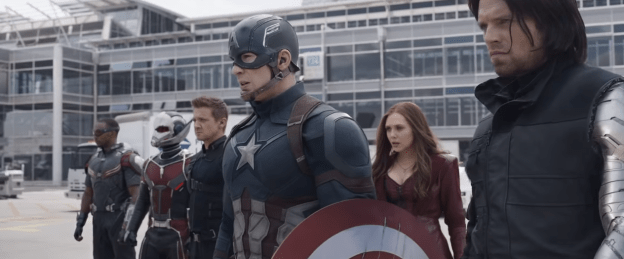
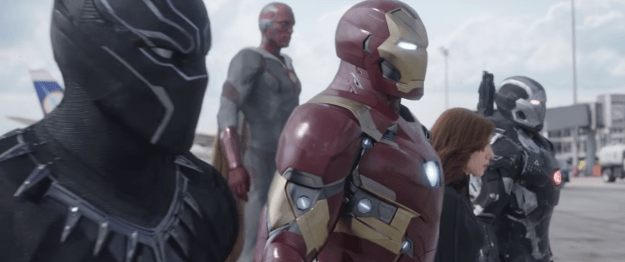
Appropriately enough since Cap is the heart of the Avengers team, but “Age of Ultron” – besides setting up a ton of plot lines – feels like a bridge between the very-nearly-peerless “Winter Soldier” and “Captain America: Civil War,” which comes out next summer and will then lead to the two-part finale of Phase Three, “Avengers: Infinity War Part 1” in 2018 and “Infinity War Part 2” in 2019.

Having said that, though, “Age of Ultron” doesn’t feel like just a stepping stone. And the ending is more satisfying, in its own way, than “Empire.”

What keeps “Age of Ultron” from feeling like just another link in the MCU chain is the plot – which wraps up plot lines like Hydra and Loki’s scepter and furthers the story of the Infinity Stones and Thanos, the Mad Titan seen in the end credits of the original – and the ingenuity of this movie’s characters.

As the movie opens, the Avengers – in a post-SHIELD world, since that spy organization was mostly dismantled in “Winter Soldier” – are the peacekeepers. They’re cleaning up messes around the globe – along with the help of some other very recognizable and very welcome Marvel movie characters – and rooting out the last of Hydra, which has been using Loki’s scepter and its Infinity Stone power source to experiment on human beings.

The only survivors of those Nazi-inspired experiments are Pietro and Wanda Maximoff, who in the comics are Quicksilver and the Scarlet Witch, the children of Magneto and mutants, but here are Eastern European twins who have an understandable grudge against Tony Stark.

The two find an ally against the Avengers in Ultron, a sentient android inadvertently created by Stark and science bro Bruce Banner.

As voiced by James Spader, Ultron is the kind of perfectly mad artificial intelligence who decides the only way to save the world is to destroy it.

With an army of robotic surrogates, Ultron causes havoc just at the wrong time for the Avengers. Stark and Banner feel guilty for their role in Ultron’s birth, personal complications rock the core of the team and all the members – Iron Man, Cap and Thor included – are haunted by visions of things to come.

Speaking of which … the Vision.

Just like “The Avengers” was one of my favorite comics, the Vision was one of my favorite characters. The synthetic offspring of Ultron, he was created to destroy the Avengers but, in the comics, becomes their ally. The shifting allegiances might come a little too easily in the movie but they are effective.

And the Vision, as played by Paul Bettany – the voice of Jarvis in previous MCU movies – is the oddest but most perfect addition to the cast. He’s eerie and weird and endearing – in other words, just like in the comics.

“Age of Ultron” is a piece in the sprawling Marvel Cinematic Universe, for certain. But it stands on its own.

And that ending …

Okay, spoilers from here on out.

Ready?

vision age of ultron

Avengers Assemble ….

To get to the conflicts to come in “Captain America: Civil War” and to reunite the team – and, perhaps, every member of the MCU – for the two-part “Infinity War” movies three and four years from now, “Age of Ultron” had to shake things up. And it does.

Besides the seeds of doubt sewn in the characters here – doubt enough to make Thor split for Asgard and prompt Stark to leave the group – the movie plants so many other seeds for the future. Longtime fans will recognize the moment when Vision rescues Scarlet Witch as a tip to their relationship in the comics, which included marriage, children and madness.

The reintroduction of old friends felt so right. It was a pure pleasure to see characters like James Rhodes (War Machine) and Sam Wilson (Falcon) in action and as part of a new Avengers line-up at the end.

The relationship between Black Widow and Bruce Banner also felt just right .. and its bitter ending felt just like a Joss Whedon relationship moment.

Who’s the happiest Avenger? No doubt it is Clint Barton. In this movie, we find out what Barton does when he leaves his Hawkeye persona behind. It’s heartwarming.

And the big character death? I was expecting maybe someone with a little more history in the MCU than Pietro but I was okay with it. And her brother’s death ensures that Wanda has the proper “push” into joining the team.

I’ll probably have more thoughts after seeing the movie a second time. Suffice it to say, “Age of Ultron” has more than its share of plot complications and hints for the future to bear another pass.

By the way … reports that there is no extra scene after the last of the end credits are true. There is a mid-credits scene, however.

Not that I have to tell you to stick around.

Comic book ads: Zombie mask and former NYC magic shop

zombiemaskcomicadRegular readers of this blog know I love old comic book ads. I grew up perusing them right along with the Marvel and DC comics stories wrapped around them.

So I’m somewhat surprised that I don’t remember – and haven’t run across before – the ad above that I found online.

Almost certainly from a comic book, this ad for “The Zombie Mask” did a nice job of selling its product.

“This fiendish, evil mask is terrifyingly lifelike in appearance,” the ad’s breathless copy maintains. “Made of top quality sanitary rubber … if your friends have bad hearts, don’t wear it.”

The mask includes a wig of “finely spun hair.”

All for $2.98. Or, for the same price, you could get a Frankenstein mask.

Hopefully some reader can fill in some details on these masks, including the manufacturer. A Google image search didn’t turn up much in the way of who made it.

There are a few interesting details to be had, however, in the company that was selling these masks.

The Magic Center – which billed itself as “the world’s largest magic store” – was a frequent advertiser in magazines like Popular Science and Google searches find their ads as far back as 1949.

magic center ape man mask

These ads were usually for magic tricks, although a 1953 issue of Popular Mechanics found the Magic Center – still located at 741 Eighth Avenue in NYC – offering a “terrifying” ape man mask.

What happened to the Magic Center? I wish I knew. Google searches turn up, in recent years, a “dive bar” at the location. And it looks like the bar itself has closed.

I’m afraid there were few zombie or ape man masks to be found there in the past couple of decades.

Batman’s Joker: Reinvention is nothing new

jaredletojoker

There was a lot of discussion online the other day when Jared Leto’s look as the Joker from the upcoming movie “Suicide Squad” released.

My personal feeling is that this is an attempt to re-invent the character for a new generation. Young moviegoers would not be satisfied with the look of the Tim Burton/Jack Nicholson Joker. I wasn’t sold on that interpretation myself.

I’m not sure about the Leto look. “Trying too hard” is one phrase that comes to mind.

What’s important, of course, is how Leto plays the character and how the part is written.

But reinvention has been a constant for the character, who first appeared in the comic book Batman 1, 75 years ago this month.

veidtmanwholaughs

There’s the unacknowledged inspiration for the “look” of the Joker, taken from actor Conrad Veidt’s appearance in the 1928 movie “The Man Who Laughs.”

billfingerjoker

There was the classic Joker, of course, “created” by Bob Kane but really created by Kane and Jerry Robinson and Bill Finger.

cesarromerojoker

For kids coming of age in the 1960s, Cesar Romero’s Joker in the “Batman” TV series – painted-over mustache and all – is the most familiar look for the character.

nealadamsjoker

At the time the world thought of “Batman” as camp, comics readers knew the Joker as a madman and real threat to the Dark Knight detective. The Joker’s look in the comics was refined in the art of Neal Adams.

timburtonjacknicholsonjoker

Tim Burton’s 1989 “Batman” movie needed a big name to play the Joker. Nicholson was cast and brought the right amount of menace to the character, but he wasn’t physically right.

batmananimatedjoker

The “Batman” animated series did wonders with a simple Joker design and Mark Hamill’s great voice performance.

alexrossjoker

Artist Alex Ross made the Joker believable and frightening at the same time.

heathledgerjoker

It’s hard to imagine it was as recently as 2008 when Christopher Nolan’s “Dark Knight” took the Joker in a whole new direction in terms of look and physicality. And Heath Ledger was outstanding in what was considered as unconventional a look as Leto’s appearance is now.

Will Leto’s look be a Joker for the ages?

‘Universal Monsters’ universe seems to be stop-and-start

universal monsters

Okay, eventually we’re going to be calling this “The Curse of the Universal Monster Franchise.”

I’d been meaning to post a few thoughts about Universal’s proposal to turn its classic Universal Monsters collection into a shared universe. You know, shared universes are the biggest deal in the entertainment industry right now. Marvel has been mapping out, to great success, its Marvel Cinematic Universe since 2008. DC/Warner Bros. are trying to do the same with their superheroes. We’ve heard about shared universe efforts from several directions, including one I wrote about a while back regarding a brilliant plan to create a shared universe that draws from low-budget 1950s movies ala Roger Corman.

I was hoping that the recent “Dracula Untold” movie wasn’t the kick-off of Universal’s efforts, and while news coverage of the Universal universe (ha!) indicates that it was, I wonder if the movie’s underwhelming reception and box-office performance won’t mean it will be officially “forgotten” when the series gets a proper start. Assuming it does.

The studio had planned a reboot of “The Mummy” in June 2016. Now word has come that “The Mummy” will be delayed until March 2017 and another, still-unspecified second movie has been delayed from 2017 to 2018.

I don’t think it’s a bad thing that Universal has delayed the kick-off. If the studio doesn’t have a firm idea of how all these characters fit together, it’s better to wait until they do.

Launching a Universal Monsters shared universe isn’t easy. I think that’s what the studio wanted to do in 2004 with the Hugh Jackman movie “Van Helsing,” considering that the titular action hero met Frankenstein’s monster, a werewolf and Dracula during the course of the story. But while the movie had a few effective moments, all the elements never jelled.

And I’m not sure that Universal should necessarily take its cues from Marvel, which took a slow burn approach to universe-building with solo movies that – if you missed a few Easter eggs or a post-credits scene – gave no overt indication to moviegoers not in the know of the “Avengers” franchise to come.

This despite the fact that Universal wants, apparently more than anything else, to build an “Avengers” team of monsters.

It might be more beneficial for Universal to consider building its universe around a city – London, perhaps – and a time – maybe around World War II. This is just my idea, but the prospect of a great city with so much history, so close in proximity to the European birthplace of so many of Universal’s monsters and heroes, at such a pivotal time, has so much potential.

Characters could come and go, playing roles large and small, with the leads of one movie – a mummy that’s seeking vengeance at the exhibition of Egyptian artifacts at a great British museum – crossing paths with a doctor who is trying to bring life back to bodies sacrificed in the war. And then … this traveling curiosity, an amphibian creature captured in the Amazon, rolls into a quiet town in the English countryside.

Like I said, there’s a lot of potential for stories told by someone who puts more thought into it than I just did in a couple of paragraphs there.

Universal is, of course, the home of the monster rally, with “team up” movies like “House of Dracula” and “House of Frankenstein” and “Abbott and Costello meet …” a part of its past.

Maybe they should look to that past rather than try to force their classic creatures into anybody else’s modern superhero mold.

Farewell to ‘Justified’

Justified

There have been so many great TV dramas in the past decade. Too many, if you have a life like mine and have limited hours to watch TV live or even catch up later on demand or online.

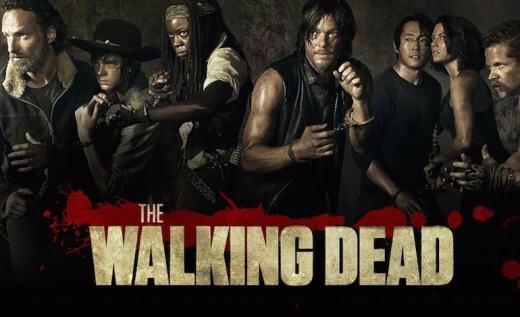
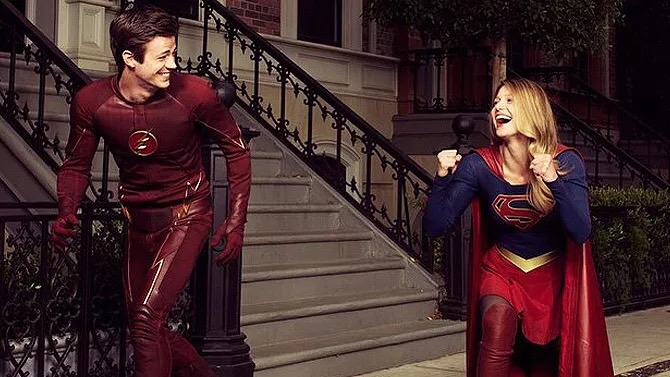
With “Mad Men” winding down in curious fashion, “The Americans” getting out in front of me, leaving me unable to keep up, and “Walking Dead” uneven but still rewarding, I’m mostly keeping pace only with the superhero shows like “Arrow,” “The Flash” and “Agents of SHIELD.”

One show that I did keep up with, pretty much every week, was “Justified,” Graham Yost’s show, based on characters created by wonderful writer Elmore Leonard, about U.S. marshals, lowlife criminals and everybody in between in modern-day Kentucky, was too good to miss.

I watched the show live pretty much every week during the course of its six seasons. And I mourned a little bit when “Justified” ended its run six days ago.

If you’ve never watched, I highly recommend it. For so many reasons:

The lead characters, marshal Raylan Givens and criminal Boyd Crowder, are charismatic and fascinating and they’re portrayed by terrific actors in Timothy Olyphant and Walton Goggins.

Other lawmen (and law-women) came and went and a couple dozen wonderful bad guys (and women) have passed through these parts but Raylan and Boyd were, ultimately, the reason we watched every week.

The two – who grew up together, dug coal together, dreamed of getting out of Harlan, Kentucky, and had less than straightforward solutions to problems – did the most fascinating dance for six seasons.

As much as we rooted for Raylan, we agreed with his boss and co-workers that he could be an angry, danger-seeking jerk.

And as much as we wouldn’t want to be on the bad end of a deal with Boyd, we’d also like to have sat down the bar from him, having a beer and listening to him formulate schemes and recounting fascinating characters he met .. and, most likely, swindled or killed.

“Justified” never let us forget that, as shaded and shady as these two could be, they were our protagonists. We were as caught up in their stories – more so, really – as any tried-and-true, straight-arrow characters.

I’ve been to and through Kentucky many times. I’m not sure I pined for the characters of “Justified” – Mags Bennett, Dewey Crow, Wynn Duffy or any of them – to sidle up next to me at a diner.

But it would have been fascinating.