Not ready for prime time

snl title

I might not watch a whole lot of tonight’s 40th anniversary special for NBC’s “Saturday Night Live,” and not just because, as someone else pointed out, the actual anniversary is sometime this fall.

And not just because I’ll be watching “The Walking Dead” and “Talking Dead” during the middle couple of hours of this marathon-length SNL fete. (And don’t even get me started on “The Walking Dead” right now, because I’m not gonna be another of those people who goes on about how the show has become an endless march through an unending storyline with the only mile markers being the death of characters great and not-so-great and I don’t know how much longer i’m gonna watch it … because I’ll keep watching it, almost without question.)

And not because I haven’t been a fan of “SNL” since virtually the beginning. One of my friends had a record album  – an LP, a vinyl disc you played at 33 and a third RPM, for the young folks – of bits from the show’s first season. He would bring it to school and one of our teachers was cool enough to let us listen to some of it on a turntable. We all watched the show every week, but these were the pre-VCR, pre-online days when you couldn’t see it again unless NBC decided to replay it. So we were riveted to the audio soundtrack of the show.

No, I might not watch a lot of tonight’s special because, as I was watching last night’s replay of the very first episode, hosted by George Carlin, from 1975, I was struck by how much of it I remembered so well.

And it struck me: “Saturday Night Live” has been on eternal replay pretty much for the past two decades-plus.

NBC and show creator Lorne Michaels have relentlessly rerun episodes and bits and pieces of episodes over the decades. The show has been cut down to fit hour-long timeslots (and I think half-hour slots as well) and repackaged into so many anniversary shows on NBC and retrospectives on VH1 and elsewhere and so many “Best of Chevy Chase” and “Best of Will Ferrell” specials … sheesh, this material has been run into the ground.

Still, there are bits that I want to still want to see. Anything with that genius Phil Hartman (the unfrozen caveman lawyer skits especially, or his Bill Clinton in McDonald’s), for example. Or Ferrell’s “Get on the bag!” sketches.

But I don’t need to see more Chase, who I can’t believe we ever thought was funny, or even more Aykroyd or Belushi, who indisputably were.

And if I do, I’ll look ’em up online. Or maybe check various shelves and boxes in my house to see: Did I ever buy that old album?
‘The Man in the High Castle’ teases alternate history

themaninthehighcastleamazon

I haven’t spent a lot of time on Amazon lately, in great part because I haven’t liked what I’ve heard about the way the retailing and publishing giant has squeezed publishers and authors after years of putting the hurt on independent bookstores. The fact that I didn’t buy any books or music through Amazon this past Christmas – and a few months before that – is decidedly immaterial to Amazon, of course.

I have gone back to Amazon recently however – without breaking out my credit card – to check out two projects from Amazon’s burgeoning original movie/TV production house.

One is “Bosch,” a series based on Michael Connelly’s Harry Bosch crime novels. Another is “The Man in the High Castle,” based on Philip K. Dick’s 1962 alternate history novel.

It’s a testimony to the lasting fascination with World War II that “The Man in the High Castle,” the book and the Amazon pilot I saw, are still so vital.

When the book by Dick – the author of the stories behind classic films like “Blade Runner” – was published in 1962, World War II vets were still strong and vital men and women, the driving force in our society, albeit soon to be supplanted by their children, the generation that came of age in the 1960s. But in 1962, the heroes of World War II and the scars of the war still loomed large.

Dick’s story is set in a world where Japan and Germany defeated an overmatched Great Britain and Russia and an unprepared United States. The US is divided between a Japanese colony on the west coast and a German colony on the east. In between is a rough neutral zone.

The Amazon pilot – which streamlines Dick’s story – tells the story of two people: Juliana, who journeys by bus from San Francisco to Canon City in the neutral zone to complete a mission started by her sister, who is killed by Japanese authorities, and Joe, a young New Yorker who seeks out a dangerous mission for anti-German resistance underground and drives a truck to Canon City.

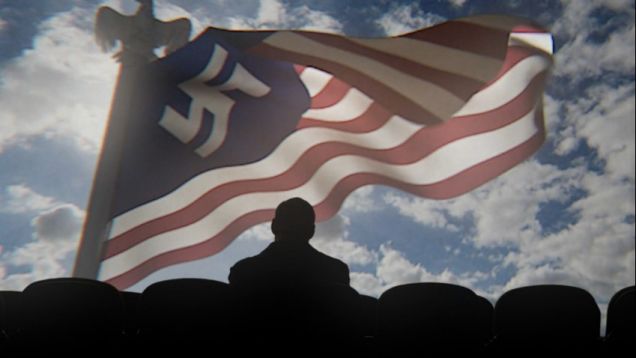
Each is carrying a newsreel, “The Grasshopper Lies Heavy,” which seems to show the US and its allies triumphant over the Nazis and Japanese. But that didn’t happen, did it?

The newsreel – a book in Dick’s original novel – is the product of a mysterious figure known as “The Man in the High Castle.” What his role in the story is and what happens to Juliana and Joe are still unknown to Amazon viewers because the creators – including former “X-FIles” producer Frank Spotnitz – have barely scratched the surface of Dick’s book. We’re not even sure if there will be more episodes to follow the Amazon pilot.

The most chilling moment in the pilot is when Joe is stopped by a swastika-wearing sheriff who acknowledges he was a US soldier in the war. “Can’t even remember what we were fighting for now, though.”

Joe notices ashes drifting down around them and asks what they’re from.

The hospital, the sheriff replies. Just the regularly scheduled burning of “cripples and the terminally ill (and other) drags on the state.”

“The Man in the High Castle” is visually stunning, from the opening credits to the newsreel images to the lived-in look of the US under occupation. The look of the series pilot is big-screen-movie-quality.

The characters are intriguing and the story is fine, although I felt like I saw the last-shot twist coming.

Maybe we’ll see where “The Man in the High Castle” takes us.

Fantastic Four trailer … Hmmm

fantastic four trailer

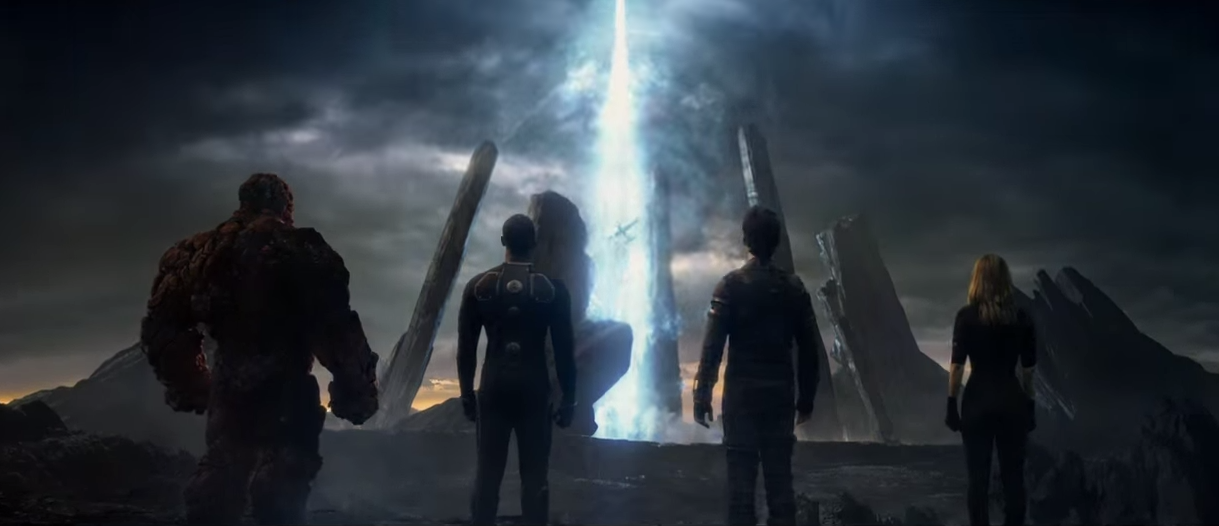
So the teaser trailer for Josh Trank’s “Fantastic Four” movie came out a few days ago and I’m not yet sure how I’m going to feel about the movie.

“Fantastic Four” was one of my favorite comics – along with “Avengers” – when I was a kid and I’ve so wanted a good movie version. And there’s been a few good points about each of the live-action “FFs” so far, believe it or not. The Doctor Doom character looked right in the low-budget, never-released Roger Cornman-produced movie from two decades ago. And the Human Torch (in the person of future Captain America Chris Evans) was perfect in the two 20th Century Fox movies from a few years ago.

But I long for a faithful (even if just in spirit) movie version of the comics, and I’m worried that Josh Trank’s version, due out Aug. 7 won’t be it.

The trailer looks like the movie put its money on the screen, but it’s so dark. I want the light-hearted but simultaneously urgent “FF,” with a real sense of adventure. The FF are scientists and adventurers, after all. They explore space and other dimensions and confront bizarre threats and do it with a wisecracking and sometimes caustic but heartfelt family dynamic.

Trank’s movie, based on the trailer, looks to follow the younger FF from the “Ultimates” line and, at least, has the look of the Thing right. Ben Grimm I’m not so sure.

We’ll see when the movie opens. In the meantime, here’s the teaser trailer.

Welcome to the low-rent universe

war-of-the-colossal-beast

It’s news to no one that shared universes are the big thing in movies right now

Marvel began building its shared cinematic universe in 2008 with “Iron Man” and has announced plans to continue it through at least 2020. Not to mention Marvel’s TV entries in that shared universe, like “Agents of SHIELD,” “Agent Carter” and “Daredevil,” the latter debuting on Netflix in April as the first in a series of “street-level” hero shows that will culminate in a “Defenders” series.

Of course, DC/Warner Bros. are trying to get their superhero universe going; Sony wants a “Spider-Man” universe but I’ll believe it when I see it.

And Universal has announced a shared universe of remakes of its 1930s and 1940s monster films featuring Frankenstein, Dracula and other creatures. I’m still pondering that one for another entry here.

So the other day, a movie company that I’ve never heard of, Cinedigm, announced plans to create, of all things, a shared movie universe. But using what classic cinematic tales?

The 1950s and 1960s exploitation movies of American International Pictures.

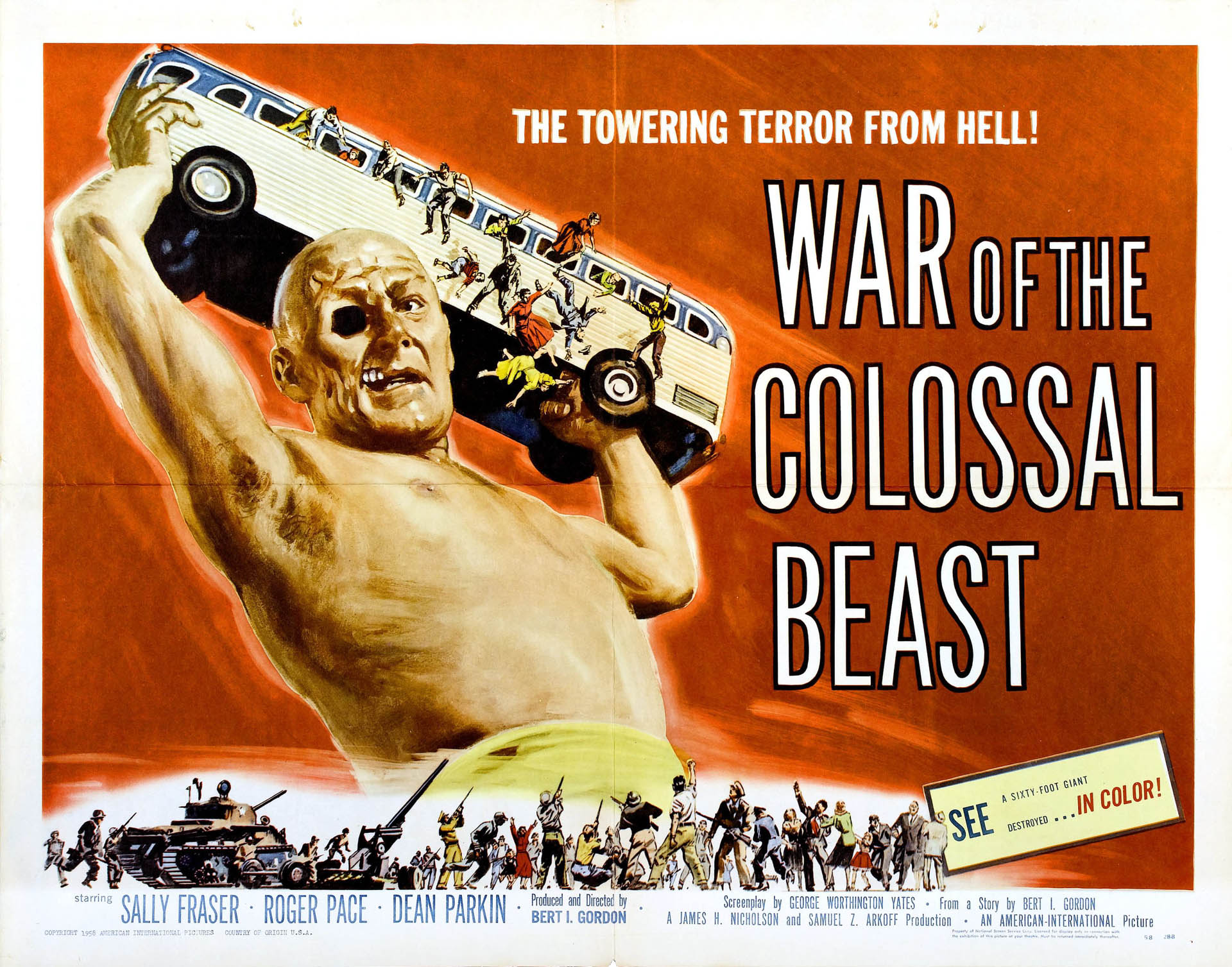
Specifically, 10 films: “Girls in Prison,” “Viking Women and The Sea Serpent,” “The Brain Eaters,” “She-Creature,” “Teenage Caveman,” “Reform School Girl,” “The Undead,” “War of the Colossal Beast,” “The Cool and the Crazy” and “The Day the World Ended.”

Strangely enough, I like this idea.

Marvel has this kind of thing perfected, down to an art and a science. I’m not sure DC’s superheroes will ever really come together on the big screen because of, I believe, a wrong-headed approach that seems more like Warner Bros. is ashamed of comic books.

But the AIP films, some of which were originally directed by low-budget auteur Roger Corman?

That’s genius.

Not because the company says it intends to shoot all 10 movies back-to-back from recently-completed scripts. Not because remaking these old AIP classics for cable TV a while back worked so well.

Because these dimly-remembered movies are perfect fodder for the remake machine.

Somebody once said that if you were going to remake a movie, don’t remake a classic. How could a remake of “Psycho” possibly work? (It didn’t.)

But with the AIP flicks, most people won’t be comparing them and, unless the remakes are horrible, they won’t be comparing them unfavorably.

And the idea of a universe shared by the monstrous, mutated “Colossal Beast” and the juvenile delinquents of “The Cool and the Crazy?” How can that possibly work?

The producers say the movies will share “a recurring cast of antiheroes, monsters and bad girls.” I can’t say that’s a bad idea and I base that on what Marvel has done with its movies.

Really, consider how improbable it might have looked, 10 years ago, to propose a shared universe that would include a bone-crunching political thriller, a good-natured space opera, a Nordic fantasy world and a rampaging monster movie. Yet “Captain America: The Winter Soldier,” “Guardians of the Galaxy,” the “Thor” movies and the Hulk’s appearances all worked.

Who’s to say those juvenile delinquents won’t end up fighting alien invaders to big box-office returns?

Stranger things have happened.

‘Black Mirror’ a ‘Twilight Zone’ for … yadda yadda

black mirror be right back

Every few years, a new TV series is dubbed “The Twilight Zone” of its generation. Heck, even the 1980s “Twilight Zone” series was called the “Twilight Zone” of its generation. And it was really pretty good.

The designation shows the staying power of Rod Serling’s “Twilight Zone,” which began in late 1959 and ran several years into the 1960s.

But while “Black Mirror” might properly be called the “Twilight Zone” of its generation … it just might earn that title a bit more because its emphasis on technology and the way it is integrated into our lives makes it very thoroughly of our generation.

“Black Mirror,” created by Charlie Brooker, has been airing in England for a couple of years now, but its recent appearance on Netflix and online have made it widely known.

It’s a dark show. Dark. And if you don’t the title reference, it seems to me to be about that little slab of glass that most of us carry around with us every day: the smart phone. Dark until it’s activated and, as “Black Mirror” shows us, that little piece of glass and plastic and electronic innards can be mighty dark.

“Black Mirror” is set in a future that’s not very far ahead, when electronics have advanced somewhat but are still totally believable in this world of Google Glass and ever-present iPhones.

The series – two seasons of three episodes and a Christmas special – look at the way technology can be used to warp and twist us. Even by ourselves.

The opening episode, “The National Anthem,” is notorious because of its adult content, but it’s gripping and upsetting in an old-fashioned way. A beloved young British princess is kidnapped by terrorists. Their only demand? That the prime minister have sex. On live TV. With a pig.

blackmirrornationalanthem

As the clock ticks, the PM and his staff try to find a way to beat the demand and avoid the horrifying, humiliating and potentially politically disastrous ransom. Meanwhile, TV reporters scramble to find out what’s going on and the public watches, fascinated, as the drama plays out first on social media then on TV. It’s a fascinating commentary on new media and old media and how we shape them and they shape us.

black mirror christmas

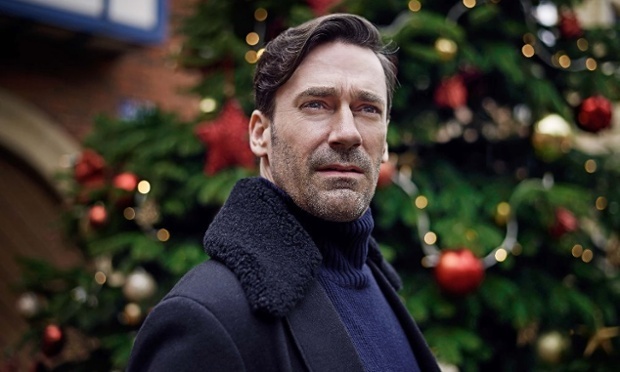
I liked “The Entire History of You” but winced at its tale of obsessive love and jealousy in a world where a “grain” of technology implanted in your head makes it possible to review – and share – your memories. The Christmas episode featuring Jon Hamm of “Mad Men” seemed to bite off too many stories.

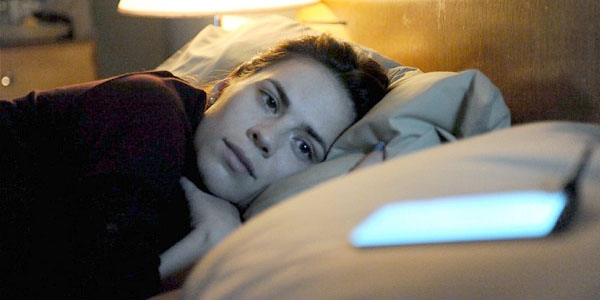
The best of the episodes I’ve seen is “Be Right Back,” with “Agent Carter’s” Hayley Atwell and Domhnall Gleeson as a young couple separated by his death in a tragic accident. But Atwell’s character learns there’s a way of being with her love again, thanks to technology. But what’s the price?

“Black Mirror” probably benefits from the cool, blue-tinged modern Brit TV atmosphere of shows like “Sherlock.”

Not to mention the pervasive feeling of technological dread each episode is infused with.

From the stacks: “I, Robot’

i robot

The 2004 Will Smith movie “I, Robot” was on TV tonight. We caught a glimpse of it and my son asked about it. He’d seen most of it before, he said, but wasn’t familiar with the story.

I went to the bookshelves in another room and pulled down my copy of Isaac Asimov’s story collection, first published in 1950, about robots and humans in the near future.

My copy was published by Fawcett Crest in August 1970, when I was almost 11 years old.

My son seemed surprised that I still had books from when I was that young. I’m not quite sure how to take that.

The cover price on the book was $1.25.


New ‘Avengers: Age of Ultron’ trailer

ultron trailer hulk close

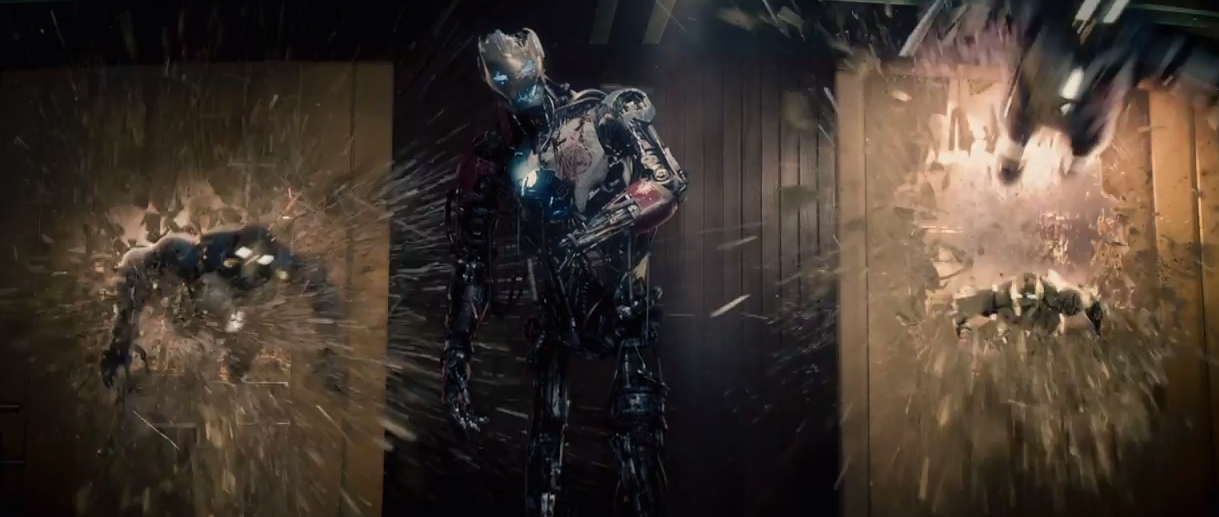
I know there’s a new “Star Wars” movie coming out in December, but I’m still looking forward to May and “Avengers: Age of Ultron” more than any other movie this year.

The new trailer came out tonight.

ultron trailer ultrons bursting

And this Joss Whedon sequel is, obviously, the “Empire Strikes Back” of this series.

ultron trailer ultron close

Dark, I tells ya.

Here’s the trailer.

Why Ant-Man – and maybe ‘Ant-Man’ – matters

tales-to-astonish-35

I know there was some discontent out there with the trailer for Marvel’s “Ant-Man” movie, but I was relieved when I saw it the other day.

Why?

Mostly because I was relieved the trailer indicated the movie, starring Paul Rudd as the second Ant-Man, Scott Lang, will address some of the same questions the moviegoing public will have: Why do we need a superhero who shrinks? And why would anyone call themselves Ant-Man?

But also because the movie will finally acknowledge the place in the Marvel Universe of one of its pioneering characters.

So who is Ant-Man and why should we care about him?

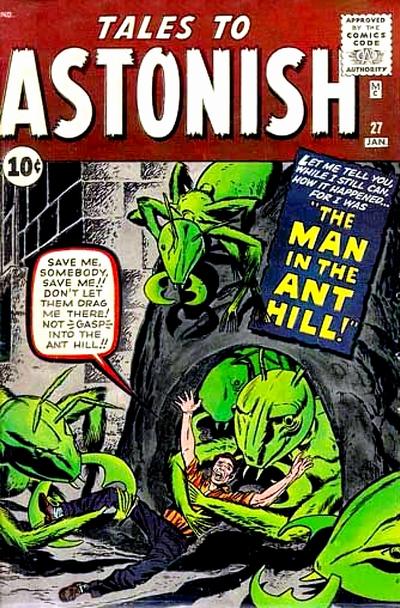
Tales_to_Astonish_Vol_1_27

Ant-Man is best known as Henry, or Hank, Pym, and he debuted in comics in “Tales to Astonish” 27, published in January 1962. Pym was an unfortunate scientist who could shrink to ant-size … but couldn’t defend himself from ants. He barely survived this tale that was a retread of “The Incredible Shrinking Man.”

But Pym returned in “Tales to Astonish” 35, this time as Ant-Man and sporting a helmet that let him communicate with ants. He was their master!

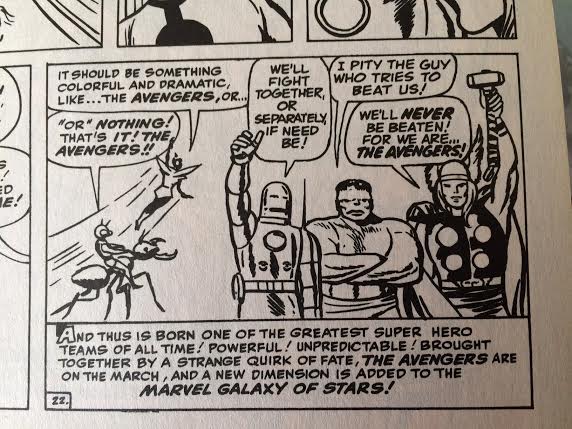
After several issues of adventures, Pym and girlfriend (later wife) Janet Van Dyne appeared in the first issue of “The Avengers,” as a diverse group of heroes got together to defeat Thor’s brother, Loki.

antmanavengers1panel

Pym and Van Dyne even named the group, which makes it all the more important that their history in the Marvel universe be part of the Marvel Cinematic Universe. Avengers co-founders!

Pym is a problematic character on a couple of counts, though.

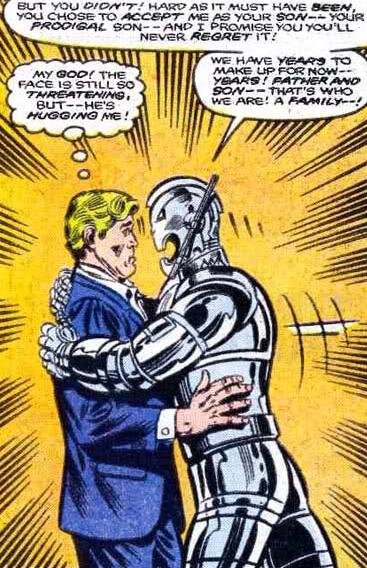
pymandultron

It’s not like the Marvel Cinematic Universe needs another genius scientist, even if Pym created Ultron, the villain in the upcoming “Avengers: Age of Ultron.” The MCU already has Tony Stark and Bruce Banner.

pymhitjanet

Plus, Pym was always an erratic character. That’s a plus for the realistic 1960s-and-beyond Marvel Comics universe, but not for movies that increasingly play to a wide mainstream audience. So Pym the brilliant genius who had emotional breakdowns, masqueraded as at least one super-villain and even struck his wife is shifted to a secondary role in the movie.

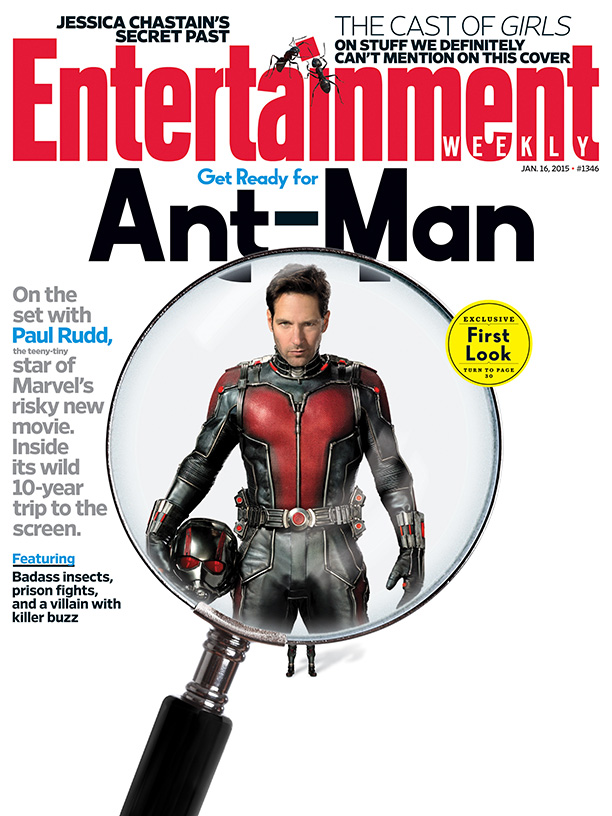
antmanEWcover

Why the “Ant-Man” movie matters is another thing. but I think that it does.

Everybody worried when the movie’s original director, “Shaun of the Dead” creator Edgar Wright, left the project and he and Marvel cited creative differences. The temptation was to worry that Marvel wanted Wright to make his movie more mainstream and he didn’t go along.

I trust ultimate director Peyton Reed – “Bring it On” is a classic – but more than anything, I trust Marvel.

Why?

Well, their track record is pretty good. Most of the Marvel Cinematic Universe movies have been good to great, with only a couple of lesser entries (“Iron Man 2” to some extent).

antmanduoEW

I also think “Ant-Man” will explore the idea of failure, loss and redemption in the Marvel universe. And that’s good, because those story beats and emotions are a huge part of the comic books.

The upcoming “Doctor Strange” movie, with Benedict Cumberbatch set to play the arrogant surgeon who rebuilds his life, should strike some of the same notes.

But more importantly, I think Marvel will use “Ant-Man” to fill in the gaps in its movie universe.

How?

Rumors indicate that portions of “Ant-Man” will take place in the 1960s, with a younger actor playing Michael Douglas’ role of Hank Pym, the original Ant-Man. It’s been suggested that we’ll see 1960s-period-appropriate versions of Howard Stark and other characters long established but unexplored during a period of several decades.

Just like “Agent Carter” on TV right now is filling in the blank spots in the post-World War II Marvel universe, I believe “Ant-Man” will fill the gaps in the 1960s, with a young Pym and wife Janet Van Dyne (parents of Hope Van Dyne, the character played by Evangeline Lilly in the movie) adventuring and working with SHIELD.

There’s a ton of material here that, if properly explored, will fill in “lost years” and make the Marvel on-screen universe feel even more like a real, if fantastical, world.

So yeah, Ant-Man matters because of his history and “Ant-Man” matters because of how it might flesh out the Marvel history onscreen.

Blast from the past: Level 42 ‘Something about You’

level42somethingaboutyoulead

I was a child of the 60s but i became a young adult in the 1970s and 1980s and those were the most influential periods of my life as far as music goes. And being a visual person, I especially loved that weird bastardization of music and visuals, the music video.

One of my favorites was the video for British band Level 42’s “Something about You.”

So many videos are awful and so many are ridiculous in their efforts to mash up the song with some kind of story, particularly romantic vignettes starring the the artist or lead singer of the band.

What I like about director Stuart Orme’s 1985 video for “Something about You” is that it’s all about the most weird and awful romance.

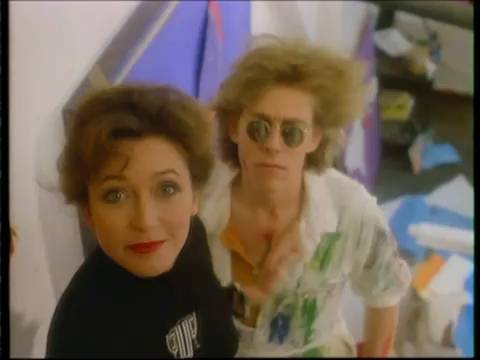
level42somethingaboutyou

Members of the band play characters riding in a train car. The oddest of the group, played by band leader and writer Mark King, imagines – envisions? – each of his fellow passengers with the same woman, usually in some sort of troubled moment in their relationships.

Overlooking each quick vision is King as a creepy, heavily-made-up man in a plaid suit, laughing heartily at each couple’s troubles. Near the end of the video, King’s suit-wearing character is either lurking or confronting each couple in some dark field or winding staircase. Creepy!

somethingaboutyoucherilunghi

At the end of the video, King’s character gets off the train and spots the woman (played by beautiful Cherie Lunghi, remembered as Guinevere in “Excalibur”) waiting in the station. But who is she waiting for?

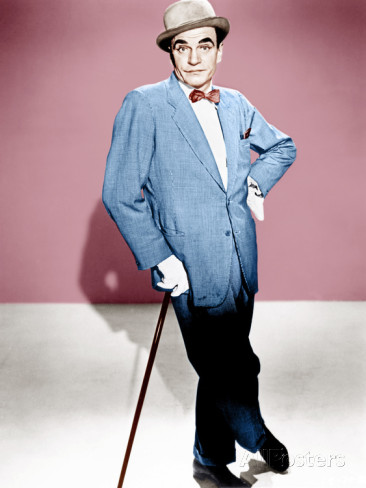
I remember hearing at the time that King’s character was based on the character Lawrence Olivier played in the 1960 movie “The Entertainer.”

the-entertainer-laurence-olivier-1960

Looks right to me.


‘Ant-Man’ trailer: ‘Is it too late to change the name?’

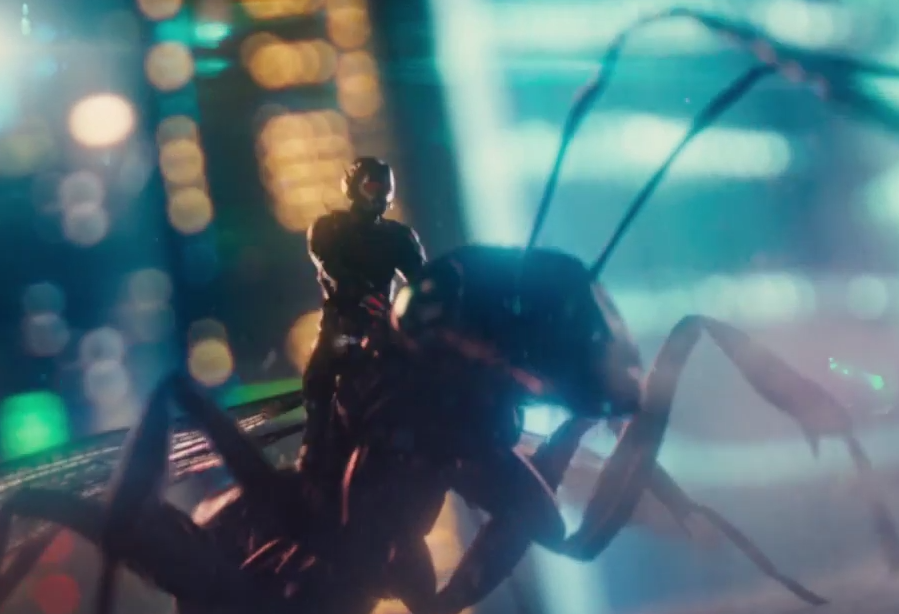
ant-man trailer

The new trailer for “Ant-Man,” Marvel’s newest superhero flick, premiered tonight during “Agent Carter.”

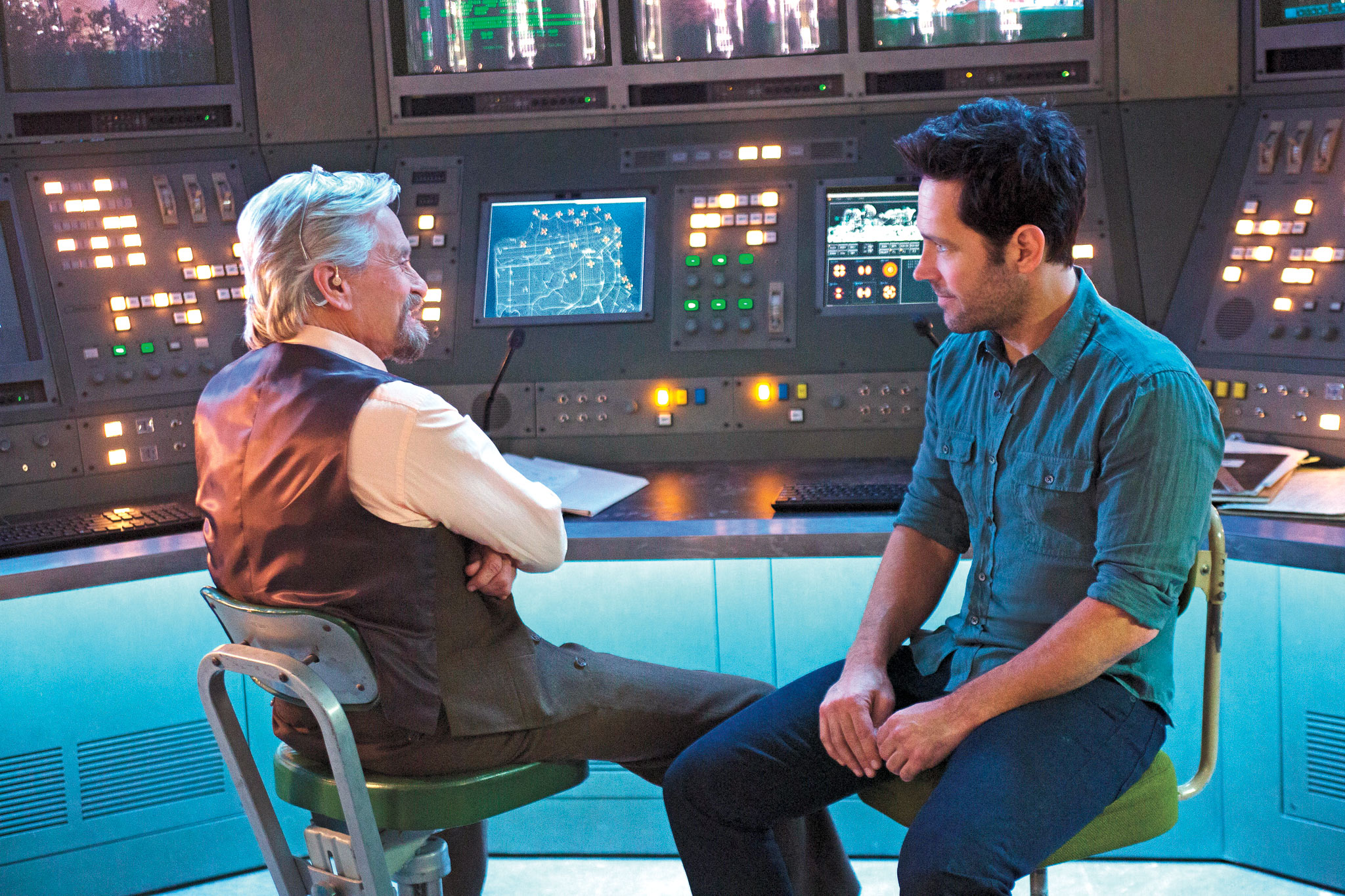
The Peyton Reed movie, featuring Michael Douglas as Henry Pym in mentor mode and Paul Rudd as Scott Lang, the guy who inherits the suit, comes out this summer.

Offbeat action and humor will sell this movie.

The trailer is fun stuff.