Chelsea Cain returns with ‘One Kick’

one kick chelsea cain

Starting a new series can be a tricky thing for an author. Will readers follow you to another series, especially one that’s very different from the old familiar one?

Chelsea Cain needn’t worry. Since 2007, she’s been writing a series of twisty and twisted thrillers about Portland cop Archie Sheridan and Gretchen Lowell, the serial killer who seduced and nearly killed Archie. Cain’s books are grim and fun at the same time, throwing great characters like young newspaper reporter Susan Ward into the horrific dance between Sheridan and Lowell to lighten the tone occasionally.

Cain is trying something very different with “One Kick,” a new books that kicks off a new series following Kit “Kick” Lannigan, a 21-year-old with a horrifying past. As a child, she was kidnapped by a stranger who held her in captivity for five years, molesting her and making her the star of many child pornography movies that live on a decade after she was rescued from Mel, her captor.

As a 21-year-old, Kick is training her body and gathering weapons for … something. She doesn’t know quite what, but she goes into high alert every time a child turns up missing.

Finally, after the disappearance of a young boy named Adam, Kick is approached by Bishop, a frustratingly smug and enigmatic man, apparently independently wealthy, who recruits her to help him find Adam and other missing children.

With the life of Kick’s brother threatened by a predator from their childhood – and Kick’s life and sanity in the balance – Kick goes to work, an emotionally frayed but lethal avenging angel, striking out to save children from the same fate that befell her.

Cain’s readers will find some familiar elements in “One Kick,” including an annoying mother and some unhealthy relationships. And there are some queasy moments of visceral gore.

But “One Kick” and Kick Lannigan are very different animals from Archie or Gretchen or Susan. As personal as Gretchen’s assault was to Archie, there’s nothing as horrible, as cruel, as the toll that child exploitation takes on its victims. It’s to Cain’s credit that her story adequately conveys this weight at the same time it turns the characters and situations into fodder for a gripping crime novel.

Today in Halloween: Hello there!

IMG_4222-0.JPG

Regular readers of the blog know I love Halloween and like to share items old and new.

Above, first time I’ve seen this piece of decor.

My thought: Sure, everybody likes it when it’s for Halloween!

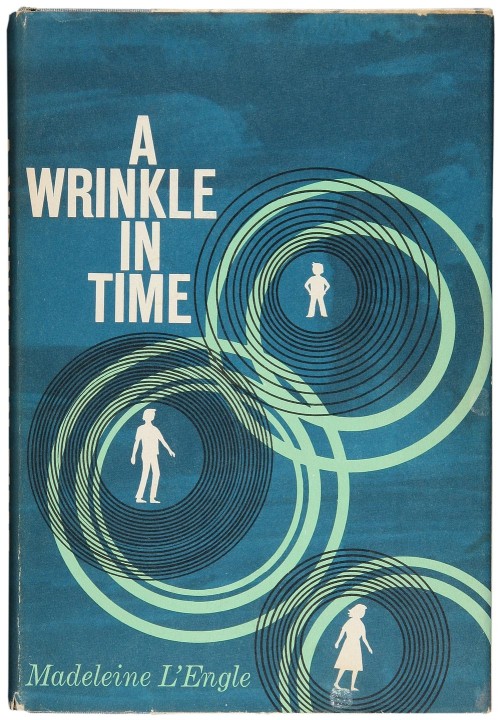
‘Wrinkle in Time’ deserves another look

a wrinkle in time

I think I’m going to have to re-read “A Wrinkle in Time.” Seriously, this time.

Madeleine L’Engle’s 1962 story, about young siblings and a friend who journey through space and time to rescue their scientist father, was a favorite of mine when I was a kid.

I was a little romantic, you see, and the book’s earnest tone and loving characters appealed to me.

I read one or two of L’Engle’s sequels but the first book really stuck with me.

And then I tried to read it again a year or two ago.

I couldn’t get through it. I couldn’t even get very far into it.

I grew up on a steady diet of science fiction and I still love some Young Adult books, especially “The Hunger Games” trilogy.

But re-reading “A Wrinkle in Time” almost made me swoon from all the saccharine dialogue and heartfelt feelings.

I’ll try reading it again because I want to experience this favorite story again before the movie comes out.

Yes, apparently Jennifer Lee, who wrote and co-directed “Frozen,” wants to write a screenplay for a long-planned movie version of “A Wrinkle in Time.”

I haven’t seen “Frozen” but it seems like Lee is the right person to add some bite to “Wrinkle.”

So I’ll try it again and see if anything can re-ignite my love for this old story.

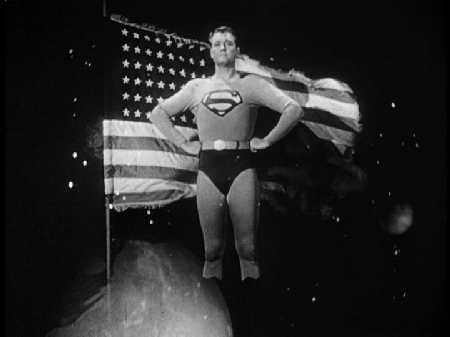
Classic TV: ‘Superman on Earth’

the adventures of superman

It’s hard to overstate just what an impact “The Adventures of Superman” had on America in the 1950s.

Kids were comic-book crazy back then and comics had sold millions of copies a year for more than a decade. Superman was one of the most popular and when the DC Comics superhero hit TV, a generations-long love affair with the Man of Steel became as solid as steel bars, breakable only by Superman himself.

A great deal of the credit for the impact of the series goes to “Superman on Earth,” a lean and sturdy telling of Superman’s origin directed by veteran helmer Tommy Carr. The series – which started in black and white, as befits a show that revolved around gangsters, hoods and other film noir staples more than science fiction – sparked millions of Superman toys, Halloween costumes and, eventually, more movies and TV shows over the course of six seasons beginning in the fall of 1952.

The debut episode hews surprisingly closely to the Superman mythos as they’d been created and fleshed out in the comics and radio show.

superman on earth jor-el rocket

The story opens on Krypton, as scientist Jor-El tries to tell the Kryptonian ruling council about the eminent destruction of the planet. They scoff at his forecast as well as his plan to build rocketships to transport the population to the planet Earth.

Before Jor-El can complete a rocket to take him, Lara and baby Kal-El to Earth, Krypton begins to tear itself apart. Jor-El and Lara wrap little Kal in a blanket and place him in the rocket.

in these first 10 minutes or so, the show plays like a “Flash Gordon”-style space opera – complete with, legend says, “Flash Gordon” leftover costumes.

After the rocket gets to Earth, it’s the heartfelt but hokey Smallville portion of the story, with Eben and Sarah Kent finding the rocket from Krypton and deciding to keep the baby. Flash forward to Clark at age 12, asking Ma why he’s different from the other boys. Then flash forward to Clark’s 25th “birthday” and Pa’s heart attack. As is familiar from so many iterations of the story, Clark decides to leave Smallville and go to Metropolis.

There’s a funny shot of George Reeves as Clark, “walking” down the sidewalks of Metropolis, putting on glasses as a disguise and deciding to become a reporter because newspapers were where the action is and Superman would know immediately when trouble broke out.

One of the strengths of the series was that Clark was a sharp guy who leveraged his powers as Superman in his everyday life. After gruff Daily Planet editor Perry White brushes him off – even after Clark shows initiative by entering his office through the window, 28 floors up – Clark hears Lois tell Perry about a man hanging from a dirigible out at the airport. Clark bargains with Perry: If he can get the man’s exclusive story, he’ll get a reporter job.

Superman shows up, rescues the man – played by Dabbs Greer, later memorable as the minister in “Little House on the Prairie,” and gets his story – frustrating Lois and winning the job.

The show wraps up with a customary joke by Clark – “Maybe I’m Superman” he taunts Lois – and bang, in less than a half hour, the show has introduced America to the the world’s greatest superhero.

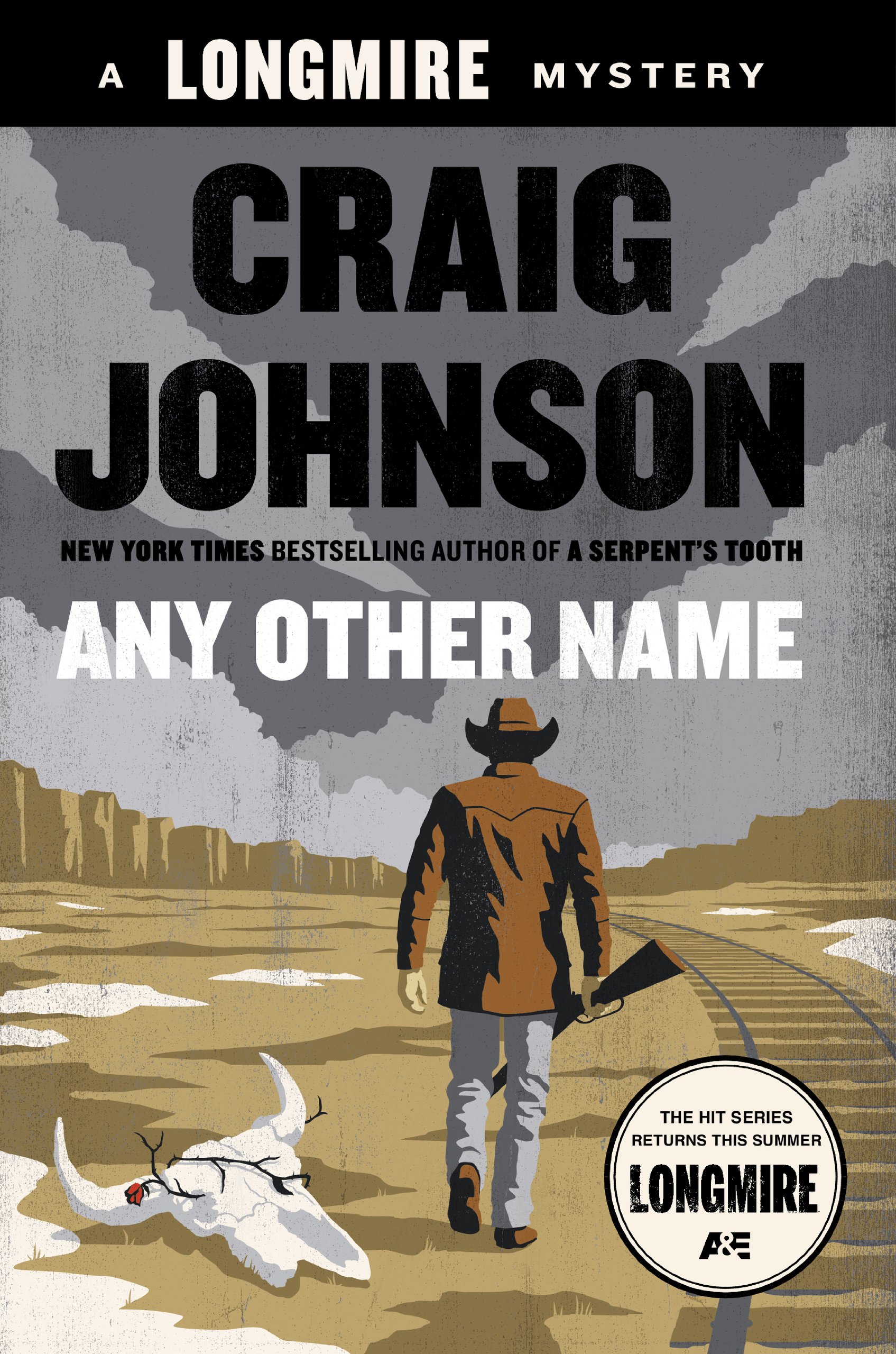
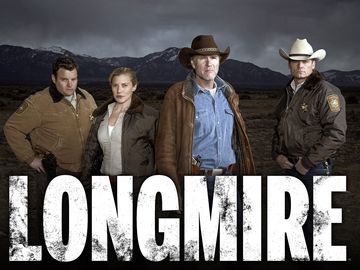
‘Longmire’ canceled; book series hits new peak

longmire any other name

I’ve got good news and bad news.

Despite its status as A&E’s top-rated drama series, “Longmire” has been canceled by the cable channel.

We heard a variety of explanations given when the news broke a few days ago. A&E didn’t value the older-than-the-most-coveted-demographic age of the audience. A&E didn’t own the series and thus made less money from it.

TV is a totally screwed up industry.

So with the finish of the third season still fresh and the possibility that the series might continue on another channel or even online, we’ll mourn “Longmire” and hope for more adventures of the crusty Wyoming sheriff and his posse.

Longmire Season 2

“Longmire” the TV series had a great cast and average-to-above-average stories that settled into author Craig Johnson’s characters and settings more as the series progressed.

But the series never topped Johnson’s stories. And I don’t think I’ve ready any 10th book in a series that felt as assured as “Any Other Name,” Johnson’s latest Longmire novel.

Sure, Robert B. Parker’s Spencer series and Lee Child’s Jack Reacher books are dependably, consistently fun. And maybe Johnson just hit a high point with “Any Other Name.” But the book series feels like it’s gotten a second wind, so compelling and accomplished does “Any Other Name” feel.

Johnson can’t go too far wrong when he focuses on Walt Longmire, of course. Select members of his supporting cast bring a lot to the stories, and he includes three of them here: Walt’s longtime best friend, Henry Standing Bear; Vic Moretti, Walt’s chief deputy and sometime paramour, and Lucian Connally, Walt’s predecessor as sheriff.

Lucian asks Walt’s help in finding out why his old friend, a cop in another county, killed himself. Before long, they determine that the cop’s death was caught up in a scheme involving missing women and human trafficking.

Johnson’s writing is so heartfelt but so wry, so funny but so hard-nosed, that it didn’t seem likely that he could top his previous books.

But I really think he did with “Any Other Name.” The story has the quirky charm of all of the author’s previous modern-day westerns with a clear and concise mystery.

And it feels like Johnson had a hell of a time writing “Any Other Name.” I just hope he had as good a time writing it as I had reading it.

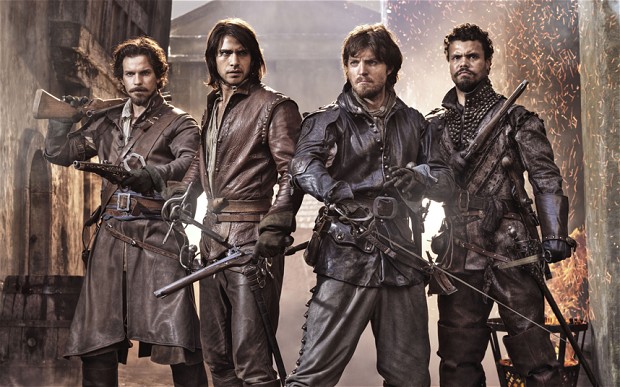
‘The Musketeers’ and ‘The Three Musketeers’

the musketeers bbc america

I’ve always loved Musketeers stories.

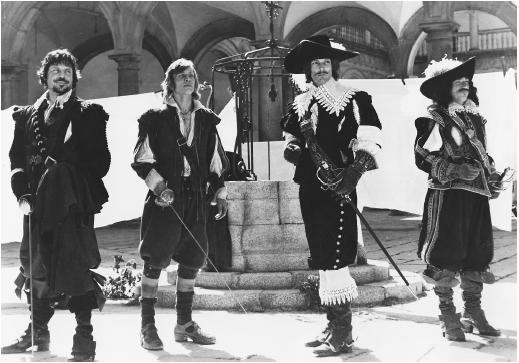
I’m pretty sure I read Alexandre Dumas’ novel of 17th-century Musketeers – the king’s guard – when I was still young and certainly before the 1973 Richard Lester movie version. I really loved Lester’s movie and its made-at-the-same-time sequel, “The Four Musketeers,” which was funny and slapstick and swashbuckling all at the same time. The movies clinched my love of the story and characters, a love that deepened when I saw the very different but equally thrilling 1948 version starring Gene Kelly and Van Heflin.

So I’ve enjoyed getting a double-dose of Musketeers lately with a BBC America series, “The Musketeers,” and a repeat viewing of Lester’s first movie.

“The Musketeers” is a handsome version of the story of young French farm boy d’Artagnan, who goes to Paris on a mission of revenge but soon finds companions in three of the king’s best Musketeers, suave Aramis, tragic Athos and brawling Porthos.

The series has the court intrigue, double-crossings and mysterious motives familiar from the story. The four Musketeers are stalwart but portrayed as men with faults and secrets.

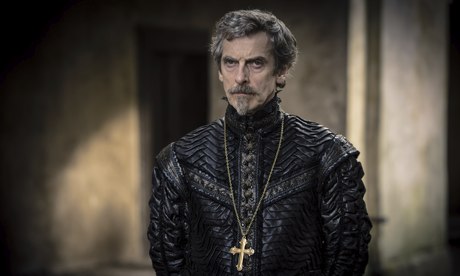
Peter Capaldi as Cardinal Richelieu in the BBC's The Musketeers.
A nice bonus is the presence of Peter Capaldi, who just last night began his tenure as the Doctor in “Doctor Who,” as Cardinal Richelieu, often portrayed as a villain but given some interesting shading here.

The series finishes up tonight, but I’m sure you can catch it streaming or on demand.

As for a recent chance to re-watch Lester’s original “Three Musketeers,” with Michael York, Raquel Welch and the amazing Oliver Reed, I rediscovered my love for the movie again.

the three musketeers 1973
But I hadn’t remembered how goofy parts of the movie were.

And for all the talk about modern-day movies hinting at or previewing future movies in a series, “The Three Musketeers” ends with scenes from its sequel.

It was a practice the producers, the Salkinds, pioneered here and tried to do again with the first two “Superman” movies. In the latter series, the producers threw out much of the footage shot for the sequel. With the “Musketeers” films, some members of the cast sued because they had been paid for only one movie.

Pretty sure Peter Jackson worked out such details with the “Lord of the Rings” cast before the fact.

Classic: ‘Night of the Hunter’

night of the hunter horseback

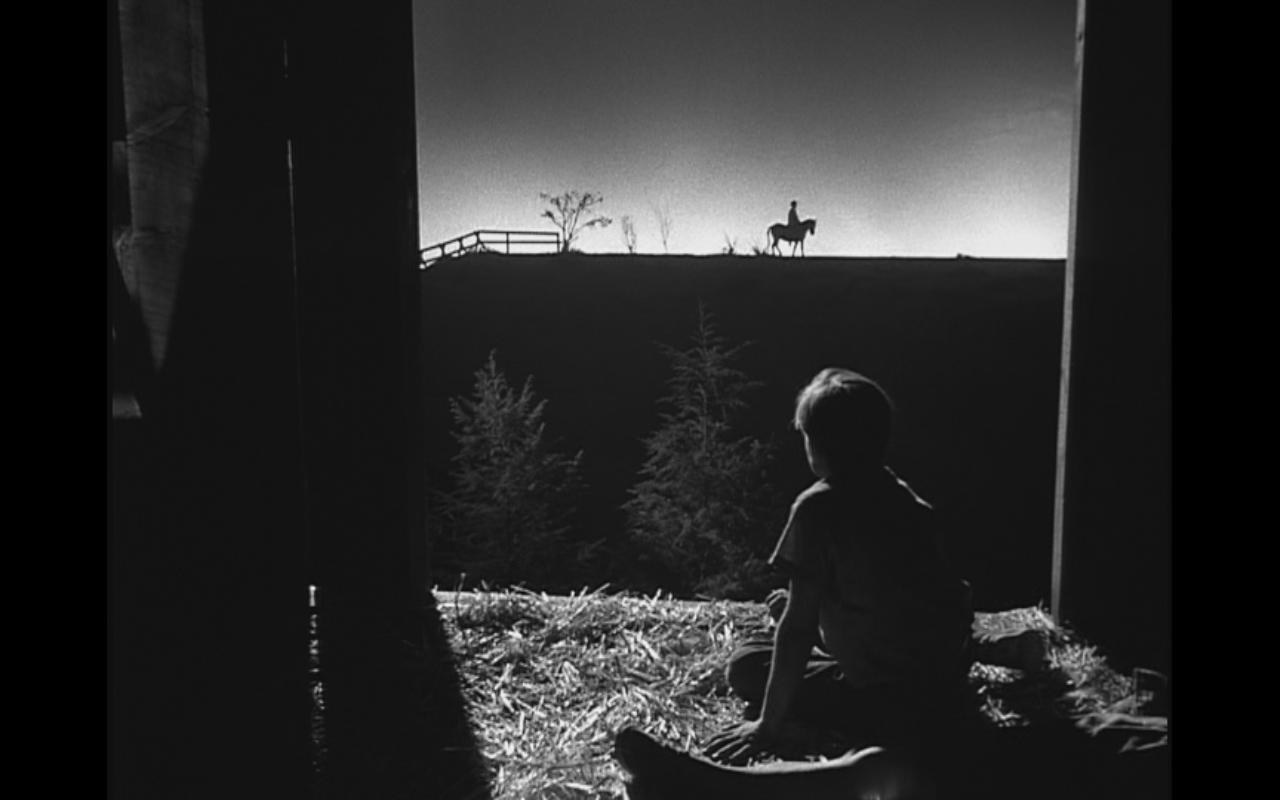
I forgot how crazy “Night of the Hunter” was.

I saw the 1955 Charles Laughton-directed film, starring Robert Mitchum as a murderous preacher with a series of dead wives in his wake, in my movie-crazy adolescence way more than 30 years ago. It was during a period I was soaking up every movie I could find on TV – this was before the VCR era, even – and reading about everything, from the old Universal horror movies to classics like the Marx Brothers and Kubrick’s “Paths of Glory.”

But in the decades since I saw “Night of the Hunter,” my mind had pretty much rendered it to its single-sentence plotline: Woman-killing man of the cloth has murderous intentions for his adopted family.

I forgot how subversive, how darkly funny, how outright odd much of the movie is.

Set in rural West Virginia in the 1930s, the movie starts out with a shock: Children playing in a yard begin a game of hide-and-seek, only to discover the body of a dead woman in the opening to a storm cellar.

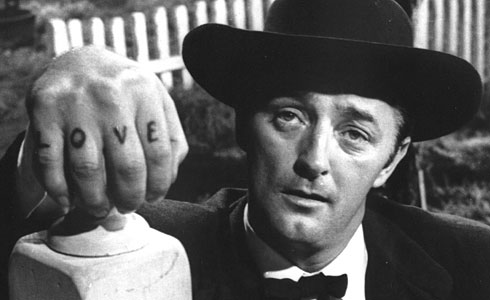
night of the hunter mitchum love

We quickly discover she’s the latest victim of Harry Powell, a traveling preacher and serial killer. As he tools along country roads, Powell talks to God about his mission: Kill women and steal their money to fund his religious crusade.

Powell’s travels are interrupted by his arrest for auto theft and he spends a few weeks in jail. While inside, he meets Ben Harper (Peter Graves), a family man awaiting execution for murder. After hearing Harper talk in his sleep about the existence of $10,000 in stolen cash – and following Harper’s execution – Powell is released and goes to find and befriend Harper’s widow Willa (Shelley Winters) and her children, skeptical John (Billy Chapin) and loving Pearl (Sally Jane Bruce).

Powell talks his way into marriage with Willa – with the help of town busybody Icey Spoon (Evelyn Varden) – and then sets out to find the $10,000, murdering his new family if he must.

The movie is full of menace and performances that range from subtle (Mitchum, usually) to over-the-top.

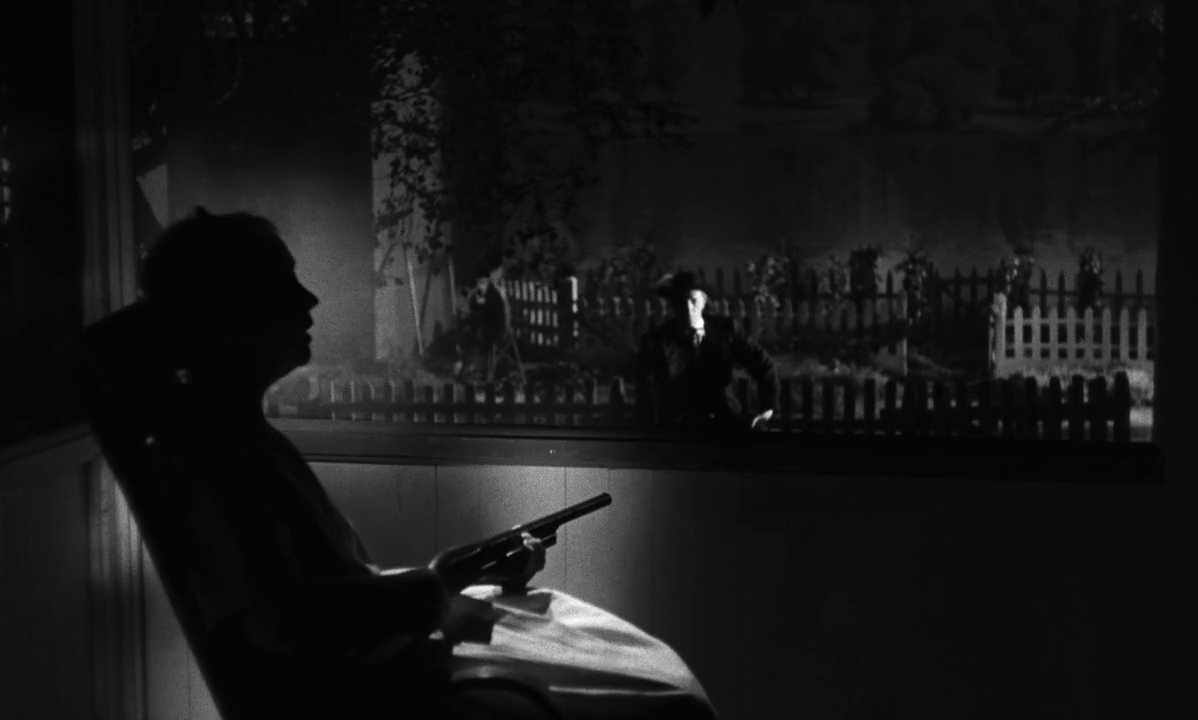
night of the hunter gish gun mitchum

“Night of the Hunter” has been cited as an influence on the filmmakers that followed it, but watching Laughton’s movie, it feels like he was influenced by everything from homespun small-town dramas (the town gossip) to horror films (the moody lighting, the lurching figure of Mitchum when he’s chasing the children, images right out of a “Frankenstein” movie). Laughton puts a satirical spin on all this, however. The gossipy neighbor who practically forces the widow into Powell’s arms literally leads the lynch mob after Powell’s head at the end of the movie.

There’s a drinking game to be played watching “Night of the Hunter,” and it involves taking a drink every time Mitchum sings a verse of a hymn or emptying your glass every time he calls out, “Children …. ” in a spine-tingling sing-song tone.

Alternately, “Night of the Hunter” could almost be recut as a 1980s sitcom, with Mitchum as the bumbling dad, forever tripping over things in the basement.

‘The Strain’ a gooey mess, but fun

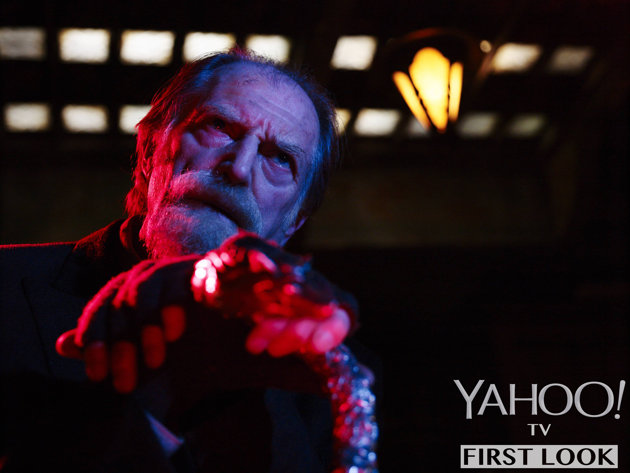
the strain david bradley

“The Strain” is an odd bird. Even besides the whole “vampires projecting fleshy six-foot-long stingers out of their mouths” thing.

It’s odd because it’s a TV series drawn from a series of three books that began life as a TV project.

Published in 2009, “The Strain” was written by movie director Guillermo del Toro and top-notch crime drama writer Chuck Hogan, who wrote “Prince of Thieves,” the hard-bitten Boston thriller made into the Ben Affleck movie “The Town.”

The two based “The Strain” and its two sequels, “The Fall” and “The Night Eternal,” on a TV series they wanted to develop.

The first book – and this is the plot familiar to viewers of the FX series, which is five episodes into a 13-episode first (?) season – follows the efforts of a small group of people – a couple of Centers for Disease Control scientists, an exterminator and a sword-wielding survivor of a World War II death camp – to convince authorities that New York City is the breeding ground for a deadly type of virus, It’s a disease that turns people into grotesque vampires, spreads rapidly – and has been deliberately released into the population after most of the passengers and crew of an airliner turn up dead on the runway at JFK.

“The Strain” is also odd in that, having read the books, I can’t quite imagine how the show can play out like Hogan and del Toro’s series of novels.

I won’t get into spoilers here, but suffice it to say that it would be an odd series indeed that starts as a medical thriller with supernatural overtones and morphs into … well, something else entirely.

“The Strain” is not what it seems. I’m not sure at what pace the plot will play out – and I’m pretty sure the series will be more faithful to the books than the adaptation of Stephen King’s “Under the Dome” has been – but it’ll be very interesting to see what happens by the end of this season. Or next, if there is one.

And those stingers. Sheesh.

‘Flash Gordon on the Planet Mongo’ by Alex Raymond

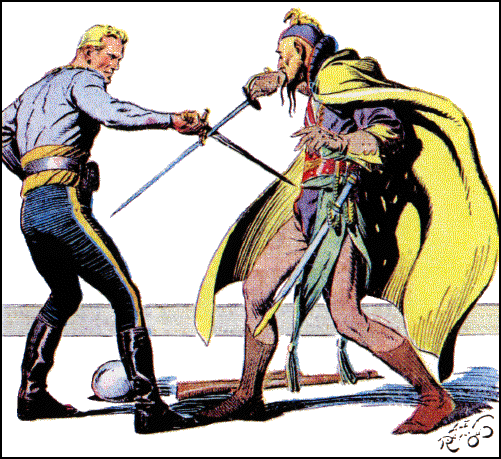
flash gordon ming alex raymond
Like Doc Savage was the inspiration for many superheroes that followed him, Flash Gordon and Buck Rogers were the forerunners for many science fiction stories that followed, including “Star Wars.”

So “Flash Gordon on the Planet Mongo,” the first in a series of beautiful hardcover collections of Alex Raymond’s Flash Gordon Sunday newspaper strips, is essential perusing for anyone who wants to understand the origins of modern space opera.

The first oversized hardback collection curates Raymond’s Sunday strips from Jan. 1, 1934 to April 18, 1937 and features an introduction and appreciation by artist Alex Ross.

What’s fascinating about the collection is how quickly Raymond populated the world of Mongo with bizarre characters and creatures. By the time of the second Sunday strip – the second – Raymond had introduced giant dinosaur lizards for Flash to battle. By the third Sunday, red ape-like creatures are brought out to wrestle a Speedo-sporting Flash.

Lion Men, Hawk Men and other staples of the strip follow one after the other.

Raymond quickly grew more confident in his art. The early strips contain up to 12 panels. They’re colorful and stuffed full of wild figures and story twists but Raymond’s talents are not shown off by the cramped layout.

By the fall of 1934, Raymond had made his panels bigger – sometimes using as few as eight – and telling his story more effectively.

By mid-1935, the panels were as few as four a week. On June 16, 1935, Raymond used just three panels – one taking up much of that week’s strip – to show Hawkmen, spears in hand, buzzing out of the sky on an enemy army on the ground below.

In these first adventures, Flash and his allies war against Emperor Ming, explore undersea kingdoms and are forever being thrown into pits with reptilian beasties.

It’s all fun and, thanks to the propulsive plots and beautiful art of Alex Raymond, a classic.

‘Guardians of the Galaxy’ takes us out there

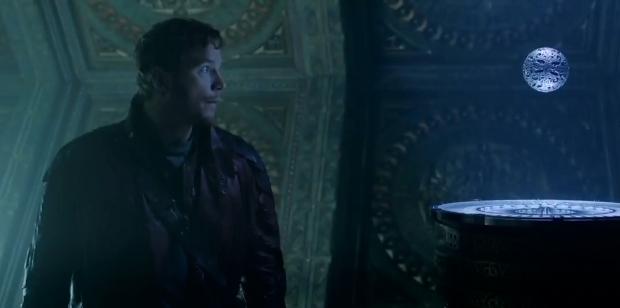
guardians infinity stone

A lot of people are saying “Guardians of the Galaxy” is this generation’s “Star Wars.” I’m not sure that’s the case, or that anything could be this generation’s “Star Wars.” Some people forget just what a game-changer “Star Wars” and, two years earlier, “Jaws,” were. Those two movies solidified summertime as a time for big-screen escapist fare and proved that people would pay to see it.

Others say that “Guardians” is this generation’s “The Last Starfighter” but I think that’s selling “Guardians” short. As fond as my memories of “Starfighter” are, I think “Guardians” is a better movie.

So what role does “Guardians” fill?

Roles, really.

First of all, it’s a really good summer movie. It’s good-natured and funny and full of action.

Secondly, it’s a sure-footed next milestone in the Marvel Cinematic Universe. Although it only slyly references the quest for the Infinity Stones – the sources of power that will, almost certainly lead Thanos to Earth in the third “Avengers” movie, probably in 2018 – it keeps that subplot to the first three phases of Marvel movies in moviegoers’ minds.

Thirdly, it expands the Marvel Cinematic Universe. Here’s how:

The comics published by Marvel in the past half-century-plus have covered a lot of territory, literally and figuratively speaking.

There’s the street-level superheroes, like Spider-Man and Daredevil, dealing with maniacal villains and street punks alike. The non-Marvel Cinematic Universe “Spider-Man” movies and Marvel’s upcoming Netflix series like “Daredevil” map out this world. (They’re the Marvel counterparts of Batman, for you DC lovers out there.)

There’s the global superheroes, like the Avengers, who have the power to face threats to the entire world. The non-MCU heroes like “Fantastic Four” also fall into this category, as does DC’s Superman and Justice League.

What “Guardians” does is give Marvel Studios a beachhead in the cosmic universe where the comic books have played for a half-century.

There’s always been some crossover among all these Marvel realms, such as when Galactus, devourer of worlds, shows up and is tackled by the FF. Cosmic threat comes to global heroes.
But quite often, the links between the cosmic and Earth-based heroes have been only tenuous. Captain Marvel or the Silver Surfer or Warlock show up and fight and eventually team up with the FF or the Avengers to face a menace like the Kree-Skrull War, but by the end of the story, things are back to a Marvel status quo and the Avengers are dealing with Earth-based villains like Doctor Doom.

“Guardians” plunges us headlong into that cosmic Marvel universe with only occasional looks back at Earth.

I won’t recap the plot I’m sure you’re familiar with by now or even go on and on with my thoughts about “Guardians.” Director James Gunn had made a fun, “Star Wars”-ian adventure pitting an unlikely band of heroes against evil forces. Along the way, the movie introduces, more smoothly than most would have thought possible, fantastic creatures like Rocket Racoon, a small but ferocious animal with a pitiable past and a love of big guns, and Groot, a walking, talking (well, a little) tree creature. Space raccoon and gentle plant-based giant you say? Sure, why not. It’s a testament to Gunn’s handling of the characters and plot of “Guardians” that what the characters are matter less than who they are.

If you remember, Thanos, Marvel’s go-to cosmic bad guy, showed up at the end of “The Avengers” to take credit for pitting an invading alien army against Earth and grin at the thought of courting death.

Thanos wants the Tesseract – the Cosmic Cube in the comics – that the Red Skull wielded in “Captain America” and Loki sought in “The Avengers.” Along with the Aether, the cosmic power from “Thor: The Dark World,” and other Infinity Stones, Thanos can make the Infinity Gauntlet, a weapon of unimaginable power. It’s a certainty that will be the major plot point of the third “Avengers” movie.

One of the most amusing things about “Guardians” is that much of the history and power of the Infinity Stones is laid out midway through the movie … but to the protagonists and antagonists of “Guardians,” who don’t even know as much as Captain America and Iron Man about the importance of the Stones but know a thing to keep away from bad guys when they see one.

So the collected Guardians, led by the effortlessly charming Chris Pratt as Peter Quill, take on Ronan, an upstart ally of Thanos, in an effort to keep a handle on their particular Infinity Stone and keep it away from Thanos.

It’s an effort that will continue for another four years before the contest for the Stones pits Avengers – and likely other allies – against Thanos in the third Avengers movie, which will likely act as capper to the first three phases of big-screen Marvel.

“Guardians” is so much fun, so funny, so charming, that it carries all the responsibility of furthering the over-arching plot of big-screen Marvel as if it were a feather. Despite its many accomplishments, that might be the movie’s handiest achievement.

By the way, I wanted to mention Marvel’s other comic-book universes, besides street-level, global and cosmic playgrounds, because the big-screen Marvel universe will no doubt incorporate them as well.

(I won’t get into a couple of lesser-known Marvel comic book universes here because, frankly, I don’t think we’ll see big-screen versions of Marvel’s romance and western comic worlds anytime soon.)

We’re all but certain to see Marvel’s mystical and horror universes come into play in movies before long, perhaps in a combined venture.

The studio has already named a director for its “Dr. Strange” movie, about a physician who became a master of the mystic arts and fought supernatural creatures. It’ll be interesting to see who the studio picks to play the part because Strange could be as much of an anchor for ongoing Marvel movies as Robert Downey Jr. has been as Tony Stark.

A “Strange” movie would not only introduce the mystical and supernatural Marvel universes to the big screen but could encompass the company’s long history of horror characters, some of whom regularly cross paths with heroes like Spider-Man (I’m looking at you, Moebius the Living Vampire) but operate in a realm that ranges from the dark corners of the Earth to other dimensions. It’s a world of magic – already explained in the “Thor” movies as simply science that humans can’t understand – and wild creatures.

If the idea seems strange to you, consider how strange a space raccoon and a talking tree might have seemed before this record-breaking opening weekend for “Guardians of the Galaxy.”