Hail Hydra! You know the drill

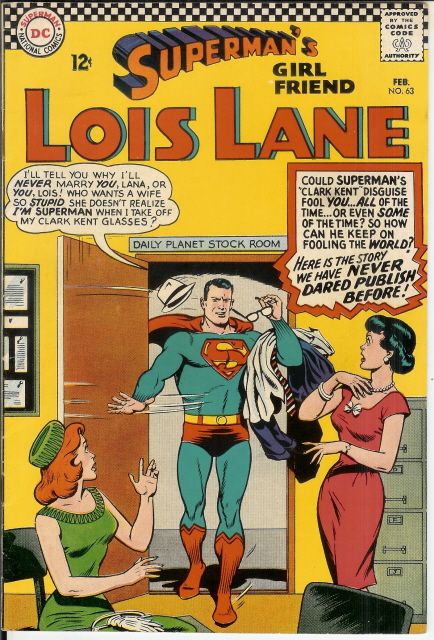
hail hydra steranko

If you saw “Captain America: The Winter Soldier,” you know (spoilers) that Marvel’s longtime super-science, super-evil group Hydra plans a big role.

And you know that “Hail Hydra” is the special password members of Hydra have used since the first “Cap” movie.

Of course, “Hail Hydra” has been around in the comics as long as Hydra has been around, and in the movies  it’s never been used more effectively than when Garry Shandling’s corrupt senator whispers it in corrupt SHIELD agent Jasper Sitwell’s ear.

So the exchange almost immediately inspired a host of Internet memes.

hail hydra lost in translation

This is the first one I saw.

hail hydra bush cheney

This one is great.

hail hydra godfather

And this one.

hail hydra bert and ernie

Can’t top this one.


‘Star Trek: The Next Generation’ – ‘Yesterday’s Enterprise’

Enterprise-d_bridge_yesterday's enterprise

“Yesterday’s Enterprise” might not be my favorite episode of “Star Trek: The Next Generation” – that top spot might go to “Best of Both Worlds” or “Starship Mine” or “Inner Light” or a handful of others – but it’s one that I stop and rematch every single time it’s on.
“Yesterday’s Enterprise” was the 15th episode of the third season of “TNG,” airing in February 1990. The series had found its footing by that point. What seemed like an awkward, stilted attempt to reboot the “Star Trek” franchise became its own show, with relatable characters and a cohesive, intriguing universe.
That said, “Yesterday’s Enterprise” took a risk that a few series take at some point in their run: Twisting that established universe and showing fans what might have been. The original “Star Trek” did it, most famously, with its “Mirror, Mirror” universe. “Buffy the Vampire Slayer” did it better than almost anyone. Heck, in recent years, even “Community” did it, with its “Darkest Timeline” stories, in which beloved Abed suggests everyone adopt Spock-style goatees to signify the twist.
With “Yesterday’s Enterprise,” “TNG” went in a fascinating direction. A team of writers – four are credited with the screenplay and two with the story – and director David Carson took us to a dark place: An alternate universe in which the Federation has been at war with the Klingon empire for many years.
The familiar Enterprise, under the command of Captain Picard, encounters another ship coming out of a rift in time. The ship is the Enterprise-C, and its appearance in the “TNG” reality catapults Picard and the crew of the Enterprise-D from the show’s familiar setting to the war-torn universe.


Castillo_and_Yar_yesterday's enterprise
The change in timeline means more than a change in the look of the ship. Klingon officer Worf is, obviously, no longer on the ship. But Tasha Yar (Denise Crosby, most recently seen in “The Walking Dead”) is back. Yar has been dead for a couple of years in the mainstream universe, but no one knows this in the rebooted, twisted universe, just like no one knows the Federation really isn’t at war with the Klingons in “our” universe.
No one but Guinan (Whoopi Goldberg), the enigmatic alien who tends Ten Forward, the Enterprise-D’s bar.
Against all probability, Picard finds that Guinan’s warnings of the disrupted timeline make sense and has a fateful decision to make. If he sends the Enterprise-C and its crew, including Captain Rachel Garrett and helmsman Richard Castillo, back into the time rift and certain death. But doing so might “correct” the twisted timeline.
It’s a fascinating, spooky “what might have been” episode.
Random thoughts:
The crew did a lot to suggest the wartime Enterprise-D with darker sets, more “war room” type display panels and a few minor costume adjustments. Neither “TNG” or any TV series of the time had money to burn on individual episodes, so a little had to go a long way.
“Yesterday’s Enterprise” was an example of what “Star Trek” always did best: Raising the stakes and building to a suspenseful climax.
The weight of Federation history weighs heavily on this episode and the writers, director and cast rise to the occasion.
The guest cast was good. Richard McDonald played Castillo in a kind of Ryker-ish style. McDonald has been a good character actor for years now, and he’s maybe best known for this and his role as the idiot husband in “Thelma and Louise.” Not to mention Shooter McGavin in “Happy Gilmore.”
And I’ve always loved Tricia O’Neil, who played Captain Garrett. She’s gorgeous and authoritative. I wish we had seen more of her adventures. Or more of her in this episode, for that matter. Her early death leaves her ship in the hands of Castillo and Yar.


‘Captain America: The Winter Soldier’ one of Marvel’s best

captain america the winter soldier illus

There’s been a lot of talk about “Captain America: The Winter Soldier” – which I’m going to refer to by some shorter title from here on out – being a game changer for Marvel Studios and its big-screen cinematic universe.

And it is, in a way. Marvel, through co-directors Joe and Anthony Russo, seem prepared to start making changes in the on-screen universe they’ve established.

That risk-taking is only one of the elements that makes “Winter Soldier” feel like we’re now seeing events play out in a living, breathing, changing universe, one that changes a little bit more after the events of every Marvel movie.

I’ll be throwing in some spoilers later in this review, but I’ll warn you first. And I’ll be acknowledging that a big rumor I had speculated about a few weeks ago was wrong, wrong, wrong.

“Winter Soldier” almost feels like more of a “SHIELD” movie or sequel to “The Avengers” than a sequel to “Captain America,” and that’s appropriate. Steve Rogers, who “died” near the end of the first movie, only to be thawed out and revived and  eventually teamed up with Iron Man, Hulk and Thor in “The Avengers” two years ago, has gone to work for SHIELD, the super-spy agency led by Nick Fury. Cap (Chris Evans, again charming and low-key and a straight-arrow without being a parody of a paragon of virtue) is working alongside Natasha, the Black Widow (Scarlett Johansson) on SHIELD ops.

A nighttime raid on a ship at sea ably demonstrates not only Cap’s, Natasha’s and their SHIELD team’s lethal effectiveness but the twisty-turny nature of the work they do. While Steve is there to rescue hostages, Natasha is there to retrieve information from a SHIELD computer on board. (I’m going to have to see the movie a second time to figure out exactly why Nick Fury (Samuel L. Jackson, with more to do here than usual) knew he could find this info on the ship.)

So while Steve is frustrated at Fury’s duplicitousness – and Natasha’s too, frankly – he’s otherwise adjusting well to the modern world. He’s got a list of pop-culture and historical milestones to catch up on – “Star Wars” is included, as is the moon landing – and he’s befriended Sam Wilson (Anthony Mackie), a fellow veteran who is a VA counselor.

As Cap tries to tell the bad guys from the good guys – aside from his helpful suggestion to Sam that the bad guys will be the ones shooting at them – we’re introduced to Alexander Pierce (Robert freakin’ Redford), a Cabinet-level official who oversees SHIELD.

Before too long, it’s obvious that things are not what they seem with several characters and SHIELD is not the organization Steve would like for it to be. In fact, it’s the organization he and Tony Stark worried about in “The Avengers.” The organization that is experimenting with technology developed by HYDRA and the Red Skull in the first “Cap” movie.

The great part about the Captain America character, as created by Joe Simon and Jack Kirby in 1941, and revived by Kirby and Stan Lee in 1964, is that he’s a man out of time, that his values are unchanging. He’s not a stick-in-the-mud and he’s not a priss. He kills because he’s a soldier, but he won’t kill if someone, even an enemy, can be saved.

The greatest test for Steve is saving the character he shares the movie’s title with. The Winter Soldier is a nearly-unstoppable killing machine, sent out by Hydra to usher in the bloody carnage that leads to a new world order. He’s played by Sebastian Stan, of course, who played Steve’s lifelong friend, James “Bucky” Barnes, in the first “Cap” movie. Here – as in the comics – Bucky, returned from the dead, is a merciless, brainwashed assassin. Once Steve knows who he is, the question becomes, how can he save Bucky instead of killing him?

“Winter Soldier” is two and half hours long, more or less, but never feels that long. Some reviews have declared it’s better than “The Avengers,” but I’m not sure I agree. It is one of the best Marvel movies, no doubt.

This isn’t surprising, considering the nature of the movie and the genre, but “Winter Soldier” feels especially brutal. There’s less Iron Man-style repulsor ray action and less Thor “hammer down” fighting here. This is hard, bone-crunching, hand-to-hand combat with fists and knives. There’s a lot of gunplay and vehicular mayhem. It never feels as callous as the combat scenes in “Man of Steel,” but if you’re sensitive to the idea of this kind of stuff … well, what were you expecting?

“Captain America: The Winter Soldier” is one of the best of the Marvel movies. It’s a big story about the fight against murderous political ambitions but at the same time a more personal story about trust: Which people and institutions deserve your respect and your trust? For the Marvel movie universe, “Winter Soldier” definitively answers that question.

Okay, spoilers from here on out.

Ready?

Easter eggs are some of our favorite things about these movies, and “Winter Soldier” had plenty of them.
Not only do Tony Stark, Bruce Banner and other major characters get name-dropped – you would expect that – but there’s at least one reference to a major Marvel character to come. Stephen Strange is named as an enemy of Hydra. Why Doctor Strange, the Sorcerer Supreme, would be taking on this organization is not quite clear, but it was, I hope, a nice foreshadowing of a movie that’s been rumored to be in development.

Toby Jones’ appearance – in an altered form – as Zola, the Skull’s scientific minion, is a treat. It’s such a substantial role that it doesn’t really qualify as an Easter egg, but what the heck. I’ll include it anyway.

I’m sure that on repeated viewings I’ll see more of these, but there’s apparently a quick reference to Stark Tower – the geographic focus of the battle in “The Avengers” – as one of the locations chosen for Pierce’s doomsday scenario attacks. I’m guessing that other locations, glimpsed briefly onscreen, would also offer up some goodies.

How great was it to see Hayley Atwell as Peggy Carter? I hope her “Agent Carter” series happens. Seeing her helping form SHIELD in the 1950s would be so much fun. And throw in some Howling Commandos, too.

A lot of sites, including this one, speculated that Redford’s Alexander Pierce was secretly the Red Skull. While I was a little disappointed he was not, thinking it over for a few hours, I’m glad that Pierce was nothing more than a Hydra agent, a politically and morally compromised mad man whose plan for implementing a new world order admittedly rivaled the Skull’s for its viciousness.

Marvel’s weekly TV series, “Agents of SHIELD,” has been building, slowly, to the events that occur in “Winter Soldier.” But how “Agents of SHIELD” operates for the rest of this season and, possibly, next, considering that SHIELD itself is a discredited and defunct as a spy agency, will be interesting to see. Keep in mind, the show will have to avoid stepping on storylines that future Marvel movies might take up.

The trailers for “Winter Soldier” made us think that Redford’s SHIELD honcho was talking to Cap when he was telling him he had “shaped the century.” He was not. Obviously.

There’s something so cool about the montage, set to Marvin Gaye’s “Trouble Man,” near the end of the movie. We see Steve and Sam and Fury but we also see Maria Hill and Sharon Carter and damned if it all doesn’t feel just right.

The first end-credits scene feels like the most puzzling one yet in a Marvel movie for viewers who don’t know the context. As most have already noted, it introduces characters we’re going to see in next summer’s “Avengers: Age of Ultron,” including “The Twins,” Quicksilver and Scarlet Witch, and Hydra leader Baron Von Strucker. While there’s mention of Hydra, the arch-villain organization of the movie, there’s nary a familiar character in sight. It seems like Marvel has enough confidence in us to let us figure out what’s going on.

The second end-credits scene is directly tied to the movie and to future “Cap” movies, perhaps. Bucky’s return after decades and his stint filling in for Steve as Cap are familiar to comics readers. Speculation recently that Bucky actor Sebastian Stan is signed for nine Marvel movies – so as many as seven more from this point – and the fact that Evans currently has only three more movies in his contract – two “Avengers” movies and a “Cap” movie – suggests that Marvel’s long game might follow the comics storyline.


1970s poster flashback: ‘Dillinger’

dillinger warren oates poster

Excuse the lack of posts lately. It’s been a week, I’ll tell you that.

Last week when I posted the “Captain America: The Winter Soldier” 1970s-style poster here, I noted that it was a throwback to an entire era of cool movie posters.

winter soldier 70s poster paolo rivera

Here’s the “Winter Soldier” poster, of course.

dillinger warren oates poster

Here (and above) is the poster for “Dillinger,” a 1973 classic.

“Dillinger” was directed by John Milius, writer of such classic screenplays as the original “Conan” and “Red Dawn.”

“Dillinger” starred Warren Oates, a great character actor, as John Dillinger, the Depression-era bank robber.

“Dillinger” is remembered as a classic of its kind. And what a supporting cast: Ben Johnson, Harry Dean Stanton, Richard Dreyfuss (as Baby Face Nelson!) Geoffrey Lewis, Steve Kanaly (of “Dallas”), Frank McRae and so many others.

And it’s got a cool poster too.

Comic book odd: Detective Comics No. 367

Detective_Comics_367

I’m pretty sure Detective Comics No. 367 is not the most rare comic book in history. But it oughta be. I’ll tell you why in a minute.

This issue of Detective came out in September 1967, during an interesting time for Batman. DC had been plugging along with the character since the Golden Age by this point, but Batman saw a revitalization after the 1966 “Batman” TV series.

By September 1967, however, the show was waning. It would hang on until the spring of 1968, when the show was gone and Batman was left to his own devices.

The comic almost always – like a lot of DC, even in the years of improbable plots – had beautiful artwork. This cover wasn’t among the best – it’s credited to longtime DCers Carmine Infantino and Murphy Anderson – but it was pretty unusual in that it offered a jigsaw puzzle for readers to assemble to try to figure out that issue’s villain.

Here’s my question along the lines of rare comic books: I wonder how many kids would have cut up the cover of this issue to assemble the jigsaw puzzle?

I didn’t have this issue, but I know I wouldn’t have been able to resist the temptation to do so.

And thus would have been lost another copy.


First look: Amy Acker as ‘The Cellist’ in ‘Agents of SHIELD’

amy acker cellist agents of SHIELD

How much do we love this?

Marvel announced today that Amy Acker of “Angel” and “Dollhouse” would appear in an upcoming episode of “Agents of SHIELD” as Audrey, the ex-girlfriend of SHIELD agent Phil Coulson (Clark Gregg). Marvel released the photo above of Acker from the still-unscheduled episode.

You might remember Audrey as the unnamed “cellist” and girlfriend of Coulson as briefly mentioned in “The Avengers.”

After the movie came out, blogs (like this one) connected some dots in our love of the idea of Coulson coming back from the dead as the Vision, the android Avenger.

A few sites noted that Wanda, the Vision’s comic-book wife – better known as the Scarlet Witch – was supposedly a cellist in the comics.

So the dots didn’t really connect. Clark Gregg came back from the dead but not as the Vision. And Elizabeth Olsen is playing Wanda/Scarlet Witch in “Avengers 2: Age of Ultron.”

So the next best thing? We get Acker as the cellist in an upcoming episode of “Agents of SHIELD.”

Cool ‘Captain America: The Winter Soldier’ posters

detail winter soldier 1970s poster

I’ve had a love affair with movie posters my whole life. It probably began when I was just a kid and going to movies and continued into the 1970s and 1980s when I bought a lot of posters (one-sheets mostly) and lucked into even m0re when a local movie theater was closing.

I got rid of a lot of my posters but still have some. Maybe when the weather finally warms up I’ll crack open the plastic containers in my garage and pull some posters out to share with you.

In the meantime, I love a good modern-day poster.

I was really taken with the recent poster for “Captain America: The Winter Soldier” and thought you might be too:

winter soldier imax poster

Cool stuff.

But today I saw artist Paolo Rivera’s take on the movie’s poster and loooooved it.

winter soldier 70s poster paolo rivera

As you can see, Rivera perfectly captures the 1970s action/thriller feel for the movie that the sequel’s makers have said they intended.

What a great piece of art. If you want to see more, check out his blog here.

James Rebhorn RIP

james rebhorn

Character actor James Rebhorn has died at age 65.

Rebhorn was one of those actors who audiences loved and were familiar with even if they didn’t know his name.

I remember him as the White House dignitary in “Independence Day,” but he co-starred in many movies and TV series, including “Homeland,” “Seinfeld,” “My Cousin Vinny” and “White Collar.”

Rest in peace, Mr. Rebhorn.

Classic shlock: ‘Curse of the Crimson Altar/Crimson Cult’

curse_of_the_crimson_altar_poster_01

In the final years of his life, before his death at age 81 in February 1969, Boris Karloff had become a beloved figure in movies and TV. The man who played Frankenstein’s monster in 1931 continued working for decades, ensuring himself a place in entertainment history not only with his early work but with vocal performances aimed at children and the entire family, as in “How the Grinch Stole Christmas” in 1966.

Although he was in frail health late in life, Karloff continued working, turning out four movies that were released in 1968 alone. One was “Targets,” a poignant drama in which Karloff played a veteran horror movie actor whose fate is intertwined with a modern-day horror, a murderous sniper.

curse_of_the_crimson_altar_poster_03

1968 also saw the release – at least in the United Kingdom; the U.S. release came in 1970 – of “Curse of the Crimson Altar,” known in the U.S. as “The Crimson Cult.”

This movie’s plot is familiar to those who remember “The Wicker Man” and other movies about cults that thrive in small-town England: An outsider comes to town looking for his missing brother. Little does he know that the lord of the manor who welcomes him into his home is the leader of a crazy cult (is there any other kind?) that worships a long-dead witch. The crusty local professor is able to help provide some clues, but it’s only a manner of time until our hero is trussed up in a dungeon, waiting to be sacrificed.

Mark Eden is fair to middling as the hero, but the reason for this movie to exist are the headliners who draw from two generations of horror film superstars.

Karloff plays Professor Marsh, the witchcraft expert, and Christopher Lee is Morley, the leader of the cult. Karloff is frail here, spending much of his time in a wheelchair. But his voice is as rich and strong as it was at any time in his career and he brings a touch of class to the movie.

Lee is likewise good as the cult leader, although anyone hoping to see him invoking demons and sacrificing virgins had better look elsewhere. Lee skulks through his mansion, urbane and threatening by turns, but the cult scenes for the most part look like they could have been shot anytime and anywhere. Except for the presence of Eden in a couple of them, the cult scenes look like they could have been shot years and miles apart from the rest.

barbara steele the crimson cult

At least those scenes are presided over by Italian horror superstar Barbara Steele. Steele’s painted green here, for some reason – more witchlike? – but looks great.

The movie has many of the loony elements you’d expect from a movie about sinister witch cults released in 1968: A witch (that’s a given), a cult (well …) human sacrifices in a dungeon, implements of torture, women in pasties with whips (!) and guys in, well, I’m not sure how to describe these outfits. Maybe leather onesies with the arms cut out?

Random observations:

The movie, upon release in the U.S. by American International Pictures, was rated “GP,” the forerunner to PG. And while it’s hard to believe now, the movie shared one quality with other PG-rated movies of the 1970s and even 1980s: Nudity. It’s not much more than you can see on some cable TV shows right now, but if a PG or even PG-13 movie came out today and contained nudity, people would go nuts.

Likewise, the movie features scenes of “wild and groovy” parties, complete with dancing girls in mini skirts and people painting each other. In retrospective, the scenes come off like something from an “Austin Powers” movie.

Although Karloff comes off all gruff and sinister – and he’s Boris Karloff, after all, the original Frankenstein’s monster – he’s on the side of the angels here. Despite the looming, grimacing visage in some of the movie’s posters.