‘Gotham’ and the ‘Smallville’ problem

Gotham-TV-Show-Fox-Logo

It’s no surprise, but “Gotham” – the recently announced Fox series about the early, pre-Batman series of Bruce Wayne – would appear to have a “Smallville” problem.

Now, I watched “Smallville,” on and off, and enjoyed some of it. I faded during the seasons when the show seemed to revolve around Clark’s girlfriend, Lana Lang, but always enjoyed the show’s treatment of young Clark and Lex and the Kent family.

Having said that, we now know it’s not impossible to do a good TV series about a superhero on a TV budget. “Arrow,” in its second season, has brought to the small screen more comic book authenticity, more characters, more action, than “Smallville” did in its entire run.

So here’s my concern about “Gotham.” It’s utterly and completely based on the “Smallville” model.

The premise of the series is that the stories will begin with the killing of Thomas and Martha Wayne and the investigation – and police career – of Jim Gordon, who begins the series as a young cop and, presumably, ends up as the police commissioner we know.

Along the way, we’ll meet younger versions of the Penguin and other characters, including good-cop-gone-bad Harvey Bullock.

gotham bruce selina

And we’ve already seen the young actors playing Bruce Wayne and Selina Kyle, who will grow up to be Catwoman.

Camren Bicondova who plays Selina Kyle was pictured on her Catwoman costume on the set of the 'Gotham' Tv series in Downtown, Manhattan, New York City

The two look right for the part and look to have charisma.

But here are my fears for “Gotham”:

The stories might go nowhere. With eight or ten years to burn through before the ultimate moment when Bruce puts on the mask, will we see 19 or 20 episodes a season acting as filler before those “aha” moments like Bruce seeing a bat and realizing it has some strange role in his destiny? (I think I just wrote the first season finale’s last scene.)

The acting – particularly that of the young actors – could be awful. Remember how wooden the guy who played Aquaman was on “Smallville?” I really, really hope they vet all the players.

The foreshadowing and Easter eggs could be fun or they could be painful. How many Halloween costumes are we going to see that suggest the ultimate look of the characters? Even “Arrow” had a thudding moment in its first season with a reference to Black Canary’s fishnet stockings.

Will it compel us to care about young Bruce? The idea of prequels – curse you, George Lucas – just leaves me cold. An extended look at a character before he or she gets interesting? Sure, sign me up.

The ending might fizzle like “Smallville.” This is what I worry about the most. In its final seasons, “Smallville” was actually building to a compelling climax for Clark’s story. But the series seemed so averse to showing Clark in the Superman outfit that … well, it never really did. We got a quick shot of Clark’s face with some red and blue below his chin and a long shot of Superman flying. That’s it.

It’ll be a while before we know if “Gotham” is more like “Arrow” than “Smallville.” In the meantime, we can only hope.

‘Agents of SHIELD,’ ‘Winter Soldier’ building to … ?

blue-alien-agents-of-shieldIt shouldn’t be surprising that Disney/ABC/Marvel is practicing synergy in how it’s handling ABC’s Tuesday-night series “Agents of SHIELD” and the April 4 release of “Captain America: The Winter Soldier,” the second Marvel movie – after “Thor: The Dark World” – released since “SHIELD” debuted last fall.

There was a “SHIELD” episode earlier in the season that tied in, in a minimal way, to the “Thor” sequel. And Jaimie Alexander guest-starred this week as Sif on “SHIELD,” tracking down fellow Asgardian Lorelei.

But it’s increasingly obvious, as I noted in an earlier piece, that both “SHIELD” and “Winter Soldier” seem to be building to something.

On “SHIELD,” Agent Phil Coulson (Clark Gregg) has had a season-long arc of discovery as he tries to determine how and why he was brought back from the dead after Loki inflicted a fatal goring in “The Avengers.” So far, we’ve learned that Coulson – and SHIELD team member Skye – were saved by a mysterious liquid that appears to be generated from the half-missing corpse of a blue alien bottled up in a remote SHIELD facility. In last week’s episode, Coulson asks Sif about “blue aliens” and she mentions several, from frost giants (obviously not the answer in this case) to the Kree, the longtime Marvel alien race that spawned not only the original Captain Marvel but also is the mortal enemy of the Skrulls (or the Chitauri, as they were depicted in “The Avengers.”)

By episode’s end, Coulson – frustrated that alien biologics were used in his resurrection and to save Skye – is seeking answers and demanding to speak to Nick Fury (Samuel L. Jackson, who’s already appeared on the series).

Promos for the series – using the subtitle (“Uprising”) – would lead us to believe that Coulson’s quest for knowledge may shake up the prevailing image of SHIELD.

As I’ve stated before, SHIELD’s been the subject of sinister undertones in the big-screen Marvel movies, most notably “The Avengers,” when our heroes discovered that SHIELD was experimenting with Hydra weaponry.

I have a feeling this will tie in, more or less, to “Winter Soldier” when it comes out on April 4. The promos for the movie indicate Cap, Black Widow and new partner Sam (aka The Falcon) Wilson might find themselves pitted against SHIELD itself or at least leader figures like the one Robert Redford plays. I’ve previously speculated the role Robert Redford’s character plays in all this (spoilers here if you look).

So what can we infer from this?

Marvel is trying to pull off something that’s extremely tricky. It’s making some pretty big changes to SHIELD, the organization that has been, more or less, the glue that’s held its cinematic universe together from the start.

And it’s doing some while it’s producing a weekly TV series about that organization.

Is the series going to turn its “good guy” into a “bad guy,” with the rank-and-file agents on the outside? Or even on the run?

Cosplay at Indy Comic Con

four in costume

I’ve noted here, more than once, that I don’t attend a lot of comic and sci-fi conventions anymore. I had a lot more time for it when I was younger. Friends and I traveled around the Midwest, from Indy to Chicago to Columbus and points in between, attending Star Trek, Doctor Who, sci-fi and comic cons.

In more recent decades my friend Andy and I attended the Star Wars Celebrations, which started out as once-every-three-year cons that coincided with release of the “Star Wars” prequels.

So this weekend’s Indiana Comic Con seems smaller in scale than most of those cons but still fun.

One element of cons that’s greatly increased since I was regularly attending cons is the amount of cosplay, or elaborate costumes patterned after popular or enduring characters from movies, TV, fiction and games.

So while my favorite thing about attending Indy Comic Con yesterday was going with my son – a Star Wars Celebration veteran from when he was a pre-schooler – was seeing some creative costume work.

Here’s a sampling:

catwoman

The best Catwoman I saw.

bane

A good Bane. Man, this costume would be warm.

batkid

Awww.

joker harley

Lots of good Batman-related cosplay here.

natasha hallway

A very good Natasha/Black Widow.

natasha artist

And here’s a variation on Black Widow, worn by artist Alexandria Monik.

More thoughts and photos from the convention to come.

We’re still friends, ‘Veronica Mars’

Veronica_Mars camera

As sure as “Buffy the Vampire Slayer” was a drama about high school filtered through horror movie trappings like vampires and demons, “Veronica Mars” was a drama about real-life horror show elements – murder, rape, STDs and, most of all, betrayal – filtered through the high-school experience.

“Buffy” and “Veronica Mars” were sisters of the same mother – as a throw-away line in the “Veronica Mars” movie that debuted just this weekend testifies – and are, ultimately, stories about surviving not just people with murderous intentions but the people who love you and the people you love. Betrayal hurts a hell of a lot worse than a stake to the heart or the zap of a Taser.

veronica mars cast

As TV shows, “Buffy” and “Veronica Mars” ended before their time. Sure, it can be argued that “Buffy” had more weak moments than strong ones in its last couple of seasons, but the most bitter pill for fans is that the show ended before pop culture’s full-on fixation with vampire stories began, with far lesser tales like “Twilight” hogging the spotlight that should have gone to the show that started it all.

And while “Veronica Mars” had the benefit of an online Kickstarter campaign that brought it back as the big-screen incarnation that debuted this weekend, its three seasons – again, admittedly, with some uneven stories late in its run – just missed out on the shared online community of Facebook, Twitter and name-your-social-media that generates – or at least proves to the world – the dedication of fans.

So we come to the new “Veronica Mars,” a big-screen movie that follows up, seven years later, on the heroine who gave the series and movie their names.

Director Rob Thomas, creator of the series, duplicates the success of the series in creating an unlikely protagonist in Veronica: A female protagonist who acts and talks like the tough-guy hero of a hard-boiled detective story but is still, realistically, a young woman trying to navigate the caste system of a small California town.

Neptune – “It really was built on a Hellmouth,” as one character says in the movie, in a nod to “Buffy” – is still a town full of haves and have nots. Thanks to the corruption that rules the town, the haves – politicians and software makers and movie actors and the police who do their bidding – push the have-nots down and keep them down.

Veronica – the former high-school outcast-turned private investigator, still played with toughness and vulnerability by Kristen Bell – returns to Neptune when former antagonist, former boyfriend Logan (charming, as always, Jason Dohring) is accused of killing his girlfriend, a former classmate who’s become a pop celebrity.

the guys fight veronica mars

The trip means leaving boyfriend Piz (Chris Lowell) and a promising job at a law firm behind in New York. And it means a reunion with friends like Wallace (Percy Daggs III), Mac (Tina Majorino) and Weevil (Francis Capra). There’s also that most dreaded function of “all these years later” plots – an actual high school reunion.

veronica and keith mars

Much more welcome is the reunion between Veronica and her dad, private investigator Keith Mars (Enrico Colantoni). It’s the relationship between Veronica and Keith – heartfelt and quippy, with the warmest and sometimes thorniest parent-child dynamic on TV – that made the show more than a rehash of Nancy and Carson Drew.

Well, that and the more-than-a-little caustic look at a town that seems more relevant today, frankly, than it did in the comparative boom days of the early 2000s. Neptune feels like a jaundiced and corrupt town from the best noir, full of biker gangs, seedy motels and people with either too much to lose or nothing at all.

The heart of the movie is Logan’s dilemma and Veronica’s puzzling out a solution, but there are a lot of nice moments with most of the cast. And there are some nice surprise appearances for fans of the show – mostly along the lines of glimpses of favorite supporting characters, with the notable exception of one who was written out of the story when it was on TV – and a fun and unexpected cameo or two.

The surprises emphasize, in a way, just how focused the movie is on fans – including those tens of thousands who helped fund it through Kickstarter  but also those who fondly remembered the series, its plucky and wry heroine and its jaded look at relationships and a town’s caste system.

The movie’s clubby anti-club slant probably limits its appeal to people who never watched the series. The point of rebooting an old TV show or movie is to bring in new fans, but like the “Serenity” follow-up to Joss Whedon’s “Firefly” series, “Veronica Mars” isn’t likely to engage new followers.

But for the faithful, the fans of the young sleuth and her world, “Veronica Mars” is a welcome reunion.

Method to their madness: Marvel movie credits scenes

Thanos-in-The-Avengers-

In all the verbiage that’s been dedicated to end-credits scenes in Marvel movies, gone unaddressed is the question of why some movies have one end-credits scene and why a few have two.

Early Marvel movies had only one end-credits “stinger,” or “button,” scene. The first, of course, was Samuel L. Jackson as Nick Fury showing up at the end of “Iron Man” in 2008.

“The Avengers” set a precedent for two credits scenes that was continued in “Thor: The Dark World” and, we’re hearing, “Captain America: The Winter Soldier.”

Spoilers ahead, obviously, although some are for movies you’ve probably seen by now. And if you haven’t, why not?

What we’re hearing so far about the end credits scenes from the “Captain America” sequel indicate the movie continues the mini-trend of two end credits scenes but also the trend of making one a direct promo for a future movie and one a character piece.

We saw that in “The Avengers,” which – in its first credits scene – teased Thanos as the bad guy behind the scenes of the movie. Then, in the end credits scene, the tired Avengers sit down for a meal in a nearly-demolished NYC restaurant. It’s a scene that emphasized the humor of director Joss Whedon.

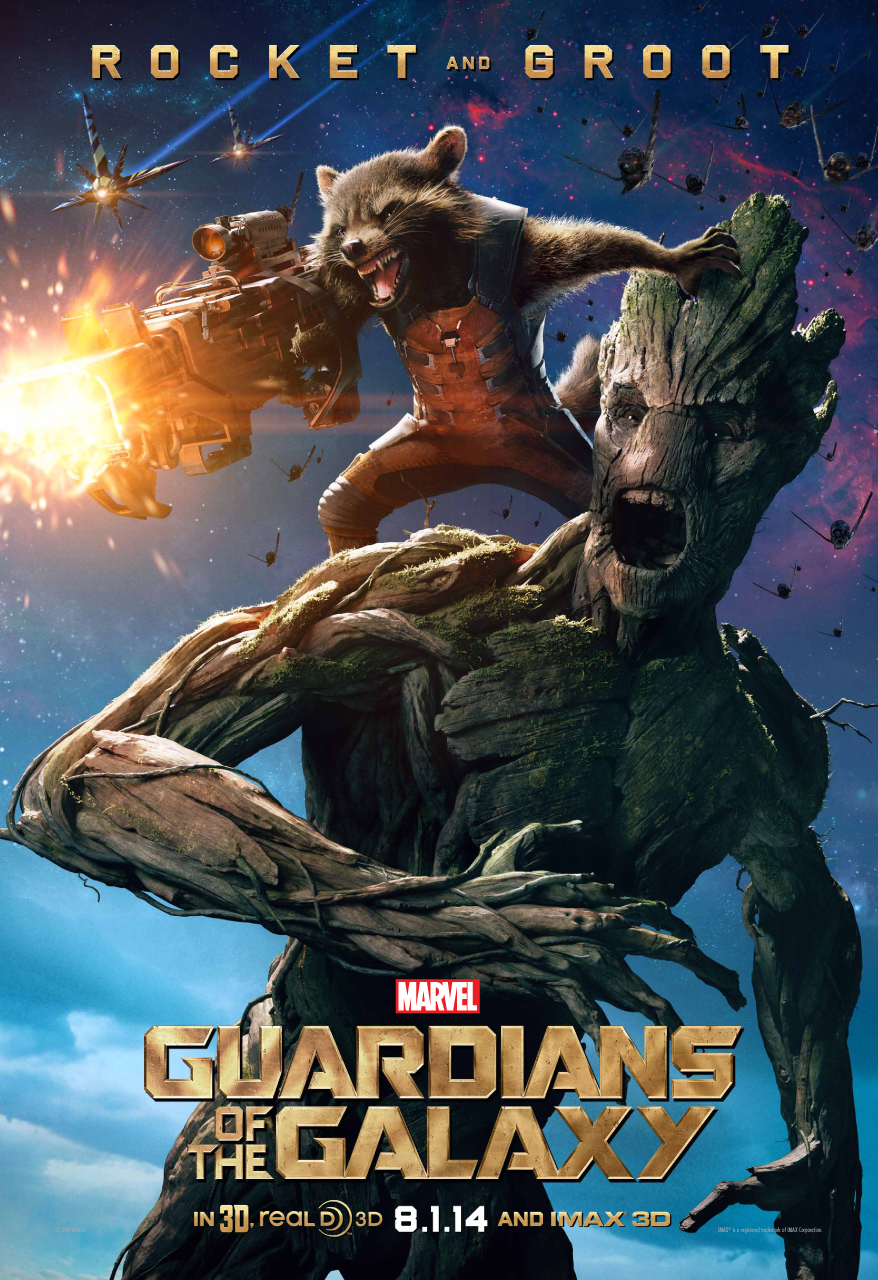
Two end-credits scenes in “Thor: The Dark World” followed that pattern. In the first, the story is advanced toward this August’s “Guardians of the Galaxy” by introducing not only the character the Collector but the concept of the Infinity Stones before the very final scene showed Thor returning to Earth and reuniting with Jane Foster.

Now we’re hearing that two end credits scenes in “Captain America: The Winter Soldier” will follow the same approach. One will advance the larger Marvel movie storyline while the other will further the development of one character.

Is it purely a marketing strategy on the part of Marvel? At the end of the original “Captain America,” the most marketing-oriented extra so far included a montage of shots from “The Avengers.”

Is it artistic vision from the director? We know that’s not always the case. “Thor: The Dark World” director Alan Taylor grumbled about the inclusion of footage promoting “Guardians of the Galaxy” at the end of his movie. He didn’t direct it. Likewise, “Avengers” series director and Marvel’s big-screen consultant Whedon directed an “Avengers”-leaning promo at the end of the original “Thor” and, it was announced this week, directed one of the two scenes at the end of “Winter Soldier.”

So we’re guessing it’s more of a savvy, catch-em-while-they’re-in-the-theater-and-create-buzz move by Marvel.

And it’s one that usually adds to the enjoyment of the movies for fans.

‘Captain America: The Winter Soldier’ end credits spoilers?

cap winter soldier poster

As “Captain America: The Winter Soldier” gets screened around the world in advance of international release dates – and the U.S. release of April 4 – spoilers are getting out.

Online this week, dozens of movie news sites repeated realistic-sounding spoilers about end-credit scenes included in those early prints.

You know, of course, the end-credits scenes I’m talking about. Marvel has specialized in them since Nick Fury told Tony Stark about “the Avenger Initiative” at the end of “Iron Man” in 2008.

News broke today that Joss Whedon, mastermind behind “The Avengers” in 2012 and also director of the 2015 summer blockbuster-in-the-making “Avengers: Age of Ultron,” directed one of the “Winter Soldier” credits scenes.

Some of the reports about Whedon are being careful about just what’s in those “Winter Soldier” scenes. Others are not.

Based on early reporting and some conclusion-gathering, here’s what I think we can expect to see during the end credits of the “Cap” sequel.”

Spoilers, naturally.

Still there?

The first end-credits scene by all reports takes us to the lair of Baron Von Strucker, a longtime second-tier Marvel villain who we’ve already heard figures into “Avengers: The Age of Ultron.” It makes sense to introduce Strucker and his prisoners – Quicksilver and The Scarlet Witch – somewhere in advance of all three appearing in “Age of Ultron.”

And that somewhere is at the end of “Winter Soldier,” apparently.

The scene reportedly shows Strucker watching Pietro and Wanda, brother and sister, in cells in some remote location. Quicksilver is speeding around his cell; Scarlet Witch is making objects move with her mind/”hex power.”

Strucker reportedly calls them “miracles,” which makes sense considering Fox and the “X-Men” movies have the market cornered on the use of the word “mutants.”

In the second scene, according to spoiler accounts, Bucky Barnes – the Winter Soldier – sees an acknowledgement of his role as Captain America’s World War II sidekick and not only confirms who he is – was – but perhaps gains a better appreciation of Cap, his partner-turned-enemy.

I like how both expand on the Marvel Cinematic Universe, but in different ways. I’m working on a quick overview of how the past double-end-credits scenes have taken a two-pronged approach. More on that later.

In the meantime, can anything make us look forward to the April 4 opening of “Winter Soldier” more?

First look at the full ‘Flash’ costume

the flash grant gustin full costume

The CW/Warner Bros. has released the first full look (sorta; he is hunched over) at the costume Grant Gustin will wear in the upcoming “Flash” pilot that will likely lead to a spinoff series of the network’s “Arrow” series.

Looks pretty good. It’s not any darker than the costume from the old “Flash” series.

And they aren’t afraid to go full Flash, obviously. No more red hoodies.


Comic book odd: Super cousins, super made for each other?

Action_Comics_289 supergirl

Back with our occasional look at odd moments in comic books.

It’s easy to forget how crazy much of DC’s Silver Age was. Batman was fighting space monsters, Lois Lane was scheming to discover Superman’s identity – and marry him – and Superman was constantly falling in love with mermaids and the like.

Or getting fixed up, like in Action Comics 289, which came out in June 1962.

In a plot that could be adapted as a Kate Hudson romantic comedy, Supergirl, worried about her cousin Superman’s loneliness, keeps trying to fix him up. Potential mates include Helen of Troy and members of the far-future Legion of Superheroes.

Ultimately, Supergirl finds a perfect match for her cousin. And what the hey – she looks just like a slightly-older Supergirl!

Some feverish dreaming going on there, among fans and in the DC editorial offices.

Movie essentials: ‘The Dead Zone’

the dead zone walken tunnel

In the 1970s, I was reading everything that Stephen King wrote as fast as I could get my hands on it. I always thought “The Dead Zone,” his 1979 novel of a man with psychic powers trying to live a normal life and, failing that, trying to stop an apocalypse, ranked right up there with his work of the time, including “Salem’s Lot” and “The Stand.”

And I thought director David Cronenberg’s 1983 adaptation of King’s book was among the best movie versions of the author’s work. Much better than Kubrick’s “The Shining,” for example.

Watching “The Dead Zone” again recently, I think it’s held up remarkably well. The story is a pretty timeless one of love and loss and its small-town setting keeps everything from looking too dated.

Christopher Walken – who has, in the 30-plus years since “The Dead Zone” was released, become an icon and has verged on self-parody – plays John Smith, a Maine school teacher looking forward to marrying his girlfriend, Sarah (Brooke Adams).

But Smith has an accident and is in a coma for five years. Although his parents are still around, Sarah has married someone else and had a young child.

Before he even gets out of bed, Johnny discovers another change: His coma has apparently awakened within him a psychic ability. If he touches someone, he can read their mind and see visions of their future. He is even able to tell his doctor, played by Herbert Lom, that his mother, separated from him in Europe in World War II, is still alive.

Not surprisingly, this unexpected talent doesn’t bring Johnny any peace of mind or comfort. Particularly when he touches the hand of a huckstering politician, Greg Stillson (Martin Sheen) and sees that he’s destined to one day be elected president and bring about the end of the world.

King’s book has more layers, but Cronenberg’s movie does a pretty good job of capturing the details and somber mood of King’s story.

Johnny is a haunted man, a man who can see everyone else’s future but has no future of his own, and the character is perfectly played by the Christopher Walken of 1983. The actor hadn’t yet become so familiar to us, through offbeat characters in movies like “Pulp Fiction” and through TV appearances on “Saturday Night Live” (“I pranked him in my basement”). We had a bad feeling about Johnny Smith just by looking at Walken’s pale and pained face.

Cronenberg’s movie feels as fresh as if it was made just a few years ago, thanks in part to its lack of trendy-at-the-time touches and the chilly blue-gray “look.”

Random observations:

It’s startling seeing Sheen as a maniacal, murderous president. That’s President Bartlet, man!

“The Dead Zone” makes me wonder why Brooke Adams, so good in this and the “Invasion of the Body Snatchers” remake, didn’t have a longer movie career.

Lom, who played “The Phantom of the Opera” way back in the 1960s and the nemesis of Clouseau in the “Pink Panther” movies in the 1970s, is a nice, steadying presence here.

Anthony Zerbe, one of my favorite character actors of the 1970s, is likewise welcome here as a potential campaign donor who sees through Stillson’s shtick.

Essential geek library: ‘The Best from Famous Monsters of Filmland’

best from famous monsters

I’ve noted it here before – as have many elsewhere – but it’s hard to overstate the importance of Famous Monsters of Filmland magazine to a generation of movie fans and, in particular, horror movie fans.

When FM appeared on newsstands in 1958 – before I was born, no less reading it – the Shock Theater package of old Universal horror films was playing on TV stations around the country, often hosted by an over-the-top character like Sammy Terry here in Indiana.

FM, published by Warren Publishing and edited by Forrest J Ackerman, greatly appealed to the audience of horror movie fans – including me, when I discovered it a few years later.

My relationship with my collection of FMs was a complicated one. I never had a complete run of the magazine, although I had most of them, between buying them new each month on the newsstand and buying back issues.

Then, possessed of the insane writer/designer spirit that led to my actual career, I cut up many of my issues, rearranging photos and articles in scrapbooks in my own fashion.

I bought many of the old issues again, years later, before selling off most of my collection a couple of decades ago.

I kept my copy of “The Best from Famous Monsters of Filmland,” however, and wanted to mention it here in this edition of the Essential Geek Library.

Published in June 1964 by Paperback Library with a cover price of 50 cents, the book was a paperback-sized, 162 page reprint, basically, of some Famous Monsters articles from 1958 through 1960.

Individual articles bore such titles as “Monsters are Good for You,” “Alice in Monsterland,” “The Frankenstein Story” and “Girls Will Be Ghouls.”

Littered with Ackerman’s trademark puns – “Kong-fidentially Yours” – the book offered not only an enthusiastic defense of monster movies but inside information, including the number of models and armatures that were used in making “King Kong,” (27, Ackerman says. In a visit to his house in the Los Angeles area in the 1980s, I got to see one of those armatures, which was nothing but a metal skeleton with bits of material clinging to it by that point.)

I’m not sure when I picked up my copy of “The Best of …” but I’m guessing it was years after publication. It’s in pretty good shape but battered by years of reading, over and over again, by me and the previous owners.

Online sources indicate Warren and Forry published at least three paperback reprint collections of FM articles, following “The Best From …” with “Son of …” and “Famous Monsters of Filmland Strike Back.”

They were just what all of us monster kids wanted and we loved ’em.