Tag Archives: Star Trek

Classic TV: ‘Star Trek’ ‘Assignment: Earth’

star trek assignment earth

Although it’s disparaged in some circles, “Assignment: Earth” remains one of my favorite episodes of the original “Star Trek” series.

Airing in March 1968 – the last episode of the second season of the classic show – “Assignment: Earth” was a “backdoor pilot,” industry parlance for an episode of a regular TV series that was intended to be a try-out for a spin-off series, an entirely different show.

The story follows the crew of the Enterprise as they – in rather blase manner – use the “slingshot” effect to travel back through time to 1968, a pivotal moment in world history. With the launch of an orbital nuclear weapons platform, the U.S. threatens to escalate the arms race.

Kirk, Spock and company don’t know about this particular wrinkle in time (heh), however. They just know that they have been waylaid by Gary Seven (Robert Lansing), ostensibly an Earth man who tells Kirk he’s been living on another planet his entire life and has been beamed back to his motherland to help the population avoid World War III.

Seven proceeds to escape from the Enterprise and beam down to the rocket launch site, with Kirk and Spock wondering if they should capture him or help him.

star trek assignment earth spock kirk

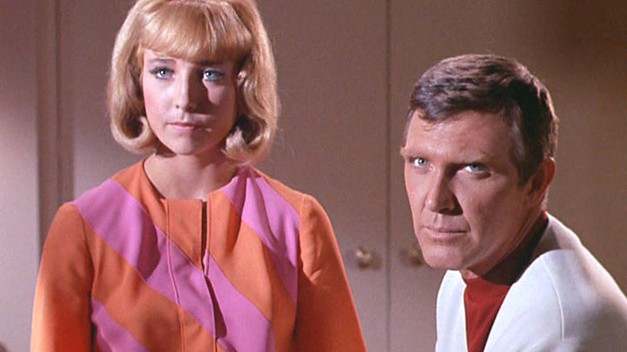
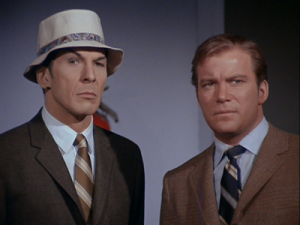
To investigate further, the two go down to 1968-era Earth, nattily dressed in sport coats and, for Spock, an ear-covering hat, and get mixed up in the goings-on. Lots of time-twisting hijinks ensue and we meet Roberta Lincoln (Teri Garr), the young woman working as secretary in the futuristic office from which Seven operates.

The episode builds to a tense climax as Seven tries to sabotage the rocket launch and throw just enough of a scare into the world without actually sparking war.

star trek assignment earth spock

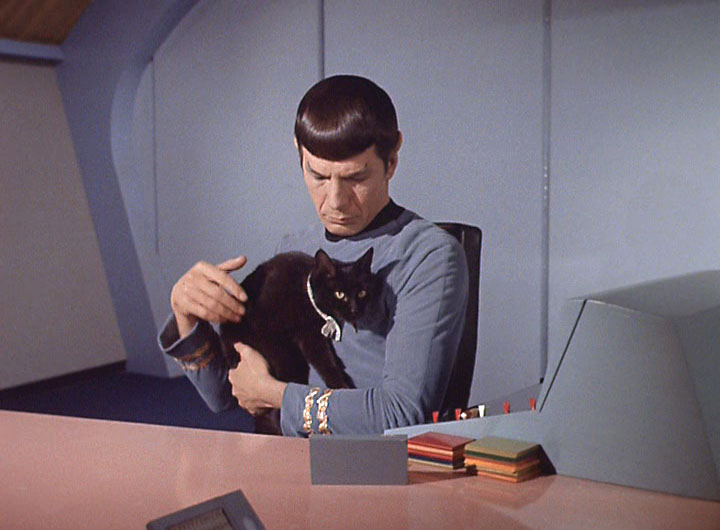
The episode ends with Kirk and Spock, looking smug, having done some research on Seven and Lincoln – they are from the future, after all – and predicting interesting adventures ahead for the team (including Seven’s shape-shifting cat/companion, Isis).

It was not to be, however. The series never materialized.

The characters turned up in a couple of “Star Trek” novels and comic books, but we never got to see the continuing adventures of Gary Seven. That’s too bad, too, because Lansing was such an interesting character actor. His grumpy, frowning demeanor would have made for an interesting, ahead-of-his-time presence on TV.

Some online criticism of the episode is that it seems dated – Teri Garr’s “mod” wardrobe and explanation of the hippie movement – or that it limits the amount of screen time for Kirk, Spock and others, particularly in the final episode of the second season. But I’m not sympathetic to those arguments. It was, after all, a pilot for a spin-off TV series. It’s done much more handily than in some series.

And it left me wanting more of Gary Seven and Roberta Lincoln.

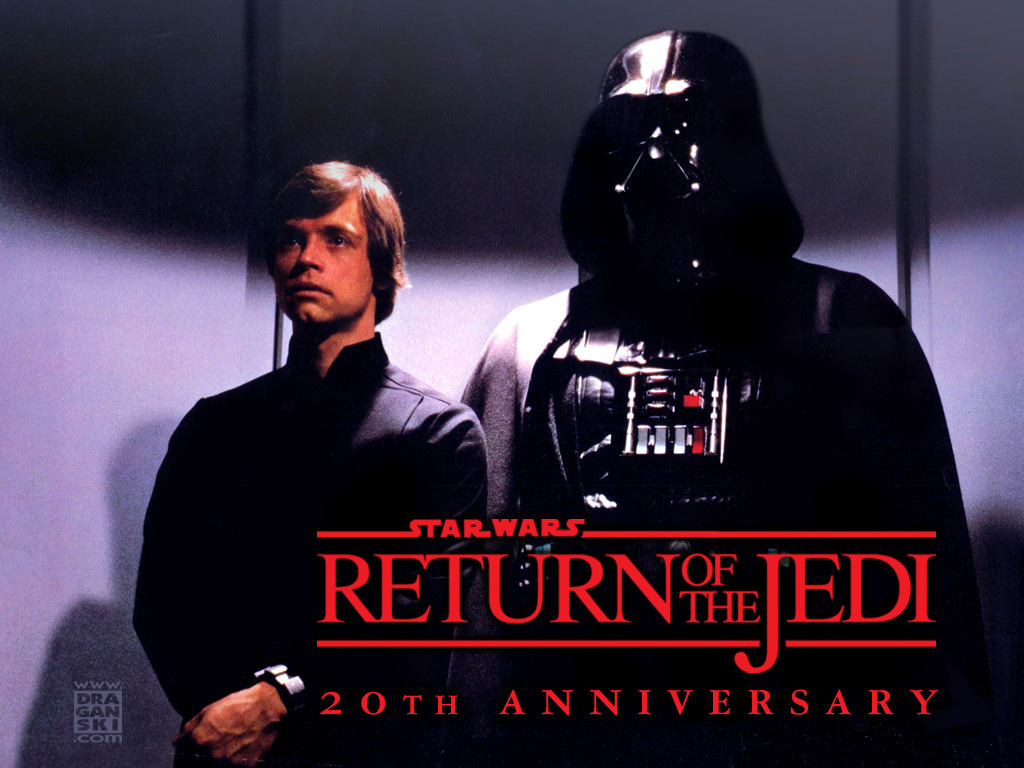
Geektastic: The Force is with us

return-of-the-jedi-vader-and-luke

I’ve lost track of the rumors and likely developments coming, fast and furious, at geeks and genre fans this week.

Rumors that Marvel is planning to base a lot of its Phase Three movies – following the “Avengers” sequel, a group of films to include “Ant-Man” and possibly “Dr. Strange” – on a multi-movie adaptation of the “Planet Hulk” and “World War Hulk” comics.

Reports that Chris Pratt, the goofy guy from TV’s “Parks and Recreation” and one of the Seals from “Zero Dark Thirty,” would play Peter, the human lead of “Guardians of the Galaxy,” one of Marvel’s Phase Two tentpoles.

The announcement by Disney’s Robert Iger that, in addition to making the three “Star Wars” sequels, the studio would make stand-alone stories in the “Star Wars” universe. A Yoda movies? A Boba Fett movie? Does it sound like Disney is following the game plan established by its Marvel subsidiary?

And heck, all that’s in addition to the line-up of movies already coming out this year, from “Iron Man 3” to “Star Trek Into Darkness” to “Thor: The Dark World.”

My son doesn’t remember a time when each year wasn’t a non-stop parade of science fiction, fantasy and comic book characters on the big screen. When you couldn’t pick up a magazine and see Iron Man looking back at you from the cover.

But I remember.

So it’s a pretty damn cool time to be us, huh?

‘Star Trek Into Darkness’ teaser: Five things to know

Star-Trek-Into-Darkness-teaser-trailer

It was another interwebs meltdown kind of day, with everybody weighing in with their opinion on the new “announcement” trailer – a short version of the teaser trailer, or an even shorter version of the nine minutes of IMAX footage coming in front of “The Hobbit” – for “Star Trek Into Darkness.”

And of course I’ve got a couple of thoughts too. If you haven’t seen it yet, here’s the “official” US trailer on iTunes and here’s the Japanese trailer, with the extra few seconds of footage that has everyone so crazy.

Five things:

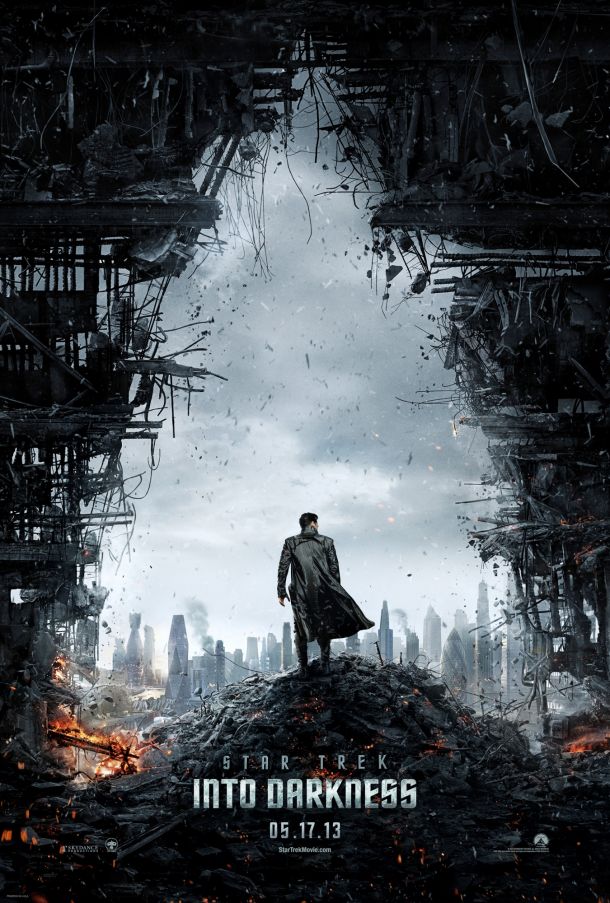
star-trek-into-darkness-teaser-poster1-610x903

That voice. I love the narration, presumably by Benedict Cumberbatch as the bad guy. “I have returned … to seek my vengeance.” Yikes.

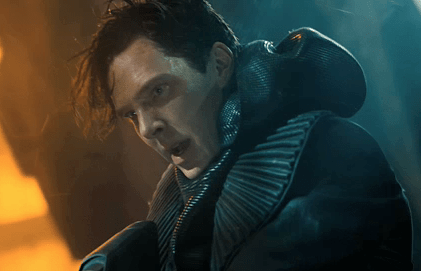
star trek benedict cumberbatch

The Cumberbatch! One of my favorite Brit actors because of the “Sherlock” series, Cumberbatch looks damn cool here. Is he playing Khan? Is he playing Gary Mitchell? Somebody else entirely? Whatever!

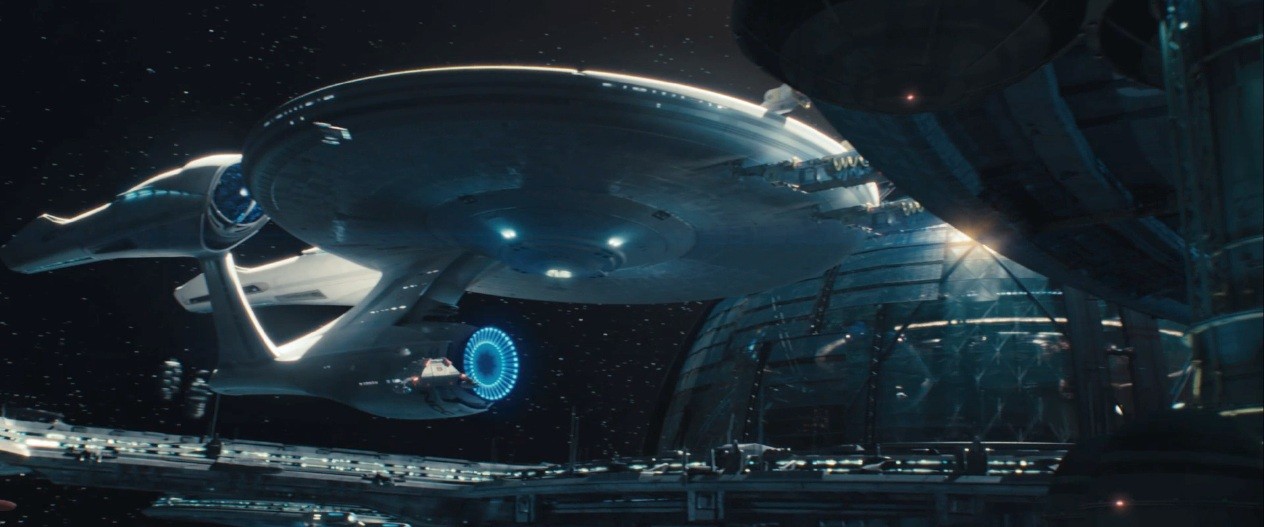
star trek into darkness ship ocean

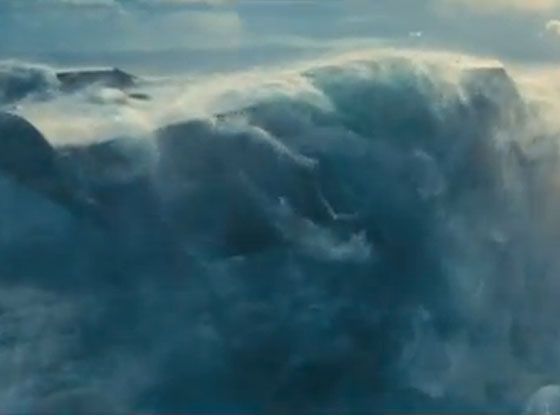
The water. I’m still trying to figure out why the Enterprise is in the ocean. The shot of the ship plowing into the water is startling and looks like they’ve decided to wreck the Enterprise again. But the one of the ship rising out of the water? Reminds me of the nebula cloud “submarine” games in “Star Trek II.”

The city mayhem. The shots of people staring up at something horrible happening in a big city – London? San Francisco? – bugged me. Call it a long-lasting 9-11 effect.

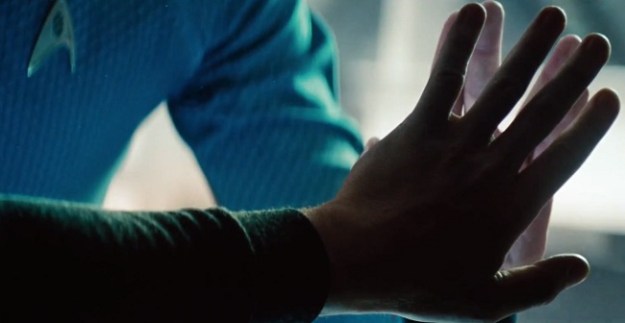
The hands. This is the part that’s making everyone crazy. Two hands, separated by glass. One is unmistakably in a Starfleet science uniform and is making the familiar Vulcan gesture that usually accompanies “Live long and prosper.” The similarities to the finale of “Star Trek II” are obvious. But surely they’re not going in that direction again? This is, after all, a rebooted universe. Anything can happen.

We’ll know in May.


Unsung actors: Roger C. Carmel

He’s one of those “Hey, I remember that guy!” actors. Roger C. Carmel was featured in many, many TV series in the 1960s and 1970s. According to his IMDB page, he guest-starred in everything from “The Dick Van Dyke Show” to “The Munsters” to “The Man from U.N.C.L.E.” and “Hogan’s Heroes” to “Batman” playing “guest villain” Colonel Gumm.

But Carmel, who died at age 54 in 1986, was best known for two roles. He co-starred in “The Mothers-In-Law,” a 1960s sitcom starring Kaye Ballard and Eve Arden and produced by Desi Arnaz, and he guest-starred in two episodes of the original “Star Trek” series.

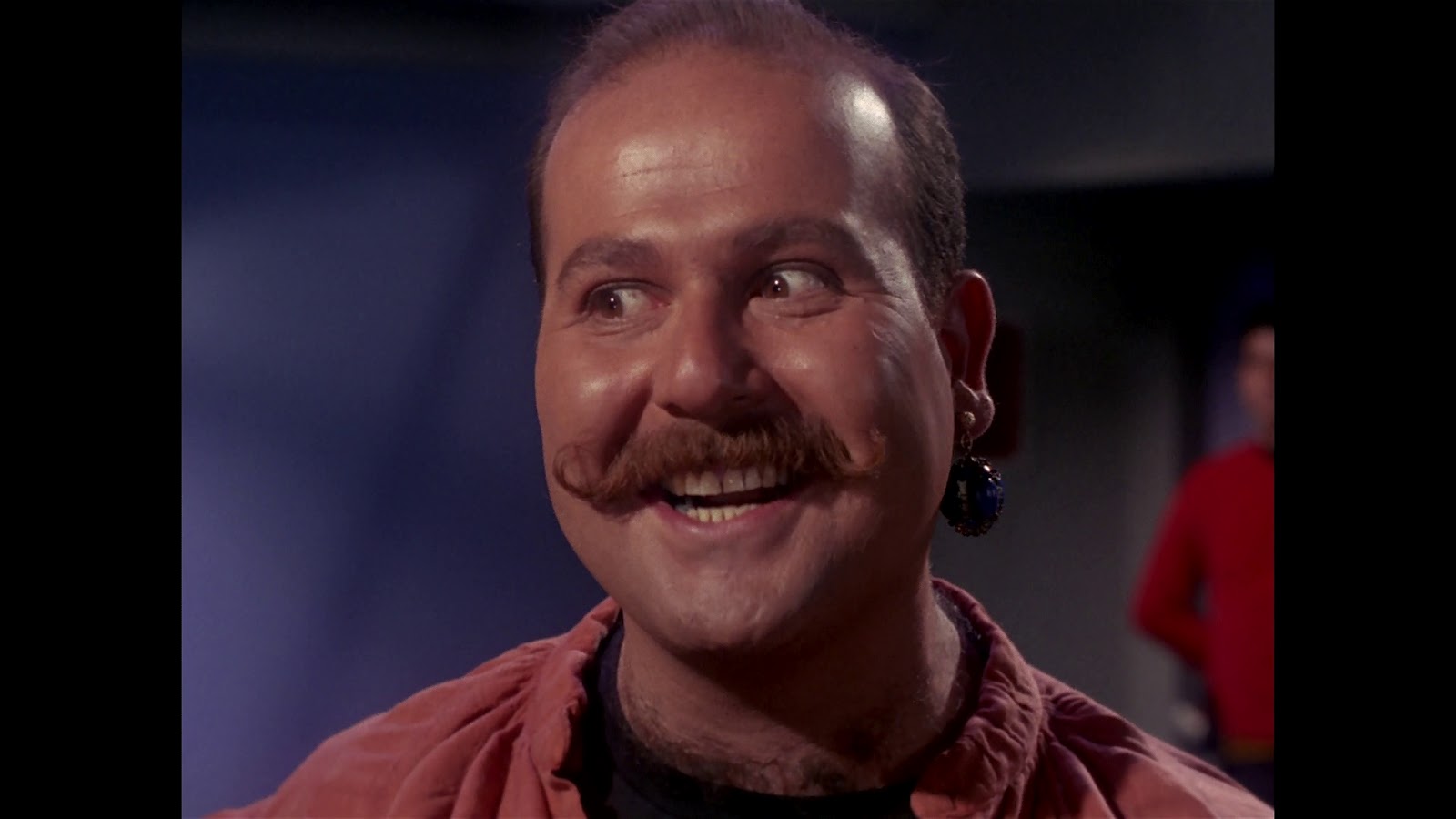
Carmel played Harcourt Fenton Mudd, a galactic hustler and con man who shows up in the first season episode “Mudd’s Women,” a fairly straight story about transporting what are, in effect, mail-order brides. But he is probably best remembered for reprising the Mudd role in “I, Mudd,” a second-season episode that finds the Enterprise crew arriving on a remote planet (is there any other kind?) where Mudd is the ruler (and prisoner) of a race of androids.

In the second episode, the tone is much lighter and Carmel plays Mudd with his trademark flamboyance. The effect was appropriate for a returning and not-very-threatening villain.

Carmel provided the voice for Mudd in an episode of the 1970s animated “Star Trek” series. There’s an online reference to plans for him to play the role once more in “Star Trek: The Next Generation,” in the first-season episode “The Neutral Zone,” in which three people from the past are revived from suspended animation. It’s a neat Hollywood tale and maybe it’s even accurate.

Carmel, who provided voices for a number of animated TV series in his final years, passed away before he had a third chance to meet the Enterprise crew.

Great sci-fi TV … and not so great (part one)

I was watching a few scenes of “Tomorrow is Yesterday,” a classic 1967 episode of “Star Trek,” the other week. My son looked up from his iPod during a fight scene.

“That is so cheesy,” he said, his voice dripping with good-natured scorn. “He didn’t even hit him.”

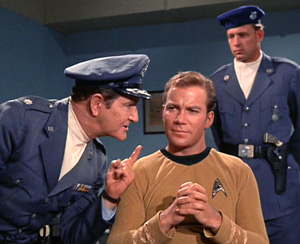
He was right. The on-screen fight scene between Kirk (William Shatner) and a group of military police officers didn’t rank up there with the most realistic screen pugilism ever. Kirk draws back, throws a right cross … and visibly misses the MP by a mile.

But still.

“Tomorrow is Yesterday” is a great episode of the original series and a great episode of TV science fiction.

Little more needs to be said about what made “Star Trek” as great and enduring as it is. But the exchange with my son made me think about the differences between good TV sci-fi and bad.

So, in a blog entry that will, with any luck, be recurring, a few thoughts on a good sci-fi TV series as well as one that’s not so good.

And yes, I have few doubts that even the series that I choose to pick on here have fans. And I’m a fan of some elements of even those shows, and I’ll cite those elements. But there’s no comparison between the great ones and the not-at-all-great-ones.

This time around: “Star Trek” vs. “Lost in Space.”

(Some of) what makes “Star Trek” great:

1. The show employed some of the greatest writers working in TV and science fiction in the 1960s, and they produced great scripts. Robert Bloch’s “What Are Little Girls Made Of” was an ultra-creepy tale of android love. Theodore Sturgeon’s “Shore Leave” showed that “Star Trek” mixed whimsy and suspense better than anyone. Frederic Brown’s “Arena” was adapted into a gripping episode featuring Kirk one-on-one with a man-sized lizard (hampered only by the makeup and costume limitations of the day).

2. Episodes were so good they were not only memorable for decades to come but provided fodder for sequels and remakes. “The Trouble with Tribbles” spawned a cottage industry in homemade fur balls — as well as enduring love — among fans. “Space Seed” created a memorable character in Ricardo Montalban’s Khan, who inspired the best of the “Star Trek” big-screen roles.

3. Episodes were as formulaic as much of what appeared on TV in the mid-to-late 1960s but transcended most of the competition to prove as lasting as anything ever on TV. Even with today’s mania for remaking old pop culture, only a handful of shows from the time — “Mission: Impossible” comes to mind — are still in the public mind. How’s that big-screen version of “The Virginian” coming?

4. The show was remarkably consistent to its characters. How many shows before, during and after were filled with characters who veered wildly between sensible and nonsensical, bold and mild, jokey and humorless depending on the plot contrivances of the week? Not “Star Trek.”

5. And speaking of characters: “Star Trek” creator Gene Roddenberry and the writers decided they needed a strong triangle of characters to lead the show, so they created man of action Kirk, cerebral Spock and emotional McCoy. Viewers could enjoy the interpersonal dynamic but the triangle also served the plot, with McCoy and Spock acting as antagonists, virtual angel and devil on Kirk’s shoulders, the voices of reason and emotional appeal.

6. Here’s a bonus: For all its space cowboy action, “Star Trek” was remarkably tolerant and progressive in its attitude toward humanity (aliens included) and the dignity of individuals. Why else would the show’s Federation have the Prime Directive, forbidding interference in less-developed cultures? (Okay, so they skirted that directive a few times. Or more than a few.)

(Some of) what makes “Lost in Space” far from great:

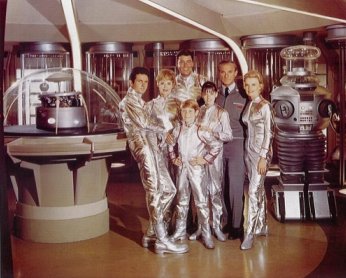
1. They bungled a good premise. A space-faring version of “Swiss Family Robinson,” the series could have shown in realistic (even for 1960s TV) manner the dynamics of a family separated from society and fending for itself. But except for a few episodes from the first, more serious season, the show lived firmly in the land of campy entertainment.

2. They let one character run away with the show. Not until Fonzie stole “Happy Days” a decade later did one character — Dr. Zachary Smith, a stowaway on the Jupiter 2 spacecraft — so come to dominate a series, to its detriment. Jonathan Harris — an enjoyable character actor — became more and more the central figure and the other characters faded into the (chintzy) background.

3. The other characters were one-dimensional. The team’s leader and literal father figure, John Robinson, was square and boring. Wife Maureen was usually inside puttering in the kitchen. Major Don West walked into camera range, threatened or insulted Smith, then stalked away.

4. The storylines. Stuck on a random planet for the first season (and then another for the second), the plots usually involved some improbable menace showing up, scaring Dr. Smith, threatening the Robinsons and then being defeated. Yawn.

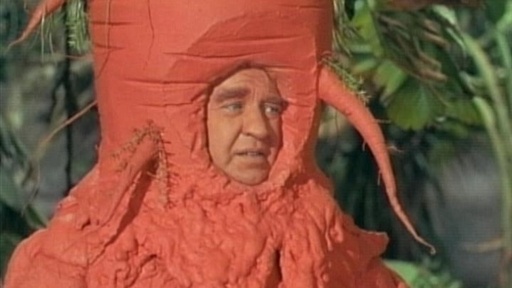
5. The budget/costumes/effects. Say what you will about the limitations of “Star Trek,” but “Lost in Space” reached the depths of “The Great Vegetable Rebellion,” with actor Stanley Adams in a carrot suit.

Case closed.

More next time.
James Bama: Artist of a thousand faces

For a compulsive credits-watcher like me, the revelation was dumbfounding: One artist was responsible for some of the most memorable pop culture images of my childhood.

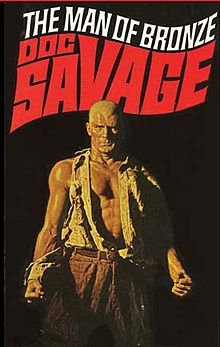
James Bama is a well-known Western artist. For me, he’s always been the man who painted photorealistic but slightly surreal covers for the 1960s paperback reprints of old “Doc Savage” pulp novels.

Since I obsessively checked movie and TV credits and artist and author credits of books, magazines and comic books, Bama was a familiar name to me.

His drawings of pulp hero Savage no doubt helped sell a new generation of fans on the Depression-era adventure stories.

How could young readers not be interested in a hero and an adventure that looked like this?

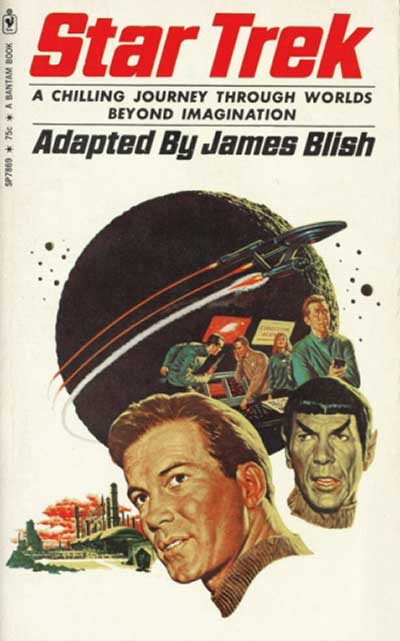
But when goofing around on the Internets the other day, I realized that the Bama of “Doc Savage” fame was also the artist who painted the cover of  an early “Star Trek” novelization. It’s one that’s still on my bookshelf.

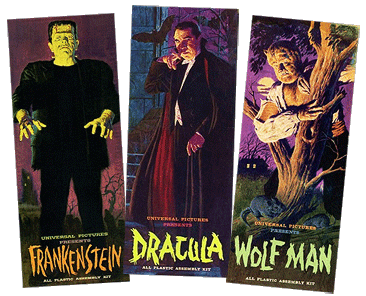
When I realized Bama had created that art, I began looking around and discovered that Bama had also painted the monster art used on 1960s Aurora model kits I loved as a kid.

How is it possible one man created so many pop culture — geek culture — touchstones?

Bama, a commercial illustrator for decades, gave up that life at his peak and left the fast lane behind to become a Western artist. He’s still going strong, painting and selling his art through a variety of galleries and websites.

He’s not drawing the colorful characters of my childhood anymore. But that’s okay. His classic work is already the stuff of pop culture legend.