Tag Archives: writing

Some honesty for you: Self-publishing my novel THAT OCTOBER and rethinking short story writing

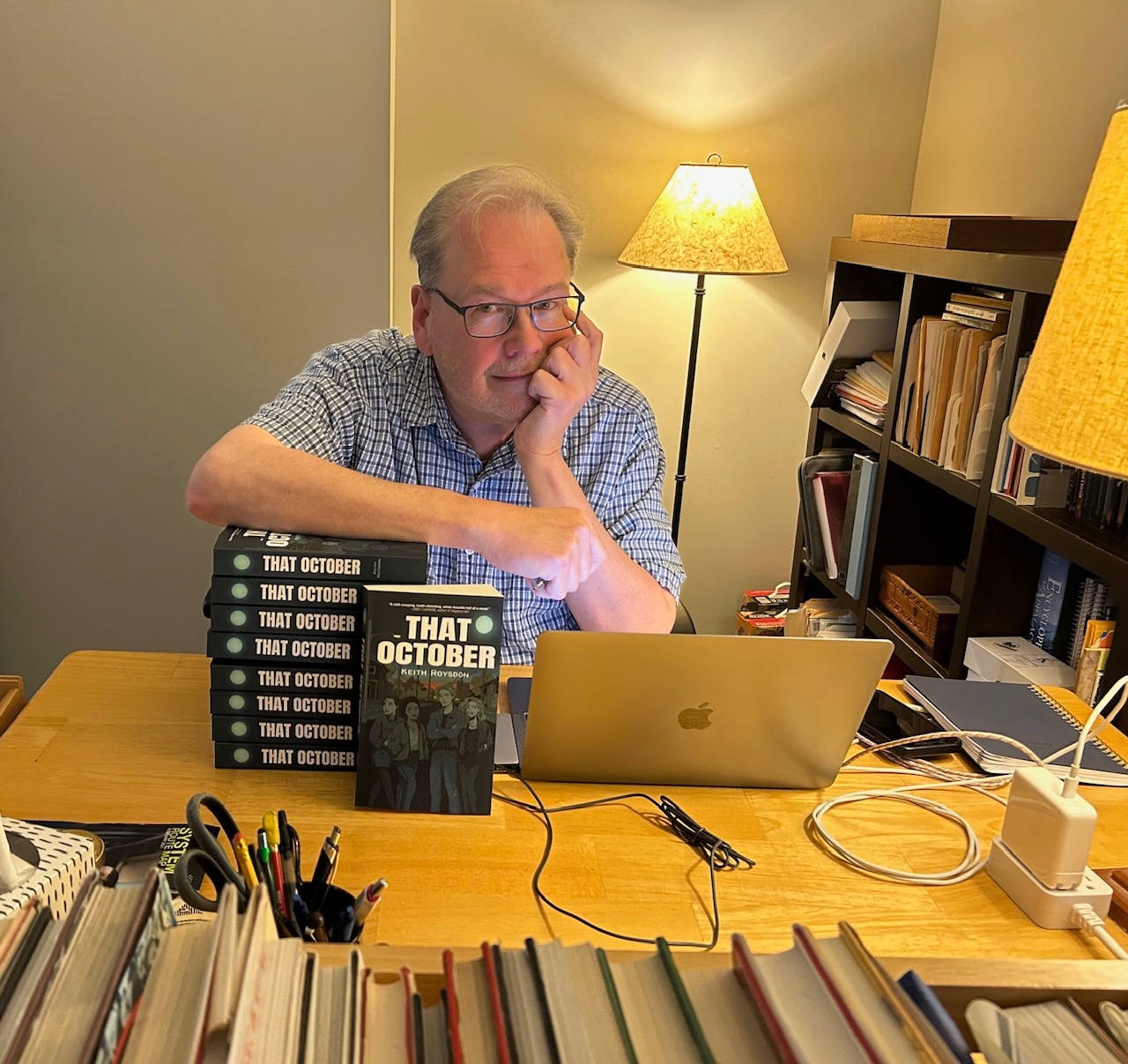
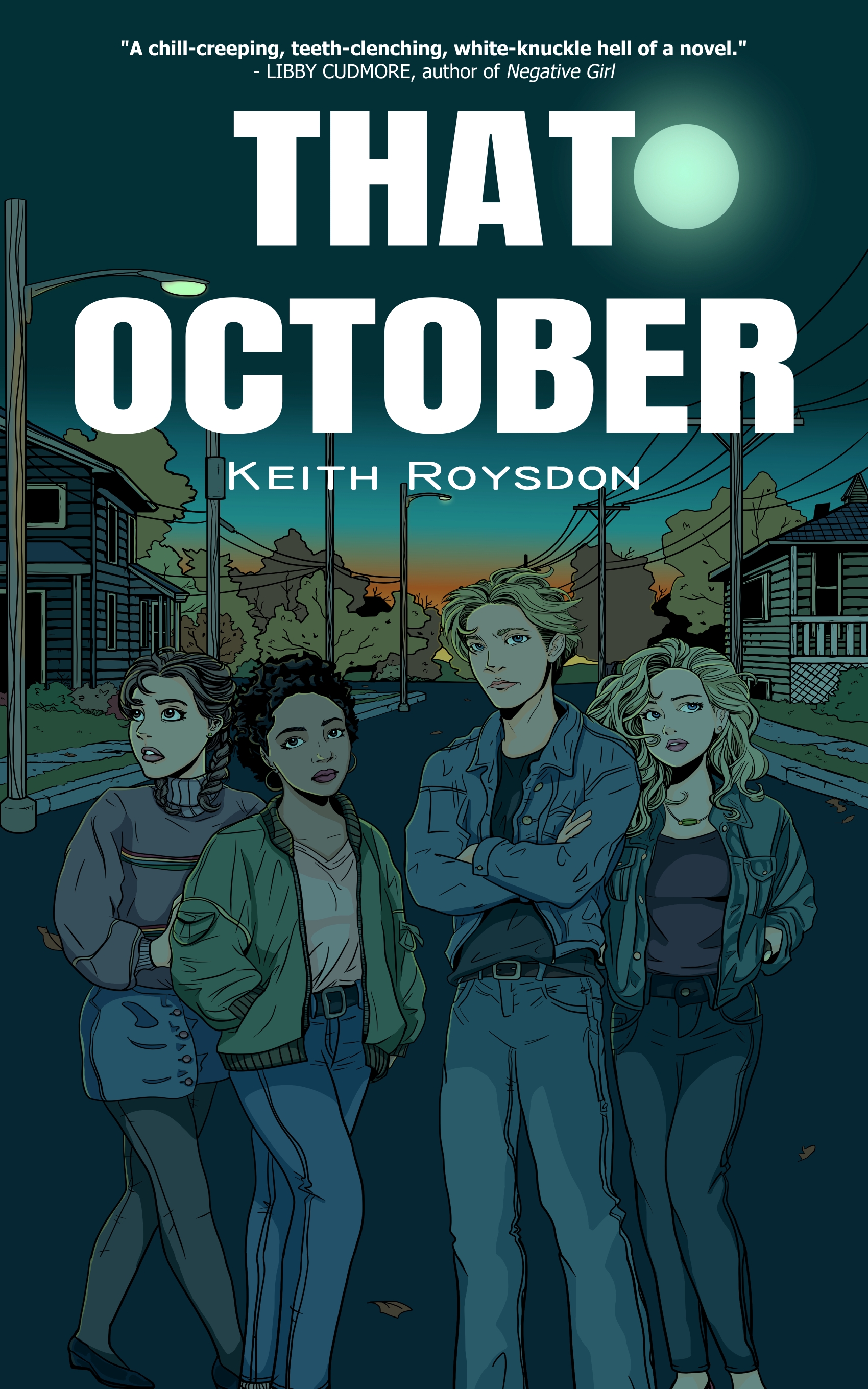
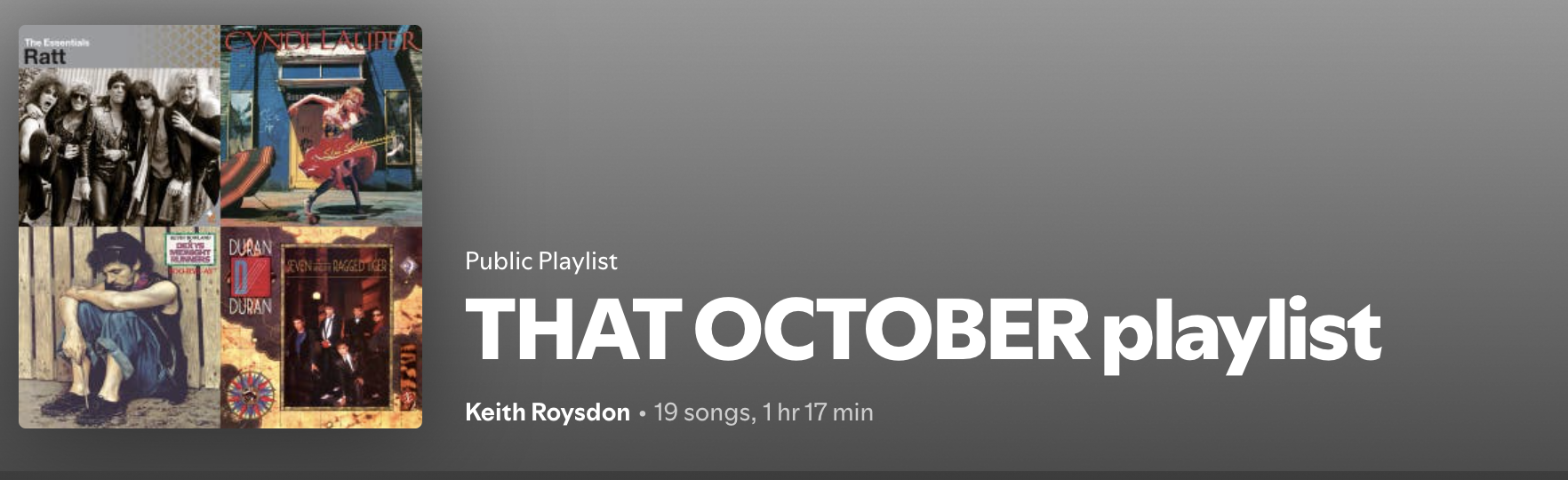
A quick update to start things off: My editor and I pulled the trigger on THAT OCTOBER the other day, uploading the book for self-publishing. What’s next? An electronic proof, then a print proof, then ARCs, then the electronic edition and getting the book in front of as many people as possible.

Writing the book felt easier and more straightforward than self-publishing, it seems. But we’re pushing forward with the book after some technical red flags about the cover. We think it’ll be okay.

Uploading the book came within the same 24-hour period of getting my latest short story rejection. I don’t think I’ve placed more than a short story or two so far in 2025, after a good year in 2024 with about a dozen short stories sold or accepted. One of those has a very long lead time and will be published on December 21, 2025. In the meantime, I’ve got several stories out on submission that I haven’t heard back on.

So it felt like a good time, frankly, to reassess what I’m doing with my writing.

I’ll continue to write pop culture pieces for CrimeReads – my latest, about men’s adventure magazines of the 1950s-1970s, was published today. I’ll have other non-fiction pieces out there too.

But as much as I loved writing short stories – and there’s no doubt it’s a thrill to see them accepted and published – I’m not going to chase every call for submission I see anymore. I’m going to write short fiction more strategically, and I hope to make good on my one 2025 writing goal, besides getting THAT OCTOBER out in the world: targeting the biggest – and most competitive – markets with my short fiction.

This will let me focus my remaining brain cells on the most important tasks I can take on.

And it’ll free up some time to work on my next crime novel.

I haven’t written a novel since I finished THAT OCTOBER in 2023. I’ve got two previous novels that I might revisit, but I want the thrill and enjoyment of writing something new – which will have the added benefit of letting me throw some characters I created for unpublished novels as far back as the early 2000s into the mix.

So I’ll update y’all here, of course, as well as socials like my BlueSky account and my author page on the accursed Facebook.

It’s a good time, with everything in chaos, to exercise a little control over what I’m doing.

I think we can all agree that exercising some control over what we can control these days is a good thing.

So your books have been pirated to train AI …

As a writer, I find AI an intensely bad thing. Yeah, it’s momentarily distracting and amusing to be scrolling through social media and see what are obviously AI-generated images of a horrible, horrible person licking the feet of an equally horrible person, or even to see some fanboy’s imagining of what a Justice League movie would look like if it were made in the 1960s.

Then you realize that this is AI and valuable natural resources are being used to run servers that create these images. Not to mention that real, actual artists – and in the case of the written word, writers – could be put out of work by this.

I first had some foreboding realizations about the effect AI might have on my work a few months ago when I went looking for one of my pieces for CrimeReads, so I could post a link to it, and realized that Google AI had generated bullet points of my articles. Why would someone need to click through to CrimeReads when they could just read the AI interpretation of what the site’s writers had written?

I was aware that some writers were saying they believed entire books of theirs had been used for AI training.

I was concerned about that because I know a lot of writers. I thought no one would possibly pirate and upload my little true crime books. Who would need that?

Then, on March 20, the Atlantic published a story about the 2-million-plus books, articles and scientific papers that have been added to Library Genesis, or LibGen, which is what Wikipedia calls a “shadow library” of file-shared work, including work that is not available digitally.

One of my writer friends said a couple of her books were there. Another had 15 of her 19 books pirated on LibGen.

The Atlantic offered a real public service that allowed readers to search to see if their work, or the work of someone they know, was uploaded to LibGen for AI training.

Here’s a screen shot of my search results using the link in the Atlantic.

I found two of the four true crime books I co-wrote with Douglas Walker on there, using the Atlantic’s search engine.

I later found what purports to be LibGen’s own search portal and could not find these two books. Had they been taken down in the meantime? Was there some mistake? It seems hard to imagine that the Atlantic got that wrong. Based on that article, I saw dozens of writers, some of whom I know, posted that they had also found their books on the site.

It’s unclear what to think about what’s there and what’s not, but there’s no question that pirated work hurts writers and publishers who might not be able to sell copies of books if people can get them for free. Since shit flows downhill, that trickles down to harm for writers, that’s for sure.

We’re all still figuring this out. It’s been pretty clear for a while that AI-generated art and writing is bad for the planet – servers use a lot of water to cool to create AI – and bad for writers. I suspect it’s also bad for consumers, but then I was never one to snap up pirated books and art and have been pretty skeptical of that inclination.

Brave new world, hell. This seems like a very cowardly ploy.

Can we afford to plunge into nostalgia right now?

For decades – heck, centuries – nostalgia has been a strong force in society. When I was a kid in the 1960s and 1970s, I loved old Universal horror films and the Marx Brothers. In the 1990s or 2000s, one of my barely-out-of-college fellow reporters surprised me once by mentioning James Dean. When I told her I was surprised she knew who the Hoosier movie icon was, the told me she’d had posters of Dean in her room at college.

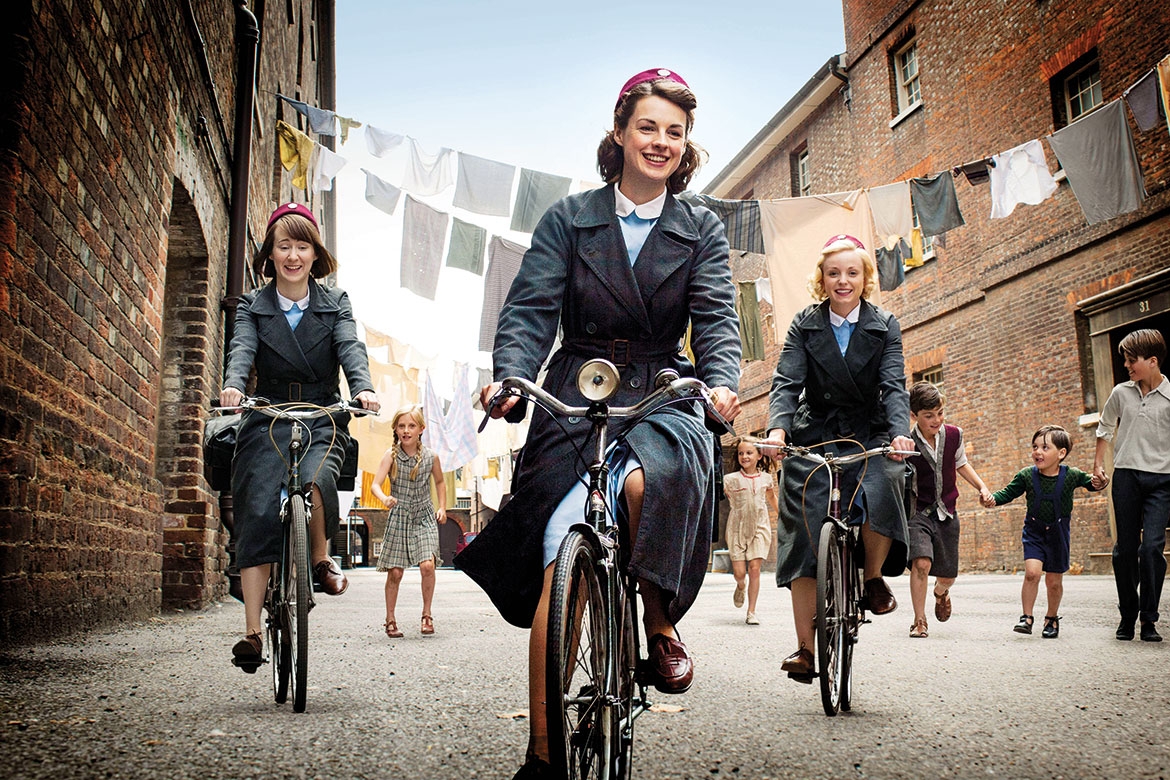
So nostalgia has always been with us. Presently, look no further than all the nostalgia channels like MeTV that offer old TV shows, or modern-day series set in the past. We’re currently watching and enjoying “Call the Midwife” on Netflix, a series about, well, midwives in 1950s London (at least early on; the show moves forward in time in subsequent seasons).

Everything from “Happy Days” – which capitalized on 1950s nostalgia in the 1970s – to the History Channel – when it was less about knife-forging competitions and more about history documentaries – appeal to those of us who want to visit the past.

Make no mistake: The past, even the recent past, was not a good time for women, queer people and people of color. (Those times are hardly better now.) I always roll my eyes when people today long for “a simpler time” which usually means a time when people who looked like them were just fine and everybody else was getting the short end of the stick or worse.

So even while I’m enjoying the occasional retreat into the pop culture of the past as well as pop culture that is set in the past, before the Internet and cell phones and various threats to our way of life, I feel guilty about it.

Shouldn’t I be alert and tuned in to all the threats and transgressions we face right now? Is it advisable to dwell in the past when confronted with an uncertain future?

I bet you’re expecting me to say that it’s fine to take the occasional foray into the past for nostalgia’s sake. But I’m honestly conflicted about doing this. Yes, I know our problems will be waiting for us when we return from the depths of nostalgia, so we might as well take a breather once in a while.

But I honestly want to know: Is nostalgia the opiate of the masses, as was once said about religion? Is is deadly? Or is it a welcome relief from the walking feeling of dread of today?

The word of the day is inspiration

Inspiration.

I think it’s easy for writers to get hung up on some, well, inspirational idea of inspiration.

I’ve always been a believer that inspiration can be quick and easy, even down and dirty. I take inspiration all the time from what I see out in the world, what I read and hear.

Today on twitter, a fellow writer, Regan MacArthur, talked about how he would change the 1997 crime drama “Cop Land” to add a little more drama for the central character, a New Jersey sheriff played by Sylvester Stallone. You should go read Regan’s tweet and follow him because he’s always just as smart as you would expect him to be from that tweet.

What Regan’s done is take a pretty great story and tweaked it just a little bit and, in my opinion, made it better. In the process, he might have inspired himself or any number of other people to write a thematically similar but different story about hero worship and how that plays into fraught relationships.

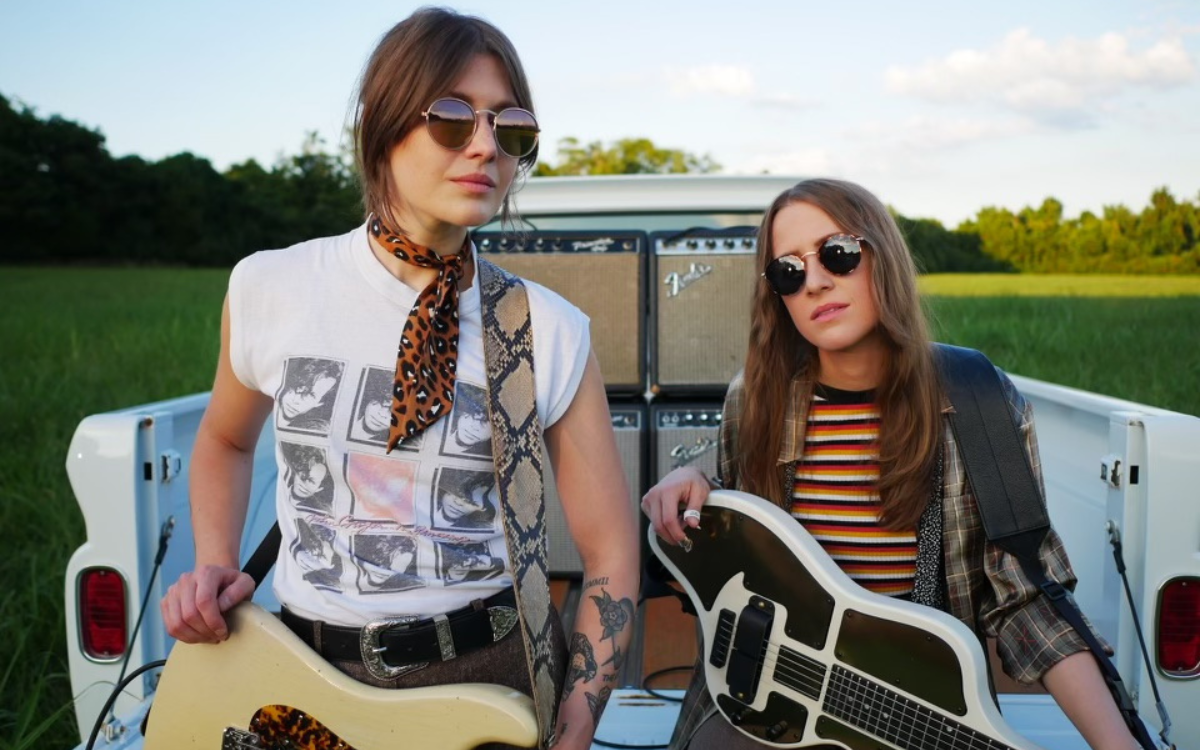
I’m trying to use this blog to talk more about writing, so I’ll note that I’ve taken inspiration lately from Larkin Poe, a truly great pair of musician sisters (pictured here) who are excelling in their mix of rock, blues and country,

They inspired me to write a short story that I’ve submitted for possible inclusion in a big 2024 anthology. No matter how good I think my story might be – I like it pretty well – it probably won’t make that anthology because so many truly inspired writers have submitted stories for consideration. I’ll shop it around somewhere else because I like the story and wrote it in a little lightning strike of inspiration.

I’ve got another story rattling around in the back of my head – and in notes – that was inspired by a former neighbor who was such a nutcase that I decided there had to be something hinky about him.

So we’ll see how that inspiration goes.

In the meantime, think about what inspires you. It doesn’t have to be a bolt from Mount Olympus. It can be as little as a good movie, a mediocre story, a billboard, anything.

Just roll with that inspiration.