‘Fantastic Four,’ ‘X-Men’ movies getting back on track?

We’re accustomed by now to how Marvel’s in-house movie process works – and how well it works. With “The Avengers” done and Marvel’s big-screen “phase two” on the calendar, leading up to an “Avengers” sequel in 2015, the comic characters controled by Marvel seem on track.

This week, news broke of moves that could help ensure some continuity for other Marvel characters that don’t fall under Marvel’s control.

No surprise here, really, but “Amazing Spider-Man” director Marc Webb and star Andrew Garfield will return for a sequel and Emma Stone is likely to return as Gwen Stacy.

There were a number of things to like about Webb’s first shot with the character. While the Lizard wasn’t a compelling antagonist, Garfield and Stone were well-cast and had great chemistry. The tone of the movie was right, although the story failed in its (I think) misguided efforts to build some mystery into Peter Parker’s past.

But the movie was pretty entertaining and a sequel – without the burden of having to explain the origin story yet again – could be fun.

Maybe more importantly, 20th Century Fox announced this week that they’ve signed longtime comic writer Mark Millar to consult on future film adaptations of Marvel comics like “Fantastic Four” and “X-Men.”

Millar’s Ultimate X-Men comic forged a new direction for the longtime super team and his Ultimates take on the Avengers influenced the movie version.

Millar has plenty of experience writing comics, but more importantly he might be a creative decision-maker not unlike Joss Whedon has become for Marvel’s in-house movies.

Marvel movies producer Kevin Feige provided the structure and strategy that led to Whedon’s “The Avengers.” Whedon might also help shape the future of Marvel movies. It’s the kind of long-term cohesive thinking that Warner Bros. wishes it had with its DC adaptations.

It’s too much to hope for, but Millar’s role in both these properties might also lead to some cross-over on film.

Unsung actors: Victor Buono

We come to praise King Tut, not to bury him.

Likewise, Count Manzeppi.

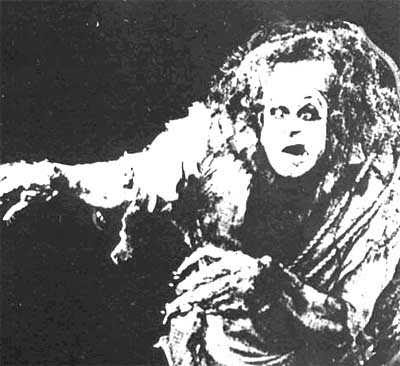
If you’re hep to the character actors we loved to watch on TV in the 1960s, you know I’m talking about Victor Buono, who received an Oscar nomination for “Whatever Happened to Baby Jane” in 1962 but is best remembered among some of us for his TV roles.

In “Batman,” he played a mild-mannered professor who, upon getting hit on the head, became the Egyptian-themed crime boss King Tut. Every guest-starring turn ended up with King Tut getting hit on the head again and reverting to his kindly professor persona.

And on “Wild Wild West,” he was the aforementioned count, foil to Secret Service agents Jim West and Artie Gordon.

Buono had a second act, of sorts, in the 1970s as a talk show guest, usually on “The Tonight Show” with Johnny Carson.

Buono was a witty fellow and often read his poetry while on the Carson show.

Here, from online sources, is his magnum opus, “The Fat Man’s Prayer.”

I think that I shall never see… my feet.

I think it only proper to end this portion of our discussion with a prayer.

Lord, my soul is ripped with riot,

Incited by my wicked diet.

We are what we eat, said a wise old man,

And Lord, if that’s true, I’m a garbage can!

I want to rise on Judgment Day, that’s plain,

But at my present weight, I’ll need a crane!


So grant me strength that I may not fall

Into the clutches of cholesterol.

May my flesh with carrot curls be sated

That my soul may be polyunsaturated.

And show me the light that I may bear witness

To the President’s Council on Physical Fitness.


At oleomargarine I’ll never mutter,

For the road to hell is spread with butter.

And cake is cursed, and cream is awful,

And Satan is hiding in every waffle.

Mephistopheles lurks in provolone,

The devil is in each slice of bologna,

Beelzebub is a chocolate drop,

And Lucifer is a lollipop!


Give me this day my daily slice –

But cut it thin and toast it twice.

I beg upon my dimpled knees,

Deliver me from Jujubees.

And my when days of trial are done

And my war with malted milks is won,

Let me stand with the saints in heaven

In a shining robe – Size 37!


I can do it, Lord, if you’ll show to me

The virtues of lettuce and celery.

If you’ll teach me the evils of mayonnaise,

The sinfulness of hollandaise

And pasta a la milanese

And potatoes a la lyonaise

And crisp fried chicken from the south!

Lord, if you love me, SHUT MY MOUTH!


Buono, who cut a hefty figure, died of a heart attack in 1982. Luckily we can remember him from his movie and TV roles and his funny and good-natured poetry.


Classic TV: ‘Night Gallery’

“Night Gallery” has, since the day it debuted as an irregularly recurring series on NBC in 1970, gotten a bad rap. During its three-year run, critics – and many viewers – alike judged it as Rod Serling’s unworthy follow-up to his ground-breaking anthology series “The Twilight Zone.”

And to be fair there aren’t many episodes of “Night Gallery” that have reached the iconic status of many episodes of “The Twilight Zone.” I recently watched “TZ’s” classic 1960 episode “The Monsters Are Due on Maple Street” and found its compact tale of paranoia and mob mentality still compelling, especially in these times.

But I’ve always loved “Night Gallery,” probably in part because it aired during my formative TV-watching years. I was devouring any kind of genre material in those days – movies, TV, comic books, novels, short stories – and “Night Gallery” fit a couple of those categories.

The show, hosted by Serling, just like “Twilight Zone,” and frequently featuring episodes he wrote, was as satisfying, to my young eyes, a presentation of the weird and the spooky as anything airing back in the day.

The pilot episode, which aired in 1969, was directed by Steven Spielberg and featured Joan Crawford, for goodness’ sake.

And how can we not love Serling? The gifted writer passed on in 1975, just two years after “Night Gallery” ended. He wasn’t much satisfied with the show by the end but that’s probably understandable. Serling’s talents no doubt made him less an artist and more a commodity to TV executives.

I’ve watched a couple of classic episodes recently on Hulu and thoroughly enjoyed them.

“They’re Tearing Down Tim Riley’s Bar,” from 1971, was written by Serling and comes across as more of a “Mad Men” story of corporate desperation than a spook story with William Windom as a business executive who’s been left behind in the rat race and longs for a past that lives on only in a shuttered neighborhood bar.


And bonus: Bert Convy plays Windom’s smarmy, conniving underling/usurper.

Much more straightforward, slow-burn horror could be found in “Pickman’s Model,” an episode I remembered quite well. Bradford Dillman played a turn-of-the-century artist who literally “paints what he sees.” The problem? He’s painting horrifying scenes of a monstrous ghoul that climbs out of the sewers and snatches people off the streets in a bad part of town.

From Larry Hagman to Leslie Nielsen to Victor Buono to Vincent Price, “Night Gallery” had an amazing rotating cast.

And presiding over it all was Serling, looking more dated in his shaggy haircut and mod jackets than he had as the buttoned-down host of “Twilight Zone,” but a welcome presence to be sure.

Check out Hulu’s collection of “Night Gallery” episodes. They’re also airing on MeTV, a nostalgia channel. “Night Gallery” was an immensely enjoyable follow-up to “The Twilight Zone” and, for me anyway, a fond send-off for Serling.

Cool new ‘Avengers’ poster

How cool is this? Artist Matthew Ferguson created this poster, part of a promotional set of four available in connection with the purchase of “The Avengers” on DVD.

There’s something kind of reminiscent of the end credits of “The Incredibles,” here, a Saul Bass kind of vibe.

Beautiful.

Check out Ferguson’s site here.


What the heck did we know: Things kids believed

When we were kids, back when dinosaurs roamed the earth, we believed a lot of crazy stuff. Childhood myths were the playground currency we traded in. Here’s a look back at some favorites.

Sea monkey were magical creatures! The ads, appearing in comic books and magazines aimed at kids, were pretty straightforward: Sea monkeys were a bowl full of fun! They were instant pets! The lady sea monkeys wore pretty bows in their um … hair? Antenna? Your whole family would gather around the fish bowl and laugh at their antics!

Of course, some of us ordered sea monkeys and found out the truth. Sea monkeys were brine shrimp. They were most often a bowl full of dead brine shrimp. They were instant pets if you considered brine shrimp pets. No hair bows were visible on the teeny, tiny heads of the teeny, tiny lady brine shrimp. And your family didn’t want any part of dead brine shrimp floating in brackish water in a bowl on the desk in your room.

Pop rocks and Coke would blow your head off! You remember the urban legend. Mikey, the kid from the cereal commercials, did the unthinkable: He ate a bunch of Pop Rocks, the fizzy candy nuggets, and drank some Coke. The intense mixture of Carbon Dioxide and, well, whatever else, was too much for his still-growing skull. Boom!

Of course, it was an urban legend, even if most of us lived in fear of accidentally mixing the two for years, until the Internet came along and snopes.com debunked the story.

According to snopes, General Foods actually took out newspaper ads around the country in 1979, claiming that Pop Rocks were safe.

If your turn your eyelids inside out, they’ll get stuck that way. This is the corollary to the belief that if you make an especially hideous expression your face might freeze that way.

When I was in second grade, a kid in my class named Lonnie could turn his eyelids inside out. Not through muscle control or anything; he just reached up and, using his fingers, flipped them over. I never tried it; Lonnie’s crazy eyelids freaked me out.

Don’t look now, but there’s something under the bed. At one time or another, all of us believed there was something under our bed or in our closet. A hideous monster ready to drag us under, to some horrible place from which we would never return.

Heck, the Pixar movie “Monsters Inc.” was based on the premise and “Calvin and Hobbes” got a lot of humorous mileage out of that fear.

Curiously enough, of all these childhood myths, “there’s something under the bed” is the only one that turns out to be true.

Ha!

Sometime we’ll explore those childhood beliefs that really, really were true, including using a magnifying glass to start a fire and how you will never, ever, use that complicated algebra formula your teacher forced you to memorize.

iPhoneography: Hartford City, Indiana

It’s time for another look at one of East Central Indiana’s cities as glimpsed through my iPhone.

Hartford City, county seat of Blackford County, was settled and platted in the mid-1800s, sent soldiers to fight and die in the Civil War and saw a growth spurt during the late 1800s natural gas boom.

Curiously, there’s not a lot of recognition of the gas boom in Hartford City – unlike Gas City, just to the north, where some street sign posts are shaped like natural gas wells – but the community’s remembrance of its sons’ Civil War service is very noticeable around the courthouse.

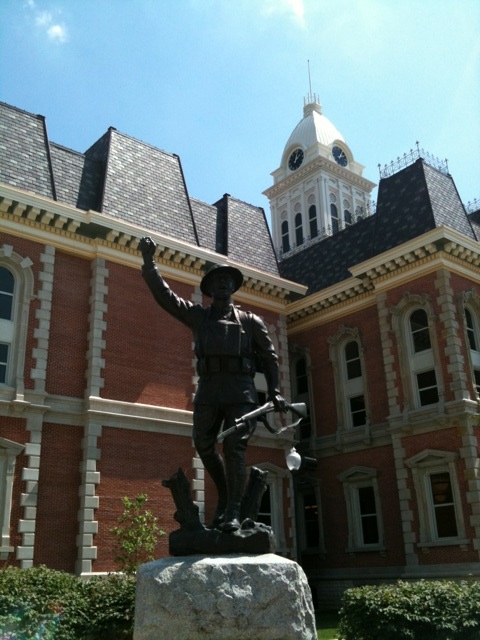
The top photo is a view of the Blackford County Courthouse’s 165-foot tower.

The courthouse was the county’s second, built 1893-95, as a historical marker helpfully tells us, and is an example of Richardsonian Romanesque style.

The tower is very eye-catching and helps the courthouse dominate the downtown square.

The courthouse square has war memorials on each corner. This is the Civil War memorial.

In Hartford City, they keep their cannon balls handy. And shiny.

Among the other memorials is one to World War I doughboys.

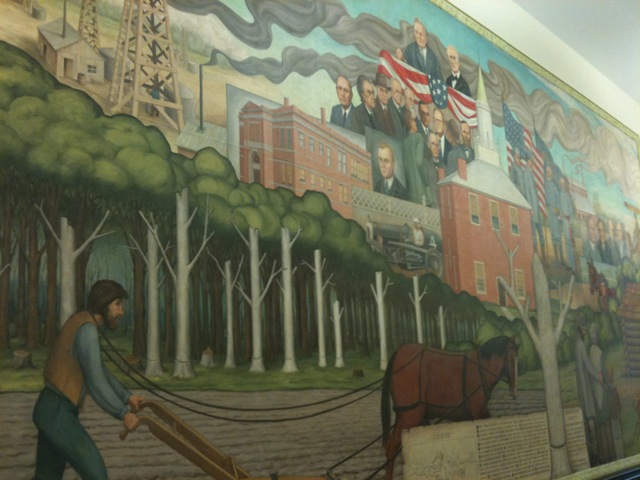
Inside the courthouse, this tin ceiling is a nice architectural detail.

Like many smaller cities and towns, Hartford City has struggled to keep its downtown alive. Hartford City has some truly impressive and historic buildings surrounding its courthouse square, though. One of them is the Tyner/Knights of Pythias building.

The Tyner building, built around 1900, was home to professional offices for decades and was, in the 1920s, home to the Ku Klux Klan. At the time, the KKK had a huge presence in Indiana and all but constituted a shadow government.

Then there’s the Hotel Ingram, which online sources date to 1893. It’s a beautiful building in Romanesque Revival style but has seen better days.

One of Hartford City’s grandest buildings surely was the Weiler’s Building, once home to a large department store. Weiler’s store was opened by four brothers from Germany. The town’s elders bragged that Weiler’s rivaled any big city department store.

Lastly, a look at a ghost sign. I enjoy finding these on the sides of downtown buildings. I’m posting this even though the sun’s rays really weren’t in the right spot for this shot. But there is a ghost sign there, believe me!


A midwestern education: What Johnny Carson taught us

Every once in a while I’ll surprise my wife with a comment about some obscure musician or author or political figure from the past. Seeing the look on her face, I’ll say, “I saw him on Johnny Carson.”

I would argue that for the 30 years leading up to his abdication of the “Tonight Show” throne, Carson was one of our nation’s greatest cultural educators.

I’m not talking about the times that Carson had political figures on the air, although that certainly fits the description as well.

I’m talking about how Carson, a white-bread Midwestern kid, helped spread the culture of the day.

It’s a feat not unlike what more recent hosts, including Jon Stewart or Stephen Colbert, do. But Carson brought us authors and entertainers and experts of every stripe. Along with actors and starlets and newsmakers and ordinary people who had unusual-looking potato chips, we saw the great and the near-great in a parade that’s unequaled today, when TV guests (with the exception of a few, like Tom Hanks and Bill Murray) seem to appear only when they’re plugging their new movie or music.

A few ways that Carson broadened our cultural horizons stick in my mind:

Comedians of all kinds, but particularly Jewish comics. If Indiana boys like me know everything there is to know about Jewish mothers and can even spout a few words in Yiddish, it’s because of watching comics on Carson’s stage and couch.

Carl Sagan. Neil deGrasse Tyson’s recent TV appearances aside, you’d be hard-pressed to find a scientist and author who was better known to the public at large. Sagan’s “Cosmos” series on PBS aside, I think most people knew him from his appearances on “The Tonight Show.”

Truman Capote and Gore Vidal. Two very different men and two very different authors whose books were read by many. But they became personalities outside the New York literary scene because of their appearances on Carson.

Buddy Rich. The world’s greatest drummer, Rich often performed in front of the “Tonight Show” orchestra. What kid didn’t want to pound the skins after seeing Rich on Carson’s show?

Marvin Hamlisch and the leading lights of Broadway. I’ve never been to Broadway but I know a lot about the Great White Way because Carson’s guests included not only the performers but composers of those shows.

As an aside, Carson’s tropical monologues were the stuff of legend, of course, but he even had time to fit the topical into silly bits. I’ll never forget during one of the Apollo moon missions Carson cracking a joke about a new toilet paper that had been invented as a result of the space program. Its brand name? Splashdown.


‘The Strain’ coming to TV

This is not surprising news: “The Strain,” the end-of-the-world-through-vampires trilogy of books written by Chuck Hogan and Guillermo Del Toro, is being turned into a TV series for FX.

It’s not surprising because “The Strain” trilogy – “The Strain,” “The Fall” and “The Night Eternal” – was originally conceived as a television series. And as a filmmaker and the guy who was tasked with bringing The Hulk to TV, Del Toro thinks and writes in a TV-friendly style.

But the news is interesting and could be good news for fans of the books. Or, at least, fans of the first book and elements of the second and third.

When “The Strain” came out in 2009, I thought it was one of the freshest and grimmest takes on vampire storytelling in years. The story plays out like a contagion thriller, with a scientist from the Centers for Disease Control, a World War II concentration camp survivor and an exterminator – yes, an exterminator – taking on a secretive vampire infestation of New York City.

The book’s plot is fun and the characters enjoyable, but the best part was the variation on vampire lore: The monsters were not sparkly dreamboats but pale, scary creatures with bloodsucking stingers that shot out several feet to snare victims. The heroes used some standard vampire-slaying tools but also used high-tech stuff like ultraviolet flashlights.

As good as the first book was, though, the succeeding volumes missed the mark with me. Maybe it was how dark they were. Maybe it was that it seemed Hogan and Del Toro painted themselves into a corner by going way, way too far too quickly.

At any rate, I’ll be interested to see what kind of show Del Toro and showrunner Carlton Cuse of “Lost” put on.

Here’s hoping they don’t go too far too fast.

What ‘Today’ is it? ‘Thoiseday’

A friend introduced me to a series of short films that David Letterman airs on Thursdays on his “Late Show” program. They’re for “Weekend Late Show” and they purport to show what the perky hosts – Bruce and Linda – who host Letterman’s show on the weekends have planned for the days Dave’s off.

The “Weekend Late Show” spots are spoofs, of course. There’s no such show airing on Fridays, Saturdays or Sundays or whenever they’re supposed to air.

As spoofs, they’re quite clever. The “hosts,” sitting at Dave’s desk but playing second fiddle to a decorative centerpiece and (often) goofy headgear, tout upcoming segments on National Noodle Month or an interview with former “Dick Van Dyke” show regular Morey Amsterdam’s nephew, who’s written a book.

The spots capture, in canny fashion, the inane stories, packaging and delivery of morning shows in general, not just weekend morning shows.

As a regular viewer of NBC’s “Today” who finds himself puzzled or irritated by the morning show’s fixations – the British Royals, for example, or pretty young white women in peril – I appreciated the “Late Show” spoofs. And if the limited amount of “Today” I see each morning doesn’t have quite as many cooking segments as the spoofs would imply, the Letterman spots are still pretty much on the money.

By the way, on Roger Ebert’s blog, Tom Shales takes a few well-deserved pokes at the morning shows, especially “Good Morning America.” It’s nicely curmudgeonly stuff.