‘Walking Dead’ goes ’18 Miles Out’

Tonight’s episode of “The Walking Dead,” “18 Miles Out,” got at least a couple of its characters moving again, which is a good thing.

Rick and Shane went on a road trip with the hapless goober who Rick rescued last week in his expedition to town. Rick irritated Shane — not that difficult a thing to do — by deciding that instead of killing the guy so he can’t lead his interloper friends to Hershel’s farm they would take him some distance — a little more than 18 miles, as it turns out — away and set him loose.

On the road trip, Rick and Shane seem to be on their way toward smoothing over their differences, which revolve around Lori, Rick’s wife and Shane’s one-time girlfriend.

They pull over at a water treatment plant and plan to drop the interloper off there. Of course, things don’t go as planned. There’s a grandly grotesque walker killing shown. Let’s just say the scene wouldn’t be out of place in a commercial for tires.

Meanwhile, back at the ranch — er, Hershel’s farm — Lori and Andrea get up in each other’s grills. Andrea, who flirted with suicide and Shane, in that order, risks the wrath of the Hershel household by allowing Hershel’s formerly comatose daughter to make her own choice about ending it all.

Much of the cast was off screen and out of the picture tonight. It’s not a bad way of constructing an episode. By focusing on just a few players/storylines, the episode seemed stronger and more cohesive.

A couple of interesting things:

Rick and Shane (mostly Rick) talked about how to prepare for what might unfold in the next few months. Is it me, or is this the first time we’ve heard characters plan or even guess about what could be on the horizon (beyond the early push to go to the CDC)?

There was a lot of emphasis on killing walkers with knives — rather than guns — tonight.

And, perhaps tied into that, was tonight’s episode the first in which characters tried to puzzle out how a couple of people became walkers even though they hadn’t been bitten? “Must have been scratches,” Rick and Shane theorize.

Or … something else?

Three more episodes remain this season. With the announcement the other day that actor David Morrissey would play the Governor — a particularly twisted character from the comics — next season, I’m going to assume that the bulk of the remaining episodes this season will take place on Hershel’s farm.

Sigh. After seeing next week’s preview, in which the survivors bicker about what to do with the hapless goober, I was thinking, haven’t we seen this episode already?

‘The Walking Dead’ eats the Oscars


Oscar-watching has been an annual ritual with me since I was a little movie-obsessed geek.

And, truth be told, I’ll be checking out the Academy Awards tonight. I especially want to see Billy Crystal’s opening, which is likely to be the kind of corny but crowd-pleasing stuff that Oscar viewers enjoy.

But in pretty short order, I’ll be tuning in to AMC to watch tonight’s “Walking Dead” episode, “18 Miles Out.”

It’s not that I don’t care about the Oscars. I’m kind of interested in who wins. But not enough to miss “The Walking Dead.”

So here are a few reasons why I’ll be watching zombies and soap opera on AMC rather than aging movie stars and soap opera on ABC.

Nobody thanks anybody on “The Walking Dead.” At least they don’t thank everybody. At great length. And monotonously.

Nobody will play anybody offstage on “The Walking Dead.”

Nobody will be talking about what the characters on “The Walking Dead” are wearing. If Shane or Lori gets mostly naked, we might hear some variation on this, however.

Nobody will complain that “The Walking Dead” lasts too long. Maybe that the characters are spending too much time on Hershel’s farm this season, but not that the show itself runs too long.

Nobody will get eaten at tonight’s Oscars. ‘Nuff said.


Classic TV: ‘The Night Stalker’

I noted here a couple of days ago the news that director Edgar Wright (“Shaun of the Dead”) and actor Johnny Depp were close to collaborating on a big-screen movie version of “The Night Stalker,” the 1970s TV movies/TV series that starred Darren McGavin as intrepid reporter Carl Kolchak, who pursued big bylines, splashy headlines and … monsters.

The possibility of a remake prompted me to break out my DVD of the original 1972 TV movie “The Night Stalker” and give it yet another viewing.

“The Night Stalker” is one of my favorite TV movies, heck, one of my favorite movies. I saw it when it originally aired, when I was all of 12 years old, and loved it then. I love it now.

Despite the fact that … gulp … 40 years have passed, the movie is rock solid. The elements of the story that are dated now only serve to give it a time capsule, slice of life feel.

With its lean 70-minute running time, the movie — produced by “Dark Shadows” creator Dan Curtis, directed by journeyman TV director John Llewellyn Moxey, written by the great Richard Matheson (“The Incredible Shrinking Man,” “I Am Legend”) based on a book by Jeff Rice — drags only near the very end, when McGavin spends a little too much time skulking around an old dark house.

Most of the movie is a dark-humored, action-filled, bitterly realistic take on newspapering, crime and big-city politics. In fact, it’s one of the best movies ever made about newspaper reporting. Kolchak is egotistical, insulting to his competition, intolerant of his bosses, dismissive to the public and resistant to authority. He is a classic newspaper reporter.

Kolchak, a reporter for a Las Vegas newspaper, narrates the plot, which unfolds in flashback. As the story proper begins, Kolchak is grumbling about being called back from vacation by his editor, Tony Vincenzo (the blustery, ill-tempered Simon Oakland) to cover what looks like the routine murder of a female casino worker.

Kolchak has, more so than many less realistic reporters in movies and TV shows, a fully-developed set of sources, both high and low, and one within the medical examiner’s office tells him the victim lost a lot of blood.

Before Kolchak can even consider that odd detail, another dead woman is found, also drained of blood.

The scenes set at crime scenes in “The Night Stalker” are some of my favorites. Inevitably, Kolchak shows up — sometimes right behind the police, including the nasty-tempered sheriff played by Claude Akins, sometimes even before the police show up.

Kolchak talks to cops and witnesses and in general has free run of these crime scenes. It’s a running gag that was probably unlikely then and is outlandish today, but they are fun scenes to watch.

Bodies, all drained of blood, keep turning up and one woman goes missing when, about halfway through the movie, Kolchak’s girlfriend, casino worker Gail Foster (Carol Lynley) suggests that maybe the killer really is a vampire. Kolchak scoffs at the idea but begins to read the old books Gail gives him.

Eventually, Kolchak tells the authorities — who barely tolerate his presence at press conferences, another realistic touch — that they won’t capture the killer unless they consider the possibility he might be a vampire.

I’m not sure that in the early 1970s a real-life coroner, police chief, sheriff and prosecuting attorney would call as many press conferences as the characters do in this movie, but they’re also fun scenes as Kolchak gets the cops and officials all riled up with his questions. The time capsule element of the press conference scenes is that officials expect the reporters to cover up the grisly, panic-inducing details of the murders. Now, of course, the press conferences would be live-streamed online and the reporters would have been tweeting all along. (Which is why officials today wouldn’t call this many press conferences.)

Besides the crime scene and press conference scenes, “The Night Stalker” boasts some pretty cool action scenes. Although there are a few scenes where Atwater, as vampire Janos Skorzeny, stalks his victims, there’s surprisingly little horror in the movie. Instead we get action scenes with a real sense of the unreal, as Kolchak and the cops come upon Skorzeny’s trail only to have the vampire kick their asses and escape.

The movie’s ending, with the authorities ensuring that Kolchak’s story won’t be told, is as downbeat and dark as anything on TV at the time or since. Ultimately, Kolchak has only the satisfaction of knowing he’s a good reporter to keep him warm at night.

McGavin — a dozen years later immortalized as the dad in “A Christmas Story” — has the right mix of schmoozer and attack dog that a reporter needs. Oakland is wonderful as that TV show cliche, the boss who yells.

Atwater, who died only a few years after the movie aired, is terrific as the vampire. He makes a big impression without a word of dialogue. Atwater’s most significant other role was as Vulcan leader Surak on a single episode of “Star Trek.”

The movie was the highest-rated TV movie of its time and prompted a sequel, “The Night Strangler,” a year later, and a weekly series, “Kolchak: The Night Stalker,” two years later. Both the sequel movie and TV series were fine, but they couldn’t match the original.

“The Night Stalker” influenced a generation of young fans of the horror genre who went on to pay tribute in a variety of ways. Perhaps the best known homage to the Kolchak concept was “The X-Files,” with FBI agents pursuing mysteries and monsters each week. McGavin even appeared on “The X-Files” as a retired FBI agent.

If Wright and Depp do a modern version of Kolchak — or even one set in the 1970s — they might do a terrific job. I’ll be shocked, though, if they can top the original, which is a classic of its kind.

Where JK goes, we’ll follow

Here’s an admission: I still haven’t read “Harry Potter and the Deathly Hallows.”

Considering the the last book in the series came out in 2007 and I loved J.K. Rowling’s series about the boy wizard and his friends, that seems kind of strange, I know.

I’ve seen the movie version of course and found it a very satisfying ending to Rowling’s series.

Something has kept me from reading the final book, though. Sure, part of it is the press of other books to read. I eagerly move from book to book and, despite my intention of going back and re-reading some classics from the past, I’ve been more interested in moving on, relentlessly on, to the next new book.

Part of it might be that once I’ve read “Deathly Hallows” the series will be over. That’s a finale and finality I don’t look forward to.

I’ve enjoyed what Rowling did with her characters and her story over the past decade-and-a-half. I don’t think I could name another writer who has maintained an entire series of books with the same integrity and consistency — brilliant consistency.

Most of us can’t imagine how hard a task Rowling took on … and completed.

Word came out today that Rowling’s next book will be published by Little, Brown. No title yet, no hint of the story, not even a publication date.

Just the revelation that the book will be aimed at adults.

For the next few months, there’ll be a lot of speculation about what Rowling has written (for she almost certainly has finished the book by now, or mostly). There’s some suggestion that Rowling was working on a crime novel in the years since “Deathly Hallows” was completed.

Oh man. I am so there.

Crime novel or not, Rowling’s new book will find a reader in me.

She’s more than earned her reputed billion dollars. She’s earned millions of readers, helped revitalize the publishing industry, jump-started books for young adults and made a new generation of people so eagerly anticipate a new book that they will turn out at bookstores at midnight.

I’ll be there for Rowling’s new book, as will millions of other readers.

Heck, I might even get ready for her new one by going back and reading “Deathly Hallows.” Finally.

Cops and zombies: Jonathan Maberry’s ‘Dead of Night’

Shambling and slow as they might be, we just can’t get away from zombies.

There’s “The Walking Dead” on TV — the biggest hit on cable — and “World War Z,” the movie version of Max Brooks’ terrific book and starring Brad Pitt, to come out later this year.

And there’s Jonathan Maberry’s “Dead of Night.”

Maberry is a writer of suspense fiction, comic books and thrillers that take their cue from biological warfare and the queasy possibilities of modern-day laboratory horrors.

In “Dead of Night,” Maberry does a couple of things I’ve not seen in a zombie book before.

He gets inside the mind of a couple of zombies — yeesh — giving readers a feel for the zombie perspective.

And, most interestingly and importantly, he approaches the possibility of a zombie apocalypse from the perspective of small-town cops dealing with its early stages.

Think about it: Most zombie books and movies, even if they have a small-town or isolated setting, include characters who know the big picture.

While Maberry’s story has those characters, it follows, especially early on but throughout the book, the street-level shock troops dealing with the beginning of the end of the world.

Maberry’s small-town Pennsylvania cops and TV reporters don’t know, at least for a while, that a plague of zombies has broken out. They only know that a couple of people have been killed, in grisly fashion, and that a couple of bodies have disappeared. A suspect is on the loose, but it takes a while for them to realize that the suspect and the missing corpse are one and the same.

The characters try to puzzle this out but thankfully never seem oblivious to the mayhem developing around them. As a matter of fact, there’s nothing like a previously dead body attacking you to change your perspective.

“Dead of Night” is a well-written thriller with appealing, made-for-cable-TV characters and situations.

The ending is open just enough to allow for a sequel. I don’t know if Maberry is planning one, but I’m ready to rejoin the zombie hordes if it happens.

Wright, Depp to team on new ‘Night Stalker?’

Ever feel that mixture of eager anticipation and dread, that feeling that runs up your spine and messes with your brain when you’re thinking about something that could be so good, so cool … if it just doesn’t get screwed up?

That’s what I felt this afternoon when I heard that Johnny Depp and Edgar Wright, the genius director of “Shaun of the Dead” and “Hot Fuzz,” were teaming up to make a big-screen version of “The Night Stalker.”

If you’re not familiar with it, “The Night Stalker” was a 1972 TV movie that starred character actor Darren McGavin as Carl Kolchak, a hard-charging newspaper reporter who — thanks to his willingness to buck authority and his his inability to kowtow to his bosses — has drifted from newspaper to newspaper, city to city, in search of steady work.

He’s at a paper in Las Vegas when a series of gruesome showgirl murders gets his attention. He starts covering the story and, much to the horror of city officials and the chamber of commerce, discovers not only that a serial killer is at work … the killer is a vampire (played to truly creepy, alien effect by Barry Atwater).

The movie unfolded like a modern-day police procedural, with Kolchak arriving at crime scenes and irritating the cops when he isn’t hanging out in the morgue. It builds to a genuinely suspenseful climax in which Kolchak takes things into his own hands … only to find himself run out of town by officials worried about the story’s impact on tourism.

Masterful writer Richard Matheson wrote the movie based on a terrific book by author Jeff Rice.

“The Night Stalker” was the highest-rated TV movie of its time and sparked not only a 1973 sequel, “The Night Strangler,” but a 1974 series, “Kolchak: The Night Stalker.”

In the series, which ran only one season, Kolchak worked out of a Chicago news service, frustrated the same boss (the blustery Simon Oakland), and kept running into monsters. The best episodes featured a zombie and a vampire who was one of the victims from the original movie.

News of the remake doesn’t fill me with quite the same level of anticipation and dread that I feel for the Tim Burton/Johnny Depp “Dark Shadows.” Maybe because Burton, a genuine artist who seems to have lost the ability to make a coherent movie, isn’t associated with this.

Maybe because, as much as I liked “Dark Shadows,” it isn’t the equal of “The Night Stalker” in my book. If Burton makes “Dark Shadows” an unwatchable mess, that’ll be a loss. If Wright screws up “The Night Stalker,” I’ll be in mourning.

Wright — who has also been working on a movie of the Marvel Comics character Ant-Man, a member of The Avengers — seems well-suited to the mixture of humor and horror that a proper adaption of “The Night Stalker” would need.

But I really would dearly love it if a “Night Stalker” movie was really good, spawning a new generation of fans and renewing attention for the original ABC movies and TV show.

‘Justified’ packs a punch with ‘When the Guns Come Out’

“I got no interest in shit-kicker on shit-kicker crime.” — Deputy U.S. Marshal Raylan Givens to lifelong friend/antagonist Boyd Crowder.

The third season of “Justified,” the FX series about good guys and bad guys in the hills of Kentucky, just gets better and better.

In tonight’s episode, “When the Guns Come Out,” Raylan Givens (Timothy Olyphant) finds himself dealing with the fallout from a burgeoning drug war in rural Harlan County.

As Boyd (the wonderful Walton Goggins) muscles in on the Oxycontin trade, gunmen working for Detroit mobster Quarles (Neal McDonough) start killing people.

Poor Raylan is befuddled by the sudden disappearance of Winona (Natalie Zea), his pregnant ex-wife, but he’s sufficiently on his game to not only banter with Boyd but pistol-whip a sleazy pimp whose hookers are victims/witnesses to the murders.

Off in the wings, homegrown mobster Limehouse (Mykelti Williamson) begins to maneuver his response to the growing threat of Quarles.

Tonight’s episode had a perfect mix of Raylan/Winona soap opera, Raylan/Boyd dramatic/comedic tension and violence so abrupt it’s almost funny.

There were great moments for Raylan’s boss, crusty marshal Art (Nick Searcy) and an appearance by Ava (Joelle Carter). And a return appearance by Stephen Root as a Harlan County judge.

It surprises me somewhat that “Justified” creator and producer Graham Yost makes this all look so effortless. But the show is better with every episode.

Your comic books died to make these valuable

When I was a kid in the 1960s, my neighbor Mike gave me several of his comic books, including the fourth issue of “The Avengers,” in which Captain America returns from being frozen in ice since World War II.

I built a small but beloved collection of comics around the issues that Mike gave me. I bought a lot of comics — mostly Marvels, but also some DCs — until they became a little too pricey for me: I could buy a lot of comics at 12 cents each, but when the cover price increased to 15 cents, around 1969, I cut back. By the time comics were selling for 20 cents a couple of years later or 25 cents a couple of years after that, I really curtailed my purchases.

I still vividly remember standing in the checkout line at a Southway Plaza dime store, trying to figure out which of the comics the cashier had just rung up I was going to put back on the rack. I had picked out more comics than my dollar would buy. And math, obviously, was not my strong suit.

Anyway, I kept my comic book collection — which was for reading, not archiving — in my family’s cedar chest on our enclosed front porch. Over the years I read and re-read those comics and they became pretty tattered.

Of course, the inevitable happened: My mom threw my dog-eared comics away.

It’s a familiar tale. It happened to most kids who bought comics over the decades. That so many comics fell apart or got tossed in the trash is what makes the surviving comics so valuable.

So it’s with a mixture of regret and pride that I read stories like this one by Jamie Stengle, who writes about how a guy in Texas discovered that the comic book collection that had always been promised to him by his aunt — his Uncle Billy’s collection — was worth a couple of million bucks.

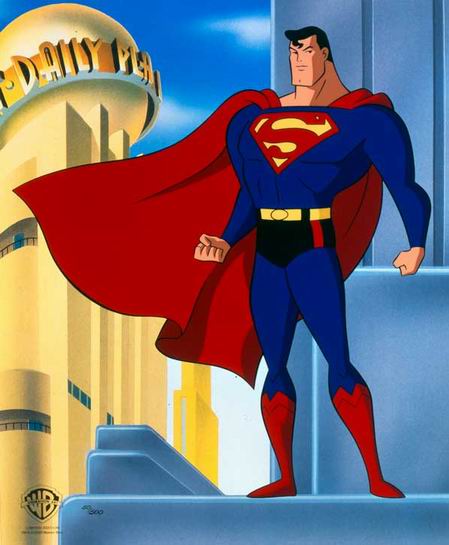
Uncle Billy’s collection included such classic issues as Action Comics No. 1, which featured the debut of Superman, and Detective Comics No. 27, which introduced Batman.

Those two issues alone are likely to go up for auction and could fetch as much as $325,000 and $475,000, respectively.

If you’re mourning the loss of your beloved comics — or the loss of that valuable asset — it’s okay. If our moms hadn’t thrown out our comics, the comics inherited by these two guys in Texas wouldn’t be worth as much.

Wait, that’s not much comfort, is it?

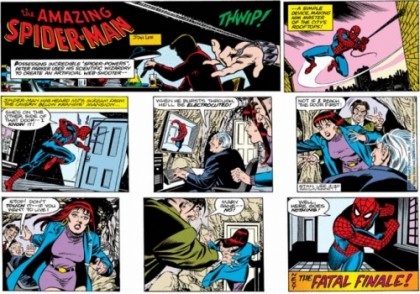
(Above: One that got away from me: Amazing Spider-Man No. 50)

‘Community’ returns March 15

For a while there, it looked like “Community” was finished.

The innovative, clever and — most importantly — funny NBC comedy seemed destined to fade into the land of dead-bef0re-their-time shows like “Freaks and Geeks” and “Undeclared.” A few months ago, NBC interrupted the third season of the show and said it would return to the air … sometime.

At least “Community” fans would have the comfort of knowing their show, about a collection of lovable oddballs hanging out at a second-rate community college, had lasted two, nearly three seasons.

But today, NBC announced that “Community” would return on March 15. True, the series will air at 8 p.m. Thursdays, opposite CBS’ uber-popular nerd comedy “Big Bang Theory.” But at least “Community” is coming back.

If all the talk about how offbeat “Community” is has discouraged you from trying it … don’t be discouraged. The show, created by Dan Harmon and starring a diverse and appealing cast, is a little odd. I mean, how many series can boast of a Christmas episode in which the characters act out a goofy, heartfelt fantasy set in “Rudolph” style Claymation?

Trust me. “Community” goes to extremes — the paintball episode that ended the first season was an amazing send-up of every action movie cliche ever — but it’s genuinely funny and doesn’t take a lot of effort to appreciate.

So check it out. For both of us.

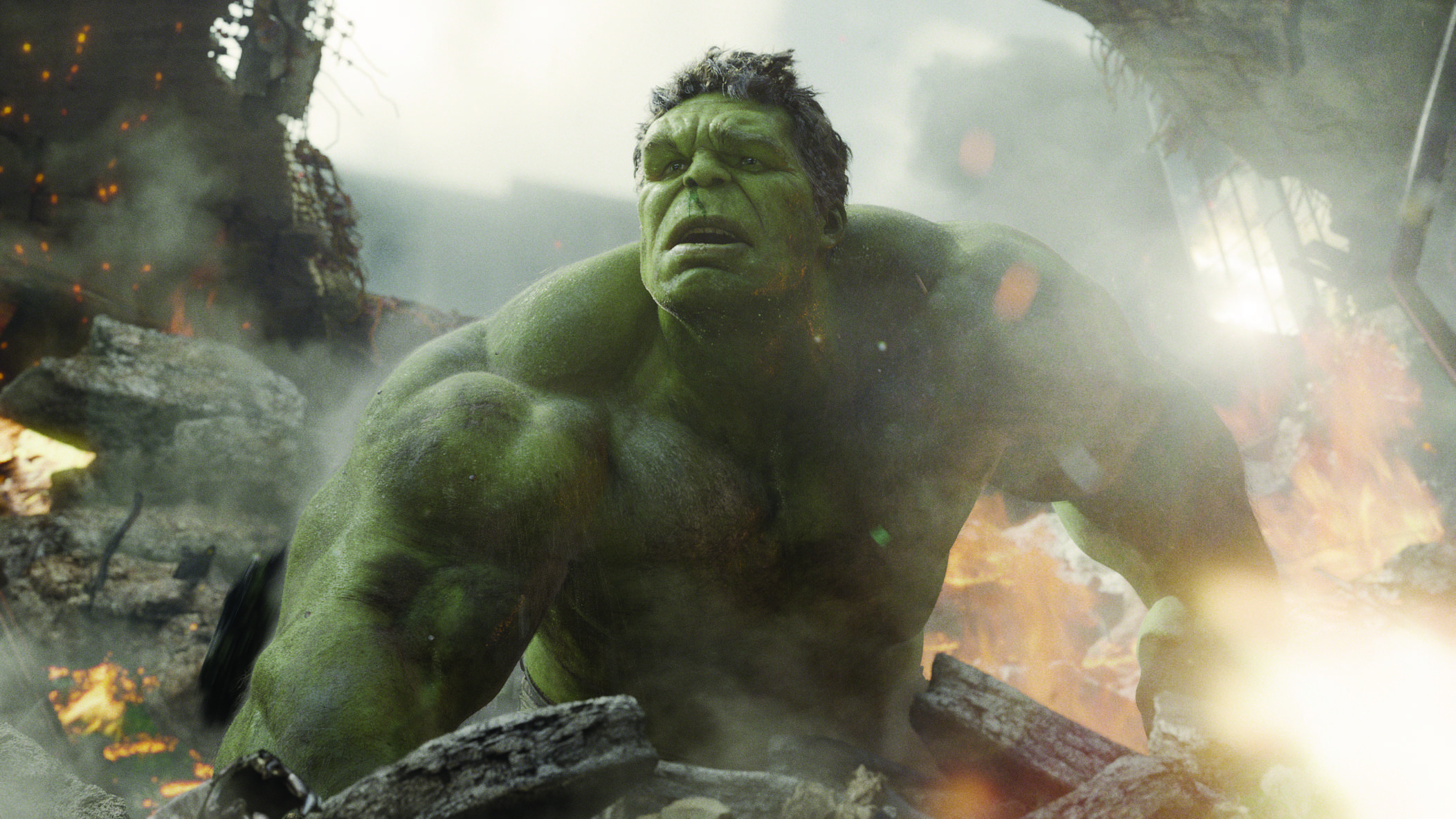
And, for no apparent reason, here’s a drawing by artist Chris Schweizer of the “Community” cast as Marvel’s “The Avengers.” No idea why. I just came across it and had to share it.

I think my favorite part is Abed as the Vision. Classic.

‘Alcatraz’ ponders bullies in ‘Johnny McKee’

Each week, the Fox thriller “Alcatraz” lets loose another former inmate of the island prison into modern-day San Francisco. And more than a few of those inmates, we’ve seen, have had some motivation for their criminal behavior.

Tonight’s episode of the series, “Johnny McKee,” offered the most overt explanation yet for what makes a killer a killer.

As Hauser (Sam Neill), Madsen (Sarah Jones) and Soto (Jorge Garcia) pursue McKee (Adam Rothenberg), a 1950s mass murder who killed with poison and is taking up his old habits in the modern-day, flashbacks show McKee as a man — admittedly unhinged and homicidal — bullied into killing another inmate while in prison.

There’s not a lot of sympathy to be had for McKee, of course. Ultimately he tells prison psychiatrist Lucy Banerjee (Parminder Nagra) — who also made the leap through time along with the inmates and Dr. Milton Beauregard (Leon Rippy) — the motivation for his first mass murder, more than a half-century ago. It’s pretty dire but doesn’t prompt viewers to think, “Yeah, I can totally see why he’s killing dozens of people.”

In the present day, Banerjee has been shot by a sniper and lies in a coma. Hauser, who knew Banerjee when he was a young guard, keeps careful — even loving — watch over the doctor.

The show, which has been struggling in the ratings, continues to tease with overall mythology and secrets. Madsen’s grandfather, an inmate on the loose in the present, is mentioned. There are also sinister overtones to the modern-day prison where Hauser — who we learn has the authority to eliminate viral videos from the Internet if they threaten to reveal the existence of his little project — keeps the recaptured inmates.

I’m still enjoying “Alcatraz,” but I’m increasingly worried that becoming involved in the show’s mythology — and that’s the best part of the show, really; the hunting down of inmates is becoming pretty routine — is going to pay off only in frustration when Fox yanks the show.

Next week’s episode, like an earlier one in which the first guard returned, looks to be interesting. An inmate who was innocent back in the day returns. But is he a killer now? (I’m guessing no.)