‘Walking Dead’ adds action in ‘Trigger Finger’

Okay, that was more like it.

Tonight’s episode of “The Walking Dead” on AMC, “Trigger Finger,” liberally mixed action with the soap opera storylines we’ve become accustomed to so far in this, the second season of the zombie apocalypse show.

A follow-up to last week’s episode, in which Rick and Glenn went to town to find Hershel, only to meet — and in Rick’s case, kill — two dangerous human types, “Trigger Finger” opened as the companions to the interlopers from last week gathered outside the saloon and, for a while, kept our heroes pinned down by gunfire.

Meanwhile, Shane went off to find Lori, who crashed her car last week and found herself fighting off a walker attack this week.

The episode had the kind of action that too many episodes haven’t featured this year, including the opening gunfight between the good guys and the new and mysterious bad guys. The stand-off was complicated by the arrival of zombies and a serious injury for one of the interlopers. Rick decides to take the injured stranger back to the farm, which further antagonizes Shane.

I’m getting the sinking feeling that the remaining few episodes of this season will be spent on Hershel’s farm. The static nature of the farm setting — and the stories told so far this year — has been a sore point with fans, me included.

But — and this is a very big but — if the remaining episodes have the same mix of action and suspense and character drama as tonight’s “Trigger Finger,” I’ll keep watching.

On the interpersonal relationships front, Shane spilled the beans about Lori’s pregnancy and and Lori cautioned Rick that Shane believes that Lori and the baby are his … and very well might kill Rick to take what he believes he’s entitled to.

Also tonight, Glenn froze in action and dealt with the aftermath and Andrea and Shane seem to be drifting further away from the core of the group. And Daryl seems intent on pushing Carol away.

One thing I’d like to see: More to do for T-Dog. He’s barely in the series anymore.

Best thing about tonight’s episode: The new, improved, man of action Hershel. If we’re gonna hang out with him all season, I’m glad he’s capable of being more than a soft-spoken old scold.

Gruesomest thing about tonight’s episode: Lots of zombie chowing down, plus a grisly fence impalement.

‘The Simpsons’ marks 500 episodes

“The Simpsons” reached its 500th-show milestone tonight, in case you’ve been living off the grid for a while now and haven’t heard.

As has been the case since the mid-90s, the episode was pretty hit-and-miss. There were some funny moments, but all too often in recent years the show seems to trade clever for crude. (More on that later.)

The plot: The entire town of Springfield, tired of the antics of Homer and the clan, decides to exile them from town. The Simpsons leave Springfield and stumble across some folks “living off the grid” and decide to give it a try.

There were some nice touches. The opening credits ended with a montage of hundreds — maybe 500; I sure couldn’t count them all — opening credits couch gags.

The show, as it often does, took a shot at its network home.

Midway through the show, the newly off-the-grid Simpson family recreated their opening credits at their new rural location. The family assembles in the living room and, instead of watching TV, they’re watching a fox sleeping on a rock.

“I’m sick of watching Fox,” Homer complains.

The episode also contained what might be the dirtiest joke I’ve ever heard on TV.

When someone acknowledges that Springfield is full of jerks, Lenny (I think it was Lenny) says, “Want me to spray some of my Jerk Off on you?”

Other good jokes:

Moe, the proprietor of Moe’s Tavern, sets up shop in a cave. The name: Moe’s Cavern.

Chief Wiggum’s acknowledgement: “I’m not the sharpest pencil in the … pencil thing.”

At the movies: Some favorite theaters

I love movie theaters.

Granted, I don’t enjoy some of the modern-day accoutrements of movie theater-going, like people talking, people talking on their cell phones and people coughing directly on the back of my head.

But I have been a lifelong movie fan — even before 1978, when I started reviewing movies — and a lifelong moviegoer.

One of my earliest memories is of going to see a Jerry Lewis movie at the Rivoli Theatre, which would ultimately enjoy its status as the last of the downtown Muncie movie palaces until it was razed in 1987.

CNN International ran a list of the world’s top movie theaters the other day, including the famed Alamo Drafthouse in Austin, Texas, as well as some in India and Japan.

The list prompted me to make a list of some of my own favorite movie theaters, both past and present.

To start with the past:

The Rivoli Theatre, downtown Muncie, Indiana: I spent a lot of hours in the Rivoli as a kid and young adult. I saw the re-release of “Gone with the Wind” there as well as Disney classics.

The Rivoli, built in 1927, was a beautiful theater marred only, in its final few years of operation, by a smaller, second theater built inside the larger auditorium. The little theater took up seats in the main auditorium and detracted from the looks of the big theater — jutting out into the line of sight of some seats in the little-used balcony — but the extra revenue probably kept the theater open a little longer. This was the days of the multiplex boom and theaters with one screen were rare.

The Rivoli was demolished in 1987 to make way for a local office building. I reported on the decision to raze the theater and the demolition and it was one of the most disheartening stories I wrote in the early years of my journalism career.

The Eastwood Theatre, Indianapolis: The Eastwood had a comparatively short lifespan for a movie theater. Opened in 1968 and demolished sometime post-1980s, the Pendleton Pike cinema was known for its size — 800-plus seats — and the staying power of the movies it screened. “Star Wars,” opening in May 1977, played for months at the Eastwood. (This was, of course, in the days when movies could play almost indefinitely at theaters. There was no home video, so studios and releasing companies made all their dollars from theatrical screenings. And the longer a movie played, the better percentage of ticket sales the theater received. Not to mention all that popcorn sold.)

I didn’t see “Star Wars” at the Eastwood — that experience came at the Northwest Plaza Cinema in Muncie — but my friends and I saw a number of other movies there, including “The Empire Strikes Back” in 198o and “Return of the Jedi” in 1983. I still vividly remember standing in line to see the “Star Wars” sequels with a big group of my friends and fellow geeks.

The Eastwood, according to the Cinema Treasures website, was torn down — no date specified — and its spot is now a Menards home improvement warehouse.

The Castro Theatre, San Francisco: I’ve only seen one movie at the Castro — “The Third Man” — but the Castro, built in 1922, is in many ways a wonderful example of a neighborhood movie palace. It’s an art movie cinema now, unspooling classics to an appreciative neighborhood and audience.

The Chinese Theatre, Hollywood: One of the most famous theaters in the world, the Chinese is where footprints and handprints in wet cement adorn the courtyard.

On one of my once-regular trips to the Los Angeles area to visit my friend Brian, we saw the 1989 Tim Burton “Batman” movie at the Chinese. Years later, Robin and I saw the movie “Mambo Kings” there.

Built in 1927, the Chinese has been the setting of almost as many movie scenes — remember the climax of “Blazing Saddles?” — as movies that have screened inside.

The Tennessee Theatre, Knoxville: One of my favorite theaters I’ve discovered in recent years is the Tennessee. Opened in 1928, the theater closed in 1977, reopened, closed again in 1978 and was ultimately restored and reopened as home to classic films and live performances.

The Tennessee is a big part of Knoxville’s historic downtown and is worth a visit to see the best case scenario for a downtown movie theater.

Cinebarre, Asheville, North Carolina: Cinebarre is an example, like the Alamo Drafthouse, of what a theater can do to attract customers tired of the worst of the moviegoing experience.

Cinebarre offers not only comfortable movie viewing but the ultimate in movie theater dining. The menu goes way beyond popcorn and warmed-over hotdogs and includes beer, wine, burgers, pizza and more.

Your food is served to you in the auditorium — you eat at a counter in front of your seat; no juggling food on your lap — while the movie is underway. You can even order dessert.

I enjoyed a lot of movies in theaters last year and, with a cool bunch of movies like “The Avengers” on tap for summer 2012, I’ll be seeing plenty again this year. I only wish I could see every movie as comfortably and memorably as my moviegoing experiences at these favorites.

What was ‘The Walking Dead’ whisper?

Here’s one for fans of the AMC series “The Walking Dead” as we wait for another new episode — the second in the latter half of the second season — to premiere Sunday night.

What did Dr. Jenner, the scientist at the Centers for Disease Control, whisper in Rick’s ear near the end of the final episode of the first season?

If you remember, the survivors of the zombie apocalypse made their way to the CDC at the end of the first season but abandoned it when Dr. Jenner, the last remaining scientist, became despondent and decided to blow stuff up real good.

Before Rick led the survivors out, Jenner whispered something in Rick’s ear.

The Associated Press asked Andrew Lincoln, who plays Rick, about the whisper.

Lincoln — who maintains he knows what the whisper was intended to be, but says he hasn’t even told his wife — hints that the whisper was not good news.

“This is a scientist who seemingly held all the cards to what this epidemic is about and I do think, you know, you would imagine he would have something of value to say on that matter,” Lincoln told the AP. “Well, he chose to kill himself.”

Well.

A friend, co-worker and fellow “Walking Dead” devotee of mine, Mark, says he believes the doctor whispered the word “Airborne,” which would not be good news for the survivors.

Having read some, but not all, of the comics upon which the show is based, I don’t know if the whisper was a part of the storyline or if it has been revealed.

I’ve heard other speculation about the whisper, including “No cure.” Also a dark scenario.

Lincoln indicated that the answer would be revealed this year.

As long as the doctor didn’t whisper, “Stay on the farm forever,” I’m good with whatever happens.

Mort Report: Severin and Hinzman

A quick note of remembrance for two pop culture figures who died recently:

As a compulsive credits reader, I loved looking at 1960s and 1970s Marvel comics, in part because Marvel actually credited the writers, artists, inkers and letterers who worked on each issue but also because the company’s style was to give each a funny nickname like Stan “The Man” Lee.

So I got accustomed to seeing the name John Severin on a lot of Marvel comics. (I don’t remember his specific nickname, but I’m guessing it was something like “Joltin’ John Severin” since “Jazzy John Romita” was taken.)

Severin was never a star artist like Jack Kirby or Jim Steranko but he had a long career. Obits published following his death in the past week at age 90 note that he drew Mad and other EC publications in the 1950s, drew some great Marvel comics in the 1960s and was a staple at the humor magazine Cracked for years after.

The other death of note is that of Bill Hinzman, who died earlier this month at 75.

You probably don’t know Hinzman’s name, but he was one of the most recognizable faces in modern-era horror movies. He played the graveyard zombie, the first seen in George Romero’s 1968 classic “Night of the Living Dead.”

“They’re coming to get you, Barbra,” was said about Bill Hinzman.

Pop culture was the better for their careers.

Geek wish list: EC Comics library

They sat there, on a high shelf of the comic book shop, calling to me.

It was the late 1970s or early 1980s, I don’t remember exactly when, and my friends and I were regulars at Comics Carnival, a comic book shop in the Broad Ripple neighborhood of Indianapolis. We were all college age with too much time on our hands, too much of the geek in us and not enough money.

The store had thousands of geek-pleasing items for sale, from comics to genre film magazines to posters and superhero statuettes.

Besides going to school, I was writing freelance for a Muncie newspaper and a couple of free monthlies in Indy. Freelancing didn’t — still doesn’t — pay a lot; I never got paid for at least one article for the latter of the free monthlies.

So I didn’t have a lot of money to spend. What I wasn’t spending on hanging out with my friends, going to movies and, you know, living, I spent on the finest geekery.

But I couldn’t afford those books on the high shelf.

Russ Cochran, a small-press publisher, had undertaken, in about 1978, an ambitious effort. Cochran set out to reprint the classic EC Comics of the 1950s.

If you’re familiar with EC, you know that they were sister publications to Mad magazine but for the most part focused on cleverly written, beautifully drawn and incredibly lurid tales of horror, science fiction, the supernatural and suspense. Artists like Graham Ingels and Wally Wood adapted classic tales by Ray Bradbury as well as illustrating new stories.

ECs were before my time, but I grew up reading about them. They were Exhibit A in Fredric Wertham’s crusade against comics. Wertham was a quack psychiatrist who wrote a 1954 book, “Seduction of the Innocent,” and testified before Congress about what a horrible influence comic books were on children.

Although superheroes were among Wertham’s targets, EC Comics — with their funny but ghastly tales of zombies, killers and gruesome revenge — bore the brunt of the scrutiny of Congress. Outrage over stories of bloodthirsty creatures and strewn body parts radiated out of Washington.

Virtually overnight, EC’s “New Trend” line of horror comics was shut down.

While horror comics finally struggled their way back onto spinner racks in the 1070s, when Marvel introduced titles like “Tomb of Dracula,” EC passed into the realm of legend.

Until Cochran began his ambitious plan to reproduce virtually every EC Comic.

Cochran started reprinting the classic EC books with the company’s horror comics — “Tales from the Crypt” and “The Vault of Horror,” to note the most familiar titles — and moved on through science fiction, westerns, detective tales and the rest.

The comics were reprinted not in color, as they were originally released, but in clear, beautiful black and white. Several issues were collected, in order of publication, between colorful hardcovers.

The guys who ran Comic Carnival were nice geeks who, on more than one occasion, allowed me to gingerly look through the bound and slip cased EC collections. They did this despite knowing that I was unlikely to have the $100 or so for each multi-volume collection.

I looked at several volumes but could never bring myself to spend the money.

Today, of course, I wish I had. The long-out-of-print boxed sets sell for hundreds of dollars online — I saw one set for as much as $900 — and are much too expensive to try to collect now.

If I win the lottery or fall under the patronage of a benevolent billionaire, I’ll go looking for Cochran’s EC reprint volumes. Until then, they’ll remain on my geek wish list.


‘Justified’ takes a page from Leonard’s book

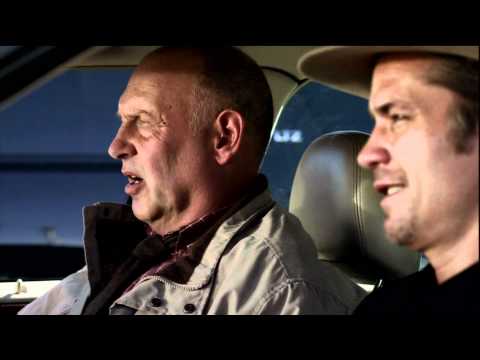
A while back I reviewed Elmore Leonard’s latest book, “Raylan,” which featured Leonard’s U.S. marshal character Raylan Givens, played in the FX series “Justified” by Timothy Olyphant.

In “Raylan,” the marshal investigates and runs afoul of a nurse and criminal crew who are stealing kidneys in a manner familiar to students of urban legends: They tranquilize people, deposit them in motel bathtubs and remove their kidneys.

Tonight’s episode of “Justified,” “Thick as Mud,” explores that same story line. In this case, the victim is Dewey, one of Harlan’s least intelligent lowlifes. As the episode opens, Dewey wakes up in a motel bathtub with a couple of incisions and a timeline until his body starts shutting down.

Dewey (Damon Herriman) staggers through much of the episode looking for cash in order to buy back his kidneys. He leaves a trail of knocked-over stores and rifled cash registers. And, of course, Raylan is on the case.

It all comes down to a face-off between Raylan and the kidney thieves.

Also tonight, Raylan’s frenemy, Boyd Crowder (Walton Goggins) finally meets up with Quarles (Neal McDonough), the Detroit mobster who has come to Kentucky with plans to cut himself into the crime business.

Boyd, obviously sensing a threat, tells Quarles he’s not impressed with the smooth criminal’s style, evening going so far as to call him a carpetbagger.

The episode sets the stage for conflicts among Raylan, Boyd and Quarles. Not to mention Limehouse (Mykelti Williamson), who so far this season seems confined to showing up at the end of the episode and dispensing equal parts charm and menace.

I have to say I enjoyed the way “Justified” treated the kidney-snatching plotline more than the way Leonard — who got a story credit for tonight’s episode — handled it in his recent book.

“Justified” continues to be one of the best slice-of-criminal-life dramas on TV. The show, like its characters, make it all look so easy.

‘Alcatraz’ probes deeper with ‘Paxton Petty’

After an episode last week that, for the first time, explored what happened when a decades-missing guard returned from … somewhere … Fox’s “Alcatraz” returned to its returning-prisoner-of-the-week format tonight with “Paxton Petty.”

Petty — like the other 300-plus Alcatraz prisoners and guards who disappeared in 1963, only to return in the present day without having aged a day — shows up in modern-day San Francisco and returns to his old hobby. In Petty’s case, that means planting and exploding land mines.

Houser (Sam Neill), Madsen (Sarah Jones) and Soto (Jorge Garcia) track down Petty with relative ease, but the twist this week is that Houser, head of the special task force tracking down the returning “sixty threes” and a San Francisco cop back in the day, gets captured by Petty and stuck on top of a land mine. Madsen and Soto must rescue him.

The show mythology subplot this week, though, is more intriguing. Dr. Lucy Banerjee (Parminder Nagra), a modern-day expert working on the case, has appeared in several flashbacks to the 1960s and the show seems to be implying that Banerjee — like the mysterious and sinister Dr. Beauregard (Leon Rippy) — was one of the missing “sixty threes” and has now returned.

The show is slowly building its mystery, teasing us with what Houser and other characters who bridge both eras know. Eventually we’ll know as much (or little) as Madsen and Soto.

“Alcatraz” has potential, and very well might be working toward the level of mind-teasing drama that “The X-Files,” “Lost” and “Fringe” eventually reached.

Trailer for ‘Abraham Lincoln: Vampire Hunter’ looks good

As previously noted in this blog, Seth Grahame-Smith’s “Abraham Lincoln: Vampire Hunter” is a fun book with a title that makes you roll your eyes.

The movie version is coming out this summer and a teaser trailer was released today.

Here’s a link to the trailer on Aint It Cool News.

So far, so good.

‘The Walking Dead’ reminds us of stranger danger

AMC’s “The Walking Dead” returned with its mid-season premiere tonight and emphasized that old zombie story truism: Other surviving humans can be more dangerous than walkers.

A lot of people complained when the first half of the hit show’s second season spent so much time on Herschel’s farm. I enjoyed the dramatic and soap opera aspects of the season — Lori’s unplanned pregnancy, Shane’s descent into madness, Glenn’s budding romance with Herschel’s daughter — but I was getting pretty restless too.

And somewhere in the back of my mind, I’m giving the show only so long to get off that farm and back on the road.

Tonight’s episode, “Nebraska,” showed the fallout from the end of the first half of the season. The band of survivors discovered that Herschel’s barn was full of walkers. Some of them were his family members, as Herschel mistakenly believed they might be cured.

Most horribly, Sophia, the long-missing daughter of Carol, was one of the walkers in the barn.

Truth be told, there was still a little too much talk in tonight’s episode, as the survivors cleaned up after the zombie massacre and Rick and Glenn went off to the nearby town to find Herschel, busy crawling into a bottle in what’s apparently the last intact bar in Georgia.

Aside from the zombie burying and zombie burning, not a lot happened until near the end of the episode, when two strangers show up.

There’s been a lot of online speculation that the two might be important characters for the rest of the season, but that’s not the case. They might spark some movement among the survivors, however, and that’s good.

The preview for next week’s episode showed that Rick and company run into friends of the strangers they confronted at the end of tonight’s episode, while a walker gets a little to close to Lori, who had an unfortunate accident tonight.

I’ll be tuning in again next Sunday, hoping that the remaining five episodes of the season get the survivors on the road again — at least long enough to get to their next destination.