Blizzard of ’78 memories

If you were alive and in East Central Indiana 34 years ago today, you probably — maybe with a little prompting — remember what you were doing.

You were watching the snow fall.

Yes, today — Jan. 25 — is the 34th anniversary of the Blizzard of ’78. Over a couple of days, 20 inches of snow was dumped on our heads (and roofs and roads and … ). Some people think even more snow fell, but that’s the official National Weather Service total. Two days of winds caused roads to close and created drifts up to many rooftops.

I know that it seemed like we were never going to see spring.

I’ve blogged about the Blizzard of ’78 before, but on the anniversary I’ll mention again what an experience it was.

It was infinitely preferable to the ice storm of January 2005, of course, because during the blizzard my family’s home still had electricity. We were warm and safe.

I don’t remember having run low on food — we lived on a farm, after all, and my parents not only had freezers full of meat from our own livestock but also basement shelves full of canned beans from our garden — but I do remember running low on things to do.

Over a couple of homebound days, I read and re-read a bunch of books and comic books and watched a lot of TV. Dinosaur alert: This was well before we had cable TV, of course, so we all spent a lot of quality time with Bob Gregory and other Indy TV figures.

When we could finally get out, we drove through the snow tunnel that followed the approximate route of South Walnut Street to the Southway Plaza, where we could stock up on groceries from Marsh and comic books from Hook’s.

As I’ve noted before, I don’t have any surviving photos from that time. The one posted above I found online tonight. It’s by photographer and writer Jim Garringer and shows a downtown Muncie street scene in the aftermath of the blizzard.

Few pictures — except for the ones in my head — can adequately capture the impact of the Blizzard of ’78, which had the temporary effect of keeping us out of school for weeks.

And had the permanent effect of being frozen, forever, in our collective memories.

And the Oscar won’t go to …

Back when I was a movie reviewer and entertainment writer, I followed the Oscar announcements as if the head of the motion picture academy was releasing puffs of either gray or white smoke. They were that important to me. Movies were my religion.

This year’s nominees were announced this morning but I’ve yet to really study the full list. I do have a few thoughts, however.

I’m not going to suggest that “X-Men First Class” or “Captain America” or “Bridesmaids” or any of several movies I saw in 2011 should have been nominated.

But each year when Hollywood is buzzing about the best movies of the year, my mind goes back to 1982. I wrote an article listing my picks for best pics of the year.

But I was too caught up in what I should choose as the best movie of the year rather than what I really thought.

Considering 1982 was a milestone year for movies, guess which of the following I picked as the best of the year:

“E.T.”

“Tootsie”

“Star Trek II: The Wrath of Khan”

“The Verdict”

“Gandhi”

“Sophie’s Choice”

“Blade Runner”

“My Favorite Year”

“Richard Pryor Live on Sunset Strip”

“The Year of Living Dangerously”

Yep, that’s right. I picked “Gandhi.”

Undoubtedly a good movie, and an Oscar winner, but one that I’ve never watched a second time.

Since then, I’ve learned to be true to my own tastes.

Between now and the Academy Awards ceremony in February, I’ll no doubt see some more of the nominees. So far, of the nine movies in contention for Best Picture, I’ve seen “Midnight in Paris” and “The Help.” I don’t know that either picture is one for the ages but they were pretty good.

I’m looking forward to “War Horse” and “The Artist” and some of the other nominees.

And I don’t really think I’ll see the makers of “Captain America” leaping up on stage next month.

But I might be wishing they would.


Svengoolie: Reunion with an old ghoul friend

Like a lot of people in Central Indiana, I grew up watching “Sammy Terry” late Friday nights on Channel 4. Sammy, whose son has lately taken up the mantle of corny horror movie host — at least on special occasions — was a fixture of most of our childhoods.

My misspent young adulthood, however, was spent in the company of Svengoolie.

For those who aren’t familiar with him, Svengoolie was a longtime horror movie host on Chicago TV station WFLD. The Sven that my friends and I were familiar with was played, for much of the 1980s, by Rich Koz, the second actor to play the part of the hippie ghoul and horror movie host.

Koz, in Svengoolie drag, would present classic (and not-so-classic) horror movies during his Saturday night show. My friends and I tuned in every week, snacks and beverages at hand, to enjoy the movies and Koz’s irreverent approach to them.

Our love for Svengoolie was so great that, when we heard that WFLD was being dropped from the local cable channel lineup in the mid-1980s, we sent him a telegram — kids, that’s the pre-Internet version of email — that he read on the final show that we could see.

My local cable lineup recently added MeTV, a nostalgia channel, and Svengoolie is right there, on Saturday nights, hosting — and making fun of — classic movies.

Last Saturday he aired “House of Frankenstein,” the 1944 Universal gem featuring not only Frankenstein and Dracula and the Wolf Man but a hunchback assistant.

Koz is older and has put on a few pounds — unlike the rest of us, who have remained young and svelte — but the show is snarky, campy good fun just like it was … holy crap, nearly 30 years ago.

Thirty years? That would make Koz and Svengoolie a classic showing classics. Hopefully for the viewing pleasure of classic old geeks.


Spider-Man in ‘The Avengers?’ Probably not. But …

The Internet broke today.

And you can blame British actress Jenny Agutter.

In an interview with Radio Times, a Brit publication, Agutter noted that she has a small role in this May’s movie version of the classic comic book “The Avengers.” While on the set, Agutter said, she saw trailers for the actors playing Iron Man and Spider-Man.

Only one problem: Spider-Man isn’t supposed to be in the movie. The webslinger’s big-screen adventures — including the reboot coming out late this summer — are being made by Sony, while “The Avengers” is coming from Disney.

So is there some cross-studio crossover in the works? Have Hollywood moguls loosened their grips on their respective superhero tentpoles and allowed the kind of hero visitation the comics have always enjoyed?

Probably not.

Anyway, there was a LOT of talk about the possibility of a Spider-Man cameo online today. About twice as many people discounted the possibility as touted it.

I guess we’ll know for certain, though, when “The Avengers” comes out on May 4.

It’s too bad that movie rights to the Spider-Man character are owned by Sony, while Fantastic Four is owned by Fox and Iron Man, Captain America and all the other Avengers are overseen by Paramount and Disney.

Because one of the best things about the comic book universe has traditionally been that it is a shared universe. As seen in the vintage cover above, Marvel heroes regularly showed up in each other’s comics.

On the current “Avengers” animated series on Disney XD, a season-one episode featured the super team fighting some bad guys in the streets of New York City. Suddenly a burst of flame pummels the baddies. The Avengers look up and the Human Torch, member of the Fantastic Four, skywrites, “You owe me one” before flying off.

Then the Torch’s FF compadre, the Thing, shows up to clobber another bad guy.

It was a throw-away gag, sure. And there was nothing to lose compared to the high stakes of big-screen movies.

But maybe someday we’ll see that big old comic-book universe play out on the movie screen.

It’s not the end of the world

I’ve been on an “end of the world” kick lately, mostly subconsciously.

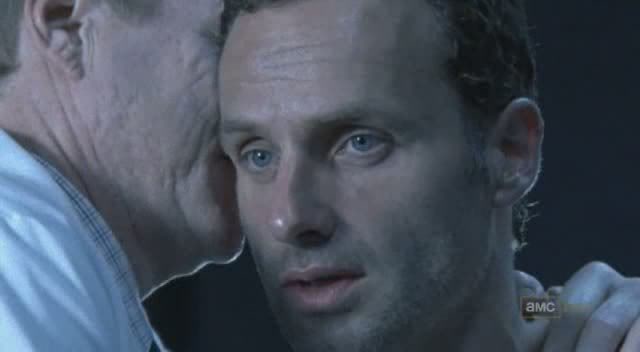
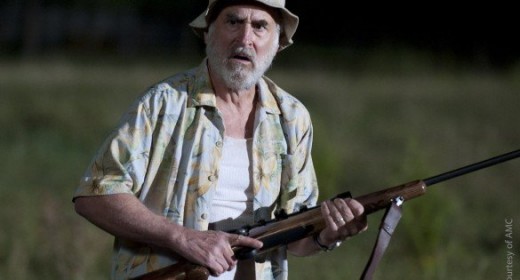
Not just looking forward to the return of “The Walking Dead” on Feb. 12, but enjoying “The Fades,” the new series on BBC America, and anticipating the movie version of “World War Z” this fall. Anticipation mixed with dread, actually, considering all the changes they’ve apparently made to the great Max Brooks episodic novel.

I didn’t get into the latest end-of-the-world opus I tried, however. I stopped reading David Moody’s “Autumn,” the first in a multi-book series, after I realized the glacial pace its end-of-the-world-through-the-flu-with-zombies story. Checking out the fourth book online, I noticed it said it took place something like 40 days into the story. No thanks. I’ve had enough of the glacial pace of “The Walking Dead” to do me for a while.

I was also a little disappointed in “The Night Eternal,” the third book in “The Strain” trilogy by Guillermo del Toro and Chuck Hogan. The series started strong with the original 2009 book about a plague of vampires threatening the world and the second book, “The Fall,” was pretty good if dire. By the time of the third book, things were pretty bleak and it’s no surprise that bad things happen to some characters you liked pretty well.

So I’ll happily make do with the return of “The Walking Dead” and the occasional glimpse of History’s “Life after People.” That series, which looks at the deterioration of the world’s landmarks after the end of humanity, is fascinating and forlorn.

And there’s always another reading of “The Stand.”

More Johnny Depp in ‘Dark Shadows’

I’m not sure what to expect from Tim Burton’s big-screen version of the classic 1960s Dan Curtis daytime drama “Dark Shadows.” Burton’s recent movies have too often been weird for weird’s sake, I think.

But I loved the supernatural soap opera when I was growing up and will probably see Burton’s version, starring Johnny Depp as Barnabas Collins, when it comes out May 11.

I’m also fascinated by how Depp looks as Barnabas. We’ve gotten a few glimpses so far and Depp doesn’t even look like himself in some.

The clearest look we’ve gotten yet is the one above.

Crazy. We’ll see in a few months.

New book captures Sherlock Holmes well

Quite unintentionally, I’ve been on a British pop culture kick lately. After enjoying the BBC America show “The Fades,” I started reading David Moody’s “Autumn,” and end-of-the-world-with-zombies story that’s the first in a series. More on “Autumn” later.

In between, I fell in with an old friend: Sherlock Holmes.

My enjoyment of Arthur Conan Doyle’s classic turn-of-the-19th-to-the-20th-century British detective series began when I was young. I loved Conan Doyle’s 56 short stories and, to a lesser extent, his four novels featuring Holmes, the world’s greatest consulting detective, and his stalwart soldier/doctor companion, John Watson. The novels, particularly “The Hound of the Baskervilles,” are fine, I should add. But a couple feel overly padded and drawn out. The character — at least in his creator’s hands — seems to work better in short-story form.

Since I tore through the stories as a kid, I’ve tried a lot of  the tributes and imitators. I loved what “Star Trek” film director Nicholas Meyer did with the characters in “The Seven Percent Solution” and “The West End Horror.” I likewise loved Mark Frost’s “The List of 7” and “The 6 Messiahs,” which took Conan Doyle on his own adventures.

Of course the various movie and TV versions, including the current, terrific modern-day “Sherlock,” have varied in quality. But the best among them have successfully captured the spirit of the stories and the characters: The aloof and driven detective and his loyal and capable companion.

I was looking forward to reading Anthony Horowitz’s “The House of Silk,” a new novel featuring Holmes and Watson, and was especially intrigued to realize that it was the first Holmes story officially sanctioned by the Conan Doyle estate.

It’s not hard to see why.

Horowitz “gets” the characters. “The House of Silk” isn’t the greatest Holmes story ever told. As a matter of fact, I was kind of startled to realize I had figured out the mystery of the title almost immediately, a couple of hundred pages before Holmes and Watson do.

But Horowitz’s mastery of the detective and his friend and biographer is perfect.

One of the greatest complaints about many film and TV versions of the characters, of course, is that Holmes so thoroughly overshadows, even patronizes, Watson. The early Basil Rathbone/Nigel Bruce movies portray Watson as a fool, nearly doddering and more of a hindrance than a help to Holmes, who makes fond fun of his friend’s incompetence.

In Conan Doyle’s stories and in Horowitz’s book, Watson is accurately portrayed as the man he likely would have been: A doctor and veteran of the British campaign in Afghanistan, Watson was handy with a gun and his fists and wasn’t a dunderhead by any means. That he couldn’t keep up with Holmes’ deductive reasoning was no surprise. No one could.

Besides the characters, Horowitz spins a neat tale of intrigue involving an upper-crust art dealer as well as the “street urchins” that make up Holmes’ Baker Street Irregulars. After something dire happens to one of Holmes’ youthful street-level eyes and ears, the detective feels compelled to right a wrong.

Horowitz hits all the right notes here, with Holmes as the master of disguise, an appearance by his brother, Mycroft, and even some love for Lestrade, the Scotland Yard inspector who was often Holmes’ antagonist.

By virtue of having written “The House of Silk” a century after the original Holmes stories, Horowitz is able to include plot developments that never would have been hinted at by Conan Doyle. There’s some pretty dark stuff going on behind the scenes, and Horowitz fits it into the story quite neatly.

One of the best elements of the book is the aura of regretful hindsight that Horowitz brings to the story. Watson narrates the story from years after the fact, and acknowledges what many of us feel: We don’t pay enough attention — and don’t acknowledge — the people in our lives often enough.

Horowitz has Watson noting, for example, that he didn’t relate to Mrs. Hudson, the detective’s landlady, enough. Saddest of all, Watson admits he didn’t even know Holmes’ birthday until he read it in the detective’s obituaries.

“The House of Silk” isn’t a mind-bending puzzler. But it is solid Sherlock Holmes fiction written for modern-day sensibilities. It’s a great addition to the official Holmes canon.

‘The Fades’ is creepy fun

If “The Fades,” a new supernatural series on BBC America, seems a little familiar, it’s no wonder. After all, it’s about a teenage outcast who discovers the ability to detect and battle supernatural creatures. The teen is aided by dorky friends and mentored by an adult monster-hunter.

Sound like “Buffy the Vampire Slayer?” Well, yes and no.

Paul, the British teen at the center of the series, is no Buffy Summers. He’s not especially heroic. He wets the bed.

But “The Fades” very well might take the “Buffy” premise and turn it into its own brand of good, creepy fun.

The show, which has been airing in the UK for a while but just debuted on BBC America (the first episode is still available for free On Demand; the second episode airs this Saturday), does employ the same kind of pop culture references that Buffy enjoyed. At some point, after Paul explains to dorky friend Mac that he’s able to see Fades — once-human walking corpses — Mac says he’s heard it before, in “The Sixth Sense.”

Mac becomes a believer, however. And Paul already has support from Neil, a disheveled middle-aged “Angelic” — living people like Paul who can see Fades — in his efforts to figure out what’s going on.

Among the mysteries: What is the violent, ultra-creepy Fade that’s attacking Angelics? And why does Paul have visions of an ash-filled global apocalypse?

The first episode of “The Fades” had a lot of intriguing ideas (although I confess I might have missed a few in the rapid-fire, Brit-accented dialogue) and some genuinely spooky scenes, especially those in a vast abandoned building.

I’m looking forward to seeing where “The Fades” goes next.

‘Justified’ is back with a vengeance

One of my favorite shows, “Justified,” returned for a third season last night with one of the strongest season premieres I can remember.

The FX drama, the story of deputy U.S. marshal Raylan Givens as he deals with drug dealers, killers and other lowlifes in his home state of Kentucky, ended a strong season two with Raylan (Timothy Olyphant) getting shot as he brought down the criminal empire of Ma Barker-ish Mags Bennett. Last night’s premiere began with Raylan still recovering from gunshot wounds and on desk duty.

Raylan, as droll and funny as he is sharp-eyed and dangerous, is more than a little rusty, but he’s willing to engage in a brawl, at the U.S. marshals office, with Boyd Crowder (Walton Goggins), his longtime friend and antagonist.

Boyd shows up and gives Raylan grief about how the deputy marshal didn’t turn over to Boyd’s homicidal care Dickie Bennett, son of Mags Bennett, who had shot Ava (Joelle Carter), Boyd’s girlfriend (who also has a thing for Raylan).

Punches are thrown, windows are broken and Boyd is carted off to jail. But why would he want to be incarcerated? We find out at the end of the episode.

Meanwhile, Ava and Boyd’s meth-head crew try to find a buyer for the marijuana they stole from Mags Bennett but discover they’ve screwed up and it’s next to worthless. This leads to a good scene in which Ava administers some frying pan discipline to a gang member who refused to obey the jailed Boyd’s orders.

And also meanwhile, Raylan considers setting up housekeeping with his ex-wife, Winona (Natalie Zea), who is pregnant. Throughout the episode, Raylan doubts himself and underperforms. Getting shot took a lot out of him, and even though he handles a new menace at the end of the episode, you have to wonder if his crisis of confidence will continue.

There’s fresh bad guys this season in Robert Quarles (Neal McDonough, a familiar face from many TV series as well as the “Captain America” movie), a super-smooth and lethal killer who is new to Kentucky and seems to be ready to take over the Dixie Mafia.

Last night’s “Justified” had some great moments, from the back-and-forth between Raylan and Boyd to the cool menace of Quarles to the wry observations of Nick Searcy as Art Mullen, Raylan’s boss.

It’s still very early in the season, and Mags Bennett and her addled brood made strong villains last season, maybe too strong for any successors to possibly top. But I’m wondering if Quarles and company — not to mention Boyd, Ava, Winona and the rest — won’t give a shaken Raylan his greatest challenge yet this year.


‘Alcatraz’ a breakout hit? (Sorry, I couldn’t resist)

So this is what we knew about “Alcatraz” going into tonight’s premiere:

It’s a new Fox show from producer J.J. Abrams (“Lost,” the new “Star Trek” movie series).

It stars Jorge Garcia, who played lovable Hurley from “Lost,” and also stars Sam Neill and Sarah Jones.

It’s about a generations-spanning mystery and coverup: The 300-plus inmates and guards at Alcatraz, the island prison off San Francisco, didn’t get transferred when the prison was shut down in 1963. They all … disappeared.

And now they’re coming back.

Here’s what we know after seeing the first two hours:

Not a lot more.

“Alcatraz” might — just might — be the kind of show that I’ll watch every week for years, like “Lost.” It might be the kind of show I’ll wish I had watched every week, like “Fringe.” There’s enough sci-fi goodness, enough mystery, enough conspiracy and enough likable characters to make me give it a try for a while longer.

Jones plays a cop who gets drawn into the Alcatraz mystery when one of the long-missing prisoners shows up, not a day older, on the streets of San Francisco and begins killing people. Garcia is the author of several books about the prison and its history who, needless to say, didn’t know about the mystery and coverup.

Neill is … kind of a mystery, and maybe the best one about the show so far. He’s now a government agent, but back in 1963 he was a young cop who discovered the island prison was empty. In the years since, he’s been waiting, apparently, for the inmates to begin reappearing. So far he’s mum on just what he knows and how he knows it. A conspiracy is pretty well indicated: The prisoners, as they start showing up, have been outfitted with money and guns and in some cases given missions, including, in one case, the recovery of a mysterious key.

Neill’s character is also interesting because we can’t quite tell yet if he’s a good guy or a bad guy. When he head-butts one recovered prisoner and shoots another in the hand, the actions seem somewhat gratuitous if not a little uncalled for.

But when he lodges the recovered inmates in a new, middle-of-nowhere prison that replicates, in gleaming style, the old Alcatraz, he seems pretty keen on torturing them.

“We’ll see how you enjoy a visit from … Dr. Beauregard,” Neill says, or something like that, smiling slightly.

Okay, makers of “Alcatraz.” I’m in for a bit longer, for several reasons, including the appeal of Garcia and Jones as an unorthodox crime-solving team, the mystery of Neill’s character and the intriguing premise.