
Tag Archives: Cold Case Muncie

A cold case father died without justice for his son

It’s been two years now since Calletano Cisneros died. A lot of people won’t know who he was, but he made a big impression on me. I interviewed him for our fourth true crime book, COLD CASE MUNCIE, which was published by History Press in 2023.

For those of you who don’t know, longtime writing collaborator Douglas Walker and I wrote about cold cases – unsolved murders – in the area of Muncie, Indiana for a few decades for The Star Press newspaper. This entailed going over old cases, some of them dating back decades and some of more recent vintage, and reviewing the facts, looking at old files and articles and often interviewing police investigators, prosecutors, coroners and, most importantly, surviving family members. Cold cases have an impact on all of those people but especially, of course, on surviving family members.

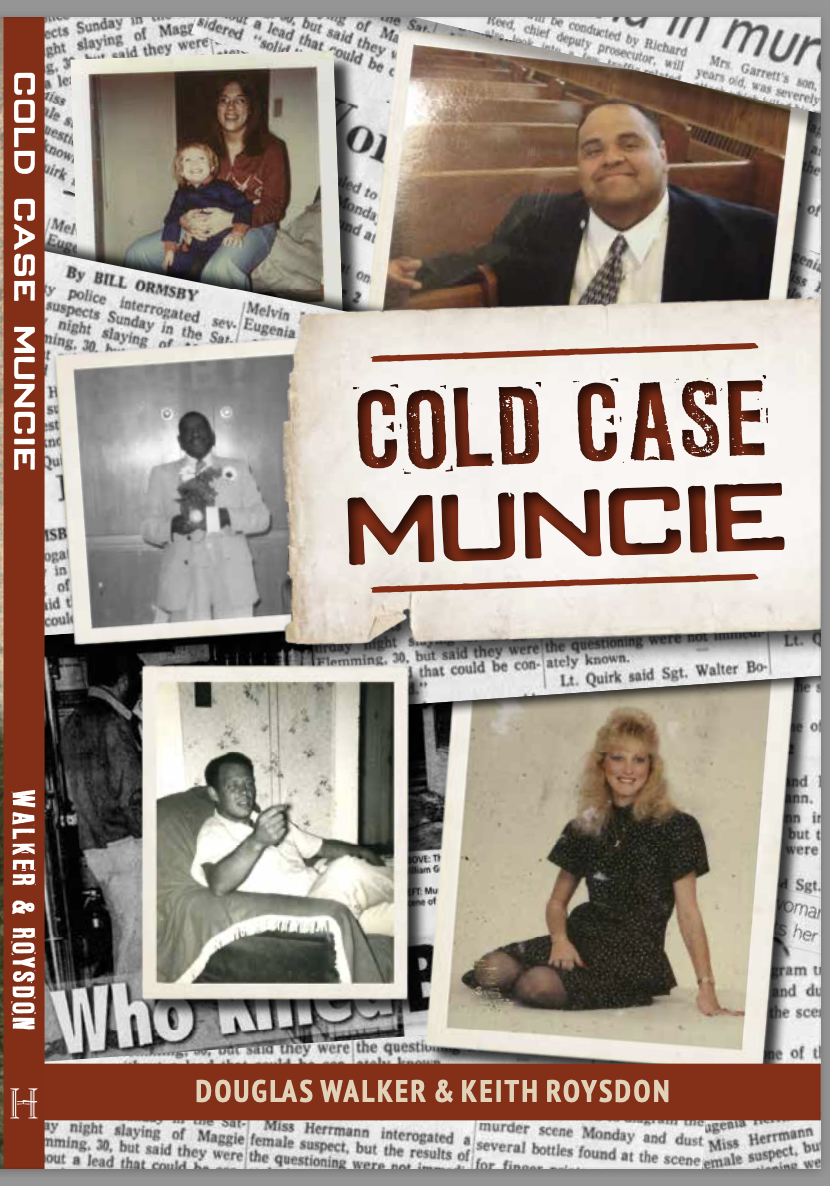
Sebastian Cisneros – that’s him in the upper right photo of the book cover above – was killed in April 2009 in Muncie, which is marred by dozens of unsolved murders. Sebastian Cisneros was killed outside his house on Ribble Avenue in Muncie.
We wrote about the case at the time and wrote about it as a chapter of the Cold Case Muncie book because it was a compelling story, made all the more so because I interviewed his father, 75-year-old Calletano Cisneros. When we spoke via long distance – he lived in Texas – he volunteered something that I hadn’t known when I called him: He himself had killed a man in a bar fight when he was 17 and had spent 10 years in prison before he was released by the governor. He’d lived with that past for a half-century and had, in the past several years, lived with the murder of his own son.

Calletano Cisneros told me he wanted justice for his son and wanted his son’s killer to be tried and sentenced to prison just as he had been more than 50 years earlier.

“I did my time. I’d like to see the same justice done in my son’s case.”

Calletano Cisneros didn’t live to see justice for his son. He died in January 2024.

Cold cases are cases that often don’t see justice done.

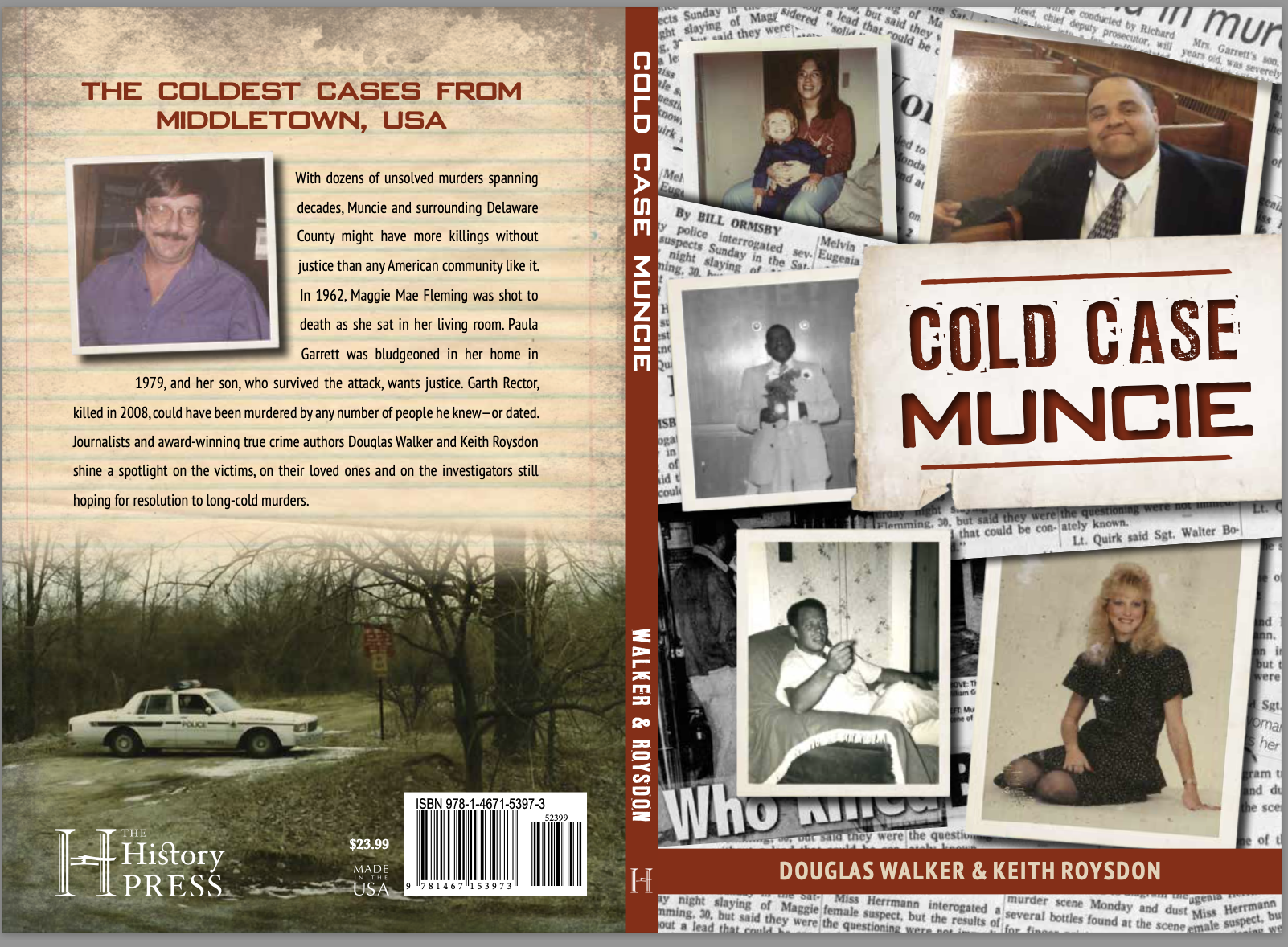
You can read about the Sebatian Cisneros case in our third true crime book:
Cold cases still pull at the heartstrings

I was watching “Ballard” the other week – it’s a good series, by the way, and a very valid follow-up to the “Bosch” series and it’s own streaming sequel, “Bosch Legacy” – and it got me thinking about the cold cases I’ve written about over the decades.

“Ballard,” which stars Maggie Q as Renee Ballard, Los Angeles police detective who is featured in her own series of crime novels by author Michael Connelly, creator of “Bosch,” is about how the Ballard character is “demoted” to the LAPD’s under-funded and over-scrutinized cold case unit.

The unit, comprised of police officers and reserves and a handful of volunteers and interns, huddles in a cluttered series of rooms that look more like storage than an office. The cold case squad is the definition of an effort that is nothing like a priority for LAPD leadership but is an essential thing to the squad members.

Ballard is initially leery of the assignment – punishment, really, for daring to report another cop for assaulting her – but grows to find satisfaction in solving long-unsolved murders, bringing killers to justice and giving closure to survivors.

Along with my longtime writing collaborator Douglas Walker, I wrote about cold cases for many years for the newspaper in my hometown of Muncie, Indiana. The most notable cold case to many was the killing of two teenagers in Westside Park in 1985. Walker and I wrote about it in our third true crime book, “The Westside Park Murders,” released by History Press in 2021.

But our fourth book, “Cold Case Muncie,” released in 2023, is an entire book of cold cases, still-unsolved murders in the Muncie and East Central Indiana area.

We had identified more than 30 cold cases, some dating back to the 1960s or even earlier, during a regular series of newspaper articles beginning in 2010. We went back and re-examined many of those cases for the book.

We interviewed surviving loved ones of the victims and revisited the murder scenes.

We put an emphasis on soliciting any new information about the murders, including a point of contact for each of the police departments responsible for resolving those cases.

And we placed emphasis on the survivors. Many of the cases are illustrated by photographs I took of those people who, today, are still waiting for someone to bring closure for the killing of their loved ones.

I’ve noted before that closure is an elusive thing, even harder to achieve than it seems, and that’s pretty damn hard.

I’m glad “Ballard” has taken up the case of cold cases and I’m glad to have brought some attention to them too.