Tag Archives: true-crime

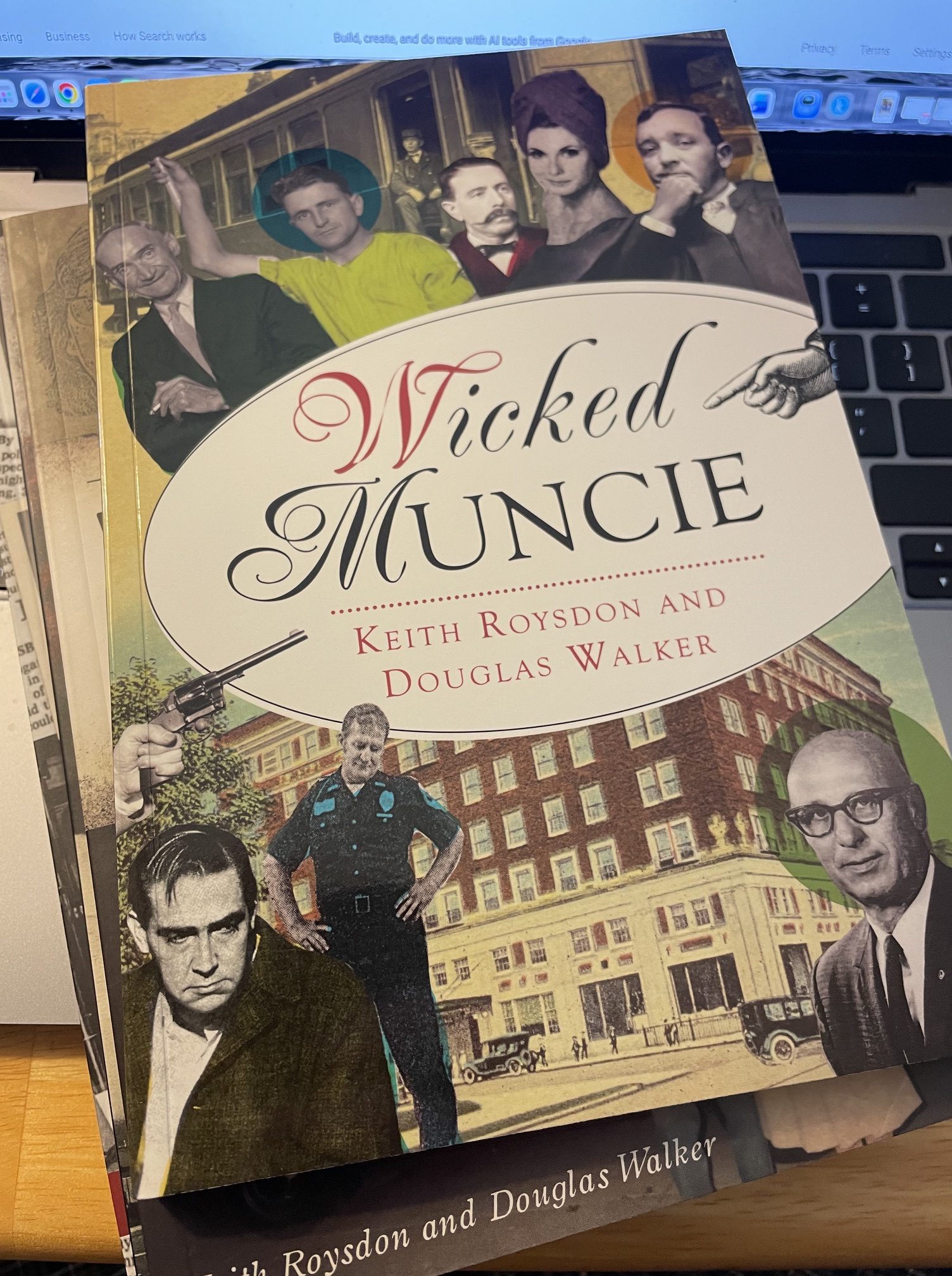
Ten years of true crime books! It’s the anniversary of our book WICKED MUNCIE

Ten years has flown by.

Ten years (and two days) ago, History Press published our first true crime book, WICKED MUNCIE.

My longtime writing collaborator Douglas Walker and I had, in 2015, finished working on long articles detailing the history of our town, Muncie, Indiana, for The Star Press newspaper to mark the city’s 150th anniversary. I’d written about 150 years of facets of the city like the local hospital and local industry and he’d written an article that touched on the city’s long history of crime and murder. (I say touched on because there’s too much crime to fit in one article.)

Walker got a cold call from an editor at History Press, based in South Carolina, who asked him to consider turning the article into a book. History Press was and still is a publisher of books detailing cities and regions’ histories, including colorful characters, businesses and industry and crime and they wanted a history of Muncie crime, which is as colorful as it is gruesome. He asked me to collaborate with him.

Because we’d been newspaper reporters for decades, we knew what kinds of stories we needed to tell, from infamous people to sensational murders to crimes that rocked the community.

We contracted with History Press and, in all of our spare time away from covering crime, corruption and government for the newspaper, wrote WICKED MUNCIE. The book was published on October 17, 2016.

The title, by the way, was mandated by History Press. They had a whole series of “WICKED” books, spotlighting cities all over the country.

We wrote three followups for History Press, MUNCIE MURDER AND MAYHEM in 2018, THE WESTSIDE PARK MURDERS in 2021 and COLD CASE MUNCIE in 2023. The later was named after a series of articles about unsolved murders we’d written for the newspaper.

The books are truly self-produced works; we did all our own research, often working from clipped and yellowed articles in files in the newspaper’s library. We begged and borrowed photos to illustrate the book and dropboxed the photos to our editors at History Press to meet their deadlines.

The books were considerable work, in no aspect more than in finding the illustrations. Muncie newspapers had not kept prints or negatives of photos over 150 years, so we had to make do with what we could find.

With the History Press books, it was not uncommon for me to dropbox 120 or more photos to find a third or half that number that would meet History Press’ technical requirements.

Producing four true crime books focusing on the same city and county was a natural – Muncie was and is a hotbed of crime and corruption; we counted about three dozen unsolved murders as we were writing a Cold Case series of articles – but a lot of work.

As I’ve noted here, the true crime books still sell and sell well for History Press and booksellers like Muncie stores including the Orchard Shop and Aw Yeah Comics and sell well online, everywhere from Amazon to Walmart.

I’m inclined to urge people to buy their copies from bookshop dot org because they contribute to indie booksellers like Ink Drinkers Anonymous in Muncie.

Here’s the link to my books on bookshop, including the four true crime books:
https://bookshop.org/beta-search?keywords=Keith+Roysdon

A cold case father died without justice for his son

It’s been two years now since Calletano Cisneros died. A lot of people won’t know who he was, but he made a big impression on me. I interviewed him for our fourth true crime book, COLD CASE MUNCIE, which was published by History Press in 2023.

For those of you who don’t know, longtime writing collaborator Douglas Walker and I wrote about cold cases – unsolved murders – in the area of Muncie, Indiana for a few decades for The Star Press newspaper. This entailed going over old cases, some of them dating back decades and some of more recent vintage, and reviewing the facts, looking at old files and articles and often interviewing police investigators, prosecutors, coroners and, most importantly, surviving family members. Cold cases have an impact on all of those people but especially, of course, on surviving family members.

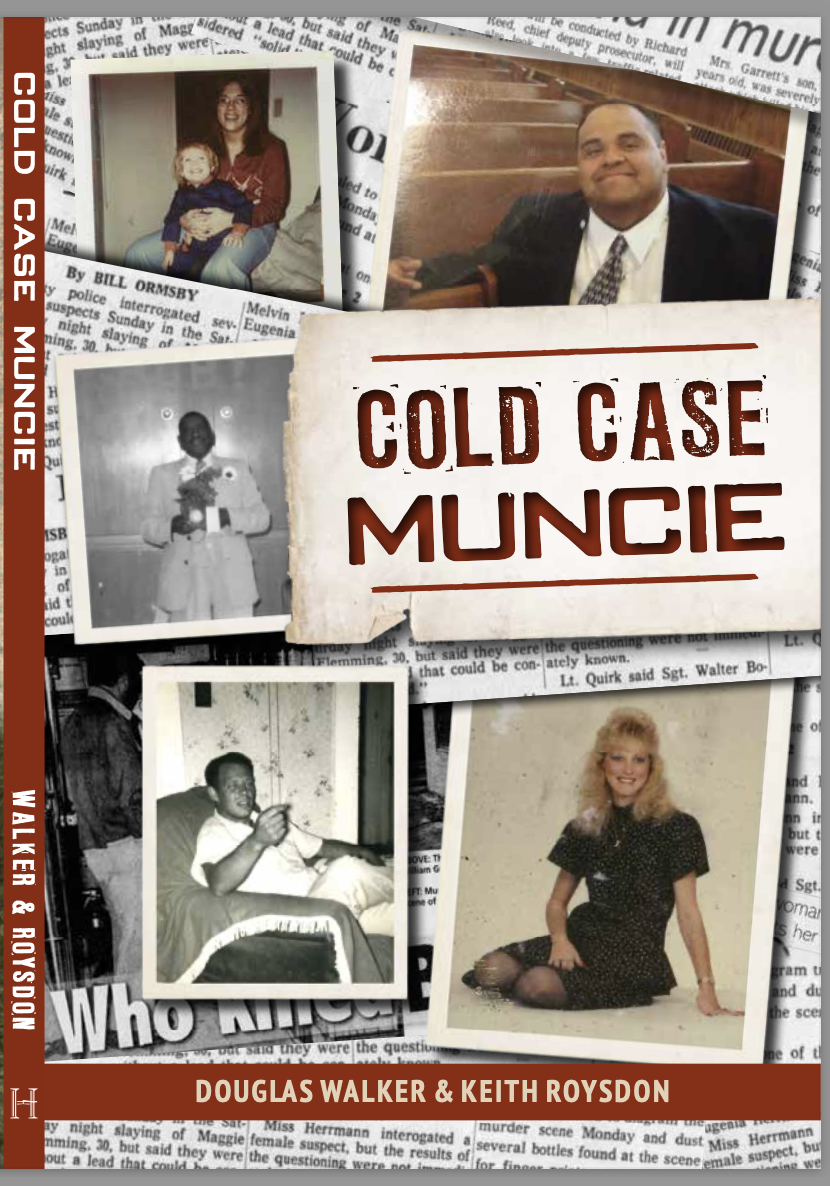
Sebastian Cisneros – that’s him in the upper right photo of the book cover above – was killed in April 2009 in Muncie, which is marred by dozens of unsolved murders. Sebastian Cisneros was killed outside his house on Ribble Avenue in Muncie.

We wrote about the case at the time and wrote about it as a chapter of the Cold Case Muncie book because it was a compelling story, made all the more so because I interviewed his father, 75-year-old Calletano Cisneros. When we spoke via long distance – he lived in Texas – he volunteered something that I hadn’t known when I called him: He himself had killed a man in a bar fight when he was 17 and had spent 10 years in prison before he was released by the governor. He’d lived with that past for a half-century and had, in the past several years, lived with the murder of his own son.

Calletano Cisneros told me he wanted justice for his son and wanted his son’s killer to be tried and sentenced to prison just as he had been more than 50 years earlier.

“I did my time. I’d like to see the same justice done in my son’s case.”

Calletano Cisneros didn’t live to see justice for his son. He died in January 2024.

Cold cases are cases that often don’t see justice done.

You can read about the Sebatian Cisneros case in our third true crime book:

The kids are alright – and interested in cold cases

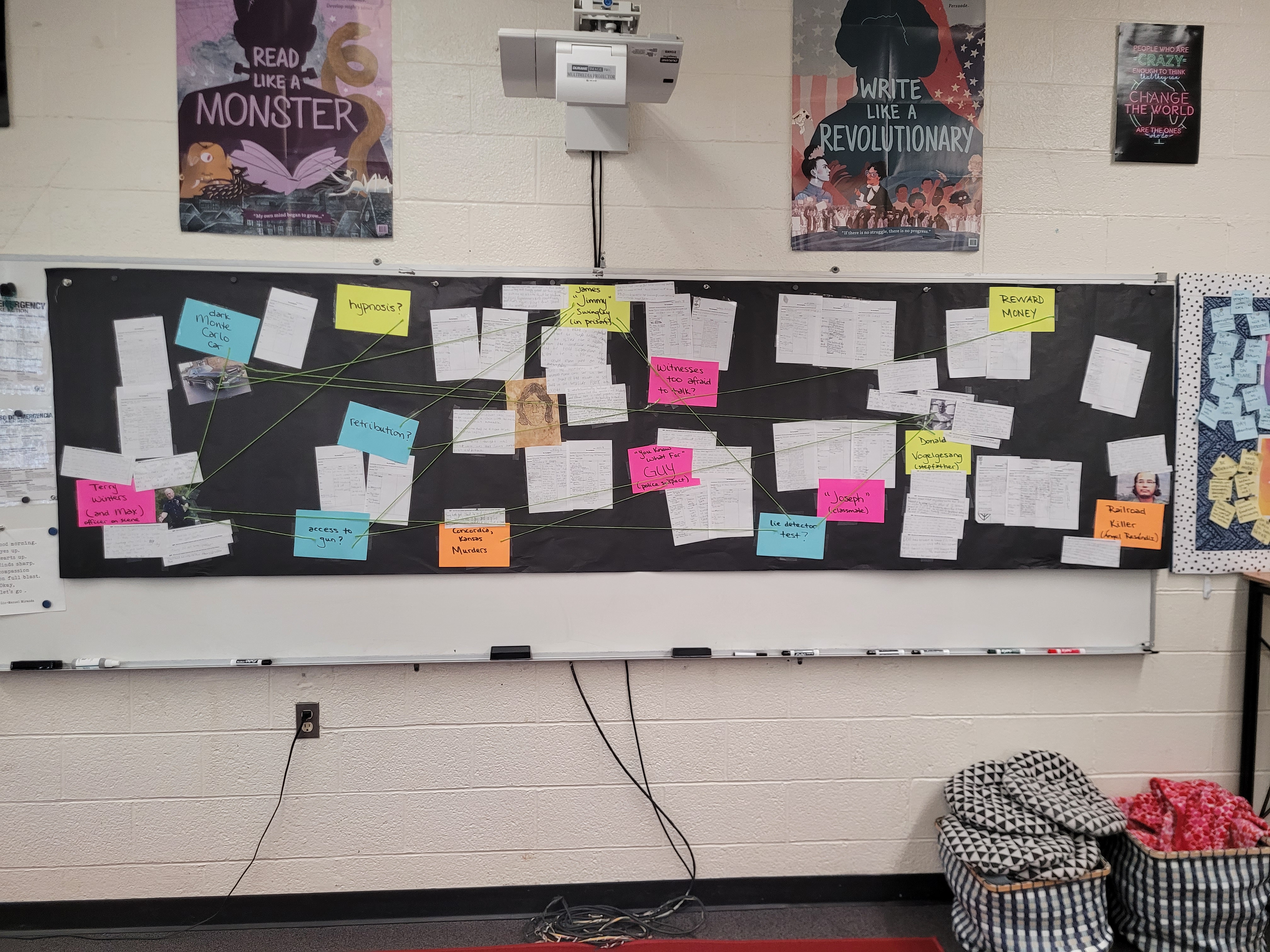
That’s a murder board. You’ve probably seen them in movies and TV shows. You might have made one yourself.

But have you ever seen a murder board, based on two real-life unsolved murders, put together by 13-and-14-year-olds? I didn’t think so.

Earlier this week I spoke to teacher Megan Byard’s middle-school class at Inspire Academy in Muncie, Indiana, my hometown. Ms. Byard had approached me and Douglas Walker, my longtime writing partner at Muncie newspapers and in four true crime books, including “The Westside Park Murders: Muncie’s Most Notorious Cold Case,” published by History Press in 2021, about talking to the class about Westside.

In September 1985, teenagers Ethan Dixon and Kimberly Dowell were shot to death in Muncie’s Westside Park. No one was ever charged with the crime, although police have had a person of interest for a few years now. In our book, we name that person, who is in prison following a conviction for a separate murder years after the Westside slayings. We explain the line of reasoning that prompted police to suspect him. We reached out to him in prison to ask about the case against him. He did not respond to written questions and a self-addressed, stamped envelope. In addition to naming him, our book explores many other theories and suspects connected to the case.

Since it came out, our book has received a lot of attention. Popular podcasts have been based on our book and the crime. On Amazon, the book has 163 ratings for 4 out of 5 stars. It prompted a Peabody-winning producer of non-fiction television to contact us about turning it – and some of our other writing – into a multi-part true crime series, but no networks or channels took the producer up on the pitch.

Of all the attention that our book has received, I think one of the coolest and most interesting was from Ms. Byard’s class. The students, who are interested in journalism and writing and true crime, studied the book and the crime in advance of having me do an online talk for their class. They asked good questions.

I think I was most impressed with the murder board, though. Made me feel like I was working in a police precinct, hoping for a breakthrough.

And I guess all of us are still waiting for a breakthrough.

Thanks to Ms. Byard and her class at Inspire Academy. Your interest and care made my week.

Here’s a link to the book on Amazon, although you can find it anywhere, including many libraries, including the Chicago Public Library.