Tag Archives: Indiana

I will not quote ‘You Can’t Go Home Again’ – damn it, I guess I just did

I’ve noted on social media in recent days that we recently spent a little time in Muncie, Indiana, promoting THAT OCTOBER and getting together with family and friends and looking around the city that was my lifelong home until we moved to Tennessee almost three years ago.

It made perfect sense to promote the book there because 1.) more people know me there than here and B.) the book is set in my version of Muncie as it was in 1984. The novel’s not a documentary, obviously, but it’s got the overall vibe of Muncie more than 40 years ago and the teenage characters do some of the same things my friends and I did in Muncie when we were that age or a little older – going to movies, watching MTV, going to house parties. I never prowled through a junkyard, I admit, but that part of the book was inspired by my late Uncle Si Stewart, who talked about when he took a shortcut home from school through a Muncie junkyard when he was a kid in the 1950s.

We get back to Muncie once or twice a year since we’ve moved down here, and I’m always so grateful that I get to see family and friends there and get to look around the city I knew so well and covered for the newspaper for most of my life.

I always come away with gratitude for the people I get to see, those that I get to meet and the places that are familiar to me.

But I always feel sad when I’m there. I’m nearly swamped with melancholy while I’m there and for a while after.

It’s not just that the city has changed. It has, and not just in the three years we haven’t lived there. It was changing most of the time I lived there too.

I always explain to people who don’t know Muncie as the city where David Letterman went to college, where the first half of “Close Encounters of the Third Kind” was set, where Garfield the cartoon cat was created and is still produced and where Ball canning jars were made dating back to the 1890s.

It’s the city where four true crime books I co-wrote with Douglas Walker, my frequent collaborator at Muncie’s newspapers, are set. There’s no getting around that Muncie – one of several Midwestern cities that were nicknamed “Little Chicago” – was sometimes a violent and murderous place.

It’s a city that in some ways peaked when I was young, as young as the teenage protagonists of THAT OCTOBER. Its population peaked at just over 76,000 in 1980 and has fallen regularly since to an estimated 64,000 now. Most of the big industrial employers went away, some of the most recent in the 2000s, although luckily there’s some stopping of the bleeding thanks to growth in employment in the education and healthcare fields.

Still, Muncie has struggled and is struggling. The city can’t keep the streets paved. The mall is all but dead. Some, not all, of the government leadership seems determined to wipe out all the welcoming efforts that groups and private individuals have made over the years. And at the same time there’s decades-long efforts to bolster downtown, there’s a proposal to pull the last few hundred government workers out of downtown and put them in an ill-advised government center miles to the south, outside the city limits. (When one of the downtown government buildings was being built in the early 1990s, there was discussion of metal detectors inside the doors. An attorney who oversaw the project said it was insulting to frisk people who were on their way to pay their taxes. Yet here we are, decades later, and metal detectors are a way of life because life is cheap and murder is easy. That said, I think it’s insulting to tell people who pay their taxes that they can’t even pay those taxes or go to court or talk to their representatives without leaving the city, ffs.)

It’s depressing to contrast the city currently with the city as it was in the 1970s and 1980s. I don’t even get into a lot about how thriving the city was in 1984 in THAT OCTOBER, but as strange and upsetting as it was for murder and mystery to envelop the city and the young protagonists of my book, 1984 in the real-life Muncie was a boom time. Life in the city had peaked, in some ways, and in the decades since, it has not struggled its way back.

My friend Tammy told me this morning, as I was ruminating on all this, that my hometown’s struggles reflect this country’s stuggles and she’s right, of course. I take that as personally as I take what’s happened to Muncie.

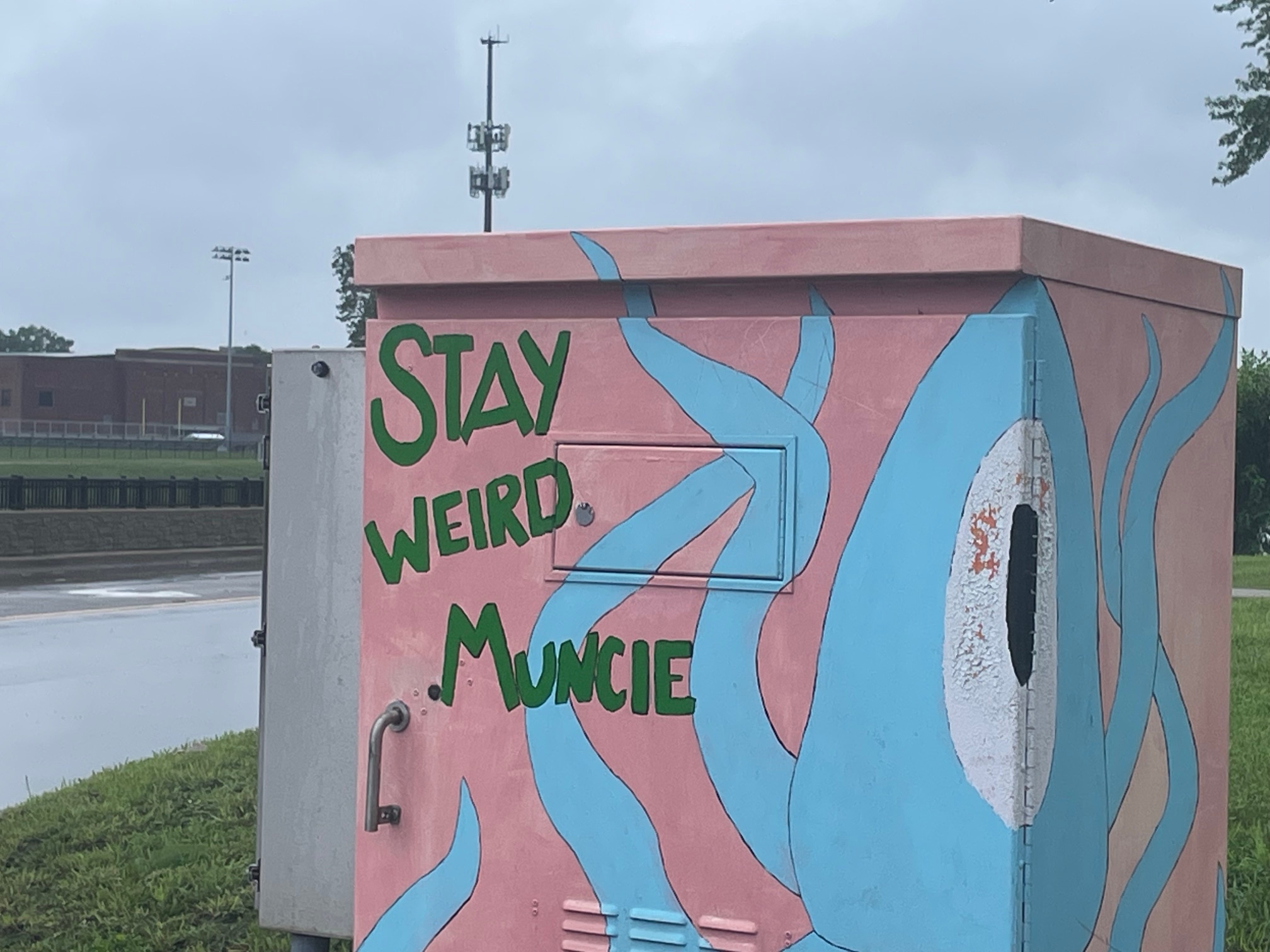
One of the consistently amusing sights around Muncie is a public art project from a few years ago that prompted artists to decorate traffic light control boxes. The art was contributed by a lot of different artists and ranged from the beautiful to the abstract to the whimsical like the “Stay Weird, Muncie,” message above. I took that picture our first day back and I’ve thought about it a lot.

I’d like to think that my hometown can be weird, interesting, welcoming, fulfilling, progressive but comforting and I like to think it can be a good hometown, either for someone who’s still living there, someone who’s just visiting or someone who’s come home again.

I’d like to think that, and maybe take comfort from that once I shake this profound melancholy I feel. But I’m not sure its possible.
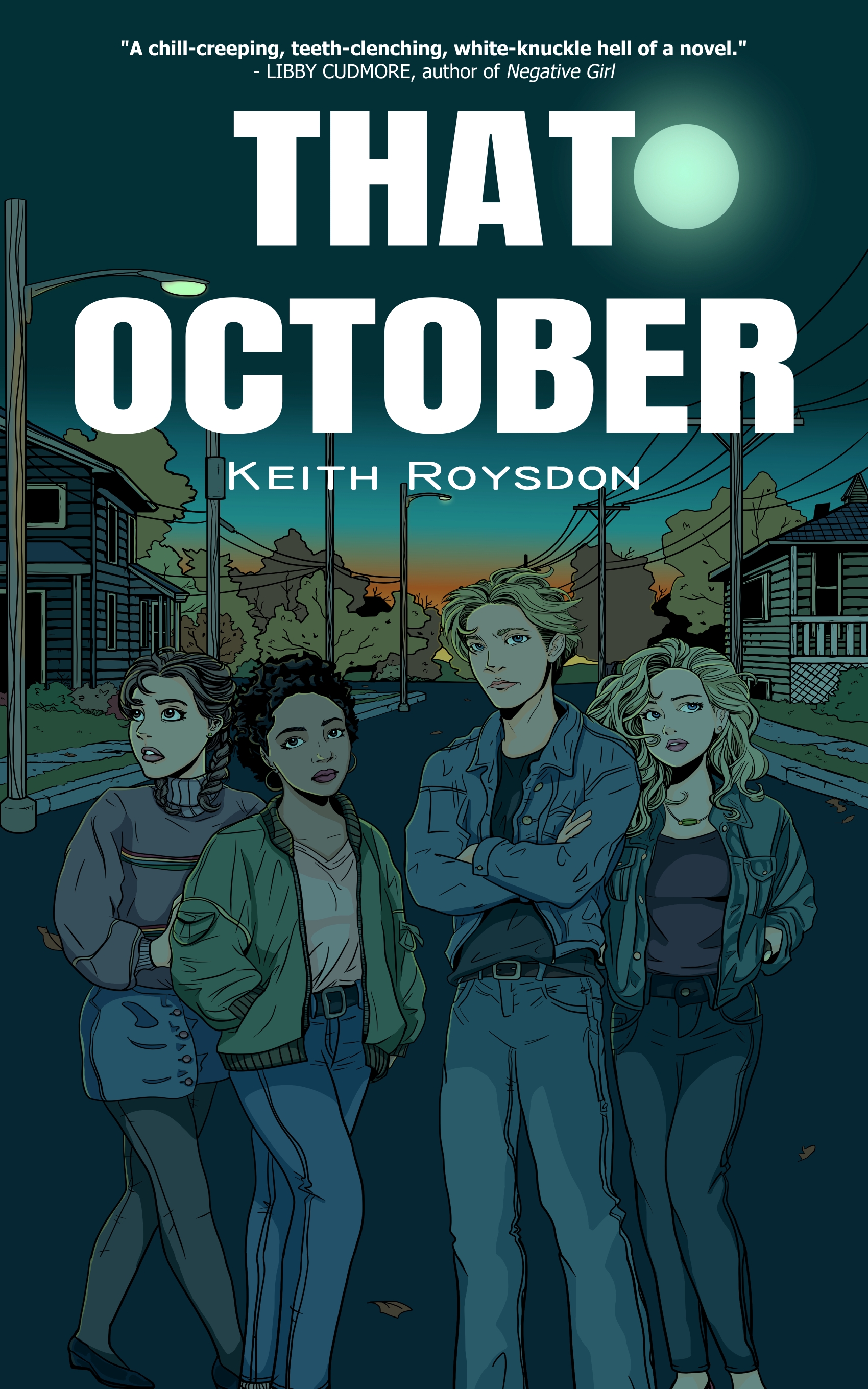
October – actually THAT OCTOBER – arrives a month from today

I promise I won’t give you a daily countdown, but how could I resist a nice round period of time like one month?

On June 1, my 1984-set crime novel THAT OCTOBER will be available. My editor Jill Blocker and artist Sara McKinley and I have really reached the finish line in this self-publishing journey – don’t all journeys have finish lines? – and all that remains now it to get the word out.

The paperback is available for pre-order on various sites now. Before June 1, we should have the electronic version available also.

I’m doing a couple of talks back in my hometown of Muncie, Indiana – inspiration for the city of Middletown, where THAT OCTOBER takes place – in June. although I don’t expect that to be of interest to many of you unless you’re in the Muncie area or somewhere in the Midwest with a lot of time on your hands.

In the next month, I’ll tell you a little about THAT OCTOBER and the world when it takes place: A time when high school students should have been spending all their time thinking about dates, football, seeing the biggest movies – “The Terminator” was new in October 1984, and “A Nightmare on Elm Street” would come out within a couple of weeks – MTV and Halloween.

Instead, the six high school friends in THAT OCTOBER are thinking about the murder of one of their classmates and the taking of another.

And they don’t understand why the adults in town seem unconcerned or, at best, evasive when the friends urge them to DO SOMETHING to solve their friend David’s murder and bring Lee Ann home.

Jackie and Michael, new siblings in a blended family, and their friends Sammi, Toni, Elmer and William push forward with their own investigation, which follows a trail rooted half-way around the world, in a time before any of them were born.

I’ll share a bit more as we move forward. I hope you come along for the ride.

iPhoneography: The cemetery in winter

beech grove military

Maybe it’s laziness. Maybe it’s the lack of good subjects. Maybe it’s my winter fatigue. But I haven’t taken all that many iPhone photos lately and haven’t shared any here.

beech grove rows

So I thought I would share a few that I took with my iPhone a couple of weeks ago.

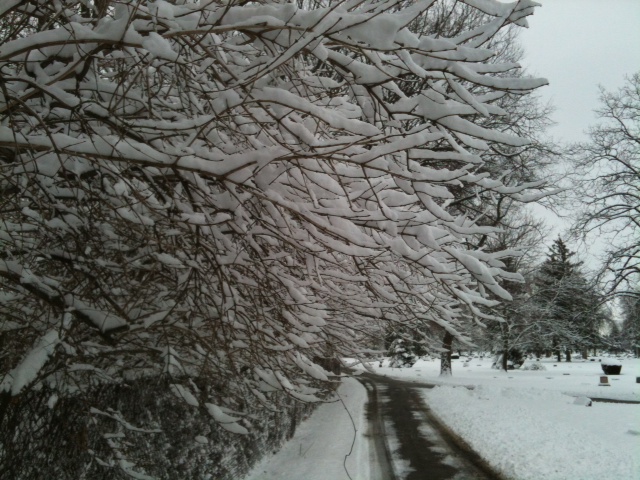
beech grove branches

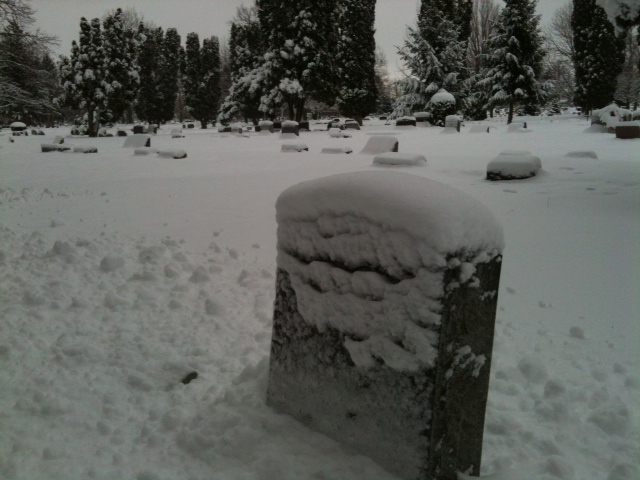
We’re only just now getting out of the grip of winter, but to have a snow like this in March was out of the ordinary. So I thought a trip to Beech Grove Cemetery here in Muncie, Indiana, would make for some nice photos.

beech grove solo

Regular readers know I love old cemeteries. They’re wonderful spots for photography.

Turns out they’re pretty good for wintertime pictures as well.


iPhoneography: Hartford City, Indiana

It’s time for another look at one of East Central Indiana’s cities as glimpsed through my iPhone.

Hartford City, county seat of Blackford County, was settled and platted in the mid-1800s, sent soldiers to fight and die in the Civil War and saw a growth spurt during the late 1800s natural gas boom.

Curiously, there’s not a lot of recognition of the gas boom in Hartford City – unlike Gas City, just to the north, where some street sign posts are shaped like natural gas wells – but the community’s remembrance of its sons’ Civil War service is very noticeable around the courthouse.

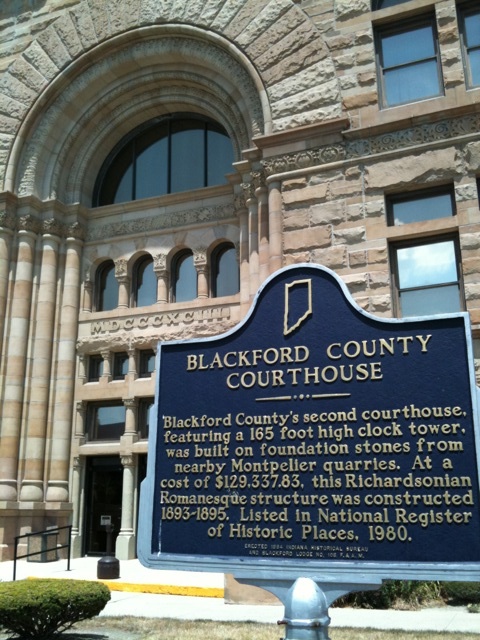
The top photo is a view of the Blackford County Courthouse’s 165-foot tower.

The courthouse was the county’s second, built 1893-95, as a historical marker helpfully tells us, and is an example of Richardsonian Romanesque style.

The tower is very eye-catching and helps the courthouse dominate the downtown square.

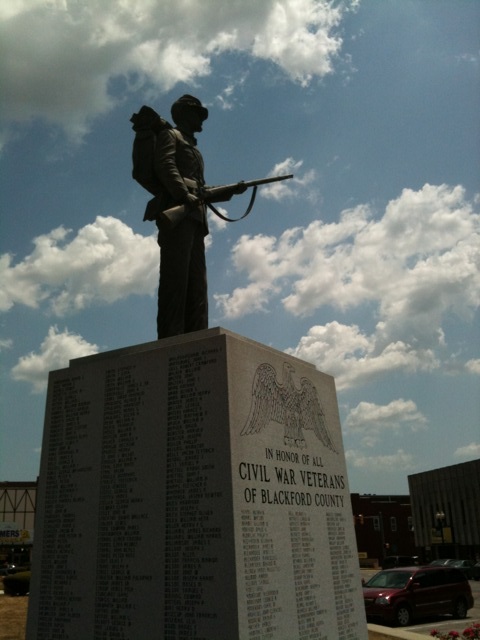
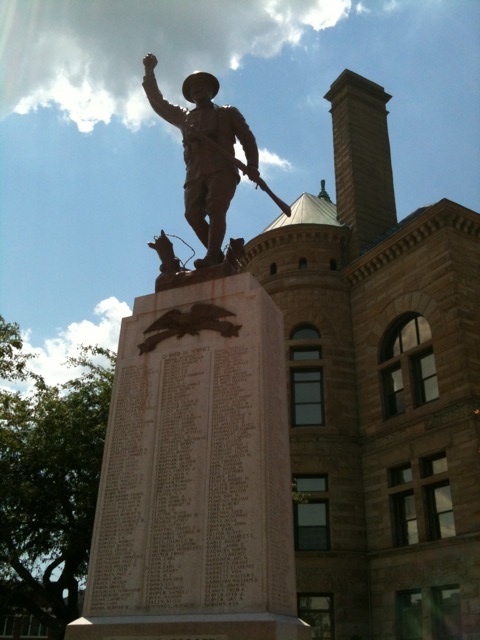
The courthouse square has war memorials on each corner. This is the Civil War memorial.

In Hartford City, they keep their cannon balls handy. And shiny.

Among the other memorials is one to World War I doughboys.

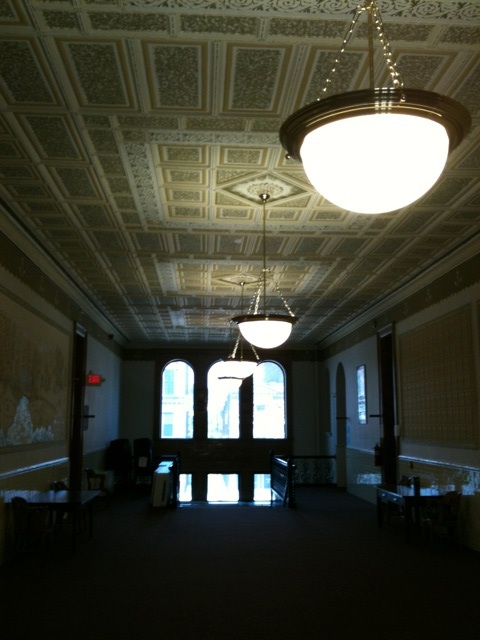
Inside the courthouse, this tin ceiling is a nice architectural detail.

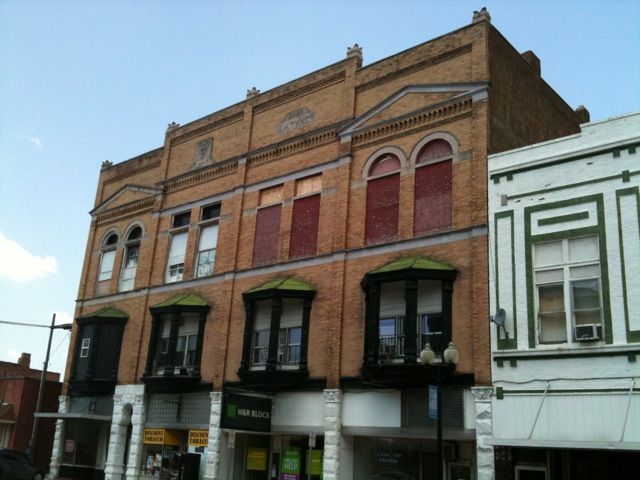
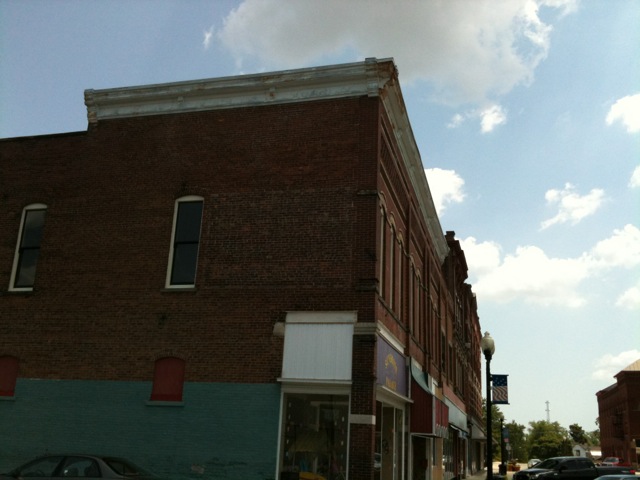
Like many smaller cities and towns, Hartford City has struggled to keep its downtown alive. Hartford City has some truly impressive and historic buildings surrounding its courthouse square, though. One of them is the Tyner/Knights of Pythias building.

The Tyner building, built around 1900, was home to professional offices for decades and was, in the 1920s, home to the Ku Klux Klan. At the time, the KKK had a huge presence in Indiana and all but constituted a shadow government.

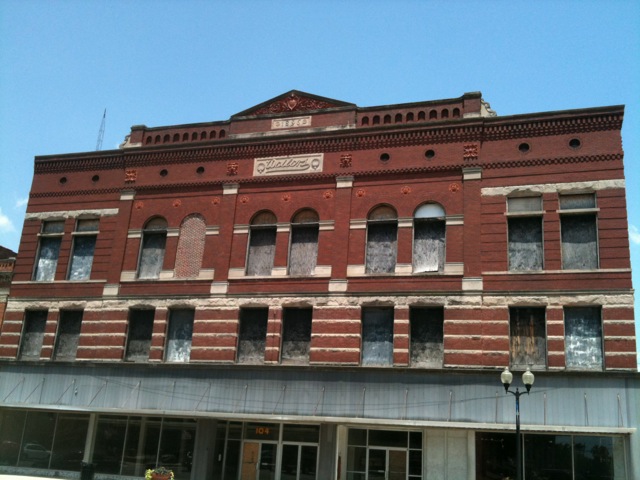
Then there’s the Hotel Ingram, which online sources date to 1893. It’s a beautiful building in Romanesque Revival style but has seen better days.

One of Hartford City’s grandest buildings surely was the Weiler’s Building, once home to a large department store. Weiler’s store was opened by four brothers from Germany. The town’s elders bragged that Weiler’s rivaled any big city department store.

Lastly, a look at a ghost sign. I enjoy finding these on the sides of downtown buildings. I’m posting this even though the sun’s rays really weren’t in the right spot for this shot. But there is a ghost sign there, believe me!


iPhoneography: 2012 Indiana State Fair

The Indiana State Fair brings summer to a close for hundreds of thousands of Hoosiers, who go back to school and jobs not long after the fair’s run.

The fair is also an opportunity for good iPhone photography.

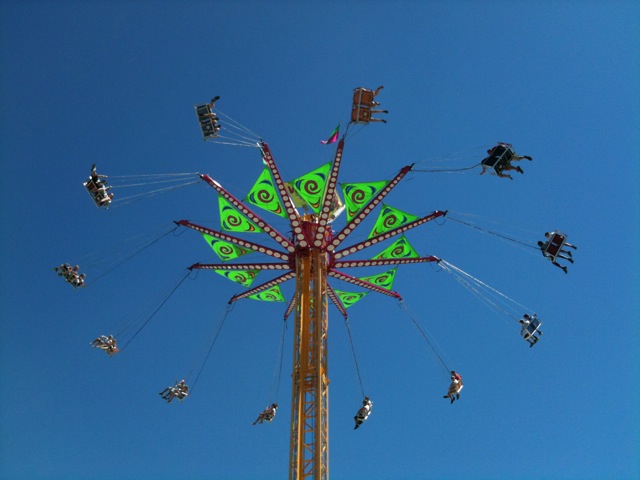
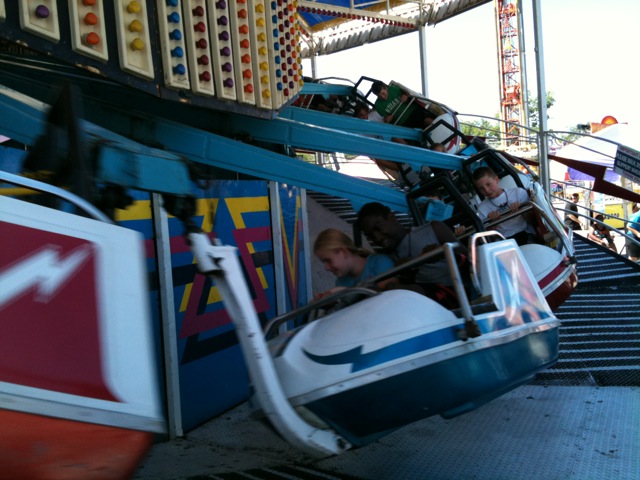
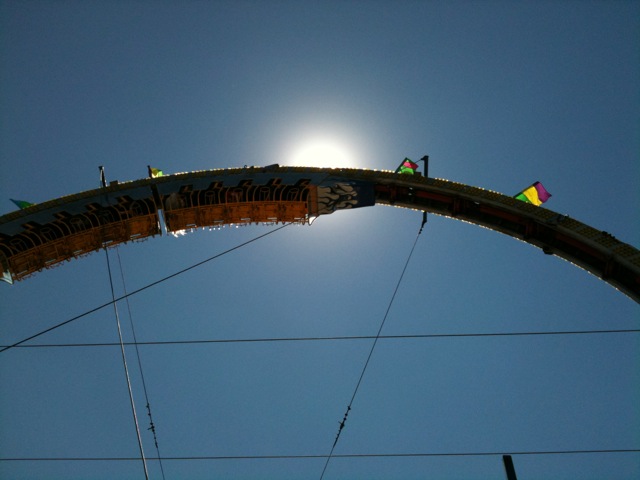
The midway carnival rides are a natural photo subject. I’m pretty sure the Vertigo ride is new this year.

I haven’t found anything online that tells me how tall it is. I’m guessing … pretty tall.

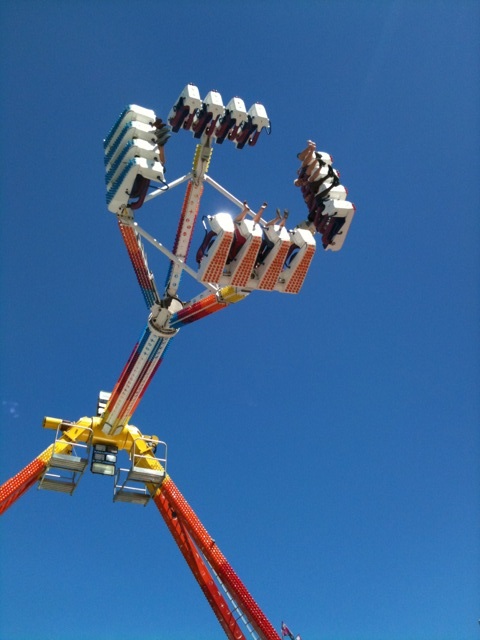
The Freak Out is among the new traditional rides at fairs at the county and state level. It’s apparently a variation on a European ride called The Frisbee.

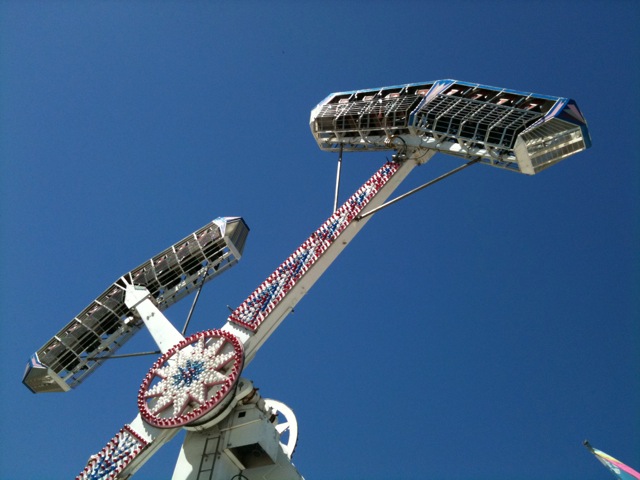
The Screamer is another new favorite.

If you’re more of  a traditionalist, the Ferris wheel is for you. The first was built for the World’s Fair in Chicago in 1893. The book “Devil in the White City” has some very interesting background on the Ferris wheel.

Sometimes traditional rides operate under a variety of  variations and names, including the Matterhorn, also known as the Flying Bobs.

The Firestorm is a traditional ride …

So is the Cliffhanger, or hang glider.

If you’re in need of a more sedate ride, the state fair offers shuttle trams pulled by tractor.

And lest we forget that 4-H competition is a big part of any fair …

Working at the cow wash. Get it?


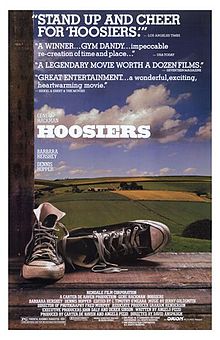
‘Hoosiers’ took us all the way to state

When “Hoosiers” came out in 1986, I don’t think most of us here in Indiana appreciated what a singular accomplishment it was.

Sure, writer Angelo Pizzo and director David Anspaugh got plenty of accolades for their homespun story of second chances and redemption. But I was reviewing movies and writing about Indiana’s fledgling status as movie location at the time and while a few movies like “Close Encounters of the Third Kind,” eight years earlier, had been partially set in Indiana — here in Muncie, as a matter of fact — they weren’t shot here. The state film commission was trying to attract moviemakers here and “Hoosiers” seemed like the state’s entry into the grand and grandiose world of filmmaking.

It was not to be.

So we can appreciate “Hoosiers” for what it is: A touching, old-fashioned story about a former college hoops coach (Gene Hackman) trying for a second chance at a tiny Indiana school. The story is loosely based on the 1954 state championship game between Milan (called Hickory in the movie) and Muncie (with South Bend substituting in the film).

There’s a lot to like about “Hoosiers.” Here are a few of our favorite things:

Yep, that’s Indiana. The movie was filmed in the state and there’s no mistaking its lonely two-lane roads, flat cornfields and historic brick school houses. Not to mention the well-known Hoosier resistance to change.

“I thought everybody in Indiana played basketball.” One of the biggest things the movie gets right is the decades-long Hoosier love of high school basketball. The crowded little school gyms, the caravan of cars to away games, the hoops hanging on the sides of barns and in rural yards. We loved it all, right up the end of class basketball.

The casting. The players, the townspeople, the people at the games. There’s rarely a jarring moment.

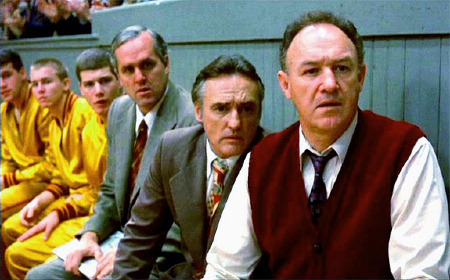
Dennis Hopper. As the town drunk who knows basketball but invariably shows up at games and embarrasses his player son, Hooper was rightly nominated for an Oscar. It’s a comeback role for him.

Gene Hackman. It’s easy to forget just how good Hackman — who is apparently retired from acting these days — is, how easy he makes acting look. He’s perfect as the single-minded, not especially cuddly coach who doesn’t take any grief from players or parents.

And finally, the tape measure scene. When the players get to the state finals at Butler in Indianapolis, Hackman has them measure the distance to the rim. It’s the same as back in their gym in Hickory, he notes. The players laugh, releasing tension, but they’ve also been reminded that it’s just a game and it’s the same game they’ve been playing, every Friday night, in gyms big and small.

Rockin’ your world

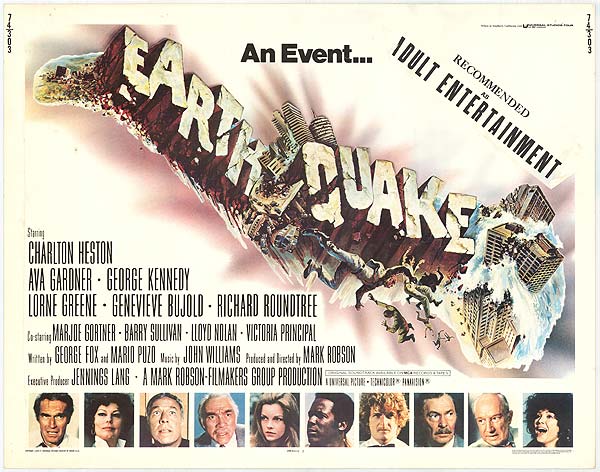
Today’s earthquake packed a lot of entertainment into just a few seconds.

Now I’m being kind of facetious about the ‘quake, which was centered in Virginia but felt waaaaay over here in Indiana, because the latest news reports indicate no injuries and little damage. As one Internet quipster said, the tremors would be wildly over-reported because they were felt in DC and NYC and I suppose there’s some truth to that.

But even here, where the New Madrid fault sometimes kicks up a rumble or two, today’s earthquake felt like a real rock-and-roller.

Maybe it’s because I was on the fourth floor, but today’s ‘quake felt different than the few I’ve experienced before. Those were shakers. Probably thanks to my elevated position, this one felt like more like a wave. A friend and I looked at each other and, we later determined, were thinking the same thing at the same time: I’m feeling dizzy.

Afterward, among a flurry of conversations — both in person, on Facebook and Twitter — I enjoyed trading stories about what we felt and when.

I don’t wish an earthquake on us or anybody and I know the New Madrid fault could really throw us for a loop someday.

But today’s quake gave us all something to talk about that wasn’t politics or the economy or war. It made us all feel like we were sharing an experience instead of arguing about an experience.

Except for you people who didn’t feel it, that is. You guys are just weird.